

If you are a local small business owner, a residential property owner, or simply a mini truck enthusiast, understanding the best options in the Japanese mini truck market is pivotal. These compact yet capable vehicles offer reliable performance, practical features, and excellent maneuverability for various needs. In this article, we will delve into the standout models of Japanese mini trucks, highlighting the Daihatsu Hijet, Suzuki Carry, and Subaru Sambar. Each chapter focuses on the unique attributes of these vehicles, helping you make an informed decision that suits your day-to-day activities and passion for mini trucks.
Daihatsu Hijet: The Benchmark That Shaped Japan’s Kei-Truck World
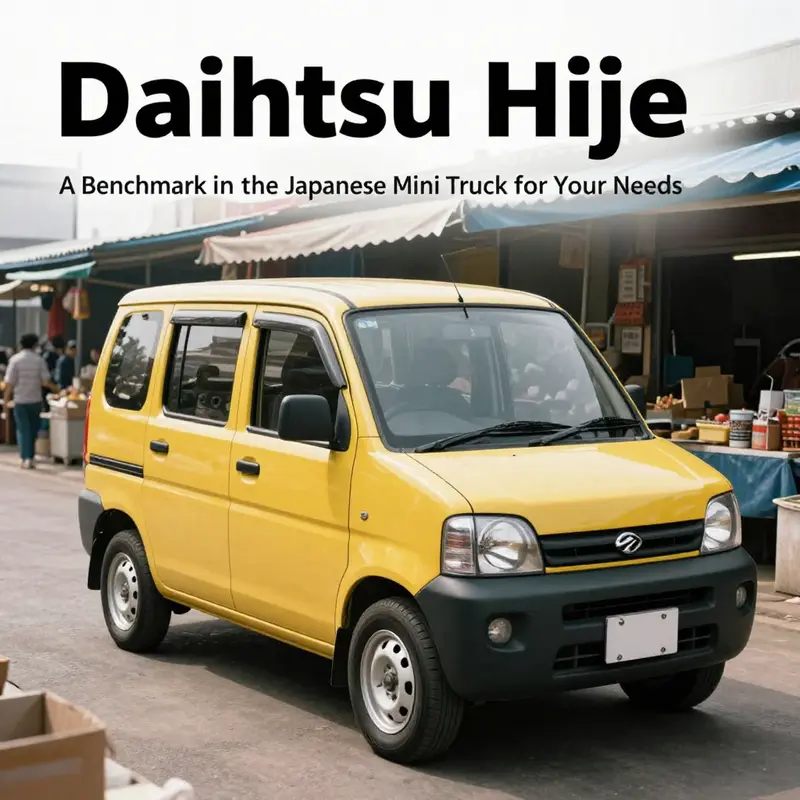
From the moment it appeared on Japanese roads, the Hijet established a template that endures in every kei truck built since. Its compact footprint defined a category designed to maximize cargo space while preserving the nimble handling that small business operators rely on daily. The Hijet’s design philosophy is straightforward: pack as much practicality into a tiny, affordable vehicle as possible. This is not a sprint for power but a marathon of reliability, economy, and simple maintenance. In that sense, the Hijet is less a single model and more a standard by which all others in its class are measured. It is the quiet gravity in the kei truck cosmos, a benchmark that sets expectations for cabin ergonomics, bed versatility, and the way a vehicle behaves while negotiating narrow urban lanes, loading docks, and sunlit alleyways.
Over the decades the Hijet has evolved through several generations. Each iteration refined what mattered most to owners: a steady engine, predictable handling, and a platform that could tolerate the rough edges of daily service. The core formula remained remarkably constant: light weight, compact dimensions, and a bed that could swallow pallets or sacks with minimal fuss. While many peers chased more horsepower or larger cargo beds, the Hijet stayed faithful to the idea that a small truck should disappear when not in use, only to reappear with a ready cargo plant when called upon. The result is a vehicle that feels both familiar and capable, a workhorse that could be trusted to return for more deliveries every minute of every day.
Part of the Hijet’s strength lies in its engineering discipline. In a segment that rewards clean packaging as much as raw torque, the Hijet pares nearly every element down to the essentials and then polishes those essentials until they shine. The engine choices, while modest in displacement, are tuned to deliver usable power at low revs, an important trait when the truck is stopped at a red light, then loaded with a crate of goods and moved again. The steering is light but not twitchy, enabling precise maneuvering in cramped alleys and crowded loading zones. The suspension strikes a balance that smooths minor pavement imperfections without robbing the bed of structural integrity. In practical terms, this translates into fewer trips back to the shop with squeaks, rattles, or sticky brakes. For operators who log long hours packing and transporting, it is the feeling of confidence that underwrites the Hijet’s reputation.
Another pillar of the Hijet’s status is its reliability, a trait that has kept it in widespread service long after newer shapes appeared on the scene. Kei trucks exist in a market where durability compounds over time; a well-maintained Hijet will outlive many of its peers and still be in service years after a newer model has moved on to other duties. This longevity is reinforced by Daihatsu’s robust spare-parts network and by the simplicity of calibration that small garages can handle without expensive diagnostic tools. The practical consequence is not only lower ownership costs but also higher resale value in markets that rely on second-hand fleets for small-scale entrepreneurs. In the eyes of many buyers, this is not nostalgia; it is a proven track record of keeping a business running when supply chains are tight and schedules are unforgiving. The Hijet’s reputation extends beyond Japan, as the model has been produced and distributed under various branding arrangements, underscoring its role as a global workhorse that adapts to local needs while preserving its core identity.
Technology has not left the Hijet behind, even as its silhouette remains instantly recognizable. Modern iterations incorporate safety features and driver-assistance tools that matter in urban use. The cabin remains a compact sanctuary for the driver, with controls oriented toward one thing: getting the job done. The cargo bed, with its modular tie-down points and the ability to customize with bed extensions or flatbeds, becomes a platform for a wide range of businesses—from farmers delivering produce to a street-side mechanic offering quick repairs. The Hijet also keeps pace with the cultural shift toward circular economy and flexible work arrangements; its size makes it easier to park, refuel, and maintain, reducing downtime for small operators whose workdays are measured in miles and customers rather than horsepower. In this light, the Hijet is not a relic but a living instrument, continually tuned to the realities of daily commerce in a crowded city and in rural backstreets where a small truck still matters most.
The Hijet’s iconic status is not merely about numbers or a long production run; it is about the narrative of a vehicle that is both humble and indispensable. It embodies a philosophy that emphasizes utility first and design second, a stance that resonates with generations of drivers who learned to read a map of alleys, curb cuts, and loading docks as if it were a blueprint for success. This narrative has seeded a culture around kei trucks, a culture that prizes modularity, ease of service, and the intimate relationship between operator and tool. That cultural resonance explains why the Hijet remains the baseline against which other kei trucks are measured, even as new entrants push innovations in safety, efficiency, and comfort. In practice, when a fleet manager asks whether the Hijet is the best choice, the answer depends on the scale of operation and the local requirements. For those who need a compact, dependable, and affordable workhorse that can withstand daily grind, the Hijet offers a compelling proposition that is hard to match.
To understand why the Hijet endures as a benchmark, one can look at its influence on the entire kei-truck ecosystem. The category is not about maximal luxury or speculative performance; it is about a reliable, repeatable workflow that keeps costs predictable. The Hijet’s presence in Japan and its export to other markets have underscored the idea that a small truck can be both practical and robust, a combination that translates into real-world durability. In urban delivery, where time windows are tight and streets are narrow, this trait translates into quicker turns into loading docks, fewer navigational headaches, and a payload that remains reliable from dawn to dusk. For many small businesses, the Hijet is a dependable partner that does not demand constant attention or expensive maintenance, an attribute that is especially valuable when margins are thin and the workday demands relentless consistency. These qualities have helped cement the Hijet’s role at the heart of the kei-truck story, guiding buyers toward the right balance of size, power, and economy.
Of course the market offers alternatives with their own strengths. The Suzuki Carry has built a formidable following by focusing on practicality, reliability, and an unbroken lineage that stretches across generations. The Subaru Sambar introduces a different flavor of capability with features like 4WD and a mechanical supercharger in some editions, offering traction and a distinctive power delivery for challenging winters and rugged work sites. Yet even as these rivals capture important niches, it is the Hijet that anchors the conversation, a reminder that the best truck for one operation may be defined by a chain of small decisions—turning radius, bed length, and the sweet spot of curb weight—that collectively determine long-term value. The Hijet’s enduring presence in both domestic and international markets speaks to engineering decisions that prioritize a harmonious blend of performance, efficiency, and ruggedness. In a sense, the Hijet has become not merely a product but a reference point—a shared memory among motor enthusiasts and small-business operators who understand that a tool can be both simple and essential.
Choosing the right kei truck inevitably boils down to the specifics of use. If your daily workload sits primarily in dense urban areas where parking is at a premium and logistics demand quick deliveries, the Hijet’s compact proportions, predictable handling, and well-honed ergonomics often translate into meaningful savings in time and fuel. If, on the other hand, a project calls for extra payload or four-wheel-drive traction to cope with snow or rough access, then a different model in the same class might be a better fit. The Hijet does not pretend to be a universal solution; it represents a philosophy of design that optically resembles a tool built for daily, practical reliability. For the readers who crave broader context, a community-driven perspective can offer a broader sense of what operators value in the kei-truck space, and that is where the story of this benchmark expands beyond the showroom floor into kitchens, garages, and street markets where the Hijet’s silhouette remains a common, comforting sight.
Ultimately, this chapter does not crown a single vehicle as the only answer to what makes the best Japanese mini truck. It sketches a landscape in which the Hijet stands as a touchstone, a continuous reminder that the best choice emerges from a long conversation between needs, local conditions, and the ongoing evolution of technology. The Hijet’s long history—its capacity to evolve while preserving a recognizable identity—provides a blueprint for what a reliable, affordable, and practical work vehicle can be. As manufacturers explore new powertrains, safety systems, and modular configurations, the Hijet remains a constant reference point, a vehicle that can still be bought, owned, and depended upon after decades of service. In this sense, the Hijet is not a relic of a bygone era but a living framework that informs how small trucks should perform, be maintained, and integrated into the daily economy that keeps communities moving.
To those studying the Japanese mini-truck market, the Hijet’s story offers a lens into the priorities that have steered kei trucks for decades: efficiency over ostentation, simplicity over complexity, and a relentless focus on utility. It is a narrative that encourages prospective buyers to weigh the options against a time-tested standard rather than chasing every latest feature. The Hijet’s status as a benchmark rests on the interplay between a compact silhouette, a network of dependable parts, and a design ethos that makes service accessible to a broad base of owners. In that sense, it is more than a model; it is a cultural artifact that has helped shape how small businesses operate within Japan and around the world. And while the market continues to innovate, the Hijet’s legacy remains a touchstone that guides both the next generation of kei trucks and the choices of the human beings who depend on them every day. For those curious to explore more about the community and the broader ecosystem surrounding kei trucks, the Minitrucks Colala blog offers a useful lens into real-world experiences and practical insights: minitrucksocala.com/blog/.
External resource: Official Hijet page with detailed specifications and historical context can be found here: https://www.daihatsu.co.jp/vehicle/hijet/.
The Suzuki Carry Reimagined: Reliability, Versatility, and the Quiet Power Behind Japan’s Kei Truck Tradition
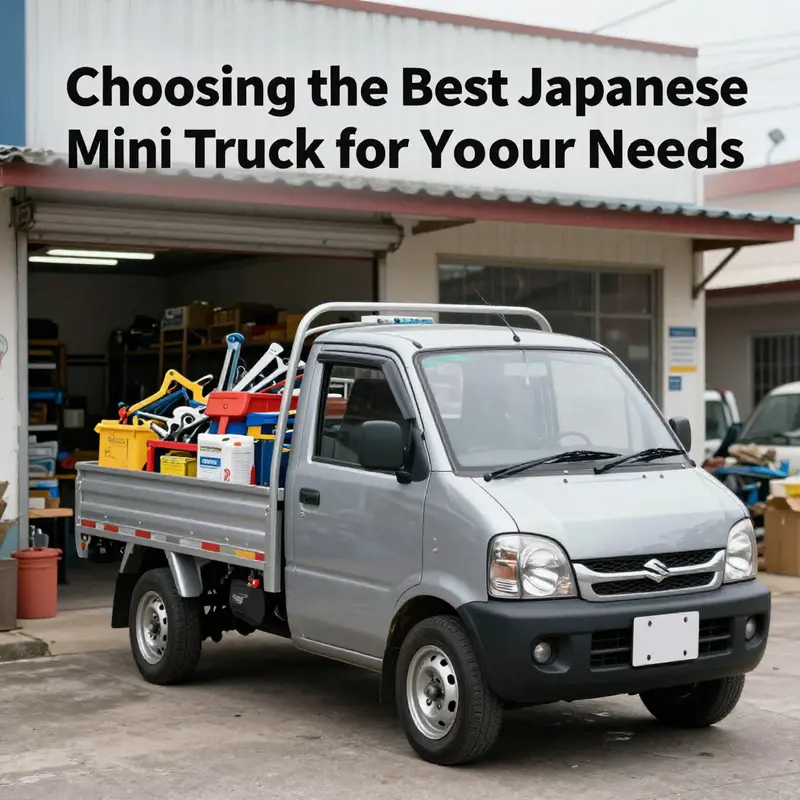
In the landscape of Japanese mini trucks, the Suzuki Carry stands as a quiet standard-bearer. It refuses to shout about its virtues, yet it consistently delivers what operators need most: reliability, practicality, and a cost of ownership that keeps a business humming through long seasons of work. When you walk through a yard dotted with blue tarps and bicycles and see a Carry perched on a muddy road shoulder, you recognize a certain logic at work. The vehicle may be modest in size and restraint, but its design lives in the same sphere as the rest of Japan’s kei-car tradition: take the essentials, do them well, and design for durability rather than dazzle. The Carry embodies that philosophy with a plainspoken geometry—a practical frame, an engine tuned for torque and efficiency, a cabin arranged with the simplest possible workflow in mind, and a drivetrain that can be counted on to deliver steady performance across a spectrum of conditions.
The Carry’s reputation for reliability has deep roots. It rests on a lineage that has evolved with the needs of farmers, retailers, and tradespeople who rely on a compact, nimble, and maneuverable truck to navigate narrow urban streets and unpaved rural lanes alike. This is not a vehicle built to blur the line between a passenger car and a heavy-duty pickup; it is a tool crafted for the daily, unglamorous labor that actually keeps operations moving. Its mechanical DNA emphasizes robustness: a straightforward engine, durable transmission, and a suspension tuned to cope with the jostle of rough surfaces and the load shifts that accompany frequent short trips. In many ways, the Carry has grown up with the markets it serves, absorbing updates that enhance usability without diluting its essence.
Fuel economy figures are not merely statistics to admire; they translate directly into bottom-line outcomes for fleets and individual operators alike. The Carry earns its keep with efficiency that translates into lower fuel bills and longer intervals between trips to the pump. In the field, this efficiency shows up as a practical advantage: fewer refueling stops during a busy day, more room in the budget for essential payloads, and a sense of predictability a small business can rely on when planning routes and schedules. The cold calculus of a balance sheet favors a vehicle that sips rather than gulps fuel, and the Carry delivers that advantage with a consistency that providers come to expect and depend on.
The kei-car framework within which the Carry operates is part of its story, and it informs why the vehicle is designed with certain limits in mind. The kei-car category imposes size and engine displacement constraints that push engineers to optimize for efficiency, light weight, and practical payload within a compact footprint. The Suzuki Carry embraces these constraints rather than attempting to defy them, which, paradoxically, gives it a kind of freedom: it becomes easier to service, easier to repair in the field, and easier to tailor to narrow streets and crowded work sites. That is not to say the Carry is a one-trick pony. On the contrary, it demonstrates a careful alignment of core strengths with the realities of what professionals actually need—the ability to ferry tools, materials, and small loads between job sites without the friction that comes from overengineering a solution for which the real demand is steadiness and simplicity.
Within the Carry’s broad family, occasional variants push the envelope where the daily needs of users are most acute. The 4×4 version, for example, expands the Carry’s capability beyond the smooth, well-paved surfaces of city streets into the more challenging real world—fields, muddy lanes, snow-bound roads, and uneven ground where traction and stability matter. The 4×4 configuration gives operators a dependable edge when weather and terrain conspire to slow progress. It does so with a price: a modest drop in fuel economy and an increment in weight and maintenance demands. Still, for a subset of users—farm operators, small contractors, and rural delivery drivers—the extra grip and control translate into tangible productivity gains. The Carry’s ability to offer both efficient 2WD versions for everyday use and rugged 4×4 variants for tougher jobs mirrors a broader truth about reliable mini trucks: versatility is the backbone of longevity in the market, not just velocity or flash.
A key element of the Carry’s enduring appeal is the balance struck between power, control, and efficiency. The vehicle’s engine options, and the note-worthy 1.5-liter four-cylinder option discussed in comparative reviews, illustrate how Suzuki has aimed to provide a blend of torque-rich performance with smoothness in operation. In a kei-car package that must stay within strict dimensions, more displacement tends to come with more torque at lower revs, a desirable trait for hauling heavier payloads or working in mountain regions where grades demand more pulling power. This engine choice, while not ubiquitous across all Carry configurations, has been highlighted in modern facelifts and market-specific updates as part of a broader push to modernize the interior and add practical technologies without sacrificing the fundamental ethos of the vehicle.
Inside the cab, the Carry continues a tradition of practicality over pomp. The interior surfaces are resilient and straightforward, designed to stand up to the daily grind of nails, sawdust, dirt, and spilled coffee. In newer models, features such as digital dashboards have begun to appear, improving day-to-day usability, providing clearer information to the driver, and reducing the cognitive load during long shifts. These changes are more than cosmetic upgrades; they are part of a broader shift toward keeping the vehicle relevant in a market that increasingly values operator comfort and data-driven awareness of vehicle status. It is not about turning a kei truck into a luxury car. It is about smoothing the routine, giving drivers a better sense of control, and lowering the friction involved in maintaining peak daily productivity.
The Carry’s cargo bed and payload capability anchor its practical narrative. The bed is designed to accept a variety of tools, materials, and small machinery—an essential feature for tradespeople and small businesses that rely on a nimble, adaptable platform rather than a fixed, single-purpose body. The payload is generous enough for the vehicle’s small footprint, allowing it to move a typical day’s work in a handful of trips rather than requiring the operator to overburden a single run. In this regard, the Carry is less about wow factor and more about the steady, repeatable performance that turns a worker’s day into a sequence of reliable, efficient strides toward completion. The design philosophy is to minimize the number of constraints on operator workflow, whether that means quickly strapping down a load, accessing tools from a compact cab, or maneuvering in tight spaces where larger trucks would struggle.
Beyond the immediate mechanics and on-road manners, the Carry’s broader footprint in the Japanese mini-truck ecosystem is telling. It has been a benchmark in the kei-truck segment for years, consistently appearing in top-seller lists and serving as a common reference point for what a true kei utility vehicle should be. In this sense, the Carry’s reputation is not only about its own specifications; it is about how a vehicle becomes a dependable part of a community’s commercial rhythm. When a fleet manager or a family-run business considers upgrading or replacing an aging unit, the Carry’s track record becomes a critical data point, a proxy for predictable performance, low maintenance costs, and a durable partner that can be counted on across multiple seasons and market cycles.
The Carry’s influence also threads into the wider tapestry of kei-trucks around the world, where its basic formula—compact exterior, efficient, robust mechanicals, and a focus on pragmatic utility—serves as a template for derivative models and regional adaptations. The Carry’s long lineage, extended across generations, demonstrates how a single design can evolve without losing its core identity. Operators who relocate, expand into new markets, or simply explore a broader range of use cases still gravitate toward a vehicle that has shown, again and again, that reliability and practicality can coexist with modern conveniences and improved ergonomics. The Carry’s continued relevance is not a matter of nostalgia; it is a result of disciplined iteration and a faithful reading of what makes a small truck genuinely capable in everyday life.
In conversations about the best Japanese mini truck, it is easy to get caught up in lists and brand prestige. Yet the Suzuki Carry reminds us that the true measure of greatness in this niche lies not in spectacle but in constancy. The vehicle demonstrates how a well-balanced, thoughtfully engineered platform can persist where fashion may come and go. It is a workhorse in the most unglamorous sense—unseen, yet crucial; enduring, not extravagant; and universally useful in a range of practical scenarios that define the day-to-day economy of small businesses and rural households alike. The Carry’s reliability, its practical interior, and its adaptable powertrain form a coherent package that embodies the heart of what makes a kei truck truly valuable: the ability to perform reliably, efficiently, and predictably, so operators can focus on the work at hand rather than on the logistics of keeping a vehicle on the road.
For readers who want to explore a broader ecosystem of mini trucks that share this ethos of practicality, the available catalogs and community discussions often circle back to the same core questions: How does the vehicle handle in adverse conditions? What are the true costs of ownership over five to seven years? How easy is it to source parts and service across a network that remains active across urban centers and countryside alike? The Carry answers these questions in a manner that is at once understated and persuasive. It invites a closer look not because it offers flashy performance figures, but because it embodies a philosophy of steady reliability and genuine utility. Its role in the kei-truck chapter of Japan’s automotive story is less about being the loudest or the most expensive and more about being the most consistently dependable partner for people who measure success by the cadence of daily progress rather than by the brightness of a showroom display.
To contextualize the Suzuki Carry within its peer landscape, consider how the vehicle complements and contrasts with other stalwarts in the same class. The Hijet, often cited as a representative icon of the kei-truck category, emphasizes its long-standing market presence and historical role as a benchmark. The Carry’s own story intersects with this benchmark through its own long lineage and uniform emphasis on practicality. The Subaru Sambar, with its distinctive four-wheel-drive and turbocharged flavor, highlights what a kei truck can do when the design goal shifts toward off-road capability and specialized performance. Each of these vehicles answers different user needs, and together they illustrate the breadth of what it means to be a work-oriented vehicle in a country where tight streets, variable weather, and a diverse economy demand a robust, adaptable tool rather than a single-purpose machine. In this sense, the Carry remains a central, stabilizing thread in the narrative of Japanese mini trucks—the one most people reach for when reliability and day-in, day-out practicality are the priority.
For those looking to place the Carry within a broader purchasing framework, it helps to anchor expectations around ownership costs, maintenance practices, and real-world usability. The aural memory of a kei-truck engine—the way it revs smoothly, the almost casual resilience of the transmission when shaded by a heavy, shifting load—becomes part of the user’s working life. The Grab-and-go nature of the cabin, the compact turning radius, and the simple, straightforward instrumentation all contribute to a vehicle that does not demand special treatment. It asks only for routine care: timely oil changes, a steady fuel regime, and the occasional inspection of the undercarriage and suspension after a winter season of harsher use. In exchange, it returns a predictable rhythm of productivity, a quiet confidence that the truck will be ready when the crew arrives at the site, and it will perform without drama as the day’s itinerary unfolds.
The narrative around the Carry would be incomplete without touching on its place in the modern market, where digitization and small innovations are gradually seeping into even the most utilitarian segments. The interior refreshes—digital dashboards, better seat ergonomics, and improved storage—signal a mindset shift. It is not that the Carry is becoming a luxury vehicle; it is that operators are seeking fewer compromises between efficiency and comfort as they spend longer hours in the cab. A driver who can monitor critical metrics at a glance, who has a comfortable seat and a logical layout for tools and paperwork, can sustain a higher level of performance over the course of a workweek. These small improvements—while perhaps incremental—amplify the already solid case for the Carry as a tool that respects the user’s time and effort.
In the end, the Suzuki Carry’s value proposition rests on the quiet force of its reliability and its unpretentious practicality. It is not flashy, but it is relentlessly useful. It thrives in a market where small-scale operations rely on predictable, maintainable equipment that does not force difficult tradeoffs between efficiency and capability. It respects the kei-truck tradition by delivering dependable performance in a compact, economical package. For readers weighing the best Japanese mini truck, the Carry offers a compelling argument: that true value in this category is measured not by the loudest claim or the latest feature, but by a proven, enduring ability to keep the work moving day after day, year after year.
Internal link for further context on the broader mini-truck ecosystem and community discussions can be found at the following hub: minitrucksocala.com/blog/. This resource helps situate the Carry within the lived experience of operators who use kei trucks as everyday tools, providing practical perspectives on what makes these vehicles endure in diverse settings.
External perspective on choosing 4×4 variants and evaluating the Carry in real-world conditions can be explored here: https://www.carinterior.com/suzuki-carry-4×4-guide-how-to-choose-what-to-look-for/.
The Suburu Sambar: A Rugged, Ingenious Path Through Japan’s Kei-Truck Heritage

When people discuss the best Japanese mini trucks, the conversation often gravitates toward a handful of enduring icons. Yet within that crowded field, one vehicle consistently rises as a study in unusual excellence: the Subaru Sambar. It is not merely another compact workhorse in a market defined by compact footprints and utilitarian aims. It is a vehicle that embodies a particular philosophy of utility, innovation, and resilience that has kept it relevant through decades of changing consumer needs, regulatory shifts, and evolving design languages. The Sambar’s enduring appeal lies in a distinctive blend of capability and craft, where four-wheel drive systems, a compact but robust drivetrain, and a design ethos centered on safety and joy come together to create something greater than the sum of its parts. In the broader landscape of kei trucks, the Sambar carves a niche that is at once practical and adventurous, a rare combination that makes it more than a simple tool for carrying cargo or passengers. It is, in its own right, a statement about how a small vehicle can be built to meet rough terrain, snowy seasons, and demanding duties without surrendering the agility and economy that define the kei category. The narrative that follows treats the Sambar not as a footnote in the history of Japanese mini trucks, but as a living argument for why a compact vehicle can still offer extraordinary value when it is designed with a clear purpose and a persistent willingness to push boundaries within its class.
At the core of the Sambar’s reputation is its four-wheel drive capability, which marks it as one of the few K-trucks to emphasize traction in adverse conditions. Full-time or part-time four-wheel drive configurations endow the vehicle with power delivery to both axles, which translates into confidence on snow-covered lanes, muddy rural roads, and uneven tracks that would challenge even small front-wheel-drive competitors. This is not merely about the presence of four wheels turning; it is about how the system integrates with the vehicle’s compact chassis to deliver predictable, controllable grip. The Sambar’s high ground clearance, combined with a drivetrain designed to maximize torque where it is most useful, enables it to negotiate rough terrain that would slow a larger, heavier vehicle. The result is a compact workhorse that can fulfill the duties of a heavier, more imposing machine without the fuel penalties, handling compromises, or parking headaches that often accompany a larger truck. In snowy Japan, where winters can transform mountain passes and rural lanes into slow-moving challenges, the Sambar’s drivetrain becomes not just a feature but a lifeline—an appliance of mobility that keeps a business running and a household connected when inclement weather would otherwise grind progress to a halt.
The engineering story of the Sambar extends beyond its 4WD capability into a broader heritage of engine layout, drivetrain coordination, and a design philosophy anchored in practicality. Subaru’s approach to engineering has long been informed by a habit of integrating lightweight yet durable materials and a compact, efficient layout. The boxer engine, a hallmark of Subaru engineering, contributes to a low center of gravity and balanced weight distribution. In the context of a small, capable truck, this arrangement fosters stability and predictable handling at modest highway speeds and on precarious off-road paths alike. Even when the Sambar uses variations of its drivetrain and transmission across generations, the underlying principle remains intact: a vehicle that can offer robust performance without demanding excessive space, fuel, or maintenance. The Sambar’s drivetrain story often features an adherence to symmetrical all-wheel drive configurations, a choice that aligns with Subaru’s broader engineering philosophy. This symmetry is not a mere marketing trope; it translates into consistent, intuitive handling and a sense that power is being distributed evenly to all four corners of the vehicle. It is this consistency that helps the Sambar feel more capable in rough terrain and less fragile under heavy-use conditions than some of its peers in the kei-truck segment.
From a design perspective, the Sambar embodies what Subaru describes as a commitment to safety and joy. This mantra—captured in the company’s design leadership—translates into a vehicle that is approachable, predictable, and responsive in a way that reduces driver stress, even when the road is less than ideal. The Sambar’s construction emphasizes lightweight durability, a principle with roots in Subaru’s early adoption of aircraft-grade materials and engineering practices. The result is a vehicle that feels spry and robust at the same time, a combination that is especially valuable in rural Japan where roads may be narrow, twisty, and uneven. The design choice to retain a sturdy, utilitarian truck body—rather than pivoting to a van-like geometry—serves a dual purpose: it preserves the vehicle’s core function as a reliable hauler while maintaining the nimble advantages of a compact footprint. It is not merely a nostalgic nod to a tradition; it is a practical response to the realities of everyday work in diverse Japanese landscapes, where a small, capable truck must be both practical and dependable.
The Sambar’s market appeal is rooted in its niche rather than its mass-market dominance. It has long served as a workhorse in communities where space, cost, and reliability are prized above sheer size or luxury. Its practical utility resonates with small businesses that require a vehicle that can function as a portable workshop, a mobile storage unit, or a versatile delivery tool in communities where every inch of road and driveway matters. The vehicle’s cultural footprint extends into popular culture, where it has enjoyed recognition in collectible and themed releases. The Disney-themed Tomica model released in 2008, for instance, attests to the Sambar’s iconic status beyond ordinary fleet duty. This kind of cultural footprint underscores the Sambar’s enduring identity as more than a commercial asset; it is a symbol of the kei-truck era’s ingenuity and charm, a compact machine that has earned a place in both the practical and the imaginative spheres of Japanese life.
Technological heritage is a key element of the Sambar’s distinctive charm. The boxer engine and the symmetrical all-wheel-drive architecture are not simply technical choices; they are expressions of a broader engineering philosophy that prizes torque delivery, stability, and control. Even as newer iterations refine fuel efficiency, emissions, and ergonomics, the Sambar keeps faith with a core idea: a small truck that can traverse tough terrain and weather with confidence. Certain variants introduce enhancements designed to improve low-speed control, hill descent, and traction in deep snow or mud, reflecting Subaru’s broader commitment to safety with capability. In scenarios where a lightweight vehicle must operate in challenging environments—steep inclines, loose gravel, slick surfaces—the ability to modulate engine output, tire traction, and braking response becomes essential. The Sambar’s sign of sophistication lies in how these features interact rather than in the presence of standalone technology. It is the integrated, driver-friendly feel—how the system behaves at the edges of grip—that makes the Sambar a compelling choice for professionals who depend on predictable performance under diverse conditions.
The Sambar’s enduring relevance is reinforced by its flexible role in Japan’s economy and daily life. It remains a practical tool for small businesses, agricultural workers, and craftspeople who value reliability and efficiency over opulent features. Its compact dimensions allow it to navigate narrow lanes and tightly spaced workyards where larger vehicles simply cannot operate. The vehicle’s rugged utility—paired with a design that prioritizes safety and ease of use—translates into a story of resilience: a vehicle that stays useful across seasons, across terrains, and across generations of owners who have learned to depend on its steady performance. Its longevity also serves as a reminder that innovation does not always mean a race toward larger scales or more luxury; sometimes it means perfecting the craft of doing more with less, while maintaining a sense of joy that makes daily work feel less like a chore and more like a purposeful mission.
Within the broader discussion of the best Japanese mini trucks, the Sambar’s place is often framed through contrasts with other iconic models. While the Hijet stands as the most representative benchmark of the Kei-truck class and the Carry has built a long lineage around reliability and volume, the Sambar offers something distinctly different: a vehicle that embraces off-road capability, snow performance, and a heritage of engineering that foregrounds safety as a practical virtue. For users who regularly encounter adverse conditions or uneven, unpaved routes, the Sambar delivers a level of confidence that is hard to replicate in a lighter, more street-oriented kei-truck design. The Sambar’s story is not a proposal to replace the Hijet or the Carry in any of their traditional roles. It is an invitation to consider that the best choice among kei trucks depends not on a single standardized metric but on a nuanced alignment of needs: capability in difficult weather, the flexibility to operate as a compact utility platform, and the emotional satisfaction that comes from driving a vehicle with a storied engineering lineage. In this sense, the Sambar’s value proposition remains timeless: a small truck that refuses to surrender to the myth that bigger must always be better.
For readers who crave a practical glimpse into how these capabilities translate into real-world use, the Sambar’s appeal becomes even more tangible when viewed through the lens of applications that demand rugged performance with minimal footprint. Rural fleets that need to ferry tools along rough lanes, or small farms that require transport over uneven fields, find the Sambar’s four-wheel-drive persona particularly reassuring. In winter months, its traction, together with a chassis tuned for stability, makes it a reliable participant in daily life when weather becomes a barrier rather than a backdrop. The Sambar’s design does not chase speed or luxury; it anchors itself in reliability, predictability, and the simple joy of a vehicle that can be trusted to show up and do the job. That combination—steadiness, capability, and a heritage that honors the practical spirit of kei transportation—defines the Sambar as a standout within a crowded field. It is not a flashy sales pitch but a quiet, enduring argument for why some of the best machines are those that never pretend to be more than they are: lean, hardworking, and ready for the next task.
As this chapter concludes, the Sambar remains a compelling example of how a compact truck can adapt to diverse demands without losing its sense of identity. It speaks to a generation of drivers who want a vehicle that feels both familiar and capable, a trusted collaborator that can perform under pressure and still be kind to the environment and to the wallet. The Sambar’s legacy—rooted in Subaru’s safety-first philosophy, its lightweight engineering heritage, and its commitment to practical, driver-centered design—continues to resonate with buyers who value purpose over pretension. For anyone exploring the landscape of Japanese mini trucks, the Sambar offers a reminder that greatness in this segment is not measured solely by horsepower or volume, but by the integrity of a machine that can adapt, endure, and bring a sense of confidence and joy to daily work. To see how this design ethos translates into modern, real-world use, readers may explore related content such as camper-focused projects that showcase how kei trucks can be transformed into versatile mobile workplaces, including features like camper conversions and rugged outfitting—examples that echo the Sambar’s spirit in contemporary adaptations. And for a deeper dive into the broader spectrum of kei-truck culture and its evolving capabilities, you can visit related explorations in the community, including in-depth discussions and reviews that connect practical performance with creative applications.
Internal link note: an illustrative exploration of how kei trucks are adapted for camper life can be found in related content such as the Godzilla truck camper review and customization guide, which highlights transformative ideas while staying rooted in the practical realities of compact trucking. See: Godzilla truck camper review and customization.
External reference: For a formal overview of the Sambar’s current offerings and official design intentions, see Subaru’s resources on the Sambar platform and its safety-oriented design language, including technical details and contemporary capabilities at the Subaru site dedicated to the Sambar. External link: https://www.subaru.com.au/vehicles/sambar.html
Final thoughts
Understanding the best Japanese mini trucks equips small business owners, residential property owners, and mini truck enthusiasts with the knowledge to make the right choice. The Daihatsu Hijet remains a benchmark for its historic reputation and versatility. Meanwhile, the Suzuki Carry offers practicality and reliability that resonate with everyday users. Finally, the Subaru Sambar stands out with its unique off-road capabilities, meeting the needs of those facing varied terrains. Whichever model you choose, rest assured that Japanese mini trucks deliver on performance and dependability, aligning seamlessly with your needs.