
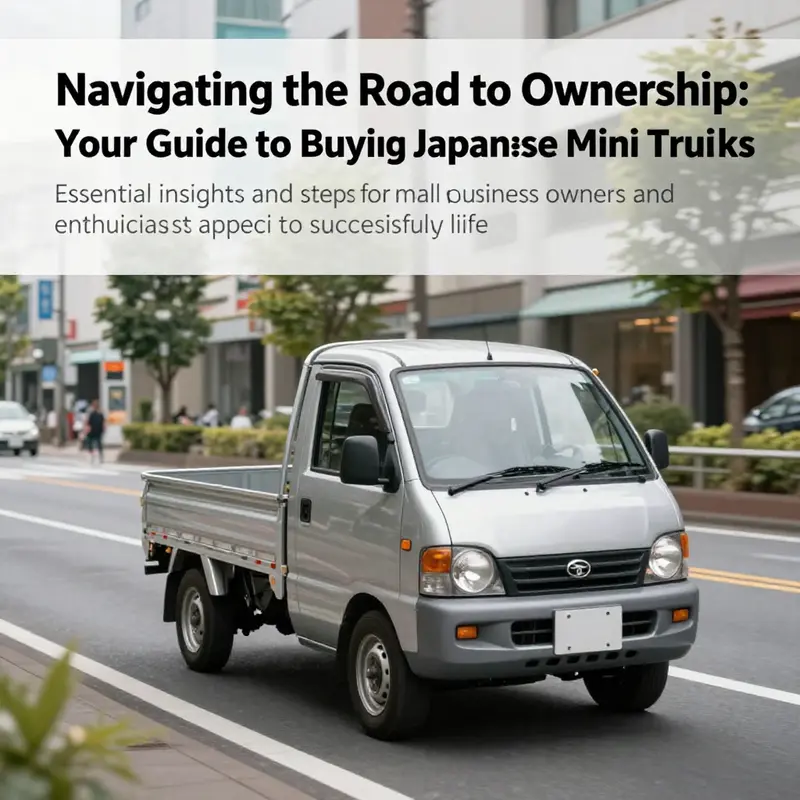
Japanese mini trucks are becoming increasingly popular among local small business owners, residential property owners, and hobbyists. These compact yet efficient vehicles offer versatility for various tasks—from deliveries to DIY projects. However, purchasing one isn’t as straightforward as it may seem due to strict import regulations and eligibility requirements in China. In this guide, we’ll break down the process into manageable chapters, each focusing on a critical aspect of buying a Japanese mini truck. We’ll cover how to work with authorized dealers or import agents, understand the eligibility and legal requirements, and explore the different types of mini trucks available and where to purchase them. By the end, you’ll be well-equipped to make informed decisions on your mini truck journey!
Navigating the Regulatory Tide: How to Buy a Japanese Mini Truck Through Authorized Dealers or Import Agents
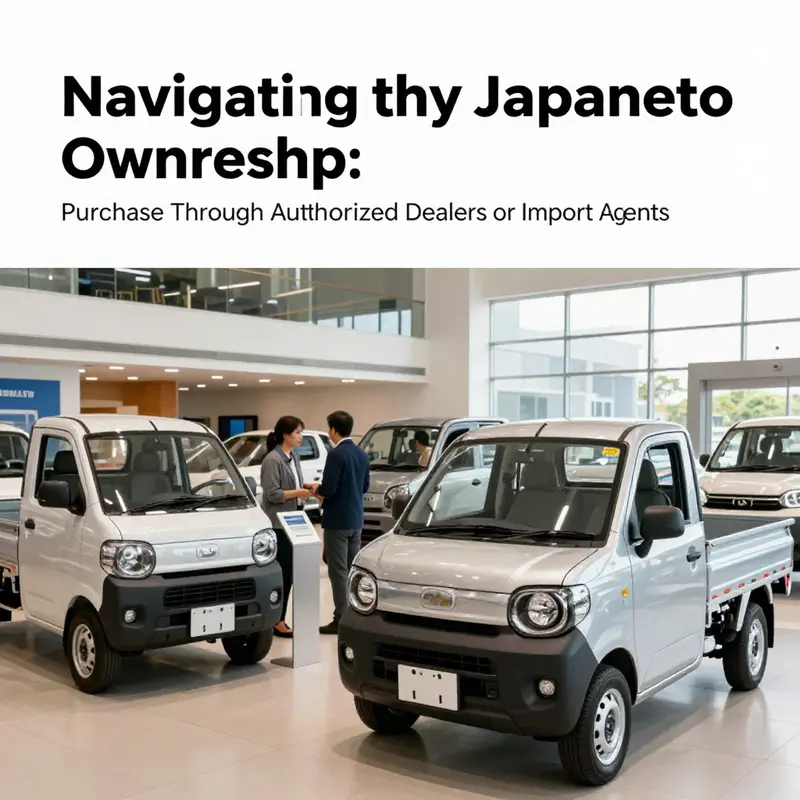
Choosing to acquire a Japanese mini truck is more than picking a compact work vehicle for urban deliveries or light logistics. It is a carefully navigated journey that hinges on understanding the regulatory environment, the options available within legal channels, and the practical realities of cost, timing, and after sales support. In markets where cross border vehicle movements are tightly regulated, the most reliable path to ownership lies in working through authorized networks that are licensed to import, certify, and register these vehicles. This chapter outlines two primary avenues—purchase through authorized dealers and procurement via licensed import agents—framing each option with its advantages, challenges, and the steps involved so that a prospective buyer can assess which route best aligns with their needs and obligations. It also situates these pathways within the broader regulatory tapestry that governs vehicle entry, safety compliance, and road readiness, underscoring why a vendor with official clearance is essential for anyone seeking to operate a mini truck legally and responsibly. For readers who want a quick glimpse into practical experiences, consider industry forum discussions that reflect real-world perspectives on these channels. A practical note for buyers is to demand clear documentation, transparent cost breakdowns including duties, taxes, insurance, and registration; and to verify the importer is licensed and able to provide after-sales support and local service networks.
From Permit to Plate: Navigating Eligibility and Legal Requirements for Japanese Mini Trucks
The allure of Japanese mini trucks in urban logistics lies in their compact footprint, nimble handling, and remarkably frugal operating costs. Their appeal is not merely about saving fuel or squeezing through crowded streets; it is also about reliability and the practical realities of last‑mile delivery in dense cityscapes. Yet for readers who plan to acquire one, the path from curiosity to on‑the‑road is braided with regulatory knots that vary by country, often making direct private import feel tempting but perilous. In the broader arc of this article, which surveys how to buy a Japanese mini truck, this chapter dwells on eligibility and legal requirements, offering a steady map for navigating the gatekeepers, paperwork, and compliance demands that define a legitimate purchase. The core message, first and last, is simple: to legally own and operate such a vehicle, buyers must respect the rules that govern cross‑border trade, vehicle safety, emissions certification, and domestic registration. The practical takeaway is that the most dependable route runs through licensed channels, with clear documentation and a transparent use case, rather than attempting a private, off‑book import that can trigger confiscation, penalties, or heavy violation charges. This perspective is not merely legalistic; it is a pragmatic plan that aligns with how governments manage vehicle imports, protect residents, and maintain road safety while still enabling efficient, modern fleet operations in cities that crave agile transportation solutions.
A useful starting point for readers who are weighing their options is to recognize that the regulatory environment is not uniform but layered. In many jurisdictions, private individuals face substantial barriers to bringing a foreign vehicle into the country. Some places explicitly prohibit direct personal importation of passenger vehicles or light commercial vehicles, including compact trucks designed for city‑scale work. In others, the rules are less absolute but require a chain of licenses, certifications, and inspections that collectively establish the vehicle’s legality for highway use. Across borders, the thread that remains constant is the same: a legally compliant purchase and registration rests on the ability to show that the vehicle was obtained through proper channels, that it meets safety and environmental standards, and that it will be used in a manner that aligns with national policy for vehicle imports and domestic roadways.
In the specific context of readers based in China who want to acquire a Japanese mini truck, the mandatory route is even more defined. Direct private importation is not permitted. The road to legality runs through authorized import agents or licensed dealers who hold the requisite import qualifications. These intermediaries manage the full cascade of requirements, including sourcing from certified channels, handling all the necessary customs procedures, and ensuring that the vehicle complies with national safety and emissions standards. The practical reason for this arrangement is straightforward: China’s customs regime is highly regulated, designed to prevent unverified or noncompliant vehicles from entering the market, and to ensure that imports conform to a common set of standards that facilitate inspection, registration, and roadworthiness. For individuals, the conclusion is clear and well‑documented: you cannot legally import a Japanese mini truck on your own. The purchase must be conducted through a licensed importer or authorized dealer who can prove their credentials, source vehicles through approved supply chains, and present the vehicle in a form that meets local standards and reporting requirements.
This structural rule—do not import privately, use a licensed intermediary—has practical implications for the way buyers approach discovery, negotiation, and post‑purchase steps. It shifts the focus from a hypothetical one‑off purchase to a process anchored in compliance. Buyers will find that authorized dealers and import agents simplify a number of complex tasks: they prepare the import paperwork, coordinate customs clearance, arrange for inspection and certification, and ensure the vehicle is aligned with the country’s emission and safety norms. In addition to these services, reputable intermediaries can offer value in risk management. They help buyers avoid forged documents, misrepresented vehicle histories, and noncompliant parts that would otherwise surface during inspection or registration. The certainty derived from dealing with a licensed entity is not merely convenience; it is a legal shield against penalties, fines, or seizure of the vehicle at the border or upon arrival.
To map the journey clearly for readers, it helps to understand the typical eligibility framework: first, establish whether you are purchasing as an individual or as part of a business. In many jurisdictions, private individuals face substantial restrictions or outright prohibitions on importing passenger or light commercial vehicles, including compact trucks. The exceptions, where they exist, are narrow and typically involve specific circumstances or exemptions that apply only to certain categories of vehicles or to residents under particular visa or residency arrangements. For enterprises, the door opens wider, but only if the company possesses valid import licenses and can demonstrate a legitimate business purpose for the vehicle. The enterprise route often involves submitting a detailed package of documentation—proof of business use, a clear vehicle utilization plan, and evidence that the importer will fulfill ongoing regulatory duties. Even with a company, the process is not a formality: it is a regulated sequence that ensures the vehicle’s safety, environmental impact, and roadworthiness meet the country’s standards before it can ever be registered and driven on public roads.
In practical terms, the eligibility question drives a buyer’s approach to model selection, supplier outreach, and the timing of the purchase. The vehicles available through authorized channels—those designed for light commercial use in urban environments—are judged not only on their usefulness and efficiency but on their conformance to the country’s regulatory expectations. The metrics of eligibility here are not purely about price or utility; they include the vehicle’s ability to pass inspection, its compatibility with local emission standards, and the feasibility of obtaining the necessary approvals for operation. When a buyer engages with an authorized dealer or a licensed import agent, the conversation naturally shifts toward the specifics of regulatory compliance: what documentation is necessary, what the approval timeline looks like, and what tests or certifications must be completed before the vehicle can be registered and plated for road use. The clarity of this pathway is one of the main reasons for choosing established channels over open‑market or private transactions.
The types of mini trucks that can be acquired legally through these channels are typically defined by weight and size. In many jurisdictions, there is a category reserved for lightweight commercial vehicles that emphasizes compact dimensions, fuel efficiency, and high maneuverability. This tier is particularly well suited to urban deliveries, small business operations, and individual entrepreneurs who need a practical, low‑cost vehicle for daily tasks in dense cityscapes. Within this category, buyers encounter a spectrum of configurations: small cargo platforms, compact dumps, and vans adapted for urban logistics. Rather than focusing on a single brand or model, readers should evaluate the vehicle’s gross weight, payload capacity, and dimensions to ensure it aligns with the intended use and with the regulatory constraints of their country. In terms of market share, the narrative in Japan’s domestic market for these vehicles shows strong demand among small business operators, with the vast majority of units sold being designed for urban mobility and efficient deliveries. This context underscores why the legal routes emphasize dependable sourcing and post‑purchase compliance as cornerstone considerations for any thoughtful buyer.
Where to start the journey is a question that many readers struggle with at the outset. The answer, in practice, is to look first to reputable, licensed import agencies or authorized dealers in your country. These entities carry the burden of compliance and provide a transparent path through the maze of documentation, inspections, and filings. Their role is not merely to secure a vehicle; they deliver a package of assurances around origin, safety, and regulatory alignment. The dealership or agency will typically guide buyers through a sequence that begins with model and configuration selection, continues with contract and deposit arrangements, and proceeds to the logistics of shipping, customs clearance, and domestic registration. In many cases, the intermediary will also coordinate financing options if required and help arrange for the vehicle to be prepared for inspection upon arrival, ensuring it meets the standards expected by local authorities. The result is a process that prioritizes compliance and reliability over speed, but the trade‑off is a smoother path to legal ownership and operation, with far fewer uncertainties than a private import would entail.
For readers seeking practical, experience‑based guidance, it can be helpful to consult the broader field notes of people who have navigated similar regulatory landscapes. A convenient starting point for those who want more context on the operational realities of buying a Japanese mini truck through legitimate channels is the ongoing industry discussion captured in dedicated online communities and blogs. These sources, while not a substitute for official requirements, often illuminate common pitfalls, typical timelines, and the practical questions buyers ask as they interface with intermediaries, brokers, and registration authorities. One such resource is the blog hosted by a community focused on light commercial vehicles. It offers insights into sourcing strategies, the roles of licensed importers, and the day‑to‑day realities of preparing a vehicle for local compliance. The content is not a substitute for formal guidance, but it provides a grounded perspective that can help buyers set realistic expectations and prepare the right questions for their chosen intermediary. minitrucksocala.com/blog/
Beyond the immediate regulatory frontier in China, readers who plan to import for other markets will encounter a parallel but distinct set of rules. The United States, for instance, imposes a well‑defined framework around importing older vehicles, particularly kei‑style trucks that are common in Japan. The centerpiece of that framework is often referred to as the 25‑year rule: vehicles that are at least 25 years old are generally exempt from the Federal Motor Vehicle Safety Standards (FMVSS) that newer vehicles must meet. This rule makes it possible for certain kei trucks to be imported without complying with current FMVSS, provided that other requirements are satisfied, including emissions considerations and proper customs documentation. The practical implication is that for buyers outside China who are considering the U.S. market, the age of the vehicle at the time of import becomes a critical calculation. A kei truck manufactured in a year such as 2000 would be eligible for import in 2025. This aging reality forces buyers to plan long horizons and precise timing if they aim to bring a vehicle into the United States. For any prospective importer, the age factor is a gatekeeper that can shape both purchase strategy and the timing of the shipment, and it reinforces why many buyers turn to licensed importers or customs brokers who understand the nuance of age‑based eligibility within the broader regulatory landscape.
There are additional layers to the US import picture that also deserve attention, even for readers whose primary interest lies in the Chinese market. Emissions standards, even for vehicles that are older, may still apply; exemptions do not always cover all jurisdictions or states, and some states may require additional verification or equipment changes to ensure compliance with local standards. Customs documentation is another critical checkpoint, including proper proof of origin, purchase history, and any certificates that attest to the vehicle’s age and condition. Importers who are unfamiliar with these procedures may encounter delays, penalties, or, in the worst case, denial of entry. The recommended practice is to work with a licensed importer or customs broker who specializes in cross‑border vehicle movement and who can guide buyers through the specific procedural steps, ensuring the vehicle meets all applicable requirements before it is cleared for entry and registered for road use.
Within this cross‑border framework, it is also essential to consider the broader ecosystem of vehicle acquisition: the platform you choose to buy through and any intermediary services. The world of international vehicle trading can be opaque, and unscrupulous operators may attempt to misrepresent a vehicle’s history or its compliance status. The safe course is to insist on documentation that demonstrates provenance, a transparent bill of sale, and verifiable certifications that the vehicle conforms to safety and emissions expectations. The intermediary you select should be able to provide detailed checklists for the documents required by your country’s authorities, verify the vehicle’s engine and structural integrity, and coordinate any inspections that are prerequisites for registration. If a platform or seller cannot provide these assurances or if the price appears unusually low for the level of compliance offered, buyers should pause and reassess the transaction. While price is an important consideration, it must never trump the foundational requirement of legality and safety.
The costs associated with legally acquiring a Japanese mini truck through authorized channels extend beyond the sticker price of the vehicle itself. Buyers should anticipate import duties and import VAT, which in some jurisdictions can be a substantial portion of the total landed cost. In addition, there are vehicle acquisition taxes, insurance coverage during shipping, and the ongoing costs of registration and licensing once the vehicle arrives. These figures may vary widely depending on the country, the exact vehicle configuration, and the intermediary’s fee structure. The cumulative effect of these charges can be significant, and prospective buyers should use a detailed, up‑front budgeting exercise that includes all potential charges to avoid unpleasant surprises. A well‑structured financial plan can also help buyers decide whether the total cost of ownership through a licensed route remains favorable compared with alternative options, such as purchasing locally with a different class of vehicle or exploring other compliant logistics solutions for urban delivery.
In the China‑centric focus of this chapter, the recommended practice is unambiguous: engage only with licensed import agencies or authorized dealers who hold the correct permits and can demonstrate a track record of compliant, transparent operations. Such intermediaries will manage behind‑the‑scenes aspects that most buyers do not think about until they approach the final registration step. They can facilitate the vehicle’s pre‑shipment checks, arrange the necessary certifications to satisfy Chinese authorities, and coordinate a seamless handoff to the receiving party who will complete the domestic registration process. The goal is not to expedite at the expense of compliance but to create a reliable, documented, and auditable workflow that protects the buyer’s investment and ensures lawful operation on public roads. The risk of bypassing these channels is not merely regulatory; it is practical and financial. A private import, even if well‑intentioned, can end up entangled with noncompliant parts, nonfunctioning emissions systems, or an inability to obtain the necessary licenses to drive legally, with the vehicle potentially becoming a stranded asset and the buyer facing fines or confiscation.
For readers who want a sense of how the practical landscape looks on the ground, consider how the local import market tends to structure its offerings. Authorized dealers present a curated range of configurations that align with city use—compact cargo platforms, light‑duty dump trucks, and similarly suited forms that can be registered and operated with minimal friction within the regulatory framework. They also provide after‑sales support, which can include maintenance services, repair parts, and a warranty period that shore up confidence in the vehicle’s reliability. While the vehicle selection is important, the enduring advantage of the authorized route is the confidence that the vehicle will be traceable to a legal origin, that its emissions and safety features have been verified according to the host country’s standards, and that the process of linking the vehicle to a legitimate registration record is supported at each step by professionals who understand the bureaucratic requirements. The result is a buyer who can focus less on red tape and more on how the vehicle will perform a given urban task with predictable reliability.
As you move through this landscape, a few practical tips can help keep the process smooth. First, verify the importer’s credentials before engaging in a contract. Ask for license numbers, proof of association with a recognized regulatory body, and a history of successful shipments. Second, request a detailed, itemized quote that includes the vehicle price, all anticipated duties and taxes, shipping costs, insurance, inspection fees, and registration charges. A transparent line‑item budget helps prevent surprises when the vehicle lands and when you begin the registration process. Third, insist on a clear timeline that covers sourcing, transit, customs clearance, inspections, and the final registration. A good intermediary will provide a realistic schedule, identify potential bottlenecks, and outline contingency plans if a shipment is delayed or if a document is characterized as incomplete by the administrative authorities. Fourth, make sure the contract includes language about post‑delivery support, including responsibilities for any post‑arrival inspections and for handling any defects discovered only after the vehicle enters service. These are small but meaningful protections that reflect the reality that cross‑border vehicle procurement is a complex, multi‑stage endeavor.
Finally, while the core of this discussion has been about eligibility and legal requirements in a Chinese context, an awareness of parallel regulatory frameworks in other markets adds valuable perspective for readers who may eventually pivot to different destinations. The United States example—with its 25‑year rule and related compliance landscape—illustrates how age and regulatory alignment shape the viability of a cross‑border purchase. It shows that while legal pathways exist, they hinge on precise timing, documentation, and the involvement of specialists who understand both the local regulatory requirements and the nuances of importing a vehicle that was constructed for a very different market. For readers who want to explore these cross‑market dynamics further, there is a wealth of practical guidance available from dedicated practitioners and enthusiasts who have navigated these challenges firsthand. A comprehensive practical guide on selecting and acquiring a Japanese mini truck—covering eligibility, regulatory considerations, and tradeoffs—offers deeper insights and can help prospective buyers weigh their options more effectively.
If you are curious about real‑world perspectives beyond formal guidelines, you can consult dedicated resources that capture practitioner experiences and field understandings. These discussions often address how to choose among configurations for urban use, how to negotiate with licensed importers, and how to plan for the after‑sales journey, including maintenance and compliance updates. In the spirit of practical, experience‑driven learning, these voices complement official requirements and provide a broader sense of what it takes to navigate the world of Japanese mini trucks as a legal importer. They help illuminate the day‑to‑day realities of coordinating across time zones, currencies, and regulatory regimes, and they underscore that the path to legally owning one of these small workhorses is as much about diligence, documentation, and due diligence as it is about the vehicle’s performance on the road.
For readers who want to anchor their planning in concrete, accessible resources, a practical entry point is the broader discussion of how to choose and acquire a Japanese mini truck through legitimate channels. This guide emphasizes the importance of working with licensed importers, understanding age and compliance requirements, and preparing for the cost and logistics involved in crossing borders. It also highlights the value of researching the regulatory landscape that will apply once the vehicle reaches your country and the steps necessary to complete registration and obtain a license plate. In short, eligibility and legal compliance are not roadblocks to be circumvented; they are essential guardrails that help ensure any purchase remains a sound, legally compliant investment that will serve its owner well on public roads. The careful reader will approach the purchase with a long‑term view, a rigorous compliance plan, and a trusted partner who can translate regulatory language into a workable, on‑the‑ground process.
For further practical context on how these criteria play out in real life, you can consult additional guidance that consolidates practical steps for choosing and purchasing a Japanese mini truck. This resource frames the decision in terms of real world needs, trade‑offs, and practical acceptances of regulatory realities, helping readers translate policy into a concrete procurement plan. As readers move toward making a decision, keeping these principles in mind—compliance, transparency, and professional support—will help ensure a smooth path from inquiry to on‑road operation. For more detailed, field‑level guidance, see the external resource linked here: https://www.japanesetruckguide.com/how-to-choose-a-japanese-mini-truck/.
Steering the Route to a Kei Workhorse: Understanding Mini Truck Types and the Trusted Avenues to Acquire One
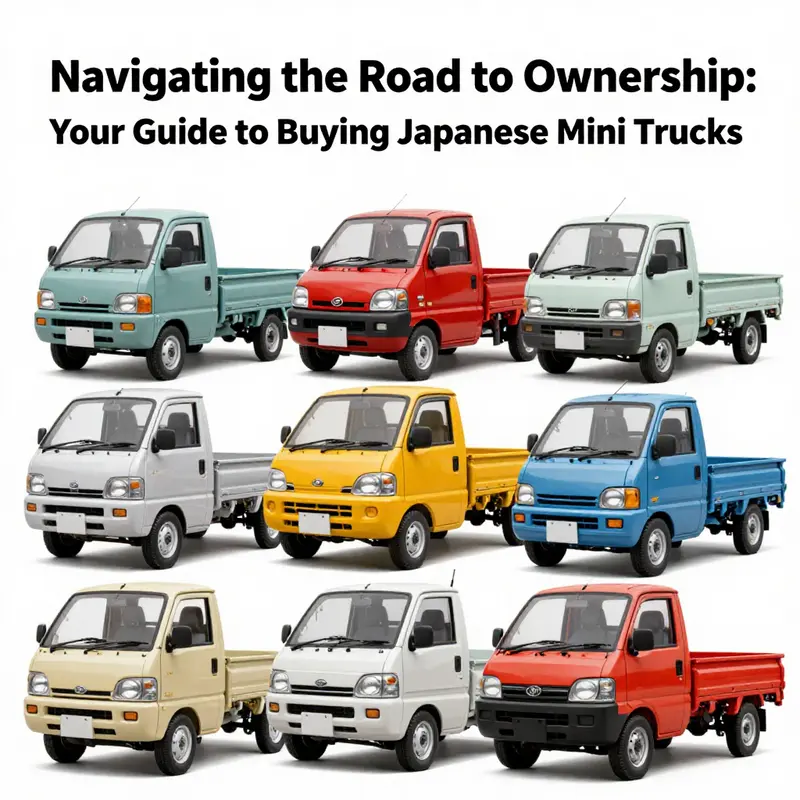
The appeal of a Japanese mini truck lies in its nimble silhouette, frugal fuel use, and surprising practicality for urban deliveries, small businesses, and site work where a larger pickup would feel cumbersome or wasteful. These compact workhorses, often referred to as kei trucks, occupy a unique niche: they blend a deceptively generous payload with a footprint that can squeeze through dense city lanes, park in tight courtyards, and maneuver around crowded construction zones. To understand how to buy one, it helps to start with the basics of what a proper kei truck is, how the category is defined, and what practical configurations buyers typically encounter. The most essential traits are not glamorous features but the steady mix of compact size, efficient engines, reliable drivetrains, and a design that emphasizes function over form. A kei truck is designed to move goods where space is at a premium, and the design ethos behind these vehicles makes them ideal for last‑mile delivery, small-scale service work, and light construction tasks that demand agility and affordable running costs.
In most markets where the Kei category is recognized, these trucks are characterized by a specific class and weight limit. A vehicle in this class must stay under a certain gross vehicle weight, ensuring it remains easy to operate with a standard license in many regions and remains affordable to maintain. The practical consequence is clear: these are not oversized work vehicles but compact tools tailored for narrow alleys, loading docks with limited space, and the kind of daily routes that don’t require a full-size truck. Their payloads typically sit in a useful range for small businesses—enough to carry tools, light materials, or several sizable packages—without tipping into the complexity and cost that come with larger models. They are, in short, purpose-built for efficiency, simplicity, and reliability in environments where space is a critical constraint.
With that understanding in place, the topic shifts from “what it is” to “how to get one legally and smoothly.” The road to ownership is shaped by regulatory realities and the practicalities of cross-border procurement. The most important rule to remember is straightforward: private or direct personal importation of Japanese mini trucks into most destinations is not a simple or universally permitted act. Regulations in several jurisdictions are strict, and attempting to bring a vehicle purchased abroad back home can trigger classifications as used imports or other compliance hurdles. In many places, private importation is restricted or prohibited altogether, and the vehicle may not be eligible for registration, inspection, or sale. The practical implication is clear: the path to a legit Kei truck almost always runs through formal channels that handle importation, compliance, and registration end-to-end.
In the context of a Chinese market, this reality translates into a single, reliable route: work through licensed import agents or authorized dealers who are already equipped to navigate the complex landscape of import licenses, customs clearance, and regulatory compliance. These intermediaries are not just brokers; they are organizers of a chain that connects a vehicle sourced from Japan to a clear, trackable entry through Chinese ports, followed by inspection and certification steps that align with national standards. Working with a licensed agent or dealer means you are leveraging a process designed to meet safety and emissions regulations, ensure proper documentation, and maintain a transparent trail from purchase to road use. The seller’s or agent’s role is not merely transactional; it is logistical, regulatory, and operational, orchestrating what may otherwise be a labyrinth of forms, fees, and approvals.
The legal ceiling is precise and important. For individuals, the current framework generally restricts private import of passenger vehicles and light commercial vehicles like mini trucks. This does not exclude all private mobility, but it delineates a boundary where imports become feasible primarily for business entities with the appropriate authorizations. Enterprises, by contrast, can pursue import activities if they hold valid import licenses and have secured the requisite government approvals, such as an Import Vehicle Approval Certificate. The documentation in those cases is extensive, often including explicit business purposes, vehicle use plans, and a demonstrated need that aligns with regulatory intent. Foreign residents or expatriates may find special circumstances occasionally permitting a narrow pathway, but those cases are exceptional and typically require additional permits or diplomatic or official status. This regulatory framework emphasizes compliance and safety over convenience, and it is grounded in a careful balance between encouraging legitimate procurement and maintaining strict oversight over vehicle imports.
Understanding the market and the vehicle itself helps illuminate what buyers should expect when evaluating mini trucks in this category. In practice, the kei truck segment features a few common design patterns that have stood the test of time. The vehicles are frequently configured with a 4×2 drive system, which offers ample traction for typical urban and light-duty applications while keeping costs and complexity in check. The payload capacities in this class are modest in comparison to full-size trucks, but they remain surprisingly capable for a range of tasks. In many cases, payloads range from roughly one to three tons, a spectrum that aligns well with day-to-day operations for small businesses, delivery teams, and on-site service operations. This balance of weight, size, and efficiency is at the heart of why the kei truck remains a practical solution for people who need to move goods in and out of tight spaces without committing to a larger vehicle. The vehicles are renowned for their reliability, their straightforward maintenance needs, and their predictable performance margins in urban and suburban environments.
For the buyer who is navigating the choices, it is essential to differentiate between new and used options and to consider how the vehicle’s history, condition, and compliance status can affect long-term cost and usability. A key part of the decision is recognizing that imported used vehicles, if not sourced through proper channels, pose a risk of noncompliance with local emissions standards or safety regulations. The maintenance and inspection landscape is equally important. Any imported vehicle, whether new or used, must eventually pass inspection by national authorities and meet emission standards appropriate to the local jurisdiction. In many cases, this is a multi‑stage process that includes vehicle identification verification, emissions testing, and a formal registration procedure. The goal is not merely to possess a vehicle but to ensure it can be legally driven, insured, and operated in a safe manner that aligns with public safety and environmental goals.
The question of “where to buy” becomes a question of navigating legitimate channels. The recommended route, particularly in China, is through licensed import agencies or authorized dealers with established import qualifications and formal relationships with Japanese suppliers through certified channels. These channels ensure that vehicles are legally imported and that they have undergone proper vetting for safety and emissions compliance. The agencies are typically well versed in the documentation required for customs clearance and the subsequent steps in domestic registration. Their services often include sourcing vehicles that fit a buyer’s operational needs, arranging financing if needed, handling contract formalities, and coordinating the logistics from Japan to the destination port, and from the port to the buyer’s facility. This end-to-end approach minimizes the risk of miscommunication, regulatory missteps, or hidden costs and provides a clearer path to legal ownership and plate registration.
For those who prefer to explore options independently, there are marketplaces that offer listings for used Japanese mini trucks and related equipment. One well-known example is a major online wholesale marketplace that features second-hand commercial vehicles and export-oriented listings from Asia. In these scenarios, buyers should approach with caution, ensuring that any seller offers verifiable documentation, a clear vehicle history, and a track record of exporting to foreign markets. The fact that these listings are frequently from exporters to international buyers means buyers must still be prepared for the additional layers of export formalities, freight, insurance, and import clearance in their own country. The importance of due diligence cannot be overstated; a vehicle’s history, mechanical condition, and prior use all carry implications for reliability and long-term operating costs. While such marketplaces can provide access to a broader selection, they should be used in tandem with the guidance of an authorized import professional to ensure compliance and to avoid pitfalls associated with non‑compliant or misrepresented vehicles.
A practical note about the sourcing landscape is that you should verify the official sources of guidance for import procedures and approved dealers. The national authority responsible for import and commerce issues publishes guidance and up-to-date regulations that reflect the current policy environment. In China, the official portal of the government, through MOFCOM, is the primary source for guidance on import regulations, licensing requirements, and permissible channels. Consulting this portal helps buyers verify that the chosen route aligns with the latest regulations and avoids unintended noncompliance. The emphasis on official channels is not a bureaucratic formality but a safeguard against scenarios where a vehicle cannot be registered or used legally due to regulatory constraints. It is through these channels that buyers gain clarity about eligibility, documentation, and the steps required to transform a purchase into a legally operable vehicle that can be insured and plated.
In terms of practical steps, the journey typically unfolds in a sequence designed to minimize risk and ensure transparency. A prospective buyer begins by identifying a licensed import agency or authorized dealer in the home country or in the destination country that has a proven track record with Japanese suppliers. The next step is to confirm eligibility with the local regulatory framework, particularly whether the buyer falls into a personal or corporate category with the permitted pathways for import. For individuals, the road is generally restricted, whereas enterprises with the necessary licenses may pursue import through the proper channels. In any case, the buyer should request a clear, written proposal that outlines the vehicle models available, the sourcing channels, the estimated timeframe for shipment and clearance, and a transparent cost structure that itemizes purchase price, shipping, insurance, import duties, value-added tax, and registration fees.
Once a model is selected, a formal contract is executed with the import agency or dealer. The contract should specify the vehicle’s compliance status, including certifications related to safety and emissions that align with local standards. Payments are typically structured with a deposit and a staged payment plan aligned with milestones such as production, shipment, port clearance, and domestic registration. The actual journey involves coordinating with the shipping line and port authorities, arranging for import clearance, and scheduling inspections upon arrival. The inspection and certification phase is a critical gate, as it confirms that the vehicle meets the local regulatory requirements. Any deficiencies identified during inspection can trigger remedial steps, repairs, or in some cases, the need for a different vehicle that better matches the regulatory and operational expectations. The registration phase then follows, culminating in the issuance of a license plate and the right to operate the vehicle legally on public roads.
An often overlooked aspect of the purchasing journey is the total cost of ownership. Beyond the purchase price, buyers must account for all related costs: import duties, value-added tax, vehicle acquisition tax, insurance, and registration fees. In some markets, there are additional compliance costs, such as conformity testing or post-import modification, to meet roadworthy standards. For a small enterprise, these costs can be a meaningful portion of the initial investment, so a careful budget that accounts for the full lifecycle can prevent unpleasant surprises later. The import process may also involve storage costs if there is a temporary delay in clearance, as well as potential penalties for noncompliance or late registration. A reliable import partner can help forecast these line items and provide a transparent breakdown that makes the financial picture clearer from the outset.
The buyer’s decision often centers on a balance between model availability, price, compliance certainty, and the volume of business that the vehicle will support. Different buyers have different priorities. A small delivery outfit may prioritize compactness and fuel efficiency to maximize daily runs within congested urban cores. A light construction crew may place more emphasis on payload capacity and cargo-carrying versatility, ensuring the vehicle can transport tools and materials without frequent trips to swap or reload. A service technician who travels between sites may value reliability and ease of maintenance, preferring a model with readily available spare parts and a broad service network. In every case, the overarching principle remains consistent: the path to ownership is most secure when navigated through legitimate channels that provide regulatory alignment and post-purchase support.
From a practical standpoint, the procurement ecosystem for a Japanese mini truck in a regulated market is not a single transaction but a chain of carefully orchestrated steps. It starts with education—understanding what a kei truck is, how the weight and size categories translate to real-world utility, and what regulatory barriers exist. It continues with alignment—choosing a route that matches the buyer’s status, whether as an individual or as a corporate entity, and identifying dependable partners who can facilitate import and compliance. It then moves into diligence—evaluating vehicle options through an authorized lens, reviewing the vehicle’s history when considering used units, and verifying documentation to ensure that all paperwork supports a straightforward clearance and registration. The final step is execution—signing a contract, making payments according to a staged plan, and coordinating the logistics from the moment the vehicle leaves Japan to the moment it appears in a Chinese yard ready for inspection and plate issuance.
The ethical and legal imperative behind this journey is clear. Do not attempt private importation through informal channels. The consequences can range from financial penalties to the seizure of the vehicle and barriers to future imports. Instead, rely on verified, government-compliant channels to navigate the process. Such channels provide the assurance that a vehicle can be registered, insured, and driven without the fear of regulatory disruptions or compliance failures. For readers who want a starting point for understanding the official landscape, the MOFCOM portal offers current information on import procedures, licensing requirements, and the status of approved dealers and intermediaries. This information can serve as a compass, guiding buyers toward legitimate options and helping them avoid the pitfalls that accompany unregulated sourcing methods.
As the journey toward ownership unfolds, one can also draw on the wider ecosystem of information and experience shared by others navigating similar paths. Industry forums, importer networks, and consumer guides often provide practical insights into model specifications, typical lead times, and the tradeoffs between new and used stock. While these sources are valuable for broad context, the most dependable decisions come from working with licensed importers or authorized dealers who can anchor the process in regulatory clarity and strong aftercare. The goal is not only to purchase a vehicle but to secure a reliable, legal, and cost-effective tool that will serve a business or daily work for years to come. The right partner will illuminate the route, handle the paperwork, and stand behind the vehicle with the warranty and service network needed to sustain operation over the long haul.
For readers interested in additional perspectives on choosing a model and navigating market offerings, a practical overview of model considerations is available in reputable automotive guides. These resources emphasize the core criteria—payload, maneuverability, maintenance, and parts availability—while providing real-world benchmarks for evaluating price ranges and total ownership costs. Engaging with such guides can sharpen your sense of what matters most for your specific use case, whether you run a city-based last‑mile operation, manage a small fleet for a rural supply chain, or perform on-site services that require dependable load capacity and a compact footprint. The crux remains the same: in regulated markets, the safest and most efficient path to a Japanese mini truck is through qualified importers or authorized dealers who bring proper documentation, steer regulatory compliance, and ensure the vehicle meets local standards before it ever hits the road.
If you are ready to start exploring models and sourcing options within a compliant framework, a good next step is to identify a licensed importer or authorized dealer with demonstrated experience in handling Japanese kei trucks. Initiate conversations about available configurations, lead times, and after-sales support. Ask for a clear, itemized breakdown of all costs, including the anticipated timelines for shipment, customs clearance, inspection, and registration. Request documentation that confirms the vehicle’s compliance status, safety features, and emissions certification relevant to your destination. By engaging in a transparent dialogue with a reputable partner, you can align expectations, minimize surprises, and position yourself to move from inquiry to ownership with confidence.
Along the way, you may discover informative resources that offer practical tips and additional context about model selection, service networks, and market dynamics. To readers who want a quick, curated pointer to ongoing discussions in the broader mini-truck community, the following resource provides a continental view of how buyers compare models, weigh price against performance, and think through long-term ownership considerations. For broader context, see the external guide: https://www.japantimes.co.jp/automotive/2026/01/26/how-to-choose-a-japanese-mini-truck-practical-guide/.
Finally, consider the value of engaging with a dedicated information hub that consolidates insights on the usage, maintenance, and customization of small‑scale commercial vehicles. A well‑curated blog in this space can offer practical perspectives on daily operation, maintenance schedules, and modifications that help maximize cargo capacity, improve ergonomics, and extend the life of a kei truck in demanding environments. For readers seeking a centralized place to explore related topics and connect with a community of enthusiasts and professionals, one reliable source is a widely used industry blog that regularly publishes updated information and practical articles. You can start with the main blog hub for ongoing discussions and practical guidance: Minitrucks Cala blog.
In summary, buying a Japanese mini truck within a regulated framework requires an understanding of the kei truck category, awareness of the legal pathways for import, and a commitment to working with licensed importers or authorized dealers who can navigate the regulatory landscape on your behalf. The process is designed to ensure safety, compliance, and reliability from purchase through registration and operation. The emphasis on legitimate channels is not simply a compliance ritual; it is a practical safeguard that protects buyers from the risks of noncompliance, hidden costs, and potential vehicle losses. By anchoring your journey in accredited suppliers, verifiable documentation, and transparent cost structures, you position yourself to secure a vehicle that delivers dependable performance for urban deliveries, site work, and daily tasks, while maintaining peace of mind about the legal and regulatory dimensions that govern vehicle ownership in your market.
Final thoughts
In summary, purchasing a Japanese mini truck can be a seamless experience if you navigate the necessary steps and legal requirements effectively. By working with authorized dealers or import agents, understanding your eligibility, and exploring the types of mini trucks available, you’ll be well-prepared to make a decision that suits your needs. Whether you’re looking to enhance your small business operations or enjoy a new hobby, these compact vehicles hold tremendous potential. Remember to utilize only legal channels when engaging in this process to avoid pitfalls. Happy truck hunting!