
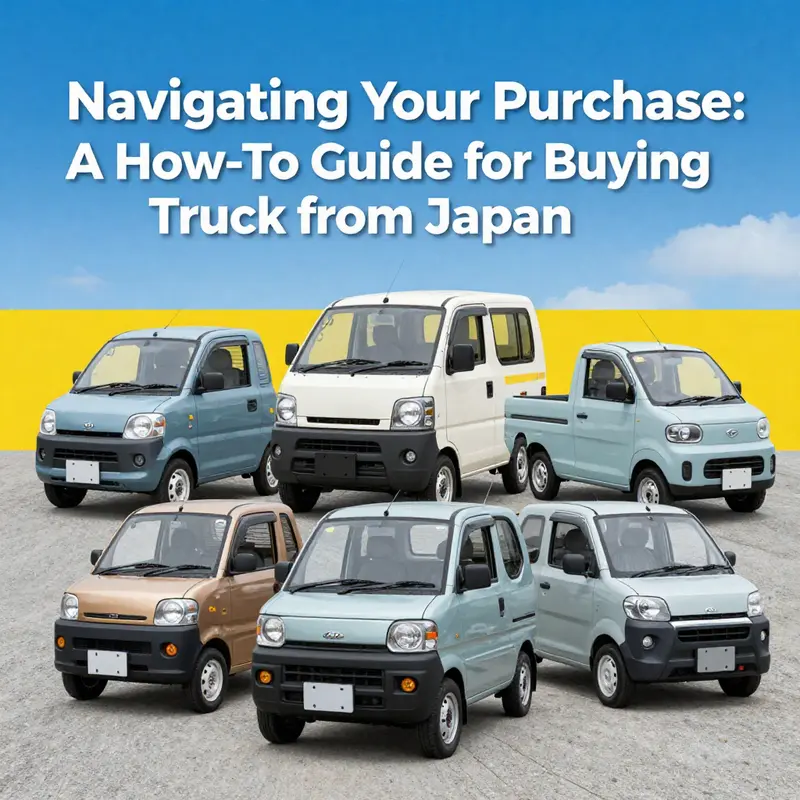
Are you considering a mini truck from Japan? These compact vehicles are ideal for small businesses, residential property owners, and hobbyists alike. With their versatility, low maintenance, and impressive fuel economy, mini trucks can be the perfect solution for urban delivery, landscaping, or personal use. This guide will help you navigate the Japanese mini truck market while assessing your own needs, exploring buying options, understanding legal and financial requirements, and finalizing your purchase with confidence. By the end, you’ll be fully prepared to embark on your mini truck journey, ensuring you choose the right model and process for your unique situation.
null
null
Needs Mapping for a Japanese Mini Truck: A Practical Assessment Before You Buy
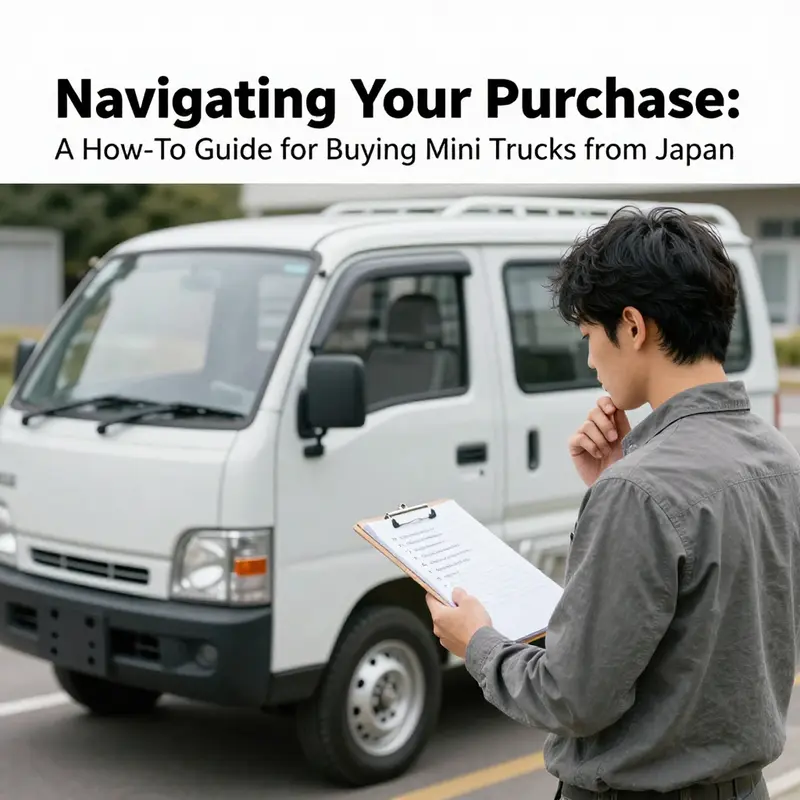
Every successful purchase of a Japanese mini truck begins long before the paperwork and shipping. It starts with a clear, honest map of your actual needs—what you move, where you operate, and how a vehicle will integrate with routine work. This chapter treats that mapping as both a practical exercise and a negotiating edge. You will learn to articulate size, power, and capability in terms that matter to your day-to-day tasks, so you can compare options without being overwhelmed by brand labels or marketing promises. The core aim is not to find the most capable machine, but to find the machine that fits your workflow with the least friction and the best long-term value.
First, outline the regulatory frame that will shape what you can use and how you will use it. In Japan, kei regulations govern small vehicles with tight limits on size and engine displacement. The length must stay under 3.4 meters, the width under 1.5 meters, and the engine displacement no more than 660 cubic centimeters. These constraints do more than influence taxes and insurance; they shape maneuverability on narrow streets, loading access on job sites, and even the ease of export when you decide to purchase abroad. Understanding these dimensions helps you set realistic expectations about payload, interior space, and how the vehicle will perform in environments that demand precision and agility. It also flags early any potential misalignment between your needs and what is technically feasible in a compact platform. If your operation requires a larger payload or more aggressive off-road capability, you will likely need to adjust either the load profile or the vehicle choice and accept that you’re entering a different weight class.
Next comes a candid assessment of your primary use. The same tool that makes mini trucks popular—compact size paired with functional cargo space—also defines their best-fit scenarios. For farming, a truck that can shoulder steady cargo loads, tolerate uneven fields, and handle frequent trips between plots and storage sheds is essential. In construction contexts, you’ll want predictable payload capacity, rugged build quality, and a chassis that can withstand rough access roads. For urban freight, consider the electric option, where quiet operation, zero exhaust, and rapid short-range trips align with city regulations and customer expectations for clean, unobtrusive service. If your routes include mountains or rough terrain, suspension, ground clearance, and drivetrain options become decisive. By anchoring your needs to these usage profiles, you create a decision framework that filters out features you won’t use while preserving critical capabilities.
Power source is another pivotal decision, and it should be tied to your operating geography and downtime tolerance. Electric mini trucks shine in tight urban corridors, offering zero-emission operation and low noise. They also align with modern sustainability goals and can simplify access to certain city contracts or recycling streams that favor clean fleets. However, range, charging infrastructure, and longer recharging times can constrain use in remote locations or multi-stop itineraries. Fuel-powered variants deliver broader range options and quicker refueling, which can be advantageous for farms, construction sites, or networks where charging is impractical. They come with higher emissions and potentially greater maintenance complexity over time. Sit down with your current and projected routes: how many daily trips, typical cargo weights, access to power outlets or charging points, and downtime for recharging. If you operate a fleet or plan to expand, treat the power choice as a long-term cost driver, not a short-term convenience. It is also worth noting that most mini trucks available for export are left-hand drive, which may require modification for certain markets. This practical nuance should influence your planning, budgeting, and the tempo of your import project.
As you size up specifications, translate numbers into daily realities. Payload capacity, ground clearance, and cargo space emerge as a set of interconnected constraints. A truck’s payload must cover the weight of your typical load plus a margin for packing materials, tools, and occasional spillage. Ground clearance matters when your routes include gravel, uneven farm paths, or construction pads where rutting and washboard surfaces can challenge a low chassis. Cargo space should accommodate the dimensions of your most frequent shipments or, for farming, the bulk items you routinely transport between fields and markets. In practice, this means drafting a simple load profile: the average weight per trip, the typical volume, and the worst-case scenario you expect. Then compare those figures against the interior dimensions and the payload rating of candidates. This exercise often reveals that you may need a larger bed, a more robust tie-down system, or a drivetrain with better low-end torque for stop-and-go loading. A careful review of these specs against real-world needs prevents the disappointment of discovering mid-ownership that the truck can’t handle a routine task without compromises.
Maintenance costs and parts availability aren’t glamorous topics, yet they define the day-to-day viability of any purchase. In Japan, parts availability for kei-class and mini trucks is generally strong for popular platforms, but the ease of sourcing depends on the model lineage, age, and whether the vehicle is new or used. You should estimate routine maintenance—oil changes, filter replacements, brake service—and factor in the cost and frequency of such service in your home country if you plan to import. Availability of spare parts across borders can dramatically affect downtime if a component needs replacement after arrival. It’s wise to investigate whether a local dealership network or an export-focused service partner offers warranty options and technical assistance for your chosen model. After-sales support is more than a nice-to-have; it directly correlates with uptime and the predictability of operating costs over the first several years.
New versus used adds another layer to your needs-mapping process. New vehicles come with clear warranty coverage, predictable maintenance plans, and a straightforward ownership narrative. They also tend to carry higher upfront costs and longer lead times, especially for export. Used models, when sourced from reputable marketplaces, offer immediate availability and potential savings, but they demand greater diligence in verifying history, condition, and potential hidden issues. In either case, demand for a model can be influenced by the reliability reputation of its maker and the availability of service channels abroad. When evaluating used options, prioritize platforms with transparent history and reputable inspection workflows. A practical step is to request a pre-purchase inspection from a service that understands the import process and the nuances of left-hand-drive configurations. This reduces the risk that a promising listing hides an expensive mechanical surprise or a safety concern that would complicate registration and use in your country.
The social and logistical ecosystem around the purchase also matters. How you intend to handle documentation, export procedures, and shipping will shape your readiness to complete a deal. Leverage the experience of export agents or logistics partners who specialize in Japanese vehicles; their guidance helps you navigate potential regulatory hurdles and align your timing with pod-like steps in the import process. In parallel, cultivate a concise needs profile that you can share with sellers and brokers. This profile should articulate your primary use, average loads, weekly trip cadence, preferred power source, and tolerance for downtime. A well-structured profile accelerates negotiation by enabling the seller to tailor options around your most critical criteria, rather than presenting a generic lineup that may include features you will not use.
To keep your decision grounded in practical reality, remember that the path from assessment to purchase is not just about the vehicle. It includes how you will register, insure, and ultimately utilize the vehicle once it arrives. Ensure you have a plan for registration steps, the cost structure of mandatory insurance, and the logistics of getting the vehicle compliant with your local regulations. The act of mapping your needs thus becomes a blueprint for cost, compliance, and long-term value rather than a single-point purchase decision. If you want a broader take on practical considerations and case-based guidance, the minitrucksocala blog offers ongoing insights and examples that align with this approach. minitrucksocala blog.
As you near the decision point, test your framework against a few “what if” scenarios. What if fuel prices spike and a diesel or gasoline engine becomes financially burdensome to operate? What if city regulations tighten around vehicle emissions or noise? What if your rural or remote sites demand a robust suspension upgrade or an emergency spare parts plan? Your answers to these questions will crystallize whether you should pursue a new build, a carefully chosen used model, or a hybrid approach that blends short-range urban flexibility with longer-range field capability. In any case, your mapping should be revisited periodically. A sound buyer revises the needs assessment as operations scale, routes evolve, or regulatory environments shift.
Finally, anchor your plan to a robust external reference that provides specifications and export pathways, so you can verify your internal assessment against authoritative data. Official channels and global partner networks can clarify warranty terms, export options, and model comparisons in a way that hears your practical constraints while staying faithful to safety and compliance standards. For official specifications and export options, see the broader resource landscape from the manufacturer’s global portal. External guidance helps you translate your internal needs map into a realpurchase trajectory without losing sight of the-dimensional realities of transport, logistics, and cross-border commerce.
External resource for further verification and global context: https://www.daihatsu.com/global
From Showroom to Shipment: Navigating Dealerships and Private Sales When Buying a Mini Truck from Japan
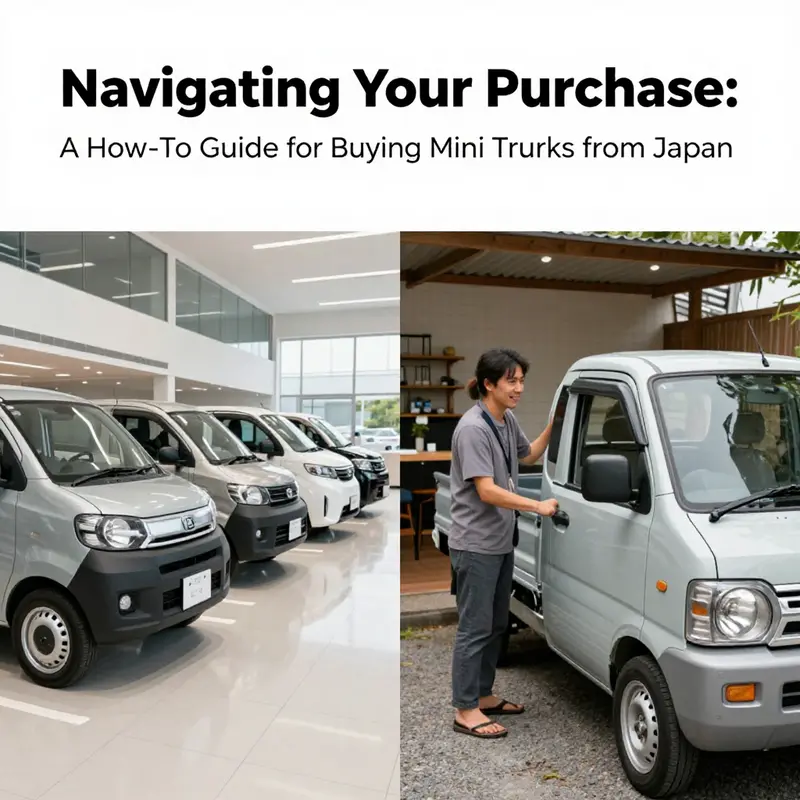
Buying a mini truck from Japan is a journey that begins with a decision and ends with a reliable workhorse arriving on your doorstep. It is a process that tests not only your budget but your ability to manage risk, paperwork, and timing across borders. The heart of the decision lies in choosing between two main routes: buying through official dealerships or engaging in private sales. Each path has its own logic, its own cadence, and its own set of practical realities. Understanding those realities early helps you align expectations, protect your interests, and keep the process moving with clarity rather than confusion. The choice you make will shape the trajectory of your entire purchase, from the initial inquiry to the moment the vehicle rolls off the ship at your destination, ready to shoulder your daily workloads.
Dealerships offer a structured buying experience that many international buyers find reassuring. In this channel, vehicles typically come with a defined inspection history, a clear condition profile, and the likelihood of a warranty or at least a robust post-purchase support option. The path is designed to reduce uncertainty around the vehicle’s provenance because dealers operate within a framework of compliance and regulatory awareness that translates into smoother handling of export documentation, transport arrangements, and the transfer of ownership in your country. For buyers who value predictability and a clearer service bundle, a dealership presents a model of reliability: coordinated export paperwork, access to financing options, and guidance through a familiar sequence of steps, from pre-delivery inspections to the final clearance at the port. The assurance of professional oversight can be particularly valuable to someone who is navigating the complexity of importing a vehicle for the first time, or who must coordinate multiple moving parts—logistics, insurance, local registration, and emissions compliance—in a compact time window.
Yet even within the dealership route, diligence remains essential. A cautious buyer does not assume perfection; instead, they ask for recent maintenance logs, a transparent odometer record, and confirmation that the vehicle has not sustained damage or repairs that could affect performance. Warranties, when present, deserve careful scrutiny: what they cover, for how long, and under which conditions when the vehicle is shipped overseas. Financing through a dealer can simplify budgeting, but it may also add to the total cost, so it is wise to compare terms with independent financing if available in your home country. A further practical advantage of dealing with an established network is the potential for export services—documentation packages, export declarations, and logistical coordination—that minimize the chance of misfiled paperwork or missing certificates during the transnational handoff. The dealer’s team can often serve as a single point of contact to navigate the borders between markets, a convenience that becomes especially valuable when language barriers or unfamiliar regulatory requirements could otherwise slow progress.
The private-sale route, by contrast, is more fluid and often more affordable, but it demands a different kind of discipline and a readiness to shoulder more responsibilities. Private sellers can offer flexibility on price and timing, particularly when the vehicle has lingered on the market or when the sale is driven by a specific personal circumstance. For buyers who possess knowledge of vehicle history analysis and the mechanics of import, this route can unlock meaningful savings. The caveat is real: there is no built-in warranty, and the burden of due diligence falls squarely on the buyer. Verifying the vehicle’s history, confirming ownership status, and assessing the current mechanical condition require a combination of careful questions, an in-person or remote inspection, and, ideally, a professional evaluation. The absence of a formal inspection trail means more attention to red flags—questions about previous accidents, the consistency of service intervals, signs of frame or structural issues, and the presence of any aftermarket modifications that could affect compliance with safety or emissions standards in your country. Smart buyers mitigate these risks by engaging trusted inspection services, requesting comprehensive diagnostic reports, and ensuring that the export status is crystal clear before agreeing to a price. The process is more hands-on, but it can be navigated with the help of experienced advisors or brokers who specialize in cross-border vehicle transactions.
Whichever route you choose, the export and import dimensions are always front and center for international buyers. The good news is that both paths can be integrated with professional support designed to translate the jargon of customs, safety standards, and emissions compliance into actionable steps. An export agent or customs broker can be a decisive ally, guiding you through the necessary declarations, the preparation of export documents, and the eventual clearance at your destination’s port. This is where the difference between a smooth experience and one that feels like a crawl often shows up. The paperwork required to move a vehicle across borders is not incidental; it is the backbone of a legitimate and timely arrival. Missing or inaccurate documentation can stall shipments for days or weeks, disrupt delivery schedules, and inflate costs. Therefore, any buyer, whether leaning toward dealership reliability or private-sale flexibility, should cultivate a relationship with a trusted professional who understands both sides of the equation: the home market and the destination country.
As you evaluate options, it can be helpful to articulate a simple set of guiding questions that anchors your decisions. What is the payload requirement for your intended use, and how important is maneuverability in tight urban spaces? What level of post-sale support do you expect, and how critical is it to have a warranty or a readily available service network in your region? How much time can you dedicate to verifying vehicle history, inspecting the vehicle, and negotiating terms before finalizing a purchase? And how prepared are you to manage the export process on your own if you pursue a private sale? Each answer nudges the decision in a particular direction. If your schedule is crowded or if you want to avoid the friction of assembling a complete export package from scratch, the dealership route remains the safer bet. If, however, you are comfortable orchestrating multiple moving parts, value price above all else, and are willing to absorb more risk in exchange for flexibility, a private sale can be a compelling option.
An important practical note concerns language, documentation, and reliability channels. The reality of cross-border purchasing is that miscommunication—whether from translation gaps or from the complexity of vehicle histories—can create misalignment between description and actual condition. The safeguard is a disciplined approach to information: insist on complete documentation, request independent verification where possible, and consider bringing in a professional who knows how to interpret Japanese vehicle histories and export statuses. This is not an optional luxury; it is a practical necessity when a trip across borders becomes a literal journey with a handful of critical documents in hand. The better you prepare at the outset, the less you will pay in stress, delays, or post-purchase frustrations.
To guide your planning, think of your purchase as a lifecycle rather than a single event. Define the core requirements upfront—payload capacity, wheelbase, turning radius, fuel efficiency, and cabin ergonomics that suit daily use. Establish a budget that anticipates not only the upfront price but also export charges, shipping, insurance, duties, and local registration costs. Build a short list of trusted sources, recognizing that each option comes with its own promise and its own set of risks. Finally, recognize that even the best choice benefits from a network: a professional experienced in exporting vehicles, a reliable logistics partner, and a clear plan for post-arrival tasks like registration and insurance. If you want a starting point for practical guidance and community-driven insights into the buying journey, the community blog can be a helpful companion for your research. Explore it here: minitrucksocala.com/blog.
As you move toward the finish line—export, shipment, arrival, and registration—the ultimate aim remains straightforward: secure a compact, efficient, and dependable vehicle that can shoulder your workload without becoming a chronic concern. The path you choose affects not only cost and timing but also the quality of your experience as you navigate inspections, CO2 and safety standards, port procedures, and the logistics of bringing a vehicle into your country’s regulatory embrace. With diligence, professional support, and a clear plan, a cross-border mini truck purchase can evolve from a cautious expectation into a consistently reliable, practical solution for urban deliveries, farm chores, or light construction tasks. The story you write at the outset—your questions, your confirmations, your arrangements—will be your map as you move through this multi-stage process toward a successful arrival and ongoing ownership.
External resource: Alibaba listings for Japanese mini trucks (https://www.alibaba.com/showroom/japanese-mini-truck.html)
Navigating Law, Cost, and Confidence: Legal and Financial Pathways for Importing a Japanese Mini Truck
Importing a Japanese mini truck is as much about careful planning as it is about a good price. The decision to pursue a vehicle from overseas brings into focus three intertwined responsibilities: complying with import and road-safety law, understanding the true cost of ownership, and building a financing and logistics plan that can survive the inevitable surprises along the way. When you look at these factors together, the process becomes a disciplined journey rather than a leap of faith. The core idea is straightforward: buy legally, spend wisely, and move with a partner who can translate complex paperwork into a clear path from auction block to importing country. In practice, that means starting with the legal framework, then layering on the financial plan, and finally aligning both with a careful procurement strategy that minimizes risk and maximizes reliability. This approach is particularly important for buyers outside the country of origin, where the rules can be different from one state to the next and where the paperwork is as decisive as the vehicle’s engine and drivetrain.
The legal landscape for importing a mini truck into the United States revolves around safety standards, emissions rules, and the timing of eligibility. A central lever is the so-called 25-year rule: vehicles manufactured 25 years ago or earlier are exempt from current safety standards, allowing import under a broader interpretation of compliance. As of 2026, that means models built in or before 1999 typically qualify for this exemption. This rule does not erase all hurdles, but it does narrow the field dramatically and gives many buyers a practical path to legal import. The hours spent studying the National Highway Traffic Safety Administration’s guidance are not wasted; they lay out the threshold under which a vehicle can be legally driven on U.S. roads, and they remind us that safety is not optional, even for older, budget-friendly imports. Beyond the 25-year umbrella, states may impose their own emissions and safety requirements, so the journey from port to pavement often involves additional steps and, occasionally, extra hardware or testing to satisfy local ordinances. A careful buyer marries the federal rule to state-specific expectations, ensuring that a promising price does not turn into a regulatory quagmire after the first inspection.
On the financial front, the lure of auction prices in Japan is compelling, but the sticker price is only the first line of the invoice. The initial cost, while often attractive, sits atop a chain of expenses that belief alone cannot absorb. International shipping fees, which cover the leg from a Japanese port to the destination port, are not a one-time curiosity but a recurring divisor in the total cost. Then there are customs duties and import taxes, commonly ranging from 10% to 25% depending on the vehicle’s make and engine size, plus any applicable processing charges that a shipping agent may levy. Importers frequently emphasize the importance of budgeting for inspection fees—these checks ensure compliance with safety and environmental standards before the vehicle is allowed into the country. The logistics of moving a vehicle inland add another layer of expenditure, including inland transport, terminal handling, and any storage costs if the vehicle must wait for compliance steps to be completed. In aggregate, what looks like a bargain at auction can quickly climb into a price range that rivals domestic alternatives when all added costs are tallied.
Hidden costs deserve a full and candid discussion. Insurance for the transit phase, although not always burdensome, is a recurring line item that protects a buyer against loss or damage during shipping. Documentation can also yield surprises: export certificates, translation of titles, and verification of ownership can generate fees that nibble away at margins if left unbudgeted. Import agents—professional intermediaries who coordinate documents, inspections, and shipping—provide a valuable service, but their fees are real and must be planned for. Financing adds another layer of complexity. While some dealers and private lenders offer loans for the price of the vehicle, most traditional financing does not cover the import-related expenses such as shipping, duties, and inspections. That means buyers should consider a lump-sum approach or a portfolio of credit options that can be tapped as needed, with a careful eye on total cost of capital and repayment timing. A disciplined budgeting exercise—one that models the total investment from auction to asphalt—helps prevent the unpleasant surprise of discovering that the total investment is much higher than the bargain headline suggested.
In practice, the path to a compliant and financially sound purchase begins with careful sourcing. Working with a reputable import agent is not a luxury; it is a practical necessity for many buyers. A seasoned agent helps verify that the vehicle’s history is sound, confirms title clearance, and coordinates export documents, shipping, and arrival logistics. It is crucial to insist on a clear paper trail—no titles with unsettled liens, no gaps in ownership history, and no red flags in prior registrations. The vehicle history matters as much as the chassis and engine numbers, because a clean record reduces the risk of hidden defects or past events that could complicate registration and operation in the new country. For buyers who prefer to handle aspects of the process themselves, the risk is not just financial but regulatory. A misstep in documentation can stall a shipment, trigger penalties, or create a legal barrier to registration that proves costly in both time and money.
From an information-management perspective, the plan should include a check for the vehicle’s eligibility under the 25-year rule. This involves confirming the model year and manufacturing date and correlating them with the import country’s acceptance criteria. It also means preparing for possible renegotiation if a model is in that borderline year and the importer cannot guarantee exemption from certain safety standards. The goal is to avoid a scenario where a vehicle looks like a steal at purchase but becomes a regulatory liability upon arrival. The literature consistently highlights the importance of title clearance checks and lien status as part of the due diligence. Any outstanding lien must be resolved before the vehicle can be imported free and clear. These steps protect the buyer from a host of downstream problems, including potential revocation of registration and the inability to insure the vehicle in the destination country.
The procedural rhythm also includes a practical attention to negotiation practices and invoicing. In Japan, price negotiation at dealerships is common, and buyers often secure favorable terms through careful bargaining, though these outcomes should not be assumed in every case. When negotiating, a purchaser should examine every line item on the bill of sale and invoice, looking for optional extras that do not add value in the new jurisdiction. The tactic is not to minimize the price at the top, but to optimize the entire cost structure—ensuring the buyer does not pay for features that are unnecessary, redundant, or impractical for import. Documentation should accompany the negotiated price with a transparent breakdown, including any pre-paid taxes or fees that can be settled before shipment. The intent is straightforward: a predictable, auditable cost profile that translates into a reliable procurement transition rather than a price-only victory that dissolves in regulatory costs.
For readers seeking a scaffold to guide their decisions, the practical tip is to anchor the plan in credible sources and to connect the dots between the legal baseline and the financial blueprint. The U.S. federal framework sets the core guardrails, while state requirements fill in the rest; your plan should weave those layers together with a concrete budget, a realistic timeline, and a risk register that flags potential delays and cost overruns. The aim is clarity: you should feel confident about the paperwork, the total cost, and the shipment schedule well before you commit. To keep the process grounded, a useful step is to consult the broader online resources that reflect current guidance and practical experiences from the import community. For further context on how these steps fit into practical import flows, see the Mini Trucks blog. This resource offers perspectives and updates that can complement the regulatory references and help align expectations with real-world purchasing experiences.
Finally, the learning never ends with the moment the vehicle clears customs. Importing a roadside-ready mini truck is only the beginning of a lifecycle that includes registration, inspection, and ongoing compliance. The steps described here are about reducing risk and ensuring a smooth transition from a potentially attractive price tag to a trustworthy asset that serves the intended purpose—whether farming, urban delivery, or light commercial logistics. The broader takeaway is practical: approach the purchase with a clear legal understanding, a disciplined financial plan, and a reliable network of specialists who can navigate the complexities of international vehicle transfers. For authoritative regulatory detail, consult the official guidance on vehicle importation and the 25-year rule at the National Highway Traffic Safety Administration’s site: How to Import a Japanese Mini Pickup Truck to the US.
From Bid to Border: Final Steps to Secure a Reliable Mini Truck from Japan
Finalizing a purchase of a Japanese mini truck is the moment where planning meets action. It is the stage that turns careful budgeting into a tangible asset and, for buyers abroad, it is where the practicalities of export, logistics, and compliance begin to formalize. The core idea is simple: know your total cost, understand the path from bid or quote to shipment, and secure a setup that keeps you compliant in both the origin country and yours. In this phase, two strands run parallel and converge: financial clarity and vehicle fit. First, you want a transparent, itemized breakdown of every potential charge. The base price is only the start. Import duties, shipping fees, and customs clearance charges can add meaningfully to the sticker price. If the vehicle requires modifications to meet local safety or emissions standards, you should obtain a detailed estimate for those work items in advance. A comprehensive quote from the seller or export agent should spell out what is included and what might be charged separately, such as additional inspections, handling, or compliance paperwork. The goal is to avoid sticker shock at the port and to avoid delays caused by missing documents. In practice, this means requesting a line-item invoice and insisting on a breakdown that you can audit against your own procurement plan. When you review the figures, consider not only the immediate outlay but the total cost of ownership once the vehicle lands in your country, including registration, taxes, insurance, and any ongoing maintenance shifts that might arise from longer transit times or unfamiliar operating conditions. It is often worthwhile to compare multiple export options—different handling teams or auction platforms—to see who can provide the clearest, most reliable cost structure and the most predictable delivery timeline. The clearer the cost picture, the easier it becomes to negotiate without risking surprises further down the line. In this regard, buyers who push for precision tend to end up with smoother logistics and fewer headaches at the border. It’s worth noting that the international market for mini trucks is competitive, and reputable exporters will welcome questions about pricing logic, potential surcharges, and the responsibilities they assume once the purchase is confirmed. A practical approach is to build a cost map that includes the purchase price, estimated import duties, anticipated shipping costs, anticipated local charges upon arrival, and an allowance for minor post-delivery tune-ups or adjustments. This level of diligence protects you from unexpected fees and gives you a reliable benchmark when you compare offers. If you are exploring auction routes in Japan, financing is often available through auction houses and third-party lenders. Securing pre-approval—proof that you have access to funds or a confirmed loan—can streamline the bidding process and improve your leverage when negotiating. Pre-approval also signals to sellers that you are serious, which can translate into more favorable terms or more responsive communication. When you combine a clear financial plan with a well-defined vehicle requirement, you create a powerful framework to evaluate each option quickly and consistently. This is where model selection, though seemingly downstream, becomes a time-saver in the final stage. Think in terms of how the truck will be used and what features matter most: payload capacity, engine performance, fuel type, and drive configuration, balanced against maintenance affordability and parts availability back home. A practical rule of thumb is to keep the focus on utilitarian metrics that translate directly into operating costs and reliability. If your application involves urban deliveries, tight spaces, or farm tasks, you’ll tend to value maneuverability and simple maintenance over high-end refinements. Conversely, if you face rough roads or rural sites, durability and robust components can drive a different set of preferences. For a concise, practical comparison of compact mini-truck options, see comparing-kingstar-kruzr-models-specs-features. This kind of cross-model reference helps you separate obvious value from hype and makes it easier to decide which direction to pursue when you contact dealers or auction houses. The point is not to chase the latest or flashiest model, but to align a real-world capability with your specific workflow. Another essential axis is the vehicle’s condition. New models may exist through official channels, but many buyers consider well-documented used units as a practical alternative. In either case, you should seek a clear history or service record, a professional pre-delivery inspection, and, if possible, access to a trusted local technician who can assess the vehicle’s condition and provide an honest assessment of any required repairs or reconditioning. For international buyers especially, an inspection service can serve as a crucial safeguard against misrepresentation and ensure you know exactly what you are purchasing before you send funds. The negotiation phase is where clarity and patience pay off. It is common to negotiate not just the price but the inclusion of essential services: a period of dealer support, a warranty option, or a reduction of ancillary fees. Buyers have reported success through price concessions of substantial amounts or even complimentary value-added services. A careful read of the purchase agreement is essential here. Watch for hidden add-ons such as extended warranties, registration fees, or handling charges that are not strictly necessary. If a loan is involved, the terms matter as much as the monthly payment. A favorable rate and reasonable contract duration can dramatically affect your overall cost. Some buyers find that shorter loan terms with a modest total interest yield better long-term value, especially when currency exchange rates and international transfer costs are factored in. The key is to balance cash flow with the certainty of delivery—knowing that once the vehicle ships, there are few unexpected obligations on your end beyond standard maintenance once it arrives. Once the purchase is finalized, the post-purchase steps become the bridge between your purchase and your first use. Registration and vehicle identification formalities must be completed in your country, often through a national or regional motor vehicle authority. The process usually requires the vehicle’s title, the international bill of sale, and import-related documents. In some markets, a local inspection or compliance audit is part of the registration process, ensuring the vehicle meets safety and environmental standards before it can be licensed for road use. You will also need to obtain appropriate insurance, which in many jurisdictions is mandatory and may involve a proof of export, a VIN sequence, or a local inspection certificate. The freight forwarder you select should coordinate the shipping, insurance during transit, and the logistics chain from port of exit to your doorstep. They can arrange containerized transport, roll-on/roll-off service, or a dedicated airfreight option depending on urgency, budget, and the vehicle’s size. If modifications are required to satisfy local standards—such as emissions adaptations, lighting, or safety equipment—these should be planned in conjunction with your importer or a qualified workshop before shipment or immediately upon arrival. Planning these steps ahead minimizes downtime and helps ensure the vehicle is in full operable condition when you first use it. For buyers navigating the quirky and sometimes opaque world of Japanese export, it helps to lean on professionals who specialize in cross-border vehicle transfers. An experienced export agent or logistics partner can help you assemble the necessary paperwork, confirm compliance with local regulations, and coordinate the timing of each milestone—from initial payment to the moment your truck clears customs and is handed to you for the final leg of its journey. Keeping a digital folder with scanned documents, contact names, and a schedule creates a reliable reference that minimizes miscommunication and delays. In sum, finalizing a mini truck purchase from Japan is a disciplined blend of cost transparency, financial readiness, and clear alignment between vehicle capability and intended use. It requires a careful appraisal of both current needs and future operating costs, plus a pragmatic view of the post-purchase lifecycle. With diligent preparation, you can secure a durable, cost-effective workhorse that enhances your mobility—whether for urban deliveries, farm tasks, or light construction support. For broader market context and ongoing industry insights, you can consult a detailed analysis from The Japan Times: https://www.japantimes.co.jp/business/2025/11/29/transportation/japanese-mini-trucks-market-trends/.
Final thoughts
Buying a mini truck from Japan can be a smooth and exciting process when you understand the market, assess your needs clearly, and know your purchasing options. By considering both dealership and private sale paths while staying abreast of legal and financial obligations, you can navigate this marketplace with confidence. Whether you require this vehicle for business delivery, towing, or personal use, being well-prepared ensures you choose the right truck that fits your lifestyle and budget. Take the leap into this rewarding ownership experience—your ideal mini truck awaits you just a transaction away!