
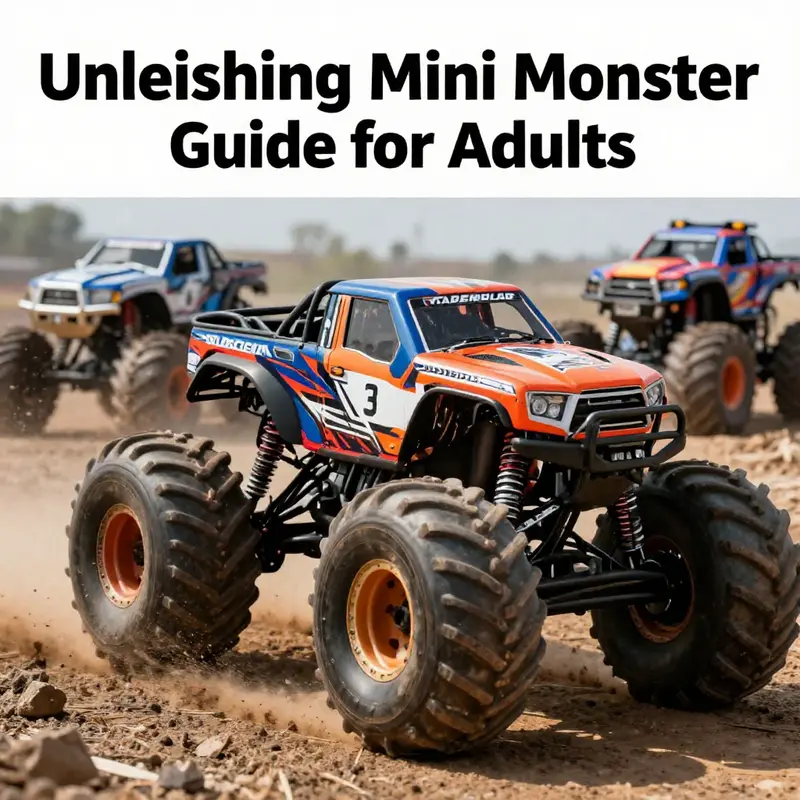
Many adults often dream of driving powerful, eye-catching vehicles, and mini monster trucks are no exception. These compact leviathans deliver an exhilarating driving experience, especially for enthusiasts and hobbyists. However, before you jump into the driver’s seat, it’s crucial to understand the legal regulations, safety precautions, vehicle suitability, age requirements, and how these trucks can be used for recreation. Each of these aspects is essential for ensuring that you enjoy your driving experience while staying within the bounds of the law and putting safety first.
Gears on the Edge: Navigating Legality, Safety, and Reality for Adult Drivers of Mini Monster Trucks
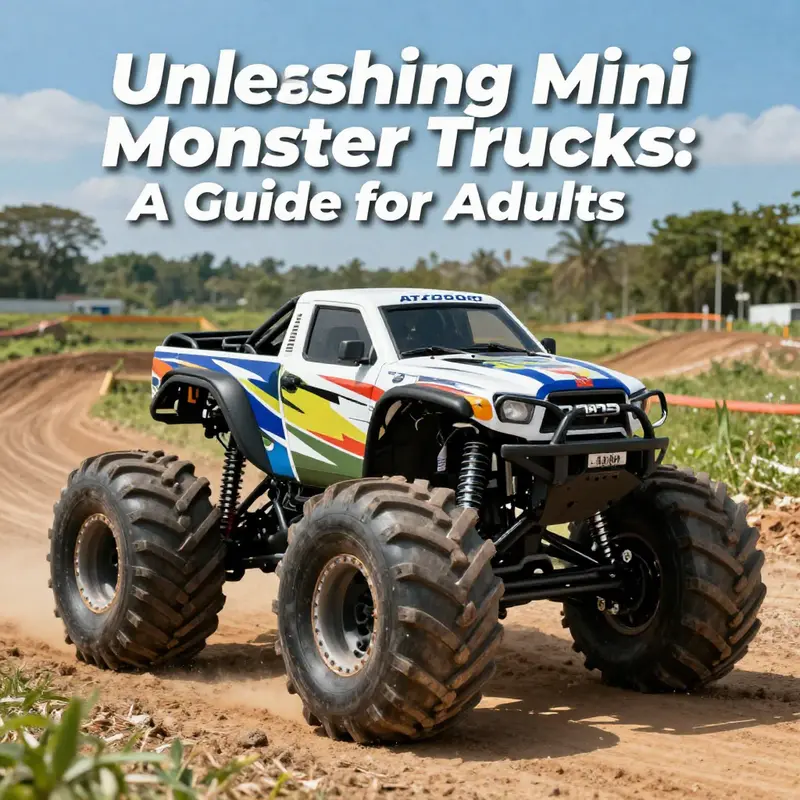
When adults circle a dusty track or a closed indoor arena with the roar of a compact engine in their ears, legality ceases to be an abstract rule and becomes the framework that keeps the experience safe, legal, and enjoyable. The question of whether adults can drive mini monster trucks is not a simple yes or no; it’s a layered judgment about where, how, and under what conditions such driving is permitted. At its core, the activity sits at the intersection of entertainment, recreation, and public safety. Mini monster trucks, while built to withstand rough terrain and the occasional stunt in controlled settings, are not ordinary road vehicles. Their design priorities—compact size, unique handling characteristics, and an emphasis on off-road performance—do not automatically align with the complex safety, emissions, and regulatory requirements demanded of street-legal automobiles. The result is a legal landscape that tends to separate the play zones from the public highways, and it makes the very possibility of adult driving contingent on context, compliance, and a clear-eyed understanding of risk.
In the United States, the most common regulatory posture treats many mini monster trucks as non-road use vehicles. This classification signals that these machines are intended for private grounds, dedicated event spaces, or indoor parks rather than everyday street driving. The practical upshot is that rolling them onto a public road—without the proper licensing, insurance, and safety features—usually violates traffic laws and can expose drivers to fines or other penalties. The road is simply not the intended stage for these vehicles, and the rules reflect the realities of combining a toy-like footprint, a powerful but low-speed purpose-built design, and the high-energy dynamics that emerge when a compact frame meets high-contrast terrain.
Yet the story is not purely punitive. The same regulatory framework that restricts street use also allows adult participation in sanctioned, controlled environments. Where tracks, theme parks, and organized shows exist, adult drivers can access modified or purpose-built vehicles that are engineered for safety and compliance within those settings. In practice, professionals and trained amateurs may participate in performances, racing events, or demonstrations under a tightly regulated umbrella. These events typically mandate thorough safety protocols, including helmets, harnesses, secure seating, roll cages if required, and staff supervision. The emphasis on trained operators reflects an understanding that with power and maneuverability comes a heightened responsibility to manage speed, balance, and the potential for collisions on a controlled surface.
The legal nuance expands further when considering the vehicle itself. Many mini monster trucks marketed for amusement use are designed with a child-oriented aesthetic and simplified controls. When adults wish to drive in non-road contexts, facilities often offer models or configurations that accommodate adult drivers. Even so, such arrangements almost always come with restrictions—age minimums, waivers of liability, and a requirement to adhere to on-site safety rules. The adult driver, then, enters a safety ecosystem rather than a free-wheeling possibility. The difference between “for adult use” and “adult use on public roads” hinges on whose rules govern the environment, how the vehicle is engineered for that environment, and what oversight is in place to prevent accidents.
A crucial practical consideration for adults is the entry point: the venue, the vehicle, and the instructor or staff. Many rental or adventure facilities set minimum age limits—often 18 years old—and may require drivers to possess a valid license or to sign waivers acknowledging the risk. These requirements aren’t about exclusion so much as risk management. They recognize that operating a small, high-torque machine with heavy tires on uneven surfaces demands a certain level of physical readiness, spatial awareness, and a willingness to follow precise instructions. Even with proper ages and permissions, the driver must be prepared to engage with a learning process that prioritizes safety over spectacle. Helmets, gloves, and sometimes additional protective gear are standard, and rules about seating position, hand placement, and body posture are enforced to minimize injury in the event of a tip, bounce, or abrupt surface change.
The physical realities of the machine also shape the legality conversation. Mini monster trucks, though compact, are heavy compared with ordinary go-karts or pocket-sized rides. They often feature solid axles, sturdy suspensions, and high ground clearance that excel on dirt and gravel but feel unfamiliar on smooth asphalt or wet surfaces. Getting in and out can be a challenge, especially for taller adults or those with limited mobility. This ergonomic mismatch is another reason why on-road use is generally contraindicated. It is not just about speed; it is about the alignment of the vehicle’s design with the driver’s size, strength, balance, and stamina. In a controlled environment, staff can help adjust seating, provide step aids, or guide entry and exit to reduce the risk of strain or fall.
But the landscape shifts when we consider the broader taxonomy of legality. In some jurisdictions beyond the United States, regulations about off-road vehicles, recreational machines, and motorized amusements can differ markedly. Some places distinguish between private property usage and public or permitted event usage in a way that affects liability and enforcement. Others treat modified versions of these vehicles as acceptable only when they are part of a licensed exhibition or a commercial demonstration with official oversight. The shared thread across these variations is clear: legality is not a blanket permission to drive a mini monster truck anywhere. It is a permission that is earned through venue, purpose, and adherence to safety rules established to protect drivers, spectators, and bystanders alike.
For adults who want to experience the thrill responsibly, the recommended pathway is explicit: engage with a facility that operates under a formal safety program and adheres to recognized standards for non-road or amusement vehicles. These programs typically provide instruction, demonstrate proper entry and exit techniques, and enforce equipment checks before each session. They also ensure that the vehicle’s safety features are functioning, such as lighting and signaling appropriate to the environment, seating integrity, lock mechanisms for the harnesses, and stable handling characteristics on the surface being used. In this context, legality serves not as a barrier but as a guarantee that the driving experience is contained within boundaries designed to prevent harm.
Importantly, the broader question—do adults have the capability to drive mini monster trucks safely—receives a confident affirmative when placed in the right setting. Skills developed from off-road driving, mechanical familiarity, and situational awareness contribute to safe operation within a controlled arena. Adults who have spent years handling rugged vehicles or who have participated in supervised driving activities are often well suited to manage the vehicle’s weight, momentum, and maneuverability on dirt, foam, or obstacle courses. The caveat remains sharp: capability does not translate to a legal right to drive on public streets. The street is not the venue, and the rules are not negotiable outside those sanctioned spaces.
For readers who want to pursue this nuance further, a practical takeaway is to consult official guidance on non-road use vehicles. The National Highway Traffic Safety Administration (NHTSA) provides terminology and regulatory framing that helps distinguish what qualifies as non-road use and what would be required for road-legal operation. While the NHTSA’s materials emphasize safety and compliance rather than entertainment, they offer a reliable baseline for understanding why these vehicles inhabit the margins of road legality. If you are planning an experience or a performance, begin with a reputable venue and verify that the operation complies with local transportation and safety regulations. If your curiosity extends to the policy side or you want a broader safety framework, you can refer to authoritative resources on non-road use vehicles for context and clarity.
To explore related topics and keep abreast of evolving practices in the mini-truck world, the Mini Trucks CaLa Blog offers articles that discuss experiences, modifications, and safety considerations in more detail. You can learn more there and gain practical insights into how venues structure these activities and what drivers should expect when they walk onto a track prepared for adult participants. minitrucksocala blog
The bottom line remains: adults can drive mini monster trucks, but only in designated, permitted environments that enforce safety and regulatory requirements. The road remains off-limits for standard, non-road-use models, not because adults lack the capability, but because the legal framework is built to prevent risk on public infrastructure. If you respect those boundaries, the experience can be engaging, safe, and genuinely exhilarating. For authoritative information on what constitutes non-road use and how it is regulated, consult official guidance such as the external resource from the NHTSA: https://www.nhtsa.gov/vehicle-type/non-road-use-vehicles. This external reference anchors the practical reality with a formal safety perspective, helping adults and organizers alike to navigate the edge where thrill meets responsibility.
Adult Hands, Tiny Titans: Navigating Safety, Legality, and Realistic Use of Mini Monster Trucks
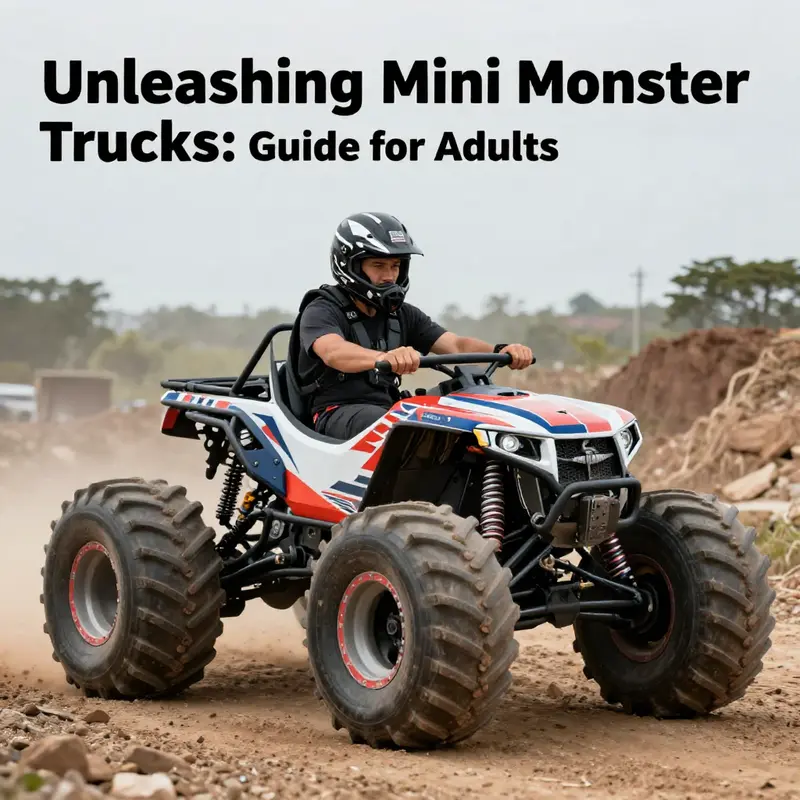
Curiosity about the thrill of a monster-vehicle experience often lingers into adulthood, even when the vehicle in question is a compact tabletop-sized machine designed to spark joy in younger riders. The question at heart remains practical: can adults truly drive mini monster trucks, and if so, under what conditions? The short answer is yes, but the long answer is more nuanced. The journey from curiosity to a safe, legitimate ride involves a careful examination of design limits, safety gaps, and the realities of operating equipment that borrows the language of big-truck performance while keeping a child-sized footprint. In many ways, the adult experience with mini monster trucks mirrors a broader lesson about why certain amusements belong in controlled environments and under well-defined rules. These machines are built to entertain and educate about off-road dynamics, yet they carry a set of constraints that are essential to respect if one aims to enjoy them without incident.
A first line of consideration centers on design limits and intended age ranges. A large portion of mini monster trucks marketed for entertainment or leisure carries explicit marks designed for younger riders—often in the range of three to eight years old. The construction, weight-bearing capacity, suspension travel, steering response, and center of gravity are calibrated for small bodies, lightweight operators, and relatively gentle terrain. When an adult steps into a chassis that was never engineered to support adult mass, the risk profile shifts in ways that are not always obvious at first glance. The suspension components may be close to their load limits, the tires and chassis could be pushed toward premature wear, and the overall handling may respond unpredictably as weight distribution changes. In practical terms, a larger rider can produce higher peak loads during jumps or abrupt maneuvers, raising the probability of mechanical stress, irregular landings, or even a rollover on uneven ground. This is not a moral indictment of the machines, just a reminder that their core design philosophy favors lighter, more forgiving interaction over long-term durability under heavier use.
Even when the vehicle’s powertrain seems modest—speeds that might hover in the single-digit to low double-digit kilometers per hour—the dynamics of a mini monster truck can still feel outsized. A sudden steering input on a rocky patch or a rapid stop on a sloped surface can shift the vehicle’s weight and momentum in a fraction of a second. Many models operate with electric motors that deliver crisp response, but that torque can catch an unprepared rider by surprise if the seat is ill-suited to an adult frame or if the pedal and steering wheel positions aren’t aligned with ergonomic comfort. In a family playground or a theme-park setting, operators may anticipate the rapid-onset thrills; on open ground or a prepared track, an adult’s weight and broader reach alter leverage, wider hips, longer legs, and different arm span—all of which influence how smoothly the vehicle accelerates, brakes, and returns to a neutral posture after a rough landing.
The safety equipment landscape on these compact machines commonly reveals gaps that adults must acknowledge. While some higher-end, purpose-built small off-road platforms may offer basic seat belts and simplified restraint systems, the robust safety ensembles associated with professional monster trucks—such as roll cages, reinforced chassis, and head-and-eye protection engineered for high-speed stunt work—are rarely present in consumer mini models. Eye protection, in particular, is highlighted in professional guidelines because debris and dust can travel at surprising velocities in off-road environments; goggles or face shields are standard in many regulated settings. For the typical mini truck, protective features might be limited to a simple belt and perhaps a basic shell that shields the torso. The real prohibition lies in assuming these toys can substitute for genuine protective gear or for properly engineered safety barriers. For adults who insist on a serious experience, the prudent path directs them toward platforms designed with adult ergonomics and full protective systems in mind, not just a scaled-down cockpit. In the absence of professional-grade protection, the risk to eyes, head, and upper body remains a decisive factor in whether an adult should proceed.
Another layer of caution comes from the operational characteristics of these compact beasts. Battery-powered or gasoline-driven variants may advertise adjustable speeds, yet the practical ceiling remains modest. The 10 to 15 kilometers per hour range, while adequate for controlled demonstrations, becomes a potential danger on rough surfaces where the moment-to-moment feedback is less predictable. The sudden transfer of momentum when the throttle is applied or released can produce unsettling weight shifts, particularly if the driver is not seated in a way that aligns with the vehicle’s geometry. Over longer sessions, battery life and voltage stability can also create interruptions that disrupt flow and require re-begun maneuvers—interruptions that, in a confined show ring or on a designated track, are manageable, but in a poorly supervised setting could lead to misjudgments and injuries. Fatigue compounds these concerns; the physical effort an adult may need to sustain during a spirited ride can be more substantial than anticipated, especially if entry and exit points require extra effort due to a narrow cockpit or a high step-in height.
For adults seeking to experience the essence of mini monster trucks without compromising safety, the most prudent recommendation is to gravitate toward vehicles and settings designed for adult use. That means choosing platforms that are explicitly engineered for grown riders, with seating and cockpit dimensions that accommodate adult anthropometry, adjustable suspension to tame rough terrain, and a braking system that is reliable under load. It also implies securing a full set of restraints, a helmet that meets appropriate standards, and a protective environment supervised by trained staff who understand the unique risk profile of small-scale off-road work. The goal is not to replicate a professional monster truck show but to create a responsible, enjoyable encounter with the sensations of off-road driving in a scaled context. In this sense, the adult experience becomes a curated, safety-forward activity rather than a casual children’s ride transported into an adult body.
That does not mean adults must abandon the idea of mini monster trucks altogether. There is a clear place for these machines as educational and recreational tools that can teach cautious risk management, basic vehicle dynamics, and the discipline of following established rules. Often, the path forward involves choosing environments where the vehicle’s capabilities are matched to safety protocols and staff supervision remains constant. A flat, open, obstacle-free area with defined boundaries and good footing reduces the likelihood of abrupt losses of control. Off-road tracks or entertainment complexes that specialize in small-scale vehicles frequently provide the kind of oversight and structured pacing that makes adult participation both enjoyable and responsible. In those contexts, drivers can appreciate the tactile feedback—the way a small chassis responds to a steering input, the sensation of a controlled bump, the coordination between throttle and brake—without venturing into unsafe or unregulated territory.
For readers who want a practical bridge to concrete understanding, a look at community resources can help. A well-curated blog and discussion hub can offer perspectives from operators and enthusiasts who have tested these machines in well-managed settings. See for yourself how the discourse centers on safety demonstrations, rider readiness, and the careful selection of equipment that truly accommodates adult use. You can visit the community blog here: minitrucksocala.com/blog/ . This resource provides context from people who balance fun with caution, sharing insights about track rules, rider preparation, and the realities of managing a safe, enjoyable experience within a controlled framework. It reinforces the idea that adult participation is not a matter of ankle-deep thrill-seeking, but a thoughtful engagement with a scaled-down vehicle platform that demands respect for its limits.
In addition to practical considerations, it is important to acknowledge the regulatory landscape. The very nature of mini monster trucks often places them outside standard street-legal categories, as they are not typically equipped to meet the broad lighting, emissions, seatbelts, and registration requirements imposed on road vehicles. Local jurisdictions may vary widely in how they classify these machines, and some venues require participants to be at least a certain age, to hold a valid license, or to sign waivers acknowledging certain risks. The safest route for adults is to engage only in environments where these rules are clear, and where staff and operators enforce them consistently. Such boundaries are not merely bureaucratic hurdles; they are essential guardrails that protect both participants and bystanders in spaces designed for controlled use.
As this chapter unfolds, the overarching message is precise: adults can indeed drive mini monster trucks, but only in designated environments that honor design limitations, provide complete safety measures, and operate within legal frameworks. The experience hinges on choosing equipment that fits adult physiology, wearing appropriate protective gear, and participating in sessions supervised by trained staff who understand how to manage the unique dynamics of small-scale off-road motion. The appeal of a miniature monster truck ride—its tactile heft, its sense of momentum, the way a compact machine negotiates terrain—remains intact when paired with disciplined, safety-first practice. For those drawn to the blend of excitement and control, the path forward is thoughtful selection, controlled environments, and a readiness to accept the boundaries that keep the experience rewarding rather than risky. In this balance lies the true enjoyment of adult involvement with mini monster trucks, a balance that respects the machines, the tracks, and the people sharing the space.
External resource for safety framework: https://www.scribd.com/document/476297329/MTRA-Monster-Truck-Safety-Guidelines
Riding the Mini Behemoth: Suitability and Safety for Adult Drivers
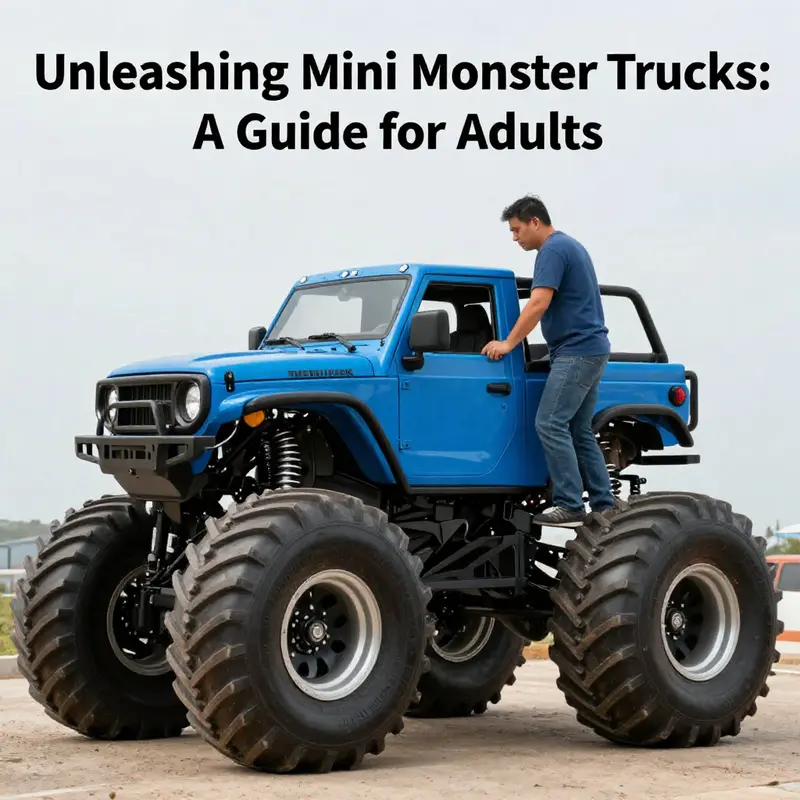
On the edge of a sunlit track, adults approach the compact behemoths with a mix of curiosity and anticipation. Mini monster trucks, though scaled down, carry the same DNA as their larger cousins: power, rugged durability, and a performance edge that rewards deliberate, practiced handling. The appeal is not simply novelty; it is a lived experience in which engineering choices translate into tangible control. These machines are built to grip rough ground—gravel, mud, sand, and the occasional rocky trail—with a chassis that resists flex and a suspension tuned to absorb punishment without surrendering stability. For adults who crave a credible, high-adrenaline ride, the thrill comes from a calibrated blend of weight, momentum, and speed, all of which respond to a driver’s input with reassuring immediacy. The design intent is clear: create a scaled platform that preserves the feel of a full-size monster truck while remaining accessible enough for adult operators who are not professional stunt performers.
From a practical viewpoint, the engineering and durability of adult-oriented mini monster trucks are central to their suitability. The engines or motors behind these machines are chosen for torque at low to mid-range RPM, delivering the grunt needed to climb imperfect surfaces rather than chase long, paved straights. Reinforced frames and heavy-duty components keep the vehicle coherent when the track kicks back, and oversized off-road tires deliver both traction and a predictable sense of contact with the ground. This combination makes the machines forgiving enough for thoughtful exploration—yet capable of dramatic responses when the throttle, steering, or braking is misjudged. It is a delicate balance, because the same raw power that excites a driver can quickly overwhelm an unwary rider if the environment is not properly chosen or if safety systems are neglected.
Design for adults is another essential thread in the suitability tapestry. Unlike models aimed at younger riders, adult-focused mini monster trucks generally boast higher weight capacities, more robust seating arrangements, and improved suspension components that translate to greater stability at speed. The seating position and control geometry are arranged to accommodate a broader range of body sizes, so entry and exit, while still requiring a deliberate effort, do not become a source of repeated discomfort or awkward maneuvering. Realism is often a selling point here: working lights, authentic sounds, and even miniature driver figures can heighten immersion and help operators gauge reaction time and spatial awareness. Yet realism must be paired with sound safety engineering. A vehicle that looks impressive on the outside can still pose risks if critical safety features are missing or improperly implemented in the interest of aesthetics. This is where design for adults intersects with compliance and prudent practice.
Legality and permitted use form the frame around which adult enjoyment must revolve. In most regions, these vehicles are not street-legal without significant modification, largely due to requirements for lighting, emissions controls, mirrors, and proper registration. The road is a different arena from private tracks or controlled off-road parks, where operators can exercise full, guided control. Within these spaces, the emphasis shifts from mere speed to situational awareness, tire choice, and the rhythm of throttle and brake. Operators routinely wear protective gear—helmets, gloves, and appropriate footwear—because the environment encourages sudden changes in direction, uneven surfaces, and the unexpected rise or dip of the surface beneath the tires. In practice, facilities that rent or host these machines typically require drivers to be at least 18 years old and to sign waivers acknowledging the inherent risks. Insurance considerations, though sometimes opaque, are an essential backdrop for enthusiasts who want to explore the boundaries of their capability within a managed setting. The adult experience, then, is framed by a partnership with an environment that is designed to emphasize fun while curtailing danger through rules, supervision, and proper gear.
The activity itself is more than a test of nerve; it is a study in balancing capability with restraint. The driver’s physical size and strength can influence comfort and control, especially during entry, exit, and the moment of transition from stationary to motion. Some models demand a deliberate, even practiced, mounting sequence, a reminder that even a toy-sized machine demands respect for biomechanics and ergonomics. For many adults, this kind of driving is the opposite of casual consumerism—it is an experience that rewards practice, patience, and a willingness to learn the vehicle’s subtle language. The track environment matters as much as the vehicle. A well-designed course with varied surfaces—grader-friendly bumps, soft turns, and graded sections—lets a driver learn how a particular mini monster truck responds to shifting weight, tire grip, and suspension travel. In such contexts, the thrill is not just the speed at which a vehicle moves, but the precision with which it can be steered through the challenges and the quick, corrective actions that prevent a misstep from becoming a mishap.
For readers curious about where these machines sit in the wider ecosystem of hobbyist off-roading, it helps to consider how adult-oriented mini monster trucks compare across the spectrum of models and configurations. A practical touchstone for understanding the landscape is to explore how different designs emphasize strength, carry capacity, and controllability. A focused comparison like [comparing Kingstar Kruzr models and specs] can illuminate how specific choices—such as suspension tuning, chassis rigidity, and power delivery—translate into real-world performance. The takeaway is not that one path is universally better, but that different builds optimize different aspects of adult experience, from raw climbing ability to precise handling on a staggered obstacle course. This nuanced view aligns with the broader purpose of the chapter: to demystify suitability by anchoring it in real-world use, safety practices, and the kinds of environments that welcome adult drivers.
Beyond the mechanics and the regulations, the social and cultural dimensions of adult participation are worth noting. Monster truck culture, even at a miniature scale, thrives on community, shared learning, and experimentation within safe boundaries. People bring their own backgrounds to the experience—some with off-road climbing histories, others with stunt or performance training, and still others simply seeking a controlled, high-energy outing. The vehicle becomes a tool for skill-building as well as a source of entertainment. When guided by reputable venues, clear rules, and consistent safety norms, adults can push boundaries responsibly, learn from each other, and enjoy the sense of mastery that comes from handling a powerful, well-tuned machine on challenging terrain. The combination of engineered reliability, practical design choices for adults, and a regulated environment makes the concept of adult driving feasible—and, in the right setting, genuinely rewarding.
In sum, adults can indeed drive mini monster trucks, provided the context is appropriate and safety remains the central priority. The vehicles discussed here are not toys to be used on ordinary roads; they are purpose-built platforms for controlled experiences that honor both thrill and responsibility. When operated on designated tracks or private off-road spaces with helmets secured, seat belts fastened, and rules followed, they deliver a distinctive kind of driving education and exhilaration. For those who are drawn to the idea of a compact, high-performance vehicle with monster-truck personality, the path is clear: seek environments that emphasize safety, choose a model whose design matches your size and strength, invest time in learning the vehicle’s proportions and limits, and participate with a mindset of respectful curiosity. The result is not just a momentary rush but a coherent, repeatable experience that sits squarely at the intersection of engineering prowess, personal capability, and disciplined recreation. And if you want a deeper sense of how these machines stack up against similar models, the link above offers a practical reference point that complements the broader narrative of what makes mini monster trucks suitable for adult drivers.
Size, Safety, and the Law: How Age and Licensing Shape Adults’ Ability to Drive Mini Monster Trucks
The appeal of a mini monster truck is immediate and visceral: a compact machine that still carries the swagger and capability of its larger cousins. For many adults, the question isn’t whether they can physically operate one, but where and under what rules. This chapter unpacks that reality by tracing how age, licensing, and the regulatory environment determine when an adult can actually sit behind the wheel. It helps readers understand that the thrill of the ride comes with boundaries that vary by country, by setting, and by the purpose of the vehicle. In practice, the same machine may be treated as an off-road toy, a competitive RC or radio-controlled model, or a full-size performance vehicle, each with a different legal status and safety expectation. The distinctions matter because they shape not just access, but the level of risk a rider accepts and the preparation required to manage that risk responsibly. The landscape is layered, and the layers differ enough from place to place that a blanket answer is rarely sufficient. A careful, context-aware approach is essential for adults who want to explore these machines without crossing legal lines or compromising safety commitments.
In recreational settings, adults often encounter a spectrum of vehicles marketed for “adult use,” yet the meaning of that label shifts with scale and purpose. Children’s recreational mini trucks, for instance, typically exist in a toy or electric-vehicle category where safety expectations emphasize age-appropriate speed and supervision rather than formal licensing. In these contexts, an age recommendation is the practical gatekeeper; it signals whether the device is meant to be an introductory experience or something closer to a controlled thrill ride. The lack of licensing in such toy or entry-level products is not a contradiction to safety, but a reflection of design intent and regulatory framing. Adults contemplating these devices should still assess physical fit, accessibility, and the possibility of awkward entries or exits. Height, arm reach, torso length, and leg power all interact with how comfortably and safely a driver can handle a vehicle of this kind. The risk calculus changes when a vehicle is scaled for play rather than governed by road or highway rules.
Remote-controlled mini monster trucks extend the discussion into a different domain altogether. These are often designed for competitive or hobbyist use and are governed by age-as-skill considerations rather than age-as-licensing requirements. In many RC racing communities, the emphasis rests on mastery, precision, and safety discipline. While the official class rules may not stipulate an explicit age floor, competitions commonly target teenagers and adults who bring a minimum level of mechanical familiarity and risk awareness to the table. A key takeaway here is that the “age threshold” is less about legality and more about capability and responsibility. Participants are expected to show up with a practical understanding of control, potential hazards, and event-specific waivers. For adults drawn to RC mini trucks as a hobby or sport, the pathway to participation is less about obtaining a license in the conventional sense and more about meeting the club’s safety prerequisites, demonstrating driving competence, and respecting the competition’s rules. In this sense, age functions as a proxy for preparedness, not an absolute permission. The result is a well-worn equilibrium: venues and associations provide access to those who are ready, while safeguarding younger, less experienced individuals from a situation that could exceed their current skill level.
Turning to full-size mini monster trucks—the real machines that appear in live shows or on off-road courses—the regulatory bar rises sharply. Here, the vehicle is treated as heavy machinery, and safety protocols demand formal driver qualification, rigorous training, and strict adherence to both traffic laws and industry standards. The phrase “professional driver” is not a pejorative; it is a concrete acknowledgment of the risks that come with size, weight, and speed. A driver must typically undergo a program that covers vehicle dynamics, rollover prevention, emergency procedures, and on-ramp or track-specific safety rules. In these environments, age can still be a factor, but it is often subordinate to demonstrated competence and licensure requirements. The presence of a license does not magically remove risk; it simply ensures that the driver has passed a standardized assessment that confirms baseline capabilities and an understanding of safety responsibilities. For adults who genuinely crave the thrill of operating larger or more powerful mini trucks, this tiered structure—toy, RC, and full-size—offers a clear map of where and how risk is mitigated and where limitations are imposed to protect riders and bystanders alike.
Legal access, then, is inseparable from the intended use and the venue. In country after country, officials carve out exceptions for off-road parks, private tracks, demonstration events, and organized competitions. These venues typically emphasize controlled environments, pre-ride safety checks, and on-site supervision. Many require riders to be at least 18 years old for adult access, with waivers that acknowledge the risks and shift liability appropriately. Some facilities may set higher minimums, not to gatekeep but to match the physical demands of entering and maneuvering a compact vehicle that can require awkward movements or sudden reflexes. The vehicle’s design itself can compound or ease these demands. A compact chassis that sits low to the ground can aid stability, while a tall or wide stance can challenge entry and exiting, particularly for taller adults or those with limited flexibility. Operators must weigh these physical considerations just as they weigh legal ones. The industry trend toward event-based driving opportunities reflects a growing interest in controlled, spectator-friendly formats where safety gear is standard and protocols are explicit. Helmets, gloves, and sturdy footwear become as essential as the vehicle’s own safety features like seat belts or harnesses. Even with the best training, the environment—a sandy arena, a dusty track, or a paved but rugged course—can alter how a driver experiences sensation, response time, and fatigue. These variables reinforce the idea that legality alone does not guarantee safety; preparedness and environment are equally critical.
A practical framework emerges when adults approach mini monster trucks as a layered activity rather than a single, uniform experience. Start with the context: is the vehicle a toy, a remote-controlled model, or a street-legal or track-dedicated machine? Each category carries its own permissions, safety expectations, and skill requirements. If you are drawn to a recreational track or a sanctioned event, verify the venue’s age policy and the waiver process. Even at facilities that permit adults to drive, most will require helmets and enforce strict on-site rules regarding conduct and vehicle control. If the activity is RC-based, look for clubs or organizers that emphasize safety training and a clear path to qualification, both of which often have age guidelines but focus more on demonstrated ability. For those considering full-size mini trucks that operate in performances or on private courses, expect a licensure pathway aligned with professional driving standards, plus ongoing training and periodic rechecks. In all cases, the responsible adult will prepare by inspecting their own physical readiness, confirming the vehicle’s maintenance state, and acknowledging that speed and force become meaningful risks only when control lines are crossed. The goal is not merely to satisfy curiosity but to participate with integrity, respecting the equipment, the venue, and the other people around you.
For adults who want to learn more before deciding where to begin, the path often runs through community resources and practical demonstrations. A quiet first step can be to explore the broader ecosystem of mini truck driving through an established hub of information, such as the blog that curates updates, insights, and community perspectives on mini trucks. That resource can offer a balanced view of safety practices, gear considerations, and the nuances of entering a dedicated driving environment. For readers exploring this chapter in the context of the larger article, it provides a grounded sense of how theory translates into real-world access. It also helps distinguish between the allure of the hobby and the reality of its legal and safety constraints, which can differ markedly depending on where you live and where you choose to drive.
The bottom line is straightforward, yet nuanced: adults can indeed drive mini monster trucks, but only in settings that permit it and with attention to the specific rules that govern age, licensing, and safety. The absence of a universal standard does not leave adults without guidance; instead, it invites a careful, personalized assessment of whether a given venue, a particular vehicle class, and a fixed set of safety practices align with one’s age, experience, and risk tolerance. In practice, a responsible adult approaches this activity much like any other high-adrenaline pursuit: with clear boundaries, informed consent, and a commitment to continuous learning. If you intend to participate, start by confirming the venue’s policy, check whether you need a waiver, and make helmet use a non-negotiable habit. Above all, treat licensing and age requirements as a map rather than a barrier—one that helps you locate credible opportunities that honor safety and legal standards while delivering the excitement that draws you to the mini monster truck world. For further reading and a sense of how organizational rules translate into on-track practice, you can visit the resource hub at minitrucksocala.com/blog. And for a broader regulatory reference that sheds light on standardized class rules in competitive RC contexts, see https://www.norcalrcmonstertrucks.com/class-rules.
Tiny Titans, Real Thrills: Adults Driving Mini Monster Trucks Within Safe, Regulated Recreational Spaces
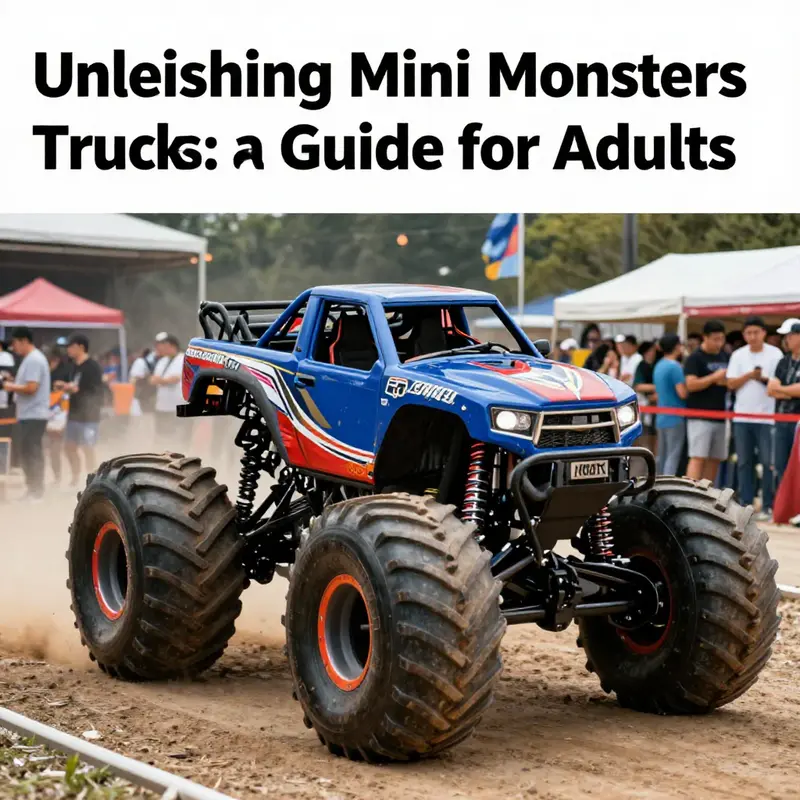
The concept of mini monster trucks sparks a surprising mix of nostalgia and adrenaline. These compact, rugged machines condense the look and feel of their full-size counterparts into something more approachable, a device through which adults can recapture the thrill of off-road driving without the logistical demands of a large vehicle. The appeal rests not just in speed or stunt capability, but in a microcosm of engineering prowess: sturdy suspensions tuned to soak up rough terrain, tires that bite into gravel as confidently as they would into dirt, and bright LEDs that turn even a dusk track into a stage for small-scale spectacle. The experience rests on the same primal driver impulse that fuels larger monster trucks—the sense of mastery when you navigate a challenging obstacle with precision and control. Yet the scale changes the experience in meaningful ways, allowing adults to push limits in a controlled, hobbyist environment rather than on crowded streets or highways. The result is a form of recreational play that respects boundaries while delivering authentic, hands-on driving satisfaction. This chapter explores what it means for adults to engage with mini monster trucks, balancing the sheer joy of the ride with the practical realities that make this pursuit safe, legal, and widely accessible through designated venues and structured settings.
Legality frames the doorways into these activities as much as skill does. Mini monster trucks are typically not street-legal in many jurisdictions because they often lack the full suite of features that local authorities require for road use. Lighting that meets night-use standards, emissions controls that align with environmental regulations, validated seating and restraint systems, and the registration processes that accompany street-legal vehicles all factor into the decision to restrict these machines to private tracks, event spaces, or dedicated amusement zones. In practice, enthusiasts meet this constraint by choosing environments engineered for safe, supervised operation. Rental facilities and entertainment venues frequently set age and liability requirements before a driver can even sit behind the wheel. The common thread is that adults can operate these vehicles competently, provided they are operating within the boundaries set by the venue and local law.
With those constraints in mind, the operating experience for adults takes on a distinctly responsible tone. Safety gear becomes more than a courtesy; it is a baseline. A helmet, proper footwear, and, where required, additional protective equipment form the trifecta of readiness before the first engine roar. Operators are taught to respect the vehicle’s footprint—these machines may be compact, but their dynamics can surprise a novice who underestimates their momentum or sensory feedback. The design itself invites experimentation, yet it also demands awareness: entering and exiting a compact, rugged chassis can be physically demanding for some adults, and long sessions demand deliberate breaks to avoid fatigue that might compromise judgment. In short, physical fit and comfort matter as much as driving skill. The environments that host these experiences—private off-road tracks, controlled obstacle courses, and sometimes staged demonstrations at fairs or shows—are purpose-built for safety first. Here, the interplay between driver and machine is optimized by well-marked courses, clear visibility, and staff ready to assist or halt activities if risk rises beyond threshold.
Technically, these mini machines are designed to deliver a surprisingly authentic driving feel within their constraints. They often feature robust suspension systems capable of absorbing rough terrain, a drivetrain tuned to negotiate uneven surfaces, and lighting that adds a sense of spectacle and situational awareness. The control interface typically relies on a modern radio system, with a remote that provides responsive, predictable handling. In some setups, USB-rechargeable batteries extend playtime, letting enthusiasts spend longer sessions on the track or in a backyard obstacle course, which some hobbyists convert into custom courses using portable ramps, berms, and turns. The consequence is a blend of tactile feedback and digital reliability: the sensation of real driving complemented by the safety nets provided by supervised venues. The experience does not merely mimic larger-scale monster trucks; it distills the essence of off-road challenge into a compact, manageable form that adults can master through practice, patience, and careful adherence to arena rules.
The social dimension is another compelling aspect of adult participation in mini monster truck recreation. Beyond the thrill of the run, the activity becomes a community pursuit that blends motorsport, tinkering, and storytelling. Enthusiasts connect through online forums, local clubs, and informal gatherings that often culminate in backyard obstacle courses or timed races. The culture rewards hands-on engagement—the kind of DIY ethos that invites owners to upgrade parts, refine suspensions, and personalize their rigs with paint and decals that express individual identity. This collaborative energy mirrors broader hobbyist movements where passion, skill, and curiosity intersect, and where participants learn from each other as much as from the machine. Not only does this foster camaraderie, but it also pushes the boundaries of what a tiny, purpose-built vehicle can achieve. The sense of belonging is a powerful force that helps adults persist in the hobby, seek out better equipment, and continuously improve technique.
In practice, many adult drivers gravitate toward environments that emphasize controlled experimentation over reckless performance. The appeal lies in the choreography of the run: the threshold between a smooth glide over a jump and a controlled stall at the lip of a ramp, the moment when the vehicle lands with just enough bounce to feel dynamic without tipping or losing traction. The educational element is subtle but meaningful. Instructors and gatekeepers at rec spaces teach the watershed between fun and folly, guiding drivers to adjust throttle sensitivity, manage weight transfer on inclines, and use the terrain to their advantage rather than fighting against it. This approach aligns with broader safety principles that prioritize deliberate practice, proper protective equipment, and respect for venue rules. The result is a sustainable hobby that accommodates adults with varying levels of experience, from curious newcomers to seasoned off-road enthusiasts who appreciate the compact scale as a gateway to hands-on engineering know-how.
From a purely engineering perspective, mini monster trucks serve as a living laboratory for understanding traction, momentum, and vehicle dynamics in a digestible package. They illuminate how suspension tuning, tire choice, and center of gravity influence stability on uneven ground. They also demonstrate how propulsion and braking must be balanced to maintain control on a course that can demand rapid adjustments. For adult hobbyists, this translates into a deeply satisfying blend of mental calculation and physical execution. The drive becomes a careful dance that rewards precision: a tiny miscalculation can produce a dramatic consequence, yet with experience, the operator learns to anticipate terrain features, modulate speed, and time throttle inputs with the rhythm of the track. In this light, the adult who chooses to drive a mini monster truck is not merely indulging a pastime; they are engaging in a form of practical mechanical literacy, one that translates to more than just entertainment. It cultivates patience, planning, and an appreciation for how small machines can perform under demanding conditions when tuned and handled with care.
The broader takeaway is clear. Adults can indeed drive mini monster trucks, but the context matters as much as the skill. The venues, safety protocols, and legal frameworks frame what is possible and responsible. The appeal lies in being part of a vibrant, safety-conscious hobby that honors the spirit of exploration that motivates off-road driving while preserving the welfare of participants and spectators. For those who want to dip a toe into this universe, a flexible entry path exists: a supervised session at a designated facility, a beginner-friendly course that teaches stance, throttle management, and cornering on forgiving terrain, followed by opportunities to customize and optimize a vehicle within the bounds of the venue’s rules. The journey from curiosity to proficiency is accessible and enjoyable when approached with respect for both the machine and the environment in which it operates.
For readers curious about the broader hobby and community surrounding these micro machines, consider exploring more about the culture and projects at minitrucksocala.com/blog/. This resource offers a glimpse into builds, modifications, and gatherings that characterize the adult hobbyist experience. As with any specialized pursuit, the path builds on shared knowledge, practical experimentation, and a shared commitment to safety and fun. While the subject is playful in tone, the discipline behind responsible participation is real, and it is this balance that makes adult engagement with mini monster trucks both meaningful and enduring. For a representative peek into consumer-grade, compact RC models that many hobbyists admire for home practice or private setups, external readers might reference a commonly available product page that highlights scalable performance and entry-level features. https://www.amazon.com/dp/B0B5YJXQZV
Final thoughts
Driving mini monster trucks can be an exciting and enjoyable activity for adults, providing a unique way to experience off-road adventure. However, it is essential to remain informed about the legal and safety guidelines to ensure a safe and fulfilling experience. By adhering to these regulations and understanding the suitability of the vehicles, you can fully embrace the thrilling world of mini monster trucks. In the end, planning your adventure with the right knowledge paves the way for safe driving while enjoying the thrill these vehicles offer.