
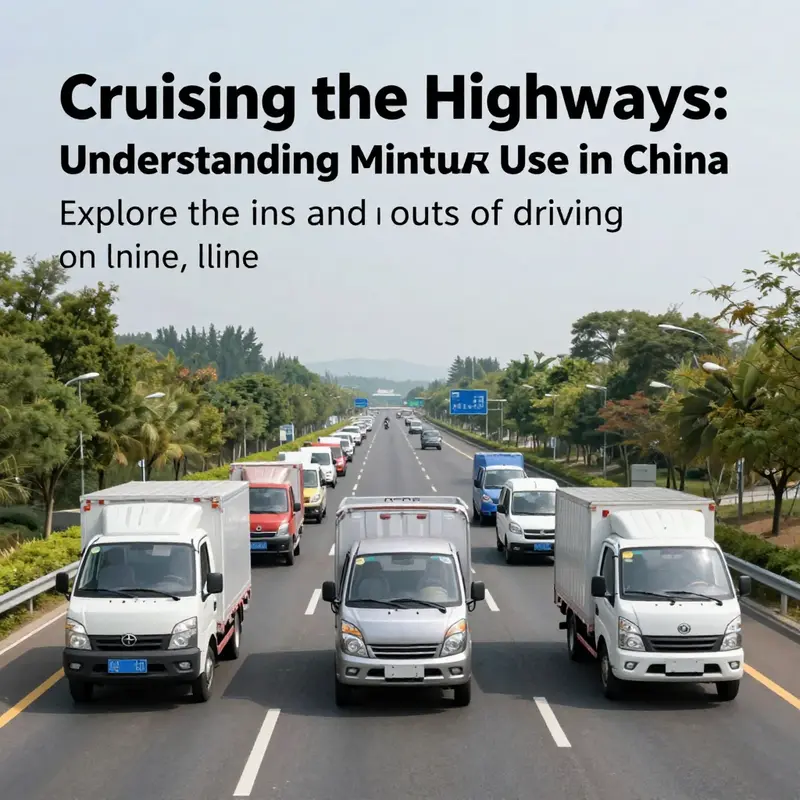
Driving a mini truck on the highway in China is not just an adventure; it’s an opportunity for small business owners, residential property owners, and mini truck enthusiasts. The recent surge in mini truck popularity has made them appealing for various uses, from transporting goods to weekend hobbies. However, navigating the complexities of regulations and safety standards can seem daunting. This article guides you through three essential chapters: the legal requirements to ensure your mini truck is highway-ready, the crucial safety standards to keep you and your load safe and sound, and the economic implications that come with utilizing mini trucks effectively on highways. Get ready to rev up your understanding and embark on a journey through the world of mini trucks in China.
Highway Credentials: Navigating the Legal Path for Mini Trucks on Open Roads
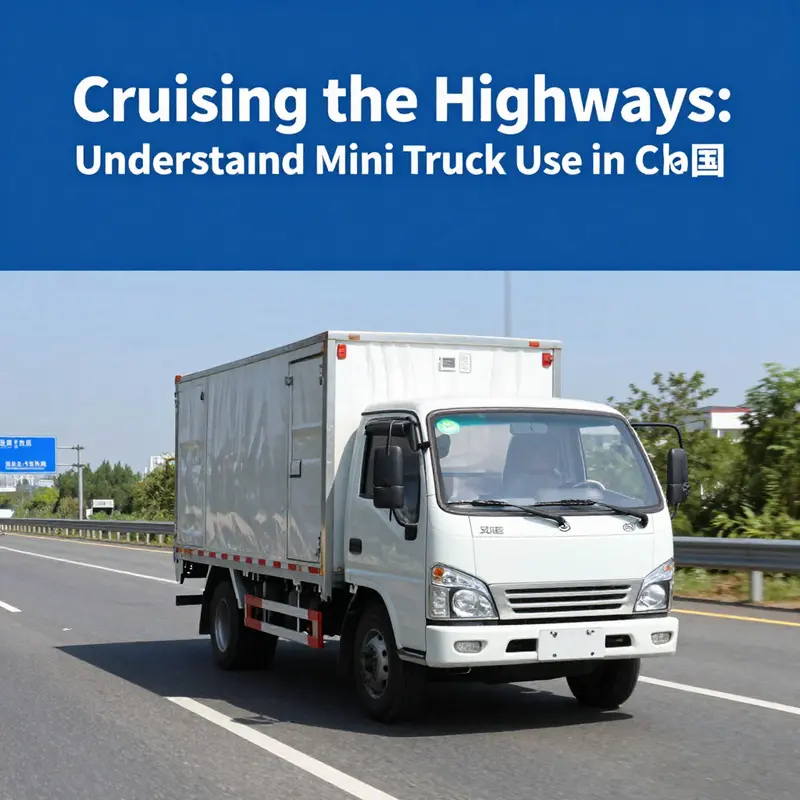
The question “can you drive a mini truck on the highway?” invites a practical, road-tested answer rather than a sweeping rule. Mini trucks are small, nimble workhorses designed for urban deliveries, light cargo, and short-haul tasks. They seem like an obvious fit for city lanes, yet highways demand more than a clever silhouette and a decent engine. The core issue is whether these compact vehicles qualify under the local regulatory framework to share the high-speed, multi-lane arteries where speed, weight, and safety converge. The short answer, with important caveats, is yes in many places—provided the vehicle meets specific criteria about speed capability, weight, size, and documentation. Those criteria are not universal; they shift with geography, vehicle class, and the intended use of the truck. The longer answer unfolds as a careful map of how different jurisdictions translate the same machine into a permissible traveler on the open road—and how a driver can stay within the lines while keeping safety front and center. When you read across borders and across state or provincial lines, you begin to see that the highway rules are less about the mug of the vehicle and more about the responsibilities that accompany sharing higher-speed roadways with heavier, faster traffic. The journey from a city block to a concrete corridor is as much about compliance as it is about capability, and the road teaches patience as much as it teaches speed.
A practical way to approach the question is to frame it in three overlapping requirements: the vehicle’s physical readiness, its official status with the road authority, and the operational ceiling under which it can travel safely. The vehicle must be physically capable of maintaining a safe, steady speed on the highway. It must not exceed size or weight limits that would render it an outlier in a high-speed environment. And it must carry valid registration, insurance, and inspection where those documents are mandatory. When these pillars are in place, the mini truck can join the stream of highway traffic without inviting the kinds of penalties that other, larger commercial vehicles face. But if any one pillar is weak or missing, the door can close quickly, even if the truck looks perfectly fit for municipal or rural roads. These distinctions matter because highways are designed around a predictable rhythm: faster traffic, larger vehicles, and longer stopping distances. A small, light vehicle must prove it can keep pace with the flow and stop reliably when necessary.
In many places, the modern framework for highway access hinges on a balance between weight thresholds and design speed. In the United States, for example, national rules administered by the Federal Motor Carrier Safety Administration define commercial motor vehicles by gross vehicle weight rating. A typical cutoff is 10,001 pounds or more. Vehicles below that threshold may be treated as non-commercial and fall under different rules. Yet even lighter trucks must meet federal safety standards for lighting, brakes, tires, and emissions, regardless of how they are classified for licensing or highway access. That means even a small, personal-use mini truck cannot escape basic safety requirements simply by virtue of its size. The road authority wants to know that every vehicle on the highway can perform to a baseline level: lights that are visible, brakes that are reliable, tires that grip, and emissions that meet environmental rules. These are not mere formalities; they are practical safeguards that keep the driving environment predictable for everyone.
State laws add another layer of nuance. Individual jurisdictions can impose width and height limits, payload restrictions, and specific highway access rules that reflect local traffic patterns, road grade, and construction realities. A mini truck that might legally cruise on a regional road or urban street could be restricted on certain stretches of highway if it fails to meet the highway’s minimum speed requirements, or if its height or width challenges bridge clearances or lane spacing. In practice, drivers often discover these distinctions only after a close look at the local rider’s guide, a visit to the local DMV or equivalent agency, or a call to a toll highway administrator. The bottom line is that the same vehicle can be a highway passenger in one state and a restricted road user in another, depending on how its weight, size, and operating profile line up with the region’s risk calculus.
Registration, licensing, and insurance seal the official status of a mini truck on the highway. Even when a vehicle is physically capable and legally allowed to travel at highway speeds, the operator’s paperwork must reflect that status. In many jurisdictions, a separately issued license category or endorsement is not required for a light-duty, non-commercial vehicle, but proof of insurance and a valid registration are non-negotiable. In some places, an inspection certificate is a prerequisite for highway use, ensuring ongoing compliance with safety and emissions standards. The absence of these documents is more than a bureaucratic misstep; it is a tangible risk to road safety and, in many jurisdictions, a reason for authorities to pull the vehicle off the highway. For drivers who cross borders or switch between municipal and rural routes, this is a reminder that the rules are not static; they travel with the jurisdiction like a road map you must read as you drive.
The conversation about whether a mini truck can legally occupy highway lanes often turns to design speed and weight in a more literal sense. A vehicle that can reach and sustain a design speed of 60 to 70 kilometers per hour is typically considered suitable for highway travel, provided it can maintain that speed safely and predictably. Some readings emphasize a minimum achievable speed, ensuring the vehicle can keep up with traffic without frequent hazards or sudden lane changes. Those numbers matter not because they are arbitrary, but because they translate into the physics of highway driving: the vehicle’s ability to accelerate, brake, and steer within safe margins at speeds common on the highway. It is not enough to be able to travel down the road; a mini truck must demonstrate that it can navigate the stream of vehicles that share the lane, with adequate braking distances, stable steering, and reliable control under a range of weather and load conditions.
In the conversation about a specific national context, such as China, the rules show a more precise and somewhat tighter planning horizon. There, the design speed criterion, a prohibition list, and the weight cap for light-duty trucks jointly determine highway eligibility. The vehicle should be constructed to reach a design speed of around 70 kilometers per hour or higher, and be free from items that the law forbids on the highway, such as certain non-motorized vehicles or unregistered platforms. Weight plays a critical role as well: the total mass, including cargo, typically must stay under a defined threshold—often described as under 4.5 tons for light-duty trucks—to qualify for highway access. This framework is not just about where a mini truck can drive; it is about what it can carry, how it can move, and how those movements are documented and supervised to safeguard all highway users. In practical terms, a mini truck that is legally registered, within the allowable weight limit, and capable of maintaining steady speed while adhering to road rules is considered fit for highway use in that jurisdiction. The technical and regulatory pieces—design speed, weight limits, and documentation—work together to create a safe and predictable traffic environment for everyone who shares the road.
The driving experience on the highway is shaped by more than the legal box checked at the DMV. On open roads, a mini truck must be prepared for the realities of high-speed traffic: longer stopping distances, the need for robust tires and brakes, and the imperative to maintain lane discipline and safe following distances. Vehicle performance and maintenance become practical safety issues. A light-duty truck that is marginal on braking capacity or tire tread is not just a compliance risk; it becomes a danger to the driver and to others. This is why regulatory bodies insist on regular inspections and on owners keeping the vehicle in a condition that supports highway-grade performance. The difference between a vehicle that can be driven as a casual urban runabout and one that can safely join highway traffic is often the difference between a simple annual check and a comprehensive, ongoing safety program that includes tires, brakes, lighting, and emissions systems. The public safety calculus in this regard is straightforward: on highways, the margin for error is smaller, and the consequences of failure are more severe.
The practical path to compliance is navigated through a few reliable steps. First, confirm the vehicle’s weight class and design speed. If the mini truck is near the boundary of a weight limit, consider whether payload changes will push it over that line. Second, verify that the vehicle’s dimensions are within the jurisdiction’s allowed limits for highway travel. Third, gather the necessary paperwork: registration, insurance, and any inspection certificates. Fourth, consult the local motor vehicle or transportation authority to confirm licensing requirements, which can vary based on whether the vehicle is used for personal transport, light commercial tasks, or intrastate deliveries. These steps are not merely formalities; they are a practical checklist that translates into a confident, legally compliant highway experience. It is worth noting that many readers will find it helpful to consult a centralized resource for regulatory nuances, such as a dedicated blog that tracks mini-truck-related policy changes and practical tips. To explore a concise, practical take on regulatory nuances, see the Mini Trucks Blog.
Beyond the paperwork and the numbers is a broader mindset about highway driving. The highway is a shared space governed by a set of expectations: other drivers assume a certain performance envelope, and they rely on the general predictability that comes from consistent speed, stable handling, and reliable stopping power. A mini truck that is well prepared embodies that predictability. It carries cargo in a way that does not overload its suspension, distributes weight in a manner that preserves steering response, and keeps the lighting and signaling clearly visible to other road users. It is not enough to prove capability in a vacuum; capability must translate into everyday road manners. Regular maintenance, careful loading, and adherence to posted speed limits and minimum speeds where applicable all contribute to a safer, smoother driving experience on the highway. The goal is not to win a race against heavier trucks but to participate in a predictable, low-stress flow of traffic that respects the rights and safety of all motorists.
In short, the answer to the central question can be nuanced but not opaque. A mini truck can share the highway in many jurisdictions, including some that have clear thresholds for weight, speed, and documentation. The practical takeaway is simple: know the vehicle’s design speed and total mass, ensure it remains within legal limits, keep it properly registered and insured, and maintain it to a standard that supports highway speeds. When these conditions are met, the highway becomes a viable extension of the vehicle’s everyday utility. The road is not a theater for experimentation; it is a system built on predictable physics and shared responsibility. If you plan to drive a mini truck on the highway, treat the vehicle as a component of a larger safety ecosystem—one that requires attention to weight, speed, maintenance, and documentation as steadfast priorities rather than optional add-ons.
For readers seeking a consolidated reference on regulatory specifics, the external resource offers a practical overview of what is typically required for mini trucks to traverse public highways in the United States. This resource emphasizes the importance of correct GVWR interpretation, state variations, and general safety standards that apply regardless of the exact vehicle category. It serves as a reminder that highway access is not a privilege granted to every compact vehicle by virtue of its size; it is a carefully managed permission grounded in careful compliance and ongoing safety practice. External reference: https://www.dmv.org/us-vehicle/mini-truck-highway-requirements.php
Open Roads, Compact Power: Navigating Highways with Mini Trucks—Rules, Safety, and Real-World Practice
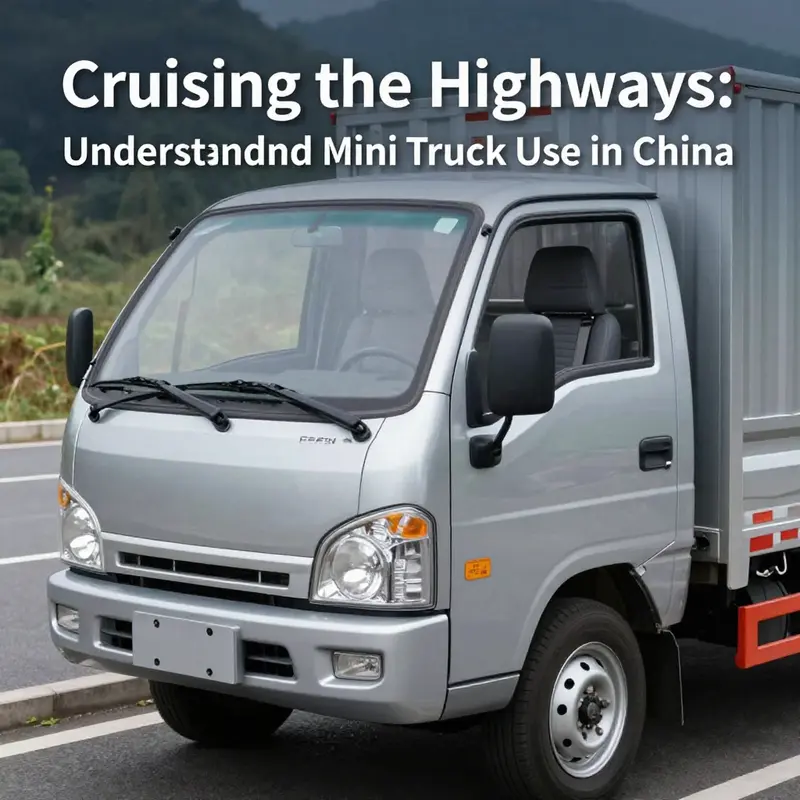
The question of whether a mini truck can legitimately share the highway is not simply a matter of speed or size. It is a question of design, capability, compliance, and judgment—the kind of equation that turns a good vehicle into a reliable partner on long, demanding drives. Across regions, the highway becomes a test of how well a compact workhorse can blend with heavier traffic, how predictable its behavior is when loaded, and how attentively its operator manages risk. In many places, including parts of China, the answer is yes, provided the vehicle meets a few clear requirements: it must be capable of sustaining a minimum driving pace, it must stay within legal weight and size limits, and it must be properly registered and maintained. But to translate those bare facts into usable practice, a driver needs a broader view—one that considers safety standards, regulatory nuance, and the practical realities of highway travel with a small cargo vehicle. That is the chapter’s aim: to weave regulatory threads, safety expectations, and everyday driving wisdom into a cohesive picture of how to operate a mini truck on the open road with confidence and responsibility.
Highway access for compact trucks rests on a set of conditions that are straightforward in principle, yet require steady attention in practice. In the Chinese regulatory context described in the initial research overview, the highway rule is pragmatic: vehicles designed for at least 70 km/h, or capable of reaching that speed reliably, and not explicitly prohibited from highways, are generally allowed. Weight matters, too. The total mass of vehicle plus cargo must stay within permitted limits for the class of vehicle. A blue-plate, or light-duty designation, often carries a 4.5-ton ceiling in some jurisdictions, and crossing that line can deny highway access. These rules are designed to balance the utility of mini trucks—their efficiency, maneuverability, and cargo capacity—with the safety needs of high-speed road networks.
In practice, that balance translates into a sequence of checks every driver should perform before setting out. First, confirm the vehicle’s capabilities: can the truck sustain highway speeds comfortably over hills and in adverse weather? Is it capable of maintaining a stable pace with a full load, without excessive strain on the engine or transmission? A truck that struggles to reach or hold 60–70 km/h on grades or in wind is a safety risk, not a road-saver. Second, verify the load. Overloading shifts weight distribution, reduces braking effectiveness, and can cause tire failure or suspension collapse. Proper loading means keeping the cargo within the vehicle’s rated limits and securing it so that it cannot shift, fall, or compromise visibility. Third, ensure documentation is in order: registration, inspection certificates, insurance, and any local permits required for highway operation. These elements aren’t bureaucratic hurdles; they are functional safeguards that protect drivers, other road users, and the vehicle itself on busy highways.
The highway environment presents its own set of demands that go beyond the numbers on a spec sheet. A mini truck behaves differently from a full-size pickup or a light commercial chassis when driven at highway speed. It has different moment of inertia, tire contact patch dynamics, and vertical load paths. Visibility is crucial, not only for the driver to monitor lane position but for other motorists to anticipate the truck’s movements. A modestly powered compact vehicle may rely more on precise steering inputs and early braking than on raw acceleration. This is especially true when the truck is loaded; the additional mass amplifies stopping distances and magnifies the consequences of a late lane change or an abrupt maneuver.
From a safety perspective, standardized features such as lighting, signaling, braking, and occupant protection become critical benchmarks. In a broader regulatory sense, the United States, for example, enforces federal motor vehicle safety standards (FMVSS) administered by the National Highway Traffic Safety Administration (NHTSA). These standards specify practical requirements that help ensure any vehicle on a highway has consistent, predictable safety behavior: adequate lighting and signaling for visibility and intent, reliable braking systems that include service and parking capabilities, and restraint systems that keep occupants protected in the event of a collision. They also address structural integrity through considerations like crumple zones and roof strength, aiming to protect occupants during impacts. Emissions and fuel efficiency, while primarily environmental concerns, intersect with safety and performance that influence long highway trips. Together, these standards create a baseline that applies across vehicle categories, ensuring that even compact work vehicles can perform safely alongside heavier traffic when built and maintained to spec.
The broader landscape of highway use also includes regional restrictions that affect mini trucks. Some areas limit access for certain vehicle classes on specific highways due to size, weight, or engine displacement. In regions where local rules are stricter, the driver needs to know not just the national or regional permit status, but also the particular road segments planned for the journey. A highway network is a tapestry of rules tailored to protect the flow of traffic, and that means a restless, well-informed approach to route planning. The prudent driver checks weather forecasts, road work notices, and any temporary restrictions that could alter the safety calculus of a planned trip. When routes include stretches with higher-speed limits or steeper grades, the necessity for robust braking performance, stable handling, and well-maintained tires becomes even more pronounced. The vehicle’s chassis, suspension, and tire condition interact with road surface quality and traffic density to determine driving comfort and safety margins.
A practical mindset for highway operation with mini trucks blends preparation, discipline, and situational awareness. Preparation starts with pre-trip checks: tire condition, tread depth, inflation pressure, brake responsiveness, lights, reflectors, and horn function. It includes ensuring cargo is appropriately secured and distributed so that the center of gravity remains stable and the load does not impede critical systems or windows. Discipline means maintaining a conservative speed when the cargo weight is high or when road conditions are less than ideal, and giving larger trucks ample following room on multi-lane highways where speed differentials can be significant. Situational awareness is the habit of continuously scanning the road ahead, the mirrors, and the blind spots around the vehicle, with the understanding that other drivers may misread a compact vehicle’s intentions. A minute of inattention on a highway can cascade into a dangerous event, especially for a small vehicle sharing space with much heavier and faster traffic.
The emotional and cognitive load of highway driving should not be underestimated. A mini truck often delivers a strong sense of efficiency and nimbleness, but highway driving rewards steadiness and predictability more than flashy maneuvers. The driver’s decisions—when to pass, how closely to tailgate, whether to accelerate on a grade, or how to merge into fast-moving traffic—carry amplified consequences when the vehicle is carrying a substantial payload. Therefore, the experiential wisdom that develops in practice emphasizes conservative choices in speed and risk, clear signaling, and disciplined lane discipline. The aim is not to conquer the highway with bravado but to coexist with other road users through dependable performance, clear communication, and careful restraint. This is the practical ethics of highway operation for compact work vehicles.
For readers seeking practical, experience-based insights on how compact trucks are configured for different missions, there is value in exploring community discussions and hands-on evaluations. The minitrucks blog, for example, offers a space where drivers compare configurations, discuss what works in real-world scenarios, and relay lessons learned from trips that test a vehicle’s limits without sacrificing safety. While the specifics of individual models are not the focus here, the collective wisdom of such sources helps illuminate how a small chassis can be tuned for highway reliability—drivetrain choices, suspension tuning for stability, securing cargo, and selecting equipment that enhances visibility and control on long journeys. If you want to explore this community perspective, you can refer to the minitrucks blog using the link below.
Beyond the rhetoric of compliance and common-sense driving, a chapter on highway operation for mini trucks must acknowledge the evolving nature of vehicle technology and safety features. Technological advances—ranging from more robust braking systems and electronic stability controls to improved lighting technologies and advanced driver-assistance systems—offer potential improvements in how compact trucks behave on the highway. Even when a vehicle remains a relatively simple, small platform, it can benefit from upgrades that enhance visibility, braking resilience, and occupant protection. Yet technology does not replace the need for sound judgment, proper loading, and regular maintenance. A well-maintained braking system will fade less quickly than an overworked one, and tires with adequate tread provide not only better traction but also more predictable reaction times when sudden steering input is necessary. Likewise, proper load securing reduces the risk of cargo shift that could destabilize the vehicle during a lane change or braking event. These are practical truths that hold regardless of the vehicle’s size or design.
In the regulatory conversation, it is useful to reference official safety authorities for authoritative guidance. In the United States, the NHTSA provides the federal standards that govern safety features and performance expectations for almost all motor vehicles, including compact trucks used on highways. The NHTSA resources lay out the anticipated baseline of safety that manufacturers must meet and offer drivers a framework for understanding how vehicles should respond under typical highway conditions. While these standards may be framed in a national context, their implications resonate globally: they encourage uniformity in essential safety elements, facilitate the safe integration of smaller vehicles into busy road networks, and help explain why certain safety practices are non-negotiable on open roads. The NHTSA’s vehicle safety guidance is a reference point for engineers, drivers, and regulators who seek to align practical highway use with rigorous safety expectations.
The broader takeaway for readers is straightforward: driving a mini truck on the highway is entirely feasible when the vehicle is purpose-built or appropriately configured for high-speed operation, when its weight and dimensions comply with the applicable rules, and when the driver commits to a disciplined, safety-first approach. This is not a celebration of speed or compactness alone; it is a recognition that highway safety thrives on predictability, maintenance, and respect for other road users. A small vehicle with a robust chassis and well-maintained systems can deliver reliable service on long trips, but only if the driver treats the highway as a shared space that demands courtesy, vigilance, and continuous attention to road conditions and legal obligations.
To bring all these threads into a cohesive practice, consider the following synthesis: verify that your mini truck meets local design speed and weight criteria, secure proper documentation, and conduct thorough pre-trip checks focused on braking, steering, tires, lights, and cargo restraint. Plan routes that avoid overly congested corridors during peak times, and factor in weather, road work, and potential detours. On the road, maintain a conservative pace that ensures you can respond to the unexpected well within your stopping distance, avoid abrupt lane changes, and use signals early and clearly. Keep a generous following distance from larger vehicles, anticipate wind gusts when crossing exposed spans, and be mindful of headwinds that can affect stability when loaded. If the route requires negotiating construction zones or uneven surfaces, slow down, increase observation, and adapt speed to the conditions. In short, highway travel with mini trucks is about harmonizing mechanical readiness with human judgment—an ongoing, dynamic practice rather than a one-off checklist.
Finally, it bears repeating that information about safety standards and regulatory compliance is not merely academic. It translates into tangible protections on the road: better visibility from proper lighting, more reliable stopping at all speeds, and structural designs that help mitigate injury in a collision. The federal safety framework, together with local regulations, shapes the environment in which drivers operate. It also influences the kinds of vehicles that are developed and marketed for highway use, ensuring that even smaller, more economical trucks can contribute productively to commerce without compromising the safety of those who share the road.
For readers who want to deepen their understanding of formal safety standards and how they apply to any light-duty vehicle, the National Highway Traffic Safety Administration (NHTSA) resource offers a comprehensive entry point. It provides the official safety standards, testing procedures, and guidelines that describe the expectations for lighting, braking, occupant protection, and structural integrity across vehicle classes. Engaging with these materials helps drivers assess whether a particular mini truck is appropriate for highway operation, and it also clarifies the responsibilities of manufacturers and operators when it comes to ongoing compliance throughout the vehicle’s life cycle. As with any vehicle used on public roads, safety is a shared responsibility among the vehicle owner, the operator, the maintenance team, and the regulatory authorities that set the rules of the road.
External resource: https://www.nhtsa.gov/vehicle-safety
Small Freighters on Big Roads: The Economic Calculus of Mini Trucks in Highway Logistics
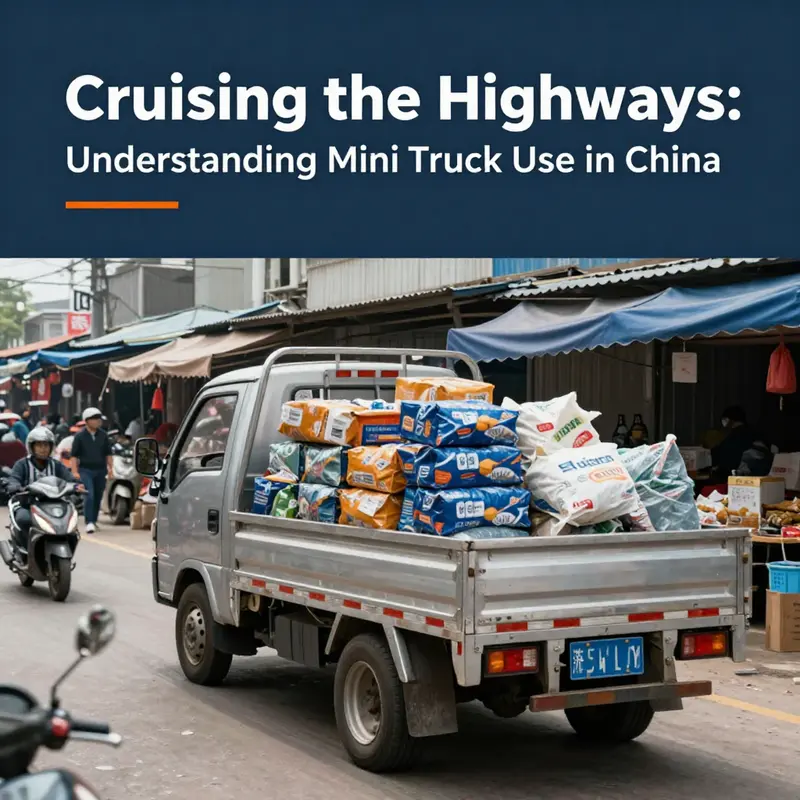
When we map the modern flow of goods, the highways become more than infrastructure; they are the dynamo of urban commerce and regional markets. A class of vehicles once considered marginal for long-distance travel—the mini truck—has begun to play a more pronounced role in the economics of moving freight over highway networks. This shift does not happen by accident. It rests on a regulatory framework that makes the highway a reachable, even preferred, corridor for certain light-duty freight movers, and on a set of cost structures that favor smaller, more nimble assets for specific transport tasks. In China, for instance, the pathway onto the highway is conditional yet clear: a mini truck can join the intercity flow provided it meets certain design, speed, weight, and documentation requirements. Specifically, the vehicle must be capable of reaching a design speed that positions it among road-going commerce tools, and it must not fall into prohibited categories such as electric bicycles, tractors, or non-motorized vehicles. The vehicle also needs to stay within legal mass limits, with many blue-plate, light-duty trucks required to keep total mass under 4.5 tons to remain eligible for highway access. There is a nuanced floor to speed as well—drivers should be able to sustain roughly 60 km/h, with many sources acknowledging 70 km/h as a practical minimum for steady highway operation. These rules create a legal threshold that can determine whether a given mini truck becomes a highway asset or remains a city-bound shuttle. The upshot is that highway viability for mini trucks rests on a triple condition: proper registration and inspection, adherence to weight and size limits, and the ability to maintain safe speeds when cruising among heavier commercial traffic. The result is a nuanced but clear permission slip that enables businesses to use mini trucks for longer legs of a journey without forcing escalation to larger fleet assets. The economic implications follow from that permission slip: a vehicle that is legally permitted on highways can participate in a broader range of logistics strategies, particularly those tied to last-mile and short-haul needs that characterize dense urban and peri-urban distribution networks. The combination of regulation and performance is a kind of market entry ticket that opens the door to highway-based operations for a vehicle category previously seen as a city solution or a local curbside handler. This boundary-crossing capability underpins a set of cost dynamics that can alter the economics of delivery for small businesses, municipal fleets, and regional shippers alike. The simplest way to see this is to compare the total cost of ownership and use between mini trucks and more traditional, larger delivery vehicles. While larger trucks carry more cargo per trip and can depend on higher mileage, they also incur higher purchase prices, steeper fuel consumption curves, and greater maintenance overhead. In urban environments where frequent stopping, sharp turns, and congestion dominate the middle miles of a route, mini trucks can outperform larger equivalents in fuel efficiency, maintenance frequency, and parking productivity. The numbers may be less dramatic in long-haul legs, but the efficiencies accumulate where road density, urban congestion, and load-to-velocity ratios favor smaller platforms. The result is a layered economic picture in which mini trucks shine in the last mile, where the pattern of arrivals, departures, and dwell times determines the true cost of delivering a parcel, a meal, or a time-sensitive shipment. The economic story, then, is not simply about the price tag of the vehicle itself. It is about how the vehicle’s size, speed, and maintenance profile interact with real-world traffic, urban infrastructure, and the finicky rhythms of city life to lower the marginal cost of each delivery. In that sense, mini trucks offer a form of asset portability that makes the overall logistics system more flexible and more resilient. A smaller, cheaper asset can be deployed with more frequent trips, reducing the inventory carried at regional warehouses and enabling tighter lead times with less capital tied up in stock. The economic advantages extend beyond motor fuel costs; they touch on parking overhead, loading dock utilization, and the throughput that a busy urban area can absorb. When a fleet can shorten the distance between a warehouse and a customer without invoking a larger, more expensive vehicle, the entire supply chain gains a degree of agility that is increasingly valuable in a market that prizes speed and reliability as much as price. Even the act of reducing parking and curbside friction translates into economic benefits. A city street that accommodates more well-timed mini-trips can reduce the time drivers spend idling, circling to find spaces, or waiting in queues with empty cargo. That, in turn, lowers operating costs and improves on-time performance, which matters to retailers, manufacturers, and service providers alike. The practical implications of this dynamic become more evident when we consider the rise of electric variants in the mini truck category. An electric mini truck, even with a modest top speed and limited range, can deliver a different set of economic advantages. In many contexts, such vehicles are priced around several thousand dollars, presenting a compelling total cost of ownership proposition in urban and peri-urban routes where charging infrastructure is accessible and the duty cycle involves frequent, short trips. The environmental benefits of electric operation—a reduction in local emissions and quieter operation in dense neighborhoods—are not just a public good; they can translate into lower regulatory costs and even favorable urban planning incentives for fleets that minimize air pollutants and noise in commercial districts. The reduced energy costs per kilometer and the potential for regenerative braking in stop-and-go traffic further tilt the economics in favor of electric mini trucks for certain delivery patterns. Of course, the embrace of electric mini trucks must be balanced with infrastructure realities. City planners and highway managers will want to ensure that charging, parking, and maintenance facilities align with the cadence of daily urban deliveries. Fleet operators will need to coordinate charging windows with peak traffic periods, a task that can be optimized with data-driven routing and support from telematics. The broader infrastructure story is equally consequential. The adoption of mini trucks promises lasting savings in public infrastructure investment and environmental compliance costs by shifting some freight activity away from heavier, more damaging vehicles. Lighter, slower, more nimble vehicles can reduce pavement wear in some contexts, potentially extending road life and lowering maintenance bills. Yet these benefits come with caveats. Traffic flow and safety considerations arise when more small, low-speed vehicles share the same arterial lanes with much faster, heavier freight and passenger traffic. The presence of micro-delivery fleets can alter highway dynamics, especially during peak urban hours, and this calls for thoughtful regulation and careful highway design adaptations. Signage, lane markings, and vehicle classification policies may need updates to reflect the evolving mix of freight on major roadways. The regulatory framework that enables the highway entry of mini trucks also creates a mandate for robust safety practices. Operators must ensure their vehicles are not only legally registered but also not overloaded and properly maintained. The risk of overloading or misclassifying a vehicle can undermine the very economic gains that permit highway access. For businesses, this translates into a duty to invest in preventive maintenance, driver training, and compliance monitoring. It also means insurance costs must reflect the actual risk profile of operations that include mini trucks on intercity routes, a factor that adds another layer to the total cost equation. In practice, the economic viability of highway-enabled mini trucks depends on aligning fleet composition with route structure and customer expectations. For urban routes with dense delivery windows, the combination of small payloads, high-frequency trips, and predictable stop patterns tends to maximize asset utilization. The same logic applies to last-mile distribution from urban warehouses to neighborhood hubs, where compact, maneuverable vehicles can navigate dense street networks more efficiently than larger trucks. When fleets incorporate mini trucks into mixed-modal strategies, they can bypass time-consuming chokepoints and reduce the reliance on larger vehicles for every leg of a journey. The result is a more flexible logistics fabric that can adapt to demand variability, seasonal fluctuations, and the growth of e-commerce, all while maintaining cost discipline. The broader economic implications extend beyond individual firms. Public sectors, logistics clusters, and regional economies benefit from a more resilient freight system that can operate with lower infrastructure stress and tighter delivery windows. This is not a one-size-fits-all narrative. The value of mini trucks on highways rises where there is strong urban density, well-planned micro-hubs, and a regulatory environment that rewards efficient, compliant operations. In places where highway design standards remain oriented toward larger vehicles, adopting mini trucks may require targeted adjustments—both in physical infrastructure and in governance—to ensure safe interoperability with other highway users. For businesses contemplating this transition, the practical decision hinges on a careful assessment of route length, road conditions, and the balance of fixed versus variable costs. The regulatory gate that allows highway use for these vehicles is part of a larger conversation about the role of small freight in modern supply chains. It invites a reevaluation of asset strategies, shedding light on how fleets can harness small, agile platforms to complement larger trucks rather than compete with them. In doing so, it opens up opportunities for regional economic gains, more efficient urban service delivery, and a more nuanced, cost-conscious approach to satisfying customer expectations in an era of growing logistics complexity. For readers seeking a more technical treatment of the freight mix and highway economics, a broader study of how freight vehicle types influence highway performance and maintenance costs offers a valuable lens. The Oregon Department of Transportation’s report Rough Roads Ahead 2 provides a thoughtful analysis of how disinvestment in highway infrastructure affects freight movement and the role of different vehicle types in maintaining economic competitiveness. It is a reminder that the micro-economics of a single mini truck can ripple through public budgets, transportation planning, and the overall reliability of the supply chain. For readers looking to explore practical perspectives and real-world cases, the topic is far from abstract. Numerous fleets are already integrating mini trucks into urban delivery schemes, seeking to balance speed, cost, and service levels in congested markets. In turn, this drives demand for supportive services—maintenance networks, battery technology improvements, and urban warehousing configurations—that collectively shape the long-run economics of highway freight. If you want to see how this translates into hands-on planning and day-to-day operations, the Mini Truck Blog offers a continuously updated window into the evolving practicalities of small-vehicle freight management. minitrucksocala.com/blog/ While the macroeconomics of mini trucks on highways are compelling, the micro-decisions within fleets determine whether a business captures the expected savings or falls short of them. Fleet managers must weigh vehicle choice against route structure, cadence, and customer service requirements. They must also consider regulatory compliance, loading practices, and the potential benefits of electrification. The balance is delicate: too aggressive a push toward smaller vehicles can inadvertently throttle capacity on routes that demand higher payloads, while a hesitant adoption can leave a business outpaced by competitors who leverage faster, more adaptable delivery networks. The most successful implementations tend to center on a clear mapping between the highway-access rules, the local urban network, and the specific service patterns a company seeks to support. In that alignment, the highway becomes not just a route for moving goods but a strategic platform that enables optimization across multiple tiers of the logistics network. The economic logic is therefore not merely about per-kilometer costs. It is about how a vehicle class enables more frequent, reliable, and predictable service within the constraints of urban infrastructure and regulatory policy. As these dynamics unfold, researchers and practitioners will continue to refine routing algorithms, load planning, and fleet composition to maximize the return on investment from highway-eligible mini trucks. The implications touch every part of the supply chain, from procurement and financing to field operations and customer experience. For anyone tracking the evolution of freight on highways, these developments underscore a broader truth: the economics of modern logistics increasingly hinge on the right mix of asset size, regulatory clarity, and urban design that supports fast, responsible, and scalable delivery. External readers seeking a deeper, systems-level perspective can consult the following resource on highway conditions and freight economics: https://www.oregon.gov/odot/reports/Documents/RoughRoadsAhead_2.pdf
Final thoughts
Understanding the intricacies of driving a mini truck on highways in China is essential for anyone looking to utilize this efficient vehicle for business or pleasure. From adhering to legal requirements and meeting safety standards to recognizing the economic advantages, mini trucks offer a versatile solution to many logistical challenges. Embrace the road with confidence—ensuring your mini truck is equipped and compliant opens doors to countless opportunities.