
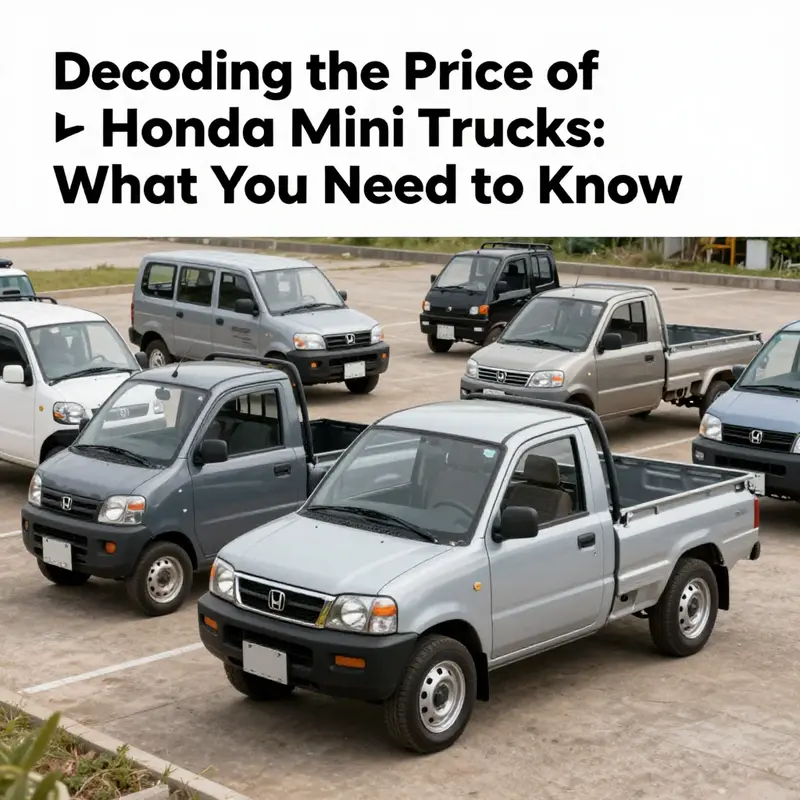
For local small business owners, residential property owners, and mini truck enthusiasts alike, understanding the costs associated with a Honda mini truck—or its closest equivalent—is paramount. Dive deep into the world of pricing, learn about the Honda Ridgeline and its unique features, and explore alternative models that may fit your needs and budget. Our goal is to provide you with a comprehensive overview to make informed decisions tailored to your requirements.
null
null
Why the Ridgeline Often Answers the Question ‘How Much Is a Honda Mini Truck?’ — A Practical Pricing and Capability Breakdown
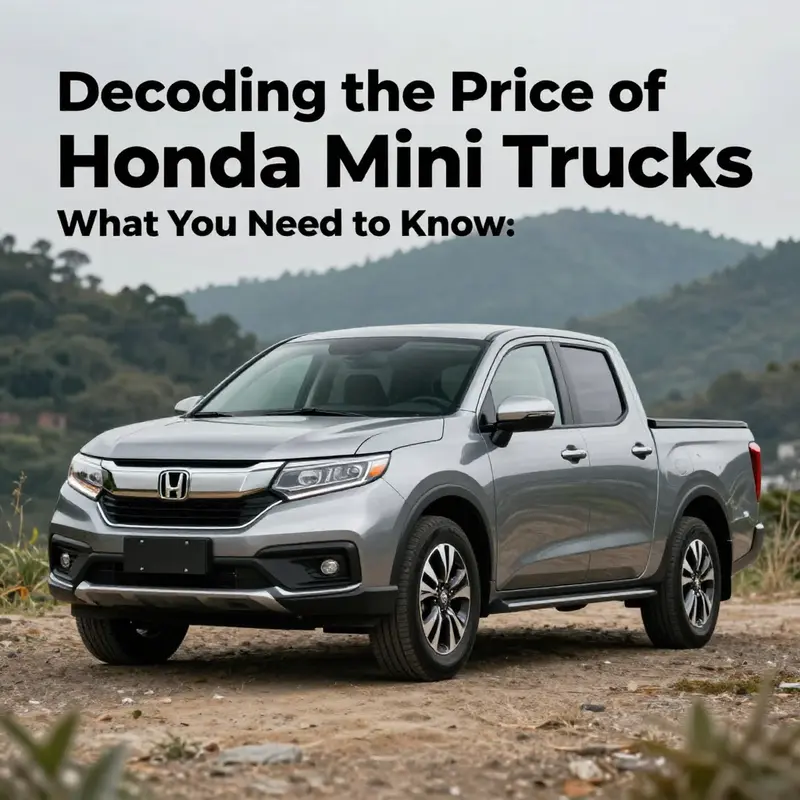
Understanding why people ask about a “Honda mini truck” starts with clarifying what that phrase usually means. Most shoppers imagining a Honda-branded mini truck picture a compact, economical utility vehicle that blends cargo capability with small size and low running costs. Honda does not sell a model officially labeled a “mini truck” in most markets, so the name becomes shorthand for any compact utility vehicle from the brand. The closest real-world match in Honda’s lineup is a unibody pickup that emphasizes comfort and everyday usability over heavy-duty work specs. Examining that model’s pricing, construction, capabilities, and trade-offs makes it easier to answer whether a Honda can deliver the mini-truck experience, and how much such an experience will cost.
From a pricing perspective, the important starting point is the manufacturer’s suggested retail price for the base model in the current model year. The entry-level versions of this pickup land at a figure that positions the vehicle squarely in the mid-size pickup segment rather than the micro-utility category many envision when they say “mini truck.” That base MSRP reflects not only the vehicle’s powertrain and cargo features but also a level of passenger comfort and technology that many true compact work trucks do not prioritize. For buyers whose priority is a tidy, efficient work shuttle, that price can feel high. For families and urban drivers who want a small pickup that behaves like a car, it can feel like a bargain.
Key elements behind the price help explain the gap between the mini-truck expectation and reality. First is the vehicle’s unibody construction. Unlike traditional body-on-frame pickups designed for maximum towing and extreme off-road punishment, this pickup uses a monocoque platform shared with a midsize SUV in the same brand family. That structure changes the fundamental trade-offs. It delivers a quieter cabin, smoother ride, and car-like handling. Those qualities require more refined suspension tuning and quieter interior components, which increases development cost and thus the sticker price. Buyers get superior everyday comfort, but they sacrifice the marginal durability and towing strength of a heavy-duty frame.
Under the hood, a naturally aspirated V6 supplies the power. The unit produces enough horsepower and torque to move the vehicle briskly and enable practical towing and payload capability for recreational users. Paired with a modern multi-speed automatic transmission and a standard intelligent torque-vectoring all-wheel-drive system, the powertrain aims for predictability and safety across varied conditions. Standard all-wheel drive contributes to the higher starting price but also broadens the truck’s practical use. Urban owners who confront seasonal weather or light off-road runs appreciate the enhanced traction, and the torque-vectoring system reduces the need for aftermarket traction tools when compared with simpler all-wheel-drive systems.
Cargo utility plays a major role in the vehicle’s identity. The bed is compact compared to full-size trucks but engineered with clever features to maximize usefulness. A composite cargo bed resists corrosion and reduces weight. Dual-action tailgate options let the owner adapt the opening style to confined parking spaces or quicker loading jobs. Under-bed waterproof storage with drainage turns the bed into a secure, weatherproof locker for tools and gear. Those hardware choices mirror the vehicle’s intention: deliver practical daily utility without the bulk of a full-size pickup. Payload and towing figures sit in a range that supports weekend trailers, small equipment, and heavier loads than a compact car can handle—but they stop short of the work-truck realm a contractor might require for constant heavy towing.
Equally significant to buyers is the vehicle’s focus on occupant comfort and in-cabin technology. Independent front and rear suspension, a relatively refined interior, and a large central touchscreen create an experience much closer to an SUV than a bare-bones truck. A full suite of active safety features, including adaptive driver assists and automated braking systems, comes standard and contributes to the base price. For people who spend significant time in traffic or value advanced safety technology, the experience justifies that cost.
How that translates to value depends on intent. If you want a “mini truck” strictly for low-cost utility and minimal creature comforts, this pickup is not the cheapest route. Small, kei-class trucks and mini utility vehicles in other markets have much lower purchase prices and simpler mechanicals. But those options typically lack modern safety systems, refined ride quality, and the storage or towing capacities many buyers need. The pickup in question occupies a middle ground: it is a compact, easy-to-live-with truck that behaves like a family car while offering more cargo and towing flexibility than a crossover.
Practical buying considerations expand beyond the MSRP. Dealer pricing, regional taxes, destination fees, package options, and local incentives all influence what a buyer will actually pay. Optional trim levels add features such as improved infotainment, unique exterior styling, off-road-oriented suspension tuning, upgraded interiors, and larger wheels. Each option drives the price upward, sometimes quickly. Buyers should balance the marginal benefit of each package against the real-world tasks they intend for the truck. Often, the base configuration supplies nearly all functional capability for typical small-truck uses, making many of the higher-cost packages lifestyle upgrades rather than necessities.
Ownership costs are another dimension where this vehicle differs from simpler mini trucks. Fuel consumption with a mid-size V6 will be higher than that of a small-displacement mini truck or a compact utility van. Routine maintenance and parts costs will reflect the vehicle’s complexity: independent rear suspension, modern engine management systems, and advanced electronics increase repair complexity but also improve longevity and safety when properly maintained. Insurance rates may track closer to SUVs and crossovers due to the vehicle’s passenger-car-like safety features and target buyer profile. For someone trading off some fuel economy to gain comfort and technology, the ownership experience often justifies the increased ongoing costs.
A close look at towing and payload specifies where the vehicle fits between mini trucks and full-size pickups. The maximum towing capacity is sufficient for small to medium trailers, boats, or recreational vehicles under a common weight threshold. Payload figures allow for heavy loads typical of landscaping supplies, small machinery, or multiple pieces of cargo for light commercial use. The unibody structure means that the vehicle will behave differently under heavy loads than a body-on-frame truck; ride height, handling, and long-term robustness under repeated heavy use will be less forgiving. For buyers who need occasional towing and everyday comfort, the numbers are adequate. For fleets or owners requiring daily, extreme loads, the design and numbers recommend a more traditional truck.
Real-world use cases clarify why many people ask about a “Honda mini truck” when they discover this pickup. Urban professionals who double as weekend adventurers appreciate a vehicle that fits in city garages yet carries bikes, camping gear, or a small trailer. Families who want pickup practicality without sacrificing passenger comfort value the smooth ride and cabin refinement. Small-business owners whose work involves light hauling but also client-facing appointments like delivery professionals or landscapers in less-intensive markets find the vehicle strikes a good balance between capability and presentation. That mix of traits is why the pickup often becomes the default answer to the mini-truck question: it gives many of the practical freedoms small business and lifestyle owners seek from a compact utility vehicle, but packaged for modern consumers rather than traditional tradespeople.
Shopping tips help buyers convert interest into a smart purchase. First, prioritize core needs: list the heaviest loads you expect to carry, the longest trailers you might tow, and the daily passenger comfort you require. Compare those needs to the base payload and towing ratings, and evaluate whether the unibody platform will meet long-term expectations. Next, test-drive both back-to-back with a full-size truck and with smaller export-market utility trucks if available. The contrast makes the trade-offs clear: you feel the ride and handling difference, and you sense how the bed size and tailgate action meet practical loading tasks. Third, inspect warranty coverage and available service networks in your area. Vehicles with more complex systems benefit from robust dealer support and clear warranty terms.
For shoppers focused on value, timing and negotiation can help. Manufacturers frequently offer seasonal incentives, dealer financing deals, or trade-in bonuses that bring the actual purchase price below advertised retail. If you don’t need the latest model-year features, certified pre-owned examples from recent years retain much of the driving and safety experience at lower cost. A careful pre-purchase inspection is crucial for used models, with attention to wear items and documented maintenance that ensures long-term reliability.
Finally, consider lifestyle fit beyond pure specs. The vehicle’s design philosophy favors owners who want a vehicle that does many things well rather than one extreme job perfectly. That philosophy underpins the price and the standard equipment list. For many buyers asking, “How much is a Honda mini truck?” the answer becomes: expect to pay a mid-size pickup price for a vehicle that feels like a high-quality crossover, but performs utility tasks better than most crossovers. The added cost buys comfort, refined driving dynamics, modern safety, and flexible cargo solutions—features that owners come to rely on during everyday use.
If you are looking for detailed, official specifications or want to confirm the latest pricing and configurations for your region, consult the manufacturer’s official vehicle page for the current model year. The official resource lists standard equipment, option packages, and MSRP for each trim, and it provides contact information for local dealerships where you can verify incentives and availability. For further reading about small trucks and alternative compact utility solutions, the Mini Truck SoCal blog offers discussions and community perspectives on how compact trucks and camper conversions compare in real-world use.
External reference: https://www.honda.com/ridgeline/
Internal resource: For broader context about compact truck lifestyles and conversions, see the Mini Truck SoCal blog at https://minitrucksocala.com/blog/.
null
null
Final thoughts
In conclusion, while Honda does not officially offer a mini truck in most markets, understanding the pricing dynamics of comparable vehicles like the Honda Ridgeline can help you make informed purchasing decisions. There are many alternatives in the market, each with unique features and price points that cater to various needs. By exploring these options, you can find a vehicle that meets your utility requirements and aligns with your budget.