
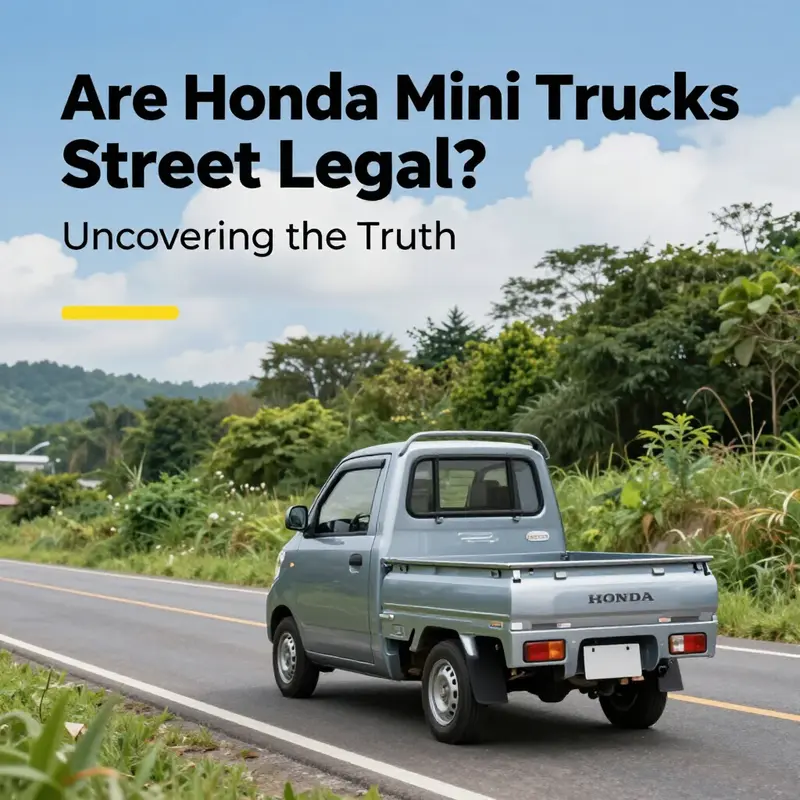
Honda mini trucks have captured the excitement of enthusiasts and small business owners alike, but the pressing question remains: are they street legal? With the rise of mini trucks as functional vehicles for businesses and personal use, understanding their legality is vital for potential owners. This article will delve into the nuances of Honda mini trucks’ status on public roads, dissecting compliance with regulations, practical considerations, and exploring alternatives for those looking for a street-legal option. Join us as we navigate through critical insights that inform your decision-making journey with mini trucks.
Understanding the Legality of Honda Mini Trucks on Stadia: Debunking a Mistranslation of Roads and Rules
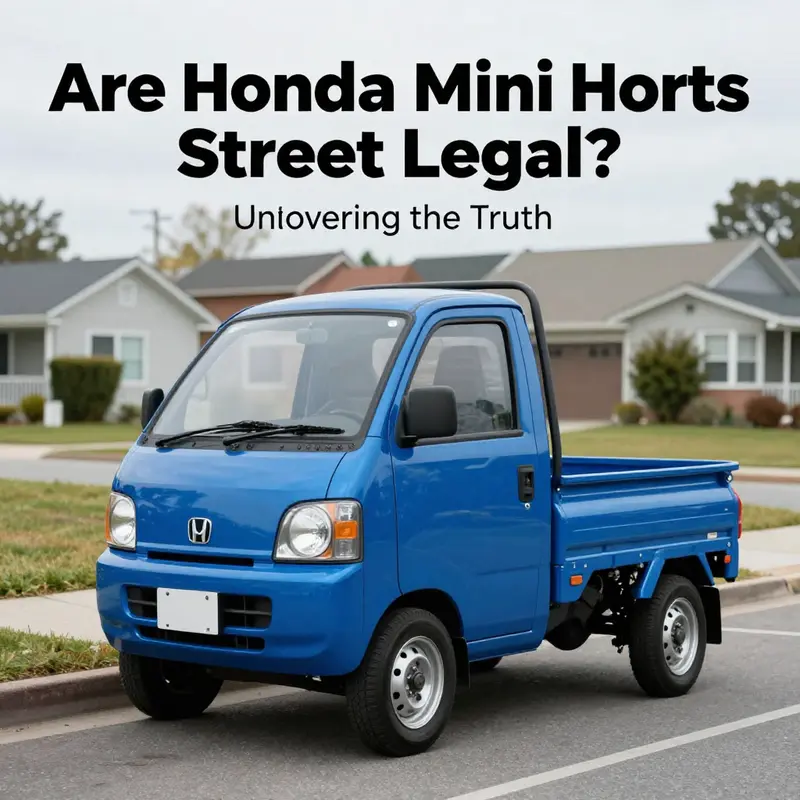
Regulatory clarity is essential when evaluating whether a small, Honda-inspired mini truck can legally operate on public roads. In many jurisdictions, legality is not guaranteed by appearance or branding alone but hinges on documented compliance with safety, emissions, and vehicle-identity rules. A vehicle with a silhouette reminiscent of a kei-truck may still require a formal path to on-road use, including a verifiable VIN, compliant lighting and signaling, seat belts, mirrors, and braking systems that meet local standards. Where a jurisdiction uses import rules or age-based exemptions, owners must navigate those provisions with careful attention to both federal and local requirements.
In North America, the 25-year rule often figures prominently: older vehicles may be imported under relaxed federal safety requirements, but registration and state compliance remain necessary. The precise thresholds and procedures vary by state and by how officials interpret the vehicle’s origin, designation, and documentation. A similar logic applies in other regions: a vehicle may receive a regional approval or type-approval, or it may be imported under a specialist scheme that permits non-standard origins to operate legally after testing and certification. The common thread is that paperwork, testing, and traceable identity are prerequisites to road use.
Practically, the process usually starts with confirming the vehicle’s identity through a VIN, chassis number, or other regulatory identifiers, then verifying the applicable standards for lights, brakes, tires, occupant protection, and emissions. If a vehicle lacks a local type-approval, an importer may pursue post-market conformity or a retrofitting path to meet the norm. The outcome depends on the jurisdiction’s tolerance for non-traditional designs, the ability to demonstrate compliance, and the willingness of authorities to issue registration and plates. Ultimately, the question of street legality is a function of jurisdiction, documentation, and verification rather than branding or nostalgia.
For readers seeking practical guidance, consult official government resources on vehicle imports and compliance in your region. In the United States, this typically involves the federal import framework and state-level registration requirements, which together define the pathway from showroom concept to road-legal vehicle. Always prioritize a precise alignment between the vehicle’s specifications and the regulatory expectations, and be prepared for a documented verification journey rather than assumptions based on a familiar logo or silhouette.
Honda Mini Trucks on Public Roads: Navigating Global Compliance and Street-Legal Realities
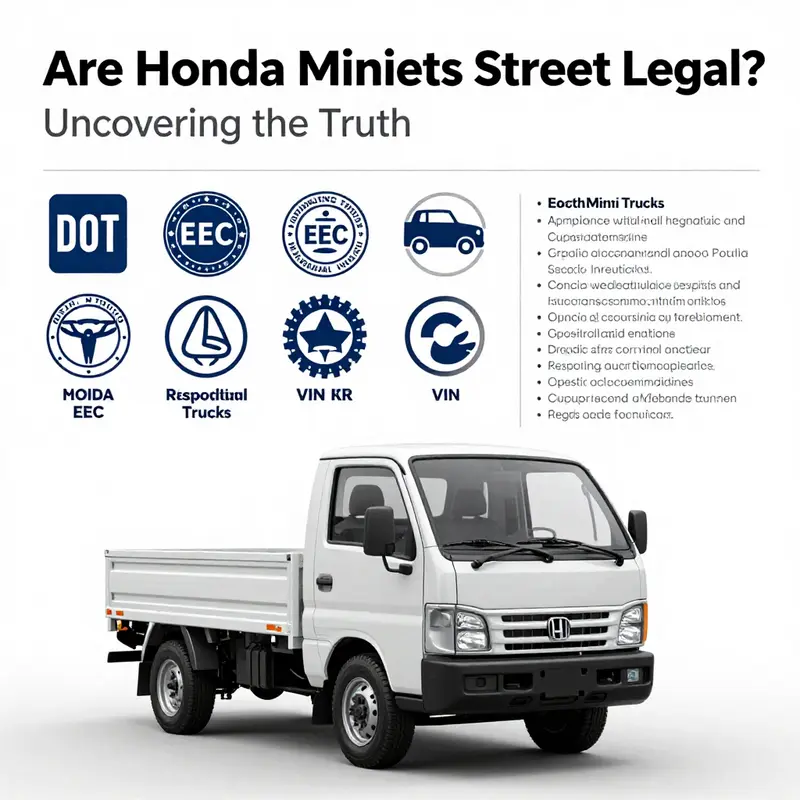
When people ask whether Honda mini trucks are street legal, they are really asking about a larger, more intricate question: does a compact, low-speed utility vehicle have the right to share public roads in a given place, and what rules must it satisfy to do so? The short answer is never a blanket yes or no. Street legality is a function of jurisdiction, vehicle type, and the specific stage of a vehicle’s life cycle—from design and certification to registration and ongoing compliance. In the broader landscape of small, light-duty trucks, Honda’s historical footprint skews toward compact utility solutions designed for grazing farm lanes, small business runs, and tight-site operations. Those configurations, while familiar in rural yards and urban back lots, do not automatically confer highway-legal status in every market. Yet the market has evolved. Today’s micro and mini trucks—especially electrified ones intended for last-mile and intra-urban logistics—are purpose-built to satisfy a mosaic of emissions, safety, and road-use requirements across different regulatory regimes. This chapter threads together the regulatory threads that determine street legality, bearing in mind Honda’s brand identity and the way regulatory bodies classify and certify small utility vehicles. It also foreshadows how a consumer navigates registration, compliance, and practical deployment on real streets, rather than in the showroom or the farm field. The question is less about a single model and more about a spectrum of vehicle categories that share one common trait: their ability to operate on public roads hinges on meeting explicit rules that vary by country, state or province, and even city. For readers seeking a concise entry point into how these vehicles are evaluated in practice, consider the broader conversation around the micro-truck category and how it intersects with regulatory expectations. A good starting point is to survey the general landscape of street-legal micro trucks, then drill into the specifics that authorities require before a vehicle can be driven from a dealer lot to a public road. In many markets, the key elements—VIN, model year designation, emissions compliance, safety equipment, and proper licensing—form a predictable checklist, even when the underlying standards differ. When this topic is placed beside Honda’s long-standing presence in the compact-vehicle space, it becomes clear that the company’s historical models were built to a different regulatory rhythm than modern urban micro-trucks. Honda has produced a family of small, practical vehicles that excel in light-duty tasks. The heritage here matters because it helps explain why the question of street legality sits at the intersection of vehicle design philosophy, regulatory adaptation, and market needs. It is not simply a matter of whether a vehicle exists; it is about whether the vehicle in question has been certified to meet the standards that govern the road use of its class in a given jurisdiction. The practical implication for buyers is that, even when a brand carries legitimacy in one segment, the road-warrant must be earned anew for each regulatory terrain. In this sense, the street-legal status of a Honda mini truck, or any similar entry in the micro-truck family, rests on the same pillars that support the street legality of any compact utility vehicle: certification, conformity, and compliance across a framework of formal approvals, inspections, and registrations. Emission standards, crashworthiness, lighting, braking, seat belts, glazing, and tires all play their part in this story. Across regions, the specifics of what counts as acceptable compliance can shift, sometimes subtly and at other times in more dramatic ways. For example, in regions that emphasize urban air quality and low-emission zones, a vehicle may need a particular drivetrain configuration or certified propulsion system to qualify for on-street operation. In other markets, the emphasis may be on safety and testing regimes that reflect a country’s approach to roadworthiness. The regulatory picture becomes even more complex when a vehicle sits somewhere between a traditional light-duty truck and an environmentally constrained urban courier. These are the very scenarios in which modern, electrified micro trucks have found their footing, offering a blend of utility, efficiency, and compliance that older, conventionally powered compact trucks did not always promise. The modern reality is that a street-legal status is not a fixed attribute of a vehicle’s name or a brand’s reputation; it is a set of certifications that a vehicle must earn and maintain. In practice, that means confirming that the vehicle carries a valid VIN and a recognized type approval or conformity mark appropriate to the market. It means verifying that the vehicle complies with local and national emissions standards and that the lighting, signaling, and occupant-protection systems meet the regulations in force. It means ensuring that the vehicle can be registered, titled, insured, and used on public roads without special exemptions or homemade modifications that would undermine standardized safety and emissions controls. The distinction between an on-road-ready machine and one that is legally restricted for street use often hinges on whether the vehicle has passed the exacting tests and the paperwork that demonstrate it meets those tests. And the paperwork matters in two directions: it proves to regulators that the vehicle is compliant and it provides a path for owners and operators to license and operate the vehicle in ordinary traffic. The landscape is nuanced not only by geography but also by the intended use-case. A micro truck designed for last-mile delivery in dense urban cores may be built to meet tight urban particulate and noise standards. Its top speed, acceleration profile, and braking characteristics are engineered to accommodate rapid urban routing while respecting pedestrian safety norms and city designation rules. In a separate vein, a farm-focused mini truck—valued for its utility rather than its highway performance—may not prioritize high-speed stability or highway-grade crash features to the same extent, yet it still must meet the safety and road-use rules applicable to its class if it is to operate on public roads as a convenience vehicle. The divergence in expectations underscores the central point: street legality is not a universal stamp, but a conditional credential that reflects the vehicle’s design intent, its certification pathway, and the regulatory appetite of the jurisdiction where it is operated. The practical implications for prospective buyers or fleet managers are clear. First, identify the regulatory environment in which the vehicle will be used. If you are in a market with strict emissions regimes or urban-low-emission mandates, verify that the vehicle’s propulsion system is certified and that the corresponding displacement or powertrain configuration has the necessary approvals. Second, confirm that the vehicle carries a vehicle identification number and the type approvals or conformity documents required by the market. These documents are not mere paperwork; they are the bridge between innovation and lawful operation, and they anchor the vehicle in a system of road-use accountability. Third, assess the safety and equipment prerequisites that the jurisdiction demands: reliable lighting and signaling, appropriate reflectors and mirrors, seat belts for occupants, and a generally robust braking and steering system that aligns with the expectations for on-road operation. It is not unusual for a vehicle to be street-legal in one country while requiring modifications or even prohibitions in another, especially when the vehicle straddles categories such as light-duty truck, neighborhood utility vehicle, or micro electric delivery van. The regulatory mosaic also means that information gathering is essential. Consumers should consult official sources such as national environmental agencies for emissions data and the transportation safety authority for vehicle safety standards. These agencies publish data on certified models, compliance status, and the regulatory pathways that enable road use. In addition to formal regulatory references, practical steps for evaluating a vehicle’s street-legal status include a careful review of the vehicle’s type-approval certificate, a VIN verification, and an understanding of the registration and insurance requirements in the intended area of operation. The interplay between regulatory regimes and vehicle configurations becomes even more important when the conversation shifts to the growing wave of micro electric trucks designed for urban logistics. These vehicles are often introduced specifically to meet aggressive urban environmental targets and to provide a payload-friendly, maneuverable option for city corridors where traditional larger trucks encounter restrictions. In this context, the question of street legality acquires new dimensions: a model may be engineered to operate at modest speeds, yet still require approval pathways that recognize its electrified drivetrain as compliant with local or regional emissions frameworks. The result is a practical, regulated option for on-street use that aligns with the city’s plans for cleaner air and more efficient micro-mupply chains. As readers consider how such a vehicle would fit into their own operations, a few guiding principles emerge. First, treat street legality as a process, not a product label. It involves certification, inspection, and ongoing compliance. Second, prioritize documentation and verification. A vehicle’s ability to be registered rests on robust proof of conformity and a demonstrable safety profile. Third, recognize that the landscape can evolve. Regulations can tighten or loosen in response to new technologies, new safety insights, and changing urban planning goals. For anyone exploring how a compact, utilitarian vehicle from a well-known automaker would navigate these waters, it helps to keep a close eye on the regulatory press—new type-approval decisions, updates to emissions data, and shifts in municipal or federal road-use policies all shape what is possible on a given day. For deeper context about how this topic ties into broader industry trends and model-level comparisons, readers may wish to explore the mini truck blog for discussions on specifications and market variations that affect road-legal status across different regions. mini truck blog. The blog explores how small, low-speed cargo vehicles are being evaluated and compared in terms of performance, safety, and regulatory acceptance, offering a practical lens on how buyers navigate the maze of approvals and certifications. In parallel, it is useful to be aware of the authoritative external data sources that regulators rely on to certify or deny road-use eligibility. The U.S. Environmental Protection Agency and related authorities maintain data repositories that summarize emissions standards, test results, and model-by-model compliance. While a single page may not capture every regional nuance, these datasets provide a baseline for understanding what kinds of powertrains and configurations tend to align with current enforcement and incentives. Keeping that data in view helps bridge the gap between what a vehicle can do in theory and what it can do on the street. The practical upshot is that, even for a brand with a long history of compact utility vehicles, the street-legal status of any given mini truck sits on a foundation built from certification, conformity, and compliance across the relevant regulatory environment. As urban transportation needs continue to evolve, the market will likely see more models designed to meet stringent urban standards while delivering the payload and maneuverability that define mini trucks. Buyers interested in any potential street-legal pathway should begin with a clear understanding of the jurisdiction’s requirements, then verify the vehicle’s documentation and certification status, and finally plan for registration, insurance, and, if needed, any modifications that authorities accept as part of a lawful configuration. The regulatory framework, while complex, is not an obstacle when approached with a structured checklist, reliable sources, and a readiness to align with the rules rather than attempt to bypass them. Embracing that approach helps ensure that the practical benefits of these compact vehicles—their small footprint, cargo efficiency, and urban suitability—can be realized without compromising safety or legality. In sum, the street-legal status of Honda mini trucks is not a fixed attribute but a dynamic outcome of design intent, certification processes, and jurisdictional rules. The more clearly a vehicle’s compliance story is documented and maintained, the more smoothly it can participate in everyday road networks. For those seeking further practical guidance on how certain small trucks stack up in terms of specs and features, a useful point of reference is the mini truck blog mentioned earlier. There, readers can gain hands-on insights into how different configurations perform and what regulatory hurdles they tend to encounter across markets. From a consumer perspective, the most reliable path to on-road legitimacy is a careful, document-backed approach: confirm the VIN and conformity status, verify emissions approvals, ensure the presence of required safety equipment, and complete the legal processes for registration and insurance. This approach protects both operators and the public while allowing the advantages of compact, versatile vehicles to be realized without ambiguity. Finally, for those who want to cross-check regulatory data beyond narrative guidance, official emission and safety databases provide a foundational reference. These external resources, while regional in scope, offer standardized criteria that help translate regulatory language into practical expectations for vehicle readiness. External regulatory data from these sources can illuminate the path from showroom concepts to street-ready machines, ensuring that the journey from design to road use remains compliant and responsible.
From City Streets to Street Legal: Navigating Compact Kei Trucks from a Major Japanese Automaker
In the growing interest around compact kei trucks, the question of street legality sits at the heart of urban mobility and practical choice. These tiny workhorses attract many with their nimble handling, frugality, and the sense that a well-tuned micro truck can slip through crowded streets where larger vehicles struggle. Yet the leap from showroom stories to legal road use is not automatic. It hinges on a dense matrix of regulations that vary by country, region, and even by city. The chapter that follows treats Honda like a shorthand for a broader class of compact kei trucks that once defined rural and urban tasks in Japan and have found a new, contested life on other public roads. The aim is not to chase a single model or brand but to illuminate how the street legal question emerges in practice, what standards must be met, and how owners navigate a landscape that rewards diligence as much as it rewards clever engineering.
A core feature of this landscape in the United States is a tension between the pace of importing older, smaller trucks and the pace of applying the rules that keep roads safe. The federal framework offers a gateway rather than a guarantee. Vehicles manufactured more than a quarter of a century ago can be imported and registered with far fewer hurdles than modern vehicles. This 25 year threshold is a well known entry point for many imported classics and Kei style trucks. It does not, however, automatically convert an imported vehicle into a legally drivable machine on every street in every state. Lawmakers, regulators, and local departments of motor vehicles impose separate checks that can tilt the balance toward or away from street legality.
The practical consequence of this arrangement is that the same vehicle might be street legal in one state and require more work in another. Over twenty states have moved toward welcoming these compact vehicles, recognizing their utility in dense urban zones, logistics yards, and small business operations. The nuance comes with interpretation. A vehicle that is technically eligible for import due to age might still need to satisfy state level conditions. Some states emphasize safety readiness, requiring a recent inspection that confirms the vehicle is roadworthy. Other jurisdictions weigh emissions and noise, particularly in regions with strict environmental regulations. Still others require modest but specific equipment updates before a title can be issued and a plate can be affixed. The interplay of federal age rules and state roadworthiness standards creates a patchwork that demands careful navigation before any road test or trail drive.
To understand what this means in real terms, consider the elements regulators typically scrutinize once an older compact truck arrives on a state’s doorstep. First is the vehicle identification number, or VIN, which anchors the vehicle to its regulatory history and its eligibility for insurance and registration. A legitimate VIN is more than a mere label; it is a signal that the vehicle’s identity has been checked against records of recalls, safety campaigns, and prior registrations. Second, the vehicle must often demonstrate some compliance with recognized standards for lighting and signaling. Headlights, tail lights, turn signals, brake lights, and reflectors are not optional ornaments. They are the language by which the vehicle communicates with other road users, and they must meet the recognized minimums for brightness, alignment, and durability. Mirrors are another constant. A street legal truck must offer adequate rear and side visibility to protect both the driver and pedestrians in urban settings where weaving traffic and frequent stops demand clear sight lines.
Beyond visibility and signaling, the seating and restraint systems come under scrutiny. The use of seat belts is not merely a comfort feature; it is a safety duty. In many jurisdictions, retrofits that align with modern safety expectations—such as properly anchored seat belts and intact mounting points—are essential. The brake system, including discs or drums, depends on the specific model but standard practice calls for predictable stopping power with a stable, well-maintained pedal feel. The tires themselves, especially in imported or older vehicles, must meet basic safety thresholds. In some cases, DOT or equivalent certifications may be sought to verify performance and reliability in common road conditions. The integration of a license plate mounting and the visibility of a VIN plate are not cosmetic; they are the permission slip that shows the vehicle has been prepared for road use in accordance with local rules.
Yet it would be a misstep to view the roadworthiness checklist as a static barrier to entry. The reality is that many owners build a path through compliance with a forward looking mindset. They begin by verifying the legality of the base vehicle through official channels, which may include the state DMV or its national equivalents, to understand the exact requirements in their jurisdiction. They then gather or confirm documentation for import records, age, and any certifications. This process often reveals that the vehicle needs certain enhancements to meet local expectations. For some, that means basic cosmetic and safety updates such as new lighting assemblies, improved mirrors, and a secure license plate bracket. For others, it involves more substantial work, including brake upgrades, wiring harness checks, and mount points that secure essential safety equipment. The aim is not to make the vehicle a modern car but to ensure it does not pose a risk to the operator or to other road users. The careful balance of preserving the vehicle’s compact charm while presenting a roadworthy profile becomes, in practice, a negotiation with the regulatory environment.
The practical realities of parts and maintenance follow closely behind the question of legality. Imported and older vehicles typically lack easy access to original parts in many markets. The result is a reliance on specialized importers, salvaged stock, and community-driven repair knowledge. Injections of DIY resourcefulness—tracking compatible brake parts, sourcing light assemblies from closely related models, and adapting mirrors or mounting brackets—are part of the everyday toolkit for owners who want to keep a small, efficient truck on the road without breaking the bank. This is not merely about cost; it is about ensuring that a vehicle that was never designed with modern supply chains in mind can still operate safely in a world that places a premium on reliable parts supply and predictable performance. Awareness of these practicalities is essential, because even small delays in obtaining spares or troubleshooting common failures can stall registration or a planned daily route.
Insurance, another often overlooked piece of the legality puzzle, can pose its own challenges. Specialty insurers with experience in classic or imported vehicles are sometimes the most reliable partners. They understand the unique risk profiles of kei style trucks and can help structure policies that cover the vehicle’s value, its use cases, and the potential liabilities that may arise in urban or rural settings. The outcome is not merely a matter of price; it is about securing a policy that recognizes the vehicle’s character while ensuring adequate coverage for everyday use, accident scenarios, and potential theft or vandalism. The variability from one insurer to another and from one state to the next reinforces the message that street legality is a moving target. Prospective owners must verify the coverage options early in their planning and be prepared to adjust their plans if a given policy requires modifications or a different usage allowance.
Despite the challenges, a growing and supportive ecosystem makes this path more navigable than in the past. The appeal of these compact trucks is not only about their practicality or their economy; it is about a certain charm that resonates with urban drivers who crave simplicity and responsiveness. Enthusiast communities and online forums provide practical guidance, experience sharing, and updates on regulatory shifts that can affect road use. For those who want to engage with the wider ecosystem and gain insights beyond the official pages, the minitrucksCa blog offers a lens into practical experiences, build tips, and the daily realities of living with a Kei style truck on public streets. For ongoing discussions and practical tips, see the minitrucksocala blog. The dialogue in those spaces often translates into on the ground steps that help a prospective owner verify the legality of a vehicle before purchase and navigate the necessary steps after arrival.
Beyond the binary question of whether a vehicle qualifies as street legal, there is a broader conversation about the role of regulation in shaping urban mobility. The appeal of compact kei trucks stems in part from their ability to deliver efficient payloads with a minimal footprint in congested environments. When regulated appropriately, these vehicles can ease competition for curb space and help small businesses deliver goods in urban cores while keeping emissions and noise lower than larger work trucks. The legal framework, then, is not a gate but a guide that helps owners adjust their expectations about out of pocket costs, parts access, and the timeline for full road use. This perspective encourages owners to treat compliance as a project that unfolds over time, rather than a single hurdle to clear.
In the end, the truth about street legality for compact kei trucks owned by a major Japanese automaker is that there is no universal stamp of approval. The approach is incremental and practical, anchored in the age of the vehicle, the regulatory posture of the locale, and the quality of the compliance work performed by the owner. For some drivers, the outcome is a vehicle that meets all local requirements with modest updates and careful documentation; for others, the process reveals why the road legal status is a moving target shaped by evolving safety expectations, environmental standards, and the availability of parts. Yet the continued interest in these vehicles shows that many drivers are willing to invest the time to understand the rules and to build a road ready machine that aligns with both personal needs and the broader goals of safe and efficient urban mobility. The journey from garage to street is not simply about owning a small truck; it is about translating the vehicle’s compact agility into a legally sound and practically reliable daily tool.
External resources and real world guidelines can provide concrete help as part of a broad preparation strategy. Those who want to dive deeper into regulatory specifics and current practice can consult official resources and community knowledge. For a starting point on community discussions and practical tips, explore the Mini Trucks blog. External readers who want to see a broader regulatory picture and current enforcement standards can turn to national highway safety resources that summarize how the road system handles older, smaller vehicles. As always, the precise path to street legality will depend on where the vehicle is intended to operate and how the owner approaches the required checks, documentation, and upgrades. The road to a legally drivable kei truck is a careful balance of age, compliance, upkeep, and local interpretation of the rules, a balance that many drivers already navigate with patience and perseverance.
External resource: https://www.nhtsa.gov/vehicle-safety
Legal Lanes for Tiny Workhorses: Are Honda Mini Trucks Street Legal?
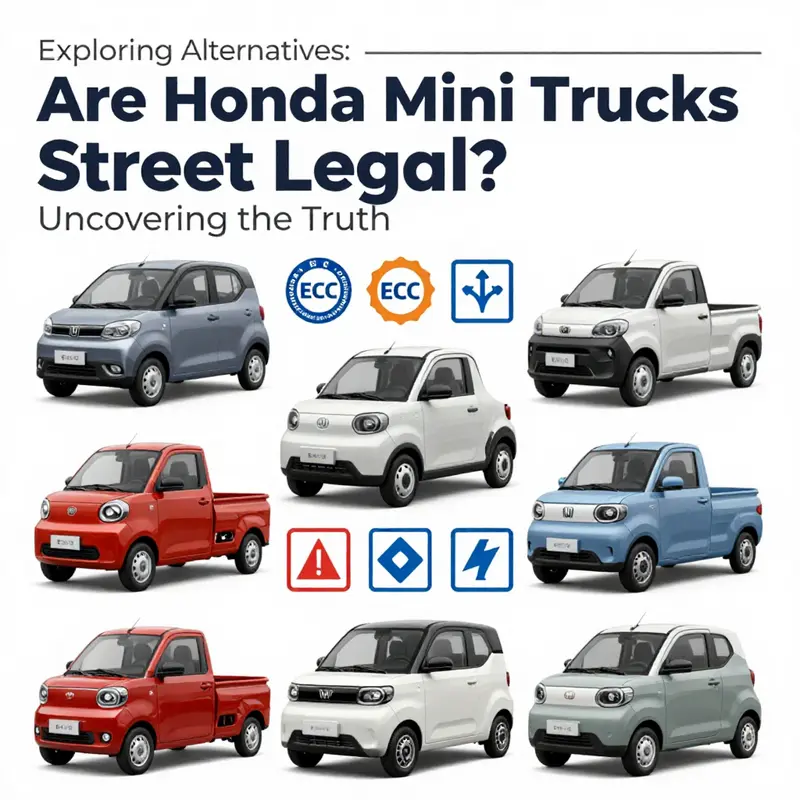
The question of whether Honda mini trucks are street legal sits at the intersection of branding, design, and the patchwork of local regulations that govern what can travel on public roads. To begin with, there is no official model in Honda’s current lineup that carries the specific label mini truck as a mass production name. That absence matters because street legality is often tethered to a vehicle’s official classification, its certifications, and the regulatory path a given model must travel before it can share lanes with bigger, mainstream vehicles. Yet the broader topic remains urgent for anyone curious about small utility vehicles: if a tiny truck is designed primarily for yard work, farm use, or compact urban deliveries, can it be made and registered as a legally drivable vehicle on public roads? And if so, under what conditions and where? The literature and regulatory chatter suggest a nuanced answer that varies by jurisdiction, by the vehicle’s actual specifications, and by the processes a buyer or importer is willing to undertake. In other words, the story is less about one model and more about a spectrum of paths toward lawful operation for micro trucks in varied marketplaces. The domain is crowded with examples of street legal micro vehicles that are not branded as Honda but meet the same functional needs: compact, economical, and surprisingly capable on real roads, provided they comply with safety, emissions, and registration standards. These cases underscore a central truth: street legality is a legal status conferred through certification, not a brand promise. For readers exploring the Honda angle, the practical takeaway is straightforward: if a Honda mini truck exists in a legally compliant form, it did so by meeting the same gatekeeping criteria that apply to other micro trucks. If not, the road is closed to public traffic until or unless the vehicle undergoes the required approvals in the relevant jurisdiction. The broader landscape, including the existence of street legal micro electrics with European certification and the general principles observed by regulators, offers a useful frame of reference. In the current market, a number of micro electric trucks have secured the necessary approvals and VINs, even at compact dimensions that resemble what hobbyists and small businesses imagine as a mini pickup. These vehicles demonstrate the route to road readiness: a clear safety architecture, compliance with emissions norms, standardized signaling and lighting, and a traceable certification trail. The point of entry is not the brand name but the compliance package that accompanies a vehicle through the regulatory gauntlet. The existence of these compliant vehicles also highlights a crucial observation about Honda’s absence in the official mini truck space: the brand can and does produce small vehicles, yet a dedicated mini truck model labeled and certified for street use has not been part of its current product strategy. In other words, if a Honda mini truck is to be street legal, it will have to be treated the same as any other micro truck that seeks entry into public traffic: it must pass the checks that regulators around the world require, from vehicle identification to lighting and safety equipment, from emissions to registration. The regulatory language that governs this space is not one-size-fits-all. It reflects a mosaic of national or regional rules that carve out lanes for light, compact, or slow moving vehicles in ways that serve both consumer safety and the practical needs of small businesses. To illustrate the practical pattern, consider the scenario in which a micro pickup, branded by a major automaker but designed or adapted for urban service, is required to demonstrate it meets minimum safety features such as functional brakes, seat belts, turn signals, and a valid VIN. In some jurisdictions, a micro truck may be classified as a low speed vehicle or a similar category that permits operation on certain roads at restricted speeds, provided certain equipment is present and the vehicle is properly registered. In other regions, even a tiny pickup may be barred from the public road unless it embraces a full complement of regulatory certifiables. A central element in these deliberations is the concept of a certification path rather than a brand path. The vehicle must be certified to a standard recognized by the local authority—whether that is a national standard such as the FMVSS framework in the United States or an ECE regulation in Europe—and it must carry the appropriate approvals. The idea of a VIN is more than a ceremonial tag; it is the foundation that allows authorities to track the vehicle’s history, confirm compliance at the point of sale, and enable ongoing registration. Without a VIN, a vehicle typically cannot be issued a title, license plate, or registration that makes it street legal. This requirement is not merely bureaucratic; it supports safety recall processes, warranty enforcement, and the accountability chain that underpins road safety. The broader research landscape also notes how different markets treat the concept of street legality for mini trucks. In some places, rural and market-oriented micro trucks are explicitly allowed on public roads, but under conditions that cap speed, impose age or driver licensing requirements, or restrict the routes in which they may operate. In others, the same class of vehicle may be permissible only if it is retrofitted with a set of safety upgrades and emissions controls, effectively turning a simple work vehicle into a certified road machine. In both directions, the underlying logic remains clear: legality is about aligning the vehicle’s design and its operation with the expectations of the public road system. This includes, as noted in the general overview, a constellation of features and documents that transportation authorities routinely check. The vehicle must feature working lights and signaling devices, a door or seat arrangement that keeps occupants secure, and a braking system that can be demonstrated as reliable under real-world conditions. The vehicle must also meet lighting, visibility, and reflective requirements for its size and weight class. Above all, the important bridge between a vehicle and the road is the certification trail: documentation that proves compliance with applicable standards, plus a chain of custody that follows the vehicle from factory floor to street. When one contemplates a Honda branded micro pickup or any similarly sized concept, the emphasis should be on compliance roadmap rather than the brand’s presence in a showroom. The absence of a current official Honda mini truck model in many markets simply reinforces the point that street legality is not guaranteed by a badge. It is earned when the vehicle earns its regulatory stripes. That is precisely why the literature emphasizes due diligence before operating any micro truck on public roads. The practical implication for a potential buyer or importer is straightforward: before assuming legal operation, verify the vehicle’s certification status with the appropriate regulator. If you encounter a vehicle advertised as street legal in one jurisdiction, the next step is to confirm that status with the local motor vehicle department or equivalent authority. It is tempting to rely on a marketing claim, but road legality depends on verified documentation that a regulator recognizes. If a person is reading this with a specific market in mind, the path will differ—what is valid in one state or country may not be in another. The dynamic nature of local rules means that staying up to date is essential. A useful indicator is to search official databases for vehicle type approvals and to confirm that the model has a compliant VIN and that the vehicle has earned the necessary certifications from recognized bodies. The journey from concept to street, especially for a platform that does not currently feature a dedicated mini truck model in a given brand, hinges on the availability of a complete compliance package. It is this package that communicates a vehicle’s readiness to traverse public roads, regardless of how small or how efficient its design may be. In practice, many market participants find it more straightforward to assess the acceptability of a micro truck by looking at the certificate trail, the presence of required safety and lighting systems, and a clear registration pathway rather than by brand affinity alone. The literature notes a broad spectrum of outcomes: in some regions, micro trucks are welcomed as viable urban or rural mobility solutions when they meet the letter of the law; in others, even small, well-engineered vehicles may be restricted because they do not neatly fit into existing vehicle categories or because the regulatory framework imposes limits that are not easily satisfied by modified compact platforms. The reality for Honda and similar manufacturers is that street legality is not a marketing promise but a technical achievement. This involves ensuring that a vehicle can be legally driven in the public traffic system, with all the rights and responsibilities that implies for the operator. It also requires ongoing compliance checks, recalls if necessary, and a maintenance regime that keeps safety-critical systems in good order. For people who seek to understand or pursue a Honda branded micro truck path to street legality, a practical route emerges from the crosswalk between design and regulation. Start with a clear specification: the vehicle needs to be built to a standard recognized by the target market. Then map out the regulatory approvals required, from emissions and safety to vehicle identification and signaling. If the vehicle is imported, determine the process for obtaining a title and license in the destination jurisdiction. This often means working with importers who specialize in compliance or with manufacturers who provide a certified version of a small utility vehicle tailored to the rules of a specific market. The decision framework is not about whether a brand can claim street legality; it is about whether the vehicle, in its final form, can demonstrate compliance to the authorities who issue street-legal status. In this sense, the broader question about Honda mini trucks becomes a lesson in regulatory literacy rather than a simple yes or no. The literature consistently emphasizes the central principle that legality is earned through conformity to standards, verified by a proper VIN and a recognized certification, and reinforced by a formal registration process. The takeaway for readers who are evaluating this space, including those who may have seen vague claims about Honda mini trucks, is to look beyond brand narratives and inspect the certification and registration evidence. The road to legality is not a detour but a set of checkpoints: design conformity, certification, VIN, registration, and compliance with local traffic laws and speed or route restrictions. This approach also highlights the increasingly global nature of the micro truck dialogue. While one jurisdiction may permit a low-speed vehicle to operate on mixed road networks with limited access, another may require a distinct category, complete with emissions verification and crash testing. In both cases, the driver’s responsibility remains constant. Every operator must understand the local rules, carry the appropriate licensing, and ensure that the vehicle is maintained in a condition that supports ongoing safety. This is not merely about crossing a finish line on publishable paperwork; it is about ensuring that the vehicle remains a safe participant in a shared traffic environment. For readers curious about further practical dimensions, industry discussions and case studies in related micro vehicle segments often illustrate how owners navigate the tension between design ambitions and regulatory realities. To further explore the broader topic and related consumer insights, you can visit the micro truck community blog for an overview of how small trucks are discussed in real-world contexts. See minitrucksocala.com/blog/ for a general sense of the field and the kinds of regulatory and practical questions that tend to arise in discussions around street legality. As you navigate from concept to street, remember that the core criteria remain constant: a lawful vehicle is one that can be identified, inspected, certified, and registered in the jurisdiction where it operates, equipped with the safety and signaling features that the law requires, and used in a manner consistent with the road rules. For a structured understanding of the governing standards and the regulatory pathways, the public resource maintained by the national transportation authority in the United States provides the essential framework. See the official guidance on vehicle standards, safety, and registration at the government site. External resource: https://www.transportation.gov.
Final thoughts
Understanding the street-legal status of Honda mini trucks is essential for enthusiasts and small business owners considering their use on public roads. While Honda does not have an official mini truck model, there are alternatives available that comply with necessary regulations. By prioritizing compliance with local and international standards, you can make informed decisions about your transportation needs. Stay informed to enhance your experiences with mini truck ownership and operation, ensuring that they function legally and effectively for your daily use.