

Hess Mini Trucks have become a beloved staple among collectors and enthusiasts alike. These small, collectible toy trucks not only evoke nostalgia but also serve as unique investments. Measuring around 9 x 7 x 3 inches, they provide an intriguing combination of play and display, appealing to various demographics from local business owners to hobbyists. This article explores the dimensions and specifications of Hess Mini Trucks and how variability across different models contributes to their charm. Furthermore, we’ll delve into the design features that enhance their collector appeal and outline the positive economic impact these trucks have on local markets.
Understanding the Size: Practical Dimensions and Real-World Scale of Mini Trucks
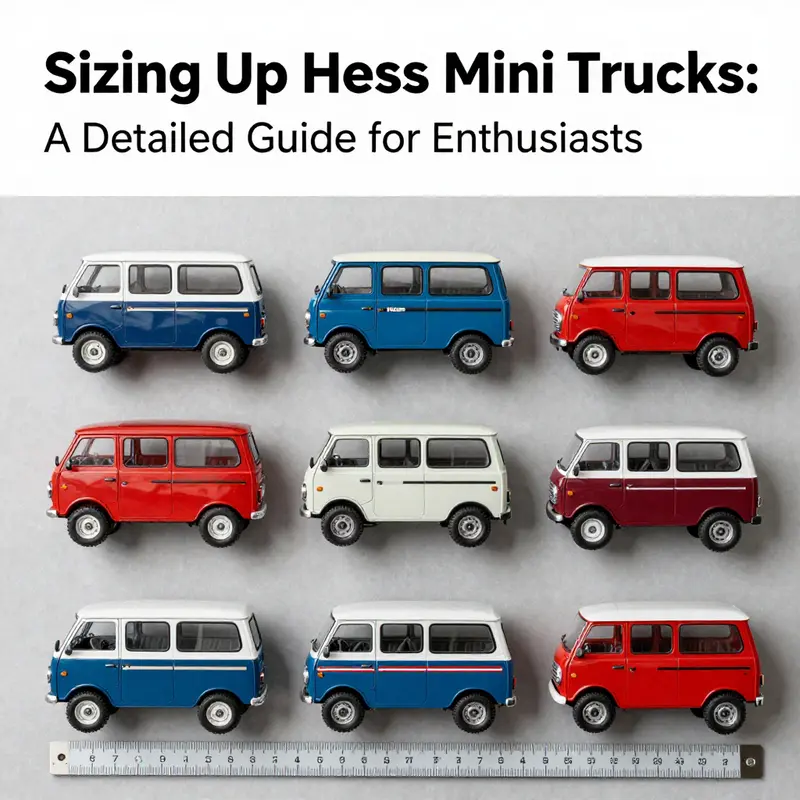
When collectors and curious buyers ask how big the mini trucks are, they usually want a clear, practical answer. Measurements alone help, but context brings those numbers to life. These mini trucks are compact, deliberately scaled-down reproductions of larger commercial vehicles. They are small enough to sit on a shelf, fit easily into a toy box, and remain substantial enough to display fine detail. A common specification for recent models lists item dimensions near 9 x 7 x 3 inches. Translated to metric, that is roughly 22.9 x 17.8 x 7.6 centimeters. Those dimensions reflect overall length, height, and depth as measured by retailers for packing and shipping. They provide a reliable baseline for expectations, but they do not tell the whole story about how these mini trucks look and feel in daily use.
Size affects several practical considerations. First, storage. At about nine inches long, one of these mini trucks takes up little shelf space. Display collectors can arrange several side-by-side on a standard bookshelf without crowding. They also work well with popular display cases and risers in hobby rooms. Second, portability. At under a foot long and made from plastic, these trucks are light. Kids can carry them comfortably, and adults can move them around for cleaning or display changes without strain. Third, playability and detail. The roughly three-inch depth and seven-inch height allow designers to include tiny features. You can get accurate cab contours, printed graphics, and often functioning small parts like rolling wheels. Those details matter because they give the miniature an authentic presence despite its compact footprint.
Not every mini truck follows the exact 9 x 7 x 3 pattern. Historical and specialty releases sometimes vary. For instance, some miniature transporters and accessory packs measure differently because of additional trailers or bulkier accessories. A small racer-style transporter might measure closer to 3.75 inches in one dimension, reflecting a narrower, more compact design. These variations are usually modest. They stay within the same general scale, so collectors can plan storage and display without major surprises. If you need absolute precision, checking a model’s product listing or packaging gives the most accurate numbers for that release.
Material choice also intersects with size. These mini trucks are commonly molded from plastic. Plastic is advantageous for small-scale models because it holds detail well and keeps weight down. It also reduces shipping costs and lowers the risk of damage from handling. That said, finish and quality can vary. Some models use multiple plastic types, small metal parts, or chrome-like paints to enhance realism. The base dimensions rarely change when artists add decorative elements, but added trim can subtly increase width or height. Collectors who value exact uniformity should note whether accessories or packaging alter final packed dimensions.
Scale perception matters as much as raw measurements. A nine-inch mini truck clearly reads as a scaled vehicle rather than a toy replica of life-size proportions. That scale helps bridge the gap between plaything and display model. When placed next to other common items—like a paperback book, a standard smartphone, or a coffee mug—the mini truck feels proportionate. Its length roughly matches many paperback books. Its height often aligns with stacked small objects. This makes it easy to visualize how the truck will fit into display groupings and everyday spaces.
Practical handling tips flow directly from dimensions. For collectors planning displays, allow a little breathing room around each item. A nine-inch-long truck benefits from at least an inch of clearance at both ends. This prevents damage when moving pieces and improves visual balance. Depth is small, but choose shelves or cases with a little extra depth to avoid a cramped look. Lighting also matters. Small models reveal details best under gentle, directed lighting. Avoid overly bright or heat-generating bulbs close to the plastic, since prolonged exposure may dull some finishes.
Packaging dimensions are another angle to consider. Retail listings frequently use the item dimensions to estimate shipping size and cost. A manufacturer or retailer listing of 9 x 7 x 3 inches typically references the packed item. That helps buyers anticipate shipping costs and storage needs before purchase. For gift buyers, that modest size makes it convenient to wrap and transport. For online buyers, the listed dimensions also provide a quick way to compare models at a glance.
Age range and play behavior are influenced by these sizes. Models this size usually suit older children and adults. They are large enough to be handled steadily but small enough to pose choking hazards if parts detach. Therefore, packaging often recommends an age range, and collectors commonly handle them with care. This balances playability with safety. The compact scale allows young hobbyists to learn model-care basics without needing extensive space.
Collectors who combine mini trucks with other models will appreciate consistency in scale. The majority of mini releases adhere to a similar footprint, which helps when building a cohesive display. A nine-inch model placed alongside a slightly shorter accessory transporter or a small tanker will look balanced. Differences between years and editions are typically minor. Enthusiasts can therefore accumulate a varied collection without disrupting visual symmetry.
Understanding dimensions also helps with restoration and customization. Hobbyists who repaint or add decals must consider surface area and curvature. A 9 x 7 x 3-inch shell offers enough room to work with typical hobby tools like fine brushes, masking tape, and decals. Customizers can replace wheels, add miniature cargo, or build dioramas that accommodate the truck without complex scaling calculations. For those exploring technical modifications, measure twice and test-fit parts before committing. Small differences in length or wheelbase affect the fit of aftermarket parts.
Finally, a short note on variability and buyers’ expectations. Model sizes can vary slightly between releases. Differences appear in length, height, or depth, usually within a fraction of an inch. These are natural outcomes of design choices and accessory inclusion. Retail listings and official product pages remain the best sources for exact numbers for a specific release. If precision is crucial, rely on those specs rather than generalized descriptions.
For those wanting a quick reference or confirmation, the official product listing for a recent mini collection includes the item dimensions given above. That page provides reliable, model-specific specifications and helps answer precise sizing questions directly. https://www.amazon.com/dp/B09ZK5VXJF
If you want broader reading about mini truck culture, customization, and models, the Mini Truck SoCal blog offers context and practical tips from enthusiasts and builders. Their articles cover display approaches and hands-on customization that complement dimensional planning. https://minitrucksocala.com/blog/
Sizing the Collection: How Hess Mini Trucks Vary and What Collectors Should Expect
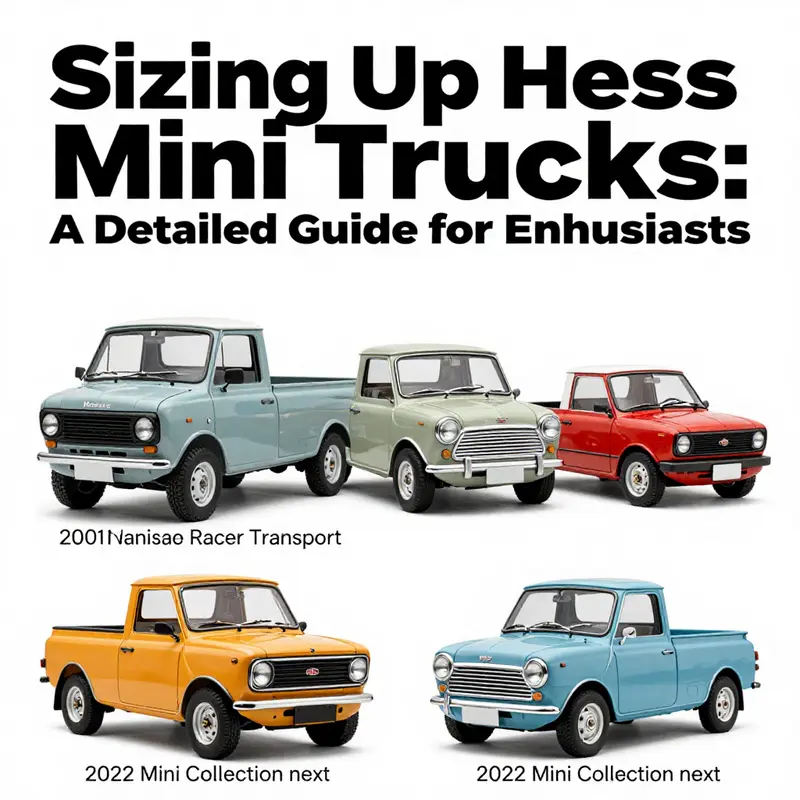
Hess mini trucks present a pleasing paradox: they are uniformly branded but variable in size. Many newer mini models fall into a familiar footprint of roughly 9 x 7 x 3 inches. That size gives a handheld, display-friendly object that still conveys detail. Older or specialty mini models can be markedly smaller, sometimes closer to four inches in length and just a couple of inches tall. These differences are not random. They reflect design choices, functional elements such as trailers or play features, and the evolving priorities of the maker across decades.
Understanding the range begins with simple measurement practice. When a listing or label states dimensions, it may mean the packaged size, the length of the vehicle alone, or the vehicle with its trailer attached. For clarity, collect three measurements: length from bumper to bumper, width across the widest point, and height to the highest point. Measure the model rather than the box to know how it will sit on a shelf or in a display case. If a trailer detaches, note both the combined length and the lengths of individual pieces. Buyers should remember that packaging adds bulk. A box measuring nine by seven by three inches may contain a smaller toy, or it may simply protect a similarly sized piece with foam inserts.
Model type drives much of the variability. A compact racer transporter without lights or moving parts can be small and squat. A tanker or rig with a long trailer naturally increases overall length. Flatbeds with accessories add dimensional complexity. Vehicles with light-and-sound features sometimes include extra housings for batteries, switches, or wiring that expand height or depth. Limited-run or commemorative editions sometimes intentionally alter scale to accommodate unique features or to create a special display presence. Across model years, the maker has occasionally experimented with proportions to match a specific theme or to fit packaging strategies.
Scale is a helpful concept but not always an exact label. Some mini trucks approximate common die-cast scales. Others are produced to fit a particular toy line or to align visually with previous releases. That means two mini trucks released in different years may look very similar when held side by side, even if their listed dimensions differ by an inch. Conversely, two models with near-identical numeric dimensions can appear different because one has a taller cab or a more pronounced trailer.
This variability affects collectors and casual buyers differently. For a collector building a uniform display, consistency matters. Shelves, acrylic cases, and shelf liners will need to accommodate the tallest or longest piece in a group. For someone who keeps pieces in original packaging, box size and condition determine storage needs. If a collection is intended for play, small variants can be handier for a child, while larger, more detailed models may offer more interactive features. Shipping and storage costs also scale with size. A few inches of extra length can change the packaging category and increase postage for mailed purchases.
Practical decisions hinge on accurate information. Always look for the item dimensions on the official product page or the listing. When a listing lacks clear specs, request them from the seller. Ask whether the measurements include removable trailers or accessories. Insist on photographs that show scale reference, such as a ruler or a common object placed next to the model. When buying used, ask to see the exact item out of the box. Photos of sealed boxes do not show potential shrinkage of content size, and they certainly won’t reveal missing or replaced parts.
Collectors should also account for display clearance. Measure shelf depth and height before making a purchase. A model that fits lengthwise might not fit under a shelf if its tallest feature is an elevated light bar or a raised cargo load. Think in terms of usable space rather than raw measurements. A three-inch height can become four inches with a stand, base, or clear protective cover. If the goal is to preserve value, plan to store the model in its original interior packaging. That approach requires shelving that accommodates the box dimensions rather than the toy itself.
Weight is rarely a primary concern for mini trucks, but it matters in a few contexts. Light-up features that include batteries add weight and change the model’s balance. Heavier models might sit more stably on a shelf, but they can also stress thin display bases over time. If models are transported frequently for shows or swaps, prioritize compact, robust cases and padded separators. For static collectors, weight variations matter mostly as a factor in long-term preservation and the potential for decal or paint micro-damage from friction within a box.
A common source of confusion is listings that mix measurement units. International buyers should double-check conversions and confirm whether centimeters or inches are used. A mistake in unit interpretation can turn a shelf-friendly purchase into a disappointing fit. Online marketplaces sometimes list dimensions in centimeters but display inches as a secondary note. Conversions are straightforward, but human error happens. When in doubt, ask for a photo with a ruler or provide an explicit request for inches or centimeters only.
Beyond raw dimensions, aesthetic scale affects how a mini truck reads among other models. Two models of different lengths can be made to look proportional by tweaking cab height, wheelbase, or trailer depth. Designers use these visual tricks on purpose. For collectors who value a consistent look, it helps to group pieces by era or theme rather than by raw dimensions alone. Grouping by feature set, such as lighted models or trailer types, can produce a visually coherent display even when dimensions vary.
Cleaning and maintenance considerations relate indirectly to size. Smaller pieces often have finer details that collect dust in crevices. Larger models may have more surface area that requires gentle wiping. Use soft brushes for tight areas and lint-free cloths for painted surfaces. Avoid harsh cleaners that can remove decals. For long-term storage, control humidity and temperature to protect adhesive decals and to prevent fading. UV exposure can gradually dull paint, so display cases with UV-filtering panels help maintain appearance. Original boxes, when in good condition, protect form and finish, and they provide accurate reference to original dimensions and presentation.
If a precise measurement is critical, use calipers for small components and a flexible tape measure for longer lengths. Measure along the model’s axis if it deviates from straight lines. When reporting or comparing sizes, always state whether measurements include trailers or accessories. This habit avoids misinterpretation and creates a trustworthy record for future trades or sales.
Research is an imperfect process. Public sources may list only a handful of models, and older product pages sometimes vanish. For definitive answers, consult the maker’s current product specifications or reach out to customer service. Manufacturer specifications typically state item dimensions clearly, and they indicate whether measurements refer to the packaged item or the model itself. When authoritative data is unavailable, buyer-supplied photos with a measuring tool are the next-best source.
For those who want a broader context on mini trucks and related small-scale vehicles, exploring specialist blogs helps. A regional mini truck blog offers articles on display, storage, and model comparisons, and it may discuss sizing and customization trends in practical terms. Visit the Mini Trucks SoCal blog for broader mini truck topics and display ideas: Mini Trucks SoCal blog.
Finally, consider one concrete example to anchor the discussion. A recent mini collection lists item dimensions of about 9 x 7 x 3 inches. Another historical miniature racer transporter measures roughly 3.75 x 2 x 2 inches. Those two data points illustrate the span. They also underline a crucial lesson: do not assume uniformity based on brand alone. Check each model, consider how it will be displayed or used, and always confirm whether listed measurements include accessories. For precise, model-specific dimensions consult the product specification or official listing. For one such example and its published dimensions, see the product page on the official retailer site: https://www.amazon.com/dp/B0B4KXVJZG
Scaled Charm and Collector Demand: How Hess Mini Trucks Combine Design, Size, and Value

The appeal of Hess Mini Trucks lives at the intersection of careful design and collector psychology. These small-scale vehicles are more than toys. They are intentional recreations of classic service and utility trucks, crafted to evoke a sense of nostalgia while fitting neatly into modern collecting habits and display spaces. Size plays a central role in that appeal. The dimensions of these mini trucks determine how they look on a shelf, how they travel between collectors, and how they function as display pieces in a wider collection.
Most modern mini releases measure in a comfortable, display-friendly range. A common format measures roughly 9 x 7 x 3 inches, or about 23 by 18 by 8 centimeters. That footprint allows for visible detail, integrated features like working lights, and sometimes moving parts. At the other end of the spectrum, earlier or specialty miniatures sometimes adopt a more compact profile. Some vintage miniature transporters measure around 3.75 x 2 x 2 inches, offering an extremely portable version for those who prize space efficiency or nostalgia for smaller die-cast toys. These different sizes reflect a balancing act. Designers aim to keep the models small enough for daily handling and display, yet large enough to render fine paint work, logos, and mechanical features legibly.
Design choices driven by scale shape the relationship between maker and collector. When a model is in the 9-inch range, there is room for multiple color layers, authentic branding, and small working components. That scale supports clear graphics that echo historic corporate liveries. Shrunken models, by contrast, demand simplification. Color blocks and key logos remain, but intricate type and tiny molded details can be reduced to preserve visual clarity. Collectors notice these differences. They appreciate models that preserve proportions and brand cues without becoming cluttered or toy-like.
Materials and construction follow the same logic. At larger mini sizes, manufacturers can use a mix of die-cast metal and high-quality plastics. Die-cast elements lend heft and a satisfying tactile feel. Plastic parts allow for lenses, light housings, and flexible connectors for trailers or ramps. Smaller models often favor lighter-weight metal alloys and simplified plastic inserts. These build choices influence durability, display treatment, and long-term preservation strategies collectors pursue.
The visual language of Hess Mini Trucks leans heavily on mid-century commercial styles. Designers borrow from classic fuel-delivery rigs, tanker trucks, and service vans. The result feels familiar and historically rooted. That aesthetic supports both play patterns and display sensibilities. For a parent buying a model for a child, a sculpted cab and bright paint catch the eye and invite hands-on engagement. For an adult collector, precise liveries and crisp logos speak to authenticity and continuity with a well-known brand story.
Limited production runs amplify the connection between design and value. When a release is constrained, its particular combination of scale, paint, and mechanical features becomes a fixed artifact. Small differences between annual editions become meaningful. A specific truck’s hue, a unique trailer attachment, or a new lighting pattern can define an edition. Over time, these subtle design shifts create a layered market. Collectors trace lineage not just by year, but by feature set. That makes understanding size variations part of due diligence. A larger mini with a unique moving ramp may command more interest, while a tiny commemorative piece may be prized for rarity or nostalgia.
Packaging also shapes how size and design are perceived. Original boxes often include molded display bases or windows that highlight scale and detail. Packaging that leaves the truck visible while protecting it preserves both the visual narrative and resale value. Many collectors prize the condition of these boxes as much as the toys themselves. A truck in pristine packaging conveys a story of care and scarcity. It suggests the owner regarded the model as collectible from the start. Consequently, packaging design becomes an extension of the toy’s aesthetic. A well-designed box will echo the model’s color scheme, include schematic artwork, and position the vehicle to show off key elements like logos and lights.
Display strategies evolve from the toys’ dimensions. A 9-inch mini sits comfortably on a single shelf, often accompanied by a placard, a display base, or other complementary models. Its presence is substantial but not dominant. Collectors arrange these pieces in tiers or dioramas that recreate service depots, roadside scenes, or holiday tabletop displays. Smaller models fit into compact cabinets or into themed groupings with other miniature vehicles. Knowing exact dimensions helps collectors plan storage. Preservation needs differ too. Heavier die-cast models require sturdier shelving and protection from tipping. Smaller pieces can be cushioned in drawers, archival boxes, or dedicated display cubes.
The interplay of size and interactive features matters. Integrating working lights, sound elements, or moving components is more feasible at certain scales. A 9-inch model can house LED assemblies, tiny switches, and articulated attachments. These features extend play value and attract collectors who enjoy mechanical complexity. They also introduce conservation challenges. Batteries must be removed for long-term storage to prevent leak damage. Mechanical joints require occasional lubrication and careful handling. Smaller models may avoid these complications by simplifying function. That trade-off affects both practical maintenance and perceived sophistication.
Collectors often make decisions based on portability. Smaller miniatures are easy to transport to shows, swaps, or meet-ups. Larger models make more dramatic impressions in a display case, but they may be restricted if shipping or travel is frequent. This balance influences buying patterns. Some collectors maintain both portable and stationary subsets of their collections. They rotate pieces between display spaces and travel cases depending on season and event.
Beyond practicalities, emotional resonance drives much of the market. The scale of a mini truck can trigger memory. A mid-sized model may recall a childhood pastime, while a tiny vintage piece might conjure a specific toy from a parent’s shelf. Designers tap into these memories with color selection and era-appropriate styling. This psychology is central to why collectors spend years building consistent sets. Size becomes part of a shared language that conveys era, use, and authenticity.
For those building a collection, a few practical rules streamline decision-making. First, measure display and storage space before purchasing. A precise understanding of shelf depth and cabinet height prevents awkward returns. Second, evaluate whether the model contains active components. If so, ask about battery compartments and maintenance recommendations. Third, decide whether originality matters. Many collectors prefer models with original packaging and documentation. That preference often affects willingness to pay for a given size or edition.
Finally, connecting with the broader hobby enhances appreciation. Local and online communities share tips for display, storage, and model care. They also swap detailed size charts and photos that clarify how different editions relate visually. Visiting specialty blogs and collectors’ guides helps contextualize a model’s scale within a wider catalog. For ongoing reading and local event notices, the Mini Trucks SoCal blog is a useful resource for enthusiasts seeking community insights and show information.
The relationship between size, design, and collector value is clear. Dimensions dictate what features are possible. Features influence desirability. Packaging and rarity elevate scarcity into monetary and sentimental worth. Whether a collector seeks a substantial 9-inch display piece or a compact vintage gem, the choices reflect a balance of aesthetic preference, display logistics, and long-term preservation goals.
For those curious about specific model dimensions or the latest mini releases, official product listings provide precise measurements and feature lists. See one of the recent official product pages here: https://www.amazon.com/dp/B0CXQKZ3WJ
Small Trucks, Big Ripples: The Market and Economic Influence of Hess Mini Trucks
Small trucks, big ripples: how a compact collectible shapes markets and spending patterns
Hess mini trucks occupy a niche where toy design, nostalgia, and collector economics meet. These models are small in physical scale, but their market effects extend beyond playrooms. They influence collector behavior, secondary-market pricing, retail strategies, and even broader trends in the mini truck market. Understanding that influence requires looking at several connected forces: the size and characteristics of the mini truck market, the dynamics of limited-edition collectibles, distribution and retail channels, policy and macroeconomic pressures, and the subtle ways these toys reflect broader transportation and manufacturing trends.
Collectors treat each mini truck as a discrete asset. A typical model measures roughly nine inches by seven inches by three inches. That compact, consistent scale helps build expectations. When buyers know dimensions and displayability, they can plan storage and resale. That predictability strengthens the secondary market, since condition and displayability are easier to assess and compare. The uniform size also keeps production and shipping costs manageable, which affects pricing strategies and retailer margins.
Market growth for mini trucks mirrors trends in urban logistics and small commercial vehicles. Industry forecasts project the global mini truck segment to reach multi-billion-dollar scale within a decade. Growth drivers include increasing demand for short-haul delivery, urbanization, and the needs of small and medium-sized enterprises. These structural tailwinds benefit the collectible mini truck space indirectly. A healthy full-size market sustains interest in miniature replicas. Enthusiasts often follow innovations in commercial vehicles and then seek scale models capturing those advances.
At the retail level, small-format collectibles are easier to merchandise. They occupy less shelf space and ship at lower weight, which reduces overhead for retailers and distributors. That enables broader retail distribution and frequent restocking. Smaller carrying costs translate into more competitive pricing and more willingness to offer seasonal or limited releases. Retailers can experiment with boxed sets, themed runs, or store-exclusive variants without the same financial risk heavier products carry.
The limited-edition model is central to value creation in this category. When a manufacturer releases a numbered run or an annual collectible, scarcity becomes part of the product narrative. Collectors respond to scarcity by paying premiums for mint-condition items, original packaging, and provenance. This behavior is predictable and well-documented across many collectible markets, from coins to action figures. For mini trucks, the effect compounds because the audience blends children and adult collectors. Parents often buy for play, while adults buy for display and investment. That mixed demand stabilizes pricing and broadens market depth.
Secondary-market dynamics follow classic supply-demand logic, with condition and rarity driving price variance. However, the small physical size makes grading and condition assessment straightforward. Minor damage often affects aesthetic value more than structural integrity. For traders and auction platforms, shipping costs remain low compared to heavier collectibles. Lower transaction friction increases turnover and liquidity. Platforms that support secure, low-cost shipping and offer certification of condition therefore unlock larger markets.
Macroeconomic forces shape buyer behavior in surprising ways. In periods when new-vehicle sales slow, collectors and consumers often limit discretionary spending. Conversely, when economic confidence rises, hobby spending expands. Trade policy and manufacturing costs also matter. Tariffs and rising component costs can push manufacturers to raise retail prices. For small collectibles, even modest price increases can shift demand among casual buyers. More affluent collectors may remain active, but newcomers may pause purchases, tightening the market.
Regulatory and infrastructure trends in the full-size mini truck market resonate with the collectible segment. The transition to alternative powertrains, for example, changes the kinds of vehicles that enthusiasts value. As electric and hybrid commercial vehicles gain visibility, miniatures that reflect those designs can capture collector interest. Yet the larger shift to electrification faces structural hurdles like charging infrastructure and cost. That measured pace of transition means many collectors still value traditional diesel-powered replicas. In other words, the pace of technological change in the real vehicle market filters into the collectible market with a lag.
Distribution channels have evolved in tandem with collector habits. Direct-to-consumer releases, subscription programs, and online auctions coexist with traditional brick-and-mortar shops. Digital marketplaces have a disproportionate effect because they widen the buyer pool beyond local regions. A particular advantage for mini trucks is their low shipping weight, which reduces cross-border friction. Lower shipping costs encourage international trade, fueling demand in regions where the full-size vehicle market is strong or where the brand enjoys recognition.
Retailers and brands respond by crafting narratives that emphasize history and authenticity. Packaging design, limited-run certificates, and themed series create stories that buyers can follow. Storytelling encourages repeat purchases. Collectors who follow annual releases often treat them as portfolio additions. This predictable behavior allows producers to plan production runs and price tiers with greater confidence. It also makes the mini truck segment more resilient during economic downturns than purely speculative collectibles.
The manufacturing footprint matters too. Small-scale production can be localized or outsourced, depending on cost structures and quality control needs. Outsourcing typically reduces unit costs but raises vulnerability to international trade policy. Tariff changes or component shortages can disrupt supply, leading to backorders or sudden price hikes. Conversely, localized production increases responsiveness and supports faster variations or region-specific editions. For brands balancing authenticity, cost, and risk, that trade-off is a recurring strategic choice.
Promotional strategies tie product size to consumer experience. Because mini trucks are display-friendly, manufacturers and retailers encourage photography, online sharing, and community events. Social media amplifies collector enthusiasm and drives secondary sales. Communities that form around these models create informational norms about condition, pricing, and rarity. Those norms reduce information asymmetry, making the market more efficient and transparent.
Price elasticity in this category is moderate. Enthusiasts show inelastic tendencies for rare or highly desired models. Casual buyers are more price-sensitive. Manufacturers exploit this by offering tiered products: standard releases for broad appeal and premium editions for collectors. Such segmentation preserves accessibility while extracting additional value from committed fans.
Policy changes affecting the broader truck industry indirectly influence the miniature market. For example, shifts in import policy that raise component costs can increase production expenses for miniatures. Similarly, macroeconomic slowdowns that incentivize fleet owners to extend vehicle life reduce exposure to the cutting edge, which dampens interest in new-model miniatures. These ripple effects are subtle but measurable over long horizons.
Finally, regional differences matter. Growth forecasts are uneven across geographies. Some regions show faster expansion in the full-size mini truck market due to urban density and last-mile delivery needs. Those regions tend to generate stronger interest in replicas representing local vehicle variants. Brands and retailers that understand regional tastes can tailor releases to local demand, increasing sales and strengthening brand loyalty.
In short, Hess mini trucks and similar small-scale models function as both consumer goods and cultural signifiers. Their compact dimensions make them efficient to produce, ship, and display. Their limited runs and storytelling drive collector engagement. And their market sensitivity reflects broader economic and policy trends in the commercial vehicle sector. For anyone tracking the intersection of toys and transport, these miniatures offer a concentrated lens on how product scale, scarcity, and narrative shape markets.
For ongoing commentary and community perspectives on small commercial vehicles and their cultural footprint, see the Mini Truck SoCal blog for broader industry and hobbyist discussion: Mini Truck SoCal blog.
For authoritative market-level forecasts and deeper analysis of the mini truck segment, refer to the detailed market report from a recognized research organization: https://www.marketsandmarkets.com/Market-Reports/minitrucks-market-271971241.html
Final thoughts
In reviewing the impressive dimensions and specifications of Hess Mini Trucks, along with their appealing designs and economic impact, it’s clear why these collectible toys retain such a strong foothold in both local markets and collectors’ hearts. Their consistent dimensions make them a recognizable choice, while variations across models cater to the diverse tastes of enthusiasts. The ongoing success of Hess Mini Trucks highlights their role as both nostalgic treasures and viable economic contributors. Understanding these aspects equips small business owners, residential property owners, and hobbyists with valuable insights into their significance.