
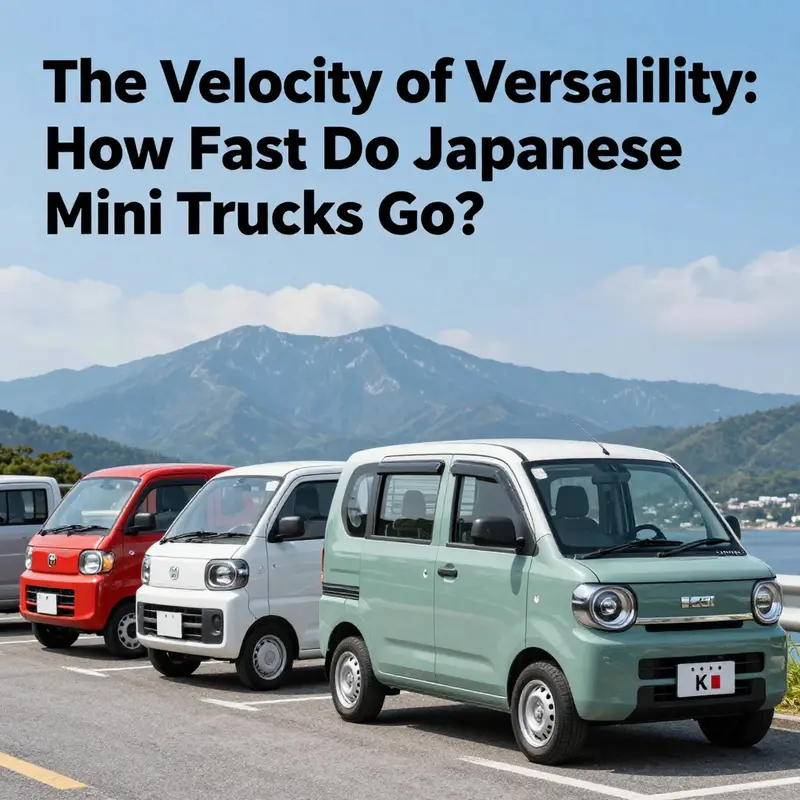
Japanese mini trucks, affectionately known as Kei trucks, are much more than mere utilitarian vehicles. Designed with efficiency and practicality in mind, they have captured the hearts of local small business owners, residential property owners, and mini truck enthusiasts alike. One of the most intriguing aspects of Kei trucks is their speed capabilities. In this exploration, we will uncover the maximum speeds these compact vehicles can achieve, the regulations shaping their performance, and their place within different road scenarios. Each chapter will delve into specific angles, from understanding speed limitations to comparing their pace with other vehicles, and we’ll finish by discussing the future trends impacting these handy little trucks. Join us as we unpack these details, revealing the fascinating world of Japanese mini trucks.
Kei Trucks on the Clock: The Real Speed Boundaries of Japan’s Tiny Workhorses
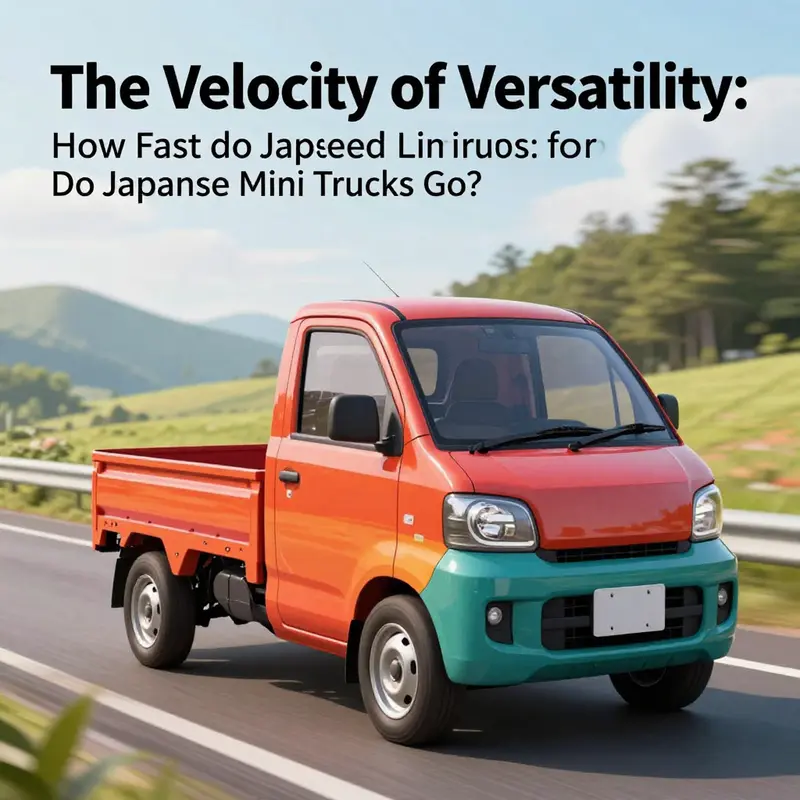
Across Japan’s streets, the sight of a compact boxy truck with a small footprint is a familiar one. These Kei trucks, as they’re commonly called, are designed not for speed or show, but for reliability, maneuverability, and payload efficiency. They inhabit a paradox: they look tiny, yet they perform a substantial portion of daily logistics, urban deliveries, and farm-to-market tasks. The speed story of these vehicles is not a simple matter of horsepower and drag; it’s a carefully calibrated balance between engineering limits, safety considerations, and the practical realities of the roads they navigate. The headline about their speed isn’t about how fast they can go in a straight line; it’s about what they are permitted to do on public roads and how that permission shapes their role in the wider transportation ecosystem.
The official boundary for kei trucks on public roads in Japan is a fixed one: they are capped at 50 kilometers per hour. This limit is not a suggestion but a regulatory parameter tied to the Kei vehicle category, a framework that governs engine displacement, power output, dimensions, and, crucially, maximum speeds. The 660 cubic centimeter mandate channels power in a way that keeps the vehicle’s weight modest, the response predictable, and reliability high. In practical terms, the engine’s modest displacement is enough to move a small, light truck with a useful payload, but it does not push the vehicle into high-speed regimes. The outcome is a vehicle that accelerates briskly from a stop and cruises efficiently, yet remains within a safe envelope for the kinds of roads these machines most often traverse—narrow city streets, winding rural lanes, and infrastructure with a dense mix of pedestrians, cyclists, and slower-moving traffic.
This regulatory stance emerges from a philosophy that prioritizes safety in environments where kei trucks are most at home: compact, high-traffic urban corridors and rural routes where the road profile is uneven, visibility can be compromised, and merging with faster, heavier vehicles demands predictable behavior. It’s a design choice wrapped in policy: the power-to-weight ratio is optimized not for scorching top speeds but for dependable, steady performance under typical loads. While some observers might wonder whether a higher cap or a freer interpretation of speed could expand the truck’s operating envelope, the current framework keeps speed within a smooth, controlled band. The implication for drivers is clear: the kei truck’s value lies not in raw velocity but in its nimble handling, its minimal running costs, and its ability to perform multiple tasks with a single, compact platform.
To understand the implications, it helps to situate the kei truck within the broader speed landscape of Japan’s road network. National highways reserved for more capable, higher-performance vehicles routinely feature limits up to 100 kilometers per hour for passenger cars. Kei trucks are not built to chase those limits; they are built to navigate the more intimate scale of the infrastructure they were designed to inhabit. When a kei truck is kept to its 50 km/h ceiling, it can still maintain a workable pace on regional roads that see slower traffic, while delivering freight with a reassuring sense of control. In practice, drivers quickly learn that the vehicle’s timing—when to accelerate, how to crest a hill with a load, and how to merge into a stream of traffic—depends less on hitting a high top speed and more on keeping momentum through practical bottlenecks, maintaining a safe following distance, and maximizing payload efficiency within the permitted speed range. It’s a choreography of speed and restraint that mirrors the broader safety culture embedded in light commercial transport across the country.
The mechanics behind this cap shed additional light on why the 50 km/h limit makes sense. Kei trucks are small both in size and in engine displacement—660 cc engines deliver power that is modest by modern standards. This architecture favors steady, reliable operation over peak performance. When the load is light, the truck can feel lively enough, and it can accelerate out of congestion quickly enough to keep the traffic flow moving. When the payload increases, the same engine must work harder, and the result is a more conservative climb in speed, all while the vehicle remains stable and predictable. The combination of light weight, compact drivetrain, and measured gearing makes for a machine that excels at short trips along city blocks, at agricultural tracks, and on the sporadic rural road where a higher speed is not just unnecessary but potentially hazardous given the surrounding traffic mix. In a way, the kei truck’s speed envelope is less about racing against the clock and more about maintaining a reliable cadence that suits the daily rhythms of its work.
For those who study or operate these vehicles, the distinction between legal speed and actual performance is instructive. In many contexts, drivers find that maintaining a steady 40 to 50 km/h delivers the smoothest fuel economy and the least strain on the engine and drivetrain. The design ethos favors efficiency and durability, not high-end torque or luxury acceleration. The 660 cc engine’s power is tuned to provide sufficient torque at low to mid-range RPM, which helps in stop-and-go urban driving, modest hill starts, and controlled overtakes where space allows. The result is a predictable, user-friendly driving experience that aligns with the vehicle’s role as a practical tool rather than a performance machine. When payloads are light and roads are flat, the truck can feel responsive and capable; when the road demands more, the pace stays steady, but the vehicle remains an ally in the driver’s hands—reliable, economical, and safe.
Another layer of nuance comes from the real-world mix of road types and the diverse duties kei trucks perform. In urban settings, where speed variance is minimal and the density of side streets, deliveries, and tight parking demands is high, a lower maximum aligns with the realities of frequent stops and the need to react swiftly to pedestrians and cyclists. In rural stretches or industrial grounds where the route is more linear and the hazards are different, the same speed boundary still keeps the vehicle within a safe operating regime while allowing it to carry meaningful loads. The speed cap, then, is not a concession to complacency but a deliberate choice that supports a broader operational model: durable, efficient transport that reduces road risks and keeps neighborhoods safer. The kei truck’s story, in essence, is a story of restraint as a form of pragmatism, and that restraint is woven into the fabric of the vehicle’s appeal.
To connect this discussion with broader interests, readers curious about how these small workhorses fit into a larger ecosystem can explore the ongoing conversations within the kei-truck community online. For context and community insights, see the Minitrucks blog, which gathers perspectives on design choices, maintenance, and everyday use of these compact movers on real roads. Minitrucks blog.
As the chapter draws to a close, it’s worth reflecting on what speed means in this context. The 50 km/h limit is not a limitation in the sense of stifling utility; it is a boundary that shapes how these vehicles interact with the world around them. It defines the pace of daily routines, the rhythm of deliveries, and the safety of shared streets. It also frames the expectations of operators who need to balance payload, fuel economy, and service timelines. In the hands of drivers who know their routes and respect the vehicle’s design, the kei truck becomes a dependable partner—compact enough to squeeze through tight urban spaces, sturdy enough to haul a useful load, and patient enough to move with the traffic rather than against it.
For those who want to dig deeper into the regulatory underpinnings, the official policy landscape provides a clear reference point. The Japanese Ministry of Land, Infrastructure, Transport and Tourism governs kei-vehicle standards and the associated speed restrictions that define the class. Their materials outline how the 50 km/h ceiling is implemented across various configurations and how it interacts with other constraints on dimensions and engine displacement. Access to these details helps frame not only the practical realities of operation but also the broader aims of road safety and efficient urban mobility that shape the everyday use of kei trucks. https://www.mlit.go.jp/
Speed on a Small Stage: How Kei Trucks Measure Up Against Other Vehicles
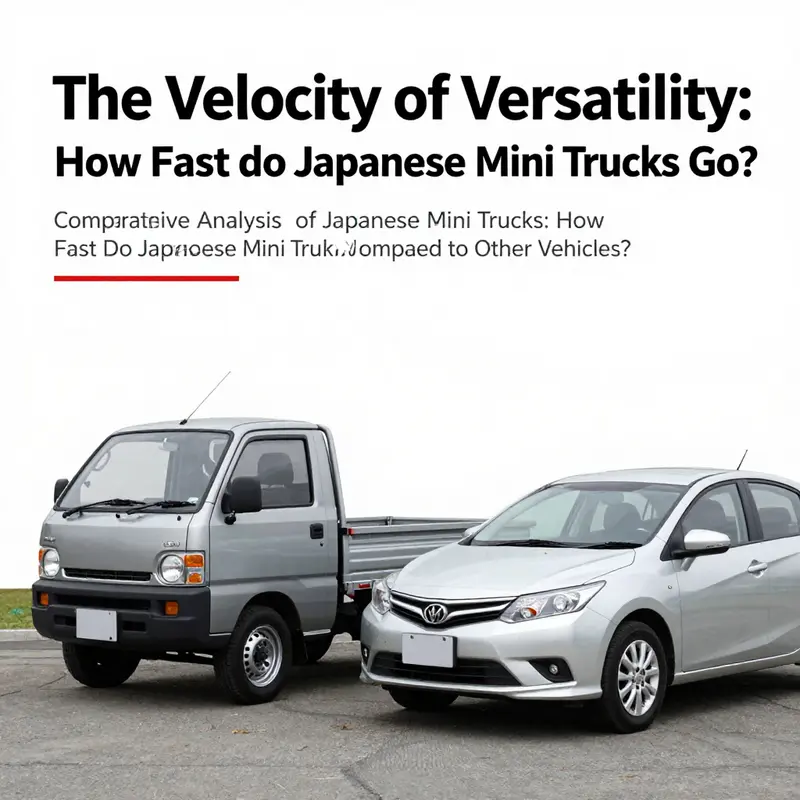
Kei trucks occupy a curious niche in the world of wheels and gears. They are not built to chase raw speed, yet they are celebrated for efficiency, reliability, and the practical ease they bring to everyday tasks. The speed conversation around these compact workhorses begins with a tightly drawn boundary: a voluntary cap that places them at or around the 140 km/h mark in steady, regulated speaking terms. This is not a marketing boast but a deliberate industry choice, a balance struck between performance and safety that reflects how these nimble machines are expected to operate in typical life cycles—city deliveries, rural farm runs, and short-haul tasks rather than highway sprinting. In Japan, where highway speed limits rest near the 100 km/h threshold, Kei trucks display a pace that aligns with the realities of the roads while also offering a margin for those infrequent moments when the route opens up and a driver needs momentum to keep up with the flow of traffic. The result is a vehicle that feels brisk enough for quick local work without drifting into the realm of high-speed driving, where the margins of stability and tire ratings can become critical concerns for a lightweight, compact chassis.
The top-line speed figure often cited—up to 140 km/h—emerges from a cooperative, industry-wide stance. Manufacturers, regulators, and safety groups collaborate to ensure that these vehicles meet safety standards while preserving a practical edge for owners who need to move goods and people through tighter spaces. This cap is not universal or universal law; rather, it is a common, understood limit that appears across many models and configurations within the Kei category. It signals a philosophy: speed is a means to an end, not the end itself. For drivers who spend their days darting through urban arteries, negotiating alleyways, or threading narrow lanes in the countryside, the key is predictability, not blistering acceleration. The cap embodies that ethos, offering a familiar, reliable ceiling that supports stable handling, reasonable braking distances, and consistent performance across a range of load conditions.
To understand how this cap translates into real-world performance, it helps to separate the Kei family into practical sub-types while keeping sight of the larger picture. Among kei trucks, the most common utility-focused variants include compact dumpers and lightweight cargo platforms. In the utility-first mindset that governs their design, these platforms are optimized for torque delivery over outright horsepower. A typical mini dump variant, designed to move small loads with modest wheelbase and weight, will usually top out well shy of the 140 km/h ceiling—often around the mid-90s in favorable conditions. The emphasis here is stability and controllability at mid-range speeds, allowing for safe operation when roads are rough or laden with materials that shift the balance of the vehicle. By contrast, the kei bus derivative, a variant aimed at passenger transport in certain international markets, tends to show a broader speed envelope. These small buses can reach roughly 91 to 110 km/h, depending on gearing, weight, and aerodynamics. That broader range reflects a dual purpose: the need to move people efficiently on shared routes while still preserving the economical profile that makes Kei vehicles viable on small budgets.
Taken together, these numbers reveal a coherent pattern. Kei trucks are slower than larger commercial trucks and most standard passenger cars, a direct consequence of their small engines, lightweight frames, and the priorities baked into their regulatory framework. Their top speed sits below the roar of highway traffic in many markets, yet their acceleration and torque are crafted to deliver reliable, practical performance for the tasks they are meant to perform. In urban environments, this translates into quick starts from a standstill, confident low-end torque to handle stop-and-go flows, and the ability to maintain steady progress through city corridors without excessive fuel burn or fatigue. On rural byways and industrial lanes, the same attributes translate into predictable behavior: responsive steering, a tight turning radius, and the confidence that a driver can place this vehicle where it is needed without fighting a mismatch between load and power.
If one tracks the trajectory of kei trucks against other small utility vehicles, the differences become even more instructive. The Kei category often outperforms small utility vans and some compact SUVs on fuel economy and maneuverability, thanks to carefully engineered weight, drivetrain efficiency, and regulatory constraints that discourage heavy, high-powered configurations. Their speed, while adequate for general transport and delivery needs, is less about supremacy and more about a predictable, economical cadence. This is why, in markets that value frugality and reliability, kei trucks are frequently chosen for farmers, local delivery hubs, and contractors whose routes are dense with tight streets and frequent stops. The vehicles’ efficiency and light weight also contribute to lower tire wear and reduced maintenance costs, a practical advantage that often outweighs any gap in top speed when measured against total cost of ownership.
The global footprint of kei trucks adds another layer to the speed discussion. In international markets, these micro-utility vehicles are prized for their low registration costs, favorable licensing regimes in some countries, and the ability to perform well in mixed terrains. They excel where the daily rhythm is defined by stop-start traffic, short hauls, and the need to park and maneuver in constrained spaces. In such contexts, a top speed around 100 km/h or slightly higher is more than enough to keep pace with the demand of typical workdays, yet the overall package—durability, simplicity, and low operating expenses—remains the decisive factor. While some operators may push these vehicles toward their theoretical limits, the broad engineering choice behind Kei trucks is to preserve control, efficiency, and long-term reliability rather than to chase the last mile-per-hour of speed.
For readers who want a glimpse into how similar light-duty vehicles handle performance beyond the Kei envelope, one can explore cross-model comparisons in dedicated spec discussions. For instance, a comparative look at how compact, light-duty models stack up in terms of specs and features can provide a broader sense of performance trade-offs. See the discussion linked here: comparing-kingstar-kruzr-models-specs-features. This resource helps place Kei trucks within a wider ecosystem of small utility vehicles, highlighting the common threads—efficient powertrains, compact dimensions, and a bias toward practical handling over brute force.
All told, Kei trucks embody a distinct philosophy of mobility. They are designed to perform essential tasks with a minimal footprint, ensuring that the job gets done without demanding excessive fuel or complicated maintenance. The speed figures—whether near 95 km/h for a mini dumper or up to 110 km/h for a small bus variant—are not limitations so much as reflections of a carefully tuned balance: a balance that favors economical operation, stable handling, and predictable performance across diverse conditions. This balance makes Kei trucks a compelling option for both personal and commercial use, particularly in regions where roads, prices, and regulatory landscapes favor practical, dependable transport over raw speed. As global usage expands, the appeal of these vehicles continues to rest on the sound engineering principle that speed is a means to move goods and people more efficiently, not an end in itself.
External resources continue to contextualize the governing standards and official perspectives on these vehicles. For a consolidated regulatory and industry perspective, consult the Japan Automobile Manufacturers Association, which offers official information and standards that shape how Kei trucks are designed and operated: https://jama.or.jp/en/.
Leashed to the Law: The Real Pace of Japanese Kei Trucks Within Safety Frameworks
Kei trucks, those compact workhorses that populate city streets, farm lanes, and construction sites with a quiet, dependable rhythm, are more than just small pickups. They embody a deliberate synthesis of efficiency, utility, and safety that reflects Japan’s distinctive approach to light commercial vehicles. The question of how fast they can go is not simply a matter of engine bore and wheel size; it is a window into a regulatory philosophy that prizes predictable handling, economical operation, and urban suitability as much as raw speed. In practice, these vehicles move at a pace that fits their mission: they are built to move loads reliably rather than to chase highway speeds. Yet the speed question matters, not only for everyday driving but for understanding how Kei trucks fit into broader transportation systems in Japan and beyond. While some discussions circulate about a nominal speed cap, the reality on the pavement is more nuanced and deeply tied to the rules that govern engine size, dimensions, and performance, rather than a single, explicit top speed that the vehicle is allowed to reach. The lineage of these vehicles is grounded in a voluntary framework that has, over time, helped shape common expectations about what Kei trucks can and should do on the road. The oft-cited figure of 140 km/h (about 87 mph) surfaces in discussions about a voluntary speed cap among manufacturers. The idea behind such a cap is not to compel drivers to travel at that speed, but to set a ceiling that supports safety, harmonizes performance across the Kei class, and maintains a degree of market sanity for a vehicle whose primary aim is utility, not sport performance. This voluntary guideline sits alongside formal regulatory constraints, creating a landscape where top speed becomes a consequence of design intent rather than a license to push beyond safe limits. The official regulatory framework that governs Kei trucks focuses on what the vehicle is, not just how fast it can go. In Japan, the Ministry of Land, Infrastructure, Transport and Tourism (MLIT) shapes the core rules. Kei trucks must respect strict limits on engine displacement, dimensions, and weight, all of which converge to moderate performance in a way that aligns with urban and rural use. The engine is capped at 660cc, a size that naturally curtails power. Across modern Kei models, horsepower hovers in a narrow band, typically ranging from the high 30s to around the 60 horsepower mark for gasoline variants. Even when a machine delivers more horsepower on the spec sheet, the power-to-weight ratio and gearing often keep top speed within a comfortable, manageable range. The structural rules—specifying width under 1.48 meters, length under 3.4 meters, and height under 2 meters—further constrain the vehicle’s aerodynamics and balance. Those dimensions, coupled with compact suspensions designed for load-bearing capacity rather than high-speed cornering, deliver a stability profile that favors controlled, dependable travel over aggressive acceleration. The practical upshot is that Kei trucks rarely push far beyond the 100 km/h threshold on open roads, and more commonly settle into a narrow corridor around 90 to 105 km/h. This band emerges not from a single throttle-limiting device but from how the engine, gearing, drag, and weight interact under real-world conditions. The propulsion systems, often configured to emphasize torque at low to mid RPM ranges, are optimized for steady acceleration when carrying cargo rather than peak horsepower. In real-world scenarios, a Kei truck with a full payload meets a limit set by the combination of engine output, drivetrain gearing, and aerodynamic drag. The result is a vehicle that can cruise comfortably at or just above typical highway speeds, but without the kind of velocity reserve that larger commercial trucks or passenger cars might enjoy. In Japan, national highways commonly carry a speed limit of 100 km/h, a standard that Kei trucks meet and sometimes surpass in short bursts, particularly when the vehicle is unladen or lightly loaded. Yet the upper end of their capability is rarely exploited for sustained periods. The reason is pragmatic: higher speeds demand more power, more energy, and better stability at speed. Kei trucks, with their compact frames and rear suspensions engineered for strength and payload, are not optimized for long-distance, high-speed travel. The impact of these design choices is evident in maintenance and handling as well. The light weight of the chassis means that wind noise and crosswinds can influence steering feel more perceptibly than in larger vehicles. A strong rear axle with leaf springs contributes to load stability when the bed is filled, but at highway speeds, the same setup must resist the bending moments created by wind and gravity. In urban and rural climates, where the bulk of Kei truck use occurs, these characteristics translate into a predictable, forgiving ride at modest speeds. The regulatory emphasis on urban adaptability also explains why many Kei trucks are seen in settings where speed matters less than reliability, visibility, and maneuverability in tight spaces. In this sense, the safety design becomes an integral part of the speed story. The speed perception is thus a composite of policy, engineering, and practical use. The MLIT framework, with its emphasis on compact dimensions and restrained power, ensures that Kei trucks perform their core function—carrying cargo through narrow streets and winding byways—with a safety margin that aligns with the realities of mixed traffic, pedestrians, and frequent stops. The social dimension of speed, especially in residential zones and school districts where local authorities enforce strict, often lower, speed limits, further shapes how these vehicles are driven daily. In such communities, the actual experience of Kei trucks is one of careful pacing and steady progress, rather than rapid transit. The practical implications of speed limits in residential areas underscore a broader safety philosophy: that speed is a composite of capability, risk, and context. For enthusiasts who wonder whether Kei trucks can reach the occasional highway cruise at the higher end of their theoretical range, the guidance remains anchored in the engineering and regulatory realities. Even as a global interest in Kei-class vehicles grows, and as regulatory environments evolve to accommodate imports and niche uses, the core principle endures: these are vehicles designed to maximize efficiency, safety, and versatility within a tightly regulated envelope. For readers seeking a deeper, more technical framing of these constraints, the Minitrucks blog offers discussions that connect on-the-ground experiences with regulatory insights. Minitrucks blog can provide additional context on how owners interpret speed in everyday operation, including perspectives from varied driving environments. While the social and regulatory landscape continues to evolve, the central message remains stable: Kei trucks are built to serve as practical, economical tools for work and daily life, not as speed machines crafted for long, uninterrupted highway hauls. The practical speed they offer, influenced by a blend of legal ceilings, engineering limits, and real-world use, remains a testament to a focused, safety-forward design philosophy. For authoritative details on Kei vehicle regulations and speed implications, the official MLIT site provides the formal backbone to these discussions: MLIT’s resources help explain the rationale behind engine and dimension limits that ultimately shape the speed profile of Kei trucks. See the official site for comprehensive regulatory specifics and updates.
Practical Pace on Tiny Wheels: Real-World Speeds and Everyday Roles of Japanese Kei Trucks
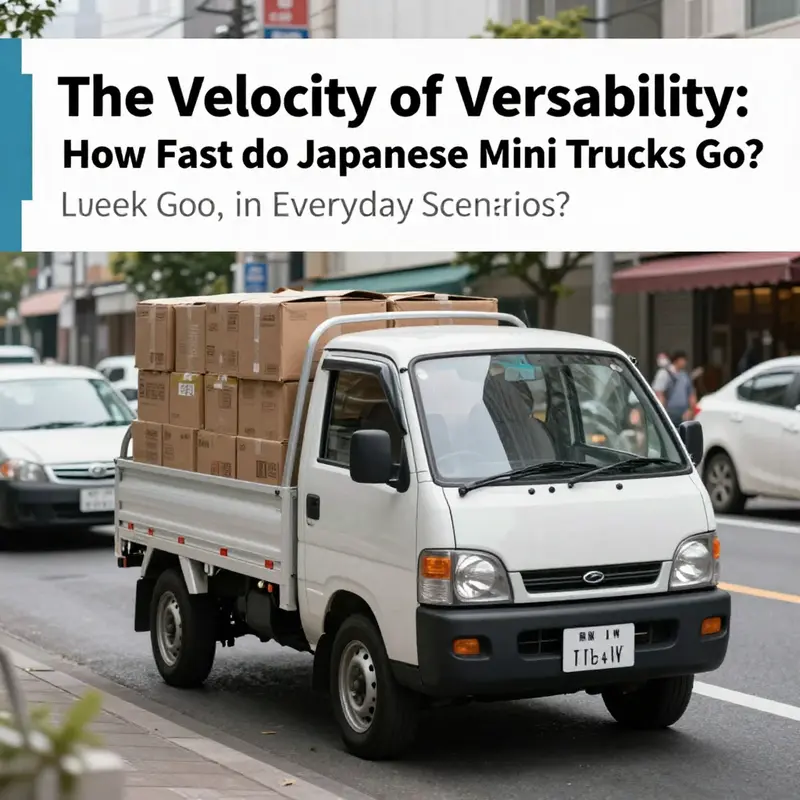
Kei trucks are not pitched as speed machines. They are designed to maximize utility, fuel efficiency, and maneuverability within dense urban environments and sprawling rural landscapes. In that light, the speed numbers that accompany these small workhorses reveal as much about safety philosophy and daily practicality as they do about engineering limits. A commonly cited benchmark is a theoretical ceiling around 140 km/h (87 mph), a figure that emerged from a voluntary industry-wide agreement among Japanese automakers. It is a cap that signals a shared commitment to safety and predictable performance across a class of vehicles whose primary job is not highway sprinting but reliable transport for people, tools, and goods. On the surface, a 140 km/h top speed sits far above the routes these trucks typically navigate. Yet it matters because it frames what the vehicle can do when the road opens up and regulatory boundaries allow a momentary stretch of speed. In Japan, highway limits are set at 100 km/h, which means even a vehicle capable of 140 km/h might still be used in a way that respects posted restrictions. The real-world implication is that these trucks, while technically capable of higher speeds, are most often operating in a space where speed is bounded by law, by street design, and by the practical needs of the task at hand. The result is a transportation profile that leans toward steadiness, reliability, and the ability to keep up with traffic without demanding aggressive acceleration or abrupt maneuvering. This is the daily rhythm of kei trucks as they perform their core missions: efficient local delivery, farm work, and service duties on roads that require precision and patience more than raw velocity.
A regulatory note helps illuminate the practical equation. In Japan, low-speed electric four-wheelers and many mini trucks are generally restricted to a maximum speed of 50 km/h. This legal cap serves a safety function that aligns with the environments these vehicles inhabit—dense urban cores, narrow streets, and secondary roads where the risk of high-speed interaction with larger, faster vehicles is nontrivial. The 50 km/h limit is not just a number; it is a behavioral standard that shapes how drivers plan each trip, how routes are chosen, and how the vehicles are loaded and staged for work. In many everyday scenarios, those restrictions intersect with the actual conditions of the road network. The urban fabric in cities like Tokyo, with its tight lanes and frequent stops, and the more open but still carefully managed rural roads of Hokkaido, all encourage a style of driving that emphasizes control, timing, and efficiency over sprint capability. The practical top speed a driver regularly encounters is often quite a bit lower than the regulatory cap, typically hovering in the 20–40 km/h range for routine tasks. When stoplights, pedestrian activity, delivery windows, and loading zones come into play, the pace settles into a cadence that prioritizes steady progress and careful negotiation of space rather than speed through.
The everyday use cases for kei trucks reinforce this pace. In urban delivery work, fleets contend with a series of micro-tuzzles: loading and unloading at storefronts with narrow entryways, threading through congested blocks to reach customers, and making brisk, localized trips between hubs or markets. In rural or agricultural settings, the trucks shuttle between fields, barns, and processing points, often along winding farm lanes or secondary roads where visibility and road surface demand cautious handling. In both contexts, the vehicle’s compact footprint, modest power, and predictable handling deliver efficiency that is more about sprinting through a single mile than sprinting across a broad highway. The practical need is for dependable access, easy maneuverability, and the ability to maintain a consistent pace that respects the speed limits and the safety margins required by mixed traffic. Even when some kei trucks are equipped with more capable features—such as turbocharged four-wheel-drive systems intended to improve hill climbs or variable terrain performance—engine power does not translate into free-range speed. The constraints of regulation and road design keep these enhancements in a lane that serves the mission rather than the thrill of acceleration.
Real-world observations support this interpretation. Delivery drivers in major metropolitan areas, as well as operators in more open countryside, commonly log local speeds in the low to mid-20s or occasionally up toward the high 30s when the route is clear and the road layout permits it. The design of these vehicles—compact, with upright seating and a light footprint—facilitates quick, deliberate starts, precise turns, and the ability to stay in the flow of traffic without fighting for space. In rural settings, where speeds might technically be allowed to climb higher on straight stretches, the combination of road quality, animal or vehicle crossings, and slower errand pacing keeps the driver at a measured tempo. Even in more controlled environments, such as test corridors or industrial campuses, operators observe slow, deliberate speeds that favor system reliability, predictable behavior, and safety margins. Reports from autonomous trials illustrate a related truth: on short, internal routes—think between a sugar processing point and a staging area—speeds hover around 20 km/h. These trials underscore how the lowest common denominator of safety and coordination governs operations, shaping a use case where speed is a subordinate consideration to control and precision.
It is important to balance speed with payload and efficiency. Kei trucks have to carry different kinds of loads—produce, tools, agricultural products, building materials—and the speed at which they move can affect productivity and fuel economy. A higher speed often comes with higher fuel consumption, increased wear, and a greater risk of spill or damage when carrying fragile loads. The practical pace better serves the job: it minimizes travel time across short routes, allows for frequent stops, reduces the risk of mishaps in narrow spaces, and improves energy efficiency per unit of cargo delivered. The result is a vehicle that excels not by conquering long distances at high speed, but by delivering steady, dependable service in the kinds of environments where a larger, faster vehicle would be less economical, less maneuverable, and less safe.
From a global perspective, the kei truck concept has resonated beyond Japan because its core strengths align with a universal demand for economical, flexible, and easily maintained light-duty vehicles. The charm lies in the blend of affordability, minimal operating costs, and a design that thrives on steady, predictable performance rather than top-end speed. This is why enthusiasts and small-business operators around the world see these vehicles as viable options for local logistics, farming, and service work in contexts where roads are intimate and tasks are frequent rather than extensive and rapid. For readers who want a closer look at practical configurations or firsthand field insights, the ongoing discussions on the minitrucksocala blog offer a useful resource that tracks real-world use cases and practical tweaks. You can explore those discussions at minitrucksocala.com/blog. The narrative that emerges from both field reports and regulatory guidelines is consistent: the value of kei trucks rests in their practical pace, not in spectacular top speeds.
For those who want to explore the regulatory frame more deeply, a primary external reference provides the official context. The Japanese Ministry of Land, Infrastructure, Transport and Tourism outlines kei car regulations and the limits that apply to these vehicles, including the speed-related constraints that shape their everyday use. For a detailed regulatory perspective, see the MLIT kei car page. This external resource helps illuminate how the speed discussions translate into real-world operation and how manufacturers, drivers, and fleets adapt to the framework that governs their daily work on Japanese roads.
External reference: https://www.mlit.go.jp/english/road/traffic/safety/vehicle/kei_car.html
Speed by Design: Kei Trucks and the Urban Pace of Modern Logistics
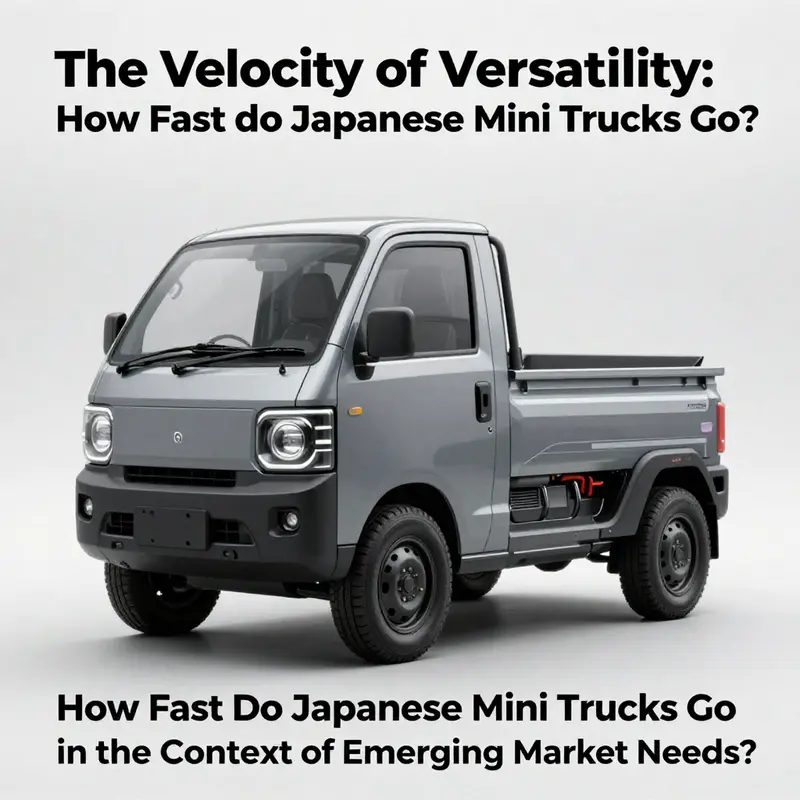
Kei trucks are designed for the city first. They fit narrow streets, tight turning radii, and simple maintenance. Their top speed is not their headline; their value is reliability, fuel economy, and predictable performance in congested urban and peri-urban routes. The official ceiling is a policy choice, not a universal law, and fleets use it to balance efficiency with safety. In practice, real-world speed is driven by traffic, road quality, and the need to deliver numerous parcels per day. The quiet acceleration and torque at low rpm let a kei truck move confidently through stop-and-go city corridors.
Across markets, manufacturers tune the chassis for steadiness rather than fireworks. Compact dimensions, light weight, and a stout low-end torque profile translate into stable starts, confident climbs on gentle grades, and durable operation with minimal maintenance. The economic argument matters most: lower purchase price, lower running costs, and high uptime rates ensure low total cost of ownership. When fleets examine a day of routes, the ability to complete more deliveries per shift matters more than shaving seconds off a single leg of a journey.
Electrification adds another layer. Electric kei trucks promise smoother curb-to-curb acceleration, quieter operation, and near-zero tailpipe emissions in dense urban cores. But they also raise questions about range, charging, and total cost of ownership given typical shift lengths. The trend, however, is toward urban fleets that value controllable, predictable performance and the ability to reduce noise and emissions without sacrificing reliability. The speed ceiling stays a reference point, while operators optimize for space, efficiency, and service levels across the urban network.
Final thoughts
Japanese mini trucks are more than just practical vehicles; they embody a unique blend of speed, efficiency, and versatility. As we’ve explored their speed capabilities, regulatory influences, and practical applications, it’s evident that these compact trucks hold immense potential for various uses, from local businesses to personal enjoyment. Their performance remains well-aligned with safety standards while catering to evolving market needs, ensuring they stay relevant in the future. As the landscape of transportation continues to change, the popularity of Kei trucks is likely to grow, allowing more users to take advantage of their impressive capabilities.