

When it comes to mini trucks, understanding their speed capabilities can make a significant difference for local small business owners, residential property owners, and mini truck enthusiasts. Whether you’re considering a small electric delivery vehicle for navigating urban landscapes or pondering the performance of Japan’s renowned Kei trucks, each model offers unique speed characteristics tailored to specific uses. In this comprehensive exploration, we’ll dive into the variations in speed across different mini truck models, including electric vehicles, the popular Kei trucks from Japan, and high-performance mini electric trucks. Each chapter provides insights that will guide you in assessing the right vehicle for your needs—whether that’s for deliveries, personal use, or simply the thrill of the ride.
Speed Across Small Frames: How Fast a Mini Truck Can Really Go Across Models
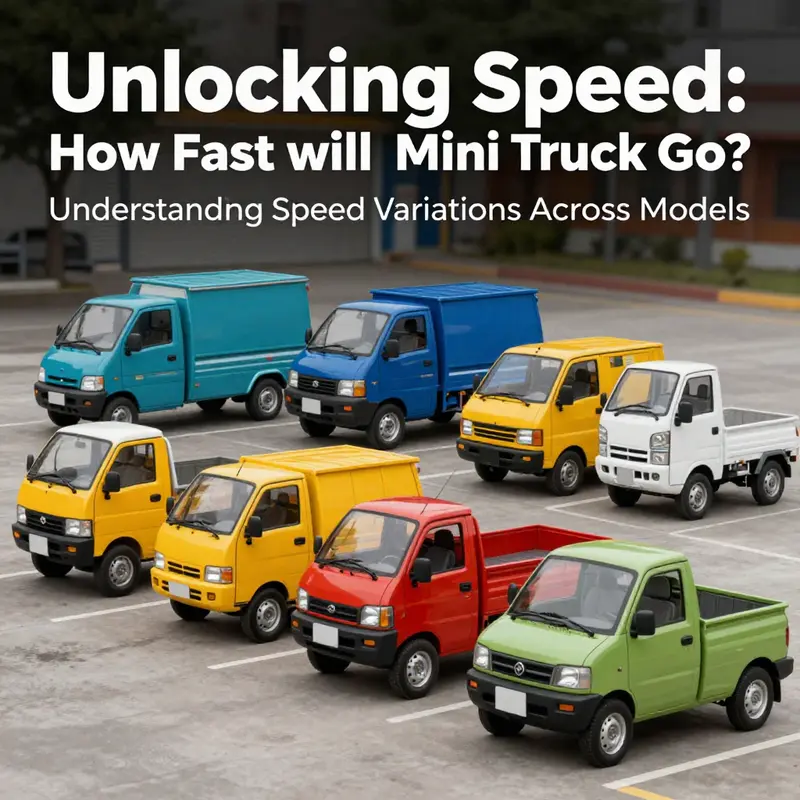
Speed in the world of mini trucks is less a single verdict and more a spectrum that reveals how manufacturers tailor performance to purpose. When you observe a fleet of these compact movers on a city street or a factory yard, the first thing you notice is that not all mini trucks accelerate toward the same horizon. They are built to serve different jobs, and speed is the practical byproduct of those jobs. Some are tuned for brisk urban deliveries and easy urban parking, while others are designed for short hauls in controlled spaces, where safety and efficiency trump raw velocity. Even within a single market, the same basic form can carry very different capabilities, depending on the design intention, the regulatory framework, and the constraints of weight and aerodynamics. The result is a range of speeds that can surprise those who expect every mini truck to shoulder a uniform pace across miles of road and mile upon mile of duty cycles.
Take, for instance, compact electric delivery vehicles crafted for dense urban use. These are the sort of machines you see zipping along narrow streets, maneuvering around pedestrians, and slipping into loading bays with precision. Their top speeds cluster around ninety kilometers per hour, roughly fifty-six miles per hour. This ceiling is not chosen by fashion, but by the realities of city operation. In a crowded urban fabric, higher speeds offer little value when low-speed maneuvers, frequent stops, and heavy stop-and-go traffic dominate the step-by-step rhythm of a driver’s day. The powertrain in these vehicles is optimized for efficiency and payload, with batteries sized to provide a useful range within city limits and with a safety profile that protects both operators and bystanders. The 90 km/h cap remains a pragmatic compromise: fast enough to keep up with city flows, but not so fast that the vehicle becomes a liability in dense pedestrian zones or on streets with tight sightlines.
A different family of mini trucks, the lightweight commercial Kei trucks popular in markets such as Japan, leans toward a similar, but nuanced, speed concept. These small commercial machines often carry the weight of tradition as much as cargo. In many technical manuals for Kei trucks, the maximum is also around 90 km/h, about 56 mph, but the reasons for that ceiling can be subtle. Kei trucks are designed for short-range tasks within urban corridors and rural micro-networks where roads are narrow, loading times are finite, and road regulations frequently shape what is permissible. In practice, these trucks excel at short hops between loading docks, warehouses, and street-level stores, delivering goods where larger vans would struggle to weave through traffic or park. Climbing ability is often a focus too, with some configurations rated to handle climbs of up to 30 percent. That climbing capability is as much about reliability on grades as it is about top speed on flat ground. It demonstrates that efficiency, torque, and traction matter as much as the final number painted on a speedometer.
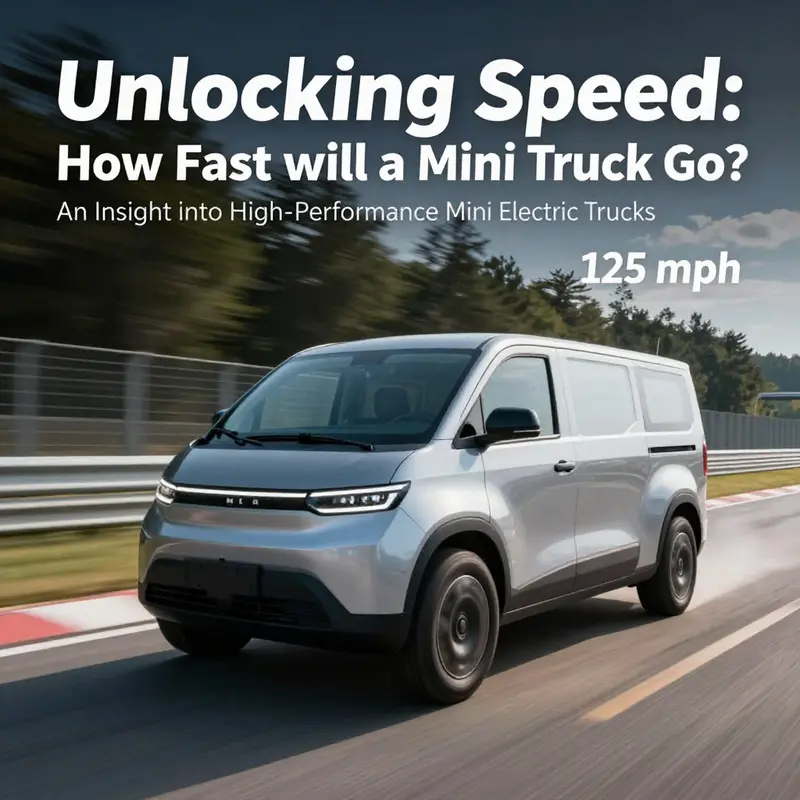
Against this broad urban and semi-urban backdrop, there exist more audacious visions—a high-performance niche that pushes the envelope beyond conventional city operation. A concept like the TELO electric truck points in a different direction entirely. Its dual-motor arrangement can generate hundreds of horsepower, delivering a claimed top speed around 125 miles per hour, or about 201 kilometers per hour, with a 0–60 mph time of roughly four seconds. This is not a vehicle designed for city deliveries or yard shuttling. It is a signal that, if engineering, battery technology, and safety systems converge in the right way, even a tiny truck skeleton can host a performance profile closer to sports cars than to utility vans. Such a fast mini truck would be at home on a test track or a controlled demonstration course, where speed and acceleration are measured with rigor and where the road-use regulations allow high-speed operation. Real-world fleets, obviously, do not replace city duty cycles with track days, and the TELO-type machines remind us that the boundaries between categories are fluid rather than fixed. In short, the typical practical mini truck, aimed at city deliveries or light commercial tasks, sits at a conservative speed band around 90 km/h; but there exists a spectrum where speed becomes a function of purpose, capability, and regulatory acceptance.
Even within the mid-range of practical performance, some models are crafted to bridge the gap between a city shuttle and a tool for light road use. A two-seat electric mini truck used in industrial or logistics settings offers a different milestone. In many CE-approved configurations, the top speed lands at about 30 km/h (roughly 18.6 mph). This figure is not a limitation born of boredom; it is a safety standard and a design choice that suits confined environments. Factory yards, airport tarmacs, ports, and large parks are the typical stages for such vehicles. They operate at speeds where the risk of collisions or injuries is minimized and where the energy consumption remains predictable. The value here is not zip but predictability: a consistent pace that aligns with human traffic, pedestrian zones, and the throughput requirements of a tightly choreographed operation. Operators are trained around these speeds, and the vehicles are engineered to maintain stable handling, predictable acceleration, and reliable braking under repetitive cycles.
Yet not all short-distance, indoor-friendly trucks stay at this lower tier. There are long-range, new-energy electric mini trucks whose design sculpts a higher ceiling while still focusing on efficiency. Some of these can reach as fast as 60 km/h (about 37.3 mph) in specific variants. The higher end is not a blanket permission for open-road exploration; it is an acknowledgment that longer routes, more demanding duty cycles, and regional regulations may create a need for speed that is modest but real. In this context, a mini electric double-cabin pickup becomes a practical compromise: more space, a sturdier chassis, and enough speed to cover urban corridors quickly while delivering payloads with reliability. The same chassis and powertrain principles that govern the slower yard-ready models can be adapted to accommodate a higher top speed, as long as the design maintains control, braking, and stability at speed. The key takeaway is that the speed the vehicle can reach is a deliberate decision—one balanced against weight, energy density, cooling capacity, and the ability of the suspension to keep tires in contact with the road.
When we step back from the specifics of individual models and look at the bigger picture, the moral becomes clear: most practical mini trucks are constrained by safety and regulatory frameworks that limit their top speeds in predictable ways. You encounter a spectrum where 30 km/h serves as the floor in confined environments and 60–90 km/h represents a comfortable ceiling for municipal and light-vehicle use. Above that, only the most specialized designs pursue higher velocity, often trading off payload, range, safety margins, or the complexity of the drive system. The result is a family of vehicles that can appear identical at a glance but, in fact, diverge dramatically in speed—depending on where and how they will be used.
To connect this with the realities of market offerings, consider the broader ecosystem of mini trucks that circulate in industrial parks and municipal fleets. The speed figure you see on a brochure or a product listing is not just a number. It is a signal of the vehicle’s role in the larger operation. A 30 km/h yard shuttle communicates a priority for safety, controlled traffic, and predictable dwell times. A 60 km/h variant signals a step toward broader coverage of a campus-like environment—still careful, still designed for short trips with frequent stops. A 90 km/h city-delivery machine declares it can thread busy streets and deliver efficiency in a time window that matters to a courier’s schedule. And the outlier at 125 mph, while not representative of everyday practice, demonstrates what is possible when the constraints of cargo handling, thermal management, aerodynamics, and safety engineering align with a high-performance directive.
For readers who want a practical touchstone when exploring this topic, a closer look at model comparisons can be instructive. A specific example frequently cited in manufacturing listings highlights how different configurations can alter speed while preserving other essential capabilities. If you study the available data for a compact electric pickup in this class, you will see the interplay of motor power, gearing, wheel size, and overall mass all converge to set the top speed. The same chassis might offer a low-speed option for yard work and a higher-speed variant for limited public-road use, depending on the regulatory environment and the optional equipment selected by the customer. These are not simply marketing claims; they are engineering outcomes shaped by requirements for torque delivery, traction control, battery management, and structural safety. This is why the landscape is so varied: speed is one lever among many that designers pull to meet the precise demands of a given job site or market.
In the middle of this spectrum lies a practical reality for many buyers. If your goal is frequent on-road deliveries across a small urban catchment, a model capped near 90 km/h makes sense. It offers enough road presence to keep time windows predictable without imposing the complexity and cost of a higher-speed, higher-risk platform. If your use-case is more about controlled environments, with predictable routes and safety rules that restrict open-road operation, the lower end around 30 km/h or 60 km/h might be exactly what you need. In this sense, the speed of a mini truck is as much about where you will drive it as it is about what the vehicle is physically capable of achieving. A high-speed capability in a laboratory or on a track does little good if the local streets are not designed to accommodate it—or if the operator workflow demands constant stop-and-go maneuvers.
To provide a practical reference that helps readers compare implications, consider how a fleet manager would weigh speed against payload and duty cycles. A model with a top speed of 90 km/h but limited range might not suit a long urban route that includes many stops and a need for frequent recharging. Conversely, a model with a top speed of 30–60 km/h might deliver a longer service life on a single charge when the route is fixed and the cargo volume is modest. In many cases, the speed that seems limiting on a brochure can become an advantage in the field, where safety, reliability, and predictable operating costs often trump a higher velocity rating. The bottom line is that the fastest mini truck is not necessarily the most valuable; the most valuable is the one whose speed aligns with the job, the environment, and the safety framework that governs daily operations.
For readers who want to explore how these differences translate into real-world numbers across brands and models, a closer look at the catalog pages and technical manuals of comparable offerings can be illuminating. In particular, a comparison of a few representative configurations reveals a pattern: the speed ceiling tracks to the role. City-focused deliveries hover near 90 km/h; yard and campus shuttles settle closer to 30–60 km/h; and only dedicated, high-performance concepts push beyond that. The continuum—from 30 to 90 km/h in most practical contexts, with the occasional track-ready exception—helps explain why the mini-truck class can feel both familiar and surprising at the same time. This is not a contradiction but a reflection of a market that has learned to tune speed to context, cargo needs, and the human realities of driving in compact spaces.
If you want a concrete glimpse into how one model family frames this spectrum, follow the discussion on model comparisons that includes practical specs and performance measures. The linked resource provides a framework for understanding how torque, power, mass, and gearing interplay with regulatory constraints to determine top speed in real usage. Kingstar KruZr models and specs. The purpose of this reference is not to pick favorites but to illustrate how a single platform can be configured to emphasize different performance outcomes while preserving core utility.
As the article unfolds, the reader will notice that these performance envelopes are not isolated to a single market or design philosophy. The same principles that govern a yard shuttle or a campus delivery vehicle will often apply to a small fleet that moves goods through a hospital campus or a university parking deck. The speed requirement emerges as a function of the route, the traffic mix, and the safety rules that govern each environment. In that sense, the question “how fast will a mini truck go?” yields a spectrum rather than a single answer. It invites buyers and designers to trade speed for stability, reach for payload, and balance performance with the constraints of energy efficiency and maintenance.
Looking ahead, it is worth noting how this topic connects to broader themes in small-vehicle design. The evolution of battery chemistry, motor control, and advanced braking systems continually shifts what is feasible in a compact footprint. As energy density improves and cooling systems become more sophisticated, higher performance configurations may become more common in markets that previously prioritized safety and efficiency over speed. Yet even as the upper limits broaden, the essential calculus remains the same: speed must be matched to mission, space, and regulation. The best mini truck for any given user will be the one whose top speed, acceleration profile, and maneuverability align with the exact route, load, and safety considerations that define that user’s day.
External reference for further reading on how speed is framed in industry offerings can be found here: https://www.alibaba.com/product-detail/CE-Approved-Mini-Electric-Pick-up-Truck-LQF123_1600584793663.html?spm=a2700.191319.0.0.3c5a4f5dKgZoBb
Swift in a Small Frame: Real-World Speeds and What They Mean for Electric Mini Trucks
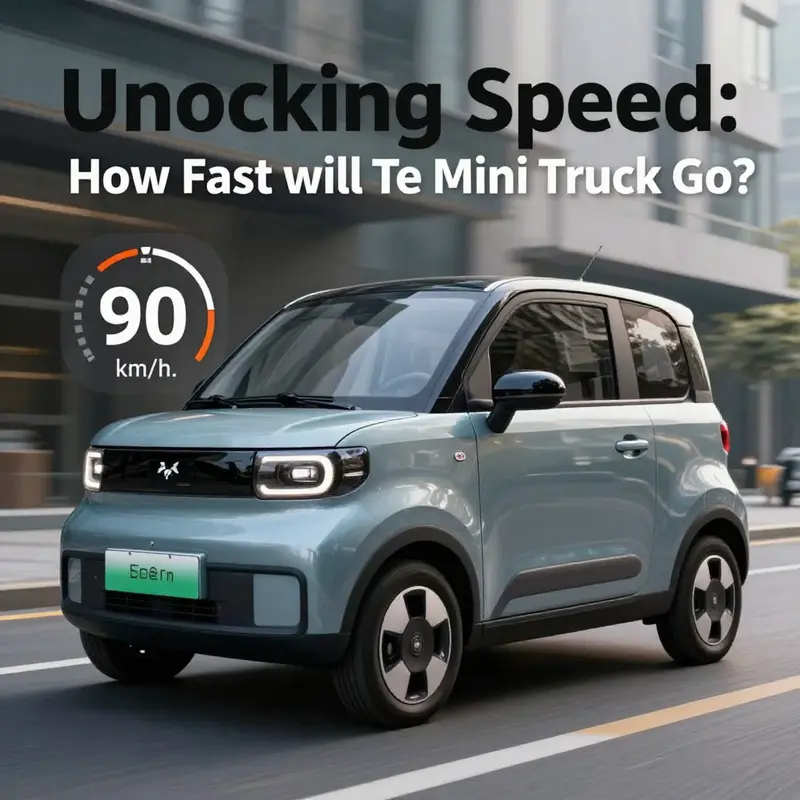
The speed of a mini truck is never a standalone figure; it is a signal about how the vehicle fits into the rhythms of urban life and the logistics networks that move goods through crowded streets. In the grand scheme of transportation, these compact electric workhorses are optimized for balance: enough haste to shorten delivery windows, enough traction and stability to haul cargo safely, and enough efficiency to maximize battery life across back-to-back stops. What that combination yields in practice is a spectrum of speeds that, at first glance, might seem modest but are precisely tuned to the purposes they serve. When we talk about how fast a mini truck will go, we are really talking about how well a vehicle can negotiate the urban lattice—the traffic, the loading zones, the pedestrian density, and the often-brief moments when the engine roars to life before slipping back into quiet, efficient operation.
Across the standard field, most electric mini pickup trucks settle into a top speed band that prioritizes control and energy efficiency over highway prowess. The common ceiling for many compact electric implementations sits in the 35–60 km/h range (roughly 22–37 mph). That spread captures a wide set of configurations: from two-seat cargo variants designed to zip through tight city streets and loading docks to larger, more robust micro-pickups intended for shorter-range deliveries where dwell times at each stop are the dominant constraint. In some cases, manufacturer calibrations purposely limit top speed to around 45 km/h to maintain stable handling when payloads are heavy or when the vehicle repeatedly accelerates from standstill in congested corridors. This careful tuning reflects a pragmatic approach: speed is a means to improve transit times only when it does not compromise safety, energy consumption, and reliability.
The practical implication for fleets and drivers is that the sensation of speed in these machines often comes from rapid, repeated acceleration rather than a sustained sprint to highway velocities. A top speed in the mid-40s to mid-50s km/h range is frequently enough to reduce travel times on short urban routes, particularly when the vehicle can navigate through traffic more effectively than larger trucks and still return to a charging point with a meaningful amount of energy reserve. It is also worth noting that some basic electric versions are even more conservative, capping at about 45 km/h. This is not a flaw but a feature: a deliberate calibration that advances efficiency and safety in the environments where these vehicles most commonly operate. The result is a fleet reality where average speeds become a better predictor of performance than peak speeds, because the working tempo is dictated by stop-and-go cycles, loading, and unloading schedules, rather than by highway-lue speed limits.
The upper end of the standard field presents a slightly different story. Newer iterations designed for improved logistics efficiency and urban throughput push toward 60 km/h, a threshold that enables faster service in dense zones while preserving the gentle handling and compact footprint that define mini trucks. These configurations often incorporate more capable powertrains, refined aerodynamics, and better thermal management to sustain brisk acceleration without sacrificing range. For operators, the marginal gain from a few extra kilometers per hour can translate into meaningful reductions in route time when many stops lie along a single lane of traffic or when delivery windows are tight. Acknowledging this, some models tout a cruising speed that nudges up to 60 km/h, pairing it with higher energy density batteries and smarter torque management to keep the vehicle responsive even under load.
Yet the horizon expands only when we step into the realm of high-performance concepts. In the broader imagination of electric micro-trucks, there are prototype configurations with dual-motor setups that claim top speeds far beyond typical city limits, flirting with highway-style performance. In those discussions, top speeds around 125 mph and accelerations from 0 to 60 mph in roughly four seconds surface as benchmarks for what a high-performance mini electric truck could achieve. These are not everyday production models; they belong to the realm of experimental engineering and niche demonstrations. They illustrate a principle that sits on the edge of practicality: that the same platform capable of delivering cargo through urban corridors could, in a different tuning, offer a dramatic leap in velocity. For most fleets, such performance remains aspirational, often constrained by battery range, cooling needs, noise, tire stress, and regulatory considerations. Even so, the existence of these concepts serves a useful purpose: they remind designers and operators that the speed envelope is not a fixed boundary but a spectrum shaped by ambition, constraints, and the specific mission profile of the vehicle.
What firmly anchors the discussion is the way speed intersects with range and reliability. Battery technology, motor design, and power electronics have progressed in tandem, enabling broader performance envelopes without sacrificing endurance. A high-capacity battery, if paired with efficient propulsion and careful thermal management, can sustain higher power draws for longer periods, supporting quicker accelerations and higher top speeds while maintaining sufficient energy for the planned duty cycle. In practical terms, a mini truck that runs city routes all day will often need a careful balance: speed that helps beat the clock on delivery windows, but not so much speed that it drains the battery before the end of a shift or forces more frequent charging stops.
The trade-offs extend into altitude and incline as well. Urban routes are rarely flat, and a vehicle that can maintain reasonable speed while climbing a slope is a valuable asset. The climbing capacity of these compact trucks tends to be modest but meaningful. Many models can handle grades of around 20% and sometimes a bit more, depending on payload, battery state, and torque delivery. This capability matters when routes include ramps to parking structures, loading docks on uneven terrain, or hilly neighborhoods where gravity compounds the energy demands of acceleration. A vehicle that maintains a steady pace on such inclines, rather than losing momentum, is less likely to throttle back unexpectedly, reducing dwell times and preserving driver confidence during peak hours.
All told, the speed story for electric mini trucks is not simply a matter of top-end performance. It is a narrative about how speed interacts with urban micro-mobility, weight distribution, and the mission profile that defines a fleet’s daily rhythms. The majority of practical models remain comfortably within the 45–60 km/h range, with a notable minority pushing toward the 60 km/h ceiling when the design goals prioritize lighter payloads, better aerodynamics, and smarter motor control. In some instances, the pace climbs to around 80 km/h for carefully engineered CE-approved configurations, a level that offers a meaningful cushion for freight operators who must contend with busier corridors or longer urban legs, yet still honors the constraints that make mini trucks indispensable for city logistics. These numbers, while useful as a baseline, do not capture the full picture of performance, because the story of velocity in micro-trucks is inseparable from the rhythm of the route, the cadence of charging, and the moment-to-moment trade-offs that define a successful delivery window.
A concrete sense of what these speeds feel like comes through the combination of torque delivery, throttle response, and the way the vehicle behaves under load. In a city delivery scenario, the most critical performance attribute is not the peak speed alone, but the quickness with which the truck can reach an efficient cruising pace after each stop and the steadiness of that pace while keeping acceleration within safe limits for pedestrians and other road users. Instant torque is a beneficial feature for pulling away from a red light or the corner where a curbside pickup happens, yet it must be kept in check to avoid sudden jolts that could unsettle cargo or destabilize a narrow ramp. For drivers, a smooth, predictable power band translates into smoother operation and less energy waste, which, in turn, preserves range for the next leg of the route.
Within this framework, the role of charging infrastructure and battery strategy cannot be overstated. A vehicle might be capable of cruising at 60 km/h for extended stretches, but if the battery state of charge is already low, or if charging opportunities are sparse along the planned route, the operator may decide to temper speed to extend reach. Conversely, a well-planned charging stop or fast-charging corridor can unlock opportunities to sustain higher speeds for segments of the route where time is at a premium. The interplay between speed, range, and logistics planning becomes a choreography, where dispatchers and drivers coordinate to minimize idle time, ensure cargo integrity, and keep service level agreements intact.
From a practical perspective, the speed envelope matters most when it aligns with the specific duties the mini truck is designed to perform. For urban delivery fleets, the priority is often no longer the ability to hit highway speeds, but the reliability to deliver with predictability, the agility to navigate tight streets and loading zones, and the endurance to complete a full shift without unscheduled downtime. In that sense, the speed figures—whether the modest top ends around 45 or 60 km/h or the rare higher-end CE-approved options at 80 km/h—become performance metrics that sit alongside payload, charging time, and thermal resilience. The best designs optimize this triad: speed for throughput, range for uptime, and safety for all road users.
For readers seeking a deeper, industry-facing frame of reference, consider how these vehicles are discussed in contemporary mining of practice and theory within urban logistics communities. The discourse frequently circles back to a simple, powerful idea: speed is a tool, not a goal in itself. The most effective mini trucks are those that can keep moving through the day, with the minimum necessary speed to respect safety and efficiency the moment the vehicle rolls away from the dock. The underlying technology—batteries, motors, and power electronics—has grown capable of providing a wider spectrum of speeds without collapsing the essential reliability and energy endurance that fleets demand. As these technologies evolve, the boundary between what is considered a practical top speed and what might be explored in a prototype will shift, but the core requirements—safety, payload, and consistent service—will remain the governing constraints that shape how fast a mini truck truly goes in the everyday sense.
To connect this broader landscape with the practical realities on the street, it helps to reflect on how urban fleets map speed to route structure. A typical day often includes a sequence of short trips, each with a tight delivery window and low average speeds due to traffic and frequent stops. In such operations, every kilometer per hour above the baseline can shave minutes off a schedule, but only if it does not erode battery life or compromise handling when a pallet shifts during a turn. The result is a pragmatic speed regime: modest peak speeds, deliberate acceleration, and a focus on repeatable, predictable performance that meets the unique demands of city logistics.
For readers who want to explore more about how these dynamics play out in real-world fleets, the industry maintains a steady stream of practical discussions and case studies. The notion that speed is only one lever among several is reinforced in many fleet blogs and technical discussions. You can explore a broader conversation at a dedicated industry hub that covers urban small-truck experiences, including design choices, route planning, and optimization strategies. In one concise resource, you’ll find a synthesis of the kinds of performance figures discussed here, along with commentary on how operators balance speed, range, and payload in daily operations. For a direct look at that ongoing dialogue, visit minitrucksocala.com/blog/ and consider how the ideas there align with the principles outlined in this chapter.
In sum, the speed of electric mini trucks is a nuanced matter shaped by purpose, safety, and energy strategy. The majority of practical models settle into a conservative band that favors reliability and efficiency over outright velocity. Yet the field is far from static: ongoing improvements in batteries and motors are steadily expanding the envelope, while high-performance concepts demonstrate the potential for a very different kind of vehicle—one that can deliver cargo with the speed and poise of a much larger machine. For today’s city fleets, the most compelling takeaway is that speed, when deployed thoughtfully, becomes a tool for smarter routing and more dependable service. It is a reminder that in the world of micro-trucks, momentum is built not only by how fast you can go, but by how consistently you can move—between stops, in the face of traffic, and along a route that rewards precision and endurance as much as it does velocity.
External reference beyond this discussion can provide additional context on the evolving specifications and market expectations for electric mini trucks. See an external resource for a broader technical perspective: https://www.aucwell.com/.
Tiny Titans on the Highway: How Fast Kei Trucks Really Go and Why Speed Isn’t Everything
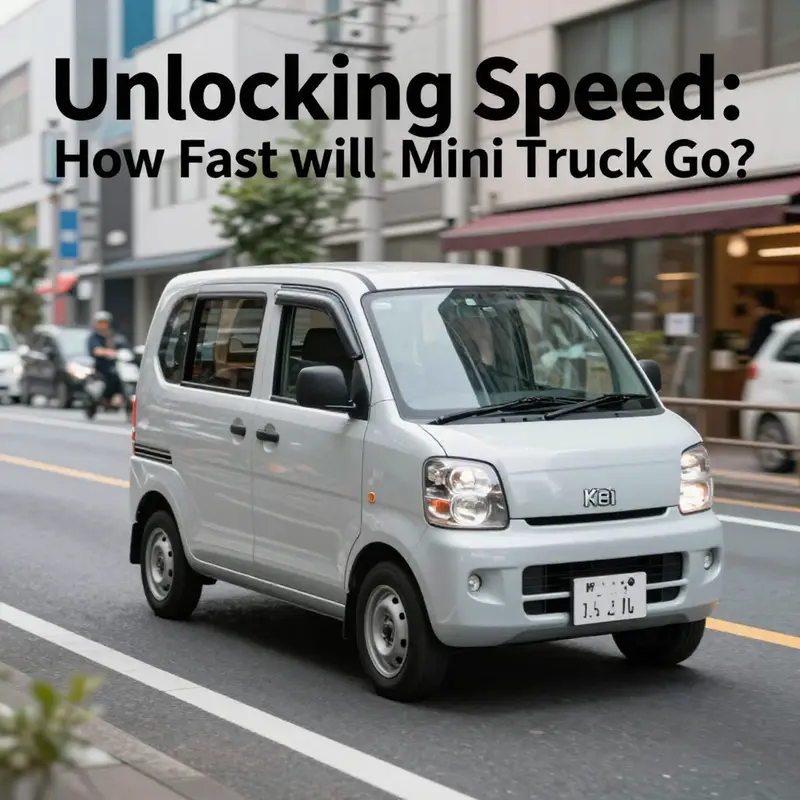
Kei trucks, small in size yet capable of carrying meaningful payloads, occupy a unique niche in automotive design. They are not built for rapid acceleration or highway sprinting; instead they emphasize efficiency, maneuverability, and reliable work over raw speed. In Japan and other markets where these compact workhorses are common, regulatory constraints shape every aspect of their performance. The engine displacement is capped at 660 cc, the width is limited to under 1.48 meters, the length under 3.4 meters, and the height below 2 meters. These rules are not just numbers on a spec sheet; they steer design toward light weight, compact dimensions, and predictable handling, which in turn influence how fast a mini truck can reasonably go and how often it actually needs to reach high speeds in daily use.
Within those limits, the typical Kei truck reaches a top speed in a narrow range. Most models top out around 90 to 110 km/h, or about 56 to 68 mph. Variation exists depending on engine type and drivetrain, as well as tuning for economy and payload. On highway routes, these trucks run at modest speeds rather than chasing top end, since the engine is tuned for efficiency and reliability. The result is a vehicle that feels steady at speed, stable in gusty winds, and economical when carrying a load or climbing grades. The broader message is that speed is a secondary consideration to the class’s mission.
To understand why, consider the truck’s role in its native environment. Kei trucks were designed for city deliveries, rural farm tasks, municipal work, and small-scale trades. They must squeeze through narrow lanes, negotiate tight corners, and brake reliably with a load. Performance emphasis is on reliability, predictable handling, frugality, and the ability to carry meaningful payload in a compact package. The small engine, paired with light weight, delivers a balance suited to these tasks.
Given the limits, top speed remains a central yet not sole determinant of performance. Distinctive geometry, such as compact wheelbase and a low frontal area, helps with highway coexistence. Front wheel drive variants are common and deliver torque in a way that favors urban duty; all wheel drive options exist for rough surfaces and hills, adding weight and different torque distribution but not redefining the class.
A key dimension is speed versus payload. When loaded, the effective power to weight shifts, the engine works harder, and top speed may drop, but practical performance centers on maintaining a steady pace with a load. This matters on climbs and long stretches, and on road grades where speed must be maintained safely. Kei trucks are built to handle these realities with grace, delivering safe highway speeds while preserving fuel economy and payload.
Comparisons with broader mini-truck design show that outside the Kei class there are high performance electric truck concepts with multi motor setups capable of hundreds of horsepower and top speeds far beyond Kei limits. They demonstrate what propulsion can achieve when constraints differ, not the everyday Kei experience.
In practical terms, Kei trucks offer predictable behavior, tight turning radii, and excellent fuel economy. They are well suited to city deliveries, dense suburban routes, and rural work where space is tight and long stretches at top speed are rare. The aim is not to outpace others but to move goods and people reliably through everyday traffic. The headline speed is a reflection of the class mission, not a measure of thrill.
Further reading notes can include official manufacturer sites for regulatory context and practical specs. For example, official Kei truck pages cover the 660 cc rule, dimensions, and typical top speeds.
Velocity in a Pocket: Unpacking the Speed of High-Performance Mini Electric Trucks
Every time we zoom in on a mini truck, we’re watching a paradox in motion: a vehicle small enough to fit in a parking space yet capable of moving cargo with the confidence of a bigger truck. The question of how fast such a machine can go isn’t just about pushing a pedal to the floor. It blends engineering, regulation, and purpose into a single, nuanced picture. When we talk about speed in this class of vehicles, the context matters as much as the powertrain. A compact electric delivery truck designed for congested city corridors will be tuned for stability, efficiency, and reliability in stop-and-go traffic. Its top speed—often around 90 kilometers per hour, or roughly 56 miles per hour—reflects a balance between enabling quicker urban routes and preserving energy, battery life, and regulatory compliance. This speed is not accidental; it is the result of deliberate choices about aerodynamics, chassis stiffness, and energy management that favor predictable handling over outright acceleration. In practical terms, drivers rarely need to push beyond that limit in urban settings, where average speeds tend to be far lower than the maximum. The same philosophy underpins the way these vehicles are designed to carry meaningful payloads, while keeping wear and tear on components manageable across thousands of cycles of door-hours and pallet drops. The interplay between power, weight, and rolling resistance becomes visible when we consider the typical duty cycle of a mini truck: frequent starts and stops, short routes, and a constant search for the next load. In this environment, high torque and rapid response do not translate into higher top speeds as much as they do into timely delivery, precise braking, and confidence on grades that might otherwise challenge a lighter chassis. This is where the core tension lives: speed as a feature, not a default, and the vehicle as a tool optimized for a specific job rather than a general purpose speed machine. To understand how fast these machines can go, it helps to trace the three broad pathways that shape speed in practice. The first is the straightforward, hardware-driven route. Electric mini trucks that are built for speed typically deploy higher-powered drive systems, robust controllers, and energy-dense batteries that keep the motors spinning at higher output while maintaining safe thermal envelopes. In the most widely deployed configurations, higher-powered motors in the hundreds of watts band, paired with controllers operating at the common 48- or 60-volt ranges, can sustain the momentum needed for highway portions of urban routes. The second pathway is the weight-speed trade-off. A lighter vehicle can accelerate and reach higher top speeds with less power, but the payload demands of a delivery or logistics operation press in the opposite direction. The payload can easily tip the scale toward stability and braking requirements that compel a lower top speed. The third pathway is regulatory and safety-driven. Local and national standards often cap speeds for commercial microtrucks, particularly those carrying heavy payloads or operating in mixed traffic. This institutional ceiling is not merely a bureaucratic footnote; it directly informs what engineers optimize for—efficiency, reliability, and predictable handling rather than performance sprints. Even within the same class, these tensions give rise to a spectrum of configurations, from city-focused, low-speed variants to ambitious, high-performance concepts that push the boundaries of what a mini truck can achieve. The high-performance side of the spectrum is where speed becomes a statement about capability rather than a necessity for routine work. In this corner, designers imagine a dual-motor setup capable of delivering substantial horsepower. A concept like this might pursue a combined output around five hundred horsepower, yielding a top speed that pushes well into the upper ranges for this class. In practice, that would translate to a top speed around two hundred kilometers per hour in theory, with a 0–60 time in the neighborhood of four seconds. Such figures are not typical of urban delivery fleets, but they illustrate the engineering potential when the vehicle is designed as a high-performance platform rather than a conventional work truck. The engineering challenges that accompany this ambition are instructive. To sustain such speeds safely, the vehicle requires a meticulously tuned suspension, a chassis that resists high-speed body roll, and brake systems capable of delivering consistent stopping power under sustained drive. Aerodynamics become a primary design discipline, not merely a footnote; every surface must minimize drag and prevent lift at speed. Thermal management becomes a critical discipline as well, because high power output over prolonged periods can heat motors and batteries in ways that degrade performance or shorten range if left unchecked. In such a vehicle, the battery pack is not only a source of energy but a heat exchanger, a structural component, and a safety system all at once. The packaging must ensure even weight distribution and maintain adequate ground clearance to cope with road irregularities, while tire specification becomes central to both grip and longevity. It is not enough to ask, “How fast can we go?” The more pertinent question becomes, “How fast can we go safely, reliably, and consistently under real-world conditions?” This leads us into the practical realities that govern any real-world application of mini electric trucks. In the more common and commercially viable segment, the top speed is around 60 to 90 kilometers per hour, depending on the model, configuration, and intended use. A number like 60 kilometers per hour corresponds to a design that prioritizes local delivery efficiency, urban maneuverability, and regulatory compliance. It also reflects a conservative approach to power and energy management, ensuring that the vehicle remains efficient, with predictable acceleration and braking behavior that fleets can rely on day after day. In many markets, these vehicles are optimized for low-speed operations to reduce risk on limited-access roads, manage heat generation in dense traffic, and maximize payload over longer routes. For fleets that demand more dynamic performance on open roads or among arterial corridors, the 90-kilometer-per-hour ceiling is the practical upper bound, at least for models designed to be compliant with local laws and to deliver steady, repeatable service. It is worth noting that some of the most talked-about advances in this space come from concept vehicles that push beyond the conventional envelope. A high-performance concept, in particular, imagines a dual-motor arrangement that elevates horsepower well beyond typical urban-focused configurations. This is not an instruction manual for everyday operations, but a glimpse of engineering intent: how a tiny truck could, in principle, match or approach the performance envelope of larger electric trucks if the constraints of size, weight, price, and safety are managed with equivalent rigor. Even so, the everyday reality remains grounded. Most operators prioritize a balance of speed, payload, range, and reliability. The top speed of around 90 kilometers per hour is a ceiling that makes sense for highway portions of delivery routes and for certain regional logistics tasks where faster door-to-door times translate into meaningful productivity gains. The payload capacity, often in the range of one to two tons for robust mini trucks, cannot be neglected either. Elevating speed without regard to payload would undercut the vehicle’s primary purpose. On the other hand, smaller, economical variants—think of electric three-wheel configurations or light-duty mini pickups—tend to cap out around 35 to 60 kilometers per hour. These vehicles are optimized for tight streets, limited parking, and shorter trips where cost efficiency and maneuverability trump speed. They are excellent examples of how the same ordering principles produce very different outcomes when the operating context changes. Across this spectrum, the decision-makers—fleet operators, regulators, designers—navigate a network of tradeoffs. They weigh the benefit of faster delivery against the cost of higher energy consumption, greater heat generation, faster tire wear, and more demanding thermal and braking requirements. The intent behind speed specifications must also be weighed against safety margins, driver training, and the realities of urban traffic. A vehicle designed to move freight quickly through a city must still stop on a moment’s notice, absorb the bumps of urban roads, and maintain stable handling as it negotiates intersections and pedestrian activity. In practice, all these considerations consolidate into one guiding principle: the best mini truck speed is the speed that achieves the task with the lowest total cost of ownership and the highest reliability. When we lift the hood and imagine the unglamorous nuts and bolts of the system, the picture becomes clearer. The 90-kilometer-per-hour capability is not a claim about raw horsepower alone; it is a function of battery chemistry, motor topology, controller software, gearing choices, weight distribution, and cooling strategies. The difference between a comfortable 56-mph cap and a hair-raising 90-kph ceiling can hinge on a handful of degrees of drag, a few kilograms of weight saved from a mislaid component, or the precision of a torque curve that keeps motors from stalling during a steep climb or a sudden lane change. In the end, the fastest mini trucks are not merely fast for their size; they are fast for their purpose. They are designed to blend speed with stability, energy efficiency with payload capacity, and a realistic service life with the financial realities of fleet operations. The chart of speeds we’ve sketched out—35 to 60 for the most economical variants, up to 90 for the higher-performing urban models, and the speculative, high-performance concept approaching highway-scale numbers—maps the practical landscape rather than a single destiny for every vehicle in this class. For readers who want to explore more about the broader landscape of micro-truck design, the online blog for the mini-truck community offers sustained commentary and case studies that illuminate how operators balance speed with other critical needs. You can read more on the community blog here: mini truck blog. For those who want to see the range of related topics and comparative discussions, this chapter connects to the ongoing conversations that help shape expectations about what speed means in a compact delivery platform. As with any evolving technology, the speed story is not a single endpoint but a moving target, shifting with advances in battery chemistry, motor efficiency, and safety engineering. If you’re considering a practical purchase or a fleet upgrade, remember that the best speed is the speed that serves your workflow, not the speed that sounds most impressive in a data sheet. An external point of reference for broader industry specs and catalog entries can be found here: https://www.alibaba.com/product-detail/Changan-Kyc-4X2-2WD-Single-Cabin-Pure_1601257934249.html
Final thoughts
In summary, the speed capabilities of mini trucks can vary widely based on their intended use and construction. From the efficient small electric models designed for urban settings with speeds of up to 90 km/h, to Japan’s Kei trucks that also reach similar speeds, there is a lot to consider. If you look into the future of performance with electric mini trucks that can hit 125 mph, it opens yet another avenue for enthusiasts and business owners alike. Assessing your needs will help you select a mini truck that not only meets your speed requirements but also serves your operational goals effectively. Embrace the potential of these versatile vehicles in your day-to-day adventures.