
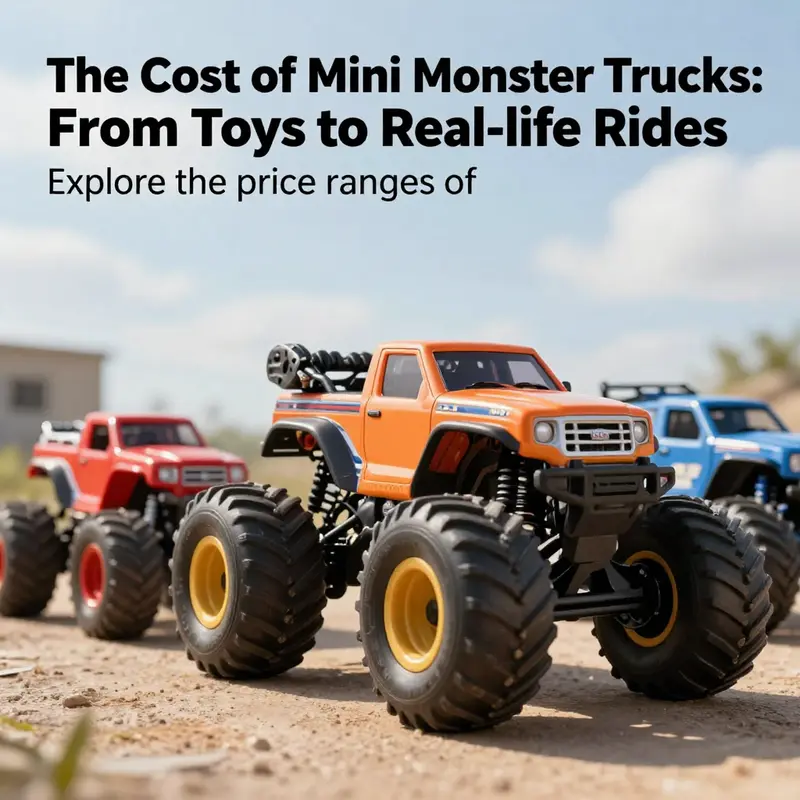
Mini monster trucks have captured the hearts of toy lovers, collectors, and even those seeking a compact vehicle for practical use. Whether you’re a small business owner looking to entertain your young customers, a parent wanting to spark your child’s interest in vehicles, or a mini truck enthusiast hoping to find the perfect model, understanding the pricing landscape is essential. This article clarifies how much mini monster trucks cost across various categories—from classic toy models to specialized miniature trucks, allowing you to make informed decisions to satisfy your needs and passions.
null
null
Price Tags on Tiny Thunder: A Cohesive Guide to the Costs Behind Mini Monster Trucks for Young Explorers
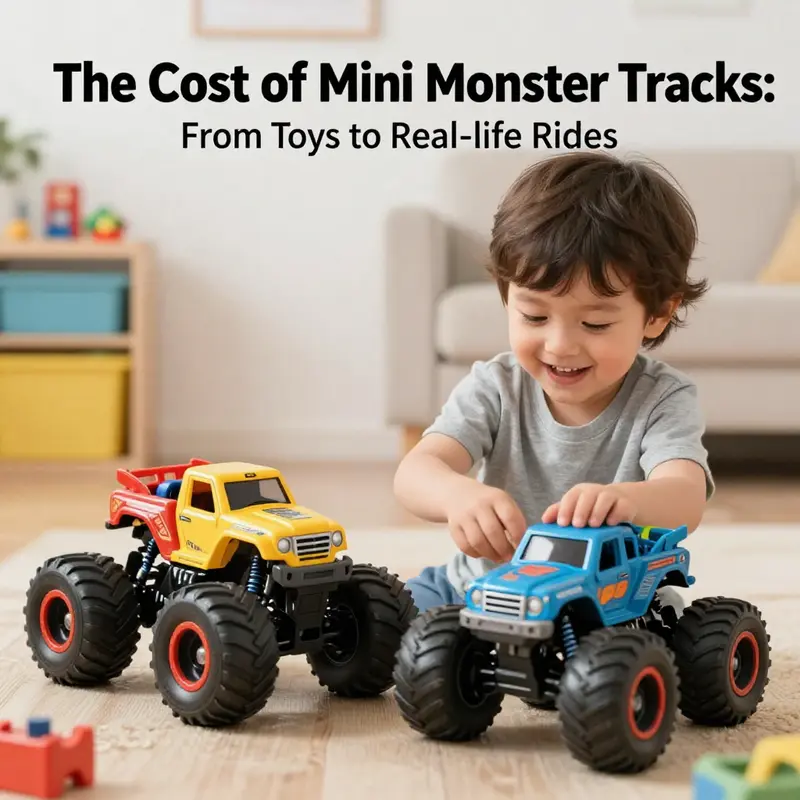
The fascination with mini monster trucks begins long before a child ever climbs into the driver’s seat. It starts with the idea of a rugged, off-road world packed into a toy form that fits a small palm and a big imagination. But alongside the thrill of chrome and mud comes a practical question that every parent, caregiver, or gift-giver eventually asks: how much do these pint-sized adventures cost? The answer isn’t a single figure, because the market reflects a spectrum of play experiences, materials, safety standards, and intended ages. When we talk about mini monster trucks for young children, the price landscape is less a single line and more a series of lanes, each linked to a different kind of play, different materials, and different commitments of time and space. In early 2026, the major routes are obvious, and understanding them helps families distinguish value from vanity, durability from novelty, and play value from mere trend. The price range you encounter can guide decisions about how a child will spend hours outside, manipulating pedals or assembling blocks, with each option offering a distinct kind of engagement and a different footprint in the home or yard. This is not merely about dollars and cents; it is about the kind of play a household values, the space available for a toy, and the calm assurance that a choice will withstand the rough-and-tumble of real childhood exploration.
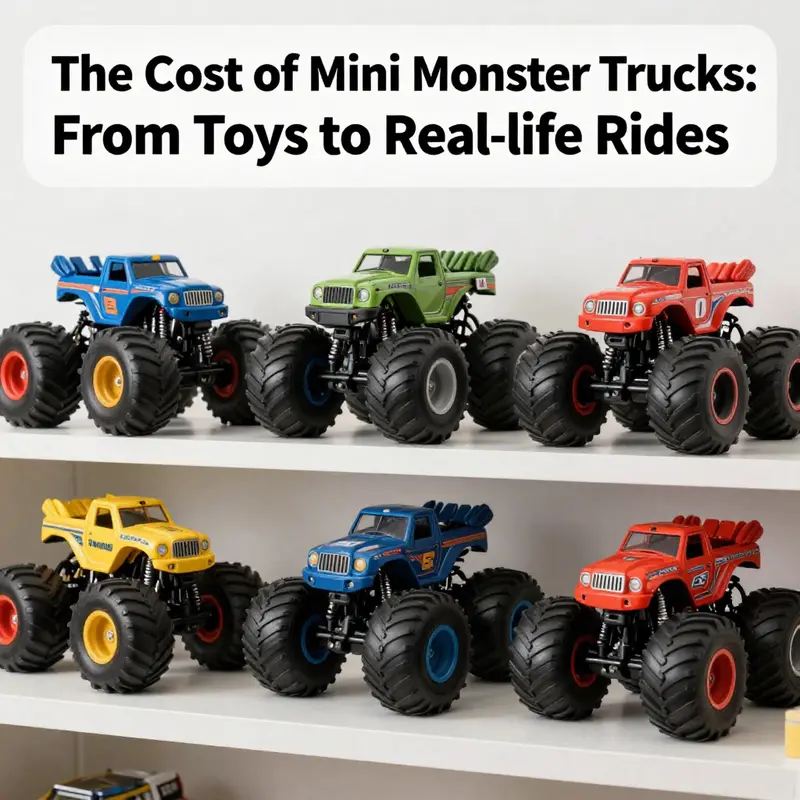
One broad and practical way to frame the conversation is to think in terms of three core categories: ride-on electric mini monsters, imaginative-atmosphere toys like inflatable play pools shaped like monster trucks, and building or digital experiences that expand play beyond the actual vehicle. Each category carries its own price architecture, and each can be a meaningful purchase in its own right. The ride-on electric category typically sits within a mid-to-upper range and often requires more planning—space for use, charging time, and a longer-term commitment to maintenance. The inflatable options bring a different kind of value: seasonal, tactile, and highly approachable for younger children, but limited by weather and storage considerations. The building-set and digital experiences, while sometimes less expensive in upfront cost, contribute to the evolving ecosystem of play that keeps a child engaged across many weeks or months. This diversity helps explain why two families can walk away from essentially the same “monster truck” concept with very different total investments and, more importantly, very different play trajectories for their children.
To understand the pricing clearly, consider the most common scenario for many households: a parent wants a single, dependable vehicle-like toy that delivers a strong, immersive experience and can be used outdoors. In that case, the electric ride-on variety is often the first stop. These ride-ons are designed for ages roughly from three to six and usually include features that make real-world driving feel accessible to small hands. The sticker price on these models typically falls in a broad band, from roughly one hundred dollars up to three hundred dollars. At the lower end, you’ll find basics: a compact body, simplified steering, a modest battery, and standard wheels. As you move toward the upper end of the range, the models gain more robust construction, larger wheels for outdoor traction, longer battery life, and enhancements such as LED lighting, realistic engine sounds, and reinforced frames that stand up to daily use on driveways, sidewalks, or grass.
The correlation between price and durability here is real but not absolute. A mid-priced ride-on may offer excellent value if it balances weight, safety, and charging time with the right materials. A budget option might be perfectly adequate for occasional use and shorter play sessions, especially if the child’s interest is evolving toward pretend play rather than sustained driving. For families prioritizing an immersive outdoor experience, premium ride-ons can be a wise investment because they are built to endure frequent use, rough surfaces, and the occasional tumble that comes with exploratory play. The trade-off, of course, is the space required for safe operation and charging time that can stretch into hours rather than minutes. In environments where a child wants to spend long afternoons exploring variable terrain, the premium ride-on can deliver more hours of engagement per week, which some parents perceive as a higher value when compared with cheaper alternatives that might see shorter play cycles.
Seasonal factors also shape pricing. In spring and summer, when outdoor toys are featured prominently in storefronts and online catalogs, discounts may appear on conventional models as retailers align inventories with the favorable weather. Holiday seasons can push prices upward, as surges in demand push the average price point temporarily higher. Yet even during peak shopping times, the market offers a continuum: families can often find deals that align with their budget if they’re willing to compare features, read safety certifications, and consider the long-term maintenance implications. For many households, the best approach is to pair a core, durable ride-on with complementary, smaller additions that fill in the broader play spectrum without duplicating a single function. A single robust ride-on can become the centerpiece, while inflatables and building sets fill the gaps in imaginative play during other parts of the year.
In the same family of playful products, inflatable monster truck pools present a very different kind of price equation. Designed for warm-weather fun, these are typically priced between roughly forty and one hundred twenty dollars. The lower end covers simple, compact designs that can be inflated and deflated quickly for seasonal use. The higher end features larger dimensions, reinforced materials, and UV-resistant fabrics that withstand sun exposure and chlorine or saltwater. The appeal here is immediate and sensory: a kid can climb in, splash around, and pretend the pool itself is a muddy, off-road course. The practical upside is that these pools are often easy to store when winter arrives, and they don’t require batteries or charging, which reduces ongoing costs. However, their use is inherently seasonal and weather-dependent. For families living in climates with short summers, the inflatable option can be a bright, affordable way to keep the monster truck fantasy alive during a few peak months, but the need to store and protect it when not in use must be considered as part of the overall value equation.
Then there are the brick-building and construction-type experiences that tap into the same fascination with off-road capability. In the toy-brick world, monster-truck-themed sets typically sit in a mid-price range, often between thirty-five and eighty dollars, and their value derives from the potential for extended, constructive play. Children can exercise fine motor skills by snapping bricks together, practicing problem-solving as they complete vehicle builds, and engaging in relentless pretend play once the model is assembled. The price here is not just for one moment of action; it buys hours of engagement, the ability to customize and rebuild, and a lasting toy that can be reimagined into different scenarios. These sets suit children who enjoy hands-on activities and who benefit from open-ended materials that can be reconfigured over time. The age range with these products matters, and while the lower end often targets younger builders, the more complex sets attract older preschoolers and early elementary children. The return on investment, in this category, lies in the ongoing creative possibilities rather than a single moment of excitement.
A related and increasingly relevant category is digital play. Monster-truck-themed games and apps come in at a very accessible price point. Many interactive experiences in this space are free to download, with optional in-app purchases that provide additional levels, customization, or virtual rewards. Others begin at two or three dollars and scale up with more content or features. The value here is convenience and breadth: a child can engage with monster-truck action on a tablet or phone, anytime and anywhere, without the need for physical space. This digital layer complements physical toys by offering new challenges, different atmospheres, and a narrative sheen that can keep a child’s interest alive between outdoor play sessions. For families balancing screen time and offline activity, digital options can be a cost-effective way to extend the life of a theme children already love. The practical decision often comes down to how the family values screen time versus hands-on play, and how much of the budget they want directed toward digital experiences versus tangible, tactile toys.
Given these distinct routes, the question often becomes less about a single price point and more about how a household plans a child’s play ecosystem. Some families may favor a single, sturdy ride-on as the centerpiece and naturally gravitate toward seasonal inflatable accessories to fill in the gaps. Others may choose to cultivate a modular play system that grows with the child: a core brick-building set and a digital companion that expands as the child’s play needs evolve. This approach can maximize value by coordinating elements that each contribute in unique ways to the child’s development—spatial awareness from driving experiences, creativity from building activities, and cognitive engagement from games and apps. Importantly, regardless of which path a family chooses, safety remains the essential baseline. Certifications, age recommendations, and the presence of parental controls or limited-speed features should be non-negotiables in any purchase decision. When a product’s price aligns with robust safety and thoughtful design, it’s easier to justify the investment, even if a lower-priced alternative might deliver a shorter-lived thrill.
For families that want to stay up to date with new releases, price changes, and practical buying tips, the ongoing conversation is worth following. A good resource, accessible at any time, provides fresh perspectives on how different play options fit together and how to identify durable, value-driven choices. This ongoing exploration helps ensure that the toy ecosystem a household builds remains aligned with the child’s evolving interests, space constraints, and the family’s budget. It also helps clarify what “value” means in this context: not just the lowest upfront price, but the combination of playtime quality, learning potential, durability, and storage practicality across seasons and years.
As you weigh options, consider the rhythm of a child’s engagement. A ride-on might be most compelling in a season of frequent outdoor activity, when the child naturally gravitates toward physical exploration. A brick-based set can become a quiet, focused activity that continues to reward meticulous building days later. An inflatable pool offers immediate joy during a heatwave and then folds away neatly for the rest of the year. A digital game can keep the theme alive when outdoor play isn’t practical, providing guided adventures or creative customization that complements real-world play. Each choice has its own cadence, its own set of maintenance tasks, and its own footprint on the household beyond the price tag.
What ultimately matters is a clear alignment between the child’s interests, the family’s space, and the budget that makes sense. A well-chosen combination can stretch a modest budget into months of meaningful, varied play. A single, high-cost item might deliver a deep, immersive experience and become a touchstone of a child’s early years. Either path can be worthwhile when the purchase is approached with attention to safety, durability, and the ways in which different play experiences reinforce one another. And as the market continues to evolve, staying informed about what is being offered, how it is built, and what it promises in terms of time and engagement remains essential.
For readers who want ongoing perspectives on the broader landscape of mini trucks and related play goods, the community resources and expert insights found at minitrucksocala.com/blog/ offer a helpful ongoing reference point. In a space where new designs and seasonal accessories appear regularly, a living resource can illuminate the subtle ways in which price, quality, and playability intersect. Meanwhile, when you are ready to branch into more specific comparisons—such as the way one design balances safety features with outdoor performance—you can explore sections that discuss model variations and their practical implications, always guided by the knowledge that play value does not hinge on the price alone but on how well a toy fits a child’s world and a family’s lifestyle. This is a nuanced conversation, one that deserves a steady, thoughtful approach rather than a quick judgment about what is “the best” or “the cheapest.” The best choice remains the one that invites the child into a world of imaginative exploration, rewards patience with durability, and respects the family’s time, space, and finances.
To round out the perspective, it helps to remember that the toy landscape is designed to be explored in layers. The simplest entry points—seasonal inflatables and small building sets—offer immediate joy with modest upfront investment and relatively low ongoing commitment. The more involved ride-ons deliver a larger, longer-term play field that can grow with a child, especially if the family anticipates ongoing outdoor use and looks for features that extend the toy’s life, like replaceable parts or modular enhancements. Digital experiences, while less tangible in terms of physical space, can complement the other options by offering new challenges, adventures, and customization possibilities that keep the theme fresh over time. The art of shopping in this category is less about chasing a single price and more about composing a playful portfolio that matches the child’s energy, the home’s configuration, and the family’s goals.
In closing, the practical takeaway is simple: mini monster trucks come in a spectrum of forms, each carrying a distinct price tag that reflects its design philosophy, durability, and the kind of play it supports. Whether you pick a single, sturdy ride-on as the centerpiece or assemble a layered collection that blends outdoor action, imaginative building, and digital exploration, the value is measured not only by cost but by the quality and continuity of play it enables. The most satisfying choice is one that invites curiosity, rewards safe play, and grows with the child’s world rather than pressing them into a one-time thrill. For the curious buyer who wants to follow the latest conversations and developments, a regularly refreshed resource can be a steady guide through the evolving marketplace, helping translate price into play that lasts. And as the market continues to shift—driven by materials, safety standards, and new ideas—the relationships families build with these tiny machines may well outlive many other trends, becoming a simple, enduring source of joy and learning in the everyday life of a child.
External resource: https://www.lego.com/en-us
Miniature, Mighty: Tracing the Price Spectrum of Mini Monster Trucks
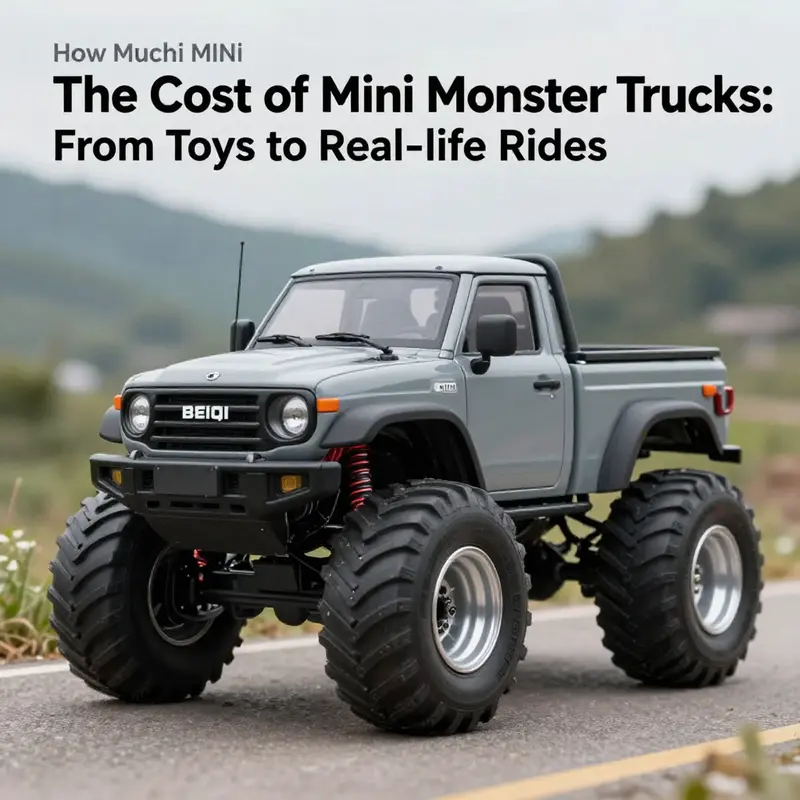
Prices for mini monster trucks reveal more than cost; they illuminate a divided market where the word “mini” can point to wildly different products and purposes. When people ask how much these tiny behemoths cost, they are usually surprised to learn that the range stretches from mere coins to substantial investments. The same term—mini—covers everything from pocket-sized toys intended for play and display to real-life, fully functional compact trucks used in promotional campaigns or specialized exhibitions. The result is a pricing landscape that looks like it belongs to more than a single product category, and understanding it requires looking past headline numbers to the forces that shape each category.
On the toy side, mini monster trucks sit firmly in the realm of affordable, mass-produced items. They are produced in high volumes, often in places known for large-scale toy manufacturing, where the economics of scale drive unit costs down. The price points here are anchored by scale, design intricacy, and order volume. In practice, the lowest end of the spectrum can dip to a few dollars per unit, with younger-audience models typically hovering under ten dollars. The lower bound reflects smaller sizes, simpler molds, and the absence of premium packaging or licensing fees. As the designs grow a bit more complex, the per-unit price climbs into the mid-range territory, around eight to ten dollars, especially for standard mini versions that include more detailed graphics or functional features like basic movable parts.
Bulk purchases shift the mathematics in favor of the retailer and the consumer who plans to resell or distribute promotional items. For instance, sets that consolidate multiple mini trucks into one package can present a compelling per-unit cost advantage, especially when factoring in shipping and display-ready packaging. A six-pack or similar multi-vehicle assortment, priced collectively around ten to twelve dollars, illustrates how bulk strategies unlock affordability per item while providing greater total value for a campaign or retailer. The exact figures shift with fluctuations in plastic and metal costs, fuel for production, and the sophistication of the design, but the trend remains consistent: scale drives price down, complexity drives price up, and the bottom line for toy variants is typically measured by the balance between cost and volume.
For those who track the market closely, the transition from a toy to a real-life miniature is the moment where the word miniature takes on a different meaning. Real-life miniature trucks are vehicles that exist in the world as fully functional, driveable machines, albeit on a scale that makes them easier to display, mock up, or operate in tight spaces compared with standard full-size trucks. The pricing here diverges dramatically from toy pricing, reflecting the realities of engineering, powertrains, safety systems, and legal compliance. In the context of a “mini truck” used in a professional setting rather than as a toy, the initial purchase price can be substantial, with guide prices for small commercial or specialty vehicles extending into the tens of thousands of dollars. A figure in the six-figure range is not unusual when one accounts for advanced customization, integration with support equipment, and ongoing maintenance. The economic calculus for these practical miniatures is driven by purpose: a promotional medium, a demonstration platform, or a specialized vehicle that must meet specific safety and performance requirements. It isn’t about a casual purchase but about a strategic investment that serves branding, events, or a unique operational niche.
To place this in a practical frame, consider the broader context of how a company might justify the cost of a real-life miniature vehicle. In many cases, the price includes more than the chassis and basic drivetrain. It encompasses design and engineering that tailor the vehicle to a particular use case, such as stunt capabilities, lighting packages, hydraulic systems, or other engineering augmentations that let the machine perform or present in a specified way. The materials used—whether lighter alloys, composites, or reinforced plastics—also shape the price, as do the level of customization and the degree of integration with other equipment or event infrastructure. In promotional roles, the vehicle may require branding surfaces, protective coatings for outdoor use, and the ability to operate reliably in public environments where safety and reliability are paramount. Each of these factors adds layers of cost that toy versions simply do not incur.
The production ecosystem behind toy mini trucks reinforces the price dynamics observed in the marketplace. A significant portion of toy mini trucks is manufactured in high-volume facilities in regions known for plastics molding, metal stamping, and mass customization. The factories operate with production runs that can reach tens of thousands to hundreds of thousands of units per month, driven by demand from retail chains, online marketplaces, and promotional agencies. When product designers push for more complex features—such as more intricate detailing, multi-dimensional prints, or enhanced durability—the price per unit can rise, but the per-unit cost often remains modest because the manufacturing processes are highly optimized. The economies of scale are powerful here: the more units produced, the lower the relative cost of each unit, and the lower the price for end consumers in bulk purchases.
In the real-world miniature category, the price narrative shifts because the product becomes a tool of operational or experiential value rather than a simple plaything. A small, driveable machine may be purchased for an exhibition, a film set, or a promotional tour, and the decision to invest hinges on performance reliability, safety certification, and long-term serviceability. The initial outlay is only part of the story; ongoing maintenance, spare parts, insurance, and compliance with local regulations add recurring costs that compound over time. In such cases, the economics resemble those of a specialty vehicle rather than a toy, and buyers commonly work with manufacturers or distributors who can provide a complete package that covers procurement, customization, delivery, and after-sales support.
Then there is the matter of making sense of what drives value beyond the sticker price. For toy variants, value comes from the design’s appeal, the durability offered at its price point, and the breadth of the assortment available to retailers seeking to create an engaging display. In promotional contexts, value is measured by impact: how the mini monster trucks attract attention, how well they withstand repeated handling, and how effectively they convey a brand message through color schemes, logos, and promotional storytelling. A well-choreographed set can transform a simple giveaway into a memorable interaction, translating into higher perceived value, greater recall, and ultimately a stronger return on investment. When the topic turns to authentic miniature vehicles, value is derived from performance and reliability. The vehicle that performs consistently under stunt conditions, or the display piece that can be driven and demonstrated without frequent repairs, offers a different kind of return, one measured in uptime, safety records, and the ability to sustain customer engagement over the course of an event or a campaign.
To illustrate the scale of these categories without naming particular products, it’s helpful to consider how a retailer or promoter would approach budgeting. If the goal is a large promotional campaign with a visually consistent fleet of mini trucks, the decision might be driven by per-unit costs, with an emphasis on durable finishes and bright, long-lasting graphics. In such cases, the price per unit must be balanced against the total number of units required, the expected lifecycle of the campaign, and the logistics of storage and distribution. If, on the other hand, a collector is seeking a single, highly detailed miniature that can be displayed or used in niche settings, the price may reflect the materials and the craftsmanship involved rather than mass-market efficiency. Here again, scale matters: the higher the fidelity, the more the budget will skew toward higher-priced materials, intricate fabrication, and specialized assembly work.
In charting the price landscape, a practical point for readers is to think in terms of total ownership costs rather than a lone purchase price. For toy mini trucks, total cost is dominated by the unit price multiplied by quantity, plus shipping and any bulk-discount opportunities. For real-life miniature vehicles, total ownership includes the upfront investment, ongoing maintenance, insurance, and potential customization costs that align with the intended use. The distinction between toy and real-life miniature becomes essential when consumers or organizations begin comparing options. The price gap is not just a difference in dollars; it’s a difference in value delivered, in risk exposure, and in the ability to achieve specific outcomes, whether that outcome is a cheerful, collectible display or a dynamic demonstration that commands attention on a showroom floor or at a trade show.
For readers who want to situate these numbers within a broader ecosystem, one can look to dedicated channels that discuss micro-mobility concepts and compact vehicle designs, where the language of scale and capability often surfaces in pricing discussions. In this context, a related but separate conversation appears around compact trucks designed for specialized tasks or promotional use. It is common for such vehicles to be sourced through specialized manufacturers who offer tiered pricing based on the scope of customization, the level of safety features included, and the certification standards required for operation in public settings. The result is a layered pricing framework: a base price for a minimally equipped miniature vehicle, additional charges for customization and branding, and further costs for after-sales support, maintenance plans, and spare parts inventories.
If you want a rough mental model while navigating these options, imagine three tiers. The first tier covers the most affordable toy mini trucks, typically under ten dollars per unit in bulk, with even lower unit costs for extremely large orders. The second tier encompasses standard mini trucks with modestly enhanced detail and build quality, generally rising into a low two-digit price per unit, often purchased in medium-to-large quantities for retail or promotional uses. The third tier represents the real-life miniature category, where the price rises sharply due to engineering, safety, and customization requirements. Here, tens of thousands of dollars can become the starting point, not the ceiling; a project’s scope and the required performance features can push the investment significantly higher. Each tier serves a distinct purpose, and the choice among them hinges on what the buyer intends to achieve—the joy of a child’s first interaction with a tiny truck, a promotional moment that sticks in memory, or a live demonstration that blends engineering and spectacle.
In sum, the question “how much are mini monster trucks?” unfolds into a conversation about purpose, scale, and value. For toy versions, affordability is the driver, with price influenced by unit cost, order size, and the efficiency of the manufacturing process. For real-life miniature vehicles, the price is a reflection of specialized engineering, the need to meet safety and regulatory requirements, and the added burden of ongoing maintenance. The two worlds share a common vocabulary—the word mini—yet they inhabit different price forests, each with its own trees, roots, and weather patterns. If a reader is trying to determine a budget, the most reliable approach is to define the objective first: is this a playful display piece for a retail environment, or a functional demonstration platform for a brand experience? Once that is clear, the pricing landscape becomes navigable, with clear signposts indicating whether the value comes primarily from design and mass production, or from engineering and service ecosystems.
For readers who want to explore more about the broader community and related projects, there is a wealth of information in the micro-m mobility and promotional-vehicle niches. In particular, one resource that delves into customization options for themed miniature builds offers a useful lens on how personalization can influence pricing, especially when special graphics, branding, or unique mechanical features are added. See Godzilla truck camper customization for a concrete example of how personalization can affect project scope and cost. This example helps illustrate a broader principle: once you introduce customization, you shift from a straightforward unit-price conversation to a multi-faceted evaluation that includes design work, material choices, and the management of a production timeline so that the resulting vehicle meets exacting specifications.
If you’re seeking a broader panorama that contextualizes these discussions within the wider world of compact and performative vehicles, a general overview is available at a well-known knowledge source on the topic. This external resource provides historical and technical context for the broader category of monster trucks, including the evolution of performance, safety, and cultural appeal. It can help readers situate their price expectations within a larger narrative about how these machines capture the imagination and the market.
Ultimately, the price of mini monster trucks—whether toy or real-life miniature—maps closely to how a buyer defines value. For personal play and gift-giving, cost-effectiveness and variety in the smallest units often drive decisions. For brands, exhibitors, and enthusiasts seeking to create a lasting impression, price is a function of durability, reliability, and the ability to deliver a precise experiential outcome. The pricing conversation, thereby, becomes a reflection of intention: the true currency is not merely dollars and cents, but the effectiveness with which the product fulfills its intended role in play, display, or demonstration.
External resource: For a broader overview of the world that gives this pricing landscape context beyond the single category, you can explore general information about monster trucks and related performance machines at the following external source: Monster truck – Wikipedia.
Tiny Titans, Pricey Engines: How Mini Monster Trucks Are Priced Against Other Toy Vehicles
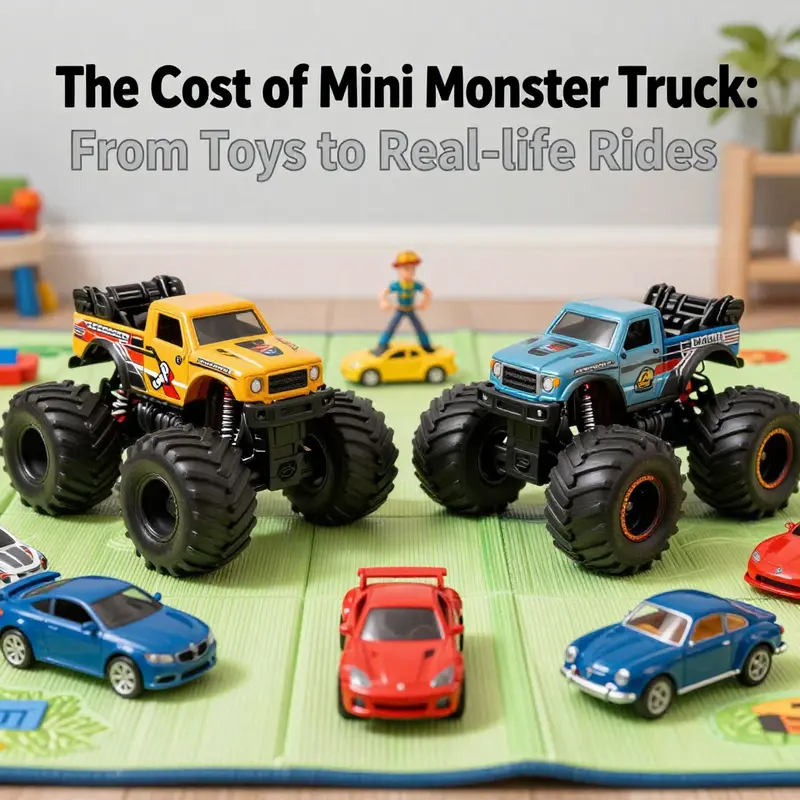
Pricing mini monster trucks sits at the intersection of toy value, durability, and play value. These small machines appeal to kids and collectors alike, and the price signals what buyers get in return. The bottom of the scale features basic, non-RC trucks made of lightweight plastics that cost only a few dollars, offering bright colors and splashy decals but modest durability. For families seeking first experiences with mini trucks, these budget models deliver quick novelty at a low cost, though they may require replacement parts sooner than pricier alternatives.
Stepping up, multi-packs of six or more mini trucks typically trade around the low two-digit range. The bundled format lowers the per-unit price and encourages shared play, whether in classrooms, birthday party favors, or family game nights. The value comes not just from the number of trucks, but from variety—different colors, decals, and characters that inspire group play and storytelling.
Single, remote-controlled mini monster trucks introduce a new price tier. Depending on size and features, prices may hover in the mid-range, with better motors, longer battery life, and more durable chassis driving the cost upward. A well-rounded RC model often balances speed, control, and resilience, offering a more convincing driving experience than basic toys while remaining far cheaper than full-size RC vehicles.
Premium mini trucks, branded or finely finished, push higher into the spectrum. These items emphasize detail, finish quality, and collector appeal, and buyers are paying a premium for craftsmanship and lasting value rather than just motion. In some markets, the premium can be justified by longevity, warranty support, or scarcity in limited runs.
To put these numbers in context, look at how mini trucks compare to basic toy cars. The latter often trades between one and ten dollars, highlighting how specialization upgrades price rather than simply size. A careful shopper weighs upfront cost against expected playtime, durability, and the joy of owning a design that resonates with a child’s imagination—or a collector’s pride.
Finally, consider ownership costs beyond the sticker price. Replacement batteries, spare wheels, and serviceability affect total cost of ownership. A more expensive model that uses common parts and robust replacement options can actually save money over time by reducing downtime and maintenance hassle. In other words, price is not just a snapshot but a signal about ongoing value. And for many families and hobbyists, that signal helps determine whether a mini monster truck will be a quick splash of fun or a long-lasting centerpiece of play.
Final thoughts
The landscape for mini monster trucks is rich and varied, offering options for everyone—from adorable toys that captivate young minds to practical vehicles that meet the needs of enthusiasts and small business owners. Understanding the pricing across these categories not only ensures you find the right product for your needs but also allows you to tap into the broader hobbyist community that shares your passion. Equipped with this knowledge, you’re in a perfect position to choose wisely and embrace the world of mini monster trucks.