

Mini trucks are a versatile solution for local small businesses, residential needs, and enthusiastic hobbyists. Understanding their price range can be pivotal for anyone looking to invest wisely. In the chapters that follow, we will explore the costs associated with new mini trucks, delve into used options, compare various types, assess regional pricing dynamics, and examine the economic factors influencing these prices. By the end, you’ll not only have a clearer picture of how much mini trucks cost but also which options suit your specific needs best.
Reading the Market: Navigating the Real-World Price Landscape of New Mini Trucks in 2026

Prices for mini trucks are not a single figure but a broad spectrum shaped by how a vehicle is intended to work, where it is sold, and what kind of powertrain and features it carries. In 2026, buyers encounter a panorama that stretches from lean, purpose-built, industrial machines meant for tasks in tight spaces to small, utility-focused pickups that resemble scaled-down workhorses. The most striking feature of this market is the stark gap between the most affordable new industrial models and the higher-end, feature-rich, or specialized variants designed for off-road use or premium urban duty. Understanding this spectrum helps clarify why a buyer might shortly decide between a budget tool and a more capable companion for a small business or adventurous weekends. On one end of the scale sits basic, lightweight industrial units advertised for as little as roughly $1,100—these are the kinds of machines aimed at simple hauling, construction sites, or agricultural tasks where every dollar counts. They may not offer the comforts or long-term refinement of a passenger vehicle, but they deliver the essential duty of moving goods in constrained spaces and dusty conditions. When a buyer needs more capability—better load capacity, easier maintenance, or a more substantial build—the price scale climbs quickly. Mid-range new models, designed to balance cost with durability, typically land in the few-thousand-dollar region, with broader configurations and options pushing the price upward toward the $7,000–$8,000 mark. For those who require heavier payloads or more robust builds—mini dumpers, cargo vans, or more advanced work trucks—the price can extend into the tens of thousands of dollars, with some industrial options reaching the upper single digits to low tens of thousands, depending on configuration and regional conditions. Even within the same general class, regional pricing, shipping costs, and import duties can tilt the final sticker price by a meaningful margin. To anchor these generalities, consider how a global price ladder for new mini trucks often starts with the most utilitarian forms and then climbs as features, build quality, and intended use are refined. The most budget-oriented, industrially oriented products can be found at the lower end of the spectrum, while vehicles designed to double as light-duty carriers with additional comfort features and more-capable drivetrains occupy the middle and upper ends. A separate, yet related, branch of the market brings newer, premium small passenger models and electric variants into view. In many markets, a compact passenger-oriented mini model from a well-known global brand carries a price tag that translates into hundreds of thousands of local currency units, depending on the country and the specifics of the trim. The price here reflects not only the brand equity and styling but also the higher expectations for safety, ride quality, and on-road performance—even when the vehicle is compact. An electric option exists in this space as well, with city-oriented mini models that provide the appeal of zero-emission operation in a small footprint. The price for such an electric mini, in several markets, sits above the most basic gas-powered versions but below the more premium micro SUVs, presenting an attractive middle ground for buyers who want efficiency without sacrificing the ability to carry a workload during the week. Beyond the new and electric categories, the used mini-truck market adds another layer of price dynamics. Used units from established regional suppliers may show a wide spread, with some listings in the mid-to-high tens of thousands of dollars in major markets, and others far lower depending on age, condition, and remaining service life. In short, the modern mini-truck market invites buyers to choose between a spectrum that ranges from ultra-basic, no-frills industrial workhorses to higher-cost, feature-rich or specialized off-road variants. The numbers in early 2026 illustrate the breadth clearly: basic industrial rigs can be acquired for around $1,100, while more capable or premium configurations can push well beyond $20,000, depending on the market and the scope of the build. For buyers contemplating the total cost of ownership, it is essential to factor in not only the upfront price but also ongoing maintenance, spare-part availability, and after-sales support in their region. The total financial picture matters as much as the sticker price when evaluating whether a mini truck will be a short-term solution or a long-term asset for a small-enterprise operation or private use. A practical path through this pricing landscape is to start with the intended use, then map those needs against the price tiers, and finally consider the total cost of ownership. If the goal is basic, front-line transport and occasional yard work, a lean industrial model might suffice and keep annual operating costs manageable. If, however, the mission involves frequent payloads, routine highway trips, or the expectation of higher uptime, the incremental cost of a more robust configuration could yield better lifetime value. The market’s current split also reflects regional supply chains and manufacturing origins. Domestic, regional, and export markets all influence price differentials. Some models arrive as industrial-focused, volume-driven offerings with minimal comforts but strong durability and serviceability. Others arrive with better cabins, sound insulation, and drivetrain options that enhance daily usability but at a higher price. This divergence has a pragmatic implication: buyers should assess not only the price tag but the intended lifecycle of the machine, the expected usage pattern, and how the vehicle will be maintained and serviced where they operate. For readers who want a concrete sense of what new mini trucks cost across the spectrum, the latest market snapshots show a few clear reference points. A budget single-cab, one-ton gas-powered mini truck is typically priced in a range that makes it accessible for light-duty cargo tasks. A step up to a small two-wheel-drive gasoline version generally commands a higher price, reflecting an increased payload tolerance or better configuration. A 0.7-ton, 1.3-liter variant sits in the same basic-cost category, indicating that a variety of configurations share common price bands as long as they stay within the lower power and load-limit thresholds. On the other end of the spectrum, a highly specialized mini pickup designed for serious off-road ability is no longer simply an urban utility—it is a niche vehicle with a niche price. The introduction of a rugged, four-wheel-drive mini pickup with a low-range transfer case illustrates the premium that off-road capability can command in this segment. Buyers who want the full off-road package should anticipate a price around the mid-tens of thousands in local currency, translating to roughly twenty-one thousand U.S. dollars in many markets. Within this higher tier, there are value-oriented alternatives that maintain core off-road capability while trimming some luxury features. Even within the mainstream, a few compact options from major regional manufacturers offer strong value propositions. The overall message remains consistent: the price of a new mini truck is a function of duty, durability, and demand. A useful contrast emerges when we compare the lower-cost industrial models with the most affordable off-road capable variants. In many markets, the base industrial mini can be found for under four thousand dollars, while the off-road-ready, premium-segment mini might price around twenty-one thousand dollars or more. This spread matters because it frames the decision not just as a choice of price, but as a choice of functionality, reliability, and long-term cost of ownership. For buyers who want a practical path through this landscape, a closer look at the newer entries and their price bands provides practical guardrails. In the budget category, a budget single-cab model might deliver the essential cargo space and compact footprint needed for urban deliveries, farm tasks, or construction site errands. Vehicles in this tier are designed for straightforward serviceability and lower maintenance costs, though they may not offer the same cabin comfort, noise isolation, or ride refinement as more premium peers. In the mid-range zone, two-wheel drive configurations with modest payloads often balance performance and pricing. These models may enjoy better ergonomics, improved instrumentation, and a more comfortable ride—benefits that can translate into lower operating costs over time as well as better resale value when the mission requires a switch to a different configuration. Finally, the upper tier introduces premium features, improved drivetrain robustness, and, in some cases, genuine off-road competence. The premium mini pickups in this category target buyers who need reliable four-wheel drive, a transfer case with low range, and the confidence that comes with enhanced traction control and redundancy for challenging work or weather conditions. The price signals, while informative, are not the whole story. Buyers should also consider how these machines are sold in their region. Local regulations can affect the total cost, including taxes, import duties, and any certification requirements. Spare parts availability and the presence of trained service networks matter as much as the initial price tag, especially for businesses that rely on predictable downtime. If you want a more granular view of how one notable budget lineup stacks up against a rival in the same tier, you can explore a detailed comparison project that delves into specs and features across different configurations. It provides a practical, side-by-side look at how a range of entries in the budget category differ in payload, engine displacement, and drivetrain choices. Access the comparison here: comparing-kingstar-kruzr-models-specs-features. This reference helps illuminate how similar-cost options diverge in the details that matter for daily use. For those seeking a broader, global frame of reference, external market summaries and manufacturer price sheets further illuminate the scale of the pricing landscape. A representative external resource on international pricing for compact, city-oriented mini models provides a broad context for how regional preferences, import duties, and local competition shape sticker prices in different countries. See this external reference for additional context: https://www.mini.com.cn/zh-cn/models/cooper/five-door-fuel.html. As readers move from market snapshots to concrete purchasing decisions, the key takeaway remains: the price of a mini truck is a menu of choices, not a single line item. The choice depends on the role the vehicle must play, the level of ruggedness required, and the cost of keeping it in service year after year. If you are balancing a tight budget with a need to move goods efficiently, you will likely lean toward the lower end of the spectrum and optimize for maintenance simplicity and parts availability. If your usage includes regular highway mileage, higher payloads, or off-road excursions, the mid-to-upper segments offer better long-term value despite a higher upfront price. In every case, the shopping process benefits from a clear view of the intended workload, a sober assessment of maintenance expectations, and an honest appraisal of the total cost of ownership beyond the initial price tag. A practical step is to review current market data for the specific region, then translate those prices into the local currency and tax-inclusive costs you would actually pay. This approach helps prevent sticker shock and ensures the chosen mini truck continues to serve well through its expected life. For readers who want a concise, side-by-side peek into a budget lineup that often appears in discussions about value, the linked comparison resource can be a useful launching point for deeper research. And as the market evolves, the price signals will continue to shift with supply dynamics, regulatory changes, and new configurations that push efficiency, payload, and durability even higher on buyers’ lists. Tracking these shifts gives small-business operators and private buyers alike a practical framework for deciding not just what a mini truck costs today, but what it will cost to keep it working tomorrow.
Mini Markets, Major Questions: Decoding Used Mini Truck Prices Across Regions

Pricing mini trucks requires understanding purpose and regional economics. Mini trucks serve utility roles from urban deliveries to rural work. Price is not a single number but a function of new vs used, spec level, and geography. New industrial mini trucks often start around $1,100 for basic models built for short hauls, reflecting simple construction and high-volume production. When buyers need more payload, enhanced durability, or better drivetrains, prices widen to a few thousand up to the high teens, with differences driven by load rating, motor options, cabin features, and warranty terms.
The niche of new passenger oriented micro vehicles follows different rules. In markets where micro cars overlap, prices can rise into tens of thousands in some currencies, driven by urban comfort, brand, and aftersales network. For buyers who want a dual role vehicle, the price reflects the value placed on interior space, ride quality, and ownership support.
Electric micro vehicles add another layer. Battery costs and charging infrastructure shape the premium, though subsidies can tilt the balance. A compact electric may command prices in the mid to high twenty thousands in local currency depending on range and charging speed. Price is not just upfront cost but expected savings from lower fuel and maintenance.
In the used market, depreciation and condition dominate. Chinese-built used mini trucks frequently range from about 6,000 to 12,500 dollars, with younger examples at the high end and older ones at the low end. Some listings fetch higher prices when the vehicle shows low mileage, a clean maintenance history, or rare equipment. Local demand and export history also push prices up or down in ways that might surprise casual buyers.
Regional differences matter. Import duties, taxes, currency moves, and compliance costs change the final ownership price when crossing borders. Market liquidity and local incentives or subsidies can also tilt what looks like a fair price. Real time data is the best guide to current values, and buyers should compare apples to apples by focusing on configuration, not just sticker price.
To anchor your own search, start with the role your mini truck will play, specify key specs, and search across both new and used segments in several regions. Compare similar configurations, account for total cost of ownership, and be wary of low mileage listings that hide maintenance costs or export fees. For ongoing updates, consult trusted marketplaces that aggregate live listings and price data, and verify what is included in the price such as warranty, service, and aftersales support.
In sum, mini truck pricing reflects purpose more than geography alone. The same model can be a bargain in one market and overpriced in another, depending on the task at hand and the buyer’s expectations. The most reliable approach combines current data with a clear understanding of lifetime costs and regional dynamics, so decisions are driven by value rather than sticker price alone.
External references can help buyers interpret price signals. Use global marketplaces and data aggregators to compare live offers across regions and currencies. See representative resources to ground your research and contextualize local listings within a broader global picture.
Price Without Pretense: The Real Costs of Mini Trucks Across Uses and Regions

Prices for mini trucks unfold like a spectrum rather than a single number. When asked how much a mini truck costs, the answer depends on purpose, maker, region, and whether it is new or used. The price spectrum reflects market structure that connects manufacturing hubs with small businesses that rely on compact, capable workhorses. In supplier catalogs and online marketplaces, the numbers can be surprising, but they map onto practical decisions about payload, power, and reliability. At the lower end, basic industrial mini trucks designed for light duties arrive with wholesale prices near 1,100 to 2,000 dollars per unit. These are stripped configurations where endurance and serviceability take precedence over comfort or speed. In contrast, more robust models such as mini dumpers or cargo vans with dumping capability can populate the 3,688 to 17,000 dollar range, depending on configuration and included components. The delta between these two ends is not accidental; it reflects the operational demands of conveyance tasks in small scale logistics, construction, agriculture, or yard operations where the cost of a tool is weighed against the efficiency it unlocks.\n\nNew mini trucks come in several flavors. The contrasts between industrial, wholesale, and passenger oriented offerings are pronounced. In many regions, there is a bargain tier for new industrial mini trucks meant to move goods within factories, farms, and small industrial yards. Think of a platform designed to shuttle products between storage zones, load docks, and small delivery routes; the price tag begins at roughly a thousand dollars and climbs with horsepower, payload capacity, and the clarity of the emissions standards it meets. Then there are the passenger oriented mini cars in similar size classes, which bring a different value proposition. In some markets, a new mini passenger car starts in the low tens of thousands of dollars, with the official price ladder climbing to higher figures as you traverse trim levels, comfort features, and safety equipment. The contrast between utility focused and passenger focused offerings is instructive: while both sit within the same general family, the buyers and the scenarios for use diverge enough to account for two distinct price tracks.\n\nElectric mini vehicles form a third, increasingly visible thread in the price tapestry. Electric drivetrains, battery packs, and related technology add premium but also long term value through lower running costs and potential incentives. A limited time offer on an electric mini city vehicle illustrates the point that the economics of micro mobility and small commercial transport converge in many markets. The electric option can tilt the decision toward a higher upfront price, but with reduced fuel or energy costs over time, a buyer may reach a favorable total cost of ownership balance, especially in urban corridors where charging infrastructure and duty cycles align with daily use. Across these diverse options, the price tag is a practical signal of the vehicle’s intended role, not merely a sticker on the hood.\n\nUsed mini trucks introduce a different set of dynamics. The used market often presents compelling cases for small businesses that need to balance upfront expenditure with predictable performance. In some cataloged examples, older but well maintained units can fetch prices in the range of roughly twenty to forty five thousand dollars, depending on their history, condition, and remaining service life. Yet a more common path arrives when a buyer surveys the market for used units in the range of roughly eighteen to forty five thousand dollars, where the spread reflects a mix of age, engine power, load capacity, and the presence of specialized equipment. A vehicle built for heavier daily use in a tougher environment would understandably command a higher asking price, while a simpler, older model can be obtained at a more accessible level if the buyer prioritizes cost control over the very latest features. This dynamic underscores a core truth in the mini truck market: price is a proxy for the expected life cycle of the asset, including wear and tear, maintenance needs, and the degree to which the vehicle continues to meet the user’s core requirements.\n\nThe market data from supplier platforms offers a more granular lens on price points across common configurations. A practical look at typical segments shows a two-tiered baseline for standard mini cargo trucks in many regional markets, with a base price commonly cited near six thousand dollars and a jump to mid-teens when a model adds capabilities such as a dump function or increased payload. Light-duty, four-by-two configurations commonly land between six thousand and twelve thousand dollars per unit, depending on the engine power, dimensions, and the presence of extra features that expand cargo handling. This range captures a sturdy class of light cargo trucks intended for urban and rural transport, where the emphasis is on reliability and maneuverability rather than extreme payload.\n\nWithin the same family, variation persists when special purpose features enter the mix. A five ton capacity model with a dump bed can break into the upper teens, while buying in bulk—say fifty or more units—often unlocks price breaks that reduce the per-unit cost. The economics of scale matters here; the ability to consolidate orders reduces material and production costs, creating a path for lower advertised prices per unit even as the nominal price of an individual vehicle remains higher due to its added functionality. In the new mini dumper niche, which is less common but strategically important on construction sites and mining-adjacent operations, the list price typically starts around the fifteen thousand dollar mark for small-volume purchases, and can fall slightly with much larger orders, a reminder that versatility in capability can carry a premium until demand tilts the pricing in your favor.\n\nFor shoppers scanning the market, a reliable rule of thumb begins with categorizing the intended use. If the objective is to support light goods movements within a city or a small-town supply chain, a basic four-by-two light cargo truck without extra frills is often sufficient. In this tier, price ranges from roughly six to twelve thousand dollars per unit, aligning with the desire for predictable performance, ease of maintenance, and compliance with local environmental standards. If the task set includes frequent loading and dumping or needs a higher load bearing frame, the model moves toward the mid teens range, and the cost becomes a reflection of the specialized capability. Yet just as a workhorse can be built with more robust suspension or heavier frame, it is essential to weigh the marginal benefits against the often steep incremental price. The decision to upgrade to a six-wheel variant, for instance, boosts stability and load distribution, a factor that can justify the higher initial outlay in industrial or rough-terrain contexts, even if day-to-day operation in an urban setting might be better served by a lighter configuration.\n\nThese price patterns also reveal important practical considerations. Emissions compliance, as exemplified by Euro 3-standard models, is a price-influencing factor. In markets that prize lower emissions and longer-term environmental responsibility, the price cadence may reflect the engineering required to meet such standards, while still preserving reliability and maintainability. Cab design is another dimension; cab over engine layouts are common for their compact footprint and improved forward visibility, especially in tight working spaces. The 1-10 ton payload range accommodates a broad spectrum of tasks, from light construction to farm logistics, and each additional ton of capacity typically translates into a meaningful price increment, balanced by the operational gains in productivity and reduced downtime.\n\nAll of these price signals converge toward a practical framework for evaluating value. Price alone cannot determine fit; instead, the decision hinges on aligning the features, engine power, and payload with the actual workload. For buyers who anticipate recurring orders or who anticipate scaling up operations, negotiating on quantity can yield meaningful savings, and the potential for a longer warranty or better service coverage can tilt the equation in favor of a higher sticker price that translates into lower life-cycle costs. The literature and market listings emphasize the same theme: the most affordable option may not yield the best return if it is consistently outpaced by maintenance costs or underpowered for the jobs at hand. Conversely, a seemingly higher initial price can be justified if the truck provides superior reliability, greater payload headroom, and lower downtime, reducing the cost of operation over the vehicle’s service life.\n\nThe price ranges documented in supplier catalogs also shed light on how buyers should approach market research. A typical four-by-two light cargo truck sits in the six-to-twelve thousand-dollar band; a more capable six-wheel variant or a model with enhanced load capacity or additional features can push prices upward toward the mid teens; specialized dump trucks in the same family command higher prices that reflect their niche function and the engineering demands of carrying and discharging heavy loads. Meanwhile, even within the same class, a compact, single-cab configuration may offer a more affordable entry point than a larger, more comfortable, feature-rich cabin arrangement. For those monitoring international markets, these price signals gain further complexity when shipping, import duties, and local taxes enter the equation, illustrating why the true landed cost may differ from the sticker price by a meaningful margin.\n\nFor readers who want to delve deeper into today’s price landscape, a broader market view can be found in industry blogs that track market trends and model comparisons. For broader market context and ongoing price trends, see the Mini Trucks Blog. This source provides ongoing analysis that helps buyers track how price points shift with new regulations, supply chain dynamics, and the introduction of new configurations. The best practice remains transparent budgeting: identify the tasks, estimate the daily or weekly load, and then map it to a configuration that balances upfront cost with expected uptime and lifetime cost of ownership. The goal is not simply to buy the cheapest item but to secure a platform that reduces downtime, improves efficiency, and ultimately lowers the total cost of operation.\n\nOne practical takeaway emerges clearly from the price tapestry. Whether you are evaluating a basic industrial model, a mid-range light cargo truck, a dump-capable unit, or a six-wheel variant, there is a price point that corresponds to the intended use and to the region’s market realities. Buyers can expect that the base price for a standard mini cargo truck hovers around six thousand dollars, with specialized models like dump trucks often exceeding fifteen thousand dollars, particularly when you factor in larger volumes or higher-tonnage capabilities. It is also important to keep in mind that the used market offers a complement of options at different price points, often delivering more service life for the same investment than a brand-new entry-level unit, if the maintenance history is strong and the vehicle has been well cared for.\n\nIn closing, the journey to understanding how much mini trucks cost is a journey through use cases and value rather than a search for a single number. The spectrum—from basic industrial workhorses to heavier-duty, load-bearing machines—reflects the practical choices a buyer faces. The most important step is to translate workload into specification in a way that matches both budget and long-term maintenance considerations. When buyers test the market, they should treat price as a component of total value, not the sole determinant, and they should use the information available from suppliers and industry sources to create a plan that aligns with the job at hand. For those seeking additional perspectives and ongoing market insights, the Mini Trucks Blog can provide a useful companion resource, and, as always, for concrete pricing and quotations the marketplace listings and supplier catalogs remain the essential starting points. External resource: https://www.alibaba.com
Price Trails Across Provinces: How Local Markets Shape Mini Truck Costs

Prices for mini trucks do not sit still on one shelf. They move with the geography, the supply chains that ferry vehicles to distant shops, and the local incentives that quietly tilt the balance in a buyer’s favor or against it. Across regions, even within the same country, the final sticker price on a basic single-cab model can swing by thousands of RMB. This isn’t a quirk of the trade; it’s a structural consequence of how regional markets operate when demand, transportation, and policy intersect. In practice, this means that the same basic vehicle, offered under the same label by nearby dealers, can arrive in the hands of different customers for markedly different sums.
Consider the basic landscape of regional pricing in a large manufacturing region where mini trucks are common. In one city, a base price for a single-cab version hovers around 34,000 RMB. A few hundred miles away in a more distant province, the same model lists at over 43,000 RMB. The nine-thousand RMB gap is not just a number; it is a story about how goods move from factory floor to showroom floor. Transportation costs to reach far-flung markets add a direct line item to the final price, and those costs are not evenly distributed. When a dealer must move stock across a broad hinterland, the added freight becomes an integral part of the price. The customer in the farther region pays for the extra leg of the journey, even before any discounts or promotions enter the equation.
Regional configurations compound this effect. A 0.97-liter circular-cab variant might be priced around 27,000 RMB in one locale, while a slightly larger or differently configured 0.5-liter version sells for about 31,500 RMB in another. These differences matter to the buyer who is weighing a compact footprint against a usable payload. The lower figure reflects not only the base engineering but also the regional cost structure—the dealer’s need to clear inventory, the local tax treatment, and the quota of vehicles on hand. Conversely, the higher price marks a market where demand is stronger, stock is tighter, or the distributor has priced to match a different set of regional expectations.
In this price ecosystem, incentives play a decisive role. Some areas offer discounts to spur local purchases, while others leave dealers to compete on what feels like a more generous sticker price to attract attention. A buyer in one city might see a discount of up to 3,500 RMB, while a neighboring region grants only a modest 500 RMB reduction. The effect is cumulative: a discount that seems modest in isolation can become substantial when set against a higher regional base price, creating an opportunity for the informed shopper who is willing to explore multiple regions or request quotes from several dealers.
The effect becomes more dramatic in the double-cab segment, where the same vehicle family can present a wider spread. In a central province, a popular double-cab variant might be discounted by 3,000 RMB—dropping from 55,000 RMB to 52,000 RMB. In another city, the same truck could be subject to a deeper cut, altering the perceived value of the purchase. The reality is that regional promotions and inventory levels are powerful levers. They can make a vehicle feel like a better deal in one place and less compelling in another, all while staying within the same national market framework.
Even more striking is the way regional dynamics shape the price of electric mini-vehicles. The electric mini-van family, with configurations that emphasize practicality and compact footprint, typically centers around a base price in the vicinity of 39,800 RMB for a mid-range setup. Across the country, the price range for these electric options might stretch from about 30,000 RMB to 60,000 RMB, depending on configuration, battery capacity, and the precise trim level. In some locales, a substantial discount can be found on certain electric variants—a discount that effectively narrows the price gap between regions and brings an electric option within reach for more buyers. This is a telling sign that even where the base price is high, regional incentives and stock levels can tilt the balance toward affordability.
For consumers who are evaluating options across regions, the lesson is practical and granular: you cannot assume a single price works everywhere. Local market conditions, tax policies, and the economics of distribution create a mosaic of prices. A buyer who ignores this mosaic risks overpaying by thousands of RMB simply because they focused on a single showroom or a single set of quotes. The smarter path is to look at a broader map of pricing, weighing not just the sticker price but the total cost of ownership—what the vehicle costs to acquire, what it costs to insure and maintain, and how incentives and service networks differ by region. This is where the strategy of price discovery becomes a real competitive advantage for a cost-conscious buyer.
The regional story does not end with brand-new, domestically produced, or strictly utilitarian models. The market also features a spectrum of new and used mini trucks sourced from different parts of the broader economy. For example, the landscape of new industrial mini trucks from China can begin at surprisingly low prices, with basic industrial models listed around 1,100 USD in wholesale contexts and more robust options in the 3,688 to 17,000 USD range for specialized applications like mini dumpers or cargo vans. Then there are passenger mini cars priced for urban convenience, where a brand-new entry can fetch tens of thousands of dollars depending on the market, along with electric variants that target efficiency and city driving. Used options further complicate the math: price bands widen as condition, mileage, and regional demand interact. A used mini truck might appear in the market at prices that echo the region’s blend of supply and appetite for a bargain, sometimes far above or below current new-vehicle perceptions, depending on the story behind the vehicle’s history.
The take-away for buyers is clear: the question, How much are mini trucks? cannot be answered with a single figure. The numbers depend on where you shop, what configuration you consider, whether you want new or used, and how far you are willing to go to secure a favorable quote. The regional lens reveals the deeper economics at work—logistics, inventory management, and local policy all folding into the final price at checkout. And within that lens lies a practical strategy: widen your search beyond the first offer. Seek quotes from multiple regionals, consider the cost of relocation or delivery if you are shopping far from home, and factor in any local promotions or tax changes that might shift the effective price over the life of the ownership period.
For readers who want ongoing context, the broader conversation on pricing across the mini truck spectrum is explored through the industry’s ongoing coverage and commentary. The Mini Trucks blog offers a centralized hub for readers seeking updated discussions, regional pricing trends, and practical buying tips in a single, accessible place. Mini Trucks blog
As this chapter tightens the link between regional price variation and the total cost of ownership, it is important to connect the dots back to the wider market reality. In a global view, the spectrum of mini-truck pricing stretches from ultra-affordable industrial models to more expensive, higher-spec passenger mini cars and electric mini-vehicles. A new, wholesale Chinese industrial model can begin around 1,100 USD, broadening to 17,000 USD for more robust configurations. On the other end of the spectrum, a new passenger mini car can command prices well into the tens of thousands of USD, with regional differences still in play due to incentives, taxes, and distribution costs. Electric variants add another layer, with compelling price points that reflect battery technology, government subsidies, and regional charging infrastructure readiness, all of which affect how much a buyer finally pays. In sum, the price of mini trucks is not a single dot on a chart but a dynamic curve shaped by where you look and when you look.
To gain a wider sense of how market forces translate into local numbers, readers may explore external industry analysis that highlights pricing shifts and regional policy impacts across auto segments. This broader perspective helps ground the local anecdotes in a more universal trend, illustrating how regional policy, logistics, and demand create the price rhythms that buyers notice in showrooms and online listings alike.
External resource: https://www.autonews.com/
Pricing in Miniature Markets: The Economic Anatomy of Mini Trucks
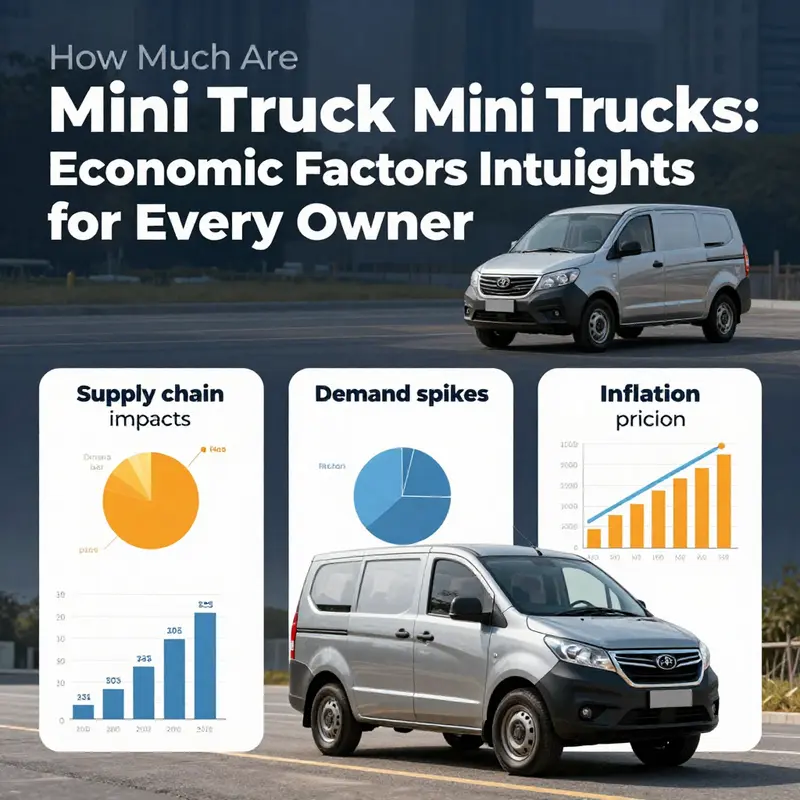
Pricing a category as varied as mini trucks requires looking beyond a single sticker price and into the economic soil that sustains the entire market. These vehicles occupy a strange middle ground between compact personal mobility and rugged commercial workhorses. On one end lie iffy, basic industrial models blazing a path with bare bones features and minimalist parts; on the other end sit high-end, purpose-built cargo solutions and passenger mini cars that carry the sheen of modern automotive engineering. The range is vast, and the reasons behind that spread are equally broad. In practical terms, a basic, new, industrial mini truck can be priced as low as about $1,100, a figure that speaks to simple design, limited feature sets, and manufacturing scale aimed at price-sensitive segments. Move up the ladder, and more capable mini dumpers or compact cargo vans enter the market with a price band roughly between $3,688 and $17,000. Those figures reflect not just the chassis and bed, but the aggregation of parts, the efficiency of the supply chain, and the expectations of buyers who need a predictable, serviceable vehicle for daily tasks. Then there are the passenger-oriented mini models and the electric options that begin to blur the line between utility and lifestyle. In China, the starting price for a new MINI Cooper in its local market sits around 233,800 RMB, roughly $32,500, with top-tier variants nudging $39,400. The 2025 model year maintains a comparably elevated price range, underscoring how consumer-facing mini vehicles command a premium tied to comfort, safety, and brand signals. In the same ecosystem, the electric MINI ACEMAN presents a different ordering of costs with a limited-time offer near 168,900 RMB, about $23,600, illustrating how battery technology and electric drivetrains reconfigure total cost of ownership even when upfront sticker prices look modest compared with larger EVs. Meanwhile, the used market reveals an equally complex pattern. A pre-owned mini truck can fetch prices that seem surprisingly diverse—from around $18,000 to mid-$40,000, depending on the vehicle’s condition, mileage, maker, and the sophistication of its equipment. The juxtaposition of such prices across new and used segments highlights a central truth: cost is not a fixed figure but a negotiation among features, reliability, depreciation, and the perceived return on investment for the buyer’s specific use case. This is not merely a matter of dollars and cents; it is a tale of value creation across different buyers and different functions. The numbers cited here are only a snapshot of a market that shifts with regional demand, policy shifts, and the cadence of global supply chains. In many markets, buyers weigh the immediate cash outlay against the total cost of ownership, which includes maintenance, fuel or electricity costs, insurance, and the potential for resale value. A $1,100 basic model might seem irresistible for a one- or two-year project, yet it will impose limits in terms of reliability, spare parts availability, and after-sales support. Conversely, a $30,000-plus mini car or a modern electric mini vehicle might deliver durable performance and lower operating costs over time, but it demands careful assessment of financing, depreciation curves, and the availability of service networks. The core task for buyers, then, becomes not merely choosing a price but aligning the vehicle’s capabilities with the job at hand. This alignment is where the climate of economic factors becomes most visible and most consequential. At the heart of the pricing ecosystem lie production costs that are themselves a mosaic of inputs, logistics, and labor. In China, where most mini trucks are produced for global markets, the concentration of manufacturing capability in clusters such as Hubei, Shandong, Henan, and Chongqing creates a powerful feedback loop. These regions benefit from longstanding automotive ecosystems, specialized supplier networks, and export channels that compress per-unit costs through economies of scale. The effect is a cascading set of advantages: shorter procurement lead times, more predictable pricing, and the ability to adjust mixes of raw materials and componentry without destabilizing the entire production line. This is not simply a matter of cheap steel or low-wage labor. It is the integration of supply chains, where a chassis, a bed, a motor, and a battery can be sequenced in a highly synchronized flow. Material standards—the choice of steel grade, the use of alloys, the durability of coatings—feed directly into the pricing equation. Higher-strength materials add upfront cost but can reduce lifetime expenses by improving durability and reducing maintenance. Lightweight constructs improve fuel efficiency, which can tilt total cost of ownership in favor of buyers who rack up heavy daily mileage. The engineering choices extend to the vehicle’s technical specifications. Add-ons like four-wheel drive, hydraulic dump beds, or electric propulsion translate into higher upfront prices. Each feature layer represents not only the cost of parts but the investment in design, testing, and certification. Buyers must decide if the extra capability aligns with the intended workload. In practical terms, a business operating in a dense urban core may value nimble handling and lower emissions over raw payload. A rural or agricultural operation, by contrast, may demand 4×4 traction and a robust dump mechanism to manage uneven terrain and off-pavement tasks. The production process itself helps explain why a given mini truck costs what it does. Mass production in well-equipped hubs, such as Chenghai’s plastics and battery operations, can leverage injection molding, automation, and standardized modules to push unit costs downward. Yet the allure of custom or low-volume builds remains a cost anchor. Specialized configurations, limited-run colors, or bespoke interiors necessitate retooling, additional labor, and extended testing cycles. The result is a price that may rise even when the underlying platform remains shared with more economical variants. Market demand adds another layer of pressure and opportunity. The surge in e-commerce and last-mile delivery has created a premium on compact, efficient fleets capable of navigating congested streets and urban corridors. Emerging markets—like parts of Africa and other regions with growing logistics networks—often exhibit heightened competition among suppliers as buyers chase reliability and speed to market. The negotiating leverage in these markets can push price upward, especially when supply stays tight or when local regulatory hurdles complicate import and registration. The energy source used by mini trucks is a defining variable. Electric mini trucks promise long-run savings through zero-tailpipe emissions and lower operating costs, yet their higher initial price and the battery’s lifecycle costs complicate the calculus. Subsidies, incentive schemes, and access to green zones can tilt the balance toward electrification, even if the sticker price remains steeper. This trade-off is often captured in a total cost of ownership calculation, where government programs can substantially shorten the payback period for an electric option. All of these factors converge to shape a buyer’s decision more than any single price figure could. For someone evaluating a fleet for a small business, the answer might hinge on utilization intensity, maintenance availability, and the likelihood of resale value after several years of service. A seller might emphasize the vehicle’s residual value, warranty coverage, and the supplier’s ability to provide spare parts in the buyer’s region. The result is a nuanced arithmetic that goes beyond the initial price tag and into the realm of long-term economics. To navigate this landscape, buyers can lean on established manufacturing partners who combine price discipline with proven reliability across diverse applications. The value of a strong procurement relationship with a trusted producer lies in more than just a favorable quote; it includes access to consistent supply, predictable lead times, and a shared roadmap for upgrades as technology and regulations evolve. In practice, a buyer’s due diligence should include a careful assessment of regional pricing trends, supplier performance, and the durability metrics that matter most for their intended tasks. A source that provides grounded, real-world metrics on supplier performance and pricing in China can be a practical compass. It highlights regional pricing trends, supplier capabilities, and credible guidance for building long-term, cost-effective partnerships with Chinese manufacturers. For readers who want to explore practical exemplars of how mini trucks can be adapted for specialized uses, the Godzilla Truck Camper Review and Customization presents a case study of how compact platforms can be outfitted for mobile living and field operations without sacrificing core utility. See Godzilla Truck Camper Review and Customization for a sense of how customization intersects with price, capability, and lifecycle costs. For a more formal view of supplier landscapes and pricing in China, external reference material is available that synthesizes market dynamics and manufacturing efficiency in this sector. External resource: https://www.dfm.com.cn/supplier-guide-mini-trucks-china. This material can help readers understand how regional ecosystems, tiered material standards, and export logistics coalesce into pricing patterns across the global market. Beyond the numbers, the story of mini truck pricing is the story of utility meeting scale. When a buyer selects a mini truck, they are choosing a tool designed to deliver predictable performance in uncertain conditions. They are betting that the vehicle will be available when needed, that maintenance will be feasible in their locale, and that the total cost of ownership will stay within the planned budgets over the vehicle’s service life. The price, then, becomes a reflection of that balance—a signal that tells a larger story about how small, capable machines participate in the broader currents of global trade, urbanization, and the evolving logistics economy. If the objective is to compare a few models side by side, it is tempting to focus on the sticker price alone. Yet a more robust approach is to examine the price through a lens that weighs material standards, manufacturing efficiency, and the constraints of the regional market. The chapter’s takeaway is not simply a catalog of numbers but an invitation to think like a savvy purchaser: map the intended workload, estimate operating costs, compare the long-term costs of ownership, and consider how incentives, especially for electrified powertrains, can reshape the economic case. In the end, the question “how much are mini trucks?” dissolves into a nuanced conversation about value, risk, and practical fit within a family of vehicles designed for compact yet capable service. The market rewards those who align function with form, price with performance, and short-term needs with long-term resilience. As you move forward, the next chapter will translate this broad economic map into a decision framework—one that helps readers determine the most cost-effective path for their specific use case, whether that path runs through a Chinese manufacturing hub, a regional dealer, or a local conversion shop dedicated to delivering reliable, economical mobility.
Final thoughts
Gaining insight into the prices of mini trucks plays a crucial role in making a knowledgeable purchase. Whether you’re considering a new or used model, understanding the types available, and the specific influences on pricing can ensure you find the right vehicle that fits your needs and budget. As you explore your options, keep these variations in mind to navigate the market more effectively.