

You just finished setting the forms for a new shed foundation, mixed the first batch, and suddenly realize you’re at least four bags short. The hardware store is 15 minutes away, and your only work vehicle? Your trusty mini truck. It’s the vehicle that never lets you down – zipping through tight gates, sipping fuel like a compact car, and parking where full-size pickups dare not tread. But here’s the million-dollar question staring you down from the bed of that little hauler: How much concrete can a mini truck actually carry without turning into a scrap metal sculpture?
It’s a dilemma every mini truck owner faces eventually. Overload the bed, and you risk damaging your suspension, blowing a tire, or worse – turning a quick supply run into a costly repair bill. Underload it, and you’re making three extra trips, wasting time, fuel, and your patience. The sweet spot lies somewhere between ambition and reality, and it all comes down to understanding your truck’s concrete capacity, payload limits, and how many cubic feet of concrete your rig can safely handle.
Here’s the thing – your mini truck is tougher than it looks. Japanese Kei trucks, for example, are famously over-engineered, often built to handle far more than their official ratings suggest. But ‘can’ and ‘should’ are two very different words when it comes to hauling concrete. A single cubic foot of concrete weighs about 150 pounds – and that adds up fast. The typical mini truck payload limit hovers between 770 and 1,500 pounds depending on the model, which means we’re talking about roughly 5 to 10 cubic feet of concrete before you hit max capacity. That’s not a lot of margin for error.
In this article, we’re breaking it all down for you. You’ll get the real-world numbers on how much weight your mini truck can actually carry, a simple formula for calculating safe concrete loads, and essential safety tips to keep your truck (and your back) in one piece. Whether you’re a small business owner running daily deliveries or a DIYer tackling weekend projects, we’ve got the answers you need.
Let’s get that concrete where it needs to go – the right way.
Understanding Concrete Weight Density: How Heavy Is It, Really?
Picture this: you’re standing in your truck bed, looking at a single cubic foot of concrete. That block – just 12 inches by 12 inches by 12 inches – weighs about as much as a 150-pound person squeezing in next to your toolboxes. Surprising, right? Concrete is dense, and that density is exactly what makes it such a durable building material – but it’s also what makes understanding its weight so critical when you’re hauling it in a mini truck.
The Numbers You Need to Know
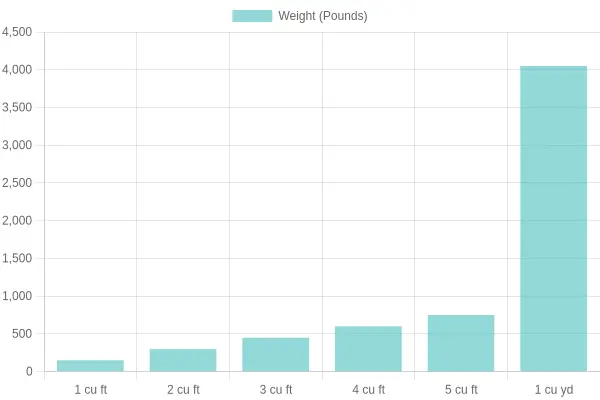
Standard concrete weighs approximately 150 pounds per cubic foot. That’s the magic number to remember. Scale that up to a cubic yard (which is 27 cubic feet), and you’re looking at about 4,050 pounds – or just over two tons. So when you’re trying to figure out how much ready-mix concrete your mini truck can safely handle, these numbers are your starting point.
It’s Not All Exactly the Same
Here’s the thing: not all concrete weighs the same. The exact concrete weight per cubic foot depends on the mix design. Here’s a quick breakdown of the variations:
- Standard concrete: ~150 lbs per cubic foot (your everyday mix)
- Lightweight aggregate concrete: ~85-115 lbs per cubic foot (uses lighter materials like expanded clay or shale)
- Reinforced concrete: ~150-155 lbs per cubic foot (steel rebar adds a little heft)
- High-density concrete: ~190-250 lbs per cubic foot (used for radiation shielding, not your average driveway)
For most practical purposes – sidewalks, patios, footings – the standard 150 lbs/cu ft average is a safe and reliable number to work with. But if you’re using a specialty mix, it’s always worth double-checking the specs.
Quick Reference: Concrete Weight by Volume
| Volume | Approximate Weight |
|---|---|
| 1 cubic foot | 150 lbs |
| 2 cubic feet | 300 lbs |
| 3 cubic feet | 450 lbs |
| 4 cubic feet | 600 lbs |
| 5 cubic feet | 750 lbs |
| 1 cubic yard (27 cu ft) | 4,050 lbs |
Why This Matters for Your Mini Truck
Knowing these numbers is the first step toward calculating safe loads. A standard mini truck bed is roughly 4-5 feet long and 4-5 feet wide – that’s about 16-25 square feet of floor space. Even a few inches of wet concrete adds up fast in weight. That’s why we recommend checking out our essential mini truck maintenance tips to keep your suspension and brakes in top shape for hauling, and browsing our top mini truck accessories for utility to find gear that helps you haul smarter, not harder.
Don’t worry – we’ll walk you through the full load calculations in the next section. For now, just remember: one cubic foot of concrete weighs about the same as a passenger riding shotgun. And nobody wants an extra passenger in the bed without knowing their truck can handle it.
Example heading
Example content text.
How to Figure Out YOUR Mini Truck’s Concrete Capacity
So you’ve got a project coming up – a new patio slab, a garden pathway, or maybe a small shed foundation – and you’re wondering, “Can my mini truck handle that load of concrete?” Great question! And the answer is: probably yes, as long as you do the math first.
Don’t worry – this isn’t complex engineering. It’s a simple four-step formula that any owner can run through in under five minutes.

Safety & Legal Considerations: Respect the Limits
Your mini truck is a tough, capable machine – we get it. But here’s the truth: physics doesn’t negotiate. Hauling concrete is one of the most demanding jobs you can ask of a small truck, and knowing where your limits are isn’t just about avoiding a ticket. It’s about keeping yourself, your load, and everyone on the road safe.
🚨 The Dangers of Overloading
When you exceed your mini truck’s rated capacity, you’re not just \”pushing it a little.\” You’re introducing real, measurable risks:
- Brake failure – Every pound over the GVWR increases stopping distance dramatically. Your brakes are designed for a specific weight range. Exceed it, and you may not stop in time – or at all.
- Tire blowouts – Mini truck tires are rated for specific loads. Overloading generates excessive heat, which can cause sudden, catastrophic tire failure at highway speeds.
- Suspension damage – Leaf springs, shocks, and bushings aren’t built for infinite weight. Overloading accelerates wear, causes sagging, and can lead to broken components mid-drive.
- Loss of steering control – An overloaded rear end lifts the front axle, reducing steering traction. This is especially dangerous on curves or during emergency maneuvers.
Mini truck safety starts with one simple rule: know your numbers before you load up.
⚖️ Legal Aspects: GVWR, Insurance & Fines
Every mini truck has a Gross Vehicle Weight Rating (GVWR) – the maximum total weight the vehicle is legally allowed to operate at, including the truck itself, passengers, cargo, and fluids. This isn’t a suggestion; it’s a legal limit set by the manufacturer and recognized by the DOT.
| Term | What It Means |
|---|---|
| GVWR | Maximum total operating weight set by the manufacturer |
| Curb Weight | Weight of the truck with fluids but no cargo or passengers |
| Payload Capacity | GVWR minus curb weight – the max you can carry |
Exceeding your GVWR doesn’t just put you at risk mechanically – it can:
- Void your insurance – If you’re in an accident while overloaded, many insurers will deny your claim.
- Result in fines – DOT officers can weigh your truck. Being over legal limits means citations, penalties, and even being placed out of service.
- Create liability – If you cause damage or injury while overloaded, you could be held personally and financially responsible.
Understanding GVWR explained properly is the foundation of responsible mini truck ownership. For more on legal requirements, check out California’s mini truck regulations.
📐 Weight Distribution: Center It Over the Axle
Even if you’re within your GVWR, how you load the concrete matters just as much as how much you load.
- Always center the load over the axle. This keeps weight balanced between the front and rear wheels, maintaining steering control and braking stability.
- Never exceed axle weight ratings. Your truck has separate limits for the front and rear axles. A load that’s too far forward or too far back can overload one axle while the other is fine – and that’s still unsafe and illegal.
- Spread the load. If you’re hauling multiple bags or mixing materials, distribute them evenly side-to-side to prevent tipping.
💧 Wet vs. Dry Concrete: The Weight Trap
Here’s a mistake that catches even experienced operators: calculating with dry weight when you should be using wet weight.
Concrete’s weight changes significantly when water is added:
| Concrete State | Approx. Weight per Cubic Foot |
|---|---|
| Dry mix (powder) | ~135 lbs |
| Wet (mixed, ready to pour) | ~150-160 lbs |
That extra 12-15 lbs per cubic foot from water adds up fast. A half-yard of wet concrete (~13.5 cu ft) can weigh over 2,000 lbs before you add the truck bed, your tools, or yourself. Always calculate using wet weight to avoid accidentally exceeding your payload.
✅ The Reassuring Takeaway
Here’s the good news: knowing your limits makes you a smarter, safer operator. You don’t need to guess or hope for the best. Check your owner’s manual for your truck’s GVWR, weigh your truck at a public scale, and do the math before you haul.
Your mini truck is an incredible tool – and when you respect its boundaries, it will serve you reliably for years. Regular maintenance also plays a big role in safety, so don’t skip that either. Check out our essential mini truck maintenance tips to keep your rig in top shape.
Stay informed. Stay within your limits. And haul with confidence.
Real-World Scenarios & Owner Tips: Hauling Concrete with Your Mini Truck
Let’s be real – you don’t buy a mini truck because you want to blend in. You buy it because you’ve got work to do, and you need something nimble enough to slip down tight driveways and tough enough to earn its keep. I’ve talked to mini truck owners across Ocala who use these little beasts for everything from paver patios to feedlot repairs. Here’s how they’re hauling concrete in the real world – and the hard-won tips they passed along.
Scenario 1: The Landscaper – 8 Bags a Day, No Sweat
Meet Carlos. He runs a hardscape crew in Citrus County, and his 1994 Mitsubishi Minicab is his secret weapon. Every morning, he loads eight 80-lb bags of Quikrete into the bed – that’s 640 lbs total, well within a typical kei truck’s 770-lb payload max. He heads to job sites where full-size trucks can’t fit, drops the tailgate, and gets to work laying paver patios and walkways.
Carlos’s Tip: “Throw a heavy-duty tarp down in the bed before you stack the bags. Concrete dust and moisture wreck your paint, but the tarp catches everything. When the day’s done, just shake it out and you’re clean.”
He also swears by keeping bags nestled against the cab wall, not stacked too high, to keep the center of gravity low on tight turns. Smart man.
Scenario 2: The Hobbyist – Pouring a Slab for Her Dream Workshop
Then there’s Jenna. She’s been restoring a ’66 Mustang in her backyard for three years, and she finally decided to pour a proper 6×8-foot slab for a small workshop. A full-size concrete truck couldn’t snake around her side gate, but her Daihatsu Hijet? It slipped right through.
She hauled six 80-lb bags per trip, mixed them by hand in a wheelbarrow, and poured the slab over a weekend. Total load: about 480 lbs per trip – no strain on the truck’s suspension, and plenty of capacity to spare for tools and forms.
Jenna’s Tip: “Bring a buddy. Seriously – concrete starts setting in 20-40 minutes with fast-set mix. You need extra hands to unload, mix, and pour before it turns into a paperweight. Don’t go it alone.”
She also recommends keeping a bucket of water and a stiff brush handy to clean tools between batches.
Scenario 3: The Farmer – Patching Feedlot Floors on the Fly
Mike runs a small cattle operation just outside Ocala. His feedlot floors take a beating from tractor traffic and weather. Instead of calling in a ready-mix truck every time a pothole opens up, he mixes small batch concrete in his mini truck and patches spots himself.
He tosses four 80-lb bags (320 lbs) in the bed, along with a portable electric mixer, a bucket, and a trowel. He drives straight to the trouble spot, mixes on-site, and has the patch done in under an hour.
Mike’s Tip: “Invest in a small electric mixer – the kind you can lift with one hand. It lets you batch on-site instead of mixing in a wheelbarrow and hauling buckets. Game changer for speed and consistency.”
He also lines his bed with a sheet of 3/4-inch plywood. It protects the metal from splash-out and makes cleanup a five-minute job.
General Owner Tips for Hauling Concrete Safely
| Tip | Why It Matters |
|---|---|
| Tarp or line your bed | Concrete dust and splash are corrosive – protect your investment |
| Know your payload limit | Most mini trucks max out around 770 lbs (350 kg). Weigh your load |
| Keep loads low and centered | Stack bags against the cab to maintain stability in corners |
| Bring reinforcements | Concrete waits for no one – have help ready for unloading |
| Use an electric mixer | On-site batching saves time and muscle. A must for patch jobs |
| Clean immediately | Once concrete hardens, it’s a nightmare. Hose down tools and bed fast |
For more on keeping your truck in top shape, check out our essential mini truck maintenance tips. And if you’re looking to trick out your rig with the right gear, browse our guide to top mini truck accessories for utility and style.
Bottom line: Your mini truck can handle more concrete than you think – as long as you respect the weight limits, prep your gear, and plan your pours. Whether you’re a landscaper, a hobbyist, or a farmer, these mini truck owner tips for hauling concrete safely will keep you working smarter, not harder. Next time you’re mixing up a small batch concrete project, you’ll know exactly what to do.
“I’ve been running a landscaping business here in Central Florida for the past six years, and my Daihatsu Hijet has been the unsung hero of every single job site. People look at a mini truck and think it’s a toy – then I show up with 30 bags of concrete mix in the bed and watch their jaws drop. But here’s the thing I’ve learned the hard way: a mini truck is only as tough as its operator is smart. I’ve hauled well over 200 loads of concrete mix in my Hijet, and the secret isn’t horsepower or fancy suspension upgrades – it’s knowing your payload and respecting it.
“I set a personal rule early on: never exceed 80% of my truck’s rated payload. That might sound conservative, but it leaves wiggle room for my tools, my water cooler, my body weight, and those unexpected extras like an extra bag of mortar or a heavy steel post. The day I tried to push it to 95%, I felt the rear end squat and the steering get light. I backed off, unloaded a few bags, and made two trips instead of one. That extra five minutes saved me from a blown axle or worse.
“Today, my Hijet has 80,000 miles on the odometer – and it still runs like new. The engine is tight, the suspension hasn’t sagged, and I’ve never had a single frame crack. That’s not luck; that’s math. Payload limits aren’t suggestions – they’re engineering realities. If you treat your Kei truck like the precision tool that it is, it will reward you with years of faithful service. If you abuse it, you’ll be shopping for a replacement before you hit 30,000 miles. I’ve seen it happen. Don’t be that guy.”
– Carlos M., Landscape Contractor, Ocala, FL. Has been hauling with his Daihatsu Hijet for 6 years and counting.
The Bottom Line: Carlos’s experience is echoed by seasoned mini truck owners everywhere. If you’re looking to get into the mini truck life and want to learn how to choose a reliable used model, check out our guide on buying pre-owned mini trucks and keep your new rig in peak shape with essential mini truck maintenance tips from the pros.
Wrapping It Up: Haul Smart, Work Safe, Keep Building
We’ve covered a lot of ground together, so let’s take a moment to pull it all together. Whether you’re pouring a small patio slab, setting fence posts, or mixing batches for a backyard workshop, your mini truck is more than capable of stepping up to the challenge – as long as you respect its limits.
Here’s the bottom line: mini trucks can typically carry 8 to 12 cubic feet of concrete per load, depending on the model you’re driving. That’s enough for plenty of weekend-warrior projects and small commercial jobs alike. But as we’ve discussed, knowing your truck’s specific payload rating isn’t just a nice-to-have – it’s the difference between a successful day on the job and a costly breakdown. A Suzuki Carry might handle a different load than a Daihatsu Hijet or a Honda Acty, and those differences matter.

Typical concrete capacity across popular mini truck models – knowing your truck’s specs keeps you safe on the job.
Remember the three golden rules we’ve walked through:
- Know your payload. Check your owner’s manual or the manufacturer’s plate on your truck. That number – typically between 770 and 1,500 pounds for most mini trucks – is your non-negotiable ceiling.
- Calculate your concrete weight. Wet concrete weighs about 150 pounds per cubic foot, so a full 10-cubic-foot load adds up to roughly 1,500 pounds. Factor in your own weight, your tools, and any equipment, and you’ll see how quickly it adds up.
- Respect your truck’s limits. Overloading doesn’t just strain your suspension and brakes – it’s a genuine safety hazard for you and everyone around you.
When you plan ahead, do the math, and drive with care, your mini truck becomes one of the most versatile tools you own. It’s not about how much you can cram in the bed – it’s about how smartly you use what you’ve got. And if you’re looking for ways to keep your rig running at its best, make sure you’re staying on top of essential mini truck maintenance tips and exploring the right mini truck accessories and utility upgrades to maximize every trip.
Just like knowing your mini truck’s limits keeps you safe on the job, knowing your bike’s limits on the road keeps you in control. That’s where Summit Fairings comes in. Whether you’re upgrading your ride’s aerodynamics, refreshing worn-out body panels, or adding that custom look you’ve been dreaming of, Summit Fairings has the quality parts and honest advice you need to stay safe, look sharp, and ride with confidence. Check out their full lineup and keep your vehicle – truck or bike – performing at its best.
Thanks for hanging out with us today. Now get out there, crunch those numbers, load up smart, and build something awesome. Your mini truck is ready when you are.