
Mini trucks are increasingly becoming a popular choice for small businesses, residential property owners, and mini truck enthusiasts. They provide flexibility, utility, and often a surprisingly low operational cost. However, understanding how much mini trucks really cost can be a bit of a maze. In this guide, we’ll delve into the pricing of new mini trucks, used ones, and heavy-duty models tailored for specific tasks. Each chapter will contribute to a well-rounded understanding of mini truck costs, helping you make an informed decision.
Mini Trucks, Major Impacts: Understanding Modern Compact Work Vehicles
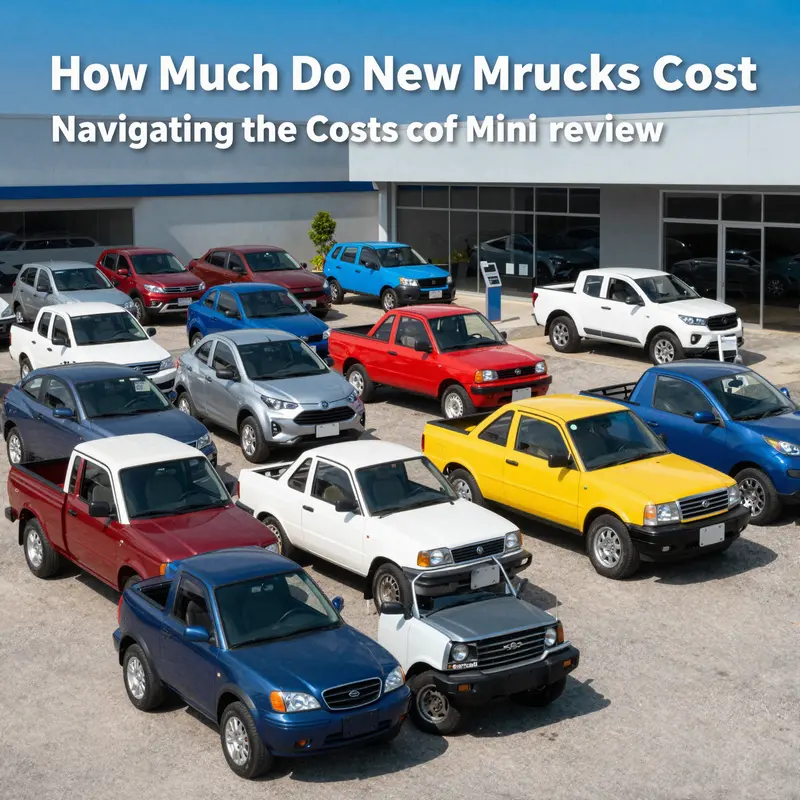
This chapter surveys how mini trucks are priced today, from entry-level models to specialized configurations.
It explains how drivetrain choice (ICE vs electric), payload capacity, and regional factors reshape the sticker price and the total cost of ownership.
It also discusses financing, used-market dynamics, and how incentives, maintenance, and resale value influence long-term economics.
By anchoring expectations to specific tasks—short urban runs, campus logistics, or light-duty hauling—you can weigh upfront price against operating costs over the vehicle’s lifespan.
What Used Mini Trucks Really Cost: Reading the Price Spectrum Across Condition, Age, and Region
Prices for used mini trucks sit at a curious intersection of practicality and aging technology. They are not simply a function of miles or model year; they are shaped by the work you expect them to do, the environment in which they operate, and the quiet calculus of risk and reliability that every small business must juggle. Reading the price spectrum requires more than a quick scan of a listing. It requires a sense of how condition and capability translate into value, how regional markets bend price expectations, and how a long view of ownership can tilt the balance in favor of an investment that seems modest at purchase but pays dividends over years of service.
To begin with, the most common picture of used mini trucks is a broad band that starts in the lower mid-range and climbs toward the high end for specialists. In practical terms, older or less equipped units in solid working order can be found roughly in the $10,000 to $25,000 range. These are vehicles that have seen some duty, perhaps a few owners, and carry the marks of their labor—scratches on a body, a routine maintenance history, and a drivetrain that has proven durable enough for a continuous cadence of service. They are credible workhorses for street vendors, small-scale delivery, mobile repair services, and other operations where the asset is primarily valued for utility rather than elegance. Buyers in this segment often balance price against the certainty of a comprehensively checked mechanical baseline. The goal is to avoid hidden costs after the sale—unexpected repairs that could erase the initial savings and then some.
Beyond that entry point lies a more variable middle field, where prices commonly drift into the mid-range depending on condition, mileage, and the presence of value-adding equipment. A used unit with moderate mileage, recent maintenance records, and a robust set of ancillary features—such as a refrigerated body, a flatbed conversion, or a modular cargo configuration—can command prices well into the $25,000 to $40,000 zone. The variability here is significant because the market recognizes two truths at once: a well-kept, purpose-built chassis can outlast a newer, less tailored option, and specialized bodies dramatically increase resale value if the new owner intends to keep the vehicle in the same line of work. In markets where refurbishing ecosystems are mature, such as those that support refurbishing mobile kitchens or compact freight platforms, the mid-range is a living space. Vendors will price around the overall condition, but they will also calculate the cost of reconditioning the vehicle to meet or exceed regulatory and operational standards. This is where a small premium can be justified, because the buyer is buying a unit that accelerates the path to productivity rather than a fixer-upper that demands further investment.
A different ceiling appears as you move into high-end used units, especially those that bring specialized capabilities to the table. Refrigeration, insulated bodies, or other specialized configurations used for food service, medical transport, or other sensitive payloads can push the price toward $40,000 to $60,000 in particular circumstances. It is not unusual for a refrigerated mini truck to command a premium not only for its core capability but also for its certification status, the integrity of its refrigeration system, and a documented service history. In these cases, the buyer is paying for reliability assurances in addition to raw capacity. The seller often presents maintenance logs, environmental compliance certificates, and portability of the unit between contracts as part of the sale package. The risk calculus shifts here; buyers weigh the incremental cost against the guaranteed ability to meet daily demand without a surprise breakdown on a critical route or shift.
This spectrum, however, does not exist in a vacuum. The regional dynamics governing used mini trucks inject a layer of complexity that can tilt price in subtle but meaningful ways. In markets that maintain a mature ecosystem for reconditioning and resale of commercial vehicles, prices can be more favorable for buyers who are selective and patient. For instance, areas known for a high volume of refurbishing activity tend to offer lower upfront purchase prices for units that have been inspected, repaired, and returned to service with warranties or post-sale support. The rationale is straightforward: high-volume refurbishing creates more predictable cost structures for sellers, enabling them to price with a margin that reflects both value and risk reduction for the buyer. On the flip side, in markets where spare parts, skilled labor, and prompt service are less accessible, the same model and body configuration may carry a premium. The buyer pays to offset the additional friction and the longer lead times that can accompany maintenance or repair in those regions.
The dynamics of condition add another layer of nuance. Condition is a primary determinant of price, and rightly so. A truck with low miles, recent maintenance, and light wear tends to command a premium. The opposite is also true: signs of mechanical trouble, frame wear, or obsolete equipment carry a heavy discount. The value of a refrigerated mini truck, for example, hinges not just on the engine and drivetrain but also on the integrity of the thermal system. A unit with a nonfunctioning or uncertified refrigeration system can still be sold, but the buyer will factor in restoration costs, regulatory compliance, and the risk of ongoing operational headaches. Each of these considerations translates into price adjustments that can be sharp and frequent depending on the local market and the stated condition in the listing. The buyer’s due diligence—inspection, test operation, and a review of service history—often determines whether a vehicle lands on the high or low end of the range.
Age interacts with condition in telling ways. A newer model, or one with fewer overall miles, can command higher prices only if the buyer is confident about the remaining useful life and the likelihood that major components have not reached the end of their service window. Conversely, an older unit that has been exceptionally well maintained and upgraded with modern, reliable components may still offer attractive value, particularly if it has already absorbed the bulk of depreciation and remains fully functional. In practice, the market tends to reward longevity that is verifiable—documented maintenance, transparent repair history, and evidence of consistent service from qualified technicians. Buyers who rely on rigorous checks and third-party inspections often feel more confident paying a premium because the risk of unforeseen failures has been materially reduced.
Regional supply chains also influence how buyers perceive value. In regions with a dense network of suppliers, distributors, and service centers, the total cost of ownership tends to be lower. Availability of compatible parts, quicker repairs, and broader financing options all contribute to a lower effective price of ownership. Conversely, in markets with long lead times for parts, limited service networks, or higher import costs, even a unit with compelling mechanical condition can feel pricier after considering maintenance and downtime costs. The interplay between local availability and the global market creates price volatility that buyers should anticipate as part of the purchasing process. It is not uncommon for someone shopping across borders to encounter a used unit that looks economically attractive on paper but becomes less favorable once shipping, import duties, and local compliance costs are factored in.
Beyond the sticker price, there is the question of total ownership cost. The sticker price is only the opening salvo in a conversation about value. A complete assessment includes maintenance expenditures, parts availability, fuel or energy efficiency, insurance costs, and the potential for downtime. A unit that appears cheaper at purchase may translate into higher ongoing costs if it operates in a region with expensive parts or a sparse network of qualified technicians. Conversely, a slightly higher upfront price can yield lower long-term costs if the vehicle benefits from easier maintenance and a longer, more predictable service life. Savvy buyers often quantify this calculus by comparing two or more scenarios: a lower upfront price with higher expected maintenance versus a higher upfront price with lower ongoing costs. In many cases, the second scenario proves more cost-effective over a five- to seven-year horizon, particularly for businesses that rely on a predictable, uninterrupted workflow.
For buyers seeking practical guidance on evaluating suppliers and navigating the market, it can be valuable to consult a framework that emphasizes supplier credibility and price transparency. A respected resource in this space highlights how the reliability of a supplier—on-time delivery, honest representations of condition, and responsive post-sale support—can dramatically reduce total ownership risk. The same framework notes that the most compelling deals often arise not from a single standout feature but from a portfolio of factors: clear documentation, accessible warranties, and a history of successful maintenance and part replacement. In short, the smartest purchases combine a solid price with confidence in service, so the buyer is not left to manage risk alone after the sale.
The practical takeaway for anyone weighing a used mini truck is that price alone does not tell the whole story. The value lies in the alignment between the vehicle’s capability and the buyer’s needs, the reliability of the seller’s representations, and the certainty that the ongoing costs will remain manageable. A unit priced at the lower end of the spectrum may seem like a bargain, but it could conceal the risk of costly repairs in the near term if the condition is not carefully vetted. Conversely, a higher asking price may reflect a well-maintained vehicle with a robust maintenance history and a body configured to support a defined workflow. In either case, the decision should rest on a structured evaluation that weighs the vehicle’s functional fit against the full spectrum of ownership costs and the seller’s credibility.
For readers who want a consolidated starting point on how to approach this evaluation, consider the practical notes and price differentiation discussed in a recent industry analysis that underscores the importance of supplier credibility and price comparison as parts of a holistic due diligence process. And for those who want ongoing, practical content on buying and evaluating used mini trucks, the following resource offers a broad, up-to-date overview: minitrucksocala blog.
In the end, the price of a used mini truck is not a fixed line but a negotiated space defined by condition, age, regional supply, and the buyer’s ability to assess risk and value. A well-constructed decision is less about chasing the lowest price and more about securing a unit that will perform reliably in daily work while keeping maintenance and downtime within reasonable bounds. The best outcomes come when buyers enter the market with a clear understanding of their needs, a checklist of critical condition indicators, and a willingness to invest in due diligence that translates into predictable performance on the job. When those elements align, a used mini truck can be a surprisingly cost-effective investment—an asset that powers a small business with steady, dependable traction rather than a perpetual source of unanticipated expense. For further perspective on supplier evaluation and price comparison, see the external framework linked here: Smart Sourcing for Used Mini Food Trucks.
Price, Power, and Purpose: Navigating the Cost Landscape of Heavy-Duty Mini Trucks
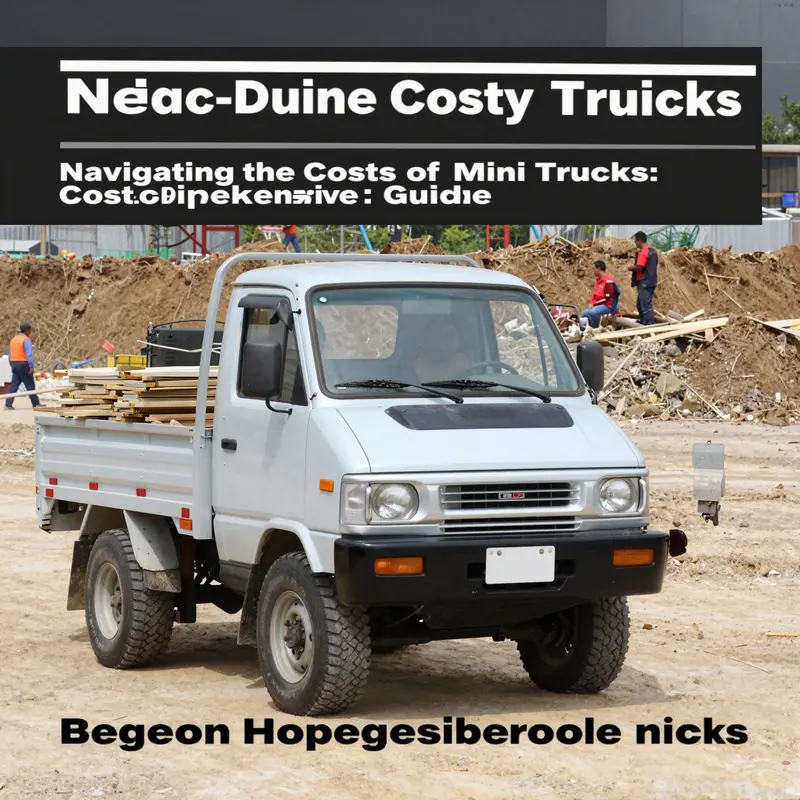
The term heavy-duty mini truck can be misleading at first glance. These machines sit in a gray area between compact urban delivery vehicles and full-blown mining haulers, yet their value is undeniable for businesses that need reliable, capable transport in tight spaces or demanding environments. In practice, price is driven as much by intended use as by size. A compact unit designed for city logistics may share a chassis with larger industrial siblings, but it will be tuned for maneuverability, efficiency, and ease of service. By contrast, a vehicle built to endure underground travel or rugged mining work carries an entirely different price equation, one that factors extreme duty, specialized safety features, and long-term durability into the bill of materials and the total cost of ownership. When you ask how much these trucks cost, you are really asking how much value you need, and how long you expect that value to endure through usage, maintenance, and resale. The price spectrum reflects this reality, spanning basic new units at a modest entry point, through robust mid-range configurations, to highly specialized heavy-duty variants whose price tags resemble those of much larger trucks. Understanding this spectrum helps buyers set realistic expectations and choose equipment that aligns with specific tasks, rather than chasing the most aggressive label or the flashiest brochure.
New mini trucks that aim at general-purpose roles—things like urban delivery, light freight on short hauls, or small-scale material transport—tend to cluster in a range that balances affordability with reliability. In many markets, the initial sticker price for a basic new unit sits in the lower mid-range for such machines, reflecting the economics of producing compact, efficient platforms that emphasize low operating costs, simple maintenance, and broad service networks. This makes sense: buyers who need dependable, immediate capability without extraordinary payloads or specialized systems often prioritize a straightforward return on investment. The result is a common price band where a wide set of new, general-purpose heavy-duty mini trucks can be acquired without resorting to bespoke specifications or custom configurations. For these buyers, the purchase is a practical decision about getting enough capacity to complete daily tasks while keeping upfront and ongoing costs manageable.
But the story grows more nuanced once you shift from everyday urban hauling to more demanding applications. Underground mining, quarry work, and other heavy-duty settings demand vehicles that can stand up to harsh conditions, long shifts, and stringent safety standards. In those contexts, the price leaps can be substantial. The core drivers here are not only raw payload capacity and power, but also the engineering details that govern durability, reliability, and safety in extreme environments. Advanced suspension systems, reinforced frames, specialized drive configurations, and integrated control systems for monitoring and diagnostics contribute to higher upfront costs but translate into lower risk of downtime and potentially lower lifecycle expenses. In many cases, a heavy-duty mini truck designed for such tasks will be priced in a distinctly higher tier, reflecting the engineering investment required to ensure performance under tough operating conditions, pervasive dust and dampness, and frequent loading cycles.
A broader view of the price landscape reveals a spectrum that includes not just the obvious high end of specialized equipment but also significant opportunities in the intermediate space. For example, a light-duty, compact cargo truck intended for general transport in constrained environments can offer a compelling blend of payload, footprint, fuel economy, and maintenance simplicity. Buyers who match their choice to the task at hand often end up with a solution that is far more economical over the vehicle’s life than chasing a maximum-rated payload or the latest safety tech if those features are not essential for their work. Conversely, for owners who need to move material quickly through a site with many stops, or who must operate in hazardous or restricted zones, the incremental cost of a more rugged, purpose-built platform can be justified by the practical gains in productivity, safety compliance, and uptime. The market further reflects these contrasts with a broad array of configurations, from 4×2 and 6×4 drive layouts to a range of payloads and engine options, each tuned for different performance envelopes.
The numbers tell a compelling story. In the most accessible segment, new heavy-duty mini trucks aimed at general use can start well below the higher echelons of the market, with basic models offering a strong combination of affordability and capability for those who need compact cargo transport without extravagant features. The price range roundly covers mid-teens to the low twenties in thousands of dollars for a basic new build. It is not unusual for buyers to encounter price bands that stretch into the low tens of thousands when options are limited to essential capabilities and a choice of standard equipment. This affordability is part of the appeal, especially for small businesses or regional operators who require repeatable, scalable transport solutions without committing to a bespoke build. As tasks become more demanding, the cost category shifts accordingly: more robust drivetrains, larger payloads, and tougher frames push the price higher, sometimes sharply, to accommodate additional engineering, safety systems, and long-term durability.
At the other end of the spectrum, the market for specialized heavy-duty mini trucks—designed for underground mining or other extreme environments—carves out a different economic space. These units often command six-figure prices, reflecting their engineering sophistication, the materials science behind their structures, and the safety and monitoring systems that must function reliably in challenging settings. A mining-specific heavy-duty mini truck can command well into six figures, depending on payload capacity, certified safety features, powertrain configuration, and optional accessories such as computerized diagnostics, reinforced cages, and remote monitoring capabilities. The price delta here is not merely about the weight of the load a vehicle can carry; it is about the entire ecosystem that supports safe, efficient operation in environments where a breakdown can entail significant costs beyond repair, including downtime, safety incidents, and regulatory penalties.
The used market offers its own set of price dynamics. A robust used unit in good condition can range roughly from the upper teens to the mid-forties in thousands of dollars, depending on factors such as age, mileage, duty history, and the presence of accessories or aftermarket enhancements. In other words, the used market can deliver considerable value for buyers who know how to assess wear patterns, maintenance records, and the remaining life of critical components like the engine, transmission, and axles. Older platforms may deliver the payload and space needed for lighter tasks, while newer or better-maintained finds can approach the reliability of a fresh unit, with a fraction of the upfront cost. For buyers prioritizing price, the used market can close the gap to immediate capability, provided the vehicle has a well-documented service history and a favorable condition profile.
Two threads run through all these observations. First, payload capacity and engine power are the most visible levers that professionals use to justify price differences. A vehicle with a higher payload and stronger torque profile is naturally priced higher because it promises greater productivity, less frequent cycling of loads, and better performance in demanding conditions. Second, drive configuration—whether 4×2, 6×4, or other layouts—matters not only for traction and off-road capability but also for site-specific constraints such as maneuverability in tight spaces, grade resistance, and durability under continuous operation. These technical choices are not cosmetic: they dictate maintenance costs, fuel efficiency, tire wear, and the long-term total cost of ownership.
Beyond the numbers, buyers should consider the practical realities that shape total cost. Warranty terms, access to parts, and the availability of a reliable after-sales network can dramatically influence the lifetime cost of ownership. A machine with factory-backed warranties on critical components can reduce the risk of costly, unforeseen repairs and shorten downtime when service is needed. Financing options, sometimes with favorable monthly payments, can also alter the perceived affordability of a vehicle, especially for small or regional operators who must manage cash flow carefully. In markets where service networks are growing or where importers offer comprehensive maintenance packages, the economic case for fresh, purpose-built units strengthens, because predictable maintenance and readily available parts translate into higher uptime and steadier output.
The breadth of options means that buyers should anchor their decision in a clear assessment of needs. If a site demands frequent loading in confined spaces, with a predictable daily cycle and strict safety standards, a purpose-built, heavily engineered platform may be worth the premium for reliability and compliance. If a business needs to move material through a campus, a compact, economical model with solid fuel efficiency and a robust service network could deliver the best return. For contractors and operators who race against time in demanding environments, the incremental cost of higher-grade equipment can be offset by fewer breakdowns, faster cycle times, and lower risk exposure.
As a practical guide, many buyers begin by defining three core specifications: payload range, typical daily distance, and operating environment. The payload and distance inform engine and transmission choices as well as fuel strategy. The environment determines whether advanced cooling, sealing against dust and moisture, or reinforced frames are essential. With those parameters in hand, a buyer can navigate the price landscape more confidently, testing configurations that deliver the right balance of capability and cost. It is also wise to examine the full ecosystem around the vehicle—spare parts availability, technicians’ expertise, and the speed at which service can be delivered in the buyer’s region. These factors often determine whether a seemingly attractive deal pays off or becomes a friction point that undercuts the expected return on investment over the vehicle’s life.
In sum, the price of heavy-duty mini trucks is not a single fixed number but a reflection of intended use, engineering depth, and the quality of ancillary support. New, general-purpose models offer compelling affordability for daily operations in constrained spaces, while specialized units tailored for demanding environments command premium prices that align with the critical nature of their tasks. The used market provides a wide range of value propositions, depending on age, condition, and service history. Buyers who align their choice with the actual work profile—and who invest in solid service and parts networks—tend to secure the most favorable balance between upfront cost and long-term capability.
For readers seeking continued context and a broader look at related models and configurations, this page offers a general resource that explores the landscape of compact, capable trucks and their variants. minitrucksocala blog.
External reference for pricing context and model variety can be found on a major supplier listing, which captures a range of configurations and market applications. The external resource provides a practical snapshot of how manufacturers price heavy-duty mini trucks across different regions and duties: https://www.alibaba.com/product-detail/Sinotruk-Sinotruck-HOWO-Right-Hand-Drive_1600856835422.html
Final thoughts
In summary, understanding the costs associated with mini trucks—new, used, and heavy-duty options—empowers you as a small business owner or enthusiast to make informed choices. With prices ranging widely based on specifications and conditions, there’s a mini truck out there for every need and budget. Take the time to evaluate your specific requirements, and you’ll find the perfect mini truck for your ventures.