

Introduction to Mini Trucks
Mini trucks are making waves in the automotive world, especially among local small business owners, residential property owners, and hobbyists alike. But what exactly are mini trucks? These compact, versatile vehicles are designed to navigate tight spaces while still packing a punch in terms of utility. Their growing popularity can be attributed to their fuel efficiency, ease of use, and the fact that they offer a practical solution for transporting goods without breaking the bank.
If you’re a small business owner, understanding how much do mini trucks weigh is essential, as it can affect everything from payload capacity to licensing and road regulations. Mini trucks typically weigh around 1,500 to 2,000 pounds, depending on the make and model, which makes them lighter and more maneuverable than traditional pickup trucks.
Whether you’re considering adding a mini truck to your fleet or simply exploring the option for personal use, knowing the weight specifications can help you make informed decisions. Plus, with an active community around mini truck enthusiasts, there are always tips and tricks to discover! By understanding the ins and outs of mini trucks, you can unlock new opportunities for efficiency and convenience in transportation, no matter your purpose. If you’re looking to dive deeper into the offerings available, check out our detailed reviews like the FMS 1-10 FCX10 Range Rover Review and the Ocala Mini Truck Community!
This image showcases different types of mini trucks in action, emphasizing their versatility for local businesses and hobbyists. From urban deliveries to transporting materials for construction and supporting agricultural tasks, mini trucks are a valuable asset for various industries.
Common Usage of Mini Trucks
| Type of Mini Truck | Common Usage in Urban Areas | Common Usage in Farmland | Common Usage on Construction Sites |
|---|---|---|---|
| Kei Trucks | Delivery services, maneuverable for city streets | Transporting crops, tools, livestock | Moving supplies and machinery |
| Mini Concrete Trucks | Urban construction projects | Not commonly used for agricultural purposes | Pouring foundations, transporting materials |
| Mini Pickup Trucks | Small deliveries for local businesses | Limited use for agricultural tasks | Hauling construction materials, tools |
| Mini Dump Trucks | Trash removal, small waste management | Not typically used for farming | Carrying soil, waste, and small equipment |
| Super Mini Trucks | Custom builds for businesses | Transporting hobbyist equipment | Site management and material transportation |
Average Weight of Mini Trucks
When it comes to mini trucks, understanding their average weight is essential for businesses and enthusiasts alike. Generally, mini trucks weigh somewhere between 1,500 to 2,200 pounds (about 680 to 1,000 kilograms). The most recognizable models, especially Japanese mini trucks-often referred to as Kei trucks-have a standard trim weight of approximately 2,000 lbs (907 kg). This specific weight is well within the range necessary for effective and efficient urban operation, being lightweight enough to navigate narrow roads but sturdy enough for various cargo needs.
Factors Contributing to Weight Variations
Several factors can influence the weight of mini trucks:
- Model Variations: Different mini truck models come with unique features that affect their size and weight. For instance, flatbed types might weigh less than those equipped with additional features like campers or toolboxes.
- Materials Used: The choice of materials can make a significant difference. Trucks built with lighter materials will generally weigh less compared to those that utilize heavier materials for enhanced durability.
- Design and Accessories: Adding customized accessories, such as enhanced towing packages or additional storage options, can also increase the weight of mini trucks.
Comparative Weights
To provide a clearer understanding, here’s a comparative summary of mini truck weights:
| Model/Type | Weight (lbs) | Weight (kg) |
|---|---|---|
| Japanese Mini Trucks (standard) | 2000 | 907 |
| Average Curb Weight in India | 1940 | 882 |
| Weight Range for Various Models | 1500 – 2200 | 680 – 1000 |
As you explore different mini truck options, knowing the weight can guide you in making informed decisions, especially regarding load capacity and operational efficiency. For more insights on mini trucks, check out our guide to mini truck maintenance tips or learn about buying pre-owned mini trucks. Also, don’t miss our visualization of truck weights below!
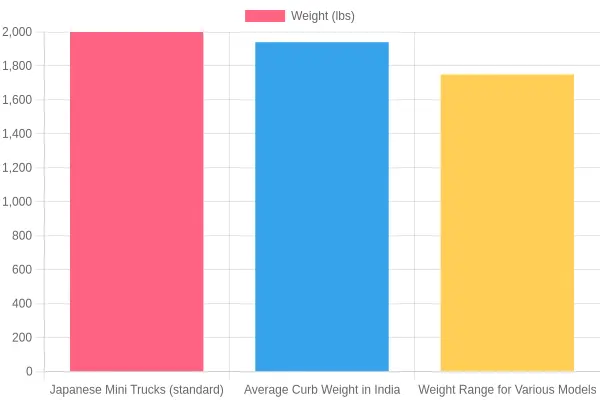
Whether you’re in local business logistics or simply a mini truck enthusiast, understanding these key weight metrics is fundamental to ensuring you choose the right vehicle for your needs.
Comparison of Popular Mini Truck Models
| Mini Truck Model | Gross Vehicle Weight (GVW) | Payload Capacity | Source |
|---|---|---|---|
| Tata Ace Gold | 1615 kg | 750 kg | Tractor Junction |
| Tata Intra V50 Gold | 1700 kg | 1700 kg | Tractor Karvan |
| Tata Ace Chota Hathi | 1510 kg – 1950 kg | 900 kg | Trucks Buses |
| Switch Mobility IeV4 | 1700 kg | 1700 kg | CMV360 |
Summary
Mini trucks like the Tata Ace and Intra models serve as excellent compact transport solutions, especially for local businesses. Their manageable weight and impressive payload capacities make them versatile options for various commercial needs. For more insights on specific models, check out the Ocala Mini Truck Community.
When it comes to understanding how much mini trucks weigh, it’s essential to consider various factors that influence their weight, including equipment, materials, and design. By examining these elements, small business owners, hobbyists, and property owners can make informed decisions about which mini truck fits their needs best.
1. Equipment Considerations
Mini trucks can be outfitted with a range of equipment, which directly affects their weight. For example, options like four-wheel drive systems, specialized utility beds, or additional cargo areas can add significant weight. Features such as advanced braking systems or reinforced frames designed for heavier hauling contribute to an increased curb weight. Consider the equipment options that align with your intended usage, as heavier configurations may provide greater utility but can also impact fuel efficiency.
2. Material Choices
The materials used in constructing mini trucks play a vital role in their overall weight. Traditional steel frames and bodies are sturdy but often heavier. Conversely, the integration of lightweight materials like aluminum and high-strength composites can create a balance between durability and reduced weight. Mini truck enthusiasts, particularly those focused on customization, should look into models that utilize advanced materials for achieving a lighter, more fuel-efficient vehicle without sacrificing performance. The material also affects factors like payload capacity and handling capabilities.
3. Design and Engineering
The design of a mini truck is intricately linked to its weight. Minimalist designs aim for a lighter structure, while those designed for rugged use might incorporate additional reinforcement or bulkier components. For instance, mini trucks designed for off-road capabilities typically weigh more due to enhanced suspension systems and durability features. Additionally, trends in mini truck design often reflect regulatory standards or consumer demands for lower emissions. Recent innovations focus on optimizing design to meet these needs while considering weight implications.
Conclusion
Understanding the factors affecting the weight of mini trucks-equipment, materials, and design-can greatly assist local business owners and enthusiasts in selecting the right vehicle. Knowing how these elements interplay can lead to better-informed choices and enhanced satisfaction with your mini truck experience. For those looking for more insights on specific models, check out our comparison of Kingstar Kruzr models or explore our Ocala mini truck community for personal stories and experiences.
In summary, consider your specific needs and how different variables will impact not just the weight but the overall functionality of your mini truck!
Mini Truck Specifications Overview
This image highlights various specifications for mini trucks, including weight, load capacity, dimensions, and fuel efficiency. Perfect for local small business owners and enthusiasts looking to understand these versatile vehicles better!
For more insights on specific models, feel free to check out our review of the FMS 1-10 FCX10 Range Rover and the Rugged Mountain X14 flatbed camper.
The Importance of Mini Truck Weight for Buyers
Understanding the weight of mini trucks is crucial for buyers, especially for those operating in local business or residential settings. The weight of a mini truck directly impacts its load capacity, maneuverability, and overall efficiency. Here are a few reasons why this knowledge is vital:
-
Local Regulations and Weight Limits: Many localities have regulations regarding vehicle weight, especially for city driving and residential areas. Knowing how much your mini truck weighs can help ensure compliance, avoiding fines and ensuring smooth operation in congested areas.
-
Operational Efficiency: Weight plays a key role in fuel efficiency and vehicle maintenance. Heavier mini trucks may consume more fuel and require more frequent maintenance. For businesses aiming to keep operational costs minimal, understanding weight is essential. Lightweight models can offer significant savings in these areas.
-
Load Capacity: Each mini truck is designed to handle specific weight limits. Knowledge of your vehicle’s weight and load capacity will help you make informed decisions about deliveries or transporting goods. For example, if you’re moving heavy items, selecting a mini truck with a higher weight capacity is advisable.
Practical Tips for Mini Truck Buyers
- Check Local Regulations: Research the weight limits enforced in your locality. This can affect not only the type of mini truck you choose but also how you plan your routes.
- Consider Your Needs: Assess what you will be using the mini truck for. If you’re operating a delivery service, look for lighter models that offer good fuel efficiency and can carry your typical load.
- Research and Compare: Use resources like this mini truck review to compare weight specifications and performance metrics before buying.
- Test Drive: Always check how the mini truck handles weight distribution and driving comfort. A test drive can provide insights into how well the vehicle performs under different weights.
Understanding mini truck weight doesn’t just help in making an informed purchase; it also plays a crucial role in optimizing your operation. Embracing this knowledge can lead to more successful business practices and smoother residential use.
“Mini trucks are recognized as versatile workhorses that are economically impactful. They offer cost-effective solutions for businesses by reducing fuel consumption and maintenance costs compared to larger trucks, making them pivotal in enhancing local business efficiencies.”
- Tata Motors
Mini trucks not only serve as efficient vehicles for transporting goods but also play a crucial role in strengthening local economies. With their size and versatility, they are perfect for maneuvering in tight spaces, which is especially beneficial for local businesses aiming to enhance delivery operations.
For more about how mini trucks can change your delivery game, learn more.
Understanding the weight of mini trucks is key for proper utilization, so let’s dive into that next!
When considering a mini truck for business or personal use, understanding weight implications is essential. Here are some common questions and answers to help navigate through mini truck weight considerations.
What is the average weight of mini trucks?
- Answer: Mini trucks typically weigh between 800 kg (1,764 lbs) and 1,300 kg (2,866 lbs), depending on the model and configuration. The lighter models tend to be more versatile, while heavier options may provide additional payload capacity for commercial applications. For a deep dive into specific weights, check out how much do mini trucks weigh.
How does the weight of a mini truck affect towing capacity?
- Answer: The weight of a mini truck plays a crucial role in determining its towing capacity. Generally, a heavier mini truck can tow more weight safely, but it’s essential to adhere to specific regulatory limits. Each jurisdiction has different rules governing allowable towing weights. For example, regularly exceeding the weight limit can lead to legal repercussions and safety hazards. Learn more about these regulations on towing from the NSW Government site.
Are there licensing requirements for driving mini trucks?
- Answer: Yes, licensing requirements for driving mini trucks can vary based on weight. In many areas, if a vehicle’s weight exceeds a certain limit, a special license might be necessary. This may include additional testing or certification, mainly if you are pulling a trailer or transporting goods. Familiarize yourself with your local licensing laws by visiting UK Government guidance on driving licenses.
What are implications for business use?
- Answer: For small businesses, mini truck weight can affect operational costs. Heavier trucks may require more robust maintenance schedules and necessitate permits for certain roads. Additionally, businesses must consider their payload capacity. The average payload for mini trucks ranges from 500 kg to 1,500 kg (1,102 lbs to 3,306 lbs), making them adaptable for various uses. If you’re looking for specific models with varying payload capacities, check out the comparison of Kingstar Kruzr models.
How does weight affect fuel efficiency?
- Answer: Typically, the heavier the mini truck, the more fuel it will consume, although mini trucks are generally designed for fuel efficiency. It’s crucial to select a truck that balances weight and engine power according to your needs. Keeping the load within recommended limits will help maintain fuel efficiency.
Are lighter mini trucks more beneficial for urban environments?
- Answer: Absolutely! Lighter mini trucks are easier to maneuver, can navigate tighter spaces, and often come with better fuel efficiency, making them ideal for urban and residential settings. Their flexibility is perfect for small business owners who need reliable transport without the hassle of larger trucks.
Conclusion
Understanding the weights as well as towing and licensing implications of mini trucks can significantly enhance your experience as a buyer or user. Be sure to conduct thorough research and consider local regulations before making a purchase. For more discussions about mini trucks, dive into our Ocala Mini Truck Community to connect with other enthusiasts!
By keeping these weight considerations in mind, you can make informed decisions that suit your needs.
Conclusion & Call to Action
In summary, mini truck weights can vary significantly based on their type and purpose. For instance, compact models like the Suzuki mini truck can weigh around 700 kg, while larger configurations such as the Piaggio Porter 1000 might reach up to 1905 kg. Understanding these weight specifications is crucial for mini truck enthusiasts and small business owners, particularly when considering load capacity and transport options. Notably, customizing your mini truck can further enhance its performance and utility, providing solutions tailored to your specific needs.
At Summit Fairings, we offer customization options for fairings that not only enhance the aesthetics of your mini truck but also improve fuel efficiency and performance. Our tailored fairing solutions are designed to optimize airflow, reduce drag, and lower operational costs, making your vehicle not just look good but perform better too.
Don’t miss the chance to revamp your mini truck! Explore our custom fairings collection today and unlock your mini truck’s full potential. Your journey towards personalization and efficiency starts now!