

If you’re a local small business owner, a residential property owner, or someone who enjoys the unique charm of mini trucks, understanding the costs associated with these compact vehicles is key. Prices for Japanese mini trucks can vary widely, influenced by factors like whether the truck is new or used, the brand and model, and even its engine type. This guide delves into different price brackets, from new models with high-tech features to relatively affordable used options, empowering you to make an informed purchase. Let’s break it down chapter by chapter, exploring each aspect relevant to your buying decision.
Real Prices for New Japanese Mini Trucks: What You’ll Actually Pay

Understanding the market price for a new Japanese mini truck requires more than a single number. These compact K-cars come in a tight cluster of sizes and capability levels, but their prices reflect differences in engines, drivetrains, features, and even special editions. A clear picture helps you decide whether to shop domestically in Japan, import, or consider alternative drivetrains like electric models.
Price brackets for new mini trucks fall into distinct tiers. At the entry level are no-frills work trucks that prioritize utility and low cost. Mid-level models add comfort, better transmissions, and drivetrain options such as full-time four-wheel drive. At the top end, special editions and electric variants push prices well above the baseline. The range is wide: from roughly ¥650,000 for basic models to several million yen for advanced electric versions. Converted to US dollars, that spans approximately $3,800 for a simple base model up to $24,000 or more for higher-end electric micro trucks. These numbers show the diversity within what many buyers lump together as “mini trucks.”
A recent special-edition micro truck illustrates how features and trim move price points. A limited-run edition with a five-speed manual transmission commands a premium over the most basic models, landing in the mid-to-high ¥1,500,000 range. Swap that manual for a four-speed automatic and the price increases modestly. Special badging, interior touches, and refined suspensions or convenience features explain the gap. For buyers who want a mini truck primarily for small business, farm work, or urban deliveries, opting for a mid-spec edition often hits a sweet spot between cost and everyday usability.
At the lower end of new models, some compact vans and mini pickups designed around the K-Car rules have historically started in the ¥650,000–¥700,000 band before taxes. These base models typically feature very small-displacement gasoline engines, basic seating, and simple manual transmissions. They are engineered to meet tight regulations and provide the lowest ownership costs—cheaper taxes, easier parking in crowded cities, and excellent fuel economy. For someone who needs a straightforward work truck and values the lowest purchase price above all, these entry-level new models remain compelling.
There is another compelling middle ground: small trucks that pack four-wheel-drive systems and upgraded utility features but still remain affordable. Recent model introductions show some manufacturers offering new compact trucks with full-time or selectable four-wheel drive for about ¥940,000 at the entry point for that class. These models are purpose-built for light off-road work, steep rural roads, and regions with challenging winters. That price range appeals to buyers who want traction and capability while keeping the purchase price low.
Electric mini trucks are reshaping the top end of the new-vehicle spectrum. A few startups and manufacturers have launched electric micro trucks with substantial payloads and modern range claims. These vehicles can offer one-ton payloads and ranges up to 300 kilometers on a single charge. The trade-off is cost: estimates for some new electric mini trucks place them around ¥3.8 million. That kind of price reflects the cost of battery packs, electric motors, and the development investment behind modern electric drivetrains. For businesses with predictable routes, access to charging, and an interest in lower operating emissions, the higher upfront cost can be justified by lower running costs and possible incentives.
When comparing these price points, it helps to remember what drives the value: engine type, transmission, drivetrain, payload capacity, and special features. Gasoline models with small-displacement engines and manual gearboxes are the most affordable. Adding an automatic transmission typically tacks on a few hundred dollars. Diesel engines, where available, tend to have higher upfront costs but can improve torque and long-distance efficiency. Electrified options replace fuel costs with electricity costs and require attention to charging infrastructure and charging time.
New vehicle price listings in Japan often exclude registration taxes and optional dealer fees, so the sticker you see in the showroom can be lower than the total cash needed to drive away. Buyers who plan to import a new mini truck should also factor in shipping, import duties, modifications required by local regulations, and homologation costs. These import-related expenses can sometimes exceed the base vehicle price, making careful calculations essential before committing to a purchase from overseas.
Another factor that nudges buyers from new to used is value retention. Mini trucks used for commercial work accumulate wear quickly, yet certain models hold value better than others thanks to reliability reputations and parts availability. New base models may offer the lowest initial outlay, but if your budget is tight and you want more features or a diesel engine, a lightly used truck from a reputable maker can provide significantly better equipment for only a modest increase in price.
Regional differences inside Japan also affect pricing. Urban dealers might emphasize convenience and accessories that increase the final price, while rural dealers will focus on utility and may offer more aggressive pricing on basic work trims. Seasonal demand also nudges prices: harvest seasons and construction booms increase demand for compact utility trucks, which can push prices up slightly for specific months.
Warranty and dealer support are part of the comparison. New models often come with manufacturer warranties and access to official service networks. That peace of mind is valuable for businesses that rely on continuous operation. Electric models, in particular, may include battery warranties that protect against rapid degradation. These ownership benefits can justify part of the premium associated with new models, especially when purchased for commercial use.
Finally, consider total cost of ownership when evaluating new-model prices. Fuel economy, maintenance intervals, tax implications, insurance, and resale value all affect the effective cost you pay over time. New gasoline mini trucks offer the lowest entry costs and strong fuel economy. Diesel variants can be more economical for heavier loads and longer distances. Electric trucks shift costs to electricity and charging infrastructure but can reduce maintenance needs and local emissions.
If you want a compact work truck with low upfront cost, look to base gasoline models. If you need traction and better capability, consider 4×4-equipped new models in the mid-price bracket. For businesses aiming to cut emissions and accept a higher initial cost, electric mini trucks are now a realistic but premium option. For additional context on how different modern mini truck models compare in features and specs, see this deeper comparison of similar small-truck models and trims: comparing Kingstar Kruzr models.
For the most current manufacturer pricing and specifications, consult official manufacturer listings and dealer quotes. Manufacturer websites provide precise pricing for specific trims and options and help you understand the difference between showroom stickers and the final delivered price. For a direct source of the latest listed prices for a recent special-edition model, see the manufacturer’s official site: https://www.suzuki.co.jp/.
Electric Mini Trucks in Japan: Pricing, Trends, and the Road to Urban Deliveries
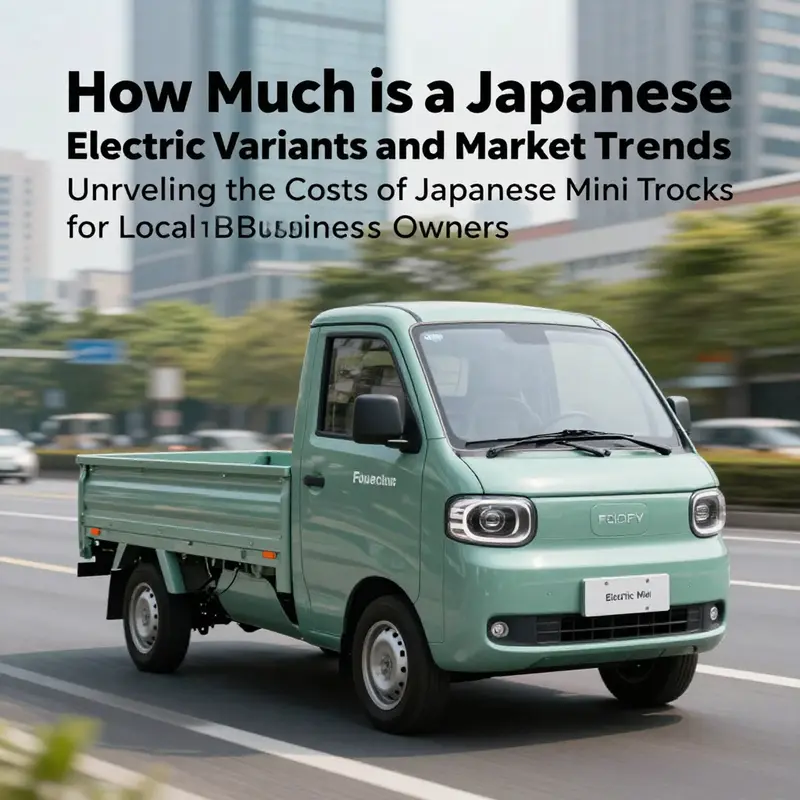
Prices for Japanese mini trucks sit at a crossroads where tradition meets electrification, a place where a tool’s price reflects not just its task but the evolving economics of urban deliveries and rural work alike. The kei-class pickup has long earned admiration for its compact footprint, allowing it to squeeze through tight streets and negotiate narrow alleys with ease. Today, the same nimble chassis competes in two distinct but overlapping markets: gasoline or diesel versions that have been the workhorse for decades, and electric variants that promise lower running costs and cleaner operation in city centers and farm lanes alike. The price spectrum mirrors this dual identity. New base models generally start around $9,000, a figure that makes them accessible as a practical business asset or a personal workhorse in tight spaces. Yet the electric variants—especially those tailored to urban delivery or light-duty hauling—can span a wider range. Some of the most affordable electrics begin near the lower end of the spectrum, while more fully equipped or larger-capacity configurations push toward the $15,000 to $25,000 band. In the global market, used Japanese mini trucks offer another route into ownership, with listings commonly landing somewhere in the mid-teens to high teens in dollars, depending on age, mileage, and condition. In other words, the price you encounter depends on the path you choose—new versus used, fuel type, cab layout, and how much battery and cargo capability you want.
Within this landscape, a newly launched electric mini truck from a Chinese automotive partner promises to tilt affordability even more. The entry price for that model sits around ¥2.5 million, roughly $13,300, and it is pitched as a compact solution for urban deliveries that still offers a respectable payload. What makes this kind of option compelling is not just the sticker price, but the package it carries: a modest 20 kWh battery, an anticipated range of up to 180 kilometers on the WLTC cycle, and a fast-charging capability at up to 100 kW. Add a heat pump air conditioning system and the energy efficiency gains become part of the ownership story, reducing running costs over a typical workday. It’s a package designed to appeal to small businesses and delivery operators who need reliable daily service without a heavy upfront outlay. It’s also a glimpse into how the market is positioning itself to coexist with more established, domestically produced mini trucks, which have their own loyal user base built on decades of service in urban and rural tasks.
A different, higher-end electric option has appeared with a markedly higher price tag, driven by larger battery capacity, longer range, and more robust payload claims. That model targets buyers who need not only a reliable courier but also some reserve to navigate more challenging routes or longer day trips. The delta in pricing between the most basic electrics and these more capable choices underscores a broader industry pattern: buyers increasingly weigh total cost of ownership, not just upfront price. In Japan and nearby markets, this has meant government incentives, subsidized charging infrastructure, and a steady cadence of battery technology improvements that tilt the economics in favor of electrics over their combustion-powered cousins for many common work scenarios. The net effect is a market that is warming to electrification not as a niche experiment but as a practical, scalable option for a wide range of tasks—from city parcel runs to on-demand farm logistics.
Market data from the early 2020s into the mid-2020s show a notable acceleration of electric adoption in the kei car space. The proportion of electric vehicles in this segment rose from just a small sliver to a much more meaningful share in a short period, driven by policy support, lower running costs, and refined battery technology. The trend is not incidental; it redefines how buyers approach purchase decisions. Where a few years ago a buyer might prioritize initial purchase price, today many weigh energy expenses, maintenance requirements, and the long-term reliability of the platform. With a growing array of configurations—single cab, double cab, different cargo setups—the same chassis can be tailored to a range of operations, from urban delivery to light-duty service roles. In this dynamic, even the price of entry-level electrics is heavily influenced by what buyers expect to recover over time through lower fuel costs and reduced maintenance. The economics thus extend beyond the price tag, shaping a broader calculus about what it means to own a micro-truck in a city cluster or a rural lane.
The market is further reshaped by new entrants considering Japan as a strategic stage for expansion. A wave of foreign and domestic manufacturers alike is evaluating how to make electrified mini trucks affordable without sacrificing the reliability and durability that users expect from kei-class platforms. In such a climate, the pricing dynamic tightens as competition grows; more players can push down the entry costs, while more capable options can command premium prices if they deliver higher payloads, longer ranges, or faster charging, all of which translate into faster daily turnover for a fleet. For buyers, that means a broader spectrum of choices, each with a different balance of upfront cost and operating expense. The value proposition then becomes less about finding the cheapest model and more about identifying the best fit for the job, including how often the vehicle will be used, the typical distance traveled, and the availability of charging options on a daily route.
In this evolving landscape, several practical realities shape the buyer’s decision. First, new base models remain an affordable entry point for small-scale operators who need a dependable, compact truck that can maneuver through narrow streets and be parked in tight spaces. Second, the electrified variants, while generally pricier at the outset, can deliver substantial savings through lower energy costs, reduced maintenance, and favorable total cost of ownership over typical work cycles. Third, the used market continues to be viable, with plenty of options that balance condition and price for buyers who can tolerate the inevitable trade-offs that come with older models. A used 4×2 or 4×4 mini-truck with a practical payload and a reasonable mileage figure can often land in the neighborhood of the mid-teens to around twenty thousand dollars, depending on exact configuration and wear. These realities make the segment particularly attractive to people who must maximize utility on a limited budget, whether they serve a small shop, a farming operation, or a city-based delivery route.
To help readers connect these market dynamics with real-world decision-making, it’s useful to view the broader ecosystem through the lens of how information is consumed and shared. Industry blogs and community forums—places where owners compare notes about reliability, downtime, and the practical costs of ownership—offer valuable context for price expectations. For readers who want a broader sense of how mini trucks are discussed and analyzed online, the Mini Trucks blog serves as a useful hub to explore practical experiences, maintenance tips, and user-driven insights that can inform a purchase. You can explore that resource here: Mini Trucks blog.
As buyers weigh options, it helps to keep a few guiding questions in mind. What is the typical daily distance, and what charging options exist along the route? What is the cargo configuration that best suits the job—single cab for tighter spaces or double cab for additional crew or equipment? How important is payload versus range, and how does climate control factor into energy use? How will incentives, tax breaks, and charging infrastructure influence the total cost of ownership over the vehicle’s lifetime? These questions are not merely academic; they shape the practical choice between a basic base model and a more capable electric variant, especially as the market becomes more crowded with options from both domestic and international manufacturers.
The overall narrative remains clear: for buyers in Japan and nearby markets, the price of a Japanese mini truck is no longer a fixed line but a moving target that reflects a broader shift toward electrification, improved battery capabilities, and smarter financing. The cost to own a mini truck includes more than the sticker price; it encompasses energy consumption, maintenance, charging needs, and the degree to which the vehicle supports a given operation with reliability and efficiency. As new entrants continue to bring price-competitive electrics into the fold, buyers will find that the economics of the category continue to improve, especially for those who plan their routes with charging access in mind and who optimize their configurations for the tasks at hand. The road to urban deliveries is being paved with more affordable, capable, and efficient micro-trucks, a development that reshapes how small businesses and workers think about mobility, productivity, and the true price of resilience on the road.
External reference for market context and price ranges can be explored here: Alibaba Electric Trucks.
Pricing on the Move: Decoding Used Japanese Mini Truck Values and What They Really Mean
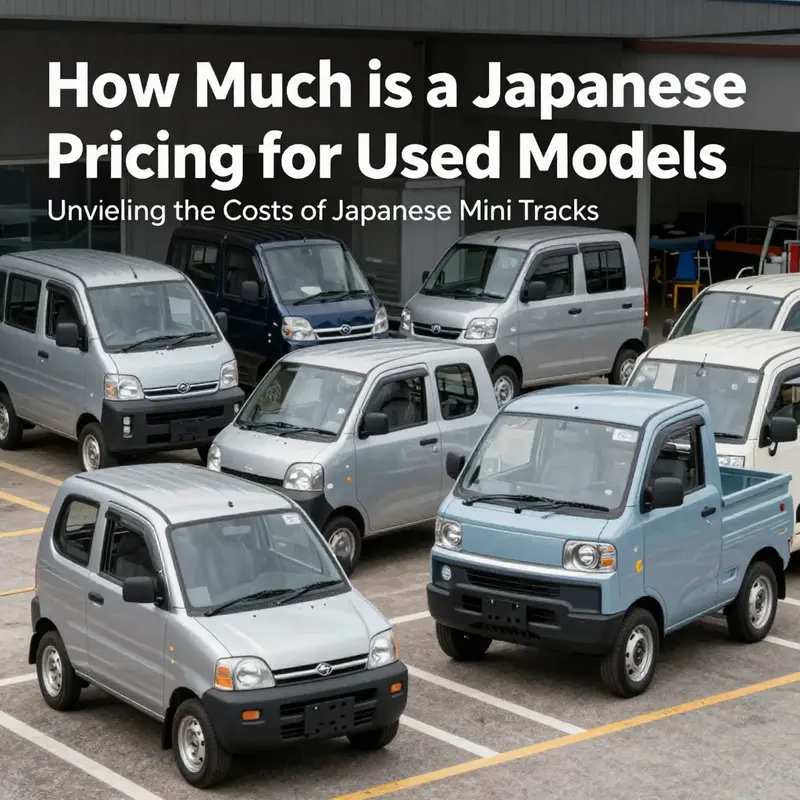
Prices for Japanese mini trucks on the used market read like a spectrum rather than a single value. The factors that determine price – condition, year, mileage, drivetrain, payload capacity, and how the vehicle has been used – combine in different ways for different buyers. The result is not a price tag but a distribution, with many units clustered in mid-range bands and a few high-value outliers for rare configurations. In practice, buyers should treat price as a starting point for negotiations, not a final number.
New versus used is the first big breakpoint. New base models in this segment often sit in the single-digit to low five-figure USD range when translated from Japanese pricing and current exchange rates. A simple bare-bones unit with a manual gearbox might be near $9,000, while an automatic version can edge toward $9,800 or higher. An electric mini-truck can push well into the mid- to high-$20,000s depending on range and payload.
In the used market, the spectrum broadens. A well-maintained, low-mileage mini truck with four-wheel drive or a diesel option commonly lands in the mid-teens, with representative listings around $15,000 to $18,000. Vehicles with strong service histories and recent maintenance can push into the $18,000-$20,000 range, whereas older or higher-mileage examples, or those lacking documentation, tend to sit in the lower end of the spectrum.
Configuration matters a lot. Four-wheel drive, diesel power, or high payload capabilities often command a premium, and buyers should consider whether those features align with their intended use because the premium may be recouped through lower maintenance costs or better resale value later. Import logistics, shipping, and compliance costs also influence total cost of ownership and are part of the purchasing calculus.
Beyond sticker price, total ownership costs include insurance, registration, parts availability, and ongoing maintenance. Buyers should factor in the risk of hidden issues or parts compatibility when evaluating cheaper listings. Verifying a clean maintenance history, requesting service records, and, if possible, arranging a pre-purchase inspection can prevent overpaying for a unit that looks cheap but costs more in the long run.
To compare prices effectively, focus on like-for-like configurations rather than chasing the lowest sticker price. Use verified marketplaces or reputable dealers that provide vehicle histories and inspection reports. If you are curious about market trends, you can cross-check a sample of current listings and note how mileage, year, and features pull prices toward or away from the mid-point band.
In sum, the price of a Japanese mini truck on the used market reflects timing, condition, and configuration as well as the broader costs of ownership. A prudent buyer anchors expectations in verified listings, reads maintenance histories carefully, and plans for the ongoing costs of ownership rather than chasing a single headline price.
Tiny Titans on the Price Ledger: How Brand, Engine, and Condition Shape Japanese Mini-Truck Costs

Prices for Japanese mini trucks sit at a crossroads where brand prestige, powertrain choices, and the vehicle’s life story collide. They are not uniform dollars and yen; they are a map of what buyers want—whether a new vehicle with modern conveniences, a rugged four-wheel-drive for off-road work, or a used workhorse rescued from a distant market. In practical terms, the price spectrum is broad: base new models start in the low six-figure thousands in yen, while special editions and electric variants pull well beyond that. The numbers you’ll see are not arbitrary; they reflect the underlying choices a buyer makes about transmission, drivetrain, and just how new the vehicle is. In the specific data gathered, a 2024-era special edition with a manual transmission sits at about 1,513,600 JPY, roughly $9,500 USD, while the automatic variant hikes to about 1,612,600 JPY, near $10,100 USD. These figures illustrate how a premium package and transmission choice can nudge the sticker price higher even within the same model line. A more utilitarian path exists in the market, where a well-known compact truck with four-wheel drive and robust off-road capability can command a higher starting point, around 2,092,200 JPY for a base four-wheel-drive configuration, which translates to about $13,200 USD. The premium for four-wheel-drive remains consistent in the market, offering a tangible value for operators who need traction in challenging terrain, even if that means paying a noticeable price premium compared to two-wheel-drive variants.
The used market adds another layer of complexity. In many regions, parallel-imported units from the Japanese market appear on local dealer lots or import platforms, bringing with them their own pricing dynamics. A common pattern is that lightly used examples, especially those under a decade old, can fall into an approachable range around $11,000 to $16,000 USD depending on condition, mileage, and provenance. The reality is that used units are often sold as turnkey workhorses, and buyers tend to value reliability and ongoing maintenance costs just as much as the initial purchase price. Across the spectrum, a buyer weighing new versus used will notice that the used market provides a more accessible entry point, sometimes closer to the mid-teens in USD, while the new side often requires a higher upfront investment but comes with the latest tech, more efficient engines, and a fresh warranty.
The broader Kei-car category—encompassing these tiny trucks along with other compact, budget-friendly models—sets a broader price ceiling and floor for new and used options alike. In the new-vehicle space, most Kei cars are priced between roughly 1,000,000 and 2,500,000 JPY, which equates to about $6,300 to $15,800 USD. Within that band, the most common price points cluster around 800,000 to 1,500,000 JPY, roughly $5,000 to $9,500 USD, depending on the trim, features, and the presence of any special editions or packages. The implication for a shopper is straightforward: if one is comparing a bare-bones model with an economy transmission to a premium package with a manual upgrade or a modern transmission, the delta can easily be several thousand dollars. It is this difference that makes the choice between a basic utility unit and a well-equipped mini-truck so consequential on a budget. Even within the same shop, the price ladder can shift as new stock arrives, depreciation is factored in, and import costs or local taxes alter the final price in a buyer’s market.
A portion of the price dispersion also comes from powertrain choices beyond the familiar gasoline engine. In parallel with internal combustion, there is a growing line of electric mini-trucks in the market, particularly from new entrants and startups that assemble in Asia. An electric variant with a one-ton payload capacity can push price tags up to around ¥3.8 million, which translates to about $24,000 USD. The appeal of electric power is clear: lower running costs, cleaner operation, and the promise of steady torque. Yet the trade-off is a higher upfront cost and, depending on use case, a different charging and maintenance ecosystem. Buyers weighing electric versus petrol or diesel need to consider daily duty cycles, access to charging infrastructure, and how the vehicle will be used in urban settings or remote work sites. The price difference also underscores the evolving value proposition of mini-trucks: efficiency and environmental considerations increasingly factor into the total cost of ownership, even in a niche market.
If one were to map price against capability, the spread becomes even more pronounced when considering drivetrain and year. A two-wheel-drive base model may price itself as a practical workhorse for light duties, while a four-wheel-drive variant commands a premium that is not merely cosmetic but functional. The premium aligns with the expected off-road and load-bearing capabilities of the vehicle—an essential factor in sectors like agriculture, construction, and small business fleets where rough terrain or inclement weather cannot be ignored. The question then becomes not merely how much a mini-truck costs, but how much it should cost given its intended use, reliability, and the ongoing costs of maintenance and parts availability. In practical terms, a buyer can expect to see roughly a $2,000 to $4,000 difference between a two-wheel-drive entry model and a four-wheel-drive variant, depending on the year, trim, and market. That delta is justified by drivetrain reliability and the added versatility for challenging sites, making the four-wheel-drive option a common choice for fleet operators who need predictable performance in uncertain conditions.
The market’s complexity is not limited to new versus used, or gas versus electric. The international market adds further nuance through import channels and local demand. For buyers who consider cross-border purchases, the price picture can shift once duties, shipping, and local taxes are included. In some cases, a parallel-imported unit with documented service history can offer a compelling value proposition, particularly for buyers who plan to maintain a tight service schedule with established parts supply. The practical implication is that the sticker price on the page is only part of the story. A complete calculation should include maintenance costs, potential import fees, and the availability of service networks that understand these micro-trucks inside and out. This broader cost awareness helps buyers avoid sticker-shock and ensures a more accurate total cost of ownership over the vehicle’s life. The broader market also presents an underappreciated truth: the value of a kei truck often lies not just in raw price, but in the balance between initial cost, reliability, and the ability to extract productive use from the vehicle day in and day out.
For buyers seeking a concise, side-by-side take on how various variants stack up, consider a quick, model-agnostic comparison resource that lays out the trade-offs between price and capability. This kind of resource helps translate the numbers into practical decisions about payload, drivetrain, and durability across different brands and configurations. It’s useful to keep in mind that even within the same market, the best choice depends on the user’s daily pattern: the frequency of loading, the typical terrain, and the proximity to service networks. While a higher price often signals greater capability or more modern features, it does not automatically guarantee that a given model will deliver better value for a specific use case. The opposite can also be true: a lower price may offer enough performance and durability for someone who runs lean and stays close to a reliable service network.
Beyond the basic price figures, there is the human element of ownership. These small trucks are known for their simplicity, ease of maintenance, and frugal running costs when cared for properly. The engine types and transmission choices influence not only price but the long-run cost of ownership. A manual transmission may simplify maintenance and part compatibility in some markets, while an automatic can reduce driver fatigue and improve resale appeal in others. For fleets, the choice often comes down to balancing driver preference, maintenance capabilities, and the expected duty cycle. In markets where space and efficiency are at a premium, the appeal of a light, nimble truck grows stronger, and the purchase decision becomes a blend of upfront cost, duty cycle, and long-term reliability.
As buyers navigate this landscape, a practical step is to weigh the options against a single, clear set of priorities: daily tasks, reliability, and total ownership costs. From there, the price line becomes a guide rather than a verdict. A useful reference for evaluating the nuances between similar models is a comparative page that reframes the discussion into model-agnostic terms, helping buyers parse the difference between a base two-wheel-drive unit and a feature-rich four-wheel-drive version. This approach lets price serve as a starting point rather than a final obstacle. To enrich the search, readers can explore a comparative resource that emphasizes model-agnostic differences and performance, rather than brand names or stylistic cues, and then pair that with the concrete price data from the market to inform their decision.
For readers curious about how these tiny trucks stack up against other compact options, an inline link to a broader comparison resource can be insightful. Consider this practical comparison page: Comprehensive comparison of kei mini-truck models as a starting point to understand how different configurations trade price for payload and reliability. While the page name references a specific model family in its URL, the linked content is structured to illuminate the trade-offs across brands and powertrains without privileging any single product. This helps keep the focus on the decision framework rather than on marketing or branding alone.
In sum, the price of a Japanese mini truck is a layered question. It reflects the engine type, the drivetrain, the generation of the model, whether it is new or used, and the included features. The newest offerings, including electric options, push the ceiling higher while reinforcing the value proposition of electric power for certain work patterns. The used market provides a more approachable entry point, with depreciation and condition playing major roles in final pricing. Across the spectrum, buyers who approach the market with clear use cases, a solid understanding of maintenance costs, and an awareness of the broader Kei-car landscape tend to find the best-value options more quickly. The beauty of these small workhorses lies in their adaptability: they remain affordable enough to be practical for small businesses, nimble enough to maneuver in tight urban spaces, and robust enough to perform a wide range of tasks that would challenge larger vehicles.
External resource: Kei cars offer a broader context for understanding these price dynamics and the evolution of small utility vehicles. For a broader context on kei cars, see Kei cars on Wikipedia.
Unpacking the Price of a Japanese Mini Truck: From New Urban Workhorses to Quietly Dependable Used Bargains
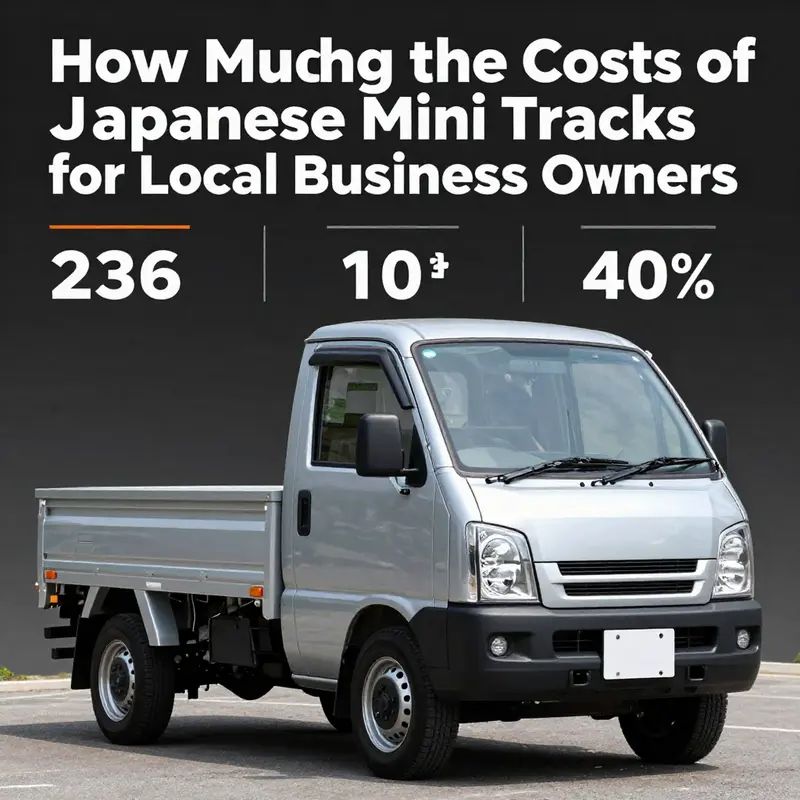
Prices for Japanese mini trucks do not sit in a single, neat line. They drift with the seasons, the engine choice, the cab configuration, and whether the vehicle is fresh from the factory or wearing the patina of years on the road. As of early 2026, the market presents a broad spectrum that reflects the vehicles’ enduring utility in crowded cities and tight job sites. The simplest way to frame the landscape is to separate new from used, then add the surprise of electric options and the reality of exchange rates. In a compact vehicle class designed for versatility rather than highway speed, the sticker price often serves as a practical proxy for total ownership costs, including maintenance, fuel or charging, insurance, and the logistics of importing or shipping to a destination outside Japan. A reader new to these tiny haulers might be surprised at how much nuance sits behind a price tag that seems, at first glance, almost modest in size.
New mini trucks sit between roughly one-and-a-half million and three-and-a-half million yen, with current market references placing common configurations near the mid-range and rarer, cargo-focused designs toward the higher end. In U.S. dollars, that translates to about twelve thousand to twenty-three thousand dollars, give or take a few hundred depending on the exact exchange rate at purchase time. The more specialized the design—think urban delivery duty with compact cargo boxes, or features that ease parking in miniature lots—the more the price tends to creep up. Some models in this segment showcase thoughtful engineering choices, such as foldable or collapsible cargo boxes that unlock extra space when the vehicle is parked or stored, and clever interior layouts that prioritize daily convenience over raw cargo volume. These design innovations can be a meaningful factor in the price, because they promise real-world savings in time and space for operators who need to squeeze every inch out of a city block or a narrow loading dock.
On the demand side, buyers today are not just local shop owners and contractors; they include small businesses that treat a mini truck as a moving storefront, a last-mile delivery tool, or a portable workshop for on-site tasks. The appeal is more than the engine’s economy; it’s the combination of compact footprint, simple maintenance, and predictable reliability that suits repeated short trips and frequent stops. New models in this family often emphasize efficiency and low running costs, making them attractive even when their upfront price sits toward the higher end of the market. For buyers who prize modern conveniences and a predictable warranty, the cost premium for new vehicles can be justified by long-term ownership ease and the peace of mind that comes with state-backed service networks.
The used market, by contrast, tells a different story. Here, price ranges compress toward the lower end of the spectrum, and the buyer’s calculus shifts toward total ownership risk as mileage, age, and condition devour the perceived savings. In Japan’s domestic and export markets, a typical used mini truck can be found roughly between eight hundred thousand and two point two million yen, or about five thousand to fourteen thousand seven hundred dollars, depending largely on how much life remains in the frame, the engine, and the cab. Mileage becomes a decisive metric because these vehicles tend to accumulate kilometers on small business routes and urban runs where reliability matters just as much as cost. The used market also benefits from a broad range of configurations—4×2 and 4×4 drive options, diesel and gasoline variants, and different cargo box layouts. When a buyer negotiates a price from a seller on an online marketplace, the key levers are mileage, year of manufacture, mechanical condition, and whether any wear items have been replaced or refurbished. Even within the same model family, a few thousand dollars can separate a bargain from a more complex repair bill later on.
The arithmetic behind these price ranges is not merely about purchase cost. It is also a reflection of where the vehicle sits on the spectrum of total cost of ownership. A newer mini truck may require less immediate maintenance, but it also locks in a higher depreciation curve and a steeper upfront payment. A used truck, while cheaper at the moment of sale, may demand more attention to routine service, timing belts, and wear items. When buyers weigh these factors, they often eclipse the headline price with a fuller picture of monthly costs, potential downtime, and the reliability profile that matters most for risk-averse or time-sensitive operations. In addition, a buyer should examine tax considerations, registration fees, insurance premiums, and, for imports, shipping costs and possible import duties. The price, after all, is a gateway to understanding how this vehicle will fit into a small business’s cash cycle and daily workflow.
Beyond the stark numbers, the market hints at a subtle shift in what buyers expect from a compact truck. New entries emphasize urban practicality and ease of use, with features that reduce the friction of tight parking, narrow lanes, and temporary storage constraints. In city environments where every meter of curb space is precious, the ability to park a mini truck in a standard spot, or to maneuver through a dense street grid, becomes an economic advantage that rationalizes a higher upfront price. Yet for a growing number of operators, the decision to buy used is equally strategic. The lower entry price opens doors to expansion, allowing a small business to deploy multiple vehicles or to replace a less efficient vehicle without compromising cash flow.
To ground this discussion in a practical frame, consider the electric option within the same family. An electric mini truck recently introduced in the market sits at roughly ¥3.8 million, about twenty-four thousand dollars at current exchange rates. The cited figures come with a notable payload specification—about one ton—and a stated range of roughly three hundred kilometers per charge. Such capability changes the calculus in several ways. The initial sticker price climbs, but the potential savings in fuel costs and maintenance can offset some of that premium over time, especially for daily routes with predictable stop patterns. The electric option also signals a broader market trend: as storage and delivery demands intensify in crowded urban cores, operators begin to weigh the relative benefits of electrification for fine-grained logistics work. The decision here is not solely about price, but about total cost of ownership, environmental considerations, and the practicalities of charging infrastructure in the customer’s operating region.
In the broader market conversation, a reader may want to triangulate prices with other sources. Manufacturer websites offer brand- and model-specific listings, while automotive marketplaces present a spectrum of used options with photos, mileage, and service histories. For those who want a sense of how these prices translate to real-world listings and to compare apples to apples, trusted marketplaces can provide a clear read on current pricing dynamics. A practical way to deepen understanding is to examine a few representative listings across new and used categories, noting the stated trims, payloads, and whether the cargo box design features any space-saving innovations. These comparisons illuminate how small differences in configuration can lead to meaningful price differentials, especially when language around “payload capacity” and “drive configuration” enters the buyer’s decision.
For readers seeking a concise anchor point within the community, the broader discussion on pricing and model variety is echoed in industry conversations and dedicated mini truck forums. The community often highlights the value proposition of compact trucks for small businesses, referencing not just initial price but the predictability of maintenance costs, spare-part availability, and the strength of after-sales support. It remains clear that the most cost-effective choice depends on the operator’s specific use case: the frequency and distance of trips, the value of cargo protection, parking realities, and the willingness to modernize with electric propulsion. The price ranges outlined here are not a verdict but a framework for evaluating what a mini truck can realistically deliver for a given budget, usage pattern, and geographic market. For readers who want a tactile sense of these vehicles in action, insights from the field—such as real-world experiences with cargo-box design, maneuverability in tight urban spaces, and reliability under everyday service loads—often translate into a more nuanced understanding than price alone can provide. If you are curious about how a particular fleet or business structure aligns with these options, a deeper dive into model-by-model comparisons can yield practical clarity.
As you navigate the price landscape, a practical takeaway is to view cost as a spectrum rather than a fixed value. The low end of new vehicles targets buyers who need immediate capability and compact form with minimal upfront investment, while the higher end of new models offers enhancements in payload handling, urban ergonomics, and long-term reliability. The used market gives a longer timeline of ownership with more aggressive price points, but it introduces considerations that a smaller business must weigh—timely maintenance, documentation, and the risk of hidden wear. The electric option adds another layer, potentially shifting the economics over time in favor of lower running costs, but requiring thoughtful planning around charging and grid access. In every case, the price is a doorway to owner experience, not merely a transaction price.
For readers who are building a broader understanding of the market, a quick note on where to look for further context can be valuable. The internal landscape of enthusiast and trade publications, along with buyer’s guides from dedicated mini truck communities, can provide nuanced, experience-based perspectives on how vehicles perform in real-world settings. For those seeking a quick pointer to ongoing discussions and more granular price data, you can explore the practical, user-focused content at minitrucksocala.com/blog/. This resource, among others, helps translate the raw price ranges into usable guidance for planning purchases, budgeting for ownership, and aligning vehicle choice with the daily needs of a small operation. In the broader external context, market watchers and buyers alike often supplement this with cross-reference checks on established automotive marketplaces to gauge how prices shift over time and across regions. External context such as CarGurus Japan can provide a complementary snapshot of how Japanese mini trucks are positioned within the larger used-truck ecosystem, beyond the domestic scene. For a broader market snapshot, see CarGurus Japan.
External resource: CarGurus Japan
Final thoughts
In summary, the price of a Japanese mini truck can significantly influence your buying decision whether you’re a small business owner or a hobbyist. New models start from around $9,000, while electric variants can reach up to $24,000, reflecting the innovation in the market. Used models vary widely, but they can provide incredible value with options starting as low as $12,000. Understanding these various facets can help you select the mini truck that best meets your needs and budget.