
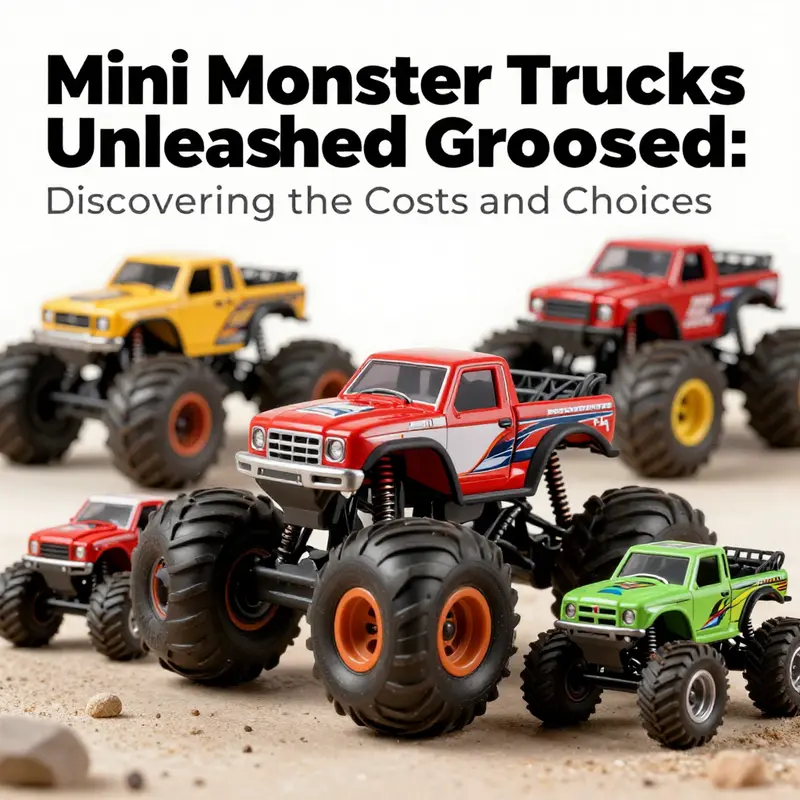
Whether you’re a small business owner looking for utility, a homeowner seeking recreational options, or an enthusiast passionate about mini trucks, understanding pricing is crucial. This guide dives into three main segments: pricing for mini RC monster trucks popular among hobbyists, collectible models that appeal to collectors, and full-sized mini dumper trucks designed for industrial tasks. Each chapter sheds light on the pricing specifics, helping you make informed choices.
Hobbyist Price Guide: What You’ll Pay for a Mini RC Monster Truck
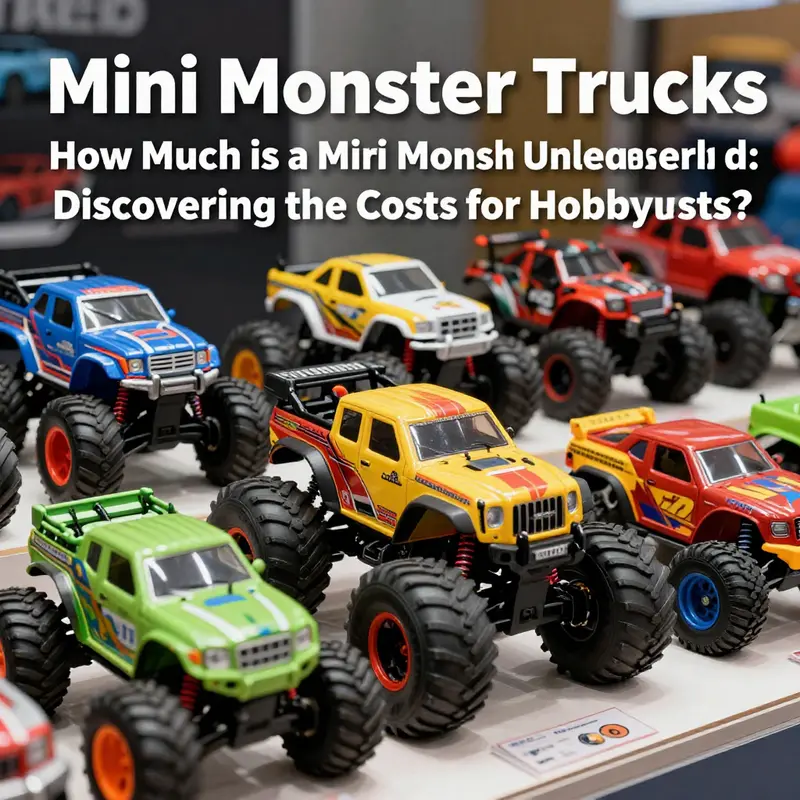
For hobbyists considering a mini RC monster truck, price is often the first practical question that shapes decisions. The market for mini RC monster trucks is straightforward compared with other tiers of the hobby. Most models aimed at casual users and entry-level enthusiasts cluster in an accessible price band, while more feature-rich versions creep upward. Understanding what drives those price differences helps you get the best value for the kind of play or tinkering you intend to do.
Most hobbyist mini RC monster trucks typically fall in a narrow range. At the time of the research, that sweet spot sits between roughly $19.98 and $29.99. Within this span you can find durable metal-bodied 1:64 scale models, kits with rechargeable batteries and basic remote controls, and small trucks designed to handle light off-road stunts. That means for a modest outlay you can own a model that offers surprising performance for its size—jumps, wheelies, and basic bashing—without a big investment.
Why do so many models sit in this price band? The factors are simple and repeatable. First, parts and materials: small-scale trucks benefit from economies of scale. Die-cast metal and ABS plastic are inexpensive in small parts runs, and electronics for basic radio control have become commoditized. Second, features: entry-level models focus on the essentials—motor, battery, a simple controller, and suspension tuned for fun rather than competition. Third, distribution: mass-market online retailers and hobby shops can price competitively because they move volume. Together, those elements keep many hobbyist models affordable.
Within the $20–$30 bracket you’ll find useful gradations of value. At the lower end you’ll see models that prioritize cost efficiency while still delivering robust play. They usually have straightforward brushed motors, basic single-cell rechargeable batteries often charged via USB-C or similar ports, and simple on/off controllers with limited range. These units are ideal for beginners, younger drivers, or anyone who wants a ready-to-run toy that can survive a few hard landings.
Move toward the higher end of the range and you start to notice tangible upgrades. Enhanced suspension, a better chassis design, metal components in high-stress areas, and longer-lasting batteries are common. Controllers may offer finer throttle and steering trim, and some packages include extras like trailers, additional bodies, or spare parts. These features don’t always turn a small-scale truck into a competitive racer, but they improve durability, handling, and the overall lifespan of the model.
Battery technology is one of the clearest differentiators in this class. Most mini hobby models are electric and use rechargeable lithium polymer or nickel-metal hydride cells. USB-C rechargeable setups are increasingly common in the newer units because they provide convenience and faster charging. Battery life in the mini class varies; a typical runtime of 10–20 minutes per charge is common for the $20–$30 models, with higher-end mini units sometimes stretching runtime and improving discharge stability. If longer sessions matter, look for models that ship with a higher-capacity cell or a replaceable battery so you can keep a spare charged and ready.
Performance expectations should be realistic: small trucks in this price range deliver surprising excitement but remain limited by size and power. They excel at park runs, backyard courses, and stunt-driving in confined spaces. You can expect fun jumps, controlled wheelies, and spirited runs across grass or packed dirt. However, they won’t match the torque, top speed, or climb capacity of larger-scale RC trucks. If your aim is hardcore rock crawling or competitive off-road racing, these mini models are best treated as fun, lower-risk practice pieces rather than primary competition vehicles.
Durability is another practical consideration. Many hobbyist mini trucks emphasize a balance between resilience and weight. Reinforced bumpers, oil-filled or spring suspension dampers, and metal drive shafts are features you may find as you approach the top of the range. Those small upgrades matter because crashes and tumbles are part of the fun. If you plan frequent rough use, prioritize models with replaceable parts and easy access to the drivetrain and electronics. The ability to swap a worn motor, replace a broken wheel, or fit a new body shell keeps the cost of ownership low over time.
Customization options and aftermarket support also influence the perceived value of a model. Even within this price bracket, some mini trucks are built on platforms that accept a range of upgrades: better tires, stronger motors, or improved suspension components. This makes them attractive to hobbyists who enjoy tinkering. If you lean toward modifying and upgrading, check whether parts are commonly available for the model you choose. A platform with active community support and spare parts availability will keep your truck on the track longer and save you from buying a completely new model after a major crash.
The controller and radio system matters more than many new buyers assume. Simpler models use basic proportional control, which is fine for casual driving. Better radios, though, give smoother steering and throttle response, and they often include adjustable trims to dial out irregularities in steering or throttle centering. In the $20–$30 range you can sometimes find improved radio gear that noticeably improves the driving experience. If a model’s controller feels jerky or unresponsive, your enjoyment will drop even if the truck itself is mechanically sound.
Value-conscious buyers should also consider bundled items and shipping costs. Many models hover near the $20 mark but add value through accessories—spare batteries, extra bodies, or small trailers that increase playtime. Free shipping thresholds can influence which retailer offers the best deal. For example, models that ship free over a minimum order amount become more economical if you plan to buy accessories or spare parts at the same time. Taking a slightly higher spend in a single order can deliver better overall value than buying the bare minimum.
A small but important note: gas-powered mini monster trucks exist but are rare at this scale and are costly to acquire and maintain. For hobbyists focused on minimal upkeep and immediate readiness, electric models are the pragmatic choice. They require less tuning, no fuel handling, and are quieter. For most hobbyists in the mini class, electric means lower long-term cost and simpler ownership.
Making a buying decision also benefits from comparing retailer policies. Warranties, return windows, and customer support vary. A slightly higher price at a reputable retailer with a solid return policy can be worth the extra dollars compared with the absolute cheapest listing. If you’re new to the hobby, the ability to return a defective unit or access parts through a dependable seller reduces risk and often saves money over time.
If you want examples of how small-scale RC review sites treat similar models, a hands-on review of a compact 1:10 platform helps illustrate performance expectations and typical upgrade paths. That kind of review highlights driving feel, suspension behavior, and the balance between factory settings and aftermarket modifications. For a comparative dive into platform behavior and upgrade paths, see this relevant review that discusses chassis dynamics and tuning options: FMS 1/10 FCX10 Range Rover review. This link provides context on how modest platform changes affect handling, which is directly useful when evaluating mini monster trucks at various price points.
Ultimately, the decision for hobbyists comes down to intended use and long-term goals. If you want a fun, ready-to-run model for casual stunts and occasional backyard runs, the $20–$30 range provides many solid choices. If you plan to learn, tinker, and gradually upgrade, prioritize a model with replaceable parts and a platform that supports aftermarket components. For those who prefer minimal fuss, search for units with USB rechargeable batteries and reliable controllers. If you aim for long session play, budget for an extra battery or a model with a higher-capacity cell.
One final practical tip: inspect reviews that focus on durability and user experience rather than marketing claims. Real-world feedback often reveals whether the suspension holds up, how long batteries truly last, and how easy it is to source replacement parts. Short-term savings can evaporate if a model requires frequent repairs or if spare parts are scarce. The modest premium on a well-supported model often pays for itself.
For quick reference, here’s a compact buying checklist to match needs with price: look for USB rechargeable batteries for convenience; prefer models with a spare-parts ecosystem for longevity; prioritize improved suspension and metal drive components if you expect rough use; and consider the controller’s responsiveness because it strongly affects driving enjoyment. Within the accessible $19.98 to $29.99 range, matching these priorities to your personal preferences will get you the best mini RC monster truck for your money.
External resource: For a current product listing and typical marketplace pricing in this category, see the product listing on the external retailer here: https://www.amazon.com/dp/B0CQZVYJXK
Tiny Titans, Big Valuations: The Price Landscape of Collectible Mini Monster Trucks
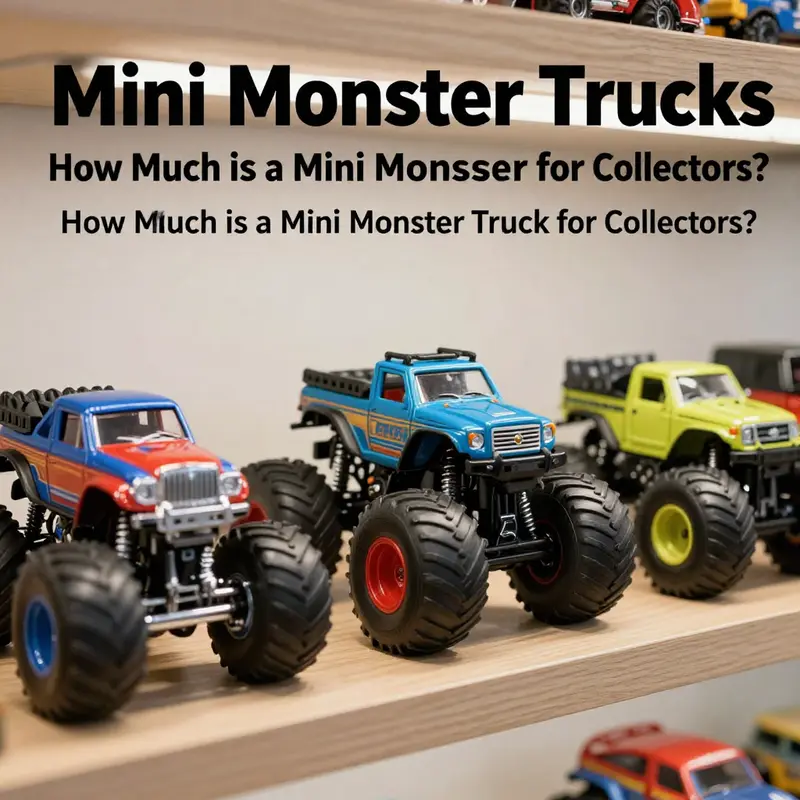
Collectors are drawn to the miniature world not merely for play, but for the precision of design, the nostalgia carried in die-cast hoods, and the sense that a tiny thing can carry a surprisingly large story. Within the broader landscape of mini vehicles, collectible mini monster trucks hold a special magnetic pull. They sit at a curious intersection of toy nostalgia, model-making craftsmanship, and a market that rewards rarity and presentation as much as it does the simple thrill of owning a tiny replica of a larger dream. When you ask how much a mini monster truck costs, you aren’t just asking for a price tag; you’re estimating a journey through scales, series, and the subtle rhythms of demand that inflect value in tiny, carefully engineered machines. The price you’ll encounter depends on the purpose of the item, the exact scale, the condition, and the licensing or branding that can lift a model from a mere trinket into a coveted object of display.\n\nIn the world of collectibles, scale matters more than it might at first appear. The standard for miniature trucks, especially those designed to evoke the iconic roar of the full-size machines, is often around 1:87. The appeal of this scale lies in its balance: the models are compact enough to be displayed in modest spaces, yet detailed enough to reveal careful paintwork, decals, and torsion-sprung wheels that mimic the real thing. The artistry involved in these tiny machines is nontrivial. Skilled mold makers and designers reproduce subtle curves, chrome highlights, and license-worthy graphics that collectors scrutinize under a loupe, seeking evidence of precision and a decision to invest in one model over another. For many buyers, the thrill is in discovering a version with a slightly rarer colorway, a variant that was released as a limited edition, or a packaging that’s nearly impossible to find intact in its original box. All of these elements accumulate into a price that is less about a fixed cost and more about the story a model tells on a display shelf.\n\nThe price spectrum for collectible mini monster trucks reflects this nuanced balance. A basic entry point in this segment can be described with a few familiar numbers: a modest five-pack from a well-known licensed line hovers around the mid-teens, while a more elaborate or highly detailed edition can push toward the higher end. If a five-pack is priced near $15 at retail, a complete sealed set—comprising a dozen distinct variants, for example—may carry a premium in the neighborhood of the $70s. These references capture a snapshot of the market as it resides in a typical online shopping cycle, where retailers and hobby shops position bundles to attract both casual buyers and serious collectors. The idea is not simply to buy a toy but to secure a curated slice of a broader storytelling ecosystem: the series, the season, the lineup. In practical terms, a collector might encounter a straightforward cluster of options: a five-pack priced around the $14.99 mark, a complete 12-pack set listed in sealed condition near $73.99, and individual blind bags that can swing in price depending on demand, rarity, and the exact year of release. The variability is not a glitch; it is a feature of a vibrant, collector-driven marketplace where completion, rarity, and freshness all contribute to what a model is worth on any given day.\n\nA key driver of price is rarity. In any collectible field, limited editions, year-long variations, or exclusive color schemes can command premiums. Tiny editions—whether produced in small runs or offered as a special release—toster the sense of exclusivity that collectors prize. When a model becomes part of a complete set, or when a particular variant exists only in a specific distribution channel, price can reflect the added value of completeness. Conversely, common variants, the ones that appear in more than one year, and the models that are widely available from multiple retailers typically settle into lower, steadier price bands. The result is a market where the same model can be affordable at one moment and jump in value the next, especially as collectors complete sets or seek out a rare piece to balance a display with something not seen in the open market for months.\n\nAnother dimension shaping price is condition. There is a spectrum from mint-in-box to loose and display-ready, and even within mint condition, packaging can tell a story. A pristine item in its original packaging—if the packaging itself is pristine and unblemished—can carry a premium. Conversely, a loose figure that has never been played with but shows signs of handling or storage might be priced more modestly, yet still desirable to buyers who prefer display pieces without the risk of damage to a delicate outer carton. In the logic of pricing, condition equals risk management. For a careful collector, the value of a model is not merely the plastic and paint; it includes the confidence that the piece will hold its appearance over time, especially when displayed in a well-lit cabinet where the box remains shielded from UV damage and humidity. These care considerations can push buyers toward collectors’ items that appear “like-new” or “near mint,” which, in turn, can justify a higher price point.\n\nThe pathway from a price point to a purchase is often navigated through a blend of channels. Retail marketplaces may offer new, unopened products with consistent pricing, while specialist toy stores and hobby shops may present curated selections that emphasize completeness, display quality, and packaging integrity. Auctions and resale platforms add another layer, where the luxury of time can open doors to better opportunities or conversely, accelerate a price spike when several bidders chase the same scarce item. The dynamic is further complicated by the seasonality of releases and the cadence of new series announcements. In some cycles, a fresh wave of mini monsters hits the market, and demand surges as collectors seek to stay ahead, to complete a subset, or to secure a version that embodies a particular era of the line. In other periods, the market steadies, and price movements become more predictable, allowing patient buyers to time their purchases to favorable windows.\n\nFor anyone new to collecting, a practical approach to pricing starts with establishing a transparent baseline. Begin with the straightforward question: what is the typical price for a single representative piece in your preferred scale and condition? A quick survey of what is currently offered in labeled sets versus loose items helps frame expectations. Take note of the spread between new-in-box items and those that are open or used for display. Also, consider bundle pricing versus single-item pricing. A five-pack, for example, might offer a per-piece value that is more attractive than purchasing the same models individually, depending on how the packaging is handled and whether the set includes any particularly rare variant. A complete sealed set often commands a premium, but the premium is tied to the perceived value of completeness rather than to the price of any single included model. In this sense, the decision to buy a complete set is both an aesthetic choice and a financial calculation.\n\nThe market’s appetite for these tiny machines also hinges on licensing and branding. A model that bears the look-and-feel of a widely recognized real-world counterpart can fetch a higher price than a generic miniature, even if the competition between different manufacturers yields similar levels of detail. Licensing adds a quality signal that buyers pay attention to; it can be a sign of authenticity and a cue that a model is part of a broader, officially sanctioned collection. Yet licensing can also constrain supply, especially if partnerships run on limited runs or exclusive distribution deals. The result is a cycle in which licensed designs that resonate with fans can become coveted items, while less distinctive offerings might remain affordable. For collectors, this trade-off between license prestige and price is a recurring theme, guiding decisions about whether to chase a rare variant or to curate a broader, more accessible display that tells a wider story.\n\nIf you are building a collection with display value in mind, the condition and the presentation of the package matter just as much as the model itself. A minty model with crisp paint, clean wheels, and a perfectly shaped canopy will usually outshine a similar model with slight scuffing or misalignment. The packaging’s condition becomes part of the artifact’s story, especially when the box includes a numbered edition, a certificate of authenticity, or branding elements that enhance the collector’s sense of provenance. The careful collector curates not only the models but also their surroundings: a cabinet with UV-filtering glass, controlled humidity, and soft lighting to emphasize the miniature’s shading and tiny decals. The rituals of care and display become part of the overall value equation, turning an ordinary shelf into a curated gallery. When you consider the long view, the price you pay for a single item can be weighed against the potential for future appreciation, the joy of display, and the satisfaction of completing a favorite series—an equilibrium that shifts with time and with the collector’s own priorities.\n\nIn the practical act of shopping, there are a few repeatable moves that help buyers make informed decisions without overpaying. First, cross-reference several sources before committing to a purchase. Prices can vary widely across retailers and platforms, and the same model can appear in multiple configurations or packaging variants. Second, check for completed listings on resale platforms to gauge what buyers have actually paid recently, rather than relying solely on asking prices. Third, verify the edition and packaging details when possible; distinguishing between a sealed set and a loose piece can be the deciding factor in price, and a single misalignment in the box or a crease in the cardboard can dramatically change value. Fourth, consider your own display goals. If your aim is to assemble a representative showroom of circa-early releases, you may value a broader set with a few key scarcity pieces; if your aim is a tightly curated display of favorites, you might prioritize a handful of high-quality vintages rather than chasing a long list of common variants. Each approach has its own price trajectory and its own sense of personal satisfaction.\n\nThe hobby also thrives on community, which gives buyers an implicit price floor: when a model becomes a topic of conversation, list price often stabilizes and can even rise as interest grows. Community platforms, forums, and dedicated collector sites become valuable resources for learning what to watch for—whether a particular colorway was distributed in a niche market, whether a given series included a variant with a rarely reproduced decal, or whether a packaging change signals a shift in release strategy. In these conversations, the philosophy of collecting often emerges: the value of a miniature model is not only in its object but in the narrative surrounding it—the story of how and why it was released, how it was perceived at launch, and how the community has embraced or debated it since. The story, in turn, informs price expectations and the confidence with which a buyer can approach a transaction.\n\nFor readers who want a practical touchstone, it helps to connect the numbers to everyday decisions. A five-pack around $14.99 represents an accessible entry point for a curious buyer who wants to sample a range of designs. A complete 12-pack sealed set around $73.99 represents a more ambitious goal for a collector who seeks breadth and cohesion in a single package. Individual blind bags, which can vary widely in price depending on availability and demand, offer flexible purchases that let a buyer grow a collection one piece at a time. These figures are not universal rules; they are markers along a path, giving you a sense of the market’s current rhythm and a framework to plan purchases without overextending. In the end, the price of a collectible mini monster truck is a conversation between your curiosity and the market’s response to that curiosity—the moment when a model becomes part of your personal display, rather than a mere entry on a shopping cart.\n\nAs you navigate this field, a few practical tips help translate price into value. Build a wishlist that prioritizes what matters most to you: is it a specific edition, a favorite color, the completeness of a set, or the packaging’s integrity? Track the price history of your top targets so you can spot genuine bargains and avoid sentimental overpayment. Don’t underestimate the value of learning from others; a quick scan of hobbyist blogs, collector marketplaces, and community wishlists can reveal patterns you might not notice on your own. And remember that the joy of collecting often grows with shared experiences: a display, a well-timed trade with another enthusiast, or a local show where you can handle pieces in person and compare them side by side. The tactile, social elements of collecting are as much a part of its value as the numerical price tag attached to any model.\n\nFor readers who want to explore more about the hobby and gain additional perspectives on buying strategies, consider visiting the community resource at minitrucksocala.com/blog/. This hub provides broader context about mini trucks, reviews, and collecting approaches that complement the price-focused lens of this chapter. The exchange between practical pricing and broader hobby knowledge helps transform a simple purchase into a meaningful entry point into a larger collecting journey.\n\nThe broader market for collectible mini monster trucks also invites reflection on what constitutes worth in miniature form. It is tempting to measure value purely in terms of market price, but many collectors derive deeper fulfillment from other aspects: whether the model’s design captured a sense of motion or era, whether the colorway evokes a particular season or event, or whether owning a piece feels like partaking in a living tradition of model-making and display. The nuanced valuation thus blends quantitative price with qualitative satisfaction. As you become more practiced, you begin to recognize that a model’s cost is a reflection of the story you want to tell with your shelf—the story of a hobby that thrives not on volume but on selective, thoughtful choices that reward careful eye and steady patience.\n\nIn closing, the price of a mini monster truck for collectors is not a single figure but a spectrum shaped by scale, rarity, condition, edition, and the story the piece carries. The numbers can guide you—an affordable entry, a mid-range set, or a coveted complete collection—but it is the alignment of your display goals, your budget discipline, and your tolerance for trade and negotiation that ultimately determines what you invest. The tiny machines hold enormous potential, both as objects of beauty and as gateways to a community that celebrates detail, memory, and shared passion. They turn small purchases into small rituals, and those rituals accumulate into the long arc of a collection that can be enjoyed for years to come. For the curious, the journey begins with a single piece, a patient eye, and a willingness to explore the balance between price and pride on a shelf that slowly grows into a landscape of micro-magnitude legends.\n\nExternal resource: https://www.amazon.com/dp/B0BQZJXWYR
From Toy to Tool: Pricing the Industrial Mini Monster—Understanding Full-Sized Mini Dumper Trucks
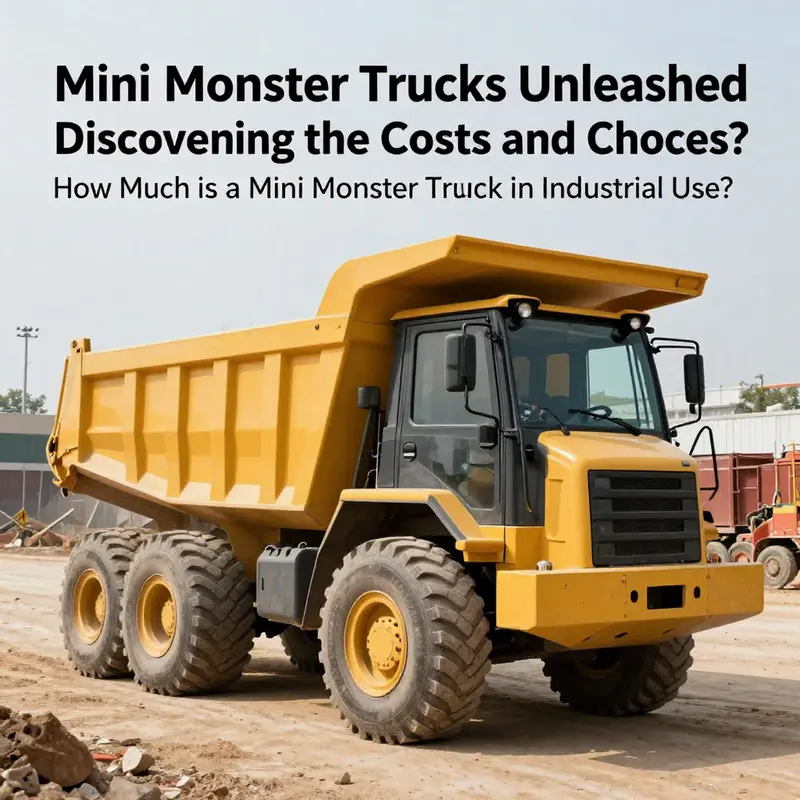
Prices for mini monster trucks cover a broad spectrum, from toy-grade RC models to full-sized, purpose-built industrial machines. When readers ask how much a mini monster truck costs, they are usually chasing a single number that fits a particular use. Yet in the industrial realm of miniature dumpers, price is less a single figure and more a function of need. The same logic that governs the cost of a compact forklift or a small site dumper applies here: the more you demand in durability, payload, control, and safety, the higher the price climbs. In this chapter we untangle those variables, focusing on the industrial segment where the term “mini dumper” refers not to a toy but to a compact machine designed to perform real material handling in constrained spaces. The goal is to illuminate how decisions about materials, powertrains, hydraulics, and work environment shape price, so readers can translate a rough budget into a configured unit that actually delivers on site. For broader perspectives on compact trucking topics, you can explore resources such as the Mini Trucks Blog, which offers context on how smaller platforms are evolving in various use cases. Mini Trucks Blog.
The price landscape you encounter for industrial mini dumpers is not published with the same clarity as consumer toys or collector models. Direct price listings for truly industrial variants tend to be guarded by suppliers, integrators, and manufacturers who tailor every unit to a specific plant, warehouse, or construction site. The most credible, practical range one can present from cross-industry observations suggests a base band that starts well above hobbyist toys and comfortable collectables, and stretches well into the five-figure territory as configurations grow more capable. A reasonable estimate, considering the balance of durability, payload, and basic automation features, places a single industrial mini dumper somewhere in the ballpark of roughly five thousand to twenty thousand U.S. dollars. The actual price, of course, hinges on the factors we’ll explore next, including materials, drive systems, dumping mechanisms, and the complexity of controls. It is important to emphasize that this range reflects a continuum rather than a single catalog price. Even within the same category, a unit ordered for a factory floor and one built for a warehousing operation can diverge substantially in price due to the intended duty cycle, duty cycle, and required resilience. In short, the dollar figure you see on a spec sheet is the product of a carefully balanced design brief tailored to a precise operational scenario.
To better understand what creates that price, imagine the core components that a compact industrial dumper must embody to be competitive in a real work environment. At the heart of any such machine is a robust chassis and frame designed to resist shock, torsion, and constant vibration. Unlike consumer-grade mini trucks, industrial variants rely on heavier gauge steel or reinforced composites, not only to support a cab or operator station but to absorb the bumps of a job site and the repetitive cycles of lifting and tipping. The frame must also accommodate a secure tipping mechanism that can safely elevate loads while preserving stability. The choice between metal frameworks and reinforced plastics is one of the first price levers. A steel frame adds a meaningful premium but delivers far greater resistance to fatigue, impact, and corrosion in harsh environments. In settings like factories with dusty atmospheres or outdoor work at construction sites, that cost premium often proves itself by reducing downtime and extending service life.
Powertrain decisions sit alongside structural choices as another major determinant of cost. The two dominant paths are electric drive and internal combustion, each with its own cost curve and lifecycle implications. An electric drive offers clean operation, lower maintenance in some respects, and straightforward integration with on-site power systems and charging infrastructure. It also requires battery packs that deliver enough energy for the planned shift length and duty cycle. Batteries add upfront cost, weight, and the potential for longer lead times if a project requires a specific chemistry, form factor, or cycle life. Diesel or gasoline powertrains, by contrast, deliver long-running capability with faster refueling options and widely available service networks, but they bring higher fuel costs, more noise, greater emissions, and sometimes more complex exhaust aftertreatment systems. Each choice ripples through to the price as well as the operation costs, including maintenance frequencies, spare parts availability, and the potential need for specialized technicians.
Then there is the hydraulic system—the real workhorse of a dumper’s efficiency. The pump, motor, and hydraulic cylinders must deliver reliable lifting and tilting under load, while maintaining predictable performance across temperature ranges and duty cycles. Hydraulic systems influence both price and reliability. A simple, low-flow configuration might reduce initial costs but could struggle with heavier payloads or faster dump cycles. A higher-capacity system, perhaps with redundant components or enhanced filtration, improves uptime and safety but adds to the upfront price. In practice, the machine’s performance envelope—how much it can carry, how quickly it can dump, and how consistently those operations occur—often drives the most meaningful gaps between one unit and another. Operators who need steady hills, awkward loading angles, or continuous operation in a warehouse or outdoor site will recognize the value of a robust hydraulic setup, and that preference is what helps push prices toward the upper end of the spectrum.
Another fundamental price factor is the control and safety package. Industrial mini dumpers require reliable operator interfaces: intuitive steering, responsive braking, clearly labeled controls, and robust safety interlocks to prevent unintended operation. In more sophisticated configurations, remote monitoring, telematics, and limited automation may be requested. Each added layer of control or alerting adds to the cost, but these features often pay for themselves in safety, efficiency, and traceability. The modern industrial environment rewards predictable, auditable performance. When a machine performs consistently, responds to operator input without lag, and provides service data to a central maintenance team, the value justifies the investment. Conversely, a spare-no-expense approach with minimal protective features can yield a lower upfront price but incur higher long-term costs through repairs, downtime, and faster wear. For managers and engineers, matching the control package to the site’s risk profile and workflow is not merely a matter of preference; it is a capital decision with a measurable return.
Tire and track configurations also swing the price dial. A compact dumper used on smooth warehouse floors can rely on lightweight, low-rolling-resistance tires designed for minimal wear and quiet operation. In outdoor or mixed-terrain settings, more rugged tires or even track options might be necessary to maintain traction and stability on variable surfaces. Such capabilities, while modestly increasing the purchase price, reduce the risk of job-site immobilization and accident-related costs. Then there are ancillary components—such as sway control, rollover protection, and cab enclosures—that enhance safety and operator comfort. Each of these touches has a price tag attached, but their value is measured not only in dollars saved but in the reliability and confidence they bring to day-to-day operations.
All of this matters not only for budgeting but for procurement strategy. Industrial buyers frequently work through a process that blends custom specification, supplier negotiation, and sometimes a staged implementation. One-off projects may justify a fully bespoke machine, which can command a higher price, because the unit is engineered from the ground up to fit a unique site geometry, load profile, or integration with existing material-handling systems. In contrast, a straight purchase of a standard spec unit can reduce lead times and bring the price down, but it may require the user to adapt their workflow to the machine’s capabilities rather than vice versa. The decision often hinges on the trade-off between a tailored fit and the speed of deployment. The market accommodates both paths, recognizing that a plant upgrading its internal logistics will weigh long-term gains against initial cost, whereas a contractor bidding on a short-term project might favor faster procurement and a simpler support plan.
The net effect of these considerations is that a buyer must interpret price as an invitation to a broader conversation about productivity, uptime, and total cost of ownership. A quoted price is not merely the sticker price; it is the starting point of a negotiation about how the machine will interact with the operator, the maintenance teams, and the facility’s power and loading profile. And while it’s tempting to generalize about a uniform price, the sensible approach is to map out the work cycle, the expected load, and the environment to identify which technologies deliver the right balance of reliability and price. In the real world, this means noting the planned shift lengths, the maximum payload, the climate and surface conditions, and the readiness of on-site maintenance capabilities. If a facility already maintains a fleet of similar machines, the incremental cost of upgrading or expanding can be significantly different from a greenfield installation where the entire maintenance ecosystem must be built up from scratch.
The price discourse is also influenced by the availability of financing, service contracts, and spare parts networks. In many regions, suppliers offer tiered service agreements that cover parts and labor for a defined period, with optional extensions. A good service contract can yield predictable annual costs and reduce the risk of unexpected downtime, which has value that should be factored into the economic equation. Spare parts availability, lead times for critical components, and the ease of sourcing common consumables all contribute to the total cost of ownership. In an industrial setting, downtime is not a mere inconvenience; it is a direct line item on the balance sheet. A less reliable machine might save a few thousand dollars upfront but could cost tens of thousands more over a three- to five-year horizon if it frequently fails to perform when needed. Conversely, a higher upfront investment in durability, easier maintenance, and a robust support network can translate into a lower long-term expenditure and steadier production lines.
As readers contemplate the price of a mini dump trailer or dumper, they should also consider the broader ecosystem into which it will integrate. Will it be charged via a dedicated charging station in the facility, or will the jobsite rely on portable batteries and quick top-ups? How will maintenance be scheduled—through an in-house team or a contracted provider? Are there regulatory requirements around emissions, noise, or operator protection that are non-negotiable? The answers to these questions influence not only the choice of machine but also the safe, practical cost of ownership. For example, if a plant requires a unit to operate inside a loud, enclosed space, the operator’s cabin design, sound attenuation, and vibration isolation may be essential, adding to the price but reducing fatigue and increasing output over long shifts. On the other hand, a simple outdoor-use model without extensive safety features might be cheaper but would demand stricter controls to protect workers and ensure regulatory compliance.
For those seeking external references on current offerings and price ranges in related segments, industry catalogs and supplier directories provide a window into what is feasible in the market. The practical takeaway is to recognize that a single figure can never capture the complexity of industrial mini dumpers. Instead, practitioners should look for evidence of a well-mocumented performance envelope that aligns with the site’s duties, available maintenance resources, and budget constraints. When a project specifies a maximum payload, the required hydraulic stroke, and the desired tipping angle, the price must adjust to meet those specifications while still delivering reliable uptime. And that is where the initial conversation about cost matures into a curated specification—one that translates site requirements into a machine profile and a corresponding, defendable price.
In closing, the journey from toy to tool in the mini dumper arena is not a straight line but a spectrum with clear inflection points. The most important message for anyone budgeting for industrial use is to treat price as a signal about capability and resilience, not as a fixed barrier. The final price will reflect whether the machine is intended to handle light, short-duty tasks on smooth surfaces, or whether it must operate with consistent reliability across challenging conditions, up to its rated payload and duty cycle. For exact quotes, the best path is direct engagement with suppliers who can translate a job description into a bill of materials, a lead-time estimate, and a formal price. They can also attach specific service terms and any integration work required with existing plant systems. And as a practical barometer, keep the rough range of five to twenty thousand dollars in mind as a starting point, knowing that the actual figure will sit somewhere within or above that band depending on the configuration, durability, and the scope of the project. If you are evaluating a single-unit purchase or a multi-unit deployment, it is worth documenting the target performance, allowed downtime, and the maintenance strategy early in the process. This approach turns a rough price into a reliable forecast that supports procurement, budgeting, and a successful rollout.
External resource for additional context on industrial mini dumpers in varied settings can be found here: https://www.industrialtruck.com/mini-dumpers
Final thoughts
In summary, mini monster trucks cater to a broad spectrum of interests—whether for leisure or practical applications. Understanding the price ranges can greatly assist not only hobbyists but also collectors and professionals in the industry. By recognizing what each type of mini monster truck offers, you can confidently choose the right one to add to your collection, enjoyment, or work fleet.