

If you’ve been eyeing a mini truck for your business, personal use, or as a hobbyist, you’re likely curious about what they cost today. The price of mini trucks can vary greatly based on factors like fuel type, manufacturer, model features, and load capacity. This article guides you through the current pricing landscape of mini trucks, breaking it down into specific segments: electric models, diesel variants, small-scale options for new buyers, and a comparative analysis of different brands. By the end, you’ll have a comprehensive understanding of how much a mini truck really costs and which one is the best fit for you.
Electric Mini Trucks: True Costs and What Drives the Price Tag
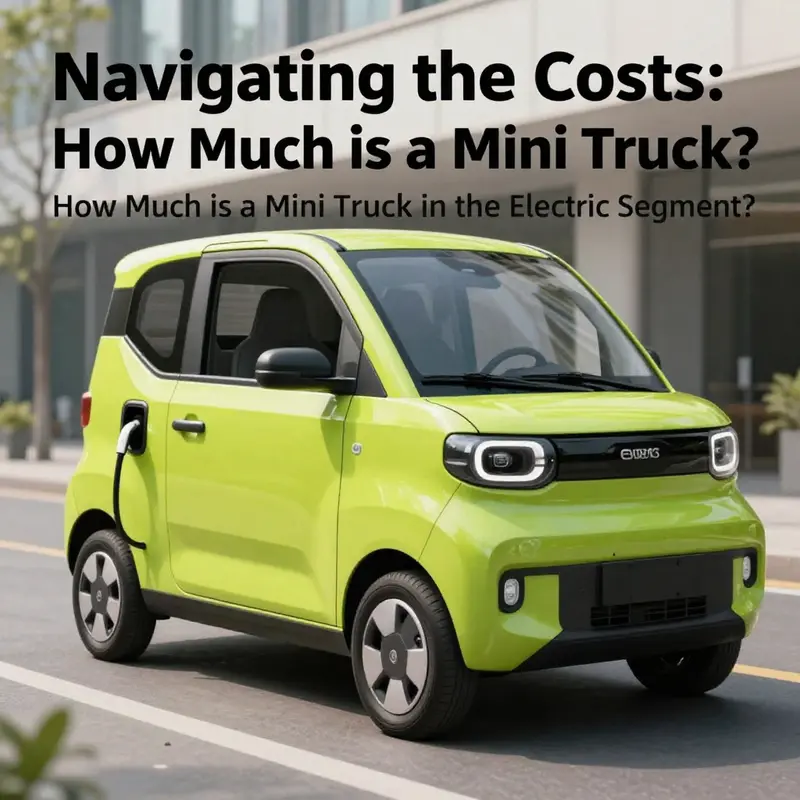
Electric mini trucks have reshaped the question of “how much is a mini truck” by adding a wide spread of prices and value propositions. Instead of a single number, the electric segment presents a spectrum that ranges from ultra-budget city haulers to premium, feature-packed commercial vehicles. Understanding that spread requires looking beyond sticker price. You need to match use case, range needs, battery specification, payload capability, after-sales support, and local regulations to the upfront cost to see the real value.
At the low end are compact urban utility vehicles built for short trips and light loads. These models target last-mile delivery, small business errands, and campus operations. Their hardware is pared down: small battery packs, modest electric motors, minimal cabin amenities, and simplified chassis. The result is a low entry price that makes them accessible for micro-fleets and independent operators. For buyers focused on short daily routes and low carrying demands, these units can cover operating costs with savings on fuel and simplified maintenance. But the bargain comes with trade-offs: limited driving range per charge, modest top speeds, and reduced payload capacity compared with larger mini trucks.
Mid-range electric mini trucks offer a more balanced profile. They increase battery capacity and motor output and often provide options like refrigerated cargo boxes, longer wheelbases, or improved suspension. These units are common among small businesses that need dependable daily range and the flexibility to handle heavier loads. The additional cost at this level typically reflects a larger battery, better integration of power electronics, and more robust chassis components. The appeal is clear: a higher upfront price still often equates to lower lifetime operating expense than a comparable diesel variant, thanks to cheaper per-mile energy costs and fewer moving parts to maintain.
At the premium end are electric mini trucks aimed at demanding commercial missions or buyers who want higher performance and optional features. These models may include larger battery packs that extend range substantially, faster charging capability, reinforced frames for heavier payloads, and specialized bodies such as refrigerated units or service-platform configurations. They can be equipped with more comfortable cabins and better insulation, and they often benefit from stronger supply-chain integration and warranty offerings. The premium price reflects these upgraded components plus the engineering required to make an electric vehicle behave like a workhorse across varied conditions.
Several market factors determine the price within this range. Battery technology is the single largest component of cost. Battery size, chemistry, and supplier agreements define the baseline. Smaller batteries reduce cost but also limit range and payload options. Conversely, higher energy density and premium battery management systems lift the price but improve usable range and longevity. Powertrain design—motor strength, inverter quality, and drivetrain durability—also plays a major role. A higher-rated motor gives better hill-climbing and load-hauling capability and typically commands a higher price.
Manufacturing origin and regional supply chains influence cost as well. Vehicles produced in regions with mature battery recycling infrastructure and established component networks tend to be more cost-competitive. This advantage shows up in business-to-business sourcing channels. When suppliers consolidate logistics, guarantee parts availability, and streamline assembly, the savings pass through to the buyer. Conversely, markets with limited parts supply or higher import taxes will push final prices upward. Local incentives or regulations can also tilt the effective cost. Incentives that reduce purchase price or operating expenses make certain electric mini trucks economically attractive, widening the effective market for higher-priced models.
Total cost of ownership is where the electric segment often makes the strongest case. Lower energy costs per mile, simplified drivetrains, and reduced routine maintenance can offset the higher initial investment over time. For fleet buyers, predictable energy consumption and centralized charging strategies reduce labor and downtime. Even a small mini truck that looks inexpensive at purchase can become expensive to run if charging infrastructure is inadequate or if local maintenance expertise is scarce. Conversely, a slightly higher initial outlay for a model with better range and support can deliver lower lifetime costs and less operational friction.
Customization needs further complicate the buying decision. Many commercial buyers require factory or post-factory modifications—insulated cargo boxes, refrigeration units, tool storage, or lift gates. These adaptations raise the price and must be factored into budgeting. If customization is done by reputable suppliers and integrated at the factory level, the added cost buys reliability and warranty coverage. Aftermarket modifications may seem cheaper but can create integration issues and void warranties. Thus, the total purchase plan should include both the vehicle base price and the likely costs of any required modifications.
Resale value and durability expectations differ across the price spectrum. Lower-cost electric mini trucks often serve predictable, light-duty cycles and can maintain reasonable resale value within local secondary markets. Higher-tier models, built with stronger components and better warranties, may retain value better across longer service lives, especially when they serve specialized commercial sectors like refrigerated delivery. Buyers who plan to trade vehicles frequently should weigh how quickly their chosen model depreciates in their local market.
For buyers exploring options, a practical approach is to map cost against mission profile. Define daily range, typical payload, required body type, and whether fast charging or refrigeration are essential. Once these needs are clear, compare three tiers: entry-level, balanced mid-range, and premium. Consider lifecycle costs—energy, maintenance, downtime—and factor in expected government incentives. This exercise often reveals that the cheapest upfront option is not the lowest cost over ownership.
Supply relationships matter. Purchasing through established B2B channels in regions with robust supplier networks can reduce costs and improve reliability. A strong supplier network can offer spare parts, technical support, and battery recycling solutions, which becomes critical as fleets grow. When comparing quotes, ask about battery warranty terms, expected battery life in cycles or years, and the availability of local service centers. These details often differentiate an economical choice from a risky one.
Finally, keep an eye on market dynamics. As manufacturing scales and battery costs continue to evolve, price bands shift. New entrants focus on lower-cost city models, while established suppliers refine mid- and high-tier offerings. Innovations in battery chemistry, modular designs, and second-life battery programs keep changing the balance between upfront price and long-term value. For those asking “how much is a mini truck” in the electric segment, the honest answer is: it depends on mission and total cost over time. Many buyers find that a mid-range electric mini truck delivers the best compromise between purchase price and operational economy, but there remains a place for both ultra-affordable units and feature-rich premium models depending on specific needs.
For practical next steps, compare costs from multiple suppliers, prioritize warranty and service access, and model expected energy and maintenance spend across the vehicle’s life. If you want to explore real-world model comparisons and features for small electric platforms, check this detailed comparison of models and specs for useful reference: comparing-kingstar-kruzr-models-specs-features. For a direct source on specification ranges and factory offerings, consult the external manufacturer’s product page here: https://www.dfsk.com.cn/vehicles/ec31
Diesel Mini Trucks: Navigating Price, Power, and Practicality in the Diesel Category

When people ask how much a mini truck costs in the diesel category, they are really asking two things at once: what level of capability they need and how much money they are prepared to invest to get it. The diesel mini truck market is a price spectrum that expands with engine power, drivetrain configuration, payload capacity, and the level of specialization required for the job. In fresh-market data from 2025–2026, a clear pattern emerges. At the entry end, lean, two-ton class machines with a simple 4×2 layout sit in a tight band around nine thousand dollars, give or take a few hundred, with a minimum order quantity that pushes suppliers to offer a better per-unit price. These basic models are designed for light freight and city deliveries, where reliability and low operating costs trump fancy features.
But the story shifts quickly as specifications grow more demanding. A standard diesel cargo van in a box-truck form with 4×2 drive and basic refrigeration can push the price substantially higher when ordered in larger quantities. For such configurations, the price typically begins near seventeen thousand dollars for bulk orders of fifty units or more, and it may land closer to sixteen thousand per unit when the order size increases. Smaller orders—those under a handful of units—tend to hover around seventeen and a half thousand. The delta here is driven not merely by the chassis or the cargo area, but by the value-adds that turn a simple transport vehicle into a controlled-environment workhorse, capable of maintaining cold goods or protecting sensitive cargo during transit. When you plan for a fleet, the economics shift from a one-off purchase to a procurement exercise, where the unit price is only one line in a longer equation that includes service, spare parts, and depreciation.
Beyond the 4×2 box van, the diesel segment broadens into higher-performance models that are built for tougher jobs and harsher environments. A 4×4 diesel pickup, for instance, can begin around twenty-four thousand dollars when purchased in bulk (ten or more units). This price reflects the added capabilities of all-wheel traction, improved ground clearance, and often a more robust braking system. For even more power and payload, a 6×4 light cargo truck with substantial horsepower typically ranges from about thirty-three thousand eight hundred to thirty-six thousand dollars per unit, depending on the exact torque curve, transmission choice, and bodywork. In the most demanding spectrum, a heavy-duty niche product such as a high-horsepower 6×4 or larger chassis used for specialized hauling can climb toward the mid-thirties to low forties in unit price, with higher capacities and more resilient components driving the cost. A flagship example in this tier, a diesel dump truck adapted for construction and heavy-duty hauling, can push well past the thirty-eight thousand-dollar mark; such vehicles are built to endure tough work cycles and carry significant loads with a degree of durability that justifies the investment for the right fleet and project timeline.
Another tier in this market is the specialized or luxury end, which includes diesel-powered micro-buses or passenger shuttles built for service provision. These are not typical delivery or utility trucks; they are designed to move people with comfort, reliability, and broader service life in mind. Price bands in this area can range from about forty-one thousand two hundred dollars up to forty-six thousand two hundred dollars per unit, depending on seating capacity, diesel engine tuning, interior amenities, and the rigidity of the chassis exposed to daily service pressures. This is where the price tags reflect not only drivetrain capability but also the kind of service network, warranty coverage, and aftercare a buyer expects for passenger transport. Taken together, the diesel mini truck market presents an expansive price landscape—from roughly nine thousand dollars for the bare-bones two-ton entry to nearly fifty thousand dollars for highly specialized passenger or heavy-haul configurations. The exact figure for any given purchase is shaped by the choices around engine power, drivetrain layout, payload capacity, refrigeration or cooling capabilities, and the bodywork that completes the vehicle for its intended use.
To understand what drives these figures, it helps to think about the total cost of ownership alongside the sticker price. Volume discounts are a decisive driver in the diesel segment, where buying ten or more units often trims the unit price by several thousand dollars compared with a smaller order. The drivetrain—whether a straightforward 4×2 or a more complex 6×4—dictates not only the initial outlay but ongoing maintenance costs, fuel efficiency, and downtime during repairs. The choice of refrigeration equipment, cargo-box design, and cargo securing features can push the price up even when the base chassis is relatively modest. If a fleet needs to operate across longer routes, in colder climates, or with sensitive perishables, the additional investment in climate control and insulation becomes a practical necessity, not just a luxury, and that translates into a higher per-unit price that is still cost-effective when viewed through the lens of reliability and service continuity.
Region plays a nontrivial role as well. Exchange rates, import tariffs, local tax structures, and the availability of spare parts all feed into the final price. When a buyer orders in bulk, the supplier often negotiates the landed cost—delivering not just the vehicle but also the import clearance, freight, and initial service package—into a single, predictable per-unit figure. Conversely, smaller orders or orders placed in regions with weaker dealer networks can yield higher per-unit costs because of higher logistics, more limited volume discounts, and the need to pay a premium for after-sales support, spare parts, and technician training. All of this means that the same mechanical platform can have different price implications depending on where the purchase is made and how the after-sales ecosystem is structured. The upshot is that price is a function of both engineering and economics: the hardware that moves freight, and the system that keeps it on the road and productive.
For anyone shopping in this space, the practical takeaway is straightforward. Start by defining the job profile: what is the required payload, the expected daily mileage, the typical terrain, and whether cargo integrity needs climate control. Then translate those requirements into a configuration: 4×2 or 4×4, box dimensions, refrigeration if needed, and the choke points where downtime would hurt margins. From there, request quotes for multiple configurations and quantities, and push for a breakdown of line-item costs—engine, transmission, chassis, bodywork, and any optional equipment. Don’t overlook the value of a strong service network and readily available spare parts; these factors often determine the long-term cost of ownership far more than a modest difference in the initial sticker price. If you’re curious about the latest market chatter and model comparisons, you can explore broader discussions on the Mini Trucks Blog, which helps buyers interpret price signals in a crowded market and align their choices with real-world usage. Mini Trucks Blog. For further context on procurement landscapes and current quotations, real-time listings on major marketplaces can be instructive, such as platforms that aggregate direct supplier quotes and enable bulk pricing negotiations. A practical starting point for broad-market diligence is to review live quotations and supplier profiles on widely used regional marketplaces, where you can compare configurations and discount structures across multiple vendors. External industry marketplaces also publish guidance on how to interpret manufacturer offerings, warranties, and post-sale support, which can significantly influence the total cost of ownership over the vehicle’s life cycle. As you map out your budget, remember that the lowest upfront price rarely captures the full picture; the value you gain from durable build quality, consistent spare parts availability, and a dependable service network often proves more important than the price tag alone. In other words, cost efficiency in the diesel mini truck arena is a balance between initial investment and long-term performance, and the right balance depends on the scale of your operation and the reliability you require from your fleet over its service life. For those who want to see how the conversation unfolds in real-world market content, the broader industry dialogue in the linked resource pool can be illuminating as you compare options and plan a purchase that aligns with operational realities rather than one-off promotions.
To keep the conversation grounded, it helps to keep a practical frame on the numbers and the needs they’re intended to meet. If your operation demands frequent loading and unloading, you’ll likely lean toward a 4×4 or a 6×4 layout with a robust payload and durable chassis. If your primary concern is transporting perishable goods under controlled conditions, a 4×2 with refrigeration remains a sensible choice, albeit with higher unit costs than a basic cargo body. If your plans involve servicing rough terrain, hills, or uneven surfaces, the extra traction and power of a 4×4 setup may justify the premium, especially in regions where road quality is inconsistent or weather events are common. The bottom line is that price is not a standalone proxy for value in this space; it’s a signal that helps you size up how well a given configuration aligns with the realities of your daily workload and maintenance expectations.
Finally, prospective buyers should approach the diesel mini truck market with a structured evaluation framework. Start with a clear payload target and a sense of how many trips per day your fleet will typically run. Then decide on climate-control needs, toolboxes or crane-ready bodies, and any specialized equipment that would affect the price. Gather multiple supplier quotations and insist on a transparent bill of materials and a warranty package. Assess not only the price per unit but the anticipated total cost of ownership, including fuel consumption patterns, maintenance costs, and potential downtime. Price guidance from recent market data suggests a broad corridor—from about $9,000 for a lean, basic 2-ton, 4×2 entry model to roughly $46,000 for highly specialized or heavy-haul configurations—reflecting the wide range of capabilities and the different workloads these machines are designed to support. In a market where such a range exists, the most prudent purchase decisions come from a thorough assessment of how the vehicle’s capabilities map to the job and how the supplier’s service footprint supports a predictable, low-disruption operation. External resources can provide additional context about current quotations and supplier ecosystems: for direct quotations and procurement context, see a broad online marketplace such as https://www.alibaba.com. This external reference helps buyers gauge regional price differentials and supplier incentives beyond the price tag itself.
Pricing the Pocket-Sized Hauler: A Real-World Guide to How Much a Mini Truck Really Costs
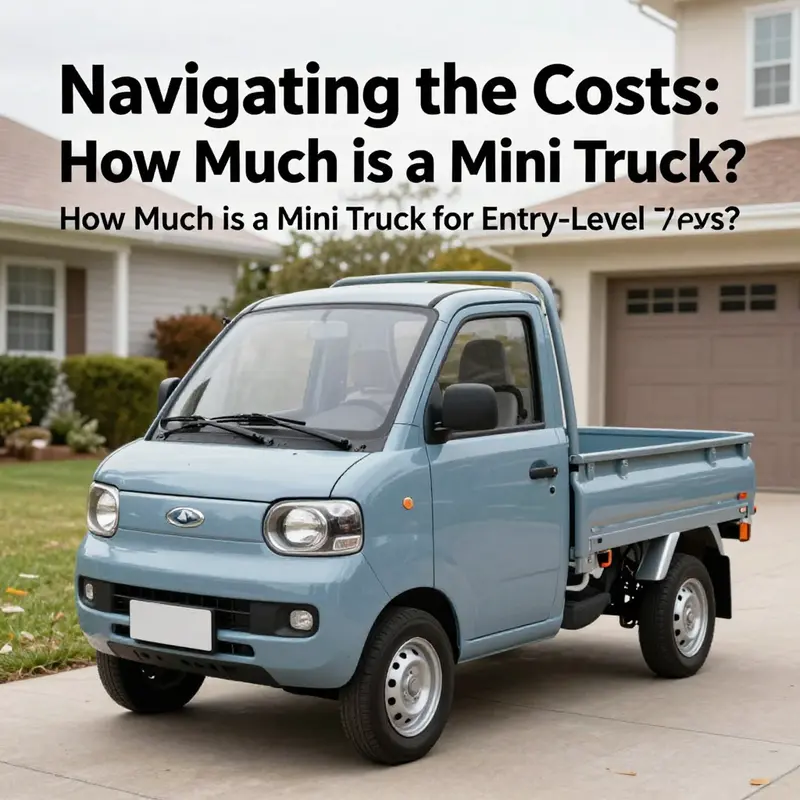
When you ask how much a mini truck costs, you’re really asking how a small, capable carrier fits into a budget. The sticker price is only one line in a longer story about value, operating costs, and the practicalities of doing more with less. In markets that have explored micro-hybrid deliveries, rural errands, and urban moves, the price of a mini truck has grown more nuanced than a single numeral. It reflects choices about powertrain, payload, build quality, and the kind of support a buyer expects from a dealer network. As of the 2025–2026 window, buyers have seen wide spreads—from a few thousand dollars for pared-back, entry-level models to well into the tens of thousands for more capable or feature-rich configurations. The result is a spectrum that invites careful consideration rather than a reflex purchase, especially for first-time buyers who are trying to quantify total cost of ownership as much as sticker price.
To understand where those numbers come from, it helps to map the landscape along a few dimensions: propulsion, payload, and regional economics. Propulsion is the most conspicuous divider. Gasoline-powered mini trucks in the cheaper tier are often the most familiar to buyers who value straightforward maintenance and widespread service networks. The price band typically starts around the mid four-thousands in USD and can rise into the lower six-thousands, depending on the exact engine displacement, cab configuration, and permissible payload. In many urban and semi-urban markets, these basics are enough for light-duty hauling, local deliveries, and personal use where cargo volume is modest and trips are short. They also tend to be the simplest to finance, the easiest to insure, and the most forgiving when it comes to resale value in markets where used prices for larger trucks have swung with fuel costs.
Electric mini trucks, by contrast, enter the scene with a different calculus. Their upfront price can be modest compared with full-sized electric trucks, yet they still carry premium features that push the price higher. The most affordable base electric mini models often land around the mid-threes to the mid-fives in USD for those who prioritize economy and urban maneuverability. The appeal is not only the lower per-kilometer energy cost but also the potential for incentives, rebates, and lower maintenance expenses over time. When you add range, payload capacity, and modern driver-assistance features into the mix, the price ladder climbs, and it can climb quickly. A broader range of electrified options can exist—from minimal-load configurations designed for short-range shuttle services to more sophisticated platforms that expand the payload and extend range toward the upper end of the category. In some markets, incentives funded by government programs or local energy initiatives can meaningfully narrow the difference between gasoline and electric options, making the economics of EVs more compelling for small businesses and first-time buyers alike.
Another factor that influences price is the overall build quality and configuration. In the lower end of the spectrum, you’ll find models that emphasize simplicity: compact cabins, basic instrumentation, small engines or compact electric motors, and limited feature sets. These packages deliver utility with minimal frills, and their straightforward design often means lower maintenance costs and predictable repair needs. In contrast, mid-range and higher-end mini trucks bring more robust suspensions, larger cabins, better insulation, upgraded infotainment systems, and improved load management options. They may offer enhanced payload ratings, better braking systems, or advanced driver-assistance features that can reduce the risk of damage during daily operations. Yet these upgrades come at a price, and the incremental cost may be justified only for buyers who need the extra resilience for daily commercial use or who anticipate a longer ownership horizon.
Regional differences compound the picture. In some countries, the cost of a mini truck reflects currency movements, import duties, and local tax structures more than the mere sticker price. In others, there are aggressive local assembly programs that keep the delivered price lower than a straightforward import would suggest. The regional mix can also influence the balance between gasoline and electric variants. Urban policy and environmental programs can tilt incentives toward EVs, prompting buyers to weigh upfront price against long-term energy and maintenance savings. The result is a pricing ecosystem that rewards buyers who take a longer view of the ownership period and who can forecast operating patterns, including typical daily mileage, load weights, and return on investment from improved efficiency.
For the typical entry-level buyer, the arithmetic starts with a practical evaluation of mission. A small business that runs multiple short trips in a city with predictable routes may find that lower upfront costs and ease of service trump features that would matter far less in the real world. A single day’s work can be a strong benchmark: if the vehicle replaces several trips previously made by a larger van, the efficiency gains and reduced fuel spend could justify a higher upfront outlay. Conversely, a private user who only needs occasional assistance with moving, loading a few boxes, or running light errands may be well served by the least expensive gasoline option, particularly if they value proven reliability and simplicity over long-term energy savings.
The used market adds another layer of complexity. For buyers seeking the sharpest price, a well-maintained second-hand mini truck can be appealing. The reason is simple: depreciation on these compact workhorses tends to be steep in the first few years, after which the decline slows. A used model can offer substantial value if the mileage is reasonable and the vehicle has undergone regular maintenance. However, condition and mileage become critical due diligence factors. Prospective buyers should look beyond the sticker price to evaluate the state of the drivetrain, battery health for EVs, brake wear, suspension condition, and the overall integrity of the cargo bed and body panels. The risk-reward balance shifts toward careful inspection and, ideally, a service history that documents tire replacements, brake servicing, and any major components that were replaced or rebuilt.
If you’re navigating this landscape for the first time, it’s worth anchoring expectations to a broad price range rather than a fixed figure. A practical window for entry-level buyers can be roughly from around three thousand dollars to over twelve thousand dollars, depending on the combination of propulsion, payload, and configuration. Within that window, the majority of basic gasoline variants land toward the lower end, while entry-level electric options cluster near the middle as incentives exist to make them appealing in dense urban contexts. The used market typically places older gasoline variants in the lower tier while earlier EVs—with limited range—may also appear at attractive prices if buyers are comfortable with reduced range and technology from a prior generation. The exact numbers will vary by country and currency, of course, but the pattern holds across markets: the more capability you require, the deeper you will need to reach into the pocket.
A poignant aspect of this pricing story is the ongoing evolution of total ownership costs. It is not enough to compare sticker prices in isolation. Buyers should consider fuel costs, maintenance, insurance, licensing, taxes, and potential resale value. Even within a single country, a compact truck that runs on electricity often offers lower operating costs per mile, provided the buyer can take advantage of an available incentive structure and if the local energy price aligns with efficiency gains. For a business, the math includes downtime costs, cargo handling efficiency, and the reliability of the vehicle in daily tasks. A longer-term perspective can reveal a different kind of value: a higher upfront investment in a better-built, more capable platform may pay off in the form of fewer repairs, more predictable uptime, and sustained resale value when the time comes to upgrade.
The decision-making process for a first-time buyer is also shaped by financing options and the maturity of the local market. Lenders often weigh the vehicle’s residual value, expected maintenance costs, and the borrower’s cash flow. A small business with steady receipts and predictable routes may secure favorable financing terms when the asset aligns with a known work pattern. For individuals, pay-as-you-go or basic loan structures can keep monthly commitments manageable, especially when the vehicle serves a specific purpose and the buyer does not anticipate an escalation of duties over time. It is here that incentives, whether from government programs or local authorities aiming to spur greener logistics, can tilt a consumer toward an electric option even if the upfront sticker price appears less favorable.
For readers seeking a practical snapshot and ongoing updates on the state of entry-level mini trucks, the community and market watcher resources can provide useful context. A reliable place to start is a practical hub that aggregates perspectives from buyers and dealers, offering real-world anecdotes about what people actually pay and how those costs translate into day-to-day usage. This kind of resource helps bridge the gap between theoretical pricing and lived experience, illustrating how a minimal cargo footprint can still deliver meaningful value in the right conditions. You can explore that resource here: Minitrucks OCala blog.
Beyond the immediate sticker price and the surrounding incentives, it helps to think about how you will use the truck across seasons and business cycles. A city-delivery workflow with frequent short hops is different from a rural haul that demands robustness and a longer duty cycle. The first scenario leans toward a nimble, efficient electric model with a modest payload, where the cost of electricity and rapid charging may be the dominant variable. The second scenario may favor a gasoline-powered or a more rugged electric platform with a larger payload and more familiar service networks, where maintenance intervals and spare parts availability become the critical factors. In some markets, the consumer’s preferred balance—cost today versus cost tomorrow—determines whether a more expensive, higher-feature unit is worth the premium.
As with any growing category, buyers should also consider the ecosystem around the vehicle. A compact truck is not a standalone asset; it integrates with a business’s logistics software, service partners, and the broader fleet. If a buyer relies on a dealer network for rapid maintenance, clear supply of spare parts, and straightforward warranty coverage, the value of that ecosystem can exceed the difference in sticker price between two otherwise similar models. The same logic applies to training and onboarding: a vehicle that is easy to operate and repair lowers the barriers to adoption for new users and helps a small operation scale more quickly with fewer disruptions. In short, the cheapest option on paper may not remain the most economical choice once you factor in downtime, service complexity, and the time value of money over the life of the vehicle.
In wrapping the practicalities together, consider the range of prices as a spectrum rather than a single figure. For an entry-level buyer, you can expect a broad band—often cited as roughly from three thousand to twelve thousand USD, influenced by engine type, payload capacity, cab features, and the presence or absence of modern conveniences. The electrification trend adds a different flavor to the pricing mix, one that can tilt toward higher upfront costs but with potential savings on fuel and maintenance that may accumulate quickly in the right operating environment. In every case, the decisive questions are not just what you can spend now, but what you will spend over the vehicle’s life, and how well the purchase aligns with your intended use, your access to incentives, and your capacity to maintain uptime.
For readers who want to deepen their understanding of regional price dynamics and current market nudges, the broader market picture is still developing. The January 2026 market analysis offers a snapshot of how different regions are balancing cost, capability, and incentives, and it highlights the variability buyers should anticipate when crossing borders or comparing urban versus rural deployments. For those who are curious about the latest regional nuances and the direction of future price movements, consult the external market report linked here: https://www.chinaautosales.com/reports/mini-truck-market-trends-january-2026. This reference provides context about how a major market is navigating the same questions that shape prices worldwide: what does a small but capable work vehicle cost today, and how will policy, energy prices, and supply chains influence that cost tomorrow?
To tie the discussion back to everyday decision-making, it is helpful to view price as part of a broader package of fit and function. The smallest, simplest gasoline mini trucks can be a compelling entry point for buyers with tight budgets and modest duties. Electric variants invite a different calculus, one where upfront premium and long-term energy savings converge—provided the buyer’s operating pattern and the local incentive framework align. Used models add further flexibility, offering experienced buyers a risk-adjusted path toward ownership, albeit with careful inspection to verify condition and remaining service life. The bottom line is that a mini truck is not a single price tag; it is a constellation of trade-offs—between cost, capability, and the intangible asset of reliability—that each buyer must weigh in the context of their own needs and market realities. The more honestly you map your usage, the more precise your estimate will become, and the more effectively you can navigate the pricing terrain without overpaying for features you will never use.
Price Profiles and Practical Choices: What a Mini Truck Really Costs Across Types and Markets

Understanding the price landscape for mini trucks requires more than glancing at sticker numbers. These compact commercial vehicles span a wide spectrum—from bare-bones work rigs built to move light payloads around dense city streets, to feature-rich electric micro vans designed for longer ranges and modern fleet integration. Price differences reflect that variety, and sensible buying decisions come from matching real needs to the right configuration rather than chasing the lowest number on a spec sheet.
A clear way to frame the market is to separate vehicles by powertrain and purpose. On one end are small internal-combustion utility vans and light flatbeds that prioritize payload and simple mechanics. On the other are electric micro cargo vans that emphasize operating cost savings, low emissions, and smoother urban use. Within each category, price is driven by payload capacity, battery size (for electric models), cab and body style, and the inclusion of comfort or tech features. Region and local incentives also shape the final out-the-door cost.
Entry-level mini trucks aimed at basic hauling tasks typically occupy the lower end of the new-vehicle price band. These models are compact, often with single cabs and modest engine or battery packs. Their value lies in low acquisition cost and minimal complexity. For buyers whose requirements are limited to short-distance deliveries, light construction support, or farm work, these trucks can be purchased for amounts that are a fraction of larger commercial vehicles. Expect the base price to cover a usable cargo bed or small enclosed box, a simple instrument set, and durable but plain interiors. Buyers willing to forgo advanced comfort and tech can find very economical new options that keep running costs predictable.
Diesel and gasoline small vans still command a significant share of the market, especially where fuel infrastructure or maintenance networks favor internal combustion engines. These vehicles often start at a moderate price point and scale upward with larger payload ratings, additional seating configurations, or more rugged chassis components. The advantage of traditional powertrains is a broad service network and familiarity for local mechanics, which can translate into lower long-term maintenance surprises—an important consideration when total cost of ownership matters more than initial purchase price.
Electric micro cargo vans have introduced a new layer of choice and price variation. At the low end, short-range models with small battery packs are priced competitively with modest ICE vehicles. Their appeal is strongest in urban contexts where daily mileage is predictable and charging is accessible. Mid-range electric models add battery capacity and better range, shifting the price upward as manufacturers include higher-quality drivetrains and improved cabin features. At the top of the electric segment, premium micro vans offer larger payload ratings, extended range, and amenities aimed at small fleets that want to cut fuel costs and reduce emissions. These premium variants can command prices that rival small passenger vans, but they deliver lower running costs and quieter operation.
Beyond powertrain, two factors rapidly influence price: payload and configuration. Payload capacity determines the robustness of the suspension, frame, and brakes. Higher payload ratings require heavier-duty components that raise manufacturing costs. Configuration choices—such as enclosed cargo boxes, refrigerated bodies, flatbeds, or fold-down sides—also add to price. A basic open-bed mini truck will sit at the bottom of the price ladder. Swap in a weatherproof box, add insulation for temperature control, or install shelving and cargo management systems, and the sticker climbs accordingly. Buyers should prioritize the configurations that contribute directly to business needs to avoid overpaying for seldom-used features.
Regional pricing dynamics should not be overlooked. Import tariffs, local taxes, safety and emissions regulations, and subsidy programs can shift prices substantially between markets. Where incentives for zero-emission vehicles exist, electric mini trucks can become significantly more affordable after rebates. Conversely, markets with high import duties or stringent homologation requirements for light-duty commercial vehicles can see higher prices even for modestly equipped models. Prospective buyers should research local registration costs, incentives, and typical dealer markups to estimate the actual cost.
Another determinant is the manufacturer’s positioning. Some producers prioritize affordability and simplicity, offering limited trim options and low base prices to attract small-business buyers. Others offer modular platforms with multiple trims and optional packages that allow customization—but at a premium. The presence of dealer financing, extended warranties, and maintenance packages can make a higher up-front price more palatable. Evaluate the total package: a slightly higher purchase price that includes a service plan or warranty can yield better value than a lower sticker with uncertain maintenance commitments.
Used mini trucks present an alternative route to cost savings. Because new models are now available across a broader price range, the used market has broadened too. Well-maintained used vehicles can be a strong value, particularly for buyers who need a capable work truck without the novelty or expense of the latest tech. When considering used vehicles, pay attention to wear items like suspension, brakes, and cargo bed condition, and for electric models, battery health. Battery replacement costs can be a major expense; validated battery diagnostics and clear service histories make a big difference in risk assessment.
Operational costs magnify the importance of initial price. For electric mini trucks, energy cost per mile and potential savings from regenerative braking or lower maintenance matter. For ICE models, fuel consumption rates and the availability of affordable parts and service are key. Insurance premiums and resale values also differ by region and model type. Buyers should run a three- to five-year total cost of ownership calculation that includes anticipated mileage, fuel or electricity costs, maintenance schedules, insurance, and likely depreciation. Often, a model with a higher purchase price but lower operating costs will be more economical over time.
Practical buying guidance centers on clarity of purpose. Define the primary use case: daily urban deliveries, weekend work, farm utility, or a mixed role. Match the truck’s payload and range to typical loads and routes. If most trips are short and within a city, a smaller electric micro van can offer lowest lifetime cost. If extended range and quick refueling are prerequisites, traditional fuel models may remain the better fit. Consider modularity of the cargo area, service network proximity, and local incentives or restrictions for low-emission vehicles. For fleet buyers, standardization across vehicles simplifies maintenance and training, often justifying a slightly higher per-unit cost for identical models.
Finally, negotiate with an eye toward total value. Ask dealers about bundled service plans, battery warranties for electric models, and trade-in values. Compare configurations carefully; small differences in battery capacity or cargo volume can lead to large price contrasts. Where available, examine fleet deals and volume discounts. For private buyers, local classifieds and verified used channels can reveal well-priced options with documented histories.
One informative resource for market context and macro trends is a comprehensive industry report that tracks light-duty truck market size and projections. Reviewing such material helps place individual model prices within broader industry movements, including expected growth and technology adoption rates. For readers who want the industry-level perspective, this detailed market analysis provides useful context: https://www.researchandmarkets.com/reports/6279787/global-light-duty-truck-market-size-share-and-trends-report-2032
For deeper comparisons between similar models and configurations, a practical walkthrough of model variants and features can be helpful; a tailored comparison guide offers side-by-side specs and price notes that illuminate trade-offs between payload, range, and cost. For a focused example of such a comparison approach, consult this detailed model comparison resource: https://minitrucksocala.com/comparing-kingstar-kruzr-models-specs-features/
In short, mini truck prices vary widely because the category covers distinct vehicle types and customer needs. A realistic budget range for a new mini truck often starts in the low thousands for the most basic units and extends into the tens of thousands for high-spec electric models with extended range and premium features. The smartest purchases align mission, configuration, and service expectations with the price paid—turning a sticker number into predictable value on the road.
Final thoughts
Understanding the costs associated with mini trucks can empower you to make the best decision for your needs. Whether you lean towards an electric model for environmental benefits, a robust diesel truck for heavy-duty tasks, or a small-scale truck for personal projects, there are options within various price ranges to fit your budget. Dive into the mini truck market with confidence, knowing what to expect in pricing and features.