
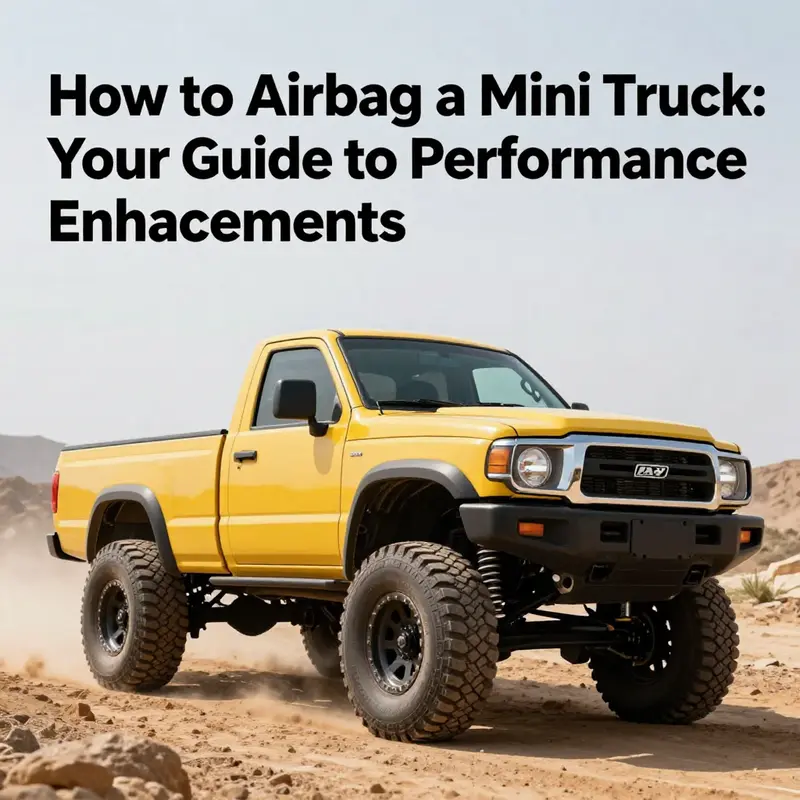
Airbagging a mini truck opens a world of possibilities for improving ride quality, load handling, and aesthetic appeal. As mini truck enthusiasts or business owners, understanding the benefits and challenges of installing an air suspension system is vital. This comprehensive guide will explore everything from evaluating compatibility and key components to discussing the pros and cons of DIY installations vs. seeking professional help. Additionally, we’ll touch on the significance of airbag safety features in modern vehicles, ensuring that safety goes hand in hand with performance.
Airbagging a Mini Truck: A Practical Roadmap to Installing Air Suspension Safely
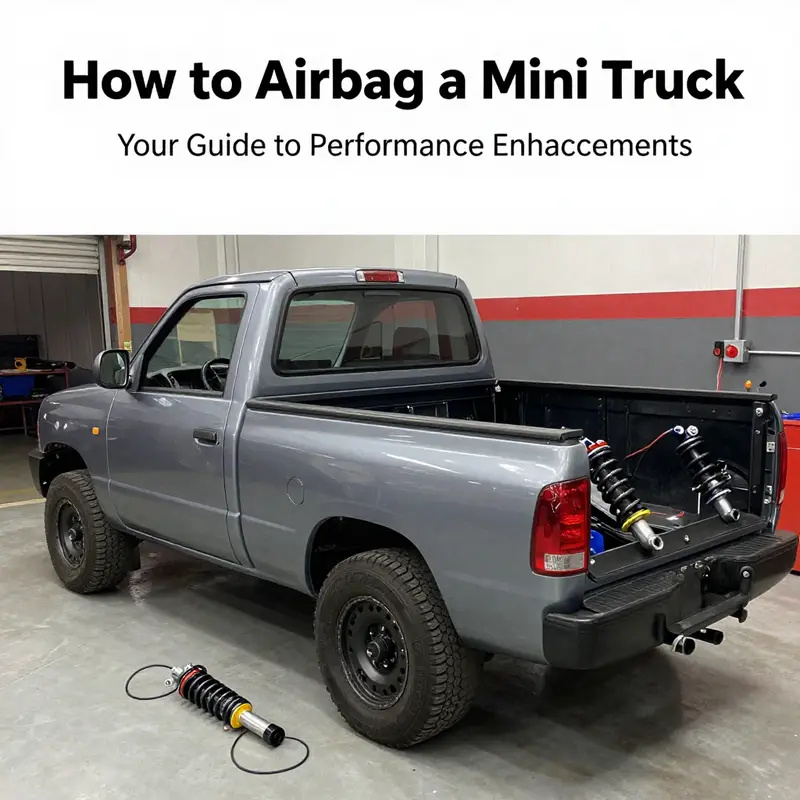
Planning and Installation of Air Suspension on a Mini Truck
Fitting air springs to a mini truck is a meaningful upgrade when done with clear goals and disciplined execution. The system replaces or supplements traditional springs with air-filled bellows. That change lets you control ride height, dial in comfort under load, and reduce sag when hauling. It can also give a truck a customized stance for shows or personal taste. Yet the conversion is not purely cosmetic. It changes load paths, ground clearance, and ride behavior. Treat it like a systems upgrade, not an accessory swap.
Start by clarifying what you want from the conversion. Do you need consistent load-leveling on a work truck? Are you chasing a smoother highway ride? Or do you want adjustable height for access and appearance? The answer affects component choice and installation details. Single-chamber airbags are simple and effective for basic load support. Dual-chamber or progressive-rate designs provide more nuance in ride control. Compressors, reservoirs, and valves shape how quickly the system responds and how long it can hold pressure.
Next, inspect the vehicle itself. Mini trucks often have compact frames and tight clearances. Verify that the frame rails offer a solid mounting surface. Check axle housings, control arms, and brake lines so you do not pin or rub new fittings. Look for rust, cracked welds, or existing damage to leaf springs or coil mounts. A worn chassis can compromise air suspension performance and safety. Measure clearances where airbags and brackets will sit. Allow space for bellows to expand, for air lines to run without kinking, and for the compressor and tank to breathe.
Selecting a kit demands attention to fitment and quality. Choose components designed for light-duty or compact truck applications. Air springs must match wheel travel and axle-to-frame distance when the truck is both unloaded and fully loaded. Compressors should provide sufficient flow to charge the system quickly. A reservoir reduces compressor cycles and maintains pressure under repeated use. Valves or a manifold let you control individual corners. Prefer durable materials for fittings and air lines. Stainless steel or high-quality nylon lines resist abrasion and heat. Even in a do-it-yourself scenario, parts with clear instructions and measured brackets make a complex job far more manageable.
Prepare tools and a safe workspace. Use a hydraulic jack and rated jack stands on hard, level ground. Keep torque wrenches, a socket set, pliers, and quality hand tools at hand. Electrical tools will be necessary to wire the compressor and control modules. Use proper safety gear and disconnect the battery before working on electrical systems. Plan where to mount the compressor and tank so they are protected from heat and road debris but still accessible for maintenance. Under-bed mounting often works for cargo trucks, while under-hood placement suits lighter setups. Ensure compressor ventilation and protect wiring with conduit in areas exposed to stones and moisture.
Begin the mechanical work by removing the existing springs or positioning the new system to work in parallel. When replacing leaf springs, take care with spring tension and use professional-grade tools. Bolt-on brackets must align precisely. Misalignment creates binding and early wear. Follow the kit’s torque specifications and the truck manufacturer’s recommendations where they overlap. Fit brackets and mock-up the airbags first. Confirm that bellows clear suspension travel, sway bar links, and shock absorbers at full droop and full compression. Make small adjustments to bracket placement before final tightening.
Air line routing and fittings deserve equal care. Keep air lines away from high heat sources and sharp edges. Secure them to the frame with clamps and zip ties at regular intervals. Use thread sealant or tape on all fusible fittings designed for pneumatic systems. After connecting the lines to the airbags and to the valve block or manifold, pressurize the system slowly and inspect every joint for leaks. A mixture of mild soap and water applied to fittings reveals escaping air as visible bubbles. Fix leaks immediately rather than relying on the compressor to mask them.
Electrical connections link the compressor to a fused power supply and a control switch or module. Use an appropriately rated relay and inline fuse close to the battery. Ground the compressor to a clean, bare metal surface on the chassis. Route wiring away from moving suspension parts and exhaust heat. For systems with automatic height control, follow sensor placement instructions closely. Height sensors must move freely with the suspension and avoid contact with the body or the tire.
Once installed, calibration follows. Start with a neutral pressure recommended by the kit manufacturer. Inflate each corner evenly and check ride height with the vehicle unloaded. Drive slowly on a low-traffic road to feel the baseline ride. Make incremental pressure adjustments to fine-tune comfort and handling. Test the truck with typical loads to confirm that the system holds desired ride height and that the compressor cycles at sensible intervals. If the compressor runs excessively, either the tank is undersized or there are leaks. Address those before regular use.
Maintenance is part of the upgrade. Inspect air lines monthly for abrasion and wear. Drain any reservoir moisture and check air filters on compressors regularly. Bellows degrade over time from exposure and should be examined for cracking, blistering, or separation from end caps. Replace worn components early. Keep fasteners torqued to specification and verify that mounting brackets remain secure after the first few weeks of service. Proper upkeep preserves performance and prevents failures that occur under load or at highway speeds.
Safety considerations should guide decisions from the start. Lowering a mini truck reduces ground clearance and can change how the vehicle handles at high speed. If you plan to run lower ride heights for show or loading, accept trade-offs in approach angles and suspension travel. Do not exceed gross axle weight ratings because airbags can support loads temporarily but do not increase the structural capacity of the frame or axle. Reinforce attachment points if needed. For any doubts about welding or frame modification, consult a qualified technician.
Deciding between a DIY installation and professional installation depends on skill and comfort. A competent DIYer can handle many kits, provided they have mechanical experience and the right tools. Complex systems with integrated electronic controls, multiple air tanks, or custom brackets often merit professional installation. A trained installer can also align sensors and test safety systems thoroughly. Where local regulations require inspections for modified suspensions, a professional shop can ensure compliance and provide documentation.
Finally, keep documentation. Record pressures, settings, and torque values. Note compressor duty cycles and any quirks observed during break-in miles. That record speeds troubleshooting later. If you want real-world inspiration or community tips, consult a regional mini truck resource, such as the Mini Truck SoCal blog, which covers local builds and practical modifications. For detailed diagrams and model-specific torque data, refer to official installation guides available from established manufacturers: https://www.airlift.com/support/installation-guides/
When executed thoughtfully, airbagging a mini truck transforms its utility and character. Respect the mechanical changes, follow safe installation practices, and plan for ongoing care. The result is a flexible, responsive suspension that meets hauling needs and personal style without sacrificing reliability.
null
null
Riding on Air: A Thorough Look at the Core Parts That Make Mini Truck Air Suspension Possible
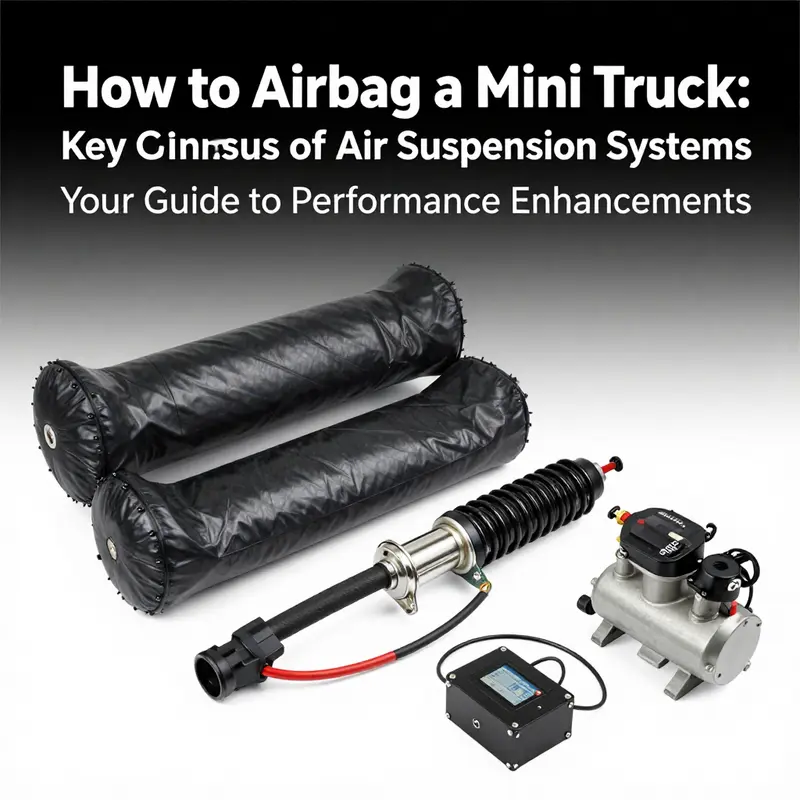
When people say they want to airbag a mini truck, the phrase usually splits into two distinct ideas. One path is a practical engineering upgrade: replacing traditional springs with an air suspension system to improve ride comfort, level loads, and tailor the stance of a compact truck. The other path focuses on the airbag safety feature that already exists in modern vehicles, designed to protect occupants in a crash. In a single, continuous narrative, these ideas intersect but do not blur. The goal here is to unfold how an air suspension system functions in a small truck, what its essential parts do, and how that knowledge aligns with the safety realities that come with any modern vehicle. This chapter does not prescribe a single way to proceed; instead, it maps the critical components and the decisions an owner or builder must face to keep things safe, reliable, and meaningful for everyday use as well as for the occasional heavy load or rough-road excursion.
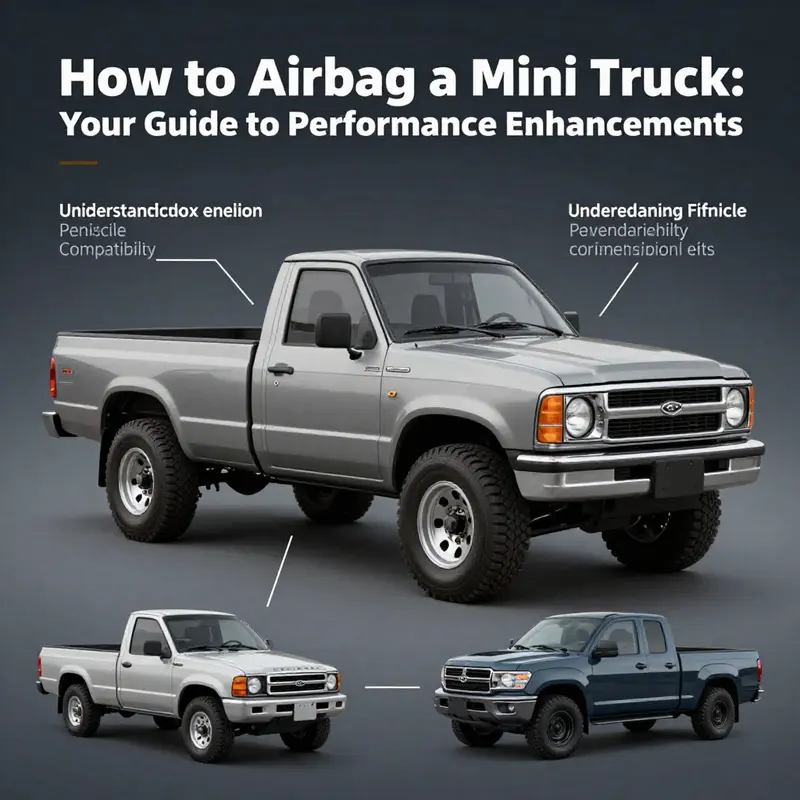
At its core, air suspension replaces or augments the stiffness and geometry of the factory springs with air springs, or airbags. Unlike metal coil or leaf springs that rely on metal fatigue and geometry to resist deformation, airbags use internal air pressure to bear the weight of the vehicle. When inflated, these flexible chambers push against the vehicle’s frame and axle, supporting the chassis while allowing the ride height to be adjusted. Deflate them, and the vehicle lowers; inflate them, and it rises. This simple principle unlocks a dramatic range of ride quality and load handling, turning a modest mini truck into a more adaptable platform for daily driving, site work, or weekend adventures. Yet the choice to install such a system should be grounded in fitment, reliability, and safety. The compatibility question is paramount. Mini trucks come in diverse makes, models, and years, and not every air suspension kit will fit perfectly. Fitment extends beyond mounting points to the angle at which the airbags sit relative to the axle, the available space in the chassis, and the alignment of suspension components under load. A mismatched kit can lead to unpredictable handling, uneven tire wear, or accelerated component fatigue. That reality underscores the practical rule: select a kit designed for the specific vehicle and ensure the kit’s mounting brackets, air lines, and hardware will align with the truck’s frame and axle geometry. In the absence of a perfect fit, even the most advanced air springs can underperform or become a safety liability.
The system’s components form a network that collaborates to control ride height, response, and comfort. The airbags themselves are the primary load-bearing elements. They are designed to be durable under real-world conditions, resisting abrasion, flex, and the chemical environment under a vehicle. The air compressor serves as the heart of the system’s air supply. Mounted in a practical location such as the engine bay or beneath the bed, it pressurizes air and delivers it to the airbags when commanded. The compressor’s performance—its volume, duty cycle, and ability to run without overheating—directly affects how quickly a ride height change can occur and how well the system keeps up with varying loads. The air tank, or reservoir, is the steady backstop. A sized reservoir provides a buffer so the compressor does not need to fire every moment the height changes. When the driver makes rapid adjustments or encounters short bursts of load, the tank ensures consistent air delivery and quiet, reliable operation.
Valves and solenoids are the traffic controllers of the system. They regulate the inflow and outflow of air to each corner of the vehicle. When the driver presses a switch or taps a control module on a dashboard interface or phone app, the valves open or close in precise sequences, lifting or lowering the truck as needed. The control unit, often integrated with sensors, interprets signals and translates ride-height goals into air-pressure targets. In a modern arrangement, a dedicated ECU monitors ride height constantly and makes minute adjustments to maintain level stance under varying load. Height sensors provide live data on the distance between the chassis and the axle or frame, letting the system react automatically to changes in weight distribution or terrain. Mounting hardware and brackets complete the ensemble, securing airbags to the frame and ensuring that the geometry stays correct through thousands of cycles. Each component has to be robust, since a failure in any one of them can compromise ride quality, handling, or safety.
Installation itself invites careful planning. Some DIY bundles offer a plug-and-play vibe, but the reality is more nuanced. The task demands a solid mechanical foundation, a willingness to work with high-pressure systems, and an appreciation for the vehicle’s electrical loom and control interfaces. For most owners, professional installation remains the safest route. A qualified installer can confirm the intended ride height range, ensure the air-supply system is sized to meet expected loads, and verify that the system won’t interfere with steering, braking, or suspension travel. They can also check for potential clearance issues that might affect road clearance, ground clearance, or the vehicle’s ability to negotiate obstacles without unintended contact. This is especially important for a mini truck where every inch of clearance matters for protection of undercarriage components and for maintaining safe approach and departure angles on uneven terrain.
Beyond the mechanical and installation considerations, a thoughtful approach to riding on air must acknowledge the practical realities of vehicle dynamics. The enhanced adjustability comes with trade-offs. In theory, higher ride height reduces the risk of underbody damage on rough terrain, while lowering can improve aerodynamics and stability on smooth highways. In practice, however, a system that fails to maintain a consistent height under load can yield inconsistent steering feel and unpredictable handling. The risk of suspension binding or component fatigue under extreme loads is never zero, so the installer’s emphasis on proper alignment, correct air-pressure targets, and calibrated height sensors cannot be overstated. Ride quality should not be judged solely by how plush a road feels at low speeds; it should be measured by how well the truck maintains stable geometry and predictable responses during cornering, braking, and when traversing rutted sections or crosswinds.
The airbag safety system of a modern mini truck, which is a separate but equally important topic, operates in a very different mode. Airbags are passive safety devices designed to deploy during a collision. They inflate rapidly in milliseconds to cushion occupants and limit injury. This system relies on a network of sensors that detect a severe impact and trigger inflation. It does not require any driver action, and it cannot be manually activated or switched off during normal operation. Its readiness is a safety baseline that complements seat belts and structural protection. The design intent is to protect occupants in a crash rather than to influence ride height or handling during regular driving. Disabling airbag systems is not advised and typically restricted to specific, manufacturer-guided circumstances, such as seating configurations that require special restraint arrangements. This separation of purpose clarifies why modifying suspension and disabling safety features both warrant caution and professional input.
When a reader contemplates whether to pursue a suspension upgrade, the reasoning process should be anchored in what a mini truck will be used for. If the goal is to improve load leveling for frequent hauling, a properly chosen air-suspension kit can preserve ride comfort while maintaining the necessary stance under heavy weight. If the aim is to achieve a particular look or stance for aesthetic or show purposes, the installer should be mindful of ground clearance at speed, tire contact, and the potential for accelerated wear under certain patterns of use. The automatic height control with sensors adds a layer of sophistication that helps sustain a consistent ride height regardless of the load, but it also introduces a degree of complexity that must be respected by technicians and owners alike. For those who intend to use their mini truck for off-road travel or on uneven surfaces, the fine balance between ride quality and durability becomes even more critical. In such cases, the system should be tuned to preserve sufficient suspension travel, avoid top-out conditions, and maintain a margin of safety for critical components.
In the bigger picture, the decision to airbag a mini truck sits at the intersection of engineering feasibility and responsible stewardship of vehicle systems. It is not simply a matter of adopting a newer method of suspension; it is about understanding how air pressure becomes a controllable medium that shapes the vehicle’s most intimate contact with the road—the suspension. It is about recognizing that every major component—from airbags to compressors to tanks, from valves to height sensors and the ECU—comes with a life cycle of wear, calibration needs, and performance expectations. It is about acknowledging that the safety system, while largely separate in its function, calls for the same respect for system integrity. A well-executed installation respects both the vehicle’s dynamic needs and the occupant protection framework that governs modern driving. And it is about grounding all plans in fitment reality, ensuring that a kit truly aligns with the truck’s frame, axle geometry, and available space so that the final result is predictable under load and reliable across the miles.
For readers who want to continue exploring practical builds, plans, and community knowledge about mini trucks, engaging with a focused resource can help translate theory into street-ready realities. See the Minitrucks Blog for ongoing discussions, real-world build diaries, and case studies that illuminate how enthusiasts approach air suspension projects with care and careful testing. Minitrucks Blog
External resource: For a broader understanding of airbag safety systems in vehicles, consult the National Highway Traffic Safety Administration’s overview of airbags and their function in crash scenarios. https://www.nhtsa.gov/vehicle-safety/airbags
Elevating a Mini Truck: Navigating Professional Air Suspension Installations vs. DIY Fitment
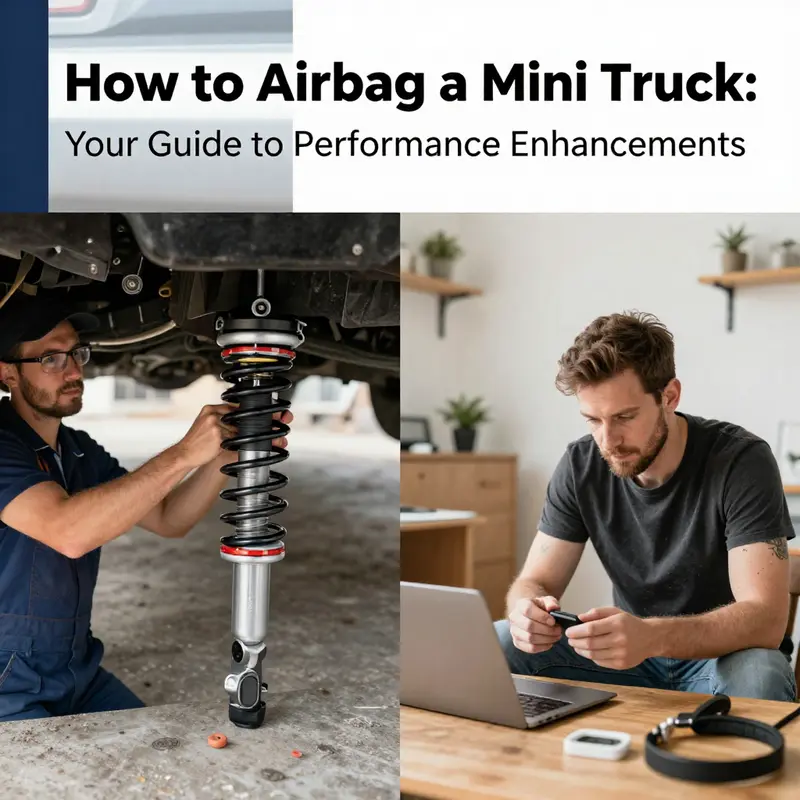
When readers think about airbagging a mini truck, the impulse often centers on the dramatic stance or the promise of a smoother ride under load. Yet the topic unfolds into two distinct paths: upgrading the vehicle with an air suspension system for better ride quality and load distribution, or understanding how airbags function as a safety feature within the vehicle’s existing framework. The latter is fixed in place, a passive system that activates in a crash, while the former is a highly configurable modification that reshapes how the vehicle responds to weight, terrain, and speed. This chapter threads those threads together, not as a catalog of parts but as a practical, real-world guide to making a sound choice about installation—whether that choice is to hire a professional or to roll up sleeves and tackle a complex DIY project.
Any discussion about air suspension begins with compatibility. Mini trucks come in a spectrum of makes, models, and years, each with its own suspension geometry and mounting points. The first question is not whether airbags will fit in a generic sense, but whether a given air suspension kit aligns with the vehicle’s specific platform. Incompatibility isn’t just a nuisance; it can undermine safety, alter alignment beyond safe limits, and compromise performance under load. After compatibility, attention shifts to the basic components that together form a complete, functional system: airbags or air springs themselves, mounting brackets that tether the bags to the chassis, air lines that carry the pressurized air, an air compressor or pump, an air tank or reservoir to store that pressurized air, and a control interface—whether a dashboard switch, a handheld controller, or a mobile app—that allows adjustment on the move. The kit may also include valves, fittings, ride-height sensors, and a small reservoir of electronics to tune the system’s response to weight changes. Reading through these elements, it becomes clear that air suspension is not a single part; it is a holistic assembly that demands precise integration.
From there, the choice between professional installation and a DIY approach hinges on topics that are easy to underestimate: calibration, safety standards, and long-term reliability. Professional installation offers clear advantages in precision. Technicians who specialize in air suspension are trained to calibrate the system so that ride height, damping effects, and load leveling work in concert. They understand how the airbags respond to dynamic forces—from cornering to braking—and how to tune the system so it maintains stability when the truck carries a heavy load or travels over uneven pavement. A professional installation also brings safety standards into focus. Proper mounting, secure line routing, and correct electrical connections are non-negotiable for roadworthiness. In many cases, shops provide warranties on both parts and labor, which translates into downstream peace of mind if issues arise. For a DIYer, the satisfaction of a hands-on build is a compelling reward, but so are the cost savings and the chance to deepen mechanical knowledge. DIY projects can also be highly educational, turning a hobby into a durable skill set that makes future maintenance or upgrades more approachable.
Yet the cons of DIY should not be glossed over. The risk of improper installation is real and consequential. Air lines must be routed to reduce the risk of pinching, abrasion, or leakage; brackets must be securely anchored to handle the vehicle’s dynamic loads; electrical wiring should be protected, fused, and shielded from moisture and heat. Without meticulous attention, a DIY installation can lead to air leaks, miscalibration, or uneven ride heights that worsen handling rather than improving it. Time is another cost not to be underestimated. What might begin as a weekend project can stretch into weeks if unfamiliar roadblocks appear, and the learning curve—particularly when it comes to fine-tuning height sensors and compressor duty cycles—may dilute the initial savings. In addition, some complex setups require more sophisticated tools or a level of mechanical access that a novice might not possess within a typical garage. The decision, then, becomes a balance: the learner’s willingness to invest substantial time and risk, versus the confidence to rely on trained hands for critical tasks.
What should guide that decision? The answer rests on four key considerations. First is technical skill level. If the owner has substantial experience with automotive systems, especially those involving hydraulics or pneumatics, a thoughtful DIY project can be rewarding and successful. If the owner lacks experience or the vehicle’s suspension is already intricate, professional help is prudent. Second is the current suspension setup and the complexity of the intended modification. A simple upgrade to add basic airbags may be within reach for a skilled DIYer, but a multi-air, height-adjustable system with integrated sensors and a digital control unit requires careful planning and precise alignment. Third is safety. Proper installation reduces the risk of ride-height variations that could impair steering, braking, or tire wear at speed. It also minimizes the likelihood of mechanical interference with steering components or exhaust routing. Fourth is the stated goal. If reliability and long-term performance are the priorities, investing in a professional installation tends to pay off through consistent calibration, potential warranty coverage, and better real-world stability under a range of loads. If, however, the aim is cost savings, a well-planned DIY project by someone who is methodical and safety-conscious can deliver satisfying results, provided every component meets industry standards and is installed with thoroughness.
Within this framework, a practical plan emerges for those leaning DIY. Start with a comprehensive assessment of the mini truck’s current suspension and service history. Confirm the chosen kit’s compatibility with the vehicle’s make, model, and year, not just the airbags’ dimensions but also the sensor interfaces and the mounting geometry. Gather a complete toolbox and the essential specialty tools, and allocate ample time for measurement, mock-up, and double-checking every connection before any air is introduced to the system. Document each step, from bracket placement to line routing, and keep a careful inventory of fasteners, seals, and hardware. The calibration phase cannot be rushed. When the system is filled, the truck must be checked for uniform ride height, correct wheel alignment, and proper sensor feedback. A miscalibrated system can create unpredictable behavior during acceleration, braking, or cornering, especially under varying loads. It is here that a cautionary note should be heeded: if the modification aims to alter ground clearance at speed, the consequences extend to high-speed stability and tire contact patterns, which can influence tire wear and traction.
For those who prefer professional intervention, the process is more predictable in terms of time and outcome. A shop will typically begin with a thorough inspection of the stock suspension and chassis to ensure there are no preexisting issues that could be aggravated by a new air system. They will then select an appropriately matched kit, install the airbags and brackets with exacting torque specs, route lines with protection from heat and abrasion, install the compressor and reservoir in a location that minimizes noise and heat exposure, and integrate the control module with the vehicle’s electrical system. Crucially, the calibration phase will be conducted with diagnostic tools to verify that height sensors respond correctly to load shifts and that the system maintains the intended ride height across the entire range. The result is a more predictable, ride-quality improvement that aligns with the vehicle’s dynamics and safety requirements. It is worth noting that professional installation often preserves more than a warranty; it maintains confidence that the system will respond consistently, especially in the unpredictable conditions of road use and varying cargo.
As readers weigh these paths, it helps to anchor the decision in how deeply they value reliability, performance, and personal capability. If the goal centers on ride stability, uniform load distribution, and long-term assurance, professional installation tends to be the prudent route. If the aim is hands-on learning, budget-conscious experimentation, and a willingness to invest significant time, a well-planned DIY project can be both educational and rewarding, provided the components used meet recognized standards and the work is performed with rigorous attention to safety.
For readers seeking a broader perspective on poster-child topics in mini-truck modification and suspension concepts, the Mini Truck So Cal blog offers an accessible repository of ideas and community-driven insights that can illuminate considerations beyond glossy spec sheets. As you browse, keep in mind that every vehicle is unique, and the best path balances technical feasibility with personal capability. In the end, air suspension for a mini truck should feel like an extension of prudent engineering and careful driving rather than a gambit for a dramatic profile alone. For a deeper dive into related suspension theory and design, see this external resource: https://www.bentleyautomotive.com/air-suspension-systems
Airbagging a Mini Truck: Upgrading Suspension for Safer Loads and Smoother Rides
Airbaging a mini truck refers to replacing or augmenting its conventional springs with an air suspension system. In practice this upgrade can transform how a small truck behaves under load. It improves load leveling, smooths rough roads, and helps preserve the chassis when the vehicle works hard. But the process is not merely cosmetic. It is a systems change that touches fitment, handling, safety, and maintenance. Approached carefully, it increases safety and utility. Done poorly, it creates risks.
Begin by understanding what an air suspension system actually does. An air spring, or “bag,” uses compressed air to carry weight. The system typically includes the airbags, brackets, airlines, a compressor, an air reservoir, and a control mechanism. Modern kits often provide adjustable valves so you can tune pressure on each corner. That independent control is especially valuable for mini trucks that haul uneven or shifting loads. With proper setup, the truck maintains consistent ride height, tire contact, and steering geometry across different payloads.
Compatibility and fitment matter more than many realize. Mini trucks vary widely by year, wheelbase, and axle configuration. A kit engineered for one model may not clear frame components on another. Mounting points must align, and suspension travel must be preserved to avoid bag damage. Before you buy, measure spring perch locations, axle-to-frame distances, and wheel clearance. Also verify whether the kit requires minor frame modifications, welding, or additional brackets. Those alterations can materially alter installation difficulty and cost. If a kit lacks clear fitment notes for your truck, assume extra work is needed.
Installation difficulty ranges from moderate to advanced. Some owners complete installs in a well-equipped home shop. However, it requires mechanical skill, accurate measurements, and the right tools. You will handle compressed air lines, secure fittings, and route electrical components for the compressor and control module. Improperly routed airlines or a poorly secured tank can fail unexpectedly. For many owners, professional installation is a wise investment. A qualified installer ensures correct mount points, torque values, clearance checks, and leak tests. They will also set safe pressure limits for everyday and maximum-load conditions.
Safety benefits are real when the system is matched and installed properly. Air suspension reduces sag under load, which helps retain steering response and braking balance. It can maintain better tire contact with the road, lowering the chance of a skid or a sudden weight shift during evasive maneuvers. On uneven terrain, the system helps avoid bottoming out, which protects structural components and payloads. For mini trucks used in agriculture or on worksites, these benefits translate directly into fewer breakdowns and safer operation during heavy use.
However, it is equally important to recognize the trade-offs. Lowering a mini truck for aesthetics can reduce ground clearance and approach angles. At higher highway speeds, a lowered stance may change aerodynamic behavior and steering feel. Overly soft air rates reduce stability during sharp turns, increasing rollover risk. Always set pressures and ride height with operational use in mind. If the truck regularly carries heavy loads, maintain higher baseline pressures and more conservative ride heights. If you prioritize show-lower looks, accept the limits on speed and rough-ground capability.
Control strategies matter. A multi-path control system that adjusts each corner separately gives the most versatility. It allows you to level the truck when hauling uneven cargo. It also helps compensate for single-sided loads common in service bodies. Simpler two-path systems work for many owners and are less complex to wire and service. Whichever option you choose, select controls you can read and adjust easily. A digital control with pressure readouts speeds safe setup. Manual switches require careful attention to avoid overinflation or underinflation.
Routine maintenance keeps an air system reliable. Inspect bags and fittings for nicks, chafing, or leaks. Check airline routing annually and replace any deteriorated hoses. Drain moisture from the reservoir as recommended. Test the compressor under load. Compressors that run constantly usually mean a leak exists and should be located promptly. Replace worn brackets or loose fasteners before they cause a failure. Simple checks prevent sudden loss of air and the abrupt changes in ride height that can surprise a driver.
Integration with factory safety systems is straightforward but essential to consider. An air suspension upgrade does not change how passive airbags or electronic stability control operate. Those systems remain independent and will deploy as designed in a crash. Do not attempt to alter or disable factory restraint systems. If you plan electrical work, avoid interfering with airbag wiring harnesses or vehicle sensors. Any electrical modifications should follow the vehicle manufacturer’s wiring conventions and use appropriately rated fuses and relays.
Legal and insurance considerations also deserve attention. Local regulations may limit suspension alterations or lowered ride heights. Failure to adhere to these rules can result in fines or failed inspections. Notify your insurer of significant suspension changes. Some policies may require disclosure and could adjust coverage terms. Keep installation receipts and documentation handy. A professional installer usually provides written warranties and paperwork that helps support insurance and resale value.
Operational advice helps you get the most from your upgrade. Start by setting a conservative, documented pressure chart for common load scenarios. Use a gauge to confirm pressures rather than relying on memory. When driving on rough fields, increase pressure slightly to prevent bottoming out. Before highway runs, return to a factory-aligned ride height to retain adequate ground clearance. Train any regular drivers on how to use the controls and on the limits of a lowered stance.
Cost and value vary with build choices. Quality components cost more but usually last longer and leak less. A well-installed system that fits the truck will save money over time by reducing chassis stress and limiting wear on leaf springs or shock absorbers. That mechanical savings pairs with higher operational safety and less downtime. When comparing options, weigh materials, warranties, and installer credentials rather than only price.
For those who want to explore community knowledge and real-world examples, local mini truck forums and owner blogs are valuable. They provide hands-on insights from users who have installed systems in similar trucks. One useful resource is the Minitruck SoCal blog, which covers customization options and owner experience across mini truck builds.
Finally, make product research specific and thorough. Confirm kit specifications, tank size, and control features. Review user installation photos and ask vendors about warranty coverage. If possible, inspect a completed installation on a similar truck before committing. And when you are ready to shop, consult product listings directly for detailed specs and fitment notes: https://www.alibaba.com/product-detail/Air-Lift-3P-4-Path-Air-Ride-Kit-for_1600582742568.html
Thoughtful planning and careful installation turn an airbag upgrade into a practical safety and performance improvement. Treat the system as part of the truck’s core structure, and you will gain lasting benefits in handling, durability, and load control.
Final thoughts
Upgrading your mini truck with an air suspension system presents significant improvements in ride quality, load handling, and even visual appeal. However, understanding the compatibility, essential components, and whether to select a professional installation or go the DIY route is crucial for a successful enhancement. Coupled with the inherent safety features of modern vehicles, airbagging not only elevates performance but also contributes to overall safety on the roads. As you consider these modifications, always prioritize safety and performance to get the most out of your mini truck adventures.