
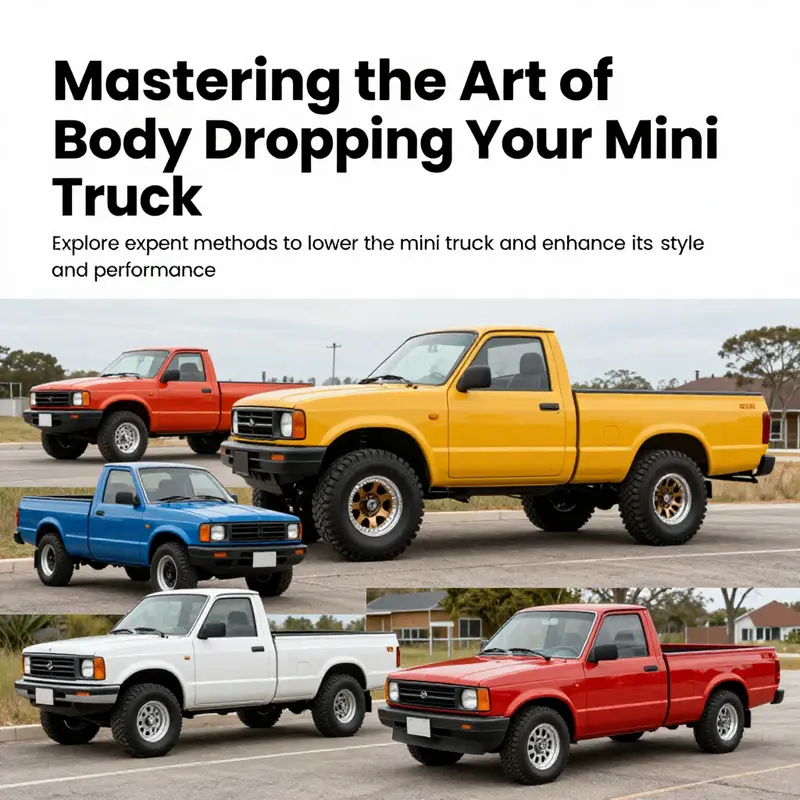
Body dropping your mini truck is an exciting way to achieve that low-slung, head-turning stance that enthusiasts crave. This process can seem daunting, but with the right knowledge and techniques, anyone can do it! In the following chapters, you’ll discover effective methodologies for adjusting suspension components, the impact of tire and wheel modifications, how to leverage body drop kits, and essential professional considerations to ensure your modifications are safe and legal. Each section will guide you step-by-step, making it easy to understand what works best for your mini truck transformation.
Lowering by Design: Practical Suspension Strategies to Body Drop a Mini Truck
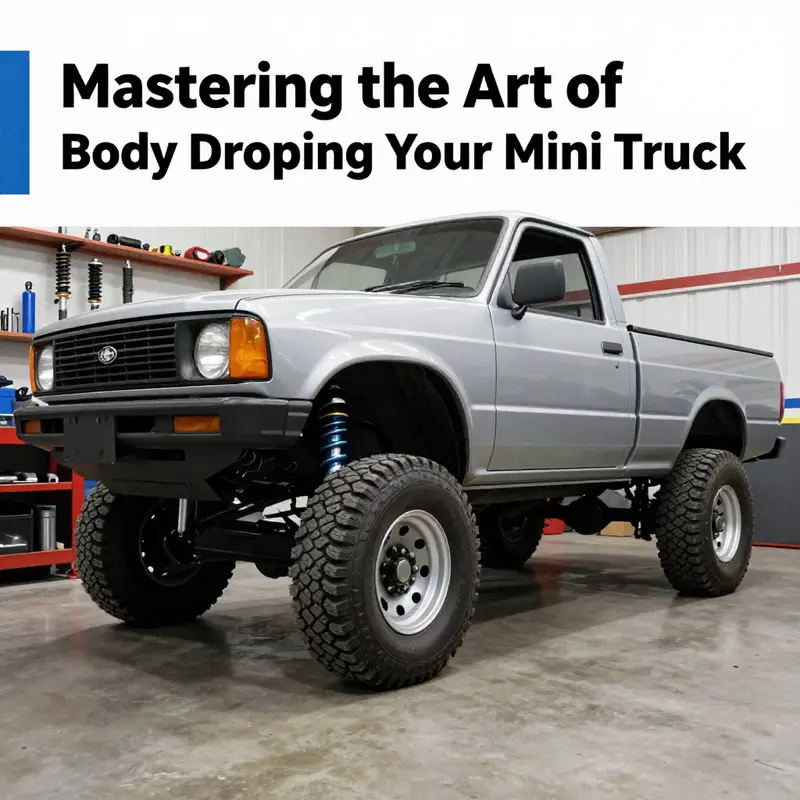
Lowering a mini truck is as much about engineering trade-offs as it is about style. A correctly executed body drop changes how the truck looks and how it behaves. It alters suspension geometry, wheel alignment, ride comfort, and ground clearance. It demands deliberate choices on springs, shocks, and structural components. This chapter walks through the core suspension-based methods, the decisions that separate a safe drop from a risky one, and actionable guidance you can use when planning your build.
Start with the goal. Decide whether you want a modest, daily-drivable drop, a show-level slammed stance, or a versatile setup that adjusts for different conditions. Your objective determines the components you should favor. A reliable drop preserves suspension travel and steering geometry. It keeps braking and handling predictable. It also respects local legal limits on ride height. Once you know your target, the mechanical options fall into a few clear categories: shortening springs, converting to adjustable coilovers, fitting air suspension, or altering component positions with drop spindles or modified control arms. Each choice carries its own performance and maintenance profile.
Shorter springs are the simplest path. These springs replace factory coils with versions that reduce free length. They are usually stiffer to compensate for reduced travel. The immediate benefits are cost and speed. Installation requires basic tools and mechanical competence. The visual drop is instant. However, shorter springs change suspension geometry, which alters camber and toe under load. Without matched shocks or corrected alignment, the truck may develop uneven tire wear and twitchy handling. Choosing a spring with the correct rate is essential. A rate that is too high makes the ride harsh. A rate that is too low causes excessive sag and poor control. Pair drop springs with upgraded shocks designed for lower ride heights. This pairing helps maintain damping control through the reduced travel.
Coilover systems offer a higher level of control. They combine spring and damper into one adjustable unit. Most coilovers allow ride height and preload adjustments. Many also include tunable damping. This flexibility makes coilovers ideal for owners who want precise stance and predictable handling. With coilovers you can dial in ride height while preserving spring rate choices. You can also tune rebound and compression to match road conditions and load. The trade-offs are cost and complexity. Proper installation and corner balancing often require specialized equipment and experience. Ignoring setup steps risks a truck with poor balance or a harsh ride. Coilovers shine when paired with careful corner weights and alignment. That combination yields a lowered truck that still corners confidently and stops predictably.
Air suspension brings dynamic adjustability. With air bags replacing traditional springs, you can raise or lower the truck at the touch of a button. This system suits owners who want a dramatic low look for shows and a raised profile for daily driving or rough roads. Air setups require compressors, tanks, and valves. They also need a reliable control system and routine maintenance to prevent leaks. Air excels for convenience and comfort when tuned correctly. But it raises the stakes for installation quality. Poorly routed airlines or undersized components create reliability problems. When installed and maintained properly, air systems deliver excellent ride quality across height ranges. For long-term reliability, plan for periodic inspections of fittings and the bags themselves.
Altering control arms or installing drop spindles provides another route to lower the body. These parts change the relationship between the wheel hub and the axle. By dropping the axle relative to the chassis, you reduce ride height without changing spring length. This approach can preserve suspension travel better than simply shortening springs. It maintains more of the factory geometry when done correctly. However, spindles and modified arms are advanced changes. They can affect steering angles and suspension kinematics. Accurate alignment after installation is mandatory. Components must be high quality and correctly installed to avoid steering bind or premature wear. When combined with tuned shocks, these hardware swaps give a substantial drop without sacrificing as much comfort or clearance at the wheel wells.
A practical build often combines methods. A common approach pairs shorter springs with upgraded shocks. Another practical combination is coilovers up front with specific drop hardware in back to match clearance and stance. Air systems pair well with reinforced control arms to handle variable loads. Combining methods lets you tune handling, comfort, and appearance more precisely. But combining also increases complexity and cost. Each added component needs to work in harmony with the others. That harmony only comes from careful planning and professional alignment.
Alignment is non-negotiable after any lowering work. The geometry of caster, camber, and toe can shift dramatically. Incorrect settings lead to accelerated tire wear and unstable handling. After lowering, always perform a full alignment. If your kit changes suspension geometry, choose alignment targets that preserve tire contact during cornering. In some cases, adjustable camber plates or eccentric bolts help return angles to safe ranges. For extreme drops, consider adjustable control arms. These give you the ability to fine-tune camber and toe without resorting to shims.
Selecting the right springs or coilovers requires matching specifications to vehicle weight and intended use. Spring rate is the single most important specification. It must support the vehicle and any typical payload while providing adequate travel for bumps. A well-chosen rate keeps the truck stable under braking and cornering. Damping rates in the shocks must pair with springs to control oscillations. Too much damping kills ride comfort. Too little allows excessive body movement. If you are unsure, prioritize conservative rates and plan for incremental upgrades after test drives. Real-world testing helps you refine the setup for comfort and control.
Ride height measurements matter. Take baseline measurements before any change. Measure at the same points on each corner, using a level surface. Record ride height with typical load. After modification, measure again to confirm symmetry and to ensure legal compliance. Adjustments should be small and tested sequentially. Rapidly lowering beyond recommended levels increases the risk of hitting bump stops or scraping the chassis. Ground clearance is a functional restraint. It affects approach angles, speed bump traversal, and underbody component safety.
Steering and brakes deserve specific attention. Lowering changes load transfer characteristics during braking and turning. Ensure steering components have adequate clearance and maintain safe angles. Check tie rods, drag links, and steering boxes for bind or interference. Braking systems may not need hardware changes, but calibration and pad selection can optimize the feel after lowering. For trucks used in mixed driving conditions, a modest drop with conservative damping strikes the best balance.
Maintenance and inspection are critical for any altered suspension. Check bushings, mount points, and fasteners frequently in the weeks after modification. New setups often settle as components compress and preload changes. Re-torque bolts after initial test miles. Monitor tires for unusual wear patterns. If wear appears, re-check alignment and suspension travel. For air systems, inspect fittings and bag surfaces regularly. For coilovers, verify locking collars and adjusters remain secure. Periodic checks prevent small issues from becoming safety hazards.
Legal and safety considerations should guide your final decisions. Some regions impose minimum ride heights or forbid certain alterations. Local rules vary. Verify compliance before committing to a major modification. Insurance and warranty implications may also follow significant suspension changes. A professional shop can advise on regulations and document the work for records.
Plan every step before buying parts. Start with clear measurements, a realistic ride-height target, and a list of constraints. Choose components that match your goals and budget. If you lack mechanical experience, prioritize professional installation. The cost of a bad install can be far higher than the saved labor. A well-executed suspension modification yields a truck that looks right and behaves predictably. It also avoids premature wear and reduces the chance of costly repairs.
If you want examples and community inspiration, check build write-ups and local resources. For regional mini truck information and community builds, see the Mini Truck SoCal blog. Practical tips from experienced owners can highlight pitfalls and creative solutions that apply to many builds.
When researching component options, consult technical guides to align expectations with reality. For a focused primer on lowering trucks without losing ride quality, refer to this external resource: https://www.caranddriver.com/features/a36879524/how-to-lower-your-truck/ . That guide outlines practical considerations and real-world trade-offs that mirror the points covered here.
A suspension-based body drop is a rewarding project when planned and executed with care. Prioritize alignment, matching spring and damping rates, and component quality. Combine methods only when you understand their interactions. Inspect often and drive progressively while you confirm settings. With the right approach, you get the low stance you want and maintain safe, enjoyable handling.
Lower, Look Strong, Stay Safe: A Tire-and-Wheel Guided Approach to Body Dropping a Mini Truck
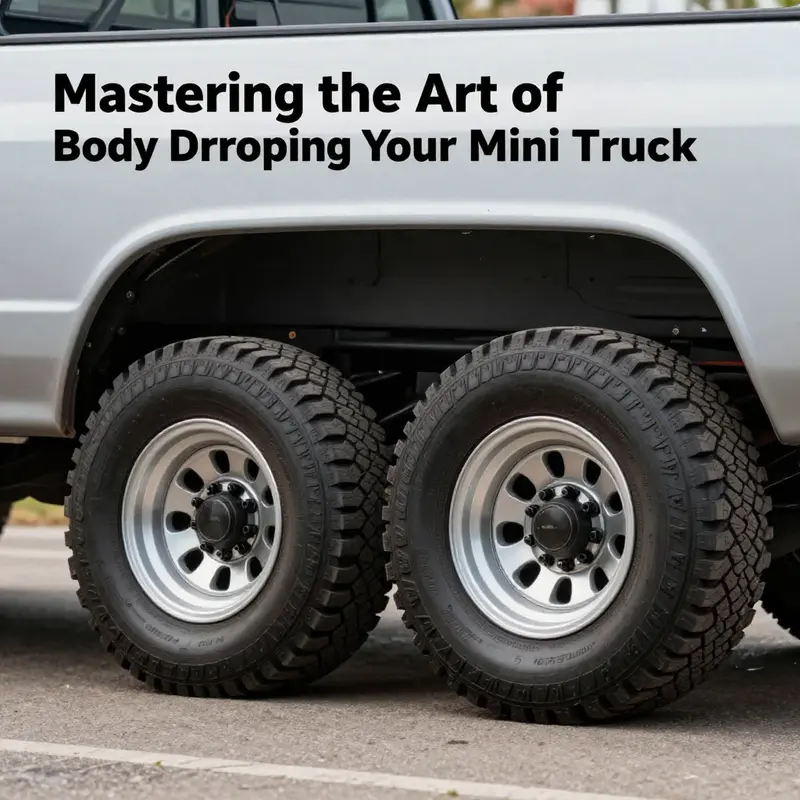
A lowered stance on a mini truck carries more than a visual punch. It speaks to how the vehicle’s proportions, weight, and reaction to road surfaces are managed. For many builders, the easiest, most controlled path to a noticeable drop begins with the tires and wheels. This chapter follows that path, tracing how smaller tires, smaller wheels, and smarter fitment choices can shave height from the chassis while preserving control, comfort, and legality. It is a technique that respects the integrity of the steering, brakes, and suspension, and it invites a careful, iterative mindset rather than a rush to a dramatic silhouette. The idea is not to obscure the truck’s engineering but to reveal a refined balance where geometry, grip, and look align.
To begin, imagine the truck’s silhouette as a three-dimensional puzzle where each dimension—ground clearance, wheel diameter, tire sidewall, and offset—needs to be tuned. The most direct way to lower the body without tearing into the frame or changing spring rates is to adjust the wheel-tire package that sits under the fenders. Tire and wheel modifications can reduce the distance from the ground to the body, creating a planted stance that looks aggressive yet remains predictable on the road. A well-executed approach changes the perceived height and the way the wheels tuck into the wheel wells, without forcing the suspension to do more than it was designed to handle. It also buys time for a builder to decide whether to pursue more extensive suspension work later on, such as a kit designed to drop the entire chassis in harmony with steering geometry and braking systems.
One of the clearest levers in this process is tire diameter. Reducing the overall diameter of the tire is one of the most effective, tangible ways to lower the truck’s stance. A practical example might move from a tall, stock-like tire toward a slightly smaller paired set; the goal is a smaller overall distance from the ground to the chassis when the truck sits at rest. The math is straightforward enough: a smaller outer diameter reduces the radius of the wheel-tire assembly, which subtracts height from the car’s front and rear ends. Yet the change is not purely cosmetic. It also shifts the way the wheel interacts with the road, affecting ride quality, steering feel, and how quickly the suspension responds to irregularities. This is where information from tire databases and fitment guides becomes invaluable. They explain how diameter translates to ride height, clearance, and handling in ways that static illustrations cannot capture.
Choosing a smaller tire diameter is not without tradeoffs. The same shrinkage that lowers the body also reduces the tire’s contact patch in a given corner, which can subtly alter grip and stability in high-demand situations. It can also affect gearing and speedometer accuracy if the rest of the drivetrain isn’t adjusted accordingly. If the truck uses an odometer and a speedometer calibrated for a larger tire, you may notice readings that drift upward or downward at highway speed. The responsible approach, therefore, combines the diameter reduction with a more holistic assessment of how the lowered profile will feel on the road. It’s a choreography of changes rather than a single, dramatic swap.
Another central move is to switch to smaller diameter wheels. The intent here is complementary: smaller wheels enable shorter sidewalls, which visually shrink the wheel well and make the lower body line appear more pronounced. The choice of wheel diameter must be harmonized with brake performance, hub geometry, and lug patterns. Smaller rims can bring a tighter, more aggressive look, but they also create tighter tolerances around the brake calipers and the spokes, so compatibility checks are essential. A well-matched wheel size helps maintain clearances for steering lock, suspension travel, and the inner fender area, especially when the suspension compresses during cornering or over bumps. It’s a reminder that every change has a ripple effect across the entire braking and steering system, and the goal is a seamless integration rather than a series of patches.
When the wheel is smaller, pushing the look further still often means adopting low-profile tires. Low-profile tires lower the sidewall height while keeping the same wheel diameter, which further reduces the overall tire height. The effect is a cleaner, more abrupt drop that many builders associate with a modern, performance-oriented stance. The stiffness that comes with shorter sidewalls reduces flex under load, which can sharpen steering response and reduce perceived weight transfer during aggressive cornering. The tradeoff, however, is a ridge of harsher ride quality and more road feedback through the steering wheel. There is less cushion over potholes and rough pavement, so the choice of tire compound and tread pattern becomes a balancing act between comfort and the look you want. It also places increased importance on the alignment and suspension geometry to prevent unwanted tramlining or unusual tire wear.
A related, often overlooked component is wheel offset and backspacing. Offsets describe how far the wheel’s mounting surface sits in relation to the centerline of the wheel. Backspacing measures the distance from the hub mounting surface to the wheel’s back edge. Both parameters govern how far the tire sits within the wheel arch and how close the tire is to the fender, suspension components, and brake hardware. A negative offset, which pushes the wheel outward, can visually widen the stance and pull the tire closer to the fender lip, creating a more aggressive, lower look. But this approach raises the risk of rubbing during compression, steering lock, or when the suspension cycles. Backspacing, likewise, becomes a critical tool: too little backspacing can push the tire into the brake rotor or the inner fender, while too much can pull the tire away and reveal gaps that undermine the intended silhouette. The goal is a balanced fit where front and rear wheels tuck neatly into the fenders with adequate clearance for full steering range and suspension travel. The art lies in selecting a combination that achieves the lowered look without sacrificing reliability or safety.
All these adjustments—smaller tires, smaller wheels, low-profile rubber, and offset/backspacing tuning—must be pursued with a careful eye on clearance and safety. A lowered package that rubs on fenders, frame rails, or control arms during cornering or over speed bumps is not just unattractive; it is unsafe. Clearance checks should be performed with the suspension at full droop and full bump, and with the steering at full lock. The engineer in you will also want to recheck the speedometer as a basic safety measure. Tire size feedback alters the overall diameter and can distort speed readings and odometer calibration. If the truck remains within legal limits for height and ground clearance, a proper speedometer recalibration or rolling-diameter adjustment becomes part of the safety net that keeps the vehicle compliant with road rules while preserving predictable highway behavior.
This is also where a broader approach to lowering becomes important. Tire and wheel changes do not occur in isolation. They should be paired with a measured, modest set of suspension tweaks to keep geometry in check without overcorrecting. For many builders, a few strategic enhancements—such as coilover spacers or adjustable control arms—provide micro-adjustments that keep the chassis square as the body sits lower. The effect is a more stable ride that preserves alignment under load and maintains consistent tire contact with the road. The result is a refined, predictable dynamic where the lowered appearance does not come at the expense of steering feel or brake response. The overall aim is balance: the lowered look should spring from informed choices that respect the car’s engineering, rather than from a single, dramatic cut that unsettles the entire system.
Practical planning and meticulous execution matter as much as the theory. A body drop through tire and wheel changes invites a careful, iterative process. Start with your target height and the constraints of your fenders and arches. Then select a tire and wheel package that nudges the height into range while leaving adequate clearance for wheel travel. Before committing, perform a mock-up with measurement checks: confirm that the tire will not rub at full steering lock, inspect the inner clearance near the ABS sensor or caliper, and verify that the fit remains harmonious across the suspension’s travel range. It’s not enough to admire a photo; you want to see the truck drift through a driveway lip at a gentle speed without any grinding, rubbing, or binding. A measured approach reduces the chances of returning to the workbench with a costly misfit.
In this approach, the road ahead is not a single, irreversible move but a sequence of calibrated steps. If the desire is a more aggressive drop, it is worth pausing to consider whether a complete lowering kit—one designed to align springs, dampers, and geometry in a balanced package—might be the safer, more cohesive path. A professional shop can translate the mechanical changes into predictable handling and road feel, ensuring that the enhancements do not compromise braking efficiency, steering stability, or the vehicle’s dynamic response. Yet even when pursuing a full kit, tire and wheel choices continue to frame the aesthetic and practical outcomes. A well-chosen set of wheels and tires establishes the baseline look and helps the suspension work with precision rather than against it.
To connect these ideas to the wider world of customization, consider how tire and wheel decisions anchor a broader philosophy of stance and stance maintenance. The look you chase is not achieved in a vacuum; it is a product of how the body, the tires, and the wheels speak to each other as the truck sits idle, accelerates, and navigates the road. The ethics of modification demand safety, legality, and reliability. It is this triad—the visual intention, the mechanical integrity, and the legal framework—that should guide every decision. If your build includes more dramatic ambitions later, you will already have established a solid foundation with tire and wheel selections that ensure stability and predictability when the height changes again.
For readers who want to connect these ideas to broader car-modification conversations without losing sight of the specific needs of a mini truck, a good touchpoint is the customization page that presents a wider approach to how adapters, spacers, and mounting considerations influence fitment. It offers a conceptual bridge between the disciplined, measurement-driven work described here and the broader culture of personalization that embraces unique silhouettes and personal taste. You can explore that page here: https://minitrucksocala.com/godzilla-truck-camper-review-customization/. The page demonstrates how a careful, modular approach to modifications can keep a project cohesive even as it expands into new directions.
As you circle back to the specifics of tire and wheel decisions, keep a steady eye on the big picture: the goal is to achieve a body drop that looks composed and intentional, not hurried or forced. The interplay between diameter, sidewall, width, and offset is the key to a low, confident stance that remains easy to drive every day. With thoughtful selection and precise fitment, you can shape a lean, aggressive silhouette whose behavior behind the wheel confirms the aesthetic with every rotation of the tires. This approach respects the engineering that supports the truck’s performance while honoring the visual statement the build makes. It invites ongoing assessment and calibration, so the drop remains a living part of the vehicle, adapting as tires wear, rims settle, and roads evolve.
In the end, the appeal of body dropping a mini truck through tire and wheel modifications lies in the balance it achieves. It is not merely about shrinking height; it is about creating a disciplined, integrated stance where every element—diameter, width, offset, and sidewall—works with the suspension rather than against it. It is about maintaining control and safety while delivering a look that stands up to scrutiny, mile after mile. It is a craft that rewards patience, precise measurement, and a willingness to test-fit, verify, and adjust. If you pursue this path with care, you will find a harmony between appearance and performance that makes the lowered silhouette feel as steady as it looks.
External resources can deepen this understanding by explaining how tire diameter influences ride height and handling in a way that is easy to apply in practice. For a rigorous technical explanation of tire diameter and its real-world effects, see this tire size guide: https://www.tirerack.com/tires/tiretech/techpage.jsp?techid=138.
Engineered Stance: How to Body Drop Your Mini Truck Safely with a Drop Kit
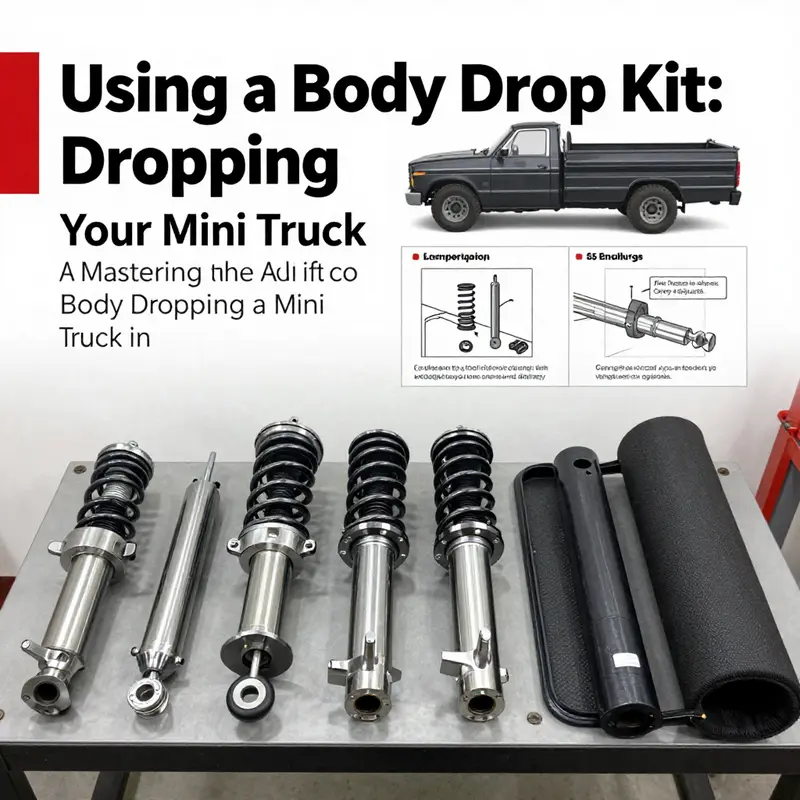
Body dropping a mini truck with a dedicated drop kit is one of the cleanest ways to achieve a low, purposeful stance while keeping suspension performance predictable. A properly chosen and installed kit can deliver the look you want without the wild side effects of haphazard cutting or mismatched parts. That said, the change is mechanical and permanent enough to warrant careful planning, a firm grasp of the kit’s components, and respect for the truck’s original geometry and drivetrain. Read on to understand what a kit does, what it changes under the truck, and how to approach the work so the result is safe, usable, and visually balanced.
A body drop kit is a set of engineered pieces that reposition the truck’s body relative to the suspension. Most kits include lowering blocks or brackets, altered control arms or spacer hardware, and sometimes shock absorber spacers. The simplest kits lower the body by a fixed amount between the frame and axle, while more comprehensive packages address steering, driveshaft alignment, and shock travel. The goal is to reduce ride height while keeping suspension travel and angles within tolerable limits.
Start by visualizing what will change. Lowering blocks sit between the axle and the springs or attach between frame mounts to move the body downward. Shock spacers shorten the effective length of shocks or reposition their mounting points. Modified control arms or drop spindles reposition wheel hubs to maintain wheel fitment and steering geometry after the drop. Together these parts alter the vertical relationship of axle, frame, and body. Small changes look subtle. Bigger drops may require complementary parts such as longer brake lines, modified sway-bar links, or reinforced cab mounts.
A critical mechanical consideration is drivetrain alignment. Dropping the body can change the angle of the driveshaft relative to the differential. If pinion angle moves too far from optimal, vibrations develop and universal joints wear prematurely. Some drop kits include slanted blocks or brackets designed to correct pinion angle. These pieces restore a safer operating angle and reduce stress on the differential and driveshaft. If a kit does not include pinion correction, plan to add it or accept a reduced service life for driveline components.
Suspension geometry is the other major area that demands attention. Lowering affects camber, caster, and toe settings. Without compensation, steering may pull, wear patterns on tires will show, and handling at higher speeds can become unpredictable. A quality kit is engineered to keep these geometry changes small. It might move control-arm mounting points or include adjustable components so alignment can be reset after installation. Always plan a professional alignment post-install. The alignment is not optional; it’s essential to making the modification safe and predictable.
Ground clearance is the trade-off you accept for the look. Dropping the body significantly reduces clearance at the frame rails, exhaust, and oil pan. Consider daily driving routes, speed bumps, and driveway slopes when choosing a drop height. If the truck will see rough roads, steep driveways, or off-road use, a modest drop is the wiser choice. If you mostly cruise smooth pavement and attend shows, a more aggressive stance might be acceptable — with the understanding that the vehicle’s utility decreases.
Materials and build quality matter. Lightweight aluminum blocks resist corrosion and reduce added unsprung weight. Steel brackets are extremely strong but can introduce rust points if not finished properly. Pay attention to the fasteners included in the kit. Grade-appropriate bolts and hardened washers are necessary to avoid failures. Bushings—rubber, polyurethane, or spherical—determine whether the ride remains compliant or becomes harsh. Polyurethane bushings are common for lowered setups since they control side-to-side motion better than stock rubber. A cheap kit that sacrifices material quality or leaves out critical alignment pieces will cost more over time.
Installation requires a methodical approach and some shop-level tools. Vehicle support and safety are primary. Use quality jack stands, wheel chocks, and follow a vehicle-specific service manual for torque values and disassembly steps. Many kits require removal of the bed or cab or at least partial disassembly of body mounts to access mounting points. This is not always a simple bolt swap; some installations take hours and call for careful measurement and mock-ups before final torqueing. If a kit instructs cutting or welding, consider having a professional shop perform that work. Poorly executed frame or cab modification can introduce structural weaknesses.
Brake and fuel system implications should not be overlooked. Lowering the body can put additional tension or slack on brake lines, parking-brake cables, and fuel filler hoses. Kits often require longer brake lines or relocation brackets. If the kit doesn’t address these items, expect to add them. Do not let a modified truck have stretched, kinked, or rubbing lines. A line failure at any speed is dangerous.
Sway bars, bump stops, and shock travel influence how the lowered truck feels. With less travel, the bump stops engage sooner. That can create a harsh transition over a sharp bump. Some installers fit progressive bump stops or tune shutter travel by limiting shock length. Sway-bar links may need shortening or swapping to prevent binding. If shocks are not shortened or replaced to match the drop, you can lose damping control and create a floaty or harsh ride. Most responsible kits recommend replacing shocks with models tuned for lowered applications.
Alignment and road testing mark the final phase. Before putting the truck back on the road, double-check torque on every fastener after a short test drive. Then get a professional alignment with specifications suited to lowered vehicles. Expect to set more negative camber than stock and to adjust toe tightly. During the first few hundred miles, recheck fasteners and inspect for rubbing, leaks, or unusual noises. Any vibration, pull, or new noise should be addressed immediately; continued driving can cause component failure.
Choosing the right kit starts with realistic goals. Decide on the target drop height and whether the truck will remain a daily driver. If you want a three-inch drop but still need occasional utility, prioritize a kit that includes pinion correction and adjustable control arms. If the truck is a show vehicle mostly parked or trailered, you can accept a more extreme kit but still invest in quality components to protect expensive parts.
Compatibility is crucial. Frame years, axle types, and suspension sub-variants matter. Use a kit that specifies compatibility with your model year and axle configuration. A universal kit is rarely a perfect fit. If the fit claims are broad, verify with photos and measurements. Many installers mock-fit components on the stands and measure ride height and pinion angle before final assembly. That extra step avoids surprises.
Professional installation is recommended for most people. A skilled technician knows the pitfalls of lowered geometry and will foresee needs for brake-line lengthening, alignment adjustments, and driveline changes. If you choose to do the work yourself, budget time for research, patience for precision, and an alignment shop afterward. Keep the kit’s instructions close and follow torque charts to the letter.
A lowered truck requires different driving habits. Reduce approach and departure speeds on steep driveways. Watch for soft curbs and avoid hard entries to garages. Plan routes to avoid speed humps where possible. The pay-off is a truck with a planted look and reduced aerodynamic lift at speed. The compromise is less clearance and more attention to where you drive.
Maintenance after a drop includes frequent inspections. Check fastener torque, look for cracked welds or fatigued bushings, and monitor tires for uneven wear. Re-lubricate fittings where applicable and replace any worn components promptly. Document changes and keep a log of modifications and torque settings. That record helps when diagnosing future issues or if you ever return the truck to stock.
If you value community resources during the decision process, refer to the mini truck community blog for build stories and galleries. Real-world photos and owner feedback reveal subtle issues not obvious in sales copy. These community posts help set realistic expectations about ride quality and usability.
A final note on legality and safety: a lowered truck may fall outside local vehicle height regulations. Check local rules before making permanent changes. Insurance and inspections can be impacted by structural modifications, so disclose changes to providers where required. Above all, prioritize structural integrity and roadworthiness. A good kit, professionally installed and followed by a proper alignment, will give you the low stance you want with minimal compromise to safety.
For a concrete reference to a drop-block style kit and its design focus on correcting pinion angle, see the product listing here: https://www.alibaba.com/product-detail/3-Lowering-Drop-Blocks-Kit-Fits-Pickup_1600547898255.html
Professional Priorities: Ensuring a Safe, Legal Body Drop for Your Mini Truck
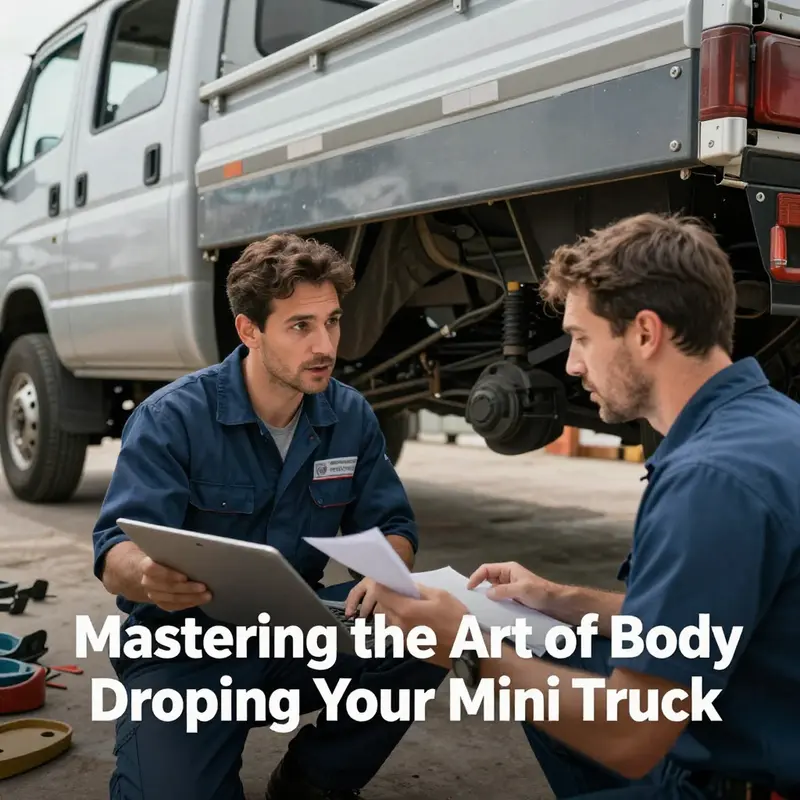
Body dropping a mini truck is more than a styling choice. It alters how the vehicle carries weight, reacts to road inputs, and meets legal standards. A professionally executed body drop balances appearance, function, and compliance. This chapter walks through the essential professional considerations you must address before, during, and after a body-drop project.
Begin with a clear objective. Define why you want the body dropped. Is it to improve cargo access, achieve a particular stance, or to adapt the vehicle for a specific use? The answer shapes scope. A modest drop for easier loading demands different work than a dramatic, show-oriented transformation. Stating the goal early helps frame decisions about reinforcements, suspension changes, and legal exposure.
Structural integrity is the single most important concern. When the bed and mounting points are altered, load paths change. The factory design distributes forces through frame rails, crossmembers, and bed mounts. Cutting, relocating, or shortening those connections without proper reinforcement ruins that balance. A professional approach starts with inspection. Check frame condition, rust, and previous repairs. A compromised frame must be repaired or replaced before any drop begins. Ignoring this sets up potential failure under load.
Reinforcement must follow any structural change. Adding crossmembers, gussets, or steel plates restores rigidity. Professionals often perform finite element or stress analysis on modified sections. This quantifies stress concentrations and guides reinforcement placement. Reinforcements should be designed to prevent frame twist and avoid creating new weak spots. Welding quality matters. Use certified welders and techniques rated for automotive structural work. Poor welds lead to fatigue cracks and sudden failures.
Suspension geometry cannot be an afterthought. Moving the body relative to the axles alters ride height, suspension travel, and alignment. These changes affect steering response and braking stability. A professional shop will evaluate how a drop affects control arms, shock mounts, and sway bar links. If suspension mounts are relocated, maintain proper roll center and camber characteristics. Compensating with custom brackets, reoriented shackles, or engineered shorter shocks keeps handling predictable.
Weight distribution shifts after a body drop. The truck’s center of gravity may lower, but local mass concentrations can change. This alters axle loads and can exceed rated limits. Before modifying, calculate expected axle loads for typical and maximum cargo. Ensure the frame, axles, and tires can handle the new distribution. Professionals use scales and load studies to verify results. If axle overload is likely, plan upgrades for springs, axles, or tires.
Braking performance must remain effective. A lower ride height can change the balance between axles under braking. In extreme cases, it can reduce available brake force where needed most. Upgrading components should not compromise the original braking balance. Keep braking distances and fade resistance in mind. A certified technician will test the vehicle under controlled conditions after modifications and adjust or upgrade braking components as needed.
Road clearance and obstacle negotiation are often reduced with a body drop. Consider common conditions the truck will face. Will it travel over speed bumps, steep driveways, or jobsite debris? Reduced clearance increases the risk of undercarriage damage and sudden stops. Professionals recommend designing skid plates, low-profile bumpers, or rerouting exhaust and fuel lines to protect vital parts. Protecting the fuel tank and brake lines prevents catastrophic failures from a single hit.
Electrical and fuel systems require attention. Lowering the bed may change the routing length of fuel lines, brake hoses, wiring harnesses, and control cables. Slack or tightness in these systems creates hazards. Excessive slack can snag and tear. Excessive tension can strain connectors. A professional will reroute lines, install longer or shorter hoses, and secure all wiring to new anchor points. Electrical grounding must be checked after welding, and fuel system integrity verified with pressure testing.
Legal compliance varies by jurisdiction. Many regions impose limits on ride height, bumper position, and lighting placement. They may also define axle load limits and require inspections for modified vehicles. Before work begins, consult local vehicle codes and your motor vehicle department. Professionals are familiar with state and local rules. They can advise on permits, inspection requirements, and acceptable modification ranges. This avoids costly rework or fines down the road.
Documentation is vital. Keep records of all modifications, parts used, and engineering calculations. Detailed welding diagrams, material specifications, and torque charts help future owners or inspectors understand the work. Professionals supply stamped drawings or certificates for major structural changes. These documents may be required for registration or insurance purposes. If you ever sell the truck, good documentation protects both parties.
Insurance implications must be addressed early. Many insurers treat significant modifications as a higher risk. Notify your insurer before any work begins. They will clarify what modifications are covered and whether additional endorsements are needed. Failure to disclose major changes may void coverage. Professionals often work with insurers to submit required documentation and ensure the vehicle remains covered.
Selecting components matters. Use quality materials and parts designed for heavy duty or modified applications. Cheap brackets, mismatched fasteners, and generic hardware increase failure risk. Prioritize materials with known fatigue properties and corrosion resistance. Fasteners should meet grade and torque specifications. If parts are fabricated, choose materials that match or exceed factory strength, and finish them to resist corrosion.
Work with qualified professionals. A reputable shop provides experienced technicians, certified welders, and structural engineers. They know how to preserve or improve crashworthiness and load capacity. Ask for references and examples of completed body-drop projects. A shop willing to show before-and-after inspections, load test results, and client testimonials demonstrates competence. Get written estimates, timelines, and warranties where possible.
Post-modification testing is non-negotiable. After completing the drop, perform a thorough road test. Check alignment, steering, braking, and noise or vibration anomalies. Load the bed to typical and maximum weights and repeat tests. Professionals use scales and alignment machines to confirm that the truck performs within safe limits. They also re-check welds and fasteners after an initial break-in period.
Think about serviceability. Modifications should not make future maintenance harder than necessary. Ensure access to oil filters, drain plugs, and suspension components. If routine tasks become complicated, maintenance may be delayed or skipped, increasing risk. A professional approach plans for service access when designing drop locations and reinforcement layouts.
Plan for resale or inspection. Even if you own the truck indefinitely, future inspections or buyers will scrutinize the work. Stick to reversible methods when possible. If a buyer wants to return the vehicle to stock, reversible alterations preserve value. If permanent changes are required, keep all removed original parts and document the process. Transparency builds buyer confidence.
Finally, seek guidance from authoritative sources. Federal safety guidance outlines expectations for vehicle alterations. Follow those recommendations and adopt industry best practices. If you want community insight or local shop referrals, consult regional resources. For example, the Mini Truck SoCal blog provides local perspectives and practical stories from similar projects. It can help you find shops and learn from hands-on experiences: Mini Truck SoCal blog.
For official safety standards and deeper regulatory guidance, consult the national agency that oversees vehicle modifications. Their pages explain when and how to maintain or improve original safety performance during alterations. Refer to this resource for authoritative rules and recommendations:
https://www.nhtsa.gov/vehicle-modifications
A professionally managed body-drop project starts with clear goals, respects structural integrity, and follows legal rules. Use qualified engineers, certified welders, and reputable shops. Document everything, test thoroughly, and communicate changes with your insurer. Done this way, a body drop enhances your truck while keeping drivers and cargo safe.
Final thoughts
Body dropping your mini truck not only enhances its aesthetic appeal but also transforms your driving experience. By understanding and applying methods for suspension modifications, tire and wheel adjustments, and utilizing body drop kits, you can achieve the perfect stance that will make your mini truck stand out. Remember, safety and legal compliance are paramount, so consider professional help if you’re unsure about any aspect. Now, go out there and start your journey towards an incredible mini truck transformation!