
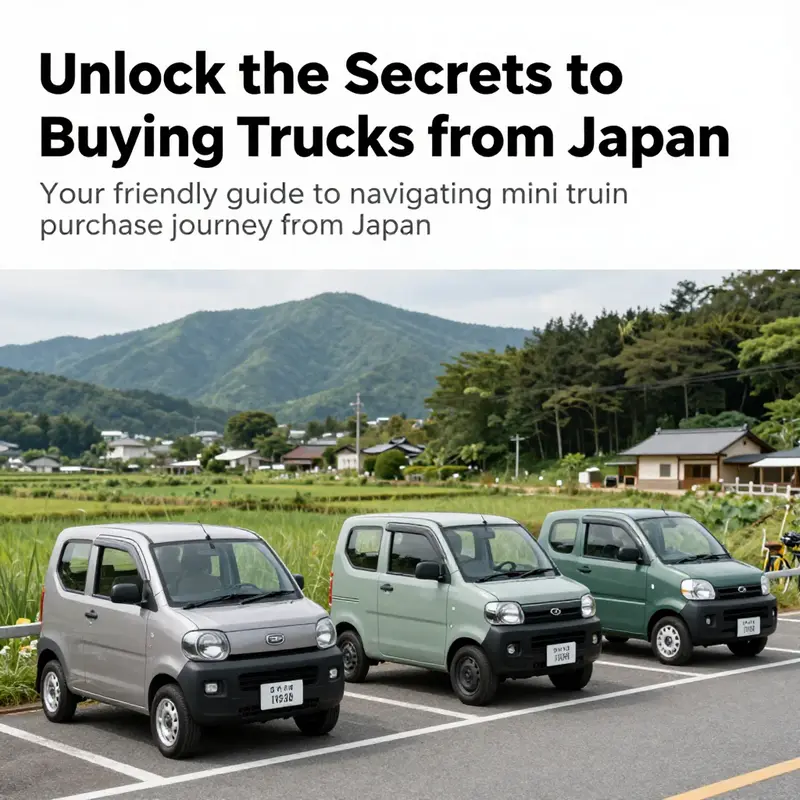
Are you a local small business owner, a residential property owner, or a mini truck enthusiast eager to explore the world of Japanese mini trucks? This guide aims to provide you with clear, actionable steps on how to buy mini trucks from Japan, ensuring you make informed decisions while enjoying the process. From understanding mini truck categories to finding reliable sellers, ensuring export compliance, and navigating the purchase process, each chapter will equip you with the knowledge needed to expand your capabilities, whether for personal use or business. Let’s delve into this exciting journey together!
Tiny Power, Global Routes: A Practical Guide to Buying Mini Trucks from Japan
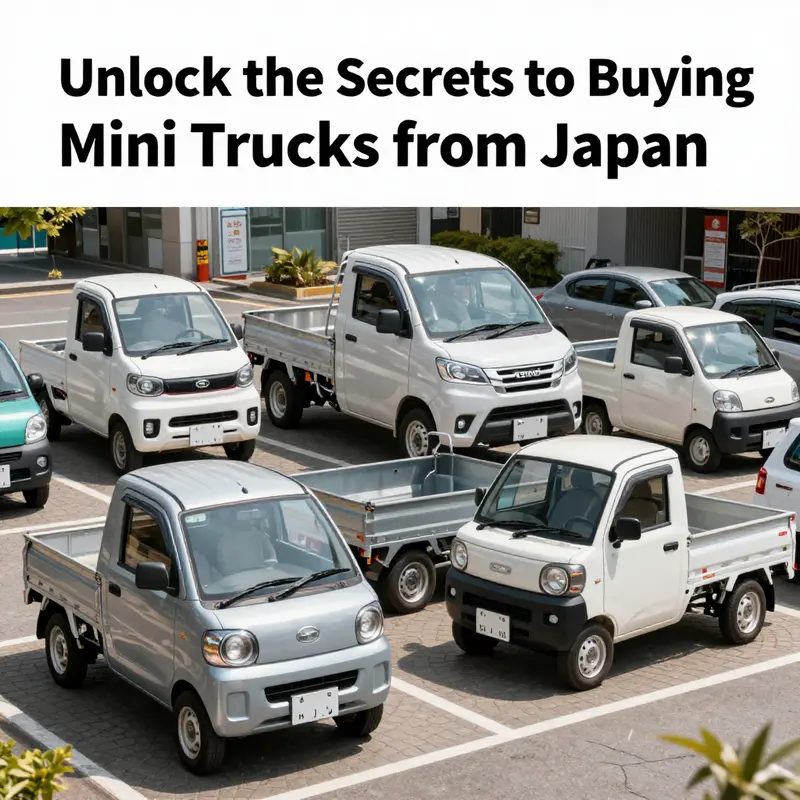
In the crowded lanes of urban logistics, where every square meter of road and every liter of fuel counts, the mini truck—often called a kei truck in Japan—appears as a small but mighty solution. These compact, purpose-built workhorses are designed to squeeze through tight alleys, carry meaningful payloads, and sip fuel with a frugality that can redefine the economics of last‑mile delivery and small-scale farming or maintenance work. Their popularity in Japan isn’t merely a trend; it’s a durable form of transportation that has shaped how small businesses move goods, tools, and time itself. When the idea of buying one of these vehicles extends beyond domestic use to international markets, the journey becomes as much about navigating rules and paperwork as it is about choosing the right chassis, bed, or cab layout. The process rewards patience, due diligence, and the willingness to view the purchase as a long-term investment rather than a quick bargain. If you approach it with curiosity and a plan, the path from a Japanese marketplace to your driveway can unfold with surprising clarity, even for buyers who start with limited familiarity with export procedures or cross-border compliance.
Understanding what makes mini trucks so well suited to diverse tasks helps set the right expectations. In Japan, kei trucks are defined by strict size and engine displacement limits, designed to maximize maneuverability and minimize running costs. They are not meant to replace full-size heavy-duty trucks in heavy industrial settings; instead, they excel in dense urban environments, where narrow streets, frequent stops, and precise parking demand a nimble solution. This is why they have become a staple of urban delivery services, small farms, and contractors who need dependable, low-maintenance transportation that can operate efficiently on short trips and in congested zones. The result is a broad ecosystem: a steady supply of vehicles, a mature network of dealers and brokers, and a set of export practices that, with proper care, can bring solid value to buyers far from Japan.
As you begin the search, it helps to keep the decision in the larger frame of import compatibility. Every country evaluates imports through its own regulatory lens—emissions standards, safety rules, and vehicle age restrictions all shape what can be legally driven on your roads. In practice, this means you’ll be weighing two parallel tracks: the condition, cost, and availability of the vehicle in Japan, and the regulatory requirements you must meet at home. The Japanese market itself is efficient and sophisticated, with a long history of exporting vehicles to every corner of the globe. In 2025, kei trucks continued to hold a dominant share of the new-truck registrations in Japan, underscoring how deeply these compact machines are embedded in the country’s commercial lifecycle. That prevalence translates into a robust pipeline of options, generous flexibility in negotiating price, and a broad range of configurations—from basic workhorses to more equipped variants that offer improved payload capability, better cabin comfort, or upgraded safety features. The practical implication for buyers is clear: there are viable paths to both affordability and reliability, provided the selection aligns with export eligibility and your intended use.
To move from interest to ownership, you’ll encounter three broad routes for acquiring these vehicles. First are official dealerships, which sell new and certified pre-owned units with the reassurance of manufacturer backing and standardized documentation. Second are the large, widely used marketplaces that aggregate listings for both new and used kei trucks, offering a stable mix of options, history reports, and direct contacts to sellers. Third are export-focused brokers who specialize in handling the complex outbound process—export certificates, shipping arrangements, and customs clearance—so buyers can focus on the vehicle’s condition and price. Each route has its benefits and trade-offs. Official dealers may command higher prices but deliver more predictable export paperwork and after-sales support. Marketplaces often provide broader choice and the best odds for striking a bargain, especially on used units, but may require more due diligence to confirm vehicle history and eligibility. Brokers can streamline the export process but add a layer of service fees. The decisive factor is not simply price but the reliability and completeness of documentation, including a clear title, the absence of liens, and a transparent history that makes it easier to pass the import checks at your destination.
The critical early step is to confirm export eligibility before committing to a purchase. This is not merely a formality; it determines whether you will be able to register and operate the vehicle in your country. Key factors include vehicle age, which often correlates with emissions compliance, and the drive layout. Most Japanese kei trucks are right-hand drive, which may require substantial modification or may be incompatible with certain left-hand-drive markets. Emissions and safety standards are equally consequential: the vehicle must be capable of meeting local requirements, whether that means obtaining certifications, making modifications, or applying a compliant conversion kit. A careful buyer maps out the path by aligning the vehicle’s specifications with the importing country’s rules, anticipating any adjustments that might be required upon arrival. In many cases, this means taking a longer view of the total cost of ownership, not just the purchase price, and planning for potential modifications or inspections that ensure full compliance once the vehicle lands in the buyer’s market.
When you engage with the buying process, the search and selection phase is where an informed eye can yield substantial gains. The concept is simple: identify candidates that match your needs for payload, cargo area, fuel efficiency, and reliability, then verify the history and condition. In practice, that means filtering listings by key attributes such as cargo capacity, age, mileage, and overall condition. For overseas buyers, it is common to request a remote inspection or third-party assessment that can verify mechanical integrity, frame condition, and service history. A thorough inspection focuses on the engine, transmission, suspension, brakes, and tires, while also verifying the presence of essential components such as the registration documentation, title, and any export paperwork. If an inspection is possible in person, the buyer should prefer a trusted mechanic with experience in export vehicles, but remote evaluations are a practical alternative when distance or cost makes on-site checks impractical. In both cases, the goal is to construct a clear picture of the vehicle’s condition and to identify any potential red flags, such as signs of heavy use in commercial service or concealed body damage that could signal past accidents.
Negotiation is the hinge that turns listing price into real value. Japanese sellers—whether individual owners or dealers—often anticipate some degree of price refinement, especially on used units. A disciplined approach can yield meaningful savings, typically in the range of a modest, attainable discount, with the possibility of added perks. For example, it’s not unusual to secure a reduction from the listed price coupled with a small package of improvements, such as updated interior features, a refreshed battery, a warranty period, or included maintenance checks. The exact numbers vary by market and vehicle condition, but a sensible target is a discount sufficient to cover a portion of the anticipated shipping and import costs, along with a cushion for any immediate fixes revealed by a pre-shipment inspection. In practice, a hypothetical scenario might show a mid‑year unit listed at a certain price but generous negotiation could bring the cost down with a small concession on additional services. The aim is to arrive at a balance where the purchase price and the post-landing costs align with your budget and the vehicle’s anticipated utility in your operation.
Once terms are agreed, the formalities begin. A sales contract marks the transition from offer to obligation, but the key is to ensure clean title transfer and proper registration. This typically involves handling the Vehicle Registration Certificate and other local paperwork that confirms legal ownership. The export process then unfolds in stages: obtaining an export permit, arranging containerized shipping, and coordinating the international movement of the vehicle. On arrival, your team or a broker will handle customs clearance, duties, and any inspections required by the destination country. Importantly, you must verify there are no outstanding loans or lien agreements on the vehicle before completion. This ensures a clean handover and reduces the risk of legal entanglements after your purchase lands in your country.
The practical realities of cost extend beyond the purchase price. New mini trucks in Japan carry a cost that reflects their efficiency and the quality of the supply chain, while used units offer substantial savings but may require attention to wear and service history. Shipping and import fees contribute a meaningful portion to the overall expenditure, and these costs vary with destination, container allocations, and the vehicle’s specifications. In some markets, buyers also face conversion or compatibility costs to meet local safety and emissions standards. The total is a careful balancing act: you assess the saving on the vehicle against the anticipated investment in shipping, duties, and compliance. The better prepared you are to navigate these elements, the more predictable your total cost will be, and the more confident you’ll feel about your return on investment. A practical takeaway is to treat the initial quote as a starting point, then work through a detailed breakdown that includes shipping, insurance, port handling, duties, taxes, and any modifications required to satisfy local regulations. On balance, the value proposition remains strong for buyers who prioritize affordability, reliability, and efficient operation in light- to mid-distance logistics.
To illustrate the spectrum of options, consider the kinds of configurations that dominate the Japanese market and the reasons buyers choose them. A compact cargo variant with a straightforward bed and basic cabin is ideal for city deliveries and tight spaces. A small flatbed might be preferred by landscape workers or maintenance crews who need to move tools and materials quickly. A cargo van or a more enclosed body offers weather protection and security for sensitive goods, while a simple, robust drivetrain—paired with reliable suspension and brakes—tends to minimize downtime and maintenance costs. Across these variants, the unifying thread is clear: the right mini truck is the one that aligns with your most frequent tasks, fits the routes you operate, and stays economical to run across the years you intend to use it.
The journey from Japanese marketplace to your own yard is not solely about buying a vehicle. It’s about building a practical, resilient asset for your operations. If you are seeking broader context, practical tips, and ongoing updates about mini trucks and their uses, consider exploring the Minitrucks blog for additional perspectives and real-world experiences that complement this chapter’s framework. Minitrucks blog.
As you close the loop on the decision to buy, remember that preparation is the best form of insurance. Gather your questions, delineate your budget, and map the regulatory steps you will need to complete after shipment. The process is intricate, but its rhythm is logical: identify a candidate, verify its condition and eligibility, negotiate with a clear sense of value, manage the paperwork with precision, and plan for the costs of shipping and compliance. If you anchor your expectations in thorough due diligence, you will find that the tambour of the international market quiets into a steady, repeatable cadence. The result is not simply ownership of a small, efficient vehicle but the achievement of a practical capability—a dependable, economical asset that can transform how you move goods, tools, and people across small-scale operations, whether in a city, a farm, or a remote work site.
External resource: For a deeper dive into the international buying framework and official guidance for buyers, see the detailed information available through international buyer resources at https://www.japanautoauction.com/international-buyers.
Navigating Japan’s Kei Truck Market: Sourcing Reliable Sellers and Securing a Smooth Export
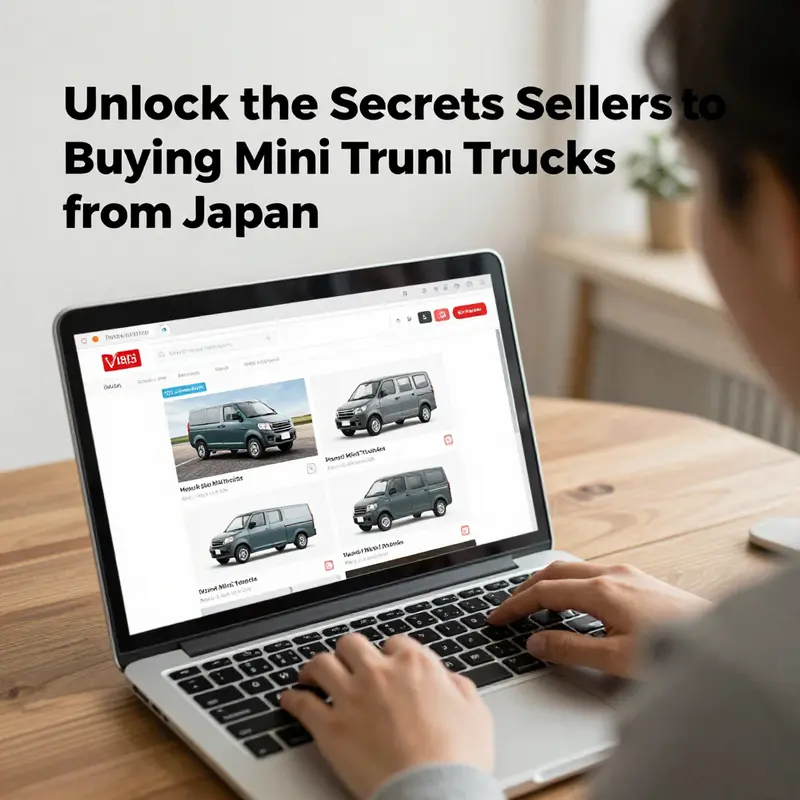
This guide explains how to navigate Japan’s kei truck market, how to source reliable sellers, and how to secure a smooth export. It covers choosing official dealers and authorized exporters, performing inspections, understanding export paperwork, and calculating total cost of ownership including shipping, duties, and local registration. The kei truck market in Japan emphasizes compact size, practical payload, and a robust export ecosystem built around confidence in documentation and compliance. Start by prioritizing official dealers tied to manufacturers’ overseas export channels for reliability, warranties, and access to export documentation. If you consider exporters or brokers, insist on transparent quotes, a clear scope of services, and verifiable references. When evaluating vehicles, assess size, payload capacity, interior ergonomics, maintenance history, and any modifications. Expect a range of conditions in used units, and look for dealer-backed warranties or certified pre-owned programs where available. Obtain a professional inspection from a certified technician, or coordinate with an independent inspection firm for remote assessments. Confirm vehicle history for accidents, prior rental use, and lien status. During negotiations, use data on comparable prices and documented condition to justify offers, and be prepared for value-added perks or service packages. After agreeing on price, ensure paperwork is ready for ownership transfer, confirm export permits, arrange container space, and choose ocean or air transport with sea freight remaining common for kei trucks. Understand the destination country’s import rules, duties, taxes, and registration requirements, and ensure the exporter provides an itemized cost breakdown that includes shipping, insurance, port handling, and any destination charges. Finally, verify there are no outstanding loans or liens on the vehicle, secure a clean title, and plan for maintenance and spare parts in the home market. As you proceed, keep the process structured: verify seller credibility, maintain a clear paper trail, and review all documents before signing. If you want additional guidance, seek curated resources that summarize how international buyers engage with Japanese sellers through legitimate channels and provide practical scenarios that illustrate the typical export workflow.
Crossing Borders with Confidence: Mastering Export Compliance When Buying Mini Trucks from Japan
Buying a kei truck from Japan offers practical advantages for small businesses and solo operators: maneuverability in tight urban streets, lower operating costs, and a supply of capable, purpose-built workhorses. Yet the journey from a Japanese lot to a long-haul route or a local job site is not a simple purchase; it is a carefully choreographed process that sits at the intersection of logistics, law, and long-range planning. The kei truck category itself is defined by a compact footprint and strict government regulations. In general terms, a true kei vehicle sits under a defined engine displacement and dimensional envelope, with a payload that fits within the narrow window of light-duty operation. The appeal is clear: a vehicle that can squeeze through crowded streets, sip fuel, and offer a practical cargo space for daily tasks. But the moment you decide to export one to another country, you step into a regulatory landscape that varies by destination, and by design, Japan’s own rules and the import standards of your country may diverge in meaningful ways. Understanding these distinctions is the first step in a smooth, legally compliant purchase—one that preserves the value of the vehicle and protects your investment across borders.
In practice, the compliance picture centers on three core pillars. The first is the kei classification itself—engine size, exterior dimensions, and gross vehicle weight—because these benchmarks often determine how the vehicle is treated on the road in both Japan and abroad. The second pillar concerns the destination country’s safety and emissions regime. No importer can ignore the requirements that govern how a vehicle is tested, certified, and allowed on the road in their home market. The third pillar is the export process, which connects the seller, the exporting broker or agent, and the buyer through a chain of documents, inspections, and shipments. When these pieces align, a Japanese mini truck can move from a listing to a compliant, road-ready asset in a way that preserves value and minimizes risk. If you keep the big picture in view, the day-to-day steps become navigable rather than daunting, and you can approach each phase with the confidence that comes from clarity rather than guesswork.
Knowledge of the kei category is not merely an academic exercise; it translates into practical decisions about eligibility and suitability. Kei trucks are designed for light cargo and urban tasks, with a footprint and engine that optimize efficiency and cost of ownership. This often makes them attractive to buyers who plan to operate in environments with narrow alleys, limited loading bays, or roads where larger trucks struggle to maneuver. However, because kei vehicles were developed for a Japanese market with its own standards, exporting them requires a careful assessment of whether the vehicle can meet the technical and regulatory expectations of another jurisdiction. In many cases, compliance hinges on whether the destination country accepts vehicles of that class in the form they leave Japan, and whether modifications or homologation steps are necessary before the vehicle can be registered locally. Some markets require alterations to lighting, mirrors, or emissions equipment; others impose more comprehensive type approvals. The decision to pursue an export hinges on a clear view of these hurdles and a plan to address them without compromising the integrity of the vehicle or the timeline for its arrival.
An equally critical thread in the fabric of export readiness is the choice of how to purchase. There are effectively two paths, each with its own set of risks and rewards. The first route runs through authorized exporters who operate with licensed credentials and experience in the mechanical and legal steps needed to move a vehicle out of Japan. These firms typically handle the heavy lifting: securing export permits, coordinating inspections, arranging compliant modifications where necessary, compiling the documentation package that accompanies the shipment, and guiding the vehicle through customs in both Japan and the destination country. For buyers new to international vehicle trade, this is the most reliable path. It reduces the likelihood that missing paperwork or an inspection shortfall will derail the process at the port of entry. It also provides a buffer if the destination country imposes stringent compliance requirements, because the exporter has experience translating those rules into concrete, actionable steps. The second path—private purchase via generic platforms or auctions—carries a higher degree of risk. While it may appear to offer a lower upfront price, it leaves the buyer exposed to the possibility of noncompliance, delayed shipments, or outright rejection at the destination port. Without a professional export process, the vehicle may not be able to clear inspections or meet local customs criteria, resulting in additional costs, storage fees, or even seizure. The prudent approach is to weigh the price delta against the confidence you have in the export pathway and the certainty you can secure through documentation, condition reports, and post-sale support. This is precisely where the value of an experienced, reputable exporter becomes evident. They act as the bridge between the seller’s listing and the buyer’s compliance obligations, translating country-specific rules into a workable plan and ensuring every document aligns with regulatory expectations.
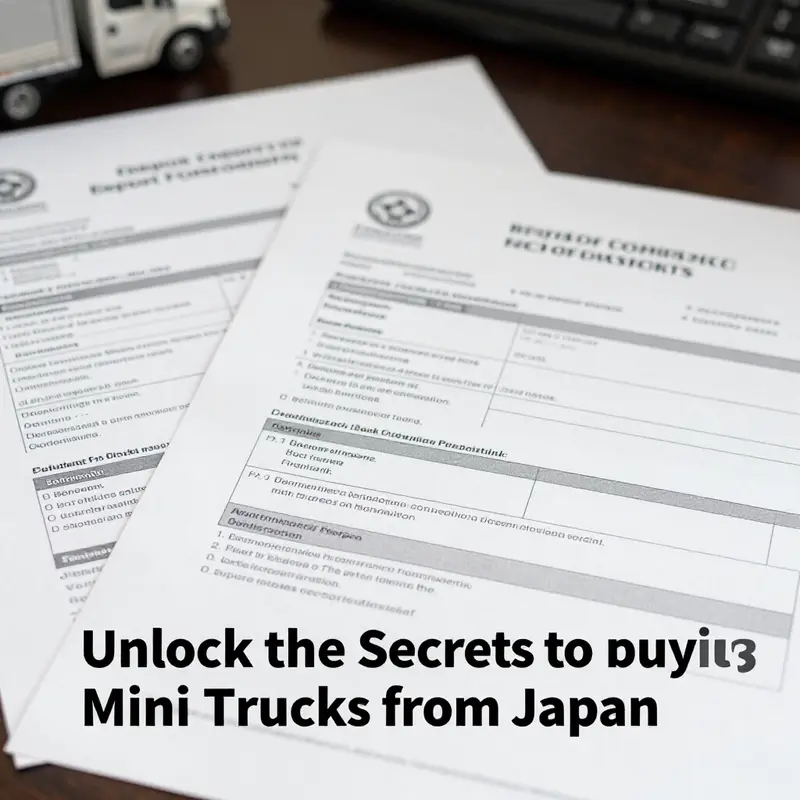
With the pathway chosen, the discussion moves to the practicalities of the export process itself. Paperwork is at the center of the operation. A well-executed sale hinges on a complete, verifiable ownership record and an unambiguous history trail. The vehicle registration certificate from Japan must be transferrable, and any liens or outstanding loans must be cleared before ownership transfers. The next set of critical documents includes the export permit, a bill of lading for the shipment, a commercial invoice, and a certificate of origin. Each document has a purpose in the regulatory sequence: the export permit confirms that the vehicle may leave Japan; the bill of lading coordinates the physical movement; the commercial invoice substantiates the transaction; and the certificate of origin substantiates the vehicle’s country of origin for duties and tariff calculations. Inspections are another non-negotiable element, particularly for buyers outside Japan. In-country inspections or third-party assessments provide a time-stamped snapshot of the vehicle’s condition, mileage, and compliance with the stated specifications. For overseas buyers, remote inspections are often offered through certified service providers who can verify the vehicle’s condition and conformance to the advertised specifications without necessitating an in-country visit. Such inspections can disambiguate uncertainties about the vehicle’s upkeep and help prevent disputes after the purchase.
Cost is an ever-present companion in cross-border procurement. The sticker price on a listing is only the first line of a much longer bill. Shipping costs, which depend on container size and destination, typically form a predictable portion of the tally, but the shipping line’s schedule, port handling charges, and inland transit arrangements can add complexity. Then there are the costs of modification or conformity work. Even when the vehicle itself does not require functional changes to operate in the destination market, some jurisdictions demand adjustments to lighting configurations, safety fixtures, or instrumentation to comply with local standards. In other words, the purchase price is the small portion of an often larger total investment. Add to that the import duties and taxes assessed by the destination country, and the overall economics may shift substantially. An accurate budgeting exercise requires a conservative margin for these compliance costs, plus a buffer for unforeseen regulatory hurdles. A seasoned exporter can help model these scenarios, presenting a transparent cost map that helps buyers decide whether the venture is financially viable before locking in a purchase.
Documentation, risk management, and timing all come together in the negotiation phase. When the seller and buyer are aligned on price, the next steps typically include a formal sales contract, ownership transfer, and the initiation of the export process. Negotiation on price is common in the Japanese market, especially for used vehicles. Buyers who follow the conventional route often achieve meaningful discounts, and can sometimes secure value-added perks such as post-purchase support, warranty extensions on non-European models, or upgraded accessories that improve the vehicle’s practical utility once it lands in its new market. It is essential, however, to ensure that any negotiated perks are within the scope of what can be delivered legally and practically in the destination country. This means confirming that add-ons or warranties do not introduce regulatory conflicts or obscure the vehicle’s compliance status. The goodwill embedded in a well-negotiated deal can pay dividends in the longer term by reducing post-delivery friction.
To keep this process grounded, it helps to anchor decisions in a simple, repeatable framework. Start by validating eligibility in your country: are kei vehicles permitted, and if so, under what conditions? Then choose your route: licensed exporters who can shepherd the vehicle through paperwork and inspections, or a more hands-on approach with private purchase and independent assessments, knowing the risks. Next, request a full documentation packet and a detailed cost estimate that includes shipping, conformity work, duties, and taxes. Finally, verify that the vehicle’s condition is confirmed through an inspection report and that the export permit, ownership transfer, and shipping arrangements are in place before you commit to payment. By treating export compliance as a structured sequence rather than a scramble at the last moment, you minimize delays and maximize the likelihood that the vehicle will perform as expected on arrival.
For readers seeking a broader sense of how the Japanese market and its export ecosystem operate, the minitrucks community offers an ongoing conversation that can illuminate practical nuances, regulatory nuances, and market dynamics. A centralized hub for those discussions is the minitrucksocala blog, which provides community-driven perspectives, practical tips, and updated insights that complement formal regulatory guidance. You can visit the blog for a broader sense of how buyers navigate listings, quotes, and the logistics of getting a vehicle from Japan to their own shores: minitrucksocala blog.
Navigating export compliance is not about chasing perfection in a single step; it is about building a chain of well-supported actions that keep you compliant, informed, and protected from the most common missteps. The cornerstone of success is working with trusted partners who understand the regulatory landscape, the shipment timeline, and the documentation that anchors every clearance decision. A reliable exporter brings legitimacy to the process, while a prudent buyer contributes due diligence, patience, and a willingness to adapt—whether that means agreeing to country-specific modifications or adjusting timelines to accommodate regulatory checks. By embracing this collaborative approach, you can transform what feels like a complex regulatory puzzle into a disciplined, reproducible buying journey. When the dust settles, the kei truck you secured in Japan will emerge as a dependable, legal asset in your local fleet, ready to support your operations with the efficiencies that attracted you to this path in the first place.
For readers seeking official, country-specific guidance, it is essential to consult a primary regulatory or trade authority that codifies import standards and vehicle registration rules. In addition to practical due diligence with exporters and inspectors, official sources provide the authoritative framework that governs whether a vehicle can even be registered in your jurisdiction. A widely recognized gateway for international trade information and regulatory guidance is the Japan External Trade Organization (JETRO). Their resources cover licensing, compliance checks, and partner directories that help align your import plans with national requirements. This official resource offers a structured, authoritative overview of the prerequisites and processes involved in exporting Japanese vehicles to international markets. See https://www.jetro.go.jp/en/ for comprehensive guidance and current updates on export-related regulations.
In sum, buying a mini truck from Japan is a feasible and potentially very rewarding endeavor, provided you enter the process with a clear map of the regulatory landscape, a chosen route for export compliance, and a realistic understanding of total costs. The kei category’s appeal is matched by the complexity of crossing borders, but with careful planning and a trusted export partner, you can transform a listing into a legally compliant, road-ready vehicle. The journey—while intricate—becomes navigable when you focus on the core mechanics of eligibility, documentation, and cost. The result is a practical, economical work vehicle that can deliver steady returns and reliable service in a way that only a purpose-built kei truck can.
From Listing to Delivery: Mastering the Journey to Buy Mini Trucks from Japan

A purchase of a Japanese mini truck is more than a transaction; it is a carefully choreographed journey from a catalog page to a freshly delivered vehicle that fits your daily tasks as if it were tailor-made. The kei truck, with its compact footprint and surprisingly versatile capacity, has earned its standing as a workhorse for urban deliveries, rural errands, and everything in between. When you begin this journey, you are stepping into a market where vehicle classification, export logistics, and local compliance converge. The path is navigable with patience, due diligence, and a clear sense of what you plan to do with the truck once it crosses the border. The goal is to align your expectations with the realities of international trade, the specifics of Japanese vehicle practice, and the regulations of your home country, while keeping the flow of money, time, and risk within reasonable bounds.
The first mile in this journey is recognizing what a mini truck is and why it remains the preferred option for many small businesses and individual operators. In Japan, these vehicles are designed to be compact and economical, optimized for narrow streets, tight loading bays, and frequent low-speed maneuvers. Their appeal lies in efficiency: low upfront cost relative to larger trucks, excellent fuel economy, simple maintenance, and a nimble footprint that can maneuver through congested neighborhoods or off-road farm lanes with confidence. That efficiency becomes even more compelling when you compare ownership costs over several years, including insurance, taxes, and routine upkeep. The market data from the mid-2020s underscores the appeal: mini trucks accounted for a substantial share of new-truck registrations, confirming their popularity with fleets and solo operators alike. It is this pragmatic balance between size, capability, and operating expense that makes the buying process feel less like a gamble and more like a strategic choice for the tasks you want to complete.
To start, you must internalize the Japanese market’s basic structure. Vehicles in Japan are categorized with precision, and that classification translates into how you shop and price. Mini trucks sit beneath a limit that differentiates them from larger commercial vehicles, and this cap is a signal to buyers about efficiency, handling, and regulatory expectations. Understanding that structure helps you set realistic goals for what you want to acquire: a vehicle that thrives in tight city routes, but that still offers enough payload for daily operations—whether you’re delivering parcels, running construction materials to a site, or swapping in-season produce at a farm stand. This perspective also guides you toward the right procurement channels. In Japan, you can purchase through official dealerships, where both new and lightly used stock may exist, or through specialized used-vehicle markets that cater to export buyers. Export brokers add another layer, offering end-to-end service that covers export documentation, container transport, and import compliance. The common thread across these channels is the need for clarity about export eligibility and the exact paperwork required to move a vehicle from Japan to your country of operation.
Before you even consider a specific listing, you should be mindful of eligibility for export. Not every Japanese vehicle can be shipped overseas, and several practical gatekeeping criteria matter. Age is a frequent hurdle; vehicles beyond a certain age may struggle to meet emissions standards or to pass the inspection regimes of destination countries. The right-hand-drive configuration typical of Japanese vehicles can complicate adoption in markets that prefer or require left-hand-drive layouts, although some jurisdictions handle this with conversion programs or specific compliance pathways. Emissions and safety standards are another critical filter. The vehicle must be demonstrated to meet or be convertible to meet the local standards your country enforces, whether those relate to tailpipe emissions, on-board diagnostics, or safety equipment. These checks are not mere formalities; they shape the cost, timing, and feasibility of your import. It is wise to work with a seller or broker who can confirm export eligibility up front and who can identify alternative options if a target listing does not meet regulatory requirements.
With eligibility in mind, the purchase process unfolds in a few interconnected stages. The search and selection phase is about narrowing a field that might contain dozens or hundreds of listings into a handful that deserve closer scrutiny. In Japan, you would typically filter by fundamental criteria such as model family (the general kei-truck archetype rather than a specific badge), mileage, model year, overall condition, and price. This filtering helps you avoid overpaying for a truck that has spent too much time on the road or that carries hidden maintenance burdens. For overseas buyers, it’s especially wise to lean on third-party services in Japan that can retrieve detailed vehicle histories and verify the current condition of the truck via remote assessment. These checks can include evaluation of the exhaust system, suspension wear, and any signs of prior accidents. A thorough remote inspection should be seen as a substitute for the in-person test drive when distance makes a physical visit impractical.
Negotiation is not a mysterious art in this market; it is a practical exercise grounded in market knowledge and flexibility about the included terms. Sellers in Japan often expect some room to maneuver and can offer value-added perks when the price is being set for export. Typical adjustments can range from a modest discount off the listed price to the inclusion of beneficial extras, such as upgraded navigation or a service extension. A careful negotiation not only reduces the sticker price but also improves the post-sale value of the vehicle for your needs. A concrete illustration helps anchor expectations: a listing might show a mid- to late-model mini truck near a baseline price in your currency, with room to negotiate down by a noticeable margin through negotiation of fees or a minor price concession, sometimes paired with additional perks. The precise figures vary, but the principle holds: do not accept the first price without exploring what can be reduced or bundled in. Within this phase, it can be helpful to consider which non-monetary terms matter most to you—such as post-purchase support, availability of spare parts, or a limited warranty extension—and to align your bargaining strategy around those levers.
Assuming you reach a mutually agreeable price, the next portion of the journey involves formalizing the purchase and preparing for export. The sales contract seals the deal on the Japanese side, but the real work begins with ownership transfer and export documentation. Transfer of ownership is typically executed through the national vehicle register or a similar official registry, often requiring a certificate of registration transfer and proof of sale. You will also need to confirm that there are no outstanding loans or liens on the vehicle before export, a step that protects you from hidden financial claims that could complicate registration in your country later on. Then comes the export phase: obtaining an export permit from the appropriate customs authority, arranging containerized shipping, and coordinating the port-to-destination leg of the journey. The export pathway is seldom a straight line; it is a network of procedural steps that must align with both Japanese authorities and the import regime of your country. A reputable exporter or broker will handle much of this implementation, but it’s crucial that you review the process and confirm estimated timelines, as these factors affect operational plans and cash flow.
The financial considerations extend beyond the purchase price and shipping charges. Insurance during transport is a prudent precaution, and you should factor in insurance costs into the overall cost of ownership. Import duties and taxes in your home country can be substantial, depending on how your government tallies duties on used vehicles and on the vehicle’s weight, value, and age. Some regions impose inspections upon arrival that can lead to additional compliance costs if modifications or certifications are required to meet local standards. It is essential to request a clear, itemized breakdown of all costs, from the moment you sign the purchase agreement to the moment the keys are handed over in your driveway. If you are new to this process, you will find that some of these components are negotiable or adjustable, particularly shipping terms, port handling charges, and the inclusion of internal documentation that simplifies import clearance.
The practical reality is that buying a mini truck from Japan can be a cost-effective route if you approach it with a well-structured plan. Prices for new kei trucks in Japan can be enticing, and even used examples can deliver substantial savings compared with equivalents in other markets. However, those savings are not automatic; they depend on your ability to secure a favorable exchange rate, negotiate efficiently, and manage the export and import steps without delays. A careful buyer will budget for contingencies, such as delays in shipping, extra charges at the port of entry, or the need for post-import inspections and modifications. The idea is to preserve the primary advantage of the kei truck: a compact, efficient work vehicle that can perform a broad range of tasks with reliability and minimal operating costs over its service life.
For readers who want a pragmatic path forward, consider approaching the process with a clear checklist that you carry through every step. Start by identifying the precise tasks you expect the vehicle to perform, and set minimum tolerances for mileage and condition. Next, determine whether you will buy through an official dealership, a specialized used-vehicle market, or an export broker, recognizing that each route has its own advantages and limitations. Then, verify export eligibility up front and confirm how each channel handles the paperwork, including the transfer of ownership and the export permit. When evaluating a listing, insist on a comprehensive history and, if possible, a third-party inspection in Japan. Practice negotiation with a target margin in mind, but stay flexible on non-price terms that may improve the truck’s long-term value to you. Finally, line up the logistics—shipping, insurance, and the anticipated import process—before you commit so you can predict timing, avoid surprises, and keep your project on track.
If you want a more in-depth view of how compact commercial vehicles compare in the broader market, consider exploring detailed model comparisons and specs on one of the industry-focused pages. This can help you balance concerns about payload, cargo space, and durability against price and availability. model comparisons and specs. While individual badge recognition is less important than getting the right fit for your workload, this kind of resource helps you calibrate expectations and choose between what is available in the marketplace at the moment you are ready to buy.
As you begin to execute the steps, you will also want to stay connected to broader market context. A well-timed purchase can offer notable savings, particularly when you align your search with typical export cycles and seasonal fluctuations in shipping rates. The global landscape for used Japanese light commercial vehicles has remained favorable for buyers who play by the rules and invest in due diligence. This is not a process to rush; the value lies in careful evaluation, transparent communication with the seller or broker, and a robust understanding of the destination country’s import regulations. With that foundation, you can navigate from a promising listing to a legitimate export and, ultimately, a smoothly registered vehicle that serves your needs well for years to come.
In closing, the purchase process for mini trucks from Japan is a structured journey that rewards persistence and preparation. Start with a clear view of your intended use, verify export eligibility early, and approach negotiations with a calm, data-driven mindset. Choose a channel that provides the right balance of price, reliability, and service, and insist on thorough inspections and complete documentation. The goal is a straightforward import experience that minimizes risk and maximizes the utility of the vehicle once it arrives. For ongoing reading on related topics and further context, you can explore broader industry insights and practical guidance via external resources that discuss market trends and import complexities. As you plan your next steps, remember that the right partner—whether an official dealer, a used-vehicle marketplace, or an experienced export broker—can be the difference between a rewarding investment and a costly misstep.
External resource for deeper context: https://www.specializedcar.com/japan-truck-market-2025
Final thoughts
In summary, buying a mini truck from Japan can be an exciting opportunity for local small business owners, residential property owners, and enthusiasts alike. By understanding mini truck types, finding trustworthy sellers, ensuring suitable export compliance, and effectively navigating the buying process, you can secure a reliable and efficient vehicle that meets your needs. Keep this guide handy for a seamless transaction experience and to make the most of your investment in a mini truck!