

For local small business owners, residential property owners, or mini truck enthusiasts, importing a mini truck into China can be an exciting but complex journey. Understanding how to navigate this process increases your chances of success from the outset. This guide aims to break down the important steps involved in importing a mini truck, ensuring you’re well informed. We will cover the necessary legal import channels, pre-import preparations including market research, and the intricate customs clearance and registration process. By the end, you’ll have the detailed knowledge you need for a smooth import experience.
Choosing a Legal Import Channel for a Mini Truck: A Practical Guide to the U.S. Path
The allure of a nimble, capable work vehicle often travels with the dream of bringing a mini truck across a border and into daily use. Yet the path from overseas vendor to usable road asset is regulated, layered, and easy to trip over if you skip the basics. This chapter focuses on the pivotal first decision in that journey: choosing a legal import channel. In the United States, that choice is less about finding a clever loophole than about aligning with the right structure and the right partners so that the vehicle can enter, clear customs, and be registered without unexpected delays. The choice you make here shapes every subsequent step, from documentation and compliance to timing, cost, and post-entry support. To keep the narrative grounded, it helps to view the landscape through two broad avenues: a private importer of record or a licensed customs broker acting on your behalf, with a realistic appraisal of the 25-year rule as the most practical entry point for many private buyers and small fleets.
First, the fundamental distinction between the viable pathways. In the United States, the standard route for privately owned, older vehicles rests on time-tested regulatory pragmatism: if a vehicle is at least 25 years old from its original manufacture date, it can be imported without meeting current safety and emissions standards that would normally govern vehicles on U.S. roads. This is not a blanket exemption from duties or taxes, but a eligibility criterion for compliance with federal safety and emissions oversight. The 25-year rule creates a practical, predictable doorway for many hobbyists and small operators who want a classic or vintage mini truck into the U.S. market for personal use, display, or limited non-road purposes. It matters because it reframes how you approach the rest of the process. You are no longer negotiating a path around modern certification standards; you are leveraging a legal corridor that recognizes the vehicle’s age as the controlling factor. Still, the door does not swing open by itself. It requires careful coordination with the right importing channel, accurate documentation, and a clear understanding of what is and is not permissible under the rule.
This is where the practical distinction between channels becomes critical. You cannot simply treat the import as a do-it-yourself project and dispatch documents from abroad with a hopeful hand. The U.S. customs landscape is designed to require an official entry by a recognized party—commonly an importer of record or a licensed customs broker who can file the necessary customs entries, duties, and ancillary paperwork. An importer of record assumes legal responsibility for ensuring that imported goods meet all applicable regulations and that the entry is completed accurately. A licensed customs broker, by contrast, acts as an expert intermediary who can prepare and submit the entry on your behalf, making sense of the fees, the classification under the correct tariff code, and any specific documentation demands tied to the age claim and country of origin. In practice, most private buyers lean toward engaging a licensed broker or an importer of record because navigating the Single Window and other customs platforms, while technically feasible to do yourself, is a high-risk, time-consuming proposition without professional guidance.
The choice between these options should be guided by several practical considerations. First, evaluate the volume and recurrence of your import activity. If you anticipate a one-off purchase for personal use, a customs broker with import experience in vehicles can offer a lean, predictable process. If you are contemplating ongoing acquisitions, you may benefit from establishing a formal importer of record relationship or working with an importer who can oversee multiple shipments more efficiently, manage compliance calendars, and coordinate post-entry activities such as registration and plate issuance. The second consideration is risk management. Vehicle imports touch on a matrix of issues—age verification, origin documentation, potential misstatements in the value or description, and the risk of delays if the vehicle arrives with non-conforming paperwork. A seasoned importer or broker has the procedural muscle to mitigate these risks before the vessel docks, which reduces the chance of costly rework at the port. The third factor is cost. While engaging a broker or importer adds a fee, their hands-on management of documentation, tariff classification, and post-entry steps can prevent expensive mistakes that cause demurrage, storage charges, or mis-declarations that trigger penalties. In short, the legal import channel you select should be chosen not primarily on price but on capability, reliability, and demonstrated experience with the 25-year rule and related entry procedures.
A practical way to frame the decision is to start from the question of eligibility and documentation in tandem. The 25-year rule is the anchor: it tells you whether you will be pursuing a rule-based import where safety and emissions conformity are not the controlling criteria, or whether you would instead explore more complex routes that aim to certify or permit a newer vehicle lacking such an exemption. If your objective is a vehicle that falls under the 25-year threshold, your initial focus should be on assembling proof of manufacture date, country of origin, and ownership history, since these are the elements that will underpin both the age claim and the customs declaration. For many buyers, this means working with a broker who can verify documents, translate them into the exact formats required by CBP, and guide you through the process of declaring the vehicle under the 25-year rule as a personal import or as a limited-use import with the appropriate constraints.
But there are caveats that deserve explicit attention. The 25-year rule is a gateway, not a guarantee. It does not automatically waive all regulatory scrutiny. Customs will still require a clean entry packet, accurate identification details, and a consistent narrative about the vehicle’s age, origin, and condition. You will still face duties and, depending on the vehicle, perhaps other charges related to the shipment. The rule exists to align with a long-established ethos of allowing cultural and historical vehicles to cross borders without the overhead of modern compliance, but it does not relieve you of everyday import requirements. A well-prepared importer of record will insist on precise VIN verification, a robust description of the vehicle’s condition on arrival, and a clear statement of the intended use that aligns with CBP guidelines for older vehicles.
Beyond the 25-year pathway, there is a broader, consultative option that some buyers pursue when the vehicle in question does not meet the age criterion, or when the buyer seeks to import a newer model. In those cases, an import permit from federal safety and environmental agencies can be sought, often through a coordinated, highly regulated process. This route can be technically feasible but is expensive, time-consuming, and rarely practical for individuals or small fleets. It tends to appeal to collectors with substantial resources or to fleets with a specific regulatory or compliance objective tied to a particular vehicle configuration. The reality for most private buyers remains, in practice, the 25-year rule as the most practical and commonly used legal import channel, especially for those who prioritize personal use, hobbyist participation, or entry into the U.S. market as a small-scale operation.
In evaluating the channel, you should also assess how the partner will handle post-entry steps. Even with the 25-year rule, clearance at the port is only the beginning. The vehicle must be cleared, and then you must navigate the next gate: vehicle registration and licensing in your state. This stage involves its own set of documents—proof of ownership, the import entry number, the bill of lading, and any state-specific forms. Working with a broker or importer who has established relationships with port authorities and state vehicle agencies can dramatically shorten the path to registration. A capable partner will also map out a realistic timeline that links vessel arrival, port clearance, and the state’s registration appointment, reducing the risk that the vehicle sits idle in a port lot or a holding facility while paperwork catches up.
One of the most valuable benefits of aligning with a qualified importer or broker is ongoing support. Importing a mini truck, even under the 25-year rule, is not a one-time event but part of a lifecycle that includes document retention, potential export controls in the country of origin, transport insurance, and the practical realities of handling vintage or lightly used vehicles. A professional partner can help you secure appropriate marine cargo insurance, oversee the transfer of title, and advise on the preservation or modification constraints that may accompany registration requirements. In many cases, a good partner will also help you understand the nuances of cost, including shipping, insurance, duties, and any handling charges at the port, so you have a realistic expectation of the total landed cost. That clarity makes it far easier to assess the project as a whole, rather than chasing incremental savings that vanish under theweight of unforeseen fees or delays.
The decision to rely on a specific import channel also interacts with risk management around documentation quality and the possibility of delays caused by inconsistencies. The paperwork for an older vehicle can be complex, especially when the origin is a different regulatory regime and the documentation standards differ from those in the U.S. A minor misstatement about the year of manufacture or country of origin can trigger questions at the border and stall the entry until corrected. A professional importer or broker maintains quality control checks to ensure that the VIN, the engine number, and the vehicle description align with the documentation provided to CBP. They also help ensure that the declared value reflects the true transaction price and that the entry is properly coded to minimize the risk of misclassification, which could lead to higher duties or penalties. In other words, the right channel is not just about getting the go-ahead to bring the vehicle in; it is about sustaining a smooth, legally compliant process from the moment the purchase is confirmed to the day the vehicle is ready for use.
As you contemplate the path, keep an eye on practical tips that a seasoned importer would emphasize. Start by compiling an age verification plan that documents the manufacture date and the vehicle’s origin in a credible, traceable way. Verify whether the seller can provide a formal letter of origin or other documentation that can be reconciled with CBP requirements. Build a dossier that includes a clear description of the vehicle’s condition, its original configuration, and any alterations that could impact the entry or future registration. When you interview potential partners, ask about their experience with the 25-year rule, their typical port-of-entry playbook, and their track record in handling the post-entry registration process. Listen for concrete illustrations of how they navigated difficult cases, what timelines they achieved, and how they managed exceptions at the port. A partner who can tell you, with specificity, how they mitigated risk and kept a shipment on schedule is worth considering for a project of this scale.
If you are looking to broaden your understanding beyond a single shipment, you can explore a broader ecosystem of information and perspectives by browsing a general resource hub that discusses the broader landscape of mini truck imports and related topics. For a broader perspective on the topic, check out the Mini Trucks Cala blog. The gateway is straightforward and informative, offering a sense of how hobbyists and small operators think about sourcing, shipping, and compliance in the real world. You can learn, for instance, how other buyers approached documentation challenges, how brokers profile risks, and how the process looks in practice across multiple shipments. This kind of background can be invaluable when you later speak with a potential importer of record or customs broker, because you will be able to ask informed questions and better gauge their confidence and transparency.
In sum, choosing a legal import channel for a mini truck destined for the United States hinges on understanding the 25-year rule as a practical entry point, selecting a partner who can shoulder the heavy lifting of documentation and compliance, and aligning on a clear, realistic plan for post-entry steps and registration. The channel you choose becomes the backbone of the entire project, shaping not only the paperwork and timing but also your level of confidence as you move from purchase to arrival, from port to the street. A careful, informed choice reduces risk, improves predictability, and, ultimately, makes the dream of a legally imported mini truck a practical reality rather than a prolonged, uncertain aspiration.
External resource: For official guidance on vehicle imports and the 25-year rule, see the U.S. Department of Transportation’s vehicle imports guidance. https://www.transportation.gov/vehicle-imports
Mapping the Road Ahead: Pre-Import Preparation and Market Research for a Mini Truck
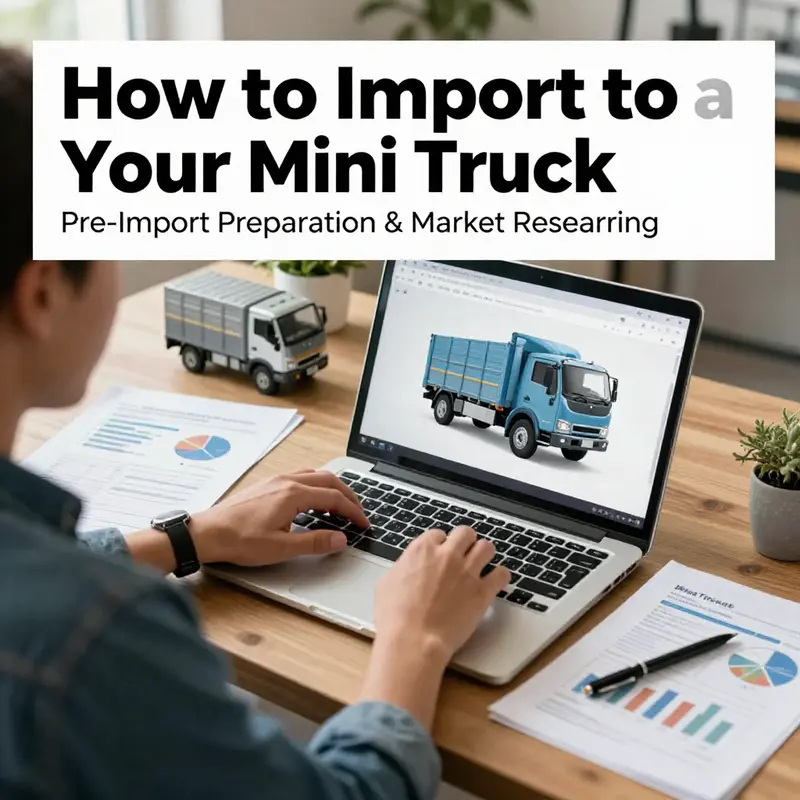
Preparing to import a mini truck into a bustling market begins long before the first inquiry with a supplier. It starts with careful planning, research, and budget alignment. This groundwork shapes the import journey, informing supplier selection, transport choices, and the pace from first contact to vehicle registration. In markets where regulatory clarity affects customs, the pre-import phase becomes a strategic advantage rather than a procedural obligation. It is the soil in which every decision must take root, and its richness often determines whether an import venture blooms or withers under delays and unexpected costs.
Market research, at its core, asks not only whether a mini truck will sell, but where and why. The domestic market for light commercial vehicles is shaped by construction sites, small logistics operators, urban delivery services, and agriculture. Each segment prioritizes features like payload, maneuverability, fuel efficiency, and durability. In dense urban regions, a compact chassis with reliable performance often wins; in rural settings, cargo capacity and easy maintenance can carry more weight. The task is to map the operational contexts where a given configuration is most valuable. This requires talking with potential customers, fleet managers, and local service providers who understand daily constraints and downtime costs. Market demand is dynamic, not a static data point, and the best import planning treats it as an ongoing conversation rather than a one-off verdict.
A global dimension also enters the pre-import calculus. Long-term potential for lightweight commercial vehicles is shaped by macroeconomic trends, urban policy, and vehicle technology. A 2026 market analysis notes that the broader light truck segment is projected to grow, signaling opportunities for operators with the right product fit and service model. The exact figures may change, but the trajectory—the growth in demand, diversification of use cases, and emphasis on reliability and total cost of ownership—highlights the need to align a mini truck with what buyers optimize around. This includes not only price but maintenance costs, fuel efficiency, and local service networks. Practically, you want to understand whether the model can be supported by local after-sales service, spare parts availability, and capable workshops.
Regulatory environment is the other half of the pre-import equation. Compliance is a constant consideration that affects model eligibility, import licensing, and eventual registration. The vehicle must meet emissions requirements and carry appropriate safety and conformity approvals. In practical terms, use a checklist to screen potential models: does the model meet local emission standards, does it carry a recognized conformity certificate, and can the VIN be verified against local rules? Non-compliant vehicles can face delays or require modifications. The pre-import phase is therefore a regulatory risk assessment as well as a market study.
From a budgeting perspective, the total landed cost—the purchase price plus export fees, freight, insurance, duties, VAT, and post-import charges—needs careful forecasting. Sea freight is common for bulk imports, offering economy at container scale. Yet, the cumulative costs of insurance, terminal handling, port charges, and inland transport can move the break-even point. Air freight is faster but much more expensive. In any case, plan several scenarios: full container, smaller consolidated shipments, and air freight if timing demands it. This clarifies feasibility and reveals currency sensitivity in cross-border trade.
Market intelligence becomes a composite picture of customer needs and regulatory realities. Verify that the chosen configuration aligns with preferred payload, wheelbase, and engine performance. Confirm that the vehicle can be certified for import with available documentation and that the VIN meets local standards. A mismatch between VIN data and import documents can trigger inspections or delays. Build a cross-check system early, with VIN documentation that can be verified against registration and conformity rules. Experience matters: work with suppliers who understand the documentation path and can supply export papers that ease port entry.
A key strategic decision from this phase is choosing the right import channel. The two legitimate routes are an Official Authorized Importer and a Licensed Trading Company. Either way, the enterprise must hold the required licenses to bring in vehicles, and individuals are excluded from direct import. This matters for managing processes at origin and destination, from negotiations with manufacturers to handling customs declarations on arrival. A qualified partner saves time and money through established procedures, timelines, and documented risk controls. The pre-import stage should map demand alongside organizational capacity to execute the import through a compliant channel.
Finally, the phase ends with a reminder about the broader ecosystem of partners. A professional automotive freight forwarder can be a dependable anchor in paperwork, regulatory nuance, and logistics. They bring process knowledge and a network of contacts across ports, insurers, and customs brokers. Investing time to select the right partner during the pre-import phase pays dividends through a smoother voyage from contract signing to registration. The goal is to illuminate the terrain so you can navigate it with confidence, knowing your research reduces risks and points to practical paths to success.
If you are ready to compare model options, review specifications to understand configurations aligned with your target customers. See a concise comparison of how different setups perform in common use cases: model comparisons and specs. As you move from pre-import planning to the actual booking, remember that the next phase depends on accurate compliance documents and reliable supplier relationships.
From Dock to Driveway: Mastering Customs Clearance and Vehicle Registration for a Mini Truck in the United States
When a mini truck arrives at a U.S. port, the journey is far from over. The shipper’s bill of lading has been signed, the cargo is allocated to a broker or an importer of record, and the vehicle must pass through a gauntlet of federal safety, environmental, and state registration requirements before it can legally ride a highway. This is the phase where policy, paperwork, and practical logistics converge. The path is straightforward in concept but demands meticulous attention to detail, a clear understanding of who is responsible for what, and a disciplined timeline that respects the rules set by federal agencies and state authorities. Although every import situation has its nuances, the underlying logic is consistent: verify eligibility, clear the border with compliant documentation, and then translate that clearance into a legal, insured, and licensed vehicle on the street.
Eligibility and compliance begin long before a container reaches U.S. soil. In the United States, a vehicle must satisfy federal safety standards administered by the National Highway Traffic Safety Administration and federal emissions rules enforced by the Environmental Protection Agency. The simplest way to think about this is to separate two broad lanes in your planning: the age-based and the standards-based. For many import scenarios, a vehicle that was manufactured to meet FMVSS and EPA standards and is currently noncompliant can be imported only if it qualifies for a narrow exemption. The most widely cited such exemption is the age-based rule: vehicles that are less than 25 years old typically must meet FMVSS and EPA requirements, unless they fall under a specific program such as Show or Display. Vehicles older than 25 years are often exempt from some of these federal requirements, which is why importers frequently consider the 25-year threshold as a practical turning point. The implication for a mini truck is clear: if you intend to import a recent model, you should expect to navigate full compliance, whereas an older model might be eligible for exemptions that simplify entry, but that pathway depends on strict adherence to the rules and documentation that prove the vehicle’s age and origin.
Beyond the age and standard regimes lies the crucial question of eligibility itself. The U.S. Customs and Border Protection acts as the gatekeeper at the border, but the process cannot be successfully completed without a clear plan for how the vehicle will be imported and who will be responsible for the various steps. The importer of record, often a licensed customs broker or a qualified company, must ensure that the vehicle entering the country is properly declared, that the right HS classification is used, and that duties, taxes, and fees are calculated and paid. This is not a formality. The wrong declaration or missing documentation can trigger delays, fines, or even the inadmissibility of the vehicle. A knowledgeable broker understands the exact mix of documents required by CBP, the specifics of how the vehicle’s VIN is verified, and the documentation necessary to establish the vehicle’s eligibility under FMVSS or the applicable exemption.
The documents themselves are not mere paperwork, they are a portable map of compliance. A typical bundle includes a bill of lading, a commercial invoice, and the entry declaration that feeds CBP’s electronic systems. The importer of record must often supply proof of ownership, a factory certificate of origin or equivalent documentation, and evidence of conformity with applicable standards, or the justification for the exemption. For vehicles that rely on exemptions, additional documentation may be requested to demonstrate the vehicle’s age, its historical use, and the jurisdictional basis for the exemption. The formatting of VINs is another common pitfall. A Vehicle Identification Number must be traceable and match the vehicle’s configuration and description in the entry documents. Inaccurate VINs can trigger delays, a rework of the entry, or even a rejection at the border. This is not merely a compliance issue; it is a risk-management issue, because a delay at the port can ripple through scheduling for inland transport, storage, and the subsequent steps of registration.
Once the vehicle has cleared the border, the next phase is the actual clearance in the customs process and the transition to registration. The clearance step involves the physical inspection by CBP, and in some cases by other federal agencies such as the Department of Transportation. The inspector will verify several elements: the VIN, the engine number, and a proper description of the vehicle. They will check whether the vehicle complies with the applicable safety and environmental standards or, if an exemption applies, whether the exemption is properly documented and justified. The inspection also includes a review of the declared value, which feeds the calculation of duties and taxes. Duty rates for light vehicles, including mini trucks, can be a meaningful portion of the total landed cost. In practice, a typical duty line is assessed against the CIF value, with additional taxes layered on top—often a value-added tax or its equivalent and, depending on the jurisdiction, a consumption tax or other local levies. The exact calculation may differ by state and the vehicle’s classification, but the principle remains: the cost of admission is more than the purchase price and shipping; it is a bundle of duties, taxes, and fees that must be anticipated in the early planning phase.
The precise moments of decision come when duties and taxes are determined and collected. After inspection, the importer must pay the applicable duties, VAT, and any other charges. The timing matters. In many cases, payment is required before the vehicle can be released from the port and moved toward inland processing, storage, and eventual registration. The financial flow is as much a part of the compliance journey as the paperwork. A miscalculation or a late payment can stall release and create costly demurrage or storage charges, which in turn alter the overall landed cost and the pricing decisions for the vehicle within the domestic market.
The final stage of the clearance narrative is the transition from border clearance to domestic registration. The moment the vehicle clears CBP, the importer proceeds to arrange for title transfer and vehicle registration with the appropriate state authority. In this system, each state runs its own version of a DMV or motor vehicle agency that governs titles, registrations, license plates, and safety inspections. Although federal requirements establish the baseline for the vehicle’s admissibility, state requirements determine how the vehicle is used on public roads. In many states, the procedure begins with the receipt of an Import Certificate or its equivalent, a document that certifies the vehicle’s clearance and its conformity with applicable import laws. The DMV, in turn, uses this certificate in conjunction with a Vehicle Identification Certificate, the Manufacturer’s Certificate of Conformity, and evidence of the purchase and payment of any applicable vehicle taxes. The DMV will request proof of ownership, such as a title or bill of sale, and may require a safety inspection or emissions test before license plates are issued. In some parts of the country, the emissions regime is strict enough that a formal emissions test is mandatory if the vehicle’s age or configuration triggers state-specific rules. Even when a vehicle is older, there can be a requirement to demonstrate that the vehicle is roadworthy and compliant with basic safety standards before registration is allowed.
The registration narrative also includes a practical, day-to-day reality: timelines. The border clearance and registration process is rarely instantaneous. Depending on the port, the broker’s efficiency, the vehicle’s documentation, and the state’s processing queue, a vehicle may move from gate to gate over a period of days to weeks. The practical person behind the import must plan for this reality. A disciplined timeline includes securing insurance prior to registration, arranging for a pre-delivery inspection when possible, and reserving an appointment at the local DMV. Insurance is not a mere courtesy; it is often a prerequisite for registration and license plate issuance. In many jurisdictions, you must demonstrate that the vehicle is insured as a condition for registration, even if the vehicle has not yet been driven on public roads. The process of registration also has a financial dimension beyond the one-time registration fee. Depending on the state, a series of recurring charges may apply, including annual registration renewals, inspection fees, and, in some cases, a tonnage or weight-based tax. Planning for these ongoing costs is essential to avoid surprises after the vehicle is on the road.
The narrative would be incomplete without acknowledging the role of professionals who orchestrate this sequence. The complexity of the border, the specificity of the documentation, and the discipline required to meet both federal and state rules make a professional freight forwarder or customs broker an invaluable partner. A seasoned partner does not simply handle paperwork; they manage a chain of custody: securing the necessary certificates, coordinating with the port authorities, reconciling the documents for CBP, and guiding the vehicle through the post-clearance lanes of the DMV. Their experience helps mitigate risk—reducing the chances of delays caused by VIN discrepancies, missing certificates, or misclassified HS codes—and can shorten the road from ship to street by steering the import through known bureaucratic bottlenecks. This is not merely a matter of convenience; it is a risk-management strategy that reduces the likelihood of costly missteps and ensures that the vehicle will eventually be titled, insured, and plated with a minimum of friction.
The import journey also carries a set of practical considerations that influence both timing and total cost. Shipping method and transit time are not mere logistics choices; they feed into the documentation readiness and the timing of inspections. Sea freight, while economical for large volumes, adds weeks to the timeline and increases the duration of encounter risk at the port. Air freight, while faster, tends to be cost-prohibitive for a typical mini truck and is generally reserved for urgent, small-volume shipments where time is of the essence. Regardless of mode, comprehensive marine cargo insurance is prudent to cover loss or damage in transit. Insurance is a standard risk-control measure, ensuring that the financial exposure remains manageable should the shipment encounter rough seas, containers mishandling, or other unforeseen events during transport.
The broader takeaway is that the customs clearance and registration process is a structured sequence that rewards preparation, precision, and patience. To align with the article’s broader aim—how to import a mini truck—this chapter has offered a focused lens on the border and post-border phases. It is essential to emphasize that the rules vary by country, and within the United States there are federal and state layers that interact in nuanced ways. The age of the vehicle, its conformity to safety and emissions standards, and the availability of exemptions determine the pathway forward. The import plan should incorporate a realistic forecast of all costs—purchase price, shipping, insurance, duties, taxes, handling fees, inspection costs, and ongoing registration expenses. A robust plan should also anticipate potential delays, from port congestion to DMV backlogs, and to that end many importers rely on a trusted freight forwarder with a track record in vehicle imports and a network of specialists who can respond quickly to documentation gaps or regulatory requests.
For practitioners who want to explore real-world context and community perspectives on importing mini trucks, it can be helpful to consult a dedicated industry blog that curates experiences, challenges, and lessons learned. See the Minitrucks blog for further perspectives that illuminate how other importers navigate similar hurdles and what pitfalls to watch for in terms of documentation and timing. minitrucksocala.com/blog/
As a closing orientation, remember that the exact steps, forms, and timelines you will face depend on the vehicle’s age, its origin, and the destination state’s rules. The general rhythm remains consistent: verify eligibility, assemble complete documentation, secure proper representation, clear the border, and complete registration. Adherence to this rhythm minimizes risk, controls costs, and increases the likelihood that your mini truck will move from customs hold to daily road use without unnecessary detours. For anyone pursuing this path, a careful early assessment of regulatory requirements, an aligned import plan, and a trusted partner are the best assurances of a smooth transition from ship to street. Official guidance and current requirements can be found through federal and state resources, especially the Department of Transportation’s vehicle import program, which provides up-to-date context for those navigating the complex ecosystem of cross-border vehicle movement: https://www.transportation.gov/vehicle-imports
Final thoughts
Successfully importing a mini truck is about more than just the purchase; it requires diligence at every step. From choosing the right legal import channel and conducting thorough market research, to navigating customs clearance and registration, each phase is crucial to ensure a seamless process. By remaining proactive and informed, you can confidently add that mini truck you’ve been eyeing to your business or personal fleet. Take these insights to heart and transform the way you approach your import adventure.