
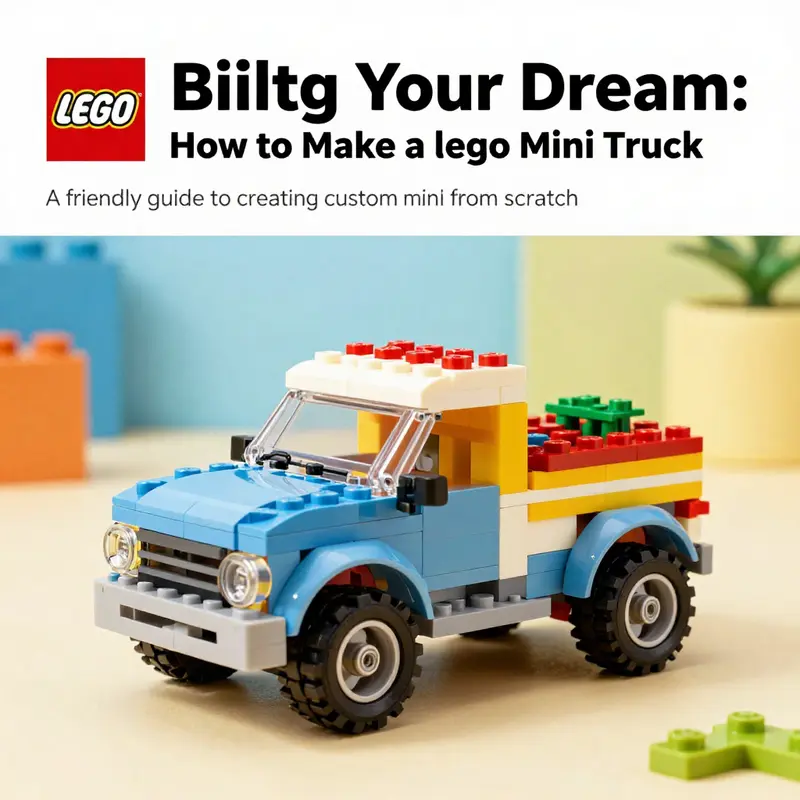
Creating a LEGO mini truck is not just a fun project; it’s an opportunity for creativity and precision. Whether you’re a local small business owner looking to incorporate design into your promotions, a residential property owner wanting to showcase your love for mini trucks, or a hobbyist who enjoys building, this guide will walk you through the process step-by-step. Each chapter will explore the materials you need, the essential design elements, and, of course, the detailed steps to build your very own mini masterpiece. Get ready to dive into the world of LEGO and see your vision come to life!
The Small Hauler Blueprint: A Cohesive, Creative Journey to Building a LEGO Mini Truck
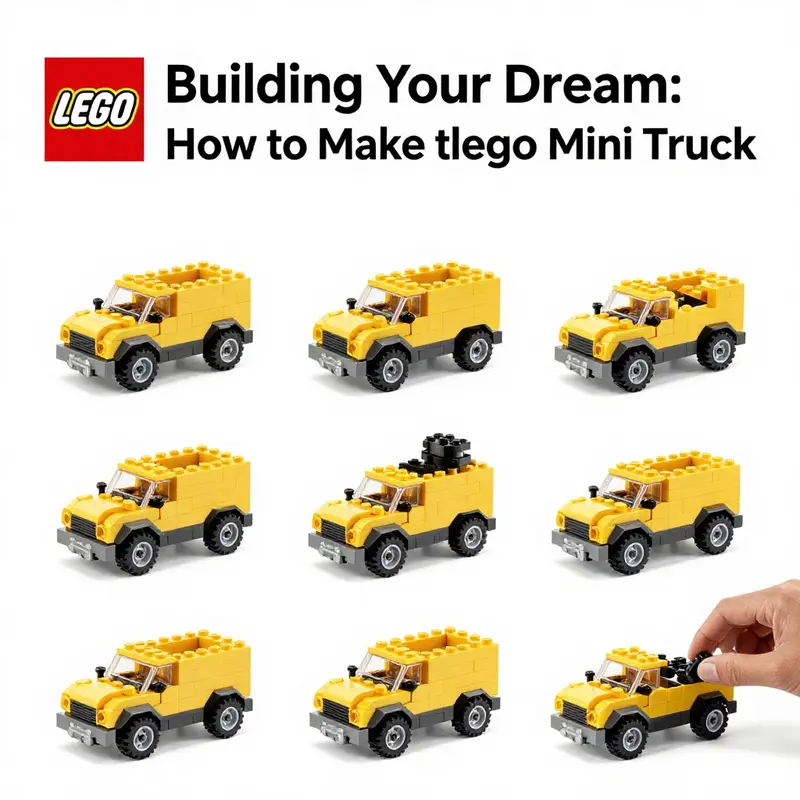
Builders who crave the satisfying heft of a well-proportioned vehicle in miniature often find the most rewarding path is not a race to a finished model, but a patient, cohesive journey that treats every brick as a purposeful part of a larger mechanism. A LEGO mini truck, when designed with intention, becomes more than a simple assembly of pieces; it becomes a compact sculpture that travels through imagination as reliably as it does across a tabletop. The process invites you to balance form and function, to weigh color against silhouette, and to weave structural integrity into every visible surface. In this chapter, the aim is not to churn out a single replica but to cultivate a single, flexible method—one that works whether you’re building a bare-bones hauler or a small, stylized workhorse that hints at a real fleet vehicle. The core idea is to start with a sturdy frame, grow a body that suits the intended scale, and then layer in details that tell a story about the truck’s purpose and personality. Along the way, a few practical choices help keep the build approachable without sacrificing the sense of realism we crave in a compact model. As you read, imagine the truck not as a static toy but as a living project with a visible skeleton and a personality painted in plastic and color.
To begin, gather a versatile stock of pieces. A stable base is the backbone of any mini truck, and the frame benefits from a combination of wider and slimmer elements that lock together with confidence. A 1×6 plate provides a low, strong platform, while a bracket or a few 1×2 elements contribute to a modular frame that can flex slightly if the design needs to accommodate wheels or interior detail without collapsing under pressure. The seating detail, a modest 1×3 brick, anchors the interior and lends a subtle sense of scale that helps the driver’s area feel cohesive with the rest of the chassis. Small bricks and plates become the cab, the bumper, and the cargo area in a rhythm that mirrors the real construction of a working truck. The beauty of this approach lies in the way each piece has both a visible role and a hidden function; the parts are chosen for how they look when the truck is parked, and for how they behave when you move it or adjust the balance.
The chassis is more than a flat stage; it is the first language the model speaks about its capabilities. A sturdy rectangle or square base crafted from larger bricks sets the foundation, and careful alignment ensures the axles will pass smoothly through the middle of the vehicle. The wheels, often using standard sizes like 2×4 or 2×6 blocks, demand precise alignment so that the truck sits evenly and rolls without snagging. For a mini truck that stays true to form, the wheel wells and the undercarriage need a clean, compact profile. The approach is to keep the frame low and wide enough to resist wobble while remaining slim enough to maintain the vehicle’s proportion. As you assemble, consider how the weight distribution will feel in real life; a little extra mass toward the front can simulate a sturdy engine bay and reduce the sense of imbalance that can crop up in small builds.
Once the frame is in place, attention turns to the cab and the body. The cab is a tiny theater where the driver sits and where edges and corners catch the light just so. A compact driver’s compartment can be realized with smaller bricks and a few 1×1 or 1×2 elements that echo window frames and dashboards. Transparent bricks or tiles function as windows, letting light travel through the cabin and adding a sense of depth that is often missing in low-profile builds. The windshield can be simplified with a single pane of clear plastic or with a hinged panel that mimics a rolling door or a front glass. The side windows, too, can be suggested with lighter color accents, creating a rhythm on the sides that guides the eye along the length of the truck. The decorative front section is where you can push the limits of character without complicating the underlying frame. A 1×6 brick with an arch can form the upper curvature of the hood, while a combination of 1×4 plates and 1×2 wall elements builds a grille-like texture that hints at the truck’s personality. A 1×1 light brick and a small plate on the sides offer a simple mirror effect, catching light and hinting at functionality beyond the toy’s appearance.
The body then rises above the chassis, where the main cargo area and the cabin meet in a silhouette that must read clearly from a distance. The body’s core can be built with a mix of 1×2 corner bricks, 1×4 plates, and 2×2 plates, chosen for their bite and symmetry. The goal is to establish a shared geometry that keeps the surface flat and the edges crisp while leaving room for texture and color variations that convey the truck’s intended use—be it a compact delivery vehicle, a rugged utility truck, or a nimble hauler designed for urban missions. If you want a touch of contrast, incorporate a slightly different color for certain panels or plates to emphasize the cargo area, or use a two-tone scheme that respects the model’s scale while providing visual interest. Small 2×2 round tiles can outline the wheel wells or serve as decorative accents near the base, offering a nod to the tire assemblies while keeping the outer lines clean and uncluttered.
With the frame and body taking shape, the next layer of detail lies in the front and the cabin, where form begins to tell a story. The front decoration is more than a face; it’s a hint at the truck’s purpose. A front grille, a bumper, and light accents create a focal point that guides the viewer’s gaze toward the vehicle’s intent. The decorative features should be simple enough to avoid overshadowing the overall silhouette, yet deliberate enough to communicate a sense of function—like a compact work truck ready to tackle a day’s tasks. The mirrors, created with a small 1×1 light brick paired with a plate, should be positioned with care to reflect a real-world stance. These mirrors are small, but they anchor the sense of scale in the mind of the observer, making the truck feel complete rather than stubby or disproportionate.
The cabin deserves its own moment of refinement. The door panels, a 1x3x3 dimension, can be arranged to form a compact doorway within the chassis. A 1×6 plate serves as a roof base, and a carefully chosen combination of plates reinforces the roof to resist flexing under light handling. Inside, a few transparent orange 1×2 and 1×1 plates can simulate interior lighting or a dashboard glow, a tiny detail that speaks to the thought you’ve given the interior without adding unnecessary bulk. The placement of these elements matters: the goal is to catch light and create subtle color shifts that reveal the model’s depth when viewed from different angles. The roof reinforcement is a quiet hero—an ensemble of 1×4 and 1×8 plates that keeps the top sturdy and helps the model retain its shape during play or display. The result is a confident, compact truck body with a robust interior feel and a legible exterior character.
Wheels are the practical heartbeat of any truck, and the mini version is no exception. Four spring-loaded wheel assemblies offer both the tactile realism of suspension and the functional pleasure of a model that rolls with some resilience. The alignment of these assemblies is a test of patience and precision; it’s easy to place pieces so that the wheels rub or ride high on the chassis. The trick is to measure twice and assemble with a light touch, ensuring the axles sit parallel and the wheels maintain consistent ground clearance. If a motorized or remote-controlled variant interests you, this is the moment to consider how to integrate a drivetrain without compromising the clean exterior lines. A minimal, purpose-built transmission can be tucked beneath the body, leaving room for simple batteries and a compact control mechanism. The beauty of this step is that it opens doors to more complex builds later on, while keeping the current model accessible to builders who want a sturdy, hands-on experience.
Finally, the top is secured with a larger plate that acts as a cap and a stabilizing shield. The 4x6x2/3 plate sits over the top, locking in the shape and preventing flex. This last touch is less about visuals and more about the confidence the model gains once the top is secured. A well-wrapped top makes the truck feel complete and less likely to wobble during handling, a small but meaningful quality that transforms a good build into a satisfying one.
The result is a sturdy, well-detailed LEGO mini truck whose parts come together in a way that respects scale, proportion, and playability. The model invites improvisation: you can switch color schemes, alter the cargo area’s configuration, or swap tires to evoke different environments—from urban delivery to off-road expeditions. In the end, the joy lies not only in the finished model but in the process of shifting plates and bricks until the proportions feel right and the silhouette communicates a clear purpose. For builders who want to extend the experience, there are abundant opportunities to explore variations—different cabs, different cargo areas, or even a compact trailer that can be hitched to the main body. These expansions hinge on the same core principle: begin with a solid structure, then layer in details that reinforce function and storytelling.
Beyond the practical steps, a thoughtful build like this offers a chance to engage with the broader maker community. Sharing your approach, comparing different frame strategies, and exchanging color palettes can broaden your understanding of what makes a mini truck look and feel authentic. A simple way to stay connected with such communities is to reference the ongoing builds and tutorials available in related spaces, which provide fresh perspectives and new techniques that can spark your next iteration. For example, readers can explore a community hub that aggregates diverse builds and visual guides, where the language of technique and design comes alive through illustrated diagrams and real-time feedback. This kind of resource can complement your hands-on practice and help you see your mini truck through the eyes of other builders, which often reveals improvements you hadn’t considered on your own. If you’re curious to see how other builders approach the same constraints, a quick visit to the community blog linked here can offer a wide spectrum of configurations and color choices that will inform your own decisions without dictating them. minitrucksocala.com/blog/
As a closing thought, the value of a cohesive LEGO mini truck build rests in embracing a balance between constraints and creativity. The constraints—scale, weight, and compatibility with wheel assemblies—give you a reliable framework. The creativity—how you shape that framework into a distinct silhouette, how you texture the surfaces with plates and bricks, and how you narrate the truck’s purpose through color and detail—gives the model life. This balance is not a rigid rule but a guiding principle that helps you grow as a builder. When you finish, you’ll not only hold a compact, functional representation of a truck but also possess a working blueprint you can adapt, refine, and expand. The journey from base to top, from frame to finish, can become a quiet ritual in which each brick’s placement resonates with intention, and every subtle choice reinforces the sense that you are building not just a toy but a small, thoughtful machine that captures the spirit of real-world engineering in miniature. External resources can augment this practice, and a well-chosen app or instructional guide can provide perspective and structure as you map out your next iteration. For additional guidance and inspiration, you may explore an external toolkit that supports building and learning around LEGO-inspired projects at a broader level, including the digital components that some builders find helpful for planning complex forms. External resource: https://www.lego.com/en-us/builders/app.
Laying the Groundwork: Essential Materials and How They Shape a LEGO Mini Truck
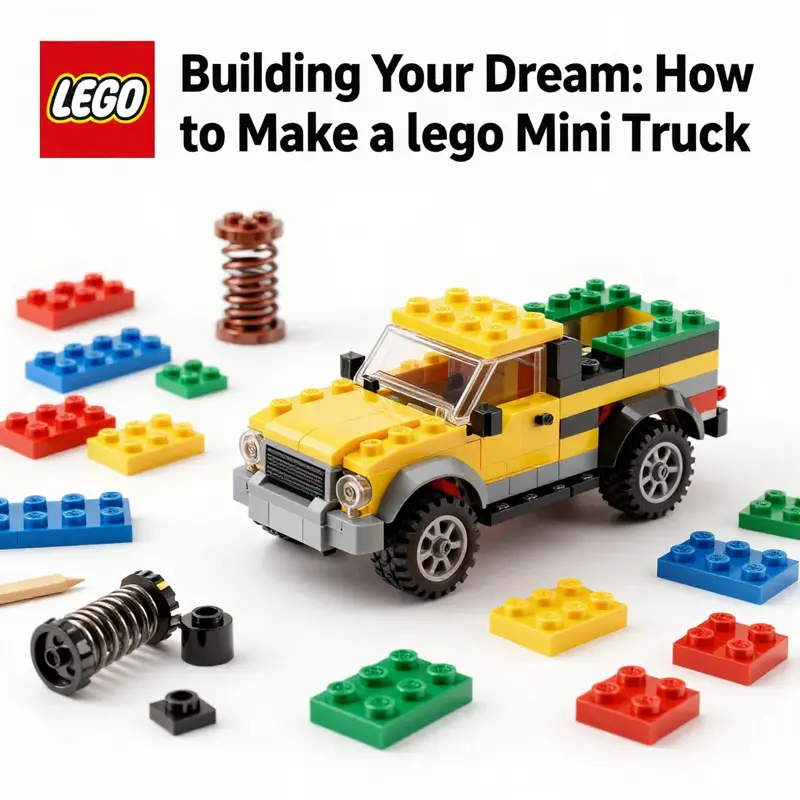
Every successful build starts with a clear sense of the parts you have and how they will work together. In the world of a LEGO mini truck, the materials you choose do more than fill space; they determine stability, scale, and the feel of play or display. The chassis must be solid enough to bear the weight of the body and any added details, yet not so heavy that it stays rigid and lifeless. The body should capture the truck’s character without compromising the movement of wheels or the function of any moving parts. The cabin needs to be accessible and visually coherent with the exterior. In short, the right materials are the first conversation you have with your design, and that conversation often guides every subsequent decision. This chapter unpacks those essential pieces and explains why each one matters, so you can plan your build with intention rather than improvisation.
At the core of any sturdy mini truck is a dependable base. A base plate, typically a flat, robust plate such as a 2×4 or 2×6, serves as the chassis and anchors every component above it. In many practical builds, a longer plate provides a forgiving platform to attach side rails, wheel arches, and the interior seating. The base plate is not just a platform; it is a torsion-tally aware element that will bend less if you attach the frame with a few strategic brackets or offset spacers. If you want to achieve a slightly more complex but still compact look, you can combine a longer base with a complementary plate near the rear to create a shallow cargo bed. The idea is to keep weight distributed, so the front nose doesn’t tip forward under the weight of decorative details or a heavy grill, and so the four wheels maintain consistent contact with the surface. This is where the concept of a frame begins to crystallize: light cross-bracing, reinforced junctions at the corners, and a simple but reliable path for axles.
Wheels and tires are the truck’s contact with reality. Four tires, often black, form the fundamental footprint and determine how the vehicle sits in the world. The size and type of tires you choose will affect proportions, ground clearance, and the sense of scale. Pair the tires with hubs or discs—commonly 2×2 or 1×2 elements—that connect them to the axles while offering a clean, integrated look. The axles themselves can be straightforward or a touch more elaborate, depending on whether you want the wheels to turn smoothly or to be stationary for a display model. Even a small detail like the width of the wheelbase can shift the perceived size of the truck from compact delivery vehicle to nimble city rig. When you install the wheels, aim for alignment that keeps all four corners parallel to each other. Misalignment can lead to wobble, rubbing against the interior walls, or a general sense that the model is unstable. The balance between a sturdy chassis and a flexible movement is subtle but essential; the wheel assemblies must rotate freely yet remain tight enough to resist accidental shifts during handling.
The body pieces are the heart of the truck’s silhouette. These parts—1×2 bricks, 1×4 plates, 2×4 bricks, and their kin—define the shape from the front grill to the rear bumper. The body material determines color, texture, and the way light plays across the surface. Lighter bricks like yellows, reds, or grays can convey different moods: a bright city truck, a practical workhorse, or a rugged, storm-ready model. The body is built from a mosaic of small elements that must align cleanly to avoid gaps or bulges when you press the top cover into place. The construction technique matters as much as the parts themselves. A careful arrangement—staggered seams, interlocking joints, and subtle overlaps—will yield a smoother exterior and a stronger interior. In this space, the 1×2 corner bricks, 2×2 plates, and 1×4 plates typically form the central mass of the cabin and cargo area. They create a continuous shell that can accept the grill details, side mirrors, and roof reinforcement without looking boxy or out of scale.
Front decoration and articulation are where risk meets opportunity. The front of the truck invites expression through small but impactful details. A brick with arch, a 1×4 plate, and a 1×2 wall element can sculpt a decorative front fascia that reads as a grille or bumper, depending on how you place them. Tiny details matter here: a 1×1 light brick positioned at the sides can simulate headlamps and add a sense of liveliness to the model. The mirrors, similarly slender, are achieved with a 1×1 light brick paired with a 1×1 plate to create a reflective edge that catches the eye. These choices, while seemingly minor, anchor the truck in a sense of realism. They also show how the same set of parts can achieve a range of appearances with thoughtful placement rather than wholesale substitution.
The cabin is where practicality and personality mingle. A cabin built from 1x3x3 door panels and a 1×6 plate can form a compact, accessible space that mirrors a real vehicle’s interior. The door panels provide vertical dimension and a sense of enclosure, while the plate serves as a mounting surface for the roof and front elements. In the center, transparent orange 1×2 and 1×1 plates add a pop of color that can suggest instrument panels, interior lighting, or just a playful accent. The roof may be reinforced with 1×4 and 1×8 plates, creating a slightly higher crown that helps prevent the top from flexing under pressure. A well-proportioned cabin not only looks credible; it also supports the installation of windows, seat sections, and other interior features without crowding the exterior lines.
Interior details give the model a sense of depth and personality. A small seating element—such as a 1×3 brick used as a simple seat—can anchor a tiny driver’s area and help with internal stability. When you pair this seating with a few 1×1 plates and the inner orange accents, you create a visual story about the truck’s purpose—whether it’s a compact delivery vehicle or a farm-side transport rig. Mirrors, as mentioned, are a small but essential detail that communicates functionality. A strategically placed 1×1 light brick on each side, paired with a plate, creates a believable surface that catches the light and hints at reflective surfaces in the real world. The interior is not merely cosmetic; it reinforces overall balance by providing a counterweight to the exterior’s mass, helping to maintain a pleasing silhouette when viewed from above or at eye level.
The roof and top structure are the connectors that keep the project cohesive. A top reinforcement made from 1×4 and 1×8 plates contributes to rigidity, ensuring that the roof remains stable even when the truck is handled or altered in future builds. The final top piece, such as a larger plate or a 4x6x2/3 element, seals the various subassemblies together and protects the interior from dust and intrusion. This top layer is essential not just for aesthetics but for maintaining the model’s integrity as you add further accessories, from optional side rails to a small cargo bed. A well-executed top minimizes gaps and gives the impression of a single, continuous shell rather than a stack of assembled parts.
Beyond the core components, the optional details are where builders can tailor the truck to their taste. You may decide to include minifigure seats or windows—transparent bricks that transform the toy into a scene of everyday use. Antennae can punctuate the roof with a hint of utility; a small grille or radiator element near the front can simulate functional parts of a real truck without adding excessive weight. Each extra detail should be weighed against the model’s overall balance. Too many embellishments can overwhelm the chassis and make the truck feel top-heavy or fragile; too few, and the model may read as generic or unfinished. The balance between function and flair is the art of material selection and placement.
In practice, the full spectrum of essential pieces for a simple LEGO mini truck begins with a dependable base and a clean frame that can hold up to play and display. The body pieces, chosen for their color and fit, should form a coherent shell that respects the vehicle’s proportions. Front details and mirrors provide cues about the truck’s purpose, while the cabin, interior accents, and roof reinforce the sense of scale and sturdiness. The final assembly—top cover in place, wheels aligned, and details added—transforms a scattered collection of bricks into a convincing little vehicle that can roll, lean, tilt, or simply sit on a shelf with pride.
For builders who want to grow beyond the basics, an interdisciplinary look at planning, part selection, and lightweight construction can pay dividends. The use of common bricks and plates allowed in many kits encourages experimentation without compromising the build’s sturdiness. When you plan ahead, you can forecast where small pieces will need to be reinforced, where a hinge might be used for a door or a small opening, and where a window can be inserted without obstructing the chassis. The idea is to approach the build as a system, not as a random assortment of bricks. By thinking through each component’s role—from base to roof—you can iterate quickly and make informed substitutions if you want a particular color scheme or a more robust front grille without sacrificing the model’s balance.
To readers seeking added guidance beyond the page, there are interactive resources that provide step-by-step visuals and real-time part lists. These tools can help you confirm that your chosen base plate matches your planned wheelbase, or that your top cover will actually fit over the cabin without interference. Such practical aids ensure you don’t discover a clash only after you’ve glued or clipped pieces in place, and they support a more confident, joyful building experience. If you’re looking to broaden your horizon with related projects that share the same design language, you can explore the broader community of mini truck builders and their blogs for ideas and shared techniques. For ongoing builds and inspiration, you can visit the mini truck blog.
As you assemble, remember that the essence of a successful mini truck lies not just in the quantity of parts but in how thoughtfully you deploy them. A few well-chosen pieces arranged with care can convey more character than a larger pile of bricks placed with little consideration. The materials listed here—base plates, wheels and axles, body bricks and plates, decorative front elements, mirrors, cabin components, and roof reinforcements—form a toolkit. With practice, you’ll be able to mix and match within this toolkit to realize a truck that reflects your own design sensibilities, whether you want a compact, utilitarian vehicle or a brighter, more playful urban courier.
For builders who want to grow beyond the basics, an interdisciplinary look at planning, part selection, and lightweight construction can pay dividends. The use of common bricks and plates allowed in many kits encourages experimentation without compromising the build’s sturdiness. When you plan ahead, you can forecast where small pieces will need to be reinforced, where a hinge might be used for a door or a small opening, and where a window can be inserted without obstructing the chassis. The idea is to approach the build as a system, not as a random assortment of bricks. By thinking through each component’s role—from base to roof—you can iterate quickly and make informed substitutions if you want a particular color scheme or a more robust front grille without sacrificing the model’s balance.
To readers seeking added guidance beyond the page, there are interactive resources that provide step-by-step visuals and real-time part lists. These tools can help you confirm that your chosen base plate matches your planned wheelbase, or that your top cover will actually fit over the cabin without interference. Such practical aids ensure you don’t discover a clash only after you’ve glued or clipped pieces in place, and they support a more confident, joyful building experience. If you’re looking to broaden your horizon with related projects that share the same design language, you can explore the broader community of mini truck builders and their blogs for ideas and shared techniques. For ongoing builds and inspiration, you can visit the mini truck blog.
External resource: the official vehicle-building instructions site for step-by-step, parts-specific guidance and diagrams can be a valuable companion as you plan and execute your build. https://www.lego.com/en-us/service/buildinginstructions
Engineering a Compact Workhorse: Design Principles for a LEGO Mini Truck
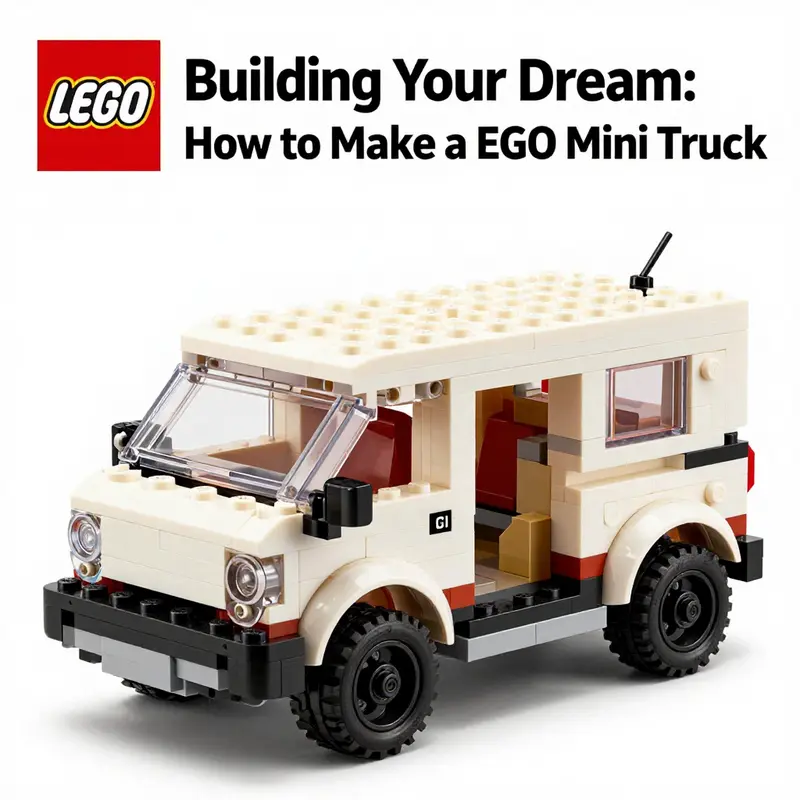
Designing a LEGO mini truck begins with a quiet, deliberate philosophy: a small model can embody the same design thinking as a full-sized vehicle, only scaled down and pared to essentials. The goal is not merely to assemble bricks but to orchestrate a system where form, function, and play converge. When you approach the build with this mindset, you find that every brick choice, every connection, and every measurement serves a larger purpose. The challenge and reward lie in balancing modularity with durability, in translating the feel of a real truck into something approachable for hands of all ages, and in embedding features that invite exploration rather than passive observation. This is where the core design elements come into focus, and where a novice builder begins to understand why certain parts are favored, how proportions affect perception, and why small details can carry big meaning.
Modularity forms the first cornerstone. A mini truck is, at heart, a system built from interchangeable parts. The frame, the body, the cab, and the load area all rely on standard bricks, plates, and specialized pieces that slide, clip, and hinge into a coherent whole. Modularity is more than convenient planning; it is a philosophy that enables growth. A creator can disassemble a project, swap a cabin for a different style, or extend the cargo bed to test new ideas without starting from scratch. In practice, this means authoring a chassis that is stiff enough to withstand play but light enough to remain responsive to small changes. It means selecting a base layer that uses modest plate counts yet provides a stable platform for future expansions. When the foundation is modular, experimentation becomes low-risk, and curiosity becomes a legitimate design tool rather than a fretted risk.
Another defining element is proportional accuracy and scale. A mini truck should feel right within its own universe, even if it does not replicate every authentic detail of a full-size vehicle. The cab’s dimensions, the length of the bed, the wheelbase, and the relative thickness of the roof all contribute to a sense of proportion that players intuitively recognize. A common target, often observed in community-built vehicles, is a consistent visual scale that harmonizes with other models in the same ecosystem. The goal is a pleasing balance: not so small that the truck loses its character, but not so large that it dominates a display or disrupts the modular plan. When proportion is well managed, the truck reads as a purposeful, compact workhorse rather than a collage of random parts. The eye perceives coherence, and play emerges from that coherence.
Functionality anchors the design in something tangible beyond aesthetics. A well-rounded mini truck offers interactive elements that invite manipulation and problem-solving. Steering, even in a simplified form, gives a satisfying sense of control. A straightforward rack-and-pinion-like arrangement can connect a steering wheel or a small knob to the front axle, delivering a tangible link between user action and vehicle response. Suspension—whether a basic spring-tension system or a pivot-based approach—adds a tactile sense of terrain and momentum. Opening features, such as hinged doors or a removable cargo area, fuse interaction with storytelling, turning a static display into a scene ready for play. If a build has a pull-back component or a small motorized mechanism, it can introduce motion in a tidy, battery-free form that emphasizes mechanical elegance over brute power. Each mechanism should be reliable, not fragile; it should reward repeated handling with smooth operation and dependable alignment.
Aesthetic detailing carries the personality of the model. Colors, textures, and decorative touches help define the truck’s role, whether it is a rugged work vehicle, a nimble delivery rig, or a special-purpose rescue unit. The palette should reinforce the intended function without overwhelming the structure. Subtle touches—a contrasting bed, a simulated grille, side mirrors formed from tiny elements, or a couple of tail-light tiles—provide visual cues that the viewer recognizes and appreciates. Theming matters: a consistent color scheme or emblem can brand the truck within a small fleet, enabling children to imagine a broader world of missions and stories. Detailing should be economical, however; the best touches are those that enhance the model’s identity without compromising strength or modularity. In the end, details are not decoration alone. They communicate function, scale, and purpose, guiding the user toward the intended narrative and play patterns.
Compatibility and expandability thread through every decision. Building in a system-first way means designing with interoperability in mind. A mini truck should connect cleanly with other builds in the same family, sharing a common measurement language and compatible connection points. This is not just about fitting pieces together; it is about enabling a spontaneous ecosystem where a truck can join a convoy, swap cargo with a trailer, or form the lead piece in a larger construction scene. The consequence is a more enduring project: a model that grows with the builder’s imagination, rather than one that must be retired as soon as the next idea arrives. Compatibility also invites constructive collaboration, as builders swap components, test ideas, and learn from one another’s configurations. The social value of play—sharing, iterating, and refining—often emerges most clearly when a design is responsive to other models and communities.
Age-appropriate complexity is more than a safety consideration; it is a design fork that aligns capability with curiosity. For younger builders, the mission is to deliver immediate gratification through sturdy construction and large, easy-to-handle parts. The steps are fewer, but the payoff is visible: a truck that can roll, steer, and perhaps open a door or two. For more experienced builders, the challenge lies in integrating more sophisticated mechanisms, refined geometry, and modular capacity that invites experimentation with different configurations. The same chassis can host alternate cabs, different cargo areas, or additional features such as a detachable roof rack or a deployable crane. This spectrum of complexity ensures that the mini truck remains a durable, rewarding pursuit across ages, transforming it into a lifelong design playground rather than a one-off template.
Durability and safety anchor the build in practical reality. LEGO-like systems are designed to withstand repeated assembly and disassembly, but a good mini truck is resilient in its own right. The resilience comes from thoughtful part selection and join strategies: using studs, brackets, and plates that hold under play, avoiding overly fragile hinge points, and distributing stress away from critical joints. A robust truck one can push across a rug without coming apart is the mark of good design. In addition to physical sturdiness, there is a safety ethos embedded in the craft. Clean lines, rounded edges, and deliberate placement of small pieces help minimize the risk of green-tinger fingers or accidental ingestion by curious hands. The culture of safe, sturdy design is not merely a feature; it is a guiding principle that makes the build accessible to varied audiences and ensures that creativity remains a positive, inclusive activity.
All these elements—modularity, proportion, function, aesthetics, compatibility, age-appropriate complexity, and durability—are not isolated checkmarks. They are interdependent decisions that arise from an understanding of how builders think and play. A modular foundation makes future proportion adjustments straightforward; a well-proportioned chassis enhances both the visual appeal and the ease of mechanical integration. Functional mechanisms, when designed with simplicity, become gateways to experimentation and storytelling. A restrained color story prioritizes recognizability and role expression over visual clutter. Compatibility broadens the horizon of possible stories and configurations, encouraging a sense of belonging in a larger maker community. When these threads weave together, the result is a miniature vehicle that feels purposeful, enduring, and alive with potential.
The designer’s mindset matters as much as the parts list. A thoughtful builder asks not only what looks good, but what can be changed, swapped, or upgraded with minimal risk. They ask how a front grille interacts with a hinge, whether a door can be opened without compromising the roof’s integrity, and where a passenger seat should sit to maximize internal support without obstructing the steering mechanism. The answers to these questions are often found by sketching ideas, testing with a few key bricks, and then iterating. In practice, this means prototyping early and frequently, using a spare section of baseplate as a temporary stage for trials. The very act of testing—a quick mock-up of a front end, a pretend steering function, or a removable cargo bed—becomes a design discipline rather than a mere prelude to assembly. The more you test, the more your intuition grows, and the less likely you are to encounter misfits in the final build.
This approach to design is not static. A mini truck can evolve over time as new ideas emerge or as the builder’s skill deepens. The modular frame invites reconfiguration: swap panels, add a roof reinforcement, or change the bed’s height to accommodate different loads. A truck can be re-themed from a rugged utility vehicle to a compact delivery rig with a few strategic color swaps and a different set of detailing elements. In this sense, the mini truck becomes a living project—one that travels with the builder through different play scenarios and learning milestones. The act of rebuilding, reimagining, and reinterpreting is as much a part of the design process as the initial construction itself. It teaches resilience, planning, and the joy of constructive persistence.
For builders seeking guidance beyond the hands-on craft, a well-curated resource ecosystem can illuminate the design path. A dedicated community space often offers modular blueprints, tips on weight distribution, and creative prompts that push a model beyond its first impression. When the community speaks in shared language about parts compatibility, hinge behavior, and proportion cues, learning accelerates and confidence grows. A practical way to engage is by exploring a general-purpose collection of how-to guides, galleries, and tutorials that celebrate vehicle design at a small scale. To peek into a broader conversation about these ideas, many builders turn to community hubs that curate stories, diagrams, and video demonstrations—venues that help translate theory into tactile, repeatable outcomes. This collaborative thread reinforces a core truth: great design emerges not from solitary gnosis but from collective exploration and iteration.
In thinking through the design elements of a LEGO mini truck, it helps to anchor the conversation in a practical example without drifting into a step-by-step recounting that might feel repetitive. Consider how the frame, body, and cab come together as a unified silhouette. The frame gives you a rigid backbone; the body adds mass and presence; the cab lends character and scale literacy. Each piece is chosen not only for its color or texture but for how it contributes to balance and alignment. The body panels must attach securely to the frame, yet leave room for a potential revision without a complete rebuild. The cab’s shape should accommodate a seat and a driver’s silhouette; even a single tile or printed sticker can convey a lot about the vehicle’s personality. When you pay attention to these relationships, the final model feels intentional and complete, not merely assembled. The end result is a tiny vehicle that communicates the builder’s design intent with clarity and confidence.
The design choices also ripple into the user experience of building. A well-considered mini truck offers a satisfying build rhythm: a sequence of stable, simple steps that build toward a more complex, interactive outcome. Each stage should feel purposeful, with parts that click into place and stay. This rhythm sustains motivation and invites repeated engagement, an essential factor for a build that is meant to be revisited, adjusted, and expanded over time. A good rhythm also reduces friction when modifications are attempted. If a change disrupts alignment, the repair should be straightforward rather than requiring a complete teardown. Such resilience is part of the design ethic: plan for growth, anticipate reuse, and celebrate the small wins that accompany each incremental improvement.
The value of these design principles extends beyond the moment of construction. They cultivate a mindset of intentional making, where play becomes a medium for learning about space, symmetry, mechanics, and spatial reasoning. A mini truck designed with modularity in mind teaches the builder to think in systems rather than in discrete parts, a skill that translates well to larger, more complex projects. A truck that balances aesthetics with function demonstrates how form and utility can reinforce one another, providing a holistic experience rather than a collection of disconnected details. The best builds offer this synthesis: a coherent story told through geometry, motion, and texture, anchored by reliable performance and a design language that players can recognize and carry forward into future projects.
For readers who want to explore these ideas in a broader narrative, a useful touchpoint is a community-driven resource hub that collects build stories, diagrams, and demonstrations. This repository of practice can guide your decisions about scale, proportion, and play value, while inviting you to contribute your own iterations and refinements. The value of such a hub lies in its ability to translate abstract principles into concrete, repeatable steps that empower builders at every level. It is less about chasing a single perfect solution and more about cultivating a toolkit of approaches that you can apply across countless small vessels of imagination. If you are curious to see how others translate these principles into real-built examples, a practical starting point is the general blog and guide space where enthusiasts share their experiments and breakthroughs. Mini Trucks blog offers a navigable entry into the conversations that shape the craft, from baseline assembly ideas to more ambitious design explorations.
In closing, the design of a LEGO mini truck is a study in disciplined play. It asks us to weigh modularity against durability, to honor proportion without letting aesthetics overwhelm function, and to build in a way that invites ongoing experimentation. When these principles align, the miniature vehicle becomes more than a toy or a display piece. It becomes a platform for exploration, a canvas for storytelling, and a reliable tool for strengthening spatial reasoning and mechanical intuition. The smallest trucks, crafted with care, carry with them the potential to unlock big ideas about how objects move, interact, and relate to the world around them. Along the way, the builder learns to see the brick not simply as an element to be placed, but as a lever that can shift balance, a hinge that opens possibility, and a channel through which imagination can travel from concept to concrete realization.
External resource for further context on vehicle design in miniature scale can be found here: https://www.lego.com/en-us/themes/technic
Final thoughts
Building a LEGO mini truck can be a deeply rewarding creative experience that combines fun and craftsmanship. By gathering the right materials, following a clear step-by-step guide, and paying attention to design elements, you can create a mini truck that not only looks great but also reflects your personal style and interests. Don’t hesitate to showcase your creation to family, friends, or even at local community events. Remember, each build is a step towards improving your skills and enjoying the process of creation!