
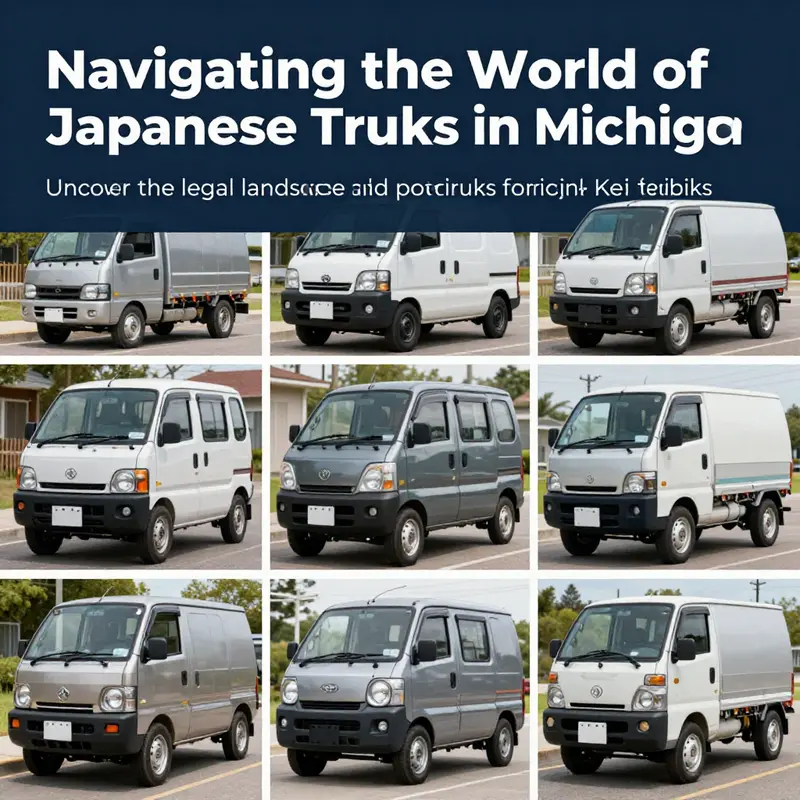
Japanese mini trucks, often referred to as Kei trucks, have won the hearts of many enthusiasts and local small business owners in Michigan. While these compact, versatile vehicles hold numerous advantages, understanding their legal status and operational guidelines on Michigan roads is essential. Throughout this piece, we’ll explore not only the legal framework surrounding these unique vehicles but also the regulatory challenges they face, safety and compliance issues, and the potential economic impact they could have for local businesses and hobbyists alike. Together, we will delve into how owning and using a Kei truck can be a rewarding yet complex endeavor, ensuring you’re informed every step of the way.
null
null
Tiny Titans and the Legal Tightrope: Navigating Kei Trucks on Michigan Roads
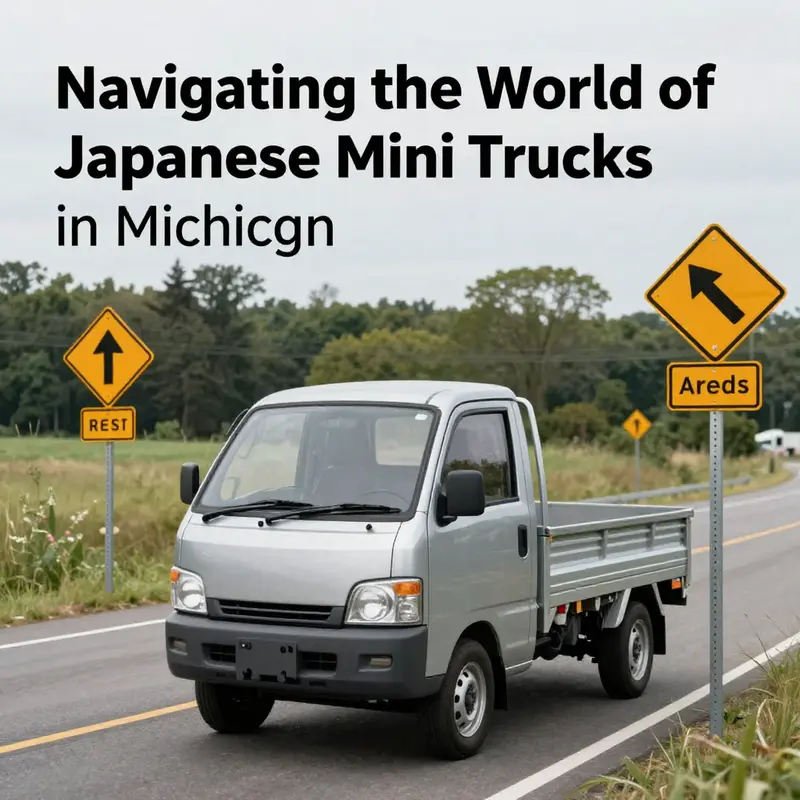
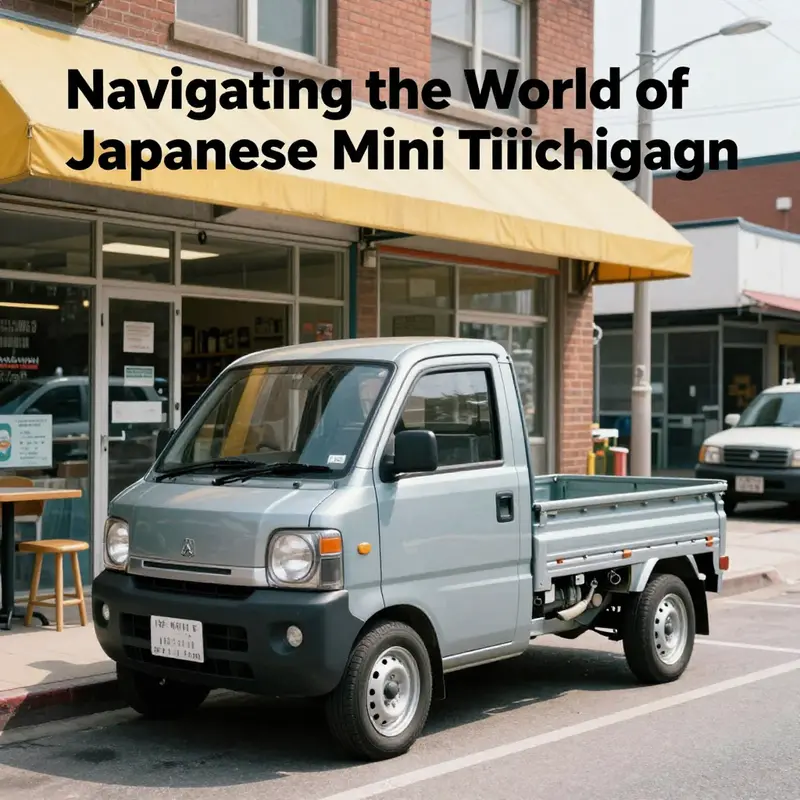
Kei trucks, Japan’s compact workhorses, have captured the imagination of farmers, urban pilots, and weekend tinkerers across North America. In Michigan, they symbolize a paradox: a vehicle that can be owned with ease, yet maneuvering it on public streets invites a tangle of rules, exemptions, and ongoing disputes. The core question—are Japanese mini trucks street legal in Michigan—settle into a broader conversation about how two regulatory worlds collide: a federal tolerance for older, smaller vehicles and a state code that aims to police what it will register for everyday road use. The chapter that follows threads these threads into a cohesive account of how ownership, operation, and the law intersect for these diminutive work vehicles as they attempt to negotiate an American road network that was designed around bigger, more conventional trucks and passenger cars.
At the heart of the kei truck story is practicality. These vehicles are designed to be efficient, maneuverable, and economical. Their compact dimensions, light weight, and engine displacement around 660cc make them appealing for tasks ranging from small-scale farming to urban deliveries. They slip through narrow alleys, swerve around obstacles, and sip fuel with a thriftiness that captures the imagination of buyers seeking a low-cost, low-emission option. Yet the moment the question shifts from ownership to use on public roads, the practical advantages collide with policy details that are not so friendly to the kei truck’s profile. Michigan’s road-ways are not just a map of streets; they are a living system of statutes, administrative interpretations, and enforcement decisions that echo a broader national tension between permissive federal treatment of older, simpler vehicles and state incentives to enforce safety and compliance standards.
Federal policy provides a broad, if imperfect, doorway for older, smaller vehicles to avoid certain standard safety and emissions regulations. The federal exemption that allows vehicles over a certain age to bypass typical compliance checks creates a pathway for classic, anthropomorphized “antique” or “historic” labeling to allow road use with fewer obstacles. In theory, this exemption should enable fortunate owners to legally operate older kei trucks, as long as the vehicle meets the age criterion and other ancillary requirements. But here the road ends abruptly for many Michigan residents. State law, not federal leniency, governs whether a vehicle is deemed fit for public road use within the state’s jurisdiction, and Michigan’s statutes do not always align with the federal timetable or intent. The friction emerges from how Michigan classifies these vehicles and how it interprets that classification for registration and road use.
Michigan’s legislative landscape took a decisive turn in 2019 when an amendment to the vehicle code introduced a new, assertive stance. The amendment explicitly excludes what is described—rather broadly and with a degree of ambiguity—as “gray market off-road mini trucks” from road registration. The phrase grabs attention because it seems to sweep in a wide range of vehicles that share the same general traits: small size, unconventional origins, and a design intended mainly for non-highway use in other countries. Even though kei trucks may be designed to reach highway speeds in their native markets, the Michigan amendment treats them as a class that risks noncompliance with road standards when imported under gray-market categories. The breadth of language creates interpretive space, which in turn invites disputes about what qualifies as a road-legal vehicle under the amended code. This is not simply a matter of technical semantics; it translates into tangible outcomes for owners, as many have found their registrations denied or revoked after navigating the bureaucratic gauntlet.
The practical enforcement story in Michigan has featured the Secretary of State actively applying the classification, often resulting in the revocation of registrations for eligible owners and instances in which refunds for registration fees were not issued. The consequences extend beyond financial losses; they feed into a larger sense of legal jeopardy for owners who believed they were simply trying to register an old, legally obtainable vehicle for use on public streets. Defenders of the owners—legal advocates who point to due process concerns—argue that the state’s approach strays from reasonable interpretation of existing statutes and diverges from the legislature’s intent when it initially crafted the rule to avoid non-highway vehicles from becoming road-registered. The tension between interpretation and enforcement is not just a matter of legal technicalities. It affects families and small businesses that rely on kei trucks for regular, daily tasks—transporting goods to markets, hauling equipment in rural settings, or performing municipal duties in communities that value compact, low-cost machinery.
Across the spectrum of legal thought, experts weigh in with nuanced positions. Advocates for the affected owners argue that the vehicles in question meet established criteria for antique or historic vehicles under Michigan law. If the kei trucks qualify as antique or historic, they should be registrable for road use under transitional exemptions or specific allowances that historically recognized older vehicles as viable, regulated assets rather than as illegal street machines. On the other side, proponents of the current enforcement framework emphasize the policy’s objective: to ensure that vehicles sharing the kei truck’s compact size do not compromise highway safety due to dimensions, maneuverability, or structural design not aligned with modern standards. The debate is not abstract. It plays out in courtrooms and administrative hearings where the fate of each individual vehicle hinges on how the law is interpreted in the particular factual context of its import, its age, its configuration, and its intended use.
The litigation unfolding around Michigan’s kei trucks underscores a broader jurisprudential question: when federal exemptions exist, should states apply them mechanically or with a lens that considers local road ecosystems, traffic patterns, and safety norms? Kevin Burton, among those representing affected owners, has argued that the state’s current stance misreads the legislative intention and ignores the objective criteria that would allow an older vehicle to be registered, subject to compliance conventions that mirror what historic or antique vehicle statutes seek to protect. Meanwhile, lawmakers who originally shaped the 2019 amendment contend that the line drawn between highway-ready and non-highway vehicles remains clear and important for public safety, even when it feels inconvenient for individuals who see value in keeping these compact workhorses on the road. The discourse in these courtrooms and legislative corridors points to a core truth: the kei truck is not just a car with a quirky origin; it is a test case for how a state balances historical exemption concepts with new safety imperatives and modern enforcement realities.
The status quo today is best described as a tense stand-off with lingering uncertainties. A lawsuit—covered by major local outlets and representing a coalition of owners and advocates—asks for a reexamination of the state’s interpretation and seeks to reframe the kei truck issue within antique or historic vehicle frameworks or within other lawful abstractions that would permit road use under regulated conditions. The case highlights several critical questions: can the state’s interpretation be harmonized with the federal stance, and is there room for a legislative fix that clarifies the intended scope of the 2019 amendment without opening a loophole that would undermine safety checks? The path forward is not merely about bureaucratic accommodation; it reflects deeper beliefs about the role of state government in facilitating affordable, practical transportation while preserving the safety of all road users. The widely anticipated trajectory suggests legislative clarifications may be necessary to resolve ambiguities and to spell out the conditions under which gray-market imports, once recognized as compliant with antique or historic criteria, might be registered for street use—or, conversely, to maintain a strict separation between road-usable and strictly off-road legal categories.
The chapter’s inquiry would be incomplete without acknowledging the everyday realities that frame the kei-truck phenomenon in Michigan. For many owners, the appeal lies not only in cost and efficiency but also in the sense of independence these vehicles confer. They enable local deliveries, snow removal in tight spaces, and agricultural tasks that larger trucks would hinder. However, the practical realities of road use cannot be divorced from the regulatory frame. Driving on public roads, especially on major arterials and highways, remains constrained by the state’s current classification and enforcement posture. The reality is that while ownership may be permissible, operating a kei truck on larger, faster roads could place owners at risk of penalties, fines, or loss of registration. The risk calculus becomes more complicated when one considers insurance coverage, liability in the event of an accident, and the reliability of modifications or retrofits to meet local safety expectations. This is not merely a theoretical dispute; it is a living tension that shapes how Michigan residents will approach ownership, use, and future legal reform.
As readers consider the broader implications, a useful reference point is the ongoing dialogue within the kei-truck community. The online dialogue, the stories of owners navigating the system, and the legal arguments presented in court all contribute to a growing body of knowledge about how to articulate a plausible, practical path forward. For readers seeking deeper impressions of kei-truck discussions and related community perspectives, the Minitrucks CaLa blog offers a resource that captures the spirit and concerns of enthusiasts and owners alike. minitrucksocala.com/blog
The future trajectory will likely hinge on legislative clarifications that can bridge the gap between federal exemptions and state registration policies. Lawmakers face a choice: preserve a cautious boundary around highway use for these small, unconventional vehicles or offer a calibrated framework that acknowledges their unique characteristics while maintaining safety standards. A refined approach could adopt an antique-vehicle framework or create a distinct, Michigan-specific category that accounts for speed capabilities, structural design, and emissions considerations in a way that is administratively feasible and publicly acceptable. The outcome will influence not only kei-truck owners but also the broader culture of how states respond to gray-market imports, how they manage modernization while honoring historical exemptions, and how they balance individual mobility with collective safety on crowded road networks.
Ultimately, the kei-truck question mirrors a larger truth about American road policies: the law often lags behind the pace of niche mobility innovations. The kei truck’s appeal is undeniable—low cost, simplicity, and versatility—but the legal framework that supports or inhibits its road use reveals how public policy must adapt without compromising essential safety commitments. The Michigan narrative is particularly instructive. It shows how a vehicle imagined for rural lanes and narrow streets in another country can become a focal point for debates about age, design, and compatibility with a modern transportation system. It invites a careful, nuanced examination of how state and federal authorities can collaborate to produce rules that respect both the practical realities of small-vehicle ownership and the imperative to keep roads safe for everyone.
For readers who want to follow the real-world developments surrounding these cases, the ongoing litigation in Michigan illustrates how policy can be shaped by courtroom arguments, administrative decisions, and the evolving definition of what it means to be road-legal in a changing transportation landscape. The dialogue is far from static; it will likely continue to evolve as lawmakers, advocates, and everyday owners press for clarity and fair treatment. The chapter’s exploration of this issue is not merely a chronicle of regulatory trivia. It is a study in how communities, regulations, and a shared road space negotiate the delicate balance between accessibility and safety, cost and compliance, novelty and responsibility.
For additional context on how these debates unfold in public discourse and legal arguments, one can consult the broader reporting that tracks the status of the Michigan kei-truck registry and the lawsuits challenging or defending the state’s stance. This coverage emphasizes the human dimension—the owners who rely on these vehicles for essential tasks, the officials charged with upholding the law, and the legal professionals who interpret statutes to determine whether a vehicle’s use on public roads remains permissible. The case highlights are not just about a single class of vehicle; they illuminate how states can refine their laws to accommodate vehicles that fall outside the mainstream while preserving the safety and reliability that communities expect from their road networks.
In sum, ownership of Japanese mini trucks in Michigan is allowed, but road use is governed by a patchwork of rules that currently restrict highway travel and complicate registration. The legal landscape continues to unfold as the pending lawsuit challenges the state’s interpretation and potential future legislative fixes emerge. The kei-truck story is a reminder that legality is not a binary state but a spectrum shaped by age, design, purpose, and jurisdiction. As Michigan, and perhaps other states, reconsider their approach to gray-market imports, the essential question remains: can a tiny, economical truck navigate the complexities of American road laws while preserving the pragmatic benefits that drew people to it in the first place? The answer may require thoughtful legislative updates and a measured, safety-conscious framework that can accommodate the kei truck’s distinctive profile without compromising the road system’s integrity. Until then, Michigan’s kei truck landscape will continue to be a living case study in how to balance ingenuity with regulation, affordability with accountability, and curiosity with caution.
External resources provide ongoing insight into how the legal process unfolds. For more on the lawsuit and public responses, see the Detroit Free Press coverage of the case. Detroit Free Press article.
On the Edge of the Road: Safety, Compliance, and the Street-Legal Realities of Japanese Mini Trucks in Michigan
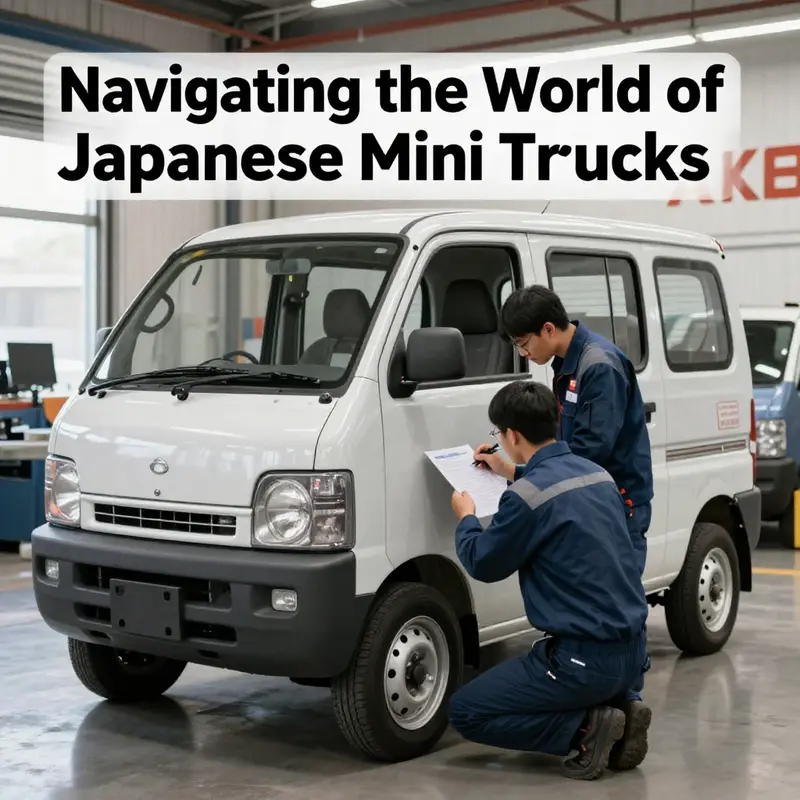
Michigan sits at a crossroads where practicality meets regulation, especially for a class of vehicles that originated far from American roadways. Japanese mini trucks, the compact workhorses often celebrated for their nimble maneuverability and affordable upkeep, inhabit a nuanced legal space in the state. Owning one is allowed, and for many small businesses, these kei trucks offer a compelling proposition: a sturdy, efficient tool that can squeeze through tight spaces and shed fuel costs. Yet when it comes to their everyday use on public roads, the picture grows more complicated. The divergence between the safety and regulatory expectations of the United States and the design principles that govern kei trucks in Japan creates a friction that policymakers, law enforcement, and owners are still working to understand in Michigan. This tension is not merely academic. It translates into real-world consequences for drivers, operators, and the communities that share roadways with these vehicles, especially as traffic patterns shift toward smaller, more agile commercial options for urban and rural service needs alike.
A foundational part of the conversation is the distinction between ownership and operation. In Michigan, you can legally own a Japanese mini truck, but using it on highways or major arteries is generally not straightforward. The size, weight distribution, and structural design of these vehicles were tailored for Japanese road configurations and regulations, which differ in meaningful ways from U.S. federal safety standards. The practical upshot is that while a person may register and maintain such a vehicle, a substantial portion of regular road use remains outside the scope of what current U.S. regulations typically permit without significant modification. This separation between possession and permissible use is one reason why many owners opt for the vehicle’s deployment on private property, in off-road settings, or in controlled environments where the typical risk calculus changes and where the vehicle’s safety profile can be more easily managed.
The safety concerns at the core of Michigan’s scrutiny are deeply tied to how these trucks were designed, not just where they were built. A large portion of kei trucks are left-hand-drive. In the United States, while left-hand-drive operation is common and not illegal in itself, the prevalence of right-hand-drive conventions in certain driving contexts—especially for rural or mixed-speed environments—poses unique risks. On multi-lane highways where speeds converge and where drivers anticipate certain response times and visibility cues, a vehicle with a non-standard layout can complicate perception, braking trajectories, and lane-following behavior. These are not hypothetical worries; they reflect how human factors interact with vehicle geometry under real-world conditions. The upshot is that the LHD configuration of many kei trucks, while not a ban in itself, raises safety questions that authorities and researchers monitor closely when considering how such vehicles could or should be integrated into Michigan’s broader traffic ecosystem.
Beyond layout, there is a broader concern about how a kei truck aligns with U.S. safety standards. The crash-test architectures, airbag deployment logic, structural integrity requirements, and overall crashworthiness expectations embedded in U.S. federal standards are not guaranteed by design in many Japanese-market models. Michigan’s safety experts and regulators acknowledge this gap: a vehicle that performs well in its intended market can behave differently when confronted with U.S. crash dynamics, occupant protection requirements, and post-crash rescue realities. The absence of standardized federal testing data for these vehicles translates into a higher degree of uncertainty for insurers, fleets, and individual owners who may be weighing the viability of regular on-road use. While a kei truck might be praised for cost efficiency and ease of maneuvers, the safety calculus changes once the vehicle is mapped onto the state’s road network, where emergency response times, heavier traffic, and higher highway speeds naturally factor into risk assessments.
This tension is reinforced by findings from transportation safety experts in Michigan. Their research has highlighted a pattern: kei trucks are appealing because they are inexpensive and compact, making them attractive to small businesses, farmers, and individuals who need a simple, dependable workhorse for light-duty tasks. Yet the same studies indicate that these vehicles often sit outside the typical safety evaluations conducted by agencies such as the National Highway Traffic Safety Administration. In practical terms, this means a gap in the data that informs typical road-use expectations. The absence of a robust safety assessment framework for these vehicles on U.S. roads complicates decisions about how they should be treated within state inspection regimes or what kinds of compliance upgrades might be recommended—or even required—for road use.
Environmental compliance adds another layer of complexity. Emissions standards, which have become a central issue for many imported and non-conforming vehicles, can create friction between what owners want to do and what the law allows. Depending on the model and its origin, some kei trucks may not meet the Environmental Protection Agency’s emission standards, while lighting configurations and side-marker requirements may diverge from U.S. norms. Poor lighting, non-compliant headlight patterns, or inadequate side visibility can elevate the risk of night-time or adverse-weather crashes. In Michigan, these factors influence not only registration and inspection practices but also broader public safety communications aimed at encouraging responsible operation and awareness among owners who might otherwise treat these vehicles as casual, on-road toys rather than work tools with serious responsibilities.
In response to these overlapping concerns, state agencies have sought to balance practicality with safety. The Michigan Department of State Police and the Michigan Department of Transportation have underscored the importance of stricter inspection protocols. They emphasize the need to ensure that any kei truck that does enter the on-road environment meets measurable safety thresholds and is properly equipped for visibility and control. Alongside inspections, public awareness campaigns target owners of imported mini trucks. The goal is not to stigmatize or discriminatorily restrict a particular vehicle class, but to ensure that drivers understand what is required to operate on Michigan’s streets. These outreach efforts often focus on the basics: secure lighting, proper marking, and adherence to general road-safety responsibilities, including the use of appropriate tires, braking performance, and load stability.
Given this regulatory backdrop, many observers and policymakers see a path forward that combines safety with pragmatic accommodation. Some scholars and practitioners argue for retrofitting imported kei trucks to meet U.S. standards. Such retrofitting would involve upgrading structural components to align with crash-test expectations, incorporating compliant airbag or restraint systems where feasible, and adjusting lighting, emissions, and overall vehicle integration to satisfy federal and state requirements. Others advocate for sharper restrictions on registration and operation based on safety performance data. The logic here is to allow ownership and limited use as a way to preserve the practical advantages of these vehicles while anchoring their road presence in robust safety metrics. Either direction requires careful calibration: it must respect the realities of Michigan’s infrastructure, enforcement capabilities, and the varied needs of small businesses that rely on affordable, maneuverable transport solutions.
The regulatory conversation is not purely theoretical; it translates into tangible steps for anyone considering ownership. Prospective buyers need to understand that the permissiveness of ownership does not automatically translate into freedom to drive on every road. The legality of road use hinges on whether the vehicle complies with safety and environmental standards—or can be demonstrated to meet a framework that would allow safe operation. This is where federal, state, and local authorities converge on a common objective: to minimize risk while acknowledging economic and logistical realities. The practical takeaway is not a blanket endorsement of street use for all kei trucks, but a nuanced recognition that, in Michigan, the path from purchase to on-road operation involves navigating a mosaic of requirements that can vary by county, jurisdiction, and the specifics of how a kei truck is configured and maintained.
Exploring the user experience for owners sheds further light on the day-to-day realities. In many cases, owners describe kei trucks as exceptionally reliable for certain tasks—wheeling through tight urban sites, delivering goods in constrained spaces, or serving as a compact utility platform for light industrial tasks. Their low cost of ownership, good fuel economy, and ease of maintenance contribute to their appeal. Yet the decision to put one to work on public roads demands a careful assessment of the vehicle’s readiness to meet safety expectations and the owner’s willingness to engage in necessary upgrades or modifications. It also invites an honest appraisal of risk: are you comfortable operating a vehicle that may not be crash-tested to U.S. standards, with a configuration that could complicate emergency maneuvers on busy Michigan roads? These questions, while challenging, are essential to responsible ownership.
From a community perspective, there is a collaborative impulse to bridge the gap between desire and compliance. Owners often share information, tips, and cautionary tales in local forums and on regional platforms. The shared knowledge helps new entrants understand not only the rules in a general sense but the practical steps that can reduce risk—regular inspections, ensuring compliance with lighting and visibility, maintaining tires appropriate for the local climate, and validating the vehicle’s emissions readiness where applicable. Such communities can serve as a resource for navigating the spectrum of options—from keeping a kei truck as a dedicated off-road or private-property workhorse to exploring the potential of more formalized pathways toward compliant on-road use, should regulatory frameworks evolve to accommodate them.
In the broader story of Michigan’s street-legal landscape, the kei-truck phenomenon illustrates how modern transportation systems continually adapt to new and old technologies. The debate encapsulates a broader tension between affordability, accessibility, and safety—the very elements that define a just and functional road network. The conversation remains ongoing, with policymakers, safety professionals, and the public weighing how best to preserve the practical benefits of these vehicles while ensuring that every ride on Michigan’s streets adheres to high safety and environmental standards. As this discourse unfolds, one thing remains clear: ownership does not automatically translate to unrestricted use, and responsible operation depends on a layered understanding of design realities, regulatory expectations, and the shared goal of keeping roadways safe for all users. For readers who want to explore local perspectives and ongoing discussions about this topic, a current resource area hosts a steady stream of community insights and practical guidance at the following hub: minitrucksocala.com/blog/.
For researchers, practitioners, and interested drivers who want to connect the dots between safety research and real-world outcomes, Michigan’s experience with Japanese mini trucks highlights a critical pattern: the effective management of risk on public roads often requires more than compliance on paper. It calls for proactive engagement with vehicle design realities, proactive inspections, and a regulatory framework that can adapt to evolving practical needs without compromising the core assurance that vehicles traveling on public highways meet essential safety and environmental thresholds. The story is still being written, and its next chapters will likely focus on how policy, enforcement, and engineering collaborate to create a path that honors both the practicality of compact work vehicles and the paramount priority of public safety on Michigan’s roads.
Small Wheels, Big Implications: The Economic Promise and Regulatory Realities of Japanese Kei Trucks in Michigan
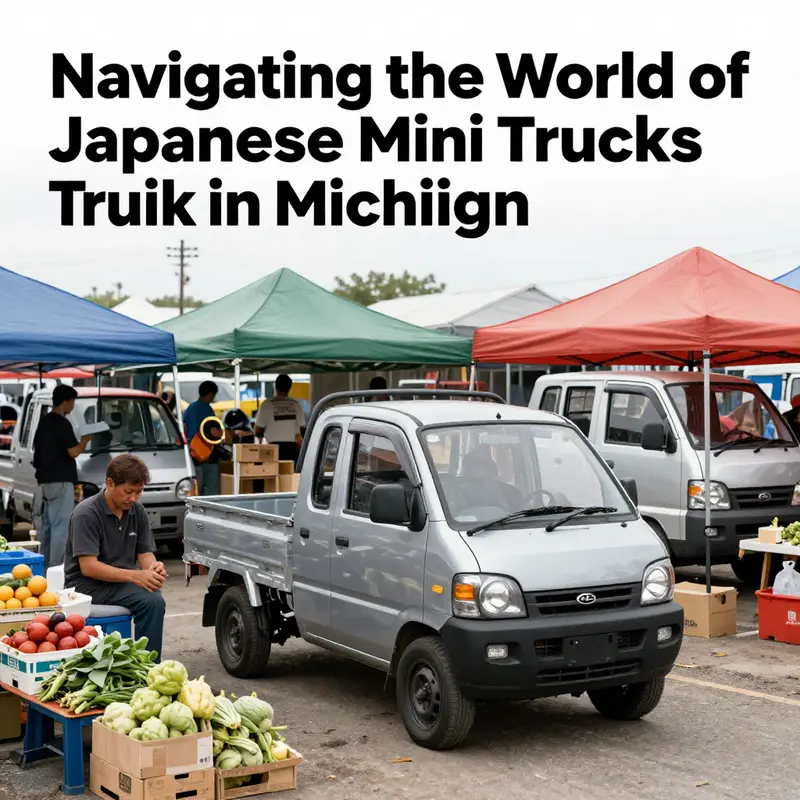
Michigan sits at a crossroads of urban renewal, rural accessibility, and a transportation culture that prizes efficiency. In this landscape, the sudden curiosity around Japanese kei trucks—small, economical, and surprisingly capable in tight spaces—appears less like a novelty and more like a potential piece of a broader mobility puzzle. The appeal is clear: these vehicles promise low purchase prices, reduced running costs, and a footprint that can ease congestion in dense city centers. Their compact dimensions and surprisingly versatile cargo areas make them contenders for tasks that lie between the burden of a scooter and the heft of a full-size pickup. For urban planners, small-business owners, and DIY enthusiasts alike, kei trucks hint at a form of mobility that could revolutionize last-mile delivery, urban farming, and equipment leasing in neighborhoods where parking and maneuverability are as valuable as horsepower. Yet the story is not simply about affordability. It hinges on a delicate balance among ownership, road use, safety, and the complex web of federal and state regulations that govern how, where, and when a vehicle can legally travel on Michigan’s public roads. The difference between owning a kei truck and using one on a city street is not a minor legal footnote—it’s a decision that redefines risk, responsibility, and return on investment for many Michigan residents and businesses. To understand this balance, it helps to start with a clear view of what ownership actually entails and how that ownership intersects with the rules that govern street use. In Michigan, as in many other states, owning a kei truck is permitted under certain conditions, even as the vehicle’s road-worthiness remains a separate hurdle. The size and engine displacement that classify kei trucks in Japan—typically 660cc or less—have a direct impact on pricing, taxes, and the ease with which a vehicle can be registered in foreign markets. In Michigan’s market, this translates to a paradox: a low upfront cost or favorable registration pathway may exist on paper, but pride of ownership does not automatically translate into permission to cruise along I-75 or M-10 during a weekday rush. The practical implication is simple and consequential: if a buyer envisions these compact machines as urban delivery fleets, personal runabouts, or farm-support vehicles, they must reckon with the regulatory framework that shapes every mile driven. For many, the path to legality remains uncertain, marred by questions about how federal standards align—or fail to align—with a vehicle engineered for vastly different regulatory environments, and how state interpretations of federal guidance translate into everyday use. The gap between what is allowed to exist and what is allowed to travel on public roadways becomes a crucible for policy discussions, business models, and consumer confidence. It is here that the broader question—are Japanese mini trucks street legal in Michigan?—moves from a point of curiosity into a conversation about policy design, market mechanics, and the everyday realities of accountability on the road. If ownership is one axis, road use is the other, and the two do not always align in practical terms. Kei trucks are designed and regulated under Japanese government standards that prioritize ultra-compact dimensions and engine displacement. These design choices, optimized for urban zoning and tax structures in Japan, often do not map cleanly onto U.S. federal safety standards, such as those enforced by the National Highway Traffic Safety Administration (NHTSA). The absence of full FMVSS compliance can complicate registration as a road-legal vehicle in Michigan, particularly on highways and major arterials where speed, crash protection, and occupant protection requirements are more stringent. It is not simply a matter of a vehicle being “little enough.” It is also about whether the vehicle, in its current configuration, can meet the safety tests, emissions controls, and crash standards that Michigan enforces for everyday travel. This is not an argument for blanket prohibition but rather a careful acknowledgment of the friction points that arise when a vehicle popular in one regulatory regime is introduced into another. From a policy perspective, Michigan’s framework sits somewhere between a cautious pragmatism and a willingness to explore low-cost mobility options. Advocates point to potential benefits: improved urban accessibility, reduced fuel consumption, and a nimble tool for small-scale logistics where a larger truck would clog a lane or require expensive parking. Critics, however, remind us that the same advantages could be offset by higher long-term costs if maintenance becomes a challenge, if parts are scarce, or if the vehicles fail to meet essential safety and emissions standards that protect communities. In this dual lens, the economic dimension becomes inseparable from regulatory constraints. The initial appeal—low upfront cost, light tax burden, and minimal bureaucratic friction in some posting systems—needs to be weighed against the realities of compliance. Across Michigan’s municipalities, the regulatory stance often hinges on whether a vehicle can be altered, certified, or registered in a form that aligns with FMVSS and EPA standards, or whether it must operate as a nonconforming or restricted vehicle tied to limited-use zones, private property, or controlled environments. The conversation about legality thus expands into a broader dialogue about the role of state policy in shaping the contours of urban mobility. The prospect of a low-cost, highly maneuverable vehicle performing last-mile deliveries or assisting with agriculture and maintenance tasks is undeniably appealing. For rural areas, kei trucks could offer an economical solution for farm work and light-duty hauling, while urban neighborhoods might find them useful for micro-distribution hubs, courtyard maintenance, or rental fleets designed for neighborhood-scale services. The shared thread across these possibilities is a need for reliable maintenance, a robust supply chain for parts, and service networks that can diagnose and repair specialized components that a kei truck uses. Michigan’s climate and road conditions would demand adaptations that ensure longevity, such as corrosion protection, winter-grade mechanical components, and appropriate tires for seasonal variability. The economic case also hinges on market dynamics beyond sticker price. In jurisdictions that have opened the door to nontraditional vehicles, buyers have tended to weigh total cost of ownership over several years, factoring in depreciation, insurance premiums, repair costs, and the ease of resale. A kei truck, with its compact build, may promise lower fuel bills and easier parking, but if maintenance becomes a recurring constraint or if a single failed component requires specialized expertise that is scarce locally, the economics can tilt quickly toward higher expense or downtime. The conversation about Michigan’s path to embracing kei trucks must, therefore, recognize two interdependent factors: the practicalities of local driving and the regulatory architecture that governs road usage. It is here that the idea of a hybrid model emerges in the collective imagination. Some owners might opt for limited-use applications—restricted to private property, farms, or micro-urban corridors—where the vehicle’s design advantages can be exploited without contravening safety and emissions standards. Others may entertain the prospect of more extensive use if manufacturers or aftermarket developers can provide compliant adaptations that align with FMVSS, or if state policy shifts create a distinct category for “small transport” vehicles that bridges the gap between purpose-built kei cars and traditional U.S.-market trucks. The pragmatic takeaway for Michigan residents is nuanced. The economic attraction of kei trucks lies in their affordability and space efficiency, especially for small businesses coping with the realities of urban logistics and seasonal demand. But the road-use question remains central. The decision to integrate these vehicles into Michigan’s road networks must be guided by a careful risk-benefit analysis, with attention to safety, emissions, and the broader social costs and benefits that accompany any shift in how people move goods and themselves around town. For individuals curious about the broader context and ongoing community conversations, a quick visit to the Minitrucks blog offers informal accounts of how these vehicles are discussed in real-world settings, shedding light on local experiences and questions that accompany the regulatory landscape. As with any new mobility option, the critical path from curiosity to practical deployment requires not just a legal green light but a robust ecosystem: dependable service networks, clear standards for compliance, transparent pricing of insurance and registration, and a consumer education framework that explains what is and isn’t possible in everyday driving. The economic thread, then, weaves through policy, commerce, and daily life, suggesting that a genuine Michigan market for kei trucks could emerge only when all these strands are braided together—when ownership is straightforward, road use is clearly defined, and the cost advantages are supported by reliable maintenance and a predictable regulatory trajectory. This is not a simple either-or decision; it is a field of possibilities that will likely be shaped over time by policymakers, industry participants, and the lived experiences of people who try these vehicles on real streets. In the meantime, enthusiasts and researchers continue to document regulatory constraints, market hopes, and practical trials, contributing to a conversation that remains as much about future infrastructure and urban design as it is about a compact vehicle with a big potential. For those who want to explore further details about how the public policy and trade context intersect with vehicle imports, official sources and industry analyses provide a framework for understanding the current state of play and the directions that might emerge as Michigan, and the country, reassess the balance between cost, safety, and mobility. More context can be found through broader discussions on the Michigan automotive landscape and the evolving role of small, efficient transport in urban life—readers can also tap into the wider community discussions at Minitrucks blog. For a deeper dive into policy and regulatory considerations at the national level, the U.S. Customs and Border Protection offers authoritative information on import policies that influence how these vehicles may enter the United States and how they are treated in terms of compliance, tariffs, and eligibility in various use cases. External resource: https://www.cbp.gov
Final thoughts
In summary, while Japanese mini trucks may bring a wealth of advantages to Michigan’s small business scene and the community of enthusiasts, their legal and regulatory frameworks pose distinct challenges. Gaining a thorough understanding of the laws governing these vehicles ensures compliance and maximizes their potential for utility. As interest in Kei trucks continues to grow, addressing safety concerns, navigating regulatory landscapes, and recognizing their economic contributions will pave the way for a thriving community around these unique vehicles. For those considering a Kei truck, knowledge is indeed power.