
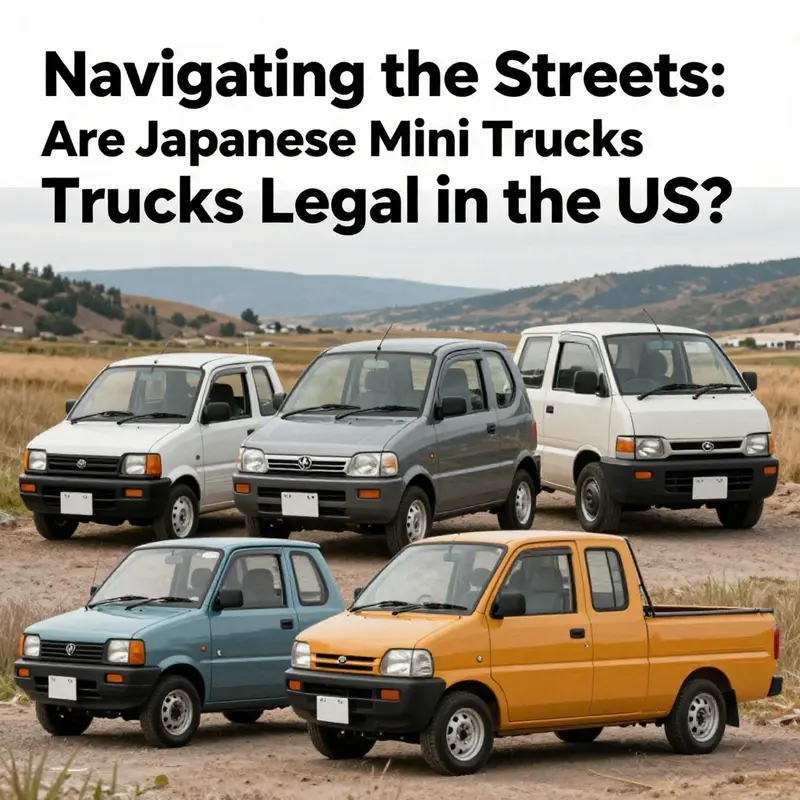
Japanese mini trucks like the Suzuki Carry, Daihatsu Hijet, and Subaru Sambar are admired for their functionality and efficiency. However, for local small business owners, residential property owners, and mini truck enthusiasts, the question often arises: Are these beloved vehicles street legal in the U.S.? This article carefully guides you through important regulatory challenges, the 25-year import rule, compliance with safety and emission standards, and alternative options. By understanding these facets, you can appreciate the complexities of importing a mini truck while exploring practical solutions that might work for you.
Roadblocks and Rules: The Long Path to Street-Ready Kei Trucks in the United States
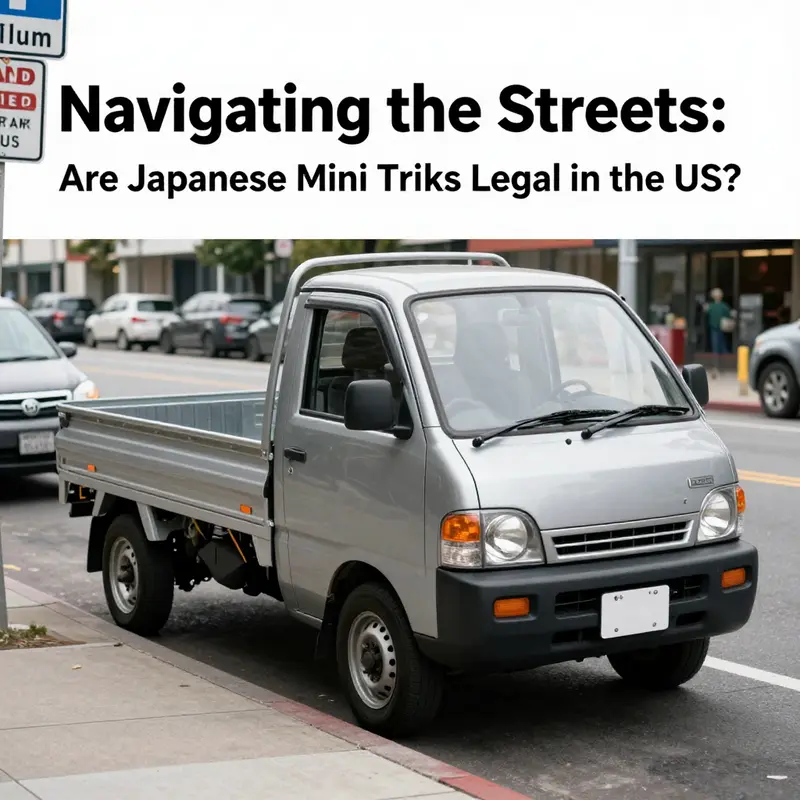
The allure of Japanese kei trucks on crowded streets is clear: tiny footprints, efficient engines, and nimble handling that fits tight lots and narrow lanes. Yet turning these pint-sized workhorses into street-legal vehicles in the United States sits at the edge of a regulatory forest. What begins as a practical curiosity often becomes a test of paperwork, budgeting, and patience. The result is not a simple import challenge but a puzzle of constraints that can overwhelm even the most motivated buyer.
Two pillars dominate the landscape: the FMVSS and the EPA emissions rules. FMVSS set crashworthiness, lighting, seat belts, and overall structure. Many kei trucks were not designed, certified, or tested to meet these standards, and may lack features expected in the United States, such as certain crash tests, standardized lighting, or airbags in some configurations. The EPA adds emissions considerations: engines tuned for Japan may not align with United States testing or certification regimes. The absence of compliant documentation means a kei truck cannot be sold as a new vehicle and may face hurdles at registration. Even well maintained examples can confront a cliff at the point of registration, and retrofitting can be costly and technically involved.
An exception exists for the Show or Display pathway, commonly called the 25 year rule. Vehicles at least 25 years old can be imported without meeting current FMVSS, provided they are used for show or exhibition rather than daily transport. This is not a free pass to drive on public roads; registration, insurance, and use restrictions apply. As of today, models manufactured before January 25, 2001 meet the 25 year threshold. More recent models remain outside that exemption.
There is also the possibility of pursuing a homologation or a special import program SIP. These formal channels allow non-conforming imports with documentation and agency approvals, but they demand time, money, and careful navigation of procedures. If a vehicle is allowed under such a program, use restrictions often apply, and road use remains uneven across states.
The practical reality is stark. Even after clearance, inspection, licensing, and insurance are not guaranteed. DMV interpretations vary by state; insurers may hesitate, exclude such vehicles, or price risk high. The overall cost of bringing a kei truck into compliance can dwarf its value, requiring reengineering of critical systems.
Nevertheless, legitimate pathways exist: compliant, readily insured, and road-legal options designed for North American standards. The market now offers modern compact utility vehicles and electric micro vans with familiar safety and emissions profiles that are easier to license. These options preserve the spirit of compact utility while avoiding a long import journey.
For readers who want deeper context, official guidance from federal agencies remains essential. Resources from the National Highway Traffic Safety Administration and other regulators, along with specialist blogs and forums, provide ongoing insight. The kei truck story illustrates how a tiny footprint on a map can translate into a sizable regulatory footprint, and how planning and compliance can converge to deliver practical, road-legal solutions.
Beyond the 25-Year Threshold: Navigating the Import Rule and the Realities of Kei Trucks on U.S. Roads
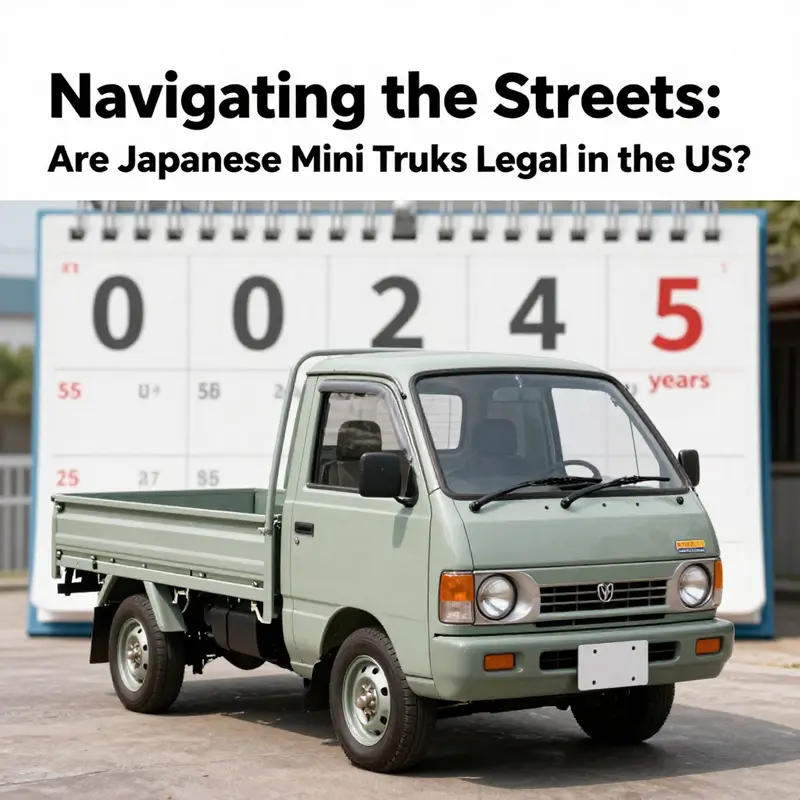
The question of whether Japanese mini trucks can legally roam American streets often comes down to a single, stubborn gatekeeper: the 25-year import rule. On the surface, this federal provision sounds almost forgiving. It grants a welcome shortcut to enthusiasts who want to bring vehicles from abroad into the United States without meeting the standard safety and emissions requirements that apply to new imports. Yet the reality on the ground is far more nuanced. The 25-year rule creates a wide doorway, but it does not automatically transform a niche vehicle into a practical, street-ready option for most buyers. The cadence of that door—when it opens, how it is interpreted by state authorities, and what it costs to legally operate a vehicle that was never designed for U.S. roads—defines the lived experience of ownership as much as the physical act of importation itself. The story begins with a simple premise: time does not erase the engineering boundaries set by federal statutes, but it can, under the right circumstances, allow those boundaries to be navigated without the same regulatory red tape that governs newer machines. Federal regulators carved out that space to acknowledge a cultural and historical niche—the vehicles that moved people and cargo in another time and place. The rule is a recognition that not every classic or foreign-design vehicle poses the same level of risk as a modern, federally certified automobile, and that a certain portion of the vehicle landscape belongs to aging fleets that have already traveled through a long life. Still, the 25-year window is not a free pass for road use. It is an invitation to consideration, documentation, and, for many, a costly and uncertain calculation about whether the vehicle can, or should, be registered for daily driving in a given state. The distance between a sealed crate in a port and a license plate on a sunbaked street is broader than most pictures let on. The path from import to street-legal status is a journey through paperwork, inspections, and the stubborn realities of compliance costs. The federal rule itself is grounded in two larger threads: safety and the environment. The FMVSS standards, which set the floor for crashworthiness, occupant protection, lighting, seat belts, and a host of other safety features, were designed to ensure a uniform baseline across all U.S. roads. The EPA emissions regulations similarly demand controls that clean the exhaust and limit pollutants, even if the vehicle was built for a different regulatory world. When a Kei truck—long a workaday tool in Japan and other parts of Asia—enters the import pipeline, those standards remain the yardsticks by which it is judged. In practice, this means that, federally speaking, most kei trucks are not certified for U.S. road use. The doors are open only to models that are at least 25 years old, cars that have already traveled outside the protective umbrella of the modern FMVSS/EPA framework. The federal framework is precise about what can be brought in without meeting current standards: the show or display exemption is the classic example. When imported under that narrow interpretation, the vehicle is typically restricted to non-road use or display purposes. It cannot be driven as a daily vehicle on public streets, and the conditions around its operation are tightly controlled. The distinction between a genuine, everyday vehicle and a museum piece that happens to share the same chassis and body panels becomes a central tension for would-be owners. As a practical matter, the 25-year rule is more a permission slip than a guarantee. It grants the legal ability to import, but it does not automatically confer the right to register and operate in the same way as a vehicle that rolled off an American factory floor. This distinction matters because the bar for state registration is not identical to the federal bar for import. States vary in how they interpret and enforce the spirit of the federal rule. Some jurisdictions take a flexible, case-by-case stance, especially when the vehicle is documented as meeting the age requirement and when the paperwork demonstrates the vehicle’s provenance and condition. Others apply a stricter lens, insisting on some degree of conformity with local safety and inspection standards before a vehicle can be registered for street use. The interplay between federal permission and state discretion fuels a kind of chess game for buyers. In a few states, the legal framework has evolved toward a more permissive attitude for 25-year-old imports with compact size and simple mechanical footprints. A notable example is a state legislature’s approach to low-displacement, old-technology imports, which can be registered if they meet particular technical criteria, such as engine displacement limits and modest top speeds. These policies are designed to preserve a practical balance: they acknowledge the cultural and practical value of older, smaller vehicles while still preserving road-safety standards and the orderly function of motor vehicle fleets. Yet even when a state appears welcoming, the path to registration remains studded with hurdles. The federal import mechanism can be satisfied, but the state will want its own assurances. The vehicle’s history becomes a central piece of that assurance. Documentation of manufacture date, ownership lineage, and a credible narrative of the vehicle’s condition are all critical. The need for exhaustive paperwork cannot be overstated. Shipping histories, domestic reconditioning, receipts for repairs, and proof that the vehicle’s operational characteristics align with local operational norms all play into a state official’s decision. In many cases, a vehicle that appears to qualify on the surface—age, low displacement, and a documented life after export—still faces a final test: will it pass compliance checks? Will the headlights, turn signals, brake lights, seat belts, and other fundamental safety features be found adequate by a state inspection or an equivalent compliance protocol? Will the vehicle be allowed to operate with a non-standard emissions profile that cannot be reconciled with state environmental standards? These questions underline a harsh reality. The costs of aligning a Kei truck with U.S. safety and emissions expectations can be substantial. The modifications necessary to bring such a vehicle into compliance may require significant structural changes, new lighting configurations, safety device retrofits, and engine or exhaust system work that can push the total investment beyond the value of the truck itself. In many scenarios, the practical financial calculus tilts away from import-driven street use and toward a more limited, non-road role or a partial restoration project intended for display or off-road recreation. The emotional appeal of these diminutive workhorses remains compelling. They embody a stripped-down efficiency and a certain spartan charm that resonates with a community of enthusiasts who value simplicity, maneuverability, and the tactile feel of a vehicle designed for utility rather than luxury. The timing of the 25-year rule aligns with a broader historical arc: as time passes, a growing cohort of vehicles reach the age where the federal system allows their import without the heavy certification burden. In that sense, the rule serves as a bridge between the regulatory world and a corner of motor vehicle culture that thrives on mechanical honesty and a certain old-school practicality. However, the bridge does not guarantee a comfortable, legal ride down a busy American street. For many potential owners, the search for a street-legal Kei truck is less about discovering a loophole and more about weighing the realities of ownership against the sunk costs and ongoing compliance responsibilities. The larger market context also matters. The appeal of kei trucks is amplified by the existence of other, more modern and legally straightforward options for light cargo and urban mobility. These alternatives—compact cargo vans, small pickups engineered for North American standards, and even electric micro-vehicles—offer legitimate and legally compliant paths for people seeking budget-friendly, efficient urban transport. The trade-offs are clear: modern designs deliver predictable safety features, guaranteed emissions compliance, and a path to registration that is supported by a nationwide framework. Kei trucks, by contrast, carry a cultural allure that appeals to the pragmatist and the tinkerer in equal measure. The decision to pursue a 25-year import path is, at its core, a personal calculus about risk, cost, and the value of a particular driving experience. For some, the journey—documenting the vehicle’s age, assembling compliance packages, negotiating with state inspectors—becomes part of the hobby itself. For others, the same journey proves too costly or unpredictable to justify daily use on U.S. roads. If a reader wants a broader, community-informed sense of how these rules play out in practice, there is a wealth of discussion and case studies in the online community that chronicles the legal and logistical steps people take to register older Japanese imports. For a practical, community-based breakdown, see the minitrucksocala blog. minitrucksocala blog
The interplay of federal rules and state interpretations means that, even with the 25-year permission, the street-legal reality of kei trucks remains a patchwork. Some people manage to register and operate such vehicles in states that have adopted flexible inspection regimes or that have enacted specific language to accommodate older, small-displacement imports. They often document their journeys with meticulous receipts, photos, and correspondence with inspectors. Others fall short when their vehicle’s condition or configuration fails to meet local expectations. In these cases, owners must decide whether to pursue further modifications, pursue a non-road use designation, or redirect their energy toward a restoration project that culminates in a show vehicle rather than a daily driver. The net effect is that the 25-year rule functions as a gate with a hinge. It allows entry for the curious and dedicated, but it does not guarantee a smooth ride through the administrative gauntlet. It also invites a broader conversation about the role of historic and internationally sourced vehicles in American transportation ecosystems. Critics argue that the availability of a legal import path for aging vehicles could complicate road safety and environmental goals, creating a tension between cultural preservation and modern regulatory aims. Proponents, meanwhile, emphasize the educational and preservation value of keeping these machines in circulation, especially for communities that prize compact design and minimalist engineering. Either way, the rule compels careful planning. Buyers must consider not only the upfront cost of acquisition and the shipping process but also the ongoing cost of compliance, insurance, and potential licensing challenges. The difference between a visually striking garage ornament and a legally driven daily tool often hinges on a handful of technical details—engine management, brake performance, lighting configurations, and the integrity of the vehicle’s safety features. Those details become the true determinants of whether a kei truck can, in fact, join the broader traffic stream in a given state. For readers who are evaluating a potential purchase, the prudent path involves early consultation with a knowledgeable import specialist or a state registration expert. They can help interpret the 25-year rule in light of current state statutes, confirm the vehicle’s manufacture date, and outline the documentation needed to pursue a lawful route. A candid assessment of the vehicle’s condition and the feasibility of needed modifications can save months of frustration and a significant portion of the purchase budget. As readers reflect on the 25-year rule and its implications, it is worth remembering that the landscape is not merely a legal puzzle. It is a living, evolving ecosystem in which hobbyists, buyers, regulators, and lawmakers continually renegotiate the balance between access, safety, and cultural value. The result is not a single, universal answer to the street-legal question, but a spectrum of possibilities that depends on the vehicle’s age, condition, configuration, and the jurisdiction in which the vehicle would be registered. In the end, the 25-year rule opens a door, but stepping through it requires a careful assessment of the road ahead. For some, the door leads to a practical, legal pathway to a distinctive, compact transport solution. For others, it reveals the door’s limits and redirects their ambitions toward alternatives that deliver a smoother, federally compliant ride.External resource: https://www.dhs.gov/immigration
Bridging Borders: The Safety Standards Hurdle to Making Kei Trucks Street-Legal in the United States
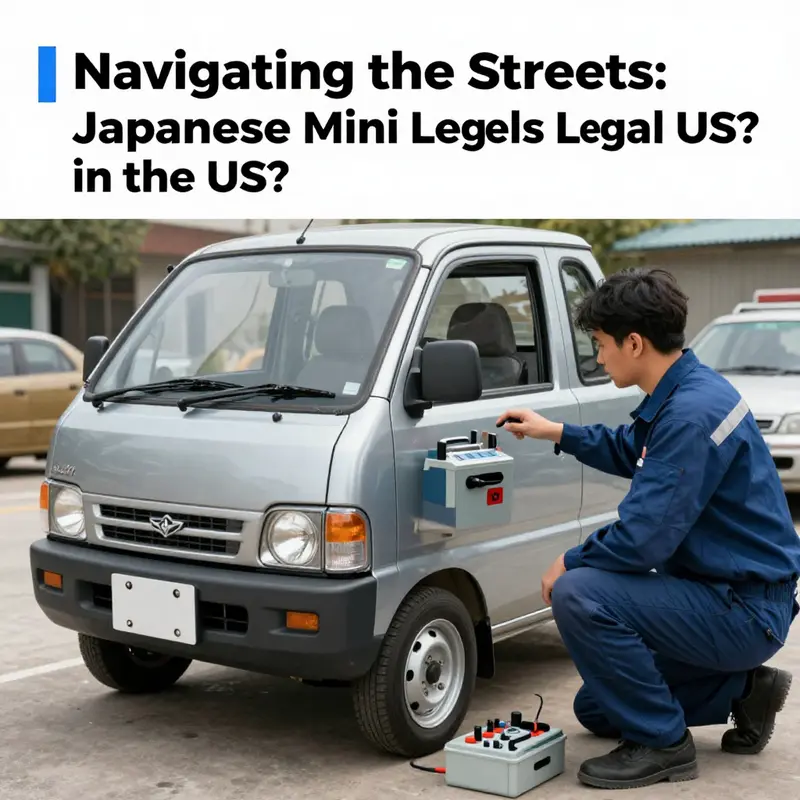
kei trucks captivate for their nimble footprint and practical payloads, especially on farms, tight urban lanes, and spaces where a full-size utility vehicle feels excessive. Their compact size, frugal engines, and simplicity have made them attractive to enthusiasts who prize efficiency and maneuverability. Yet the dream of driving a true Japanese kei truck on regular U.S. roads collides with a web of regulatory requirements that were designed for domestic vehicles, not imports. At the heart of the challenge are safety and emissions standards that the U.S. relies on to protect occupants and the environment. These standards, known collectively as the Federal Motor Vehicle Safety Standards (FMVSS) and the Environmental Protection Agency (EPA) emissions regulations, were crafted around vehicle categories, crash testing protocols, and powertrains that generally do not align with the specifications of kei trucks produced for the Japanese market. What works in a showroom in another country can face a long, exacting, and expensive path to legality that few vehicles can complete for daily street use in the United States. The tension between the appeal of these light, economical vehicles and the rigidity of U.S. safety and pollution controls sets the scene for anyone weighing a potential import or a speculative build aimed at street legality.
The FMVSS create a baseline of structural integrity, occupant protection, and visibility that most kei trucks were not designed to meet. In practice, the standards address crashworthiness in a way that assumes a passenger car architecture with deformable crumple zones, reinforced roof structures, and standardized testing procedures. They also specify criteria for seat belt systems and the deployment of airbags, which do not map cleanly onto a small, lightweight platform conceived for compactness rather than maximum restraint performance. The result is that even if a kei truck could be brought into the country, there is no automatic certification that it can operate safely alongside vehicles designed with U.S. crash standards in mind. The absence of airbags in older or smaller designs, for example, flags a fundamental gap between the vehicle’s original intent and the safety expectations that are enforced on U.S. roads. The same philosophy applies to lighting, reflectors, and visibility features; the regulatory framework assumes certain lighting configurations and warning systems that may not be present—or may be inadequate—in a kei truck built for a different regulatory and climatic context.
Emissions rules add another layer of complexity. The EPA’s standards are not merely about the total amount of exhaust a vehicle emits; they set thresholds for pollutants, specify testing cycles, and require the integration of modern control technologies. Kei trucks with tiny displacement engines and Japanese exhaust and fuel-management systems were engineered to meet Japan’s standards, which can differ significantly from U.S. fuel economy and emissions targets. Retrofitting such engines to meet U.S. thresholds often translates into substantial mechanical changes, from catalytic converters and exhaust routing to engine calibration and diagnostic systems. In many cases, these alterations would require not only parts replacement but also extensive reengineering that challenges the vehicle’s original design philosophy and escalates costs beyond feasible limits for most buyers. The regulatory calculus here is not simply about ticking a few boxes; it is about aligning a holistic set of performance, safety, and environmental characteristics with a distinct national framework that was not built around kei trucks.
If someone still pursues an import under the letter of the law, there are narrow avenues beyond standard sales routes. The 25-year rule provides a notable loophole: vehicles that are at least 25 years old can be imported without complying with current FMVSS if they are used for display, exhibition, or show purposes rather than for daily driving. This “show or display” pathway reshapes the vehicle’s intended use and is understood in the regulatory language as a means to preserve automotive history and enable enthusiasts to study and showcase older designs. While this exemption reduces one barrier, it does not erase the other regulatory requirements entirely. A vehicle imported under this rule may still face scrutiny at the state level when it comes to registration, insurance, and on-road operation. Some operators and shops pursue this route with a focus on collecting, education, and occasional, controlled demonstrations rather than turning the kei truck into a daily commuter. It is a legal workaround with strict limits, and it underscores the mountain that must be climbed to convert an import into a street-legal companion for everyday use.
Beyond age-based exemptions, the Special Import Program (SIP) offers another avenue for non-commercial, non-road use. SIP requires thorough documentation and explicit approvals from the National Highway Traffic Safety Administration (NHTSA) and the EPA. In practice, this path is rarely a shortcut; it involves rigorous review, compliance demonstrations, and a clear statement of the vehicle’s intended use. The practical reality is that even when a kei truck slips through the regulatory cracks via SIP, the end result is typically a vehicle that is not suited for unrestricted public-road operation. The economic calculus here is crucial: the costs of obtaining approvals, validating conformity, and retrofitting or certifying the vehicle often dwarf the price paid for the original truck and can overshadow the purpose of the import altogether.
The interplay between federal standards and state-level administration adds another layer of complexity. States are not simply pass-through channels for federal rules; they administer registrations, inspections, and, in many cases, additional safety or environmental checks. A kei truck that clears federal hurdles in theory might still fail to obtain a title or registration at the state level if its equipment does not meet state-specific requirements or if the inspection process flags important safety or emissions concerns. This dynamic makes the practical pathway to street legality a patchwork of federal waivers, state interpretations, administrative fees, and, often, bespoke modifications. The result is a landscape where only a minority of kei trucks—usually those that have benefited from substantial pre-existing conformity, or those that have been rebuilt to align with U.S. expectations—ever truly see public streets under a valid, legal basis. Even then, the street-legal status inherits a degree of fragility: a potential owner must maintain ongoing compliance, keep meticulous documentation, and anticipate periodic re-inspections or updates to stay within evolving regulatory boundaries.
The upshot for most readers is clear: the dream of simply importing a kei truck and putting it on a U.S. road is, for all practical purposes, fraught with prohibitive cost, substantial regulatory risk, and a level of technical intervention that often exceeds the vehicle’s own value. Enthusiasts frequently weigh these realities against the allure of ownership and the unique utility such a vehicle can provide in specialized contexts. For those who still wish to explore the topic further, there is a wealth of community knowledge and anecdotal experience captured in automotive and import-focused spaces. A useful entry point for readers seeking deeper context about the import journey, regulatory interpretation, and real-world stories is the general automotive blog hub of the kei-truck community. Minimized barriers and practical guidance on the realities of import adventures can be found at minitrucksocala.com/blog/.
Within this framework, the viable alternatives begin to emerge not as direct equivalents but as parallel solutions. For those who value compactness, efficiency, and practicality, modern, purpose-built compact utility vehicles exist within the U.S. market as law-abiding options. These include small, purpose-built work vehicles and compact vans designed to meet FMVSS, EPA, and state requirements from the outset. The gap between the kei truck’s iconic lightness and the heavier, safety-conscious design of U.S. alternatives is not simply one of features; it is a reflection of how regulatory ecosystems shape product development and market availability. In some parts of the country, electric micro-vans and battery-powered work platforms have begun to fill the niche for urban or farm-based tasks, offering comparable utility while aligning with emissions targets and safety standards. Availability, however, remains highly variable by state, and buyers must navigate dealership networks, vehicle classification, and potential incentives or restrictions tied to local emissions programs. This ripples into conversations about infrastructure, charging, and support networks—factors that often determine whether a practical alternative is viable in a given region.
Ultimately, the story of street legality for kei trucks in the United States is a study in regulatory nuance as much as mechanical feasibility. The challenge is not simply a matter of engineering a vehicle to behave on U.S. roads; it is about proving to multiple authorities that the vehicle can meet a standardized expectation of safety, performance, and environmental responsibility that modern U.S. roadways presume. The standards exist to protect drivers, passengers, and the broader driving ecosystem, and the rigorous nature of those standards reflects the high stakes involved in everyday mobility. The path to legal operation is narrow and often expensive, with the best outcomes coming from a careful assessment of intent, resource availability, and a clear understanding of the regulatory terrain.
For readers who want to connect the regulatory picture to real-world exploration and practical decision-making, the broader literature and community discussions can be illuminating. Those seeking official, codified guidance should turn to the NHTSA’s resources, which outline the FMVSS framework and the legal channels for import and registration in the United States. Visit the official NHTSA site for authoritative information on vehicle safety standards and compliance: https://www.nhtsa.gov. This reference serves as a compass rather than a guarantee, underscoring the fact that while curiosity about kei trucks remains strong, the practical route to street legality in the United States is defined by a careful balance between ambition and the constraint of federal and state regulations.
Emission Gatekeepers: Why Japanese Mini Trucks Struggle to Be Street-Legal in the United States
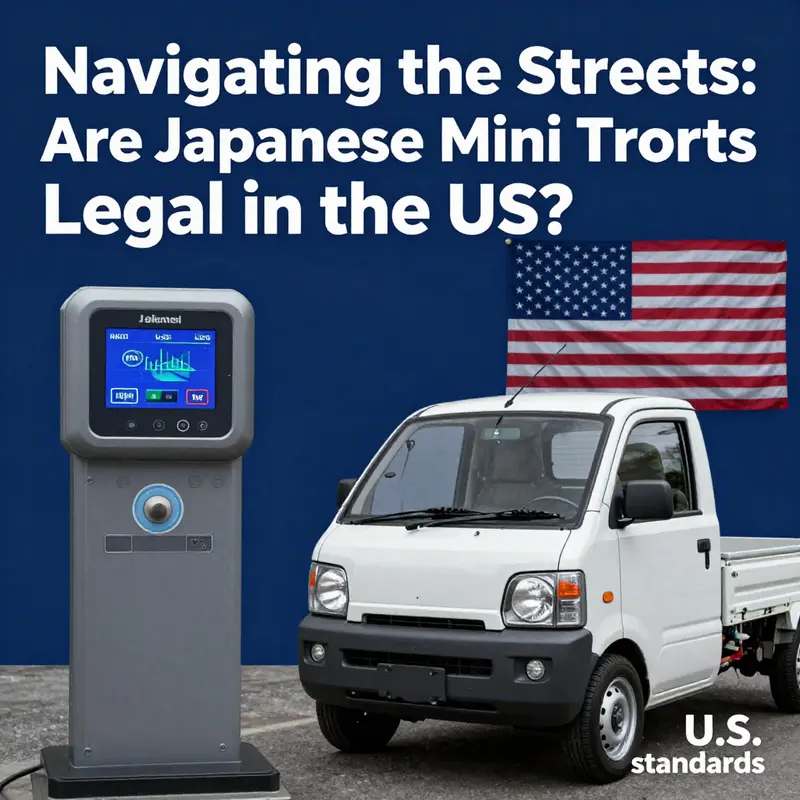
Japanese mini trucks draw a quiet, persistent enthusiasm from hobbyists and small-business operators alike. Their compact size makes them nimble in narrow city streets and cramped farm lanes, their simple, robust layouts invite hands-on maintenance, and their utility bed space seems perfectly tailored for light-duty work without the bulk of a full-size pickup. Yet behind the appeal sits a complex web of federal rules designed to ensure safety and environmental stewardship on every road. The result is a regulatory landscape where the allure of a tiny, efficient workhorse can collide with the hard math of compliance. In the United States, the possibility of driving such a vehicle on public streets depends less on personal desire and more on whether the truck can meet two parallel sets of standards: those governing vehicle safety and those governing emissions. The two regulators most directly involved are the National Highway Traffic Safety Administration (NHTSA) and the Environmental Protection Agency (EPA). Each agency enforces a distinct dimension of legitimacy for vehicles used on U.S. roads, and both have criteria that are difficult for off-market imports to satisfy. The safety standards that the NHTSA administers compel a vehicle to demonstrate crashworthiness, appropriate lighting, structural integrity, seat belts, and often airbag systems. The emissions standards administered by the EPA require that a vehicle’s exhaust, fuel system, and engine management control pollutants to a level that aligns with modern air-quality goals. For many Japanese mini trucks, designed primarily for the domestic market, those criteria are not a natural fit. The result is a practical barrier: even if a vehicle could be physically transported to the United States, merely driving it down the street can be fraught with regulatory risk, cost, and paperwork.
The emissions regime, in particular, is a critical bottleneck. U.S. standards are built around a framework of testing, certification, and ongoing compliance that ties a vehicle’s ability to be sold, registered, and operated to verifiable performance in several pollutant categories. In the United States, a minitruck must pass emissions testing or obtain EPA certification indicating that it meets the relevant limits. The challenges here go beyond simple defects or missing equipment; a vehicle may have been engineered to operate within the emissions envelope of its country of origin, yet those parameters can differ markedly from what U.S. regulators expect. The tiers and tests reflect decades of environmental policy and evolving technology, and they impose a baseline that many imports fail to meet without substantial modification. Even when a vehicle can be technically modified to meet those standards, the process is intricate and costly. Documentation, precise engine tuning, and aftermarket components must be validated through a formal certification pathway, a process that demands time, expertise, and capital. In practical terms, this means that a project which starts with a compact, economical work tool can spiral into a regulatory undertaking that rivals or exceeds the price of the vehicle itself. The EPA’s import-and-certify framework is explicit about what qualifies for exemptions and what must be proven through testing and documentation. While the policy landscape can appear rigid at first glance, there are recognized routes for certain imports to enter the country under controlled conditions. The most notable option for older vehicles is rooted in age: an import that is at least 25 years old may fall outside the more stringent emissions demands that apply to newer models. In effect, the so-called 25-year rule creates a sort of “historical vehicle” category that can be brought into the United States with fewer regulatory hurdles than a modern, emissions-intensive model. It does not automatically grant street legality, but it does present an opening. In parallel, there is the possibility of obtaining a Special Import Program (SIP) designation for non-commercial, non-road use in specific circumstances. This program, while offering an avenue for import, is not a direct path to daily street use; it is generally oriented toward display, research, or exhibition purposes. The implications of these programs underscore a pattern: the regulatory system is built to distinguish between vehicles that will be used on busy public roads and those that will be preserved for show or limited, non-road application.
That distinction matters because the roadworthiness standard is not a mere formality. It translates into concrete engineering and compliance costs, and it changes the calculus of ownership significantly. Even when a vehicle is modified to meet certain criteria, it may still fail to achieve full street legality if other elements—such as crash protection, lighting compliance, or the integrity of safety systems—do not fully align with U.S. requirements. The paperwork alone can be substantial: documentation of modifications, evidence of emissions performance, and proof of conformity with FMVSS and EPA rules. For many prospective importers, the mountain of required steps is a barrier that stretches beyond the point where the vehicle’s price would seem attractive. In this light, the dream of a perfectly legal on-road mini truck in the United States becomes, in many cases, an impractical pursuit, unless the vehicle originates from an era or category that aligns with the regulatory framework or the importer is prepared for a long, expensive process.
The practical implications extend beyond the procedural into the daily realities of ownership. A vehicle that finally clears the regulatory path may still require ongoing oversight to stay compliant. Emissions controls can drift from target specifications if the engine is altered or if fuel quality changes, and any modifications to the exhaust system, engine management, or other emissions-related components can trigger re-certification requirements. That adds another layer of potential expense and administrative overhead. Safety-related components pose a separate, substantial set of hurdles. The U.S. safety standards are not merely about the presence of seat belts; they require a certifiable structure, predictable crash performance, proper lighting, and other features designed to reduce risk on the road. When a small, utilitarian truck is adapted from a different regulatory environment, ensuring that all these elements work together harmoniously demands careful engineering, testing, and documentation. The reality is that even when enthusiasts find a path to street legality, the journey is rarely quick or cheap. The mathematics of import costs, modification, and certification often yield a sum that beats or rivals the price of a locally compliant, modern counterpart—whether that is a compact work vehicle designed for U.S. roads or a compliant electric micro-van that aligns with current state regulations.
Amid these hurdles, it is helpful to see how an importer might navigate the terrain. The age-based exemption provides a foothold: once a truck is 25 years old, it may be imported under Show or Display provisions without meeting the current EPA emissions standard. This reduces the emissions barrier, but it does not automatically confer street legality. The vehicle then still faces the FMVSS-based scrutiny for on-road use. In this way, the 25-year rule acts as a doorway to importation, while the safety standards function as the threshold for actual driving on public streets. A separate and nuanced pathway is the Special Import Program, which permits non-commercial, non-road use under tightly controlled conditions. SIP requires extensive documentation and a clear expectation that the vehicle will not be used as a conventional street vehicle without further compliance work. In practice, many who pursue these routes discover that the combined costs—engineering changes, testing, certification, and regulatory oversight—quickly escalate to levels that make street use impractical for a vehicle whose market price is modest by regular automotive standards. This reality helps explain the cautionary chorus you’ll hear from regulators and seasoned importers alike: while a legal avenue exists in theory, the practical, financial, and logistical barriers are real and substantial.
The upshot for most readers is straightforward. If the goal is a reliable, legally operable mini truck on U.S. roads, several realities must be acknowledged from the outset. The first is that emissions requirements are the central obstacle, and they are not easily bypassed by a few changes or a clever retrofit. The second is that even with exemptions for older vehicles, the path to full, everyday street use remains conditional on safety compliance—crashworthiness and all related systems—being demonstrably in line with U.S. standards. The third reality is that the cost of meeting these requirements can rival or exceed the cost of the vehicle itself, especially once the vehicle has been imported and the clock starts on inspections, testing, and certification. This combination of regulatory rigor and economic reality helps explain why many in the community view the legal route with a sense of pragmatism. The dream persists for those who are passionate about the concept of a tiny, economical work vehicle, but the cold calculus of compliance often redirects the choice toward alternatives that are purpose-built for the U.S. market. For readers who want to explore the broader landscape of how such vehicles compare to domestically available options, the minitrucks blog offers discussions and community insights that can illuminate practical aspects of ownership and maintenance. blog.
Those who want to go beyond personal curiosity and build a grounded understanding of the regulatory environment can also consult authoritative resources that lay out the current import rules, testing requirements, and certification processes. The EPA’s official guidance explains eligibility for exemptions, as well as the steps required to demonstrate compliance when exemptions are not available. This resource helps clarify the distinctions between importing for display, import for potential on-road use after modification, and the various documentation packages that accompany each route. In the end, the regulatory framework is designed not to close doors entirely but to ensure that any vehicle that enters U.S. roads meets a standard designed to protect public health and safety. The practical takeaway is clear: if street legality is the objective, both the emissions and safety pathways demand careful planning, expert coordination, and a willingness to accept that the expenditure and timeline may be longer and more complex than a casual purchase would suggest.
For those who still wish to pursue a legally compliant, on-road mini-truck solution within the United States, the landscape is best navigated with updated information and a clear understanding of the trade-offs. Modern, purpose-built options that are designed to fit U.S. safety and emissions standards exist, and they offer the same compact utility without the regulatory detours that accompany foreign imports. These vehicles provide predictable performance, manufacturer-backed support, and a compliance pathway that aligns with both state and federal requirements. While they may not capture the same nostalgic appeal as a vintage or domestic-foreign hybrid, they deliver tangible reliability for users who need a small, efficient work vehicle that won’t be caught in regulatory limbo.
In sum, the chapter on emission regulations for Japanese mini trucks reveals a careful balancing act between desire and compliance. The U.S. system prioritizes safety and air quality, and the regulatory architecture reflects long-standing commitments to both. A vehicle that originates outside this framework is not simply a matter of mechanical adaptation; it requires a comprehensive demonstration that it will perform safely and cleanly in the demanding environment of American roads. Enthusiasts who approach the topic with a practical mindset often find that the cost-benefit analysis tilts toward exploring compliant, domestically available options that deliver similar utility without the uncertainty and fiscal overhead. For the broader article, which examines whether Japanese mini trucks can be street-legal in the U.S., this chapter highlights the central role of Emission Regulations and shows how they shape every decision—from import strategy to everyday use. As policies evolve and as technology advances, the line between what is possible and what is prudent will continue to shift. The essential takeaway remains stable: federal emission standards and federal safety standards are the gatekeepers, and they define the practical limits of bringing foreign mini trucks into American traffic.
External resource: EPA Importing and Certifying Vehicles
null

null
Final thoughts
Understanding the legality of Japanese mini trucks in the U.S. is essential for anyone interested in these versatile vehicles. Regulatory challenges exist, particularly concerning safety and emissions, but potential paths like the 25-year rule and alternative vehicles can help satisfy your needs. Knowledge is key—being informed will allow small business owners, property owners, and enthusiasts to make the best decisions moving forward. Keep exploring your options, and who knows? Your dream mini truck may be closer than you think.