
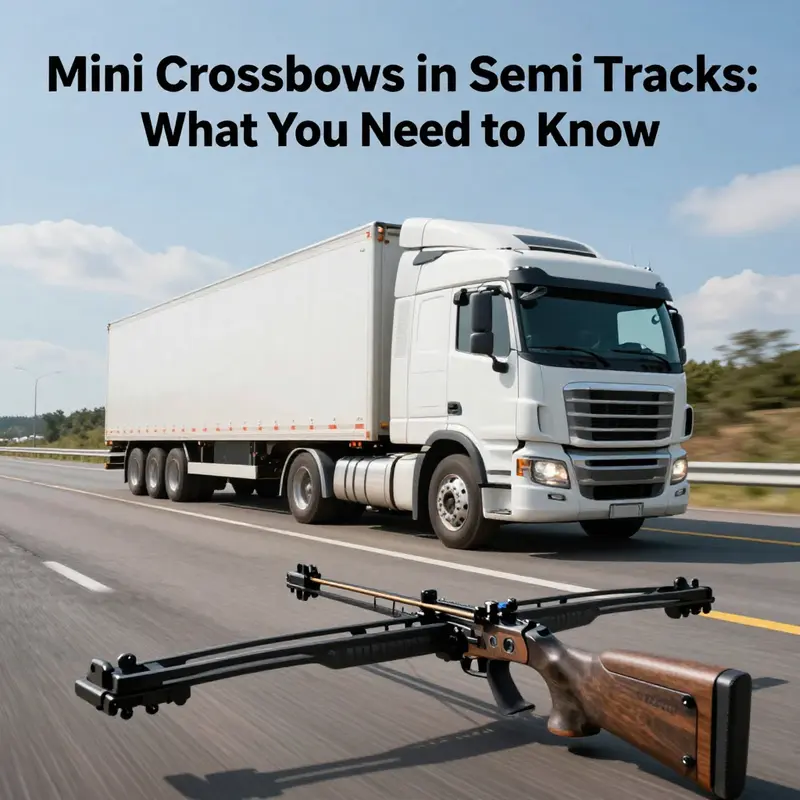
Transporting a mini crossbow in your semi-truck is a topic that raises numerous questions for small business owners, hobbyists, and truck enthusiasts alike. As the popularity of mini crossbows continues to grow, understanding their legality in various jurisdictions is essential for responsible ownership. This article will walk you through the legal landscape concerning mini crossbows in semi-trucks, delve into state-specific regulations, and address safety concerns to ensure you can transport your mini crossbow with confidence. Let’s explore the rules that govern this exciting hobby while keeping both the law and safety in mind.
Rules on the Road: The Nuanced Legal Terrain of Mini Crossbows in a Semi-Truck
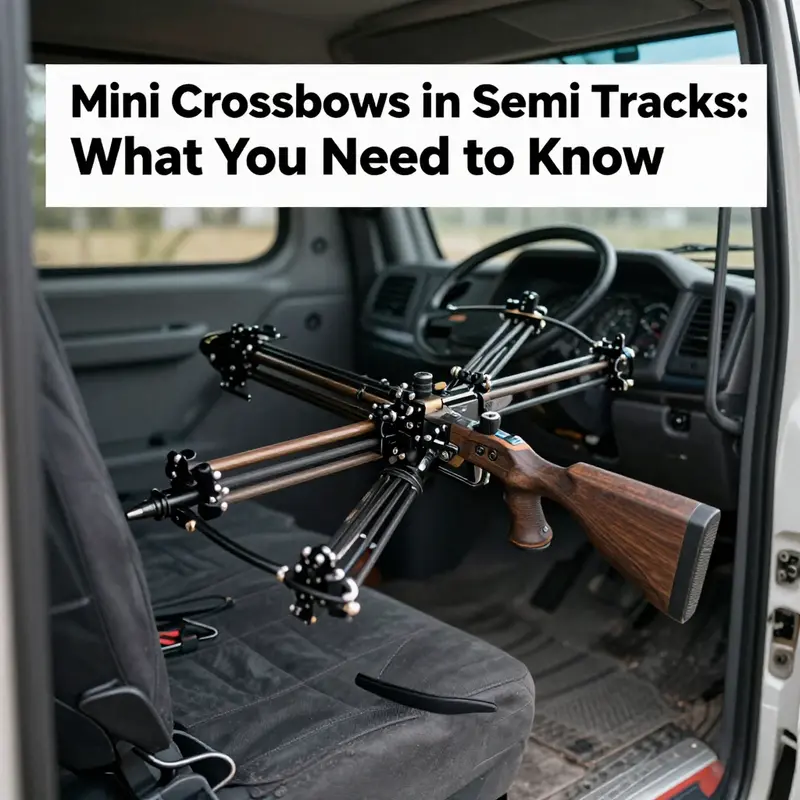
When a driver spends days behind the wheel of a semi-truck, surrounded by the predictable rituals of shifting gears, weigh stations, and the rhythm of miles ticking by, a small, unlikely hardware item can suddenly become a focal point of legal and safety concerns: the mini crossbow. It is not the kind of topic that makes headlines, yet it sits at the intersection of ownership, transportation, and the kind of everyday risk assessment that keeps fleets compliant and travelers safe. The absence of a sweeping federal rule that explicitly prohibits or endorses possessing a mini crossbow inside a commercial vehicle leaves a grey area that state law is free to color with its own lines and shadows. What emerges from this landscape is a tapestry of rules that varies from one jurisdiction to the next, and even within the same state, from one context to another. The primary thread that runs through this tapestry is the distinction between owning a crossbow and carrying it in a vehicle, and the weight that vehicle storage, method of transport, and intended use carry when state authorities interpret the law.
In the United States, there is no uniform federal prohibition or mandate tailored to “mini crossbows in a semi-truck.” Instead, the legal question tends to fall under two broad headings: how the crossbow is treated for hunting or sporting purposes, and how laws governing weapons or dangerous items apply to transportation within a vehicle. Several states treat crossbows similarly to other hunting tools rather than as firearms per se, but with caveats about where and how they can be carried. In California, for example, crossbows are generally legal to possess and use for hunting under defined conditions. The key caveat is that carrying or using a crossbow in a vehicle is typically restricted unless it is in the course of lawful hunting. The practical takeaway is not a blanket ban on possession in a truck, but a caution against turning a crossbow into an immediately accessible instrument of potential harm in a vehicle. It is a reminder that possession in a moving vehicle may be scrutinized under laws aimed at weapons in public spaces and under regulations designed to ensure road safety and the security of people in and around the vehicle.
In Texas, the landscape looks different again. Crossbows are legal to own and use for hunting, and there is no blanket prohibition on carrying them in a vehicle, provided they are not used in a way that could threaten others. Yet even in a state with permissive hunting rules, the phrase “not used in a manner that could endanger others” leaves room for interpretation. A loaded crossbow, or one that is easily accessible, could trigger concerns under general vehicle-safety standards or under specific rules about weapons in vehicles. The practical implication for a driver is simple in concept but demanding in detail: if a crossbow is to be transported, it should be secured so that it cannot be easily fired or readily drawn in a moment of stress or panic. The difference between legal possession and lawful transport often hinges on the way a crossbow is stored and secured, and on the driver’s intent at the moment of transport.
The broader narrative here is that even when a state allows ownership and hunting use, it does not automatically grant a free pass to carry a crossbow in a moving vehicle. The law frequently treats the vehicle as a space that magnifies risk for others on the road. Vehicles, by their nature, are workplaces for drivers who often share roads with other motorists, pedestrians, and occasionally wildlife along the shoulder. The moment a crossbow is loaded or within reach, the risk calculus shifts from “how I will hunt if I reach a deer stand” to “how I can safeguard passengers, fellow drivers, and the cargo while I am on the highway.” The requirement to unload and secure crossbows, the insistence on transporting in a protective case, and the obligation to keep the item out of immediate reach are not only prudent steps; in many jurisdictions they are the difference between lawful transport and an offense that could invite a citation or more serious consequences.
For drivers who operate across state lines, the challenge becomes even more acute. A semi-truck may travel through jurisdictions with markedly different rules about weapons in vehicles, about hunting equipment, and about how heavy vehicles interact with public safety standards. The lack of a universal federal framework means that a crossbow could be treated as lawful equipment in one state and as a restricted or potentially dangerous object in another. This reality makes a temperamentally cautious approach—one that assumes the worst-case interpretation of local laws—prudent for any commercial operator who intends to transport or store a crossbow in a truck. The driver’s decision to carry a crossbow should be guided by a careful, documented process: know the exact statutes in the states you operate within, verify any restrictions on carrying or transporting weapons in a vehicle, and confirm with employers or fleet managers whether the company policies align with or restrict such possession.
The role of the employer in this context cannot be overstated. Trucking companies operate within a web of rules that extends beyond state law. Internal policies may impose stricter standards than those required by law because employers have a responsibility to maintain a safe, compliant work environment and to minimize liability. These internal policies often prohibit weapons entirely inside company vehicles, regardless of what the state statute may permit for personal ownership or hunting. In practice, a driver who chooses to transport a crossbow must navigate not only the law but also the company handbook, safety protocols, and the potential for disciplinary action if a policy violation is discovered. The tension between permitted possession under state hunting regulations and prohibited conduct under workplace safety mandates creates a space where drivers must carefully document their compliance procedures—how they store the crossbow, how they ensure it cannot be fired from the cab, and how they restrict access to it during the operation of the vehicle.
This brings us to the heart of practical legality: the concept of “readily accessible” versus “unloaded and secured.” In many jurisdictions, the crucial question is whether the crossbow is readily accessible to the driver or any other person in the vehicle. If a crossbow sits in a rack behind the seat, disassembled in a protective case, and locked away, the risk of immediate harm is minimized, and the crossbow becomes more a hunting instrument than a weapon on the street. If, however, the crossbow is loaded, left under a seat, or within arm’s reach, the legal and safety calculus shifts dramatically. States that impose strict controls on weapons in vehicles often treat such accessibility as a factor that elevates the crossbow from a recreational tool to a potential threat on the road, with corresponding penalties or restrictions. This is especially true in urban corridors or in areas where law enforcement places a premium on de-escalation and rapid response to perceived threats.
The conversation about storage intersects with the broader question of risk management for fleets. Trucking, by its nature, involves moving valuable cargo through varied environments—industrial parks, residential zones, highways with heavy traffic, and rural stretches where wildlife is more likely to appear. A crossbow, even a mini version, presents a unique set of hazard considerations. In a collision, in a sudden stop, or during a rough road condition, a crossbow could injure a driver or a bystander. The safety culture inside a fleet often translates into explicit guidelines: keep hunting equipment in a hard-shell case, secure it in the trailer when not in use, and ensure it cannot be moved or operated unintentionally while the vehicle is in motion. These practical precautions do not just reduce the risk of accident; they also simplify compliance with laws that may require safe storage and transportation of dangerous items in a commercial vehicle.
To bring this discussion into a more personal frame, consider a driver who is also a shooter or hunter. A common temptation may be to keep the crossbow within easy reach, perhaps on the passenger seat or tucked under the bunk where it can be grabbed quickly after a break in the morning. The law, the safety protocols, and the potential for employer discipline converge to deter such behavior. The driver learns to think of the crossbow not as a casual accessory but as an item with specific transport requirements and a defined status within the vehicle. This shift in mindset—from possession to responsible transport—helps ensure that the crossbow remains a lawful hunting tool rather than a legal headache. The transformation is not purely a legal exercise; it is a discipline that aligns with the broader professional standard of transport, where predictable behavior and stringent safety measures are valued above convenience.
For readers who want a window into related resources and perspectives, the experience in practice often echoes what appears in broader discussions about hunting equipment and vehicle safety. A quick anchor to this broader conversation can be found in the general guidance offered through state wildlife resources, which outline the conditions under which crossbows can be used, stored, and transported. While these sources do not always directly address the semi-truck context, they illuminate the underlying assumptions about how crossbows are regulated when carried in vehicles. For instance, official hunting regulations typically emphasize that crossbows must be unloaded and secured during transport and used in accordance with hunting laws when deployed in the field. The same logic—reducing accessibility and preventing misuse during travel—carries forward into vehicle-specific rules, even if those rules are not always stated in a single, cohesive statute about crossbows in trucks.
A contiguous thread to consider is the way state interpretation interacts with public policy goals. Authorities are tasked with balancing the rights of individuals to possess hunting equipment against the broader aims of public safety and roadworthiness. In many cases, this balance tips toward caution in scenarios where a vehicle is a space shared with the public and where the consequences of a misstep could be severe. The presence of a weapon-like object in a moving vehicle is not a neutral fact; it triggers a risk appraisal that may lead to heightened scrutiny, warnings, or penalties. From this vantage point, the practical guidance for anyone who drives a semi-truck with a mini crossbow becomes clear: stay informed about the precise rules in every state where you operate, align with employer policies, store the crossbow properly, and treat the vehicle as a space where safety and compliance are the top priorities.
In reflecting on how to approach this topic in writing and research, one can sense the tension between general statements about legality and the granular specifics that truly matter on the road. The state-by-state mosaic means that drivers cannot rely on a single rule but must build a local map for each jurisdiction. A driver who plans a cross-country route would benefit from securing written confirmations from the employer and from local law enforcement or legal counsel about the legality and the safe transport mechanics in each stop or corridor. The practice of documenting each state’s stance could become a practical part of trip planning, much like checking weight limits, hours-of-service rules, and hazmat regulations. While a mini crossbow might not be hazardous in the same sense as a loaded firearm or a high-pressure container, it still sits at the boundary of safety and legality in the trucking world—and that boundary deserves respect, careful navigation, and ongoing education.
For readers who want a grounded, community-based sense of the topic, one can also look to practical resources that discuss the regulation of hunting equipment in vehicles more generally. The discussion often surfaces in local and regional hunting regulations that illuminate how crossbows are treated in transit, including expectations about storage, securing, and the context in which the crossbow may be used. In this light, a well-run fleet can approach policy as a living system, one that evolves with changes in state law, administrative rules, and the company’s evolving safety culture. A small but meaningful symbol of that culture is how the crossbow is treated during a break or a delivery shift: it should be stowed away, protected from the elements, out of reach, and leveraged only when the driver is in a position to practice lawful, safe, and responsible use. The result is not just compliance; it is a culture of diligence that helps ensure that the truck remains a workplace that respects the complex intersection of hunting rights, road safety, and corporate responsibility.
In sum, the chapter explores a moral and regulatory landscape rather than a single, universal directive. The legality of possessing a mini crossbow in a semi-truck depends on the jurisdiction, the vehicle context, and the specific storage and handling practices. The lack of a federal rule does not imply universal freedom to carry; it instead places the burden on drivers, fleets, and regulators to work together to define safe, lawful practice. The path forward is for drivers to build a robust understanding of the laws where they operate, to align with their employer’s safety guidelines, and to adopt transport practices that keep both the crew and the public safe on the road. In practical terms, this means treating a mini crossbow as a piece of hunting equipment that requires careful storage and a clear understanding of when, where, and how it may be transported. It means recognizing that legality does not exist in a vacuum and that the most reliable route to compliance is a disciplined approach to policy, procedure, and ongoing education. For readers who want to dive deeper into related everyday considerations while planning or reflecting on this topic, the detailed discussions and practical perspectives you’ll find in the broader trucking and hunting communities—such as the ongoing coverage and standard references in the industry blog—offer useful context and a grounded sense of how these rules play out in real-life driving scenarios. See the Minitrucks CA Blog for more community-driven reflections on how small tools and big journeys intersect in the world of compact trucks and the broader truck culture. Minitrucks CA Blog.
On a final, practical note, readers should remember that legal clarity is best sought through official sources. The state hunting and wildlife agencies provide primary guidance on crossbows used for hunting and the related transport rules. While each state may have its own nuance, the core principles—unloaded, secured storage; restricted or calm use inside vehicles; and respect for public safety—toster the policy framework that helps keep roadways safe while preserving legitimate hunting rights. If you want to explore the official, state-level guidance that informs these nuanced positions, consult the California Department of Fish and Wildlife’s hunting regulations, which discuss crossbow use and transportation as part of the broader framework for responsible hunting. External reference: https://wildlife.ca.gov/Hunting
Across State Lines and Into the Cab: Navigating Mini Crossbow Rules for Semi-Truck Drivers
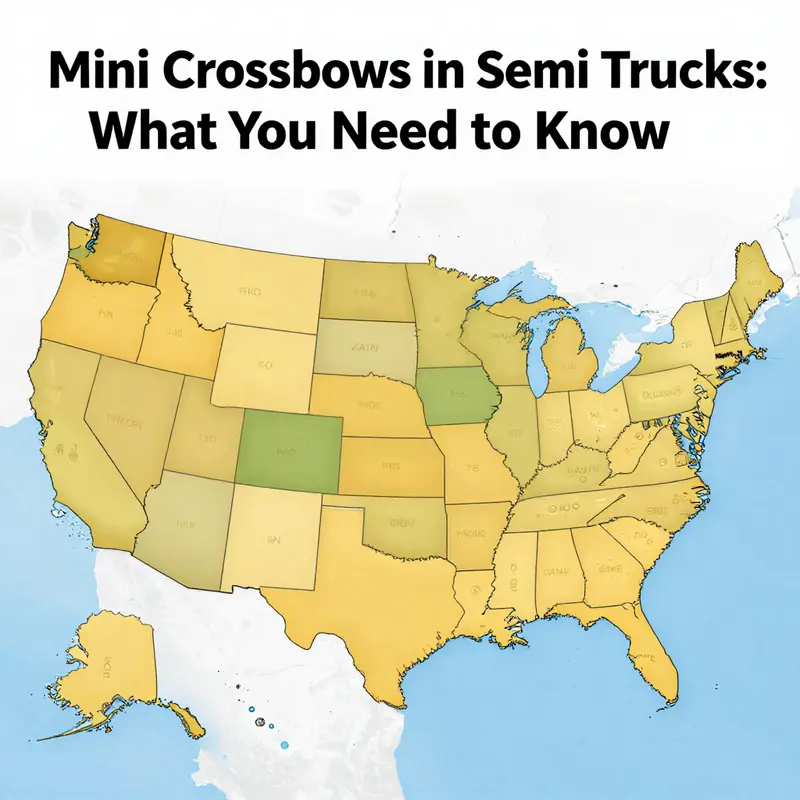
The question of whether a mini crossbow is legal to have in a semi-truck opens a door into a landscape where law, safety, and the realities of long-haul life intersect. It’s not simply a matter of “ownership” or even “possession.” It’s about how laws in different states define possession, transport, and use, and how those definitions apply to a vehicle that itself crosses a mosaic of jurisdictions day after day. In the United States, there is no federal prohibition or uniform prohibition on mini crossbows per se. The federal framework that governs weapons, including firearms, largely leaves crossbows to state and local control. The Aircraft and Firearms regime under the National Firearms Act does not treat a crossbow as a firearm, so federal traffic of crossbows operates in a different lane from guns. The practical consequence of that separation is not uniform permission but variable risk: a driver capable of navigating hours on the road must size up the laws of every state they operate in and the places they may legally stop, rest, load, unload, or store a crossbow inside a vehicle.
What makes this topic particularly thorny is the difference between owning a crossbow and carrying one in a vehicle. States distinguish between mere possession in private space and activity that occurs in public or semi-public spaces, or that involves transport through public roadways. Some places require permits, registrations, or licenses even to own a crossbow; others say nothing about ownership at all, but draw tight lines around carrying and use in vehicles or in public spaces. The result is a patchwork where a driver could be perfectly within the law in one state and potentially noncompliant just across a border. This is not a cautionary tale about fear or paranoia; it is a practical map of what can change from mile to mile as trucks roll along interstates and rural corridors alike.
At the core, the legality questions revolve around three intersecting concepts: ownership versus carrying, loaded versus unloaded condition, and the context of use. In many states, crossbows are not classified as firearms. That distinction matters, because it removes crossbows from the pocket of federal firearms regulation. Yet the public-safety and weapons statutes inside each state can still shape whether you may possess a crossbow in a vehicle, how it must be stored, and under what circumstances it may be drawn or used. The consequences of misalignment with state law aren’t abstract. They can involve fines, seizure of the weapon, or criminal charges for actions as simple as leaving a crossbow within easy reach while the vehicle is parked in a public lot. For truckers who spend nights in rest areas or park on private property between runs, those risk factors are not theoretical. They are daily reality checks that require a disciplined approach to compliance.
Among the states, the differences are most pronounced in the way regulations treat crossbows as items that may be owned, transported, or displayed in public. In California, the guidance landscape is unusually strict. The state has taken a conservative stance toward crossbows, reflecting a broader policy approach to weapons and hunting equipment. While the exact statutory language in practice is layered, the essence of the California approach is clear: crossing into vehicle transport of a crossbow can trigger restrictions that make possession or transport subject to licensing, and crossbows may be restricted from use or transport except in narrowly defined hunting contexts. The practical takeaway for a driver who travels through California is that owning a crossbow is not the same as carrying one in a vehicle, especially if that crossbow is readily accessible or operable in a way that could pose a risk to others. The state’s emphasis on safety and controlled use underscores how even a device designed for sport can become a regulated object in transit. For readers who want to ground their understanding in official guidance, the state’s crossbows resources are a reliable touchstone, and the information is frequently updated as regulations evolve. A useful point of reference is the California attorney general and state agencies’ crossbows pages, which compile the current stance and requirements for owners and potential purchasers alike. Minitrucks California blog offers a civically minded lens on how these rules shape daily life for people who drive smaller commercial rigs and navigate state-by-state nuances.
New York takes a different approach, with its own strict posture toward crossbows in public spaces. The state’s approach reflects concerns about public safety and the potential for crossbows to be used in ways that threaten others in crowded or accessible areas. Transportation and vehicle rules in New York often align with those public-safety concerns, meaning that carrying a crossbow in a vehicle in public spaces can be illegal or require special permissions, even when ownership is legal. Illinois, New Jersey, and a handful of other states follow suit with their own license, permit, or registration requirements, and in several of these states, the act of carrying a crossbow outside the home or property line can trigger additional scrutiny and regulatory steps. Conversely, Florida presents a more permissive frame in some respects, permitting crossbow use or possession on private property while maintaining restrictions on public display or transport. The broad lesson is simple but essential: there is no uniform rule that can be applied across all states to a crossbow kept inside a semi-truck. The legal reality is that each state has carved out its own boundaries, and those boundaries shift when the truck moves from one state line to another.
For drivers who operate across multiple states, this means building a practical compliance discipline. The first line of defense is to check the state codes and the relevant hunting and wildlife statutes for each state in which the route will pass during a given period. This implies more than a casual glance at hunting season calendars or gun-ownership norms. It requires understanding how those laws interact with vehicle regulations, especially those that address weapons in vehicles, prohibited items in public places, and “readily accessible” criteria. Readily accessible is a standard that appears in various guises in many states’ vehicle statutes. It typically means something that can be quickly moved into a position of use, or something not stored in a locked container; when that standard applies to a crossbow, a traveler can find themselves facing penalties even if they own the crossbow legally and only intend to transport it for hunting on a future layover or a permit-approved hunting site.
The practical questions then become logistical: how should a crossbow be stored within a semi-truck? What constitutes permissible transport? In most cases, the safest and most compliant practice is to store the crossbow unloaded, in a locked case, and strictly out of reach of the driver and other occupants while the vehicle is in motion. If the crossbow is to be used at a hunting stop, it should only be unpacked in a controlled, permitted location and never carried across state lines in a mixing of public and private spaces without verifying each jurisdiction’s stance. Bolts and other accessories may carry their own restrictions, and in some states, possession of projecting bolts or the wrong type of bolt could trigger separate requirements for hunting equipment or weapon storage. The layered complexity of these rules is why experienced drivers often mark a route with a mental map of regulatory checkpoints, and why a simple kit of lawful hunting gear does not automatically translate to the ability to carry it in a vehicle during a cross-country trip.
The legal script here is not merely about whether owning a crossbow is allowed. It is about how a crossbow can be transported with minimal risk and maximal compliance. A driver who plans routes through states with stricter crossbow rules should insist on a secure, locked storage solution for the crossbow, ensure the crossbow is unloaded, and carry documentation or licenses where required. In states that require any kind of registration or permit for owning or transporting a crossbow, keep those documents accessible and updated. It is increasingly common for jurisdictions to demand proof of lawful hunting authorization if the use of a crossbow is contemplated, even when the crossbow is stored away during the route. In states with permit regimes or registration requirements, failure to maintain current registration or permit can carry penalties that are disproportionate to the minor inconvenience of routine compliance.
The broader regulatory environment for commercial vehicles adds another layer. State-specific regulations on commercial vehicles often operate alongside federal guidelines, yet states may impose stricter rules that go beyond general vehicle safety standards. California, for example, has a suite of emissions and safety standards for trucks that are among the most stringent in the union. While those rules pertain to engine performance, emissions, and driver qualifications, they reflect a broader state approach that values strict oversight of what can be carried within a commercial vehicle and how goods and tools are stored. California’s framework for commercial driving includes licensing requirements (CDLs), hours of service rules, and vehicle inspection protocols that intersect with any non-standard equipment a driver might keep on board. In Texas and other large states, the regulatory environment emphasizes weight, permit processes, and safety inspections, while also recognizing the practical realities of long-haul trucking across vast distances. For drivers, this means that while the crossbow itself may not be a forbidden item under federal rules, it can become a legal obstacle if it fails to meet state standards for possession, transport, and use inside commercial vehicles. The FMCSA guidelines provide a baseline for vehicle operation and safety, but states retain latitude to add or modify rules based on regional concerns like traffic density, urban-rural interfaces, and law enforcement priorities along major corridors.
With these realities in view, the best practice for a driver or truck owner who wants to possess a crossbow in a semi-truck comes down to proactive compliance. Start by researching the laws of each state along the planned route. Do not rely on general assumptions about “hunting gear” or “non-firearm weapons.” Consult official state portals, and when possible, contact local law enforcement or the state wildlife agency to confirm how crossbows are treated in vehicles. Document what the appropriate storage method is in each jurisdiction, and adjust the vehicle’s configuration accordingly. In many cases, this means keeping the crossbow in a locked case, unloaded, with accessories stored separately. In some states, even that may not be sufficient if the crossbow is in a place that can be easily accessed by someone in the vehicle or if it is visible from outside the vehicle when carrying on an open bed or in an unsealed compartment. The central message is this: legality does not automatically equal safety; and safety, when coupled with the unpredictable nature of road networks, requires a disciplined approach to how and where a crossbow is stored and accessed.
For those who are new to the law-and-truck life, a practical starting point is to rely on official, up-to-date sources rather than informal guidance. Consider the core takeaway from state-level resources: you may be able to own a crossbow, you may be able to transport it under certain conditions, but you must know the rules where you drive, and you must store and handle the equipment in a way that is consistent with those rules. The road is not the place to test a guess about legality. It is a place to apply a careful, documented process that minimizes risk and maximizes compliance. That process is not complicated, but it requires deliberate attention to the state-specific details and a willingness to adapt as routes change. It means building a simple, repeatable habit: verify, secure, document, and store before every trip that might involve a crossbow, and re-verify whenever a route crosses into a new state’s jurisdiction.
The cross-border dimension of this topic is where the internal links to broader trucker resources become valuable. The knowledge base around how states regulate crossbows in vehicles grows as laws evolve, and staying connected to a practical, community-informed resource can help drivers remain compliant without becoming overwhelmed. For readers who want a compact, first-hand reference on state practices, the linked internal blog resource provides a straightforward read on how these rules play out in real-world trucking life, including the considerations that come with owning and transporting hunting gear within a semi-truck across different states. The emphasis remains on safety, legality, and the stability of operations on the road, not on what-ifs that might tempt someone to push the boundaries of a law that is designed to protect the driver, other road users, and the public alike.
Given the patchwork nature of state laws and the reality of cross-country trucking, the answer to whether mini crossbows are legal to have in a semi-truck is not a single yes or no. It is a careful, route-aware practice built on a foundation of up-to-date state statutes and enforcement attitudes. It is the responsibility of drivers and fleet managers to establish a compliance culture—one that treats a crossbow not as a routine accessory but as a potential legal and safety hazard if mishandled or misstored. This approach not only reduces the risk of citation or confiscation but also protects the driver and others on the road by minimizing opportunities for accidental misuses or dangerous incidents. The central narrative remains clear: legality exists, but it is contingent on location, context, and meticulous handling. And for those who navigate these decisions with care, the road ahead can be safer, more predictable, and better aligned with the diverse legal landscapes that define American trucking today.
External resource: https://oag.ca.gov/crossbows
Carrying Mini Crossbows in Semi Trucks: Legal Boundaries, Safety, and Practical Transport
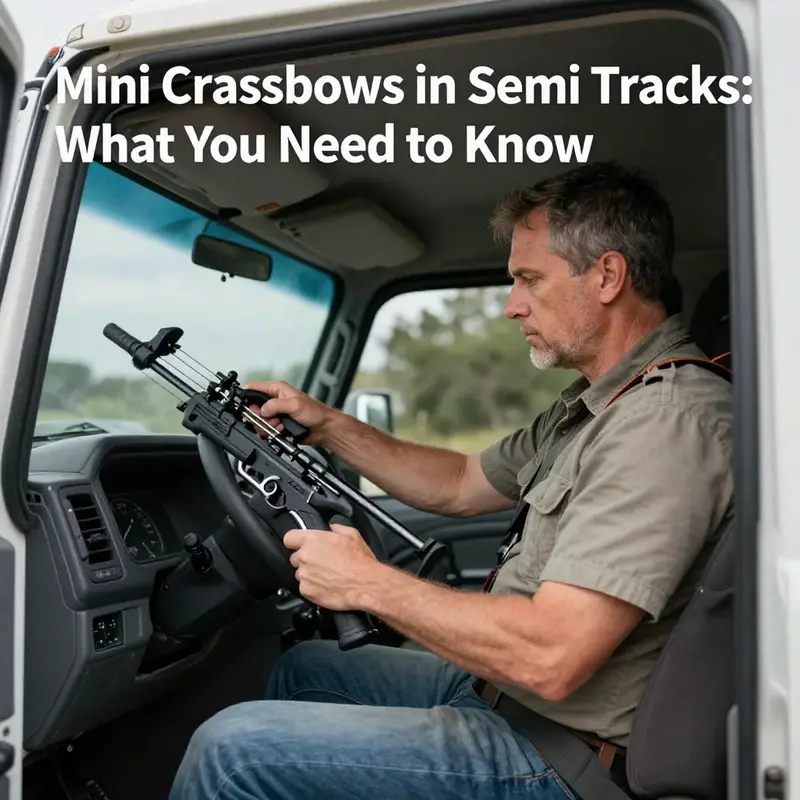
Exploring whether a mini crossbow can be legally carried in a semi truck involves law, safety culture, and practical logistics. There is no single federal rule in the United States because crossbows are regulated at state and sometimes local level. The core question becomes a set of conditions: is possession allowed in the state, how must the item be stored during transit, and what documentation or permits may be required?\n\nIn states where crossbows are lawful, transport in a vehicle often has restrictions such as keeping the crossbow unloaded, using a protective case, and preventing easy access to the weapon by occupants. Some jurisdictions may prohibit carrying crossbows in passenger areas or require that the item be secured in the trailer. Drivers planning multi state trips should review each jurisdiction along their route and ensure storage methods comply with local rules.\n\nPractical transport guidance emphasizes three pillars: legality, safety in transport, and responsible storage. Always treat the crossbow as a potentially dangerous item, even if its legal status is clear in the home state. Unload the device, relax the string, engage the safety, and secure the equipment so it cannot shift. Labeling the storage area as containing a crossbow and keeping documentation of ownership and any licenses can facilitate inspections.\n\nFrom a fleet perspective, crossbows should be integrated into safety policies and cargo handling procedures. Clear procedures for loading, securing, and responding to incidents help reduce risk and avoid misunderstandings during roadside stops. When in doubt, consult state authorities, fleet managers, and compliance officers to understand local requirements and company policies.\n\nThe takeaway is that safety and legality depend on context. With proper due diligence, durable securing hardware, and transparent documentation, transporting a mini crossbow in a semi truck can be done safely and legally where allowed.
Final thoughts
Navigating the world of mini crossbows and their legality in semi-trucks can be intricate but manageable with the right knowledge. By understanding your local laws and prioritizing safety, you can enjoy the hobby while staying within legal bounds. Always remember to check state-specific regulations and transport your mini crossbows responsibly. This ensures not just your safety, but also that of fellow drivers on the road. Embrace the joy of archery while being a conscientious vehicle owner!