

Whether you’re a small business owner delivering refreshments, a homeowner transporting a new appliance, or a truck enthusiast planning a custom setup, knowing how to fit a mini fridge in your truck is essential. Mini fridges are compact and efficient, but transporting them safely requires planning. In this guide, we cover size considerations, securing transportation, a practical comparison of fridge sizes to cargo spaces, and potential risks involved in moving a mini fridge by truck. Let’s get started on ensuring your valuable appliance arrives safely!
Sizing It Right: Can a Mini Fridge Really Fit in a Truck and Travel Safely
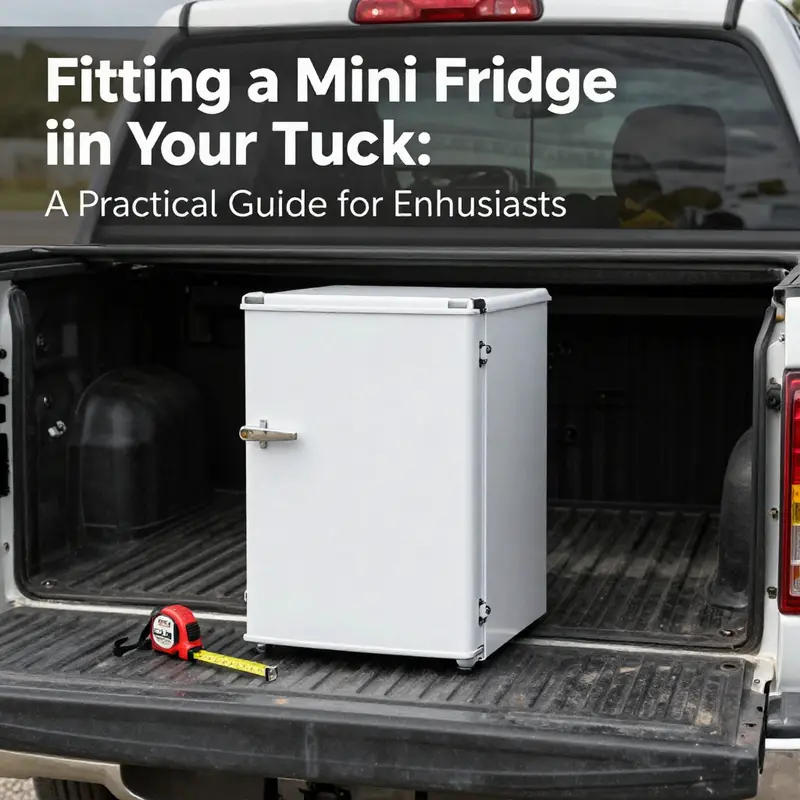
Moving a compact fridge from one place to another often starts with a simple question: will it fit in the truck, and can it arrive intact? The answer hinges on a careful blend of measurements, layout awareness, and a few sensible transport habits. A mini fridge is designed to be space efficient, but space still has its limits. Understanding those limits means looking not just at the fridge’s numbers, but at how those numbers sit inside the vehicle you plan to use. When you approach the task with a sense of geometry and a plan for secure anchoring, a small appliance can slide into a truck bed or cargo area with less drama than you might expect. The job isn’t complete until the fridge is stable, upright if possible, and protected from the jolts that come with road travel. For many people, that balance between compact size and secure transport is what makes the idea of taking a mini fridge along entirely practical rather than purely aspirational.
Mini fridges occupy a narrow band of dimensions and weights. They typically range from about 1.0 to 1.7 cubic feet in capacity, which translates into a broad set of physical footprints. In practical terms, you’ll usually see a width of roughly 18 to 24 inches, a depth of 18 to 22 inches, and a height that runs from 30 to 36 inches depending on model and features. A commonly cited example in the category is a compact 30-liter unit whose footprint sits around 400 millimeters wide by 415 millimeters deep and 530 millimeters tall. That converts roughly to a slim 16 inches wide, 16 inches deep, and about 21 inches tall. Those numbers aren’t universal, but they illustrate the core truth: a significant portion of standard truck cargo spaces can swallow a mini fridge, especially if the cargo area is cleared of other items and the fridge is kept upright during transit.
When you measure your truck’s cargo space, you’re really assessing two things at once: the physical envelope and the path the fridge will take to settle inside it. A typical pickup-style cargo bed, with the tailgate up, presents a long, flat surface that can accommodate a compact fridge laid on its back or stood upright, depending on the height clearance and any wheel wells intruding into the cargo area. A larger cargo van or a utility body adds flexibility, because the interior is often more box-like and easier to maneuver a small appliance into without needing to angle it through a narrow doorway. The key in every case is not just whether the fridge fits in one dimension, but whether it can be secured against shifting, whether the door clearance is adequate for loading and unloading, and whether there’s enough room for protective padding so the fridge doesn’t rattle or rub against metal and other objects.
For anyone who wants more context on how professionals think about moving compact gear with a small truck, a practical starting point is to explore the broader discussions in related resources. If you’re curious about organized content that covers handling small loads in truck-friendly ways, you can check the minitrucksocala blog for practical tips and scenarios that align with the cushion-and-strap approach described here. minitrucksocala blog.
Size, Fit, and Safe Transport
The core decision about fit begins with dimensions, but it doesn’t end there. Even a fridge with modest exterior measurements needs room for maneuvering into place and for a stable resting position once it’s loaded. If you’re dealing with larger mini fridges that reach close to 1.7 cubic feet, or units that include extra features like a door with a recessed handle, a crisper drawer, or a slightly bulkier door exterior, it becomes essential to map those protrusions against the truck’s interior features. Likewise, a doorway, a hatch, or a gate into a cargo area may constrain how you orient the appliance. In practice, most standard pickup beds and larger cargo vans will accept a mini fridge placed upright or lying on its back, with careful positioning around wheel wells and tie-down anchors.
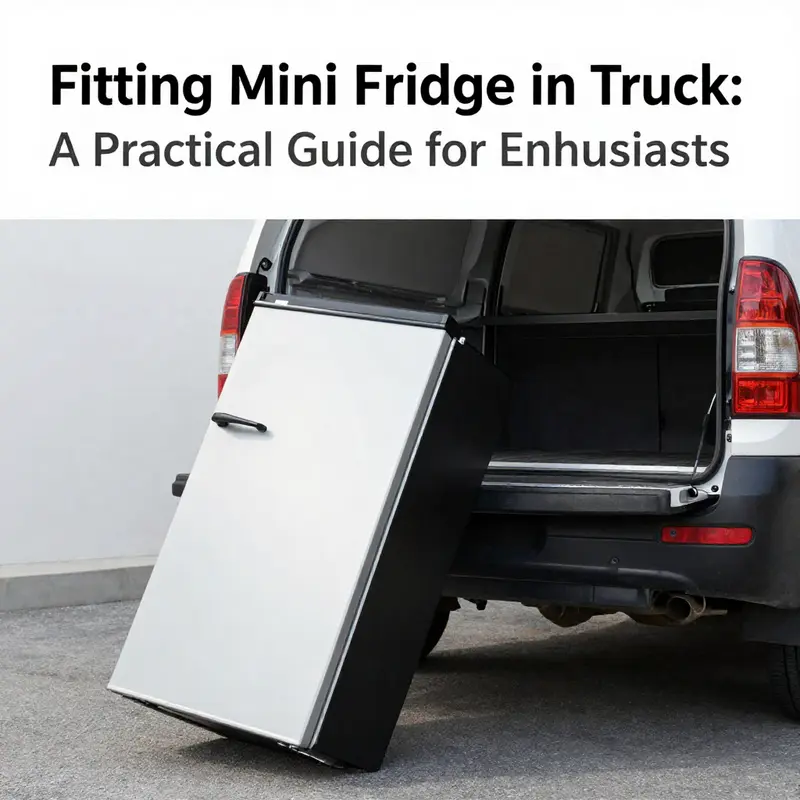
Orientation matters a lot. Keeping the fridge upright during transport is the default recommendation because the compressor and internal components are designed to operate that way when the appliance is in use. Laying the unit on its side or back for extended periods can delay oil settling or expose cooling components to forces they don’t tolerate well. If you must tilt it for a moment to clear a corner or fit through an opening, plan to return it to an upright position as soon as possible and allow the internal oils to settle before plugging in. The general caution is simple but important: the longer the fridge stays tilted, the more carefully you should treat it when you return it to service.
A practical load plan also recognizes that the fridge isn’t a standalone object. It’s part of a moving system that includes blankets, padding, and straps. Padding serves a dual purpose: it cushions the fridge from hard contact and it creates friction that helps resist shifting in transit. Non-slip mats can further reduce movement, especially on a slick truck bed or a smoother cargo floor. The aim is to create a low-friction, high-friction hybrid: a snug fit that neither rattles nor slides. If the fridge is positioned near the tailgate, you’ll want to ensure that it’s far enough from the edge to avoid sudden shifts when braking or encountering a bump.
On the safety side, securing the fridge to the vehicle’s anchor points is non-negotiable. Ratchet straps or dedicated cargo restraints are standard tools for this job. The strategy is straightforward: anchor the fridge to sturdy points in the bed or along the sides, not to the door or to the door’s frame if that frame isn’t designed to handle load. The straps should be tightened gradually, checking for any give as you go. If there’s a risk of the door hitting the side of the truck or snagging on a protrusion, consider additional padding or a shallow cradle that keeps the door from swinging outward. In addition, ensure the strap setup doesn’t impede access to the vehicle’s controls or restrict the driver’s vision.
Weight also plays a role in fit. While mini fridges are lighter than their full-size counterparts, they still carry enough mass to matter in a moving vehicle. A practical rule of thumb is to treat the appliance as a payload and account for the combined weight of the fridge plus any padding, shelving removed or reconfigured, and the potential contents you’ll transport alongside it. Keeping the load balanced, rather than placing it exclusively toward one side of the bed, helps maintain predictable handling on the road. If you’re dealing with a longer trip, consider distributing other lighter items around the fridge to prevent a clumsy, top-heavy feel when you brake or accelerate.
Finally, ventilation cannot be ignored. While a fridge isn’t a heat source in the same sense as an engine, it does generate heat during operation, and it needs a little breathing room in storage. If you’re transporting a fridge that will still be in use during part of the journey, ensure it has airflow around the exterior. Even when it’s powered off, keeping some space around the appliance reduces the risk of overheating once you plug it in at the destination. If you’re transporting the fridge in a closed cargo space, be mindful of heat buildup and keep the load as organized as possible to encourage air circulation.
To summarize the practical fit: start with the fridge’s dimensions and compare them to the truck’s available space with the seats folded down or the door opened, then consider the footprint of any accessories, and finally verify a secure anchoring plan. The process benefits from a calm, methodical approach rather than a race to close the tailgate. The aim is a clean fit, zero movement, and a setup that leaves you confident that the journey won’t invite jostling, rattles, or post-trip surprises.
As you plan, remember that a mini fridge’s compact footprint is what makes it so versatile. It can slip into a tight corner of a cargo area or nestle next to a pile of gear when space is at a premium. The real strategizing happens not just in the moment of loading but in the before-and-after steps: how you measure, how you pad, how you strap, and how you position the appliance relative to the truck’s other contents. The better you plan, the easier it is to avoid improvisation at the loading dock or on the highway.
For a broader sense of how compact gear fits into a truck-based workflow and to compare layout options that affect fit, you may find it helpful to explore additional practical guidance in related discussions available through the same resource ecosystem. The internal tip above points toward a resource that prioritizes real-world loading scenarios and the kind of field-tested tips that help you anticipate what will fit and what won’t before you start moving.
In the end, the fit comes down to a mix of measurement discipline and transport discipline. A fridge that measures well in the store can still require careful preparation to reach its destination in one piece. Conversely, a unit with bolder dimensions might still travel gracefully if you optimize the space, pad aggressively, and secure the load with confidence. The beauty of this approach is that it’s repeatable: start with the numbers, translate them to your space, and finish with a secure, stable setup. When you do, you’ll find that the seemingly small question—can a mini fridge fit in a truck?—has a straightforward answer, provided you approach it with a plan rather than with guesswork.
To supplement this discussion with broader context on moving gear for compact spaces, consult relevant practical resources and guides, and consider the internal link above for more community-tested loading tips. For an external, more comprehensive overview of mini fridge options and considerations, see the Consumer Reports mini fridge guide. Consumer Reports mini fridge guide.
Stabilizing the Load: Mastering Safe Transport of a Mini Fridge in a Truck

When you ask whether a mini fridge can fit in a truck, the obvious answer is yes for many common configurations. But the real challenge—and the key to preserving the appliance’s integrity and performance—lies in how you move it. A unit that slides, tips, or lies on its side during transit can suffer more than a cosmetic bruise. The goal is not simply to squeeze the fridge into the cargo space, but to secure and protect it so that, once you arrive, it behaves as it did when it left the kitchen. The dimensions that make a 30-liter model ideal for dorms and small offices also work in many pickups and cargo vans. A practical example in the literature notes measurements around 400 by 415 by 530 millimeters, which fit within the cargo bays of most standard trucks, especially when the fridge stands upright or is positioned with a stable orientation. This midrange footprint is what gives the appliance its portability value, but it also means you must manage two critical realities at once: space and stability. Space is about whether the unit can be oriented in a way that preserves its internal layout and avoids compressing the compressor when the vehicle hits a bump. Stability is about keeping the fridge from moving under braking, acceleration, or rough road conditions. Even when the geometry works, neglecting stability can turn a simple haul into a test of equipment durability and pedestrian common sense. The plan, therefore, unfolds in a sequence that respects both geometry and physics—preparation, stabilization, securing, protection, and post-transport handling—each step reinforcing the next to keep the appliance upright and the refrigerant settled as it should be. The core principle is straightforward: keep the fridge upright for the entire trip. Tilting, tipping, or laying it on a side can disrupt the refrigerant flow. A disruption of refrigerant flow is not something to take lightly; it can place the compressor under unusual stress and, in the worst cases, lead to performance drops or longer-term damage. This makes orientation the non-negotiable starting point for transport, even before you consider straps or blankets. In practical transport terms, the plan looks like a careful choreography of securing the unit while respecting the bed’s geometry, the truck’s interior contours, and the driver’s need to manoeuvre safely. The preparation phase is where you disconnect the power, remove all contents, and drain any condensation water from the drip pan. This last step serves two purposes. First, it minimizes the risk of leaks should the fridge shift during transit. Second, it prevents standing water from pooling in the drip pan and becoming a source of corrosion or a slipping hazard when you unload. The next movement involves stabilization. A flat, non-slip surface inside the cargo area is essential. If the truck bed has a rough or slippery surface, lay down non-slip mats or rubber pads to reduce movement. The fridge can then be positioned against a wall or a built-in barrier if available. The rationale is simple: a wall acts as a natural brace, limiting side-to-side motion. When this step is complete, you turn to securing the unit. This is where you bring in strong straps, ratchet binders, or cargo nets and anchor them to fixed points within the truck—tie-down hooks, anchor points, or sturdy rails that won’t yield under load. The objective is not to pull the fridge so tight that you dent the casing, but to apply enough tension to eliminate any wiggle. A common guideline is to tighten just enough to stop movement without creating stress lines on the shell. If you use blankets or padding, place them around the fridge’s corners to cushion against any minor impacts during acceleration or deceleration. The combination of padding and straps reduces the risk of cosmetic damage and keeps the appliance from radiating against hard edges, which can cause rattling noises or more pronounced shifts. Protection, in this sense, becomes a multi-layered approach. Wrap the unit in moving blankets or foam padding, especially around the top, sides, and corners. The goal is not to insulate the fridge from the world, but to absorb the jolts that come with uneven pavement, potholes, and sudden braking. If you have to travel in heat or direct sun, shade is your ally. The fridge should not be exposed to prolonged heat during loading, transit, or unloading. Direct sunlight can raise the internal temperature, not only stressing the cooling system but also accelerating wear on gaskets and seals. A shaded corner of a loading area or the use of a portable cover can help maintain a more predictable environment. The environmental control aspect also includes avoiding excessive humidity and vibration. A damp interior and continual vibration can contribute to corrosion on metallic components and to a noisy or unsettled ride for the appliance. A calm, well-ventilated cargo space reduces these risks and also makes the loading process more comfortable for the humans involved. Once you’ve arrived at the destination, the handling must reflect the same caution you used on the way in. Do not plug the fridge back in immediately. Instead, allow the unit to settle in an upright position for two to four hours. This grace period gives the refrigerant time to reposition itself after any tilting and helps ensure a rapid, efficient startup when you power it again. The two-hour minimum is a conservative approach; if your journey involved rough roads or significant tilt, extending the period to four hours offers extra insurance against compressor stress and cooling inefficiency. The literature on safe appliance transport—while not in itself a consumer-manual for every model—emphasizes consistent adherence to an upright stance throughout the journey and a careful post-transport recovery period. As you plan, take into account the truck’s cargo dimensions and how your chosen loading method aligns with the vehicle’s floor plan. In a pickup, you might rely on the bed’s length and the cab’s proximity to create a corridor of stability. In a cargo van, you may have more room to brace the fridge against a wall and still maintain a clean, unobstructed path for loading and unloading. If you expect to move more than one appliance, or if space is at a premium, consider temporary bracing that uses the vehicle’s side panels or built-in footholds. The aim is to keep the fridge from shifting in any direction. After a successful haul, the step-by-step discipline doesn’t stop at replugging. It extends to a post-move routine of inspection: check the seals, listen for any unusual sounds from the compressor when the unit powers up, and confirm that there are no leaks around the drip pan area or the power cord seal. A careful eye during the first run after relocation can stop a small problem from becoming an expensive repair later. The practice of safe transport isn’t just about avoiding damage to the fridge; it’s also about reducing wear on the truck and preserving the cargo area. Heavy straps placed haphazardly can dent alloy wheels or hardware and accelerate wear on the truck bed’s finish. Conversely, a measured, deliberate approach to stabilization protects both assets and reduces the likelihood of needing special handling later. For a broader perspective on practical knowledge exchange around portable transport and vehicle use, readers who want more community-driven tips can explore focused discussions in the Minitrucks Cola blog, which gathers practical guides and real-world experiences from truck enthusiasts. Minitrucks Cola blog. In the context of this chapter, the key takeaway is that a fridge’s fit in a truck is only the first hurdle. The second hurdle—the one that determines whether your move goes smoothly or becomes a hassle—depends on your discipline in preparation, stabilization, securing, protection, and post-transport handling. The simple truth is that small appliances travel best when treated like delicate cargo that still needs to perform after arrival. The guidelines you follow don’t need to be elaborate, but they must be deliberate and consistent. When you respect the upright requirement and you build in padding and secure anchoring, you reduce the odds of surprising noises, surprising stops, or surprising failures. It’s a philosophy of transport that prioritizes the appliance’s health and your safety. It’s also a reminder that the broad question—can a mini fridge fit in a truck?—has a practical, repeatable answer: yes, with care. The broader article from which this chapter derives its purpose is anchored in a careful evaluation of how to move compact cooling units in a way that aligns with both common sense and engineering realities. The life of a mini fridge in transit is not simply a question of space; it’s a dance of restraint, protection, and respect for the machine’s internal mechanisms. As you prepare for your own move, carry that awareness with you—especially if your journey involves longer distances, uneven terrain, or weather that tests the limits of your cargo area. The steps outlined here are intentionally straightforward, designed to be adaptable to different trucks and different climates, while keeping the essentials intact: keep upright, secure, protect, and allow time for settling. In this way, the mini fridge remains not just a space saver, but a reliably functioning appliance that can be plugged in with confidence once you reach your destination. For readers seeking additional practical perspectives on vehicle-based living and cargo management, the external guidelines compiled by safety authorities offer a broader context on transporting small appliances in vehicles; consult the official resources at https://www.eavsa.org.uk/guidelines/small-appliance-transportation. This external reference complements the chapter’s focus by grounding it in recognized safety practices and standard handling procedures that extend beyond a single device or scenario.
Sizing Up the Space: Can a Mini Fridge Really Fit in a Truck—and How to Move It Safely
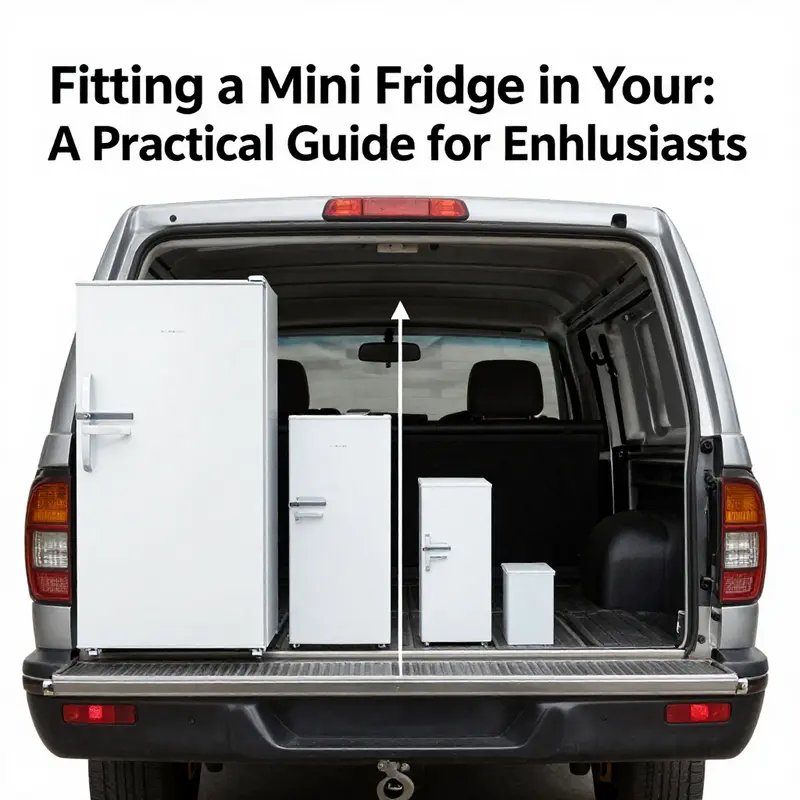
Space defines the practical answer to the question, can a mini fridge fit in a truck. When we strip the question to its essentials, we are really asking about footprint and weight, not just cargo space. Mini fridges are built to be compact and portable, but their usefulness hinges on how their size intersects with a vehicle’s interior or bed. The spectrum of mini fridges is narrow in essence but broad in application. They are designed to chill snacks, beverages, and small meals within arms’ reach, whether in a dorm, a studio apartment, or a compact office. In the world of trucks, those same traits translate into a different kind of fit: can the fridge slide into the cargo area without squeezing, and can it stay put enough to survive a road trip without tipping or shifting the moment the wheels roll? The practical answer is yes, usually. The more important follow‑up is how to make that fit reliable and safe, especially when the journey involves uneven roads, quick stops, or long hauls.
The dimensions themselves tell a clear part of the story. A small, commonly cited size for a 30‑liter model is a compact rectangle around 400 millimeters wide, 415 millimeters deep, and 530 millimeters tall. When you translate those numbers into a truck’s world, they look deceptively modest. A standard pickup bed or a cargo box offers a wide, flat plane that can accommodate a fridge standing upright, lying on its back, or even angled slightly if the configuration demands it. The crucial point is not that the fridge must be crammed in, but that the available space aligns with its footprint and clearance for air around it. In practice, if the truck’s cargo area can swallow the fridge’s base with a little extra room for movement, there is a strong likelihood of a straightforward fit. A larger 20‑liter model, though smaller in volume, often shares the same broad intake area, simply offering less height or a different orientation courtesy of its door design. The takeaway is simple: when space is measured in meters and liters, the math of fit becomes a practical check rather than a guessing game.
The sheer volume of a truck’s cargo area matters, and here the contrast is revealing. Even the smallest cargo spaces in trucks range from roughly 200 to 500 liters, which translates to about 7 to 18 cubic feet. That range dwarfs the typical kitchen‑scaled footprint of a mini fridge, which is engineered for tight quarters rather than high‑volume storage. A 200‑liter trunk of space in a compact vehicle is not what you’d use to move furniture, but it is ample for a single appliance if the aim is efficient, targeted transport rather than bulk haul. Conversely, for anyone who contemplates moving more than one device or pairing the fridge with other gear, the cargo area quickly becomes a multi‑item workspace, where planning and securing gear becomes essential. The contrast also clarifies why the idea of “just tipping it on its side” should be treated with caution. In most moving scenarios, the fridge is designed to run with the compressor upright. Laying it down can trap lubricants and oil in the compressor in ways that complicate startup and could lead to long‑term issues if the tilt is prolonged. The practical rule of thumb is to minimize tilt durations and always return the fridge to an upright orientation as soon as possible after transport. Securement, rather than sheer space alone, becomes the decisive factor in a clean, safe fit.
If you picture the inside of a truck as a flexible, empty canvas, the fit becomes a conversation between the fridge’s shape and the cargo area’s geometry. A wide, low appliance can ride neatly across the bed, its bulk held in place by the bed floor and a set of straps anchored to the bed rails. A taller unit, with its weight concentrated toward the top, benefits from being placed toward the cab end where the shoulder line is firmer and the impacts are dampened by the truck’s frame. The orientation decision—upright or laid down—depends on a handful of practical notes: the vertical space available in the bed, the presence of a tonneau or cap that could affect airflow or stability, and how you plan to anchor the fridge so it doesn’t slide in transit. For many drivers, upright transport is the simplest route, letting gravity do the work of keeping the door aligned and the hinges under compressive forces that the frame can support. When upright, the door should face inward or outward depending on which position gives the strongest restraint for the strap system, and the fridge should be prevented from shifting laterally by wedging soft supports against its sides or using foam pads to dampen vibration. The result is a compact, secure package that can ride peacefully through potholes, speed bumps, and personality‑driven roadways.
The transport choreography itself is an exercise in careful preparation rather than trial and error. Before loading, remove the risk of spills by clearing loose items around the fridge area and covering the floor with a non‑slip mat. Position the appliance so it has minimal clearance on all sides: enough to avoid contact with the truck walls or bed rails but not so tight that straps cannot bite into the surface. The securing method matters as much as the fit. A straightforward approach uses multiple straps or tie‑downs anchored to the bed or cargo tie‑down points. The idea is to create a lattice of restraint that keeps the fridge from tipping, sliding, or turning mid‑ride. If you can, place a strip of foam or a blanket between the fridge and the bed to dampen vibrations and reduce noise. Even when the fridge is not actively running, its components can respond to the vehicle’s motion in ways that make a little cushioning worth the effort.
The accounting of fit also invites a forward‑looking mindset. If you anticipate frequent trips that require topping up the fridge’s contents, considering the chameleon nature of the cargo space can be a smart move. You might choose a model that remains comfortable in a variety of orientations, or you might plan to transport one fridge per trip, splitting the load with other small items where possible. The point is to see the fridge not as a static object but as a mobile participant in a broader cargo ecosystem. Its size becomes a variable asset in how you plan trips, how you stack items, and how you allocate space on each run. In this sense, the challenge of fitting a mini fridge into a truck becomes less about a magic division of space and more about a disciplined method—knowing the fridge’s footprint, understanding the vehicle’s geometry, and applying securement practices that stabilize the unit without compromising access or airflow.
To ground this discussion in real‑world practice, it helps to keep one important principle in view: the fit is highly contextual. Two trucks with similar bed lengths can offer very different usable cargo spaces once you account for wheel wells, bed caps, and the angles at which you can safely place a heavy object. A trunk or cargo van, with its tall interior and long floor, may appear more forgiving, yet its transitional features can complicate the loading path for a bulky, upright appliance. The nuance matters because it shapes how you plan the trip, what you measure before loading, and how you secure the unit to protect its internals during transit. A practical takeaway for anyone weighing the feasibility of a mini fridge in a truck is to treat the question as a space‑planning exercise first, a transportation challenge second, and a protection protocol third. In that ordering, the result is not merely a fit but a well‑executed fit that preserves the refrigerator’s condition and ensures safe travel for the journey ahead.
For readers who want to keep exploring the space planning angle, there is value in looking beyond the fridge itself and toward how portable cooling solutions integrate with broader vehicle use. A simple, recurring idea is to treat the fridge as part of a modular setup: you plan for a stable base, a set of restraints, and a shut‑off pathway for when you reach your destination and need to unload. The more you view the fridge as part of an array of travel essentials—snacks for field work, beverages for road trips, or meals for overnight stays—the more natural it becomes to consider it within the broader logic of space, motion, and safety. If you want to see how space planning is tackled in a more general sense within the world of compact transport and living solutions, the Mini Trucks CalA blog offers a broad platform for exploring related ideas and configurations. Accessing the broader context can help you fine‑tune your loading approach, understand the limits of different truck sizes, and imagine how a small, energy‑efficient cooling unit can operate in harmony with a mobile lifestyle. minitrucksocala blog
Beyond the practical steps, the larger takeaway remains consistent: mini fridges are designed for compact, controlled environments. Trucks, by contrast, prioritize volume, durability, and the ability to move large items across distances. When you align the fridge’s footprint with the truck’s cargo space, you reveal a straightforward truth: fit is not a one‑size fit, but a fit that grows more reliable with careful measurement, thoughtful orientation, and solid securing. The act of loading becomes a choreography—measuring, testing, securing, and finally driving with confidence that the fridge will stay in place and function as intended when it reaches its destination. In this way, the original question transforms from a simple yes or no into a practical guide for space management, transport safety, and everyday logistics that can empower owners to use their trucks for more than just bulk hauling. The fridge’s compact dimensions, when understood in concert with the truck’s cargo area, unlock a clear pathway to a reliable, safe, and repeatable fit. And when you have that pathway, the door—both literally and figuratively—opens to a more flexible approach to mobile cooling and on‑the‑move storage.
External resource for broader context on cargo space and vehicle dimensions can deepen this understanding. For a broader look at cargo space resources, see the external guidance on truck cargo space and dimensions. https://www.edmunds.com/trucks/cargo-space/
null
null
Final thoughts
In summary, fitting a mini fridge in your truck isn’t just about dimensions—safety and security are paramount. By following the guidelines outlined in this guide, you’ll not only ensure that your mini fridge fits snugly but also arrives at your destination in perfect working order. Careful planning and execution will save you time, money, and potential headaches. Remember, the right approach to transporting your fridge can make all the difference in your experience.