
When it comes to small to medium construction projects, understanding the capacity of a mini mix truck is essential for local small business owners and residential property owners alike. These compact concrete mixer trucks streamline the delivery of concrete, making them perfectly suited for a variety of tasks. Whether you’re a mini truck enthusiast or a hobbyist looking to expand your knowledge, knowing how much concrete these trucks can hold is key to ensuring you have the right equipment for the job. In the upcoming chapters, we’ll explore the overall capacity of mini mix trucks, their applications in construction, and the advantages and disadvantages of using these versatile vehicles for concrete delivery.
Small-Batch Power: How Much Concrete a Mini Mix Truck Can Carry and Why It Matters
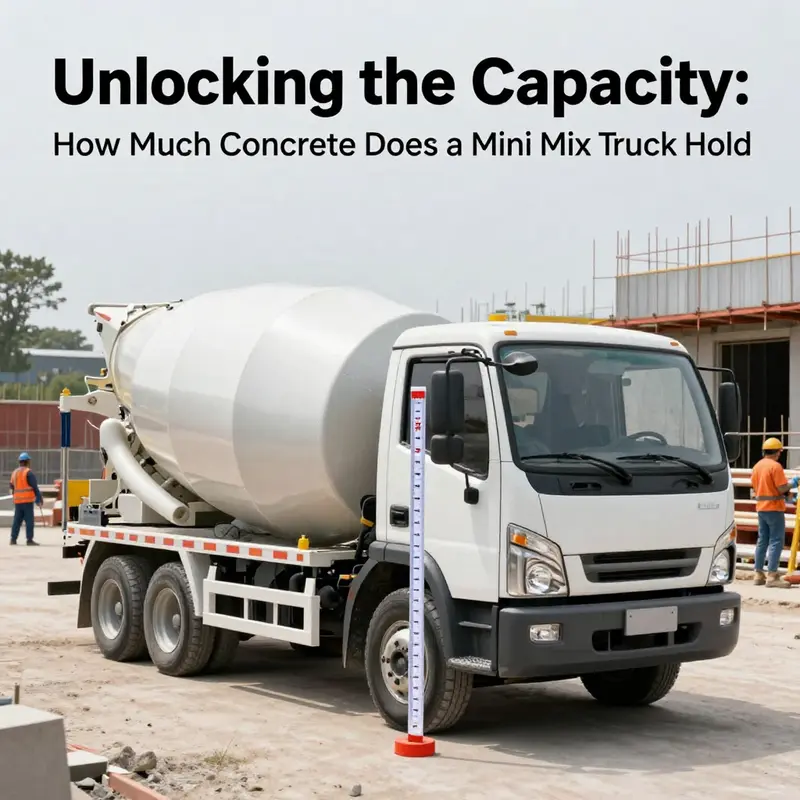
Understanding the capacity of a mini mix truck is more than a matter of numbers. It shapes every practical choice on a project—from how you bid and schedule work to how you sequence deliveries and manage site safety. At its core, the capacity tells you how much concrete you can move in a single trip, how many trips you must plan, and how the drum’s rotation keeps the mix workable from the yard to the pour. In the real world, these trucks vary, but most models fall within a clear and useful range: roughly 1.5 cubic meters up to 4 cubic meters per load. That spectrum may seem narrow, yet it unlocks a practical flexibility that is precisely why small mixers are favored for residential driveways, repair jobs, urban infill, and other tasks where a full-sized mixer would be cumbersome or impractical. The common capacities you’ll encounter—1.5 m³, 2.0 m³, 3.0 m³, and 4.0 m³—each represent a balance between maneuverability and volume, a balance that becomes the backbone of logistics planning on site. The smallest end, at about 1.5 m³, is designed for tight spaces and restricted access. These compact units squeeze through narrow streets and reach backyards or alleyways where larger trucks simply cannot operate without disruption. Their compact footprint makes them ideal for small-scale construction, minor repairs, and projects where minimizing site disturbance is as important as delivering the concrete itself. The 1.5 m³ capacity is not just a size metric; it is a constraint that directs how crews sequence tasks and how they allocate time on a given day. A smaller batch means more frequent reloads, which translates into more planning around access routes, stockpiles, and the location where the drum can be safely and efficiently loaded and discharged. When every minute counts, the predictability of a 1.5 m³ load becomes a reliability asset that reduces the risk of overrun and underutilization. The 2.0 m³ capacity, by contrast, reflects a middle ground that many crews embrace for its balance of portability and payload. This size offers greater load per trip while preserving the ability to navigate tighter sites than large trucks can manage. It suits minor infrastructure work, limited commercial jobs, and renovations where the crew wants to limit the number of reloads without sacrificing throughput. The 2.0 m³ option also tends to align well with crews who run a lean fleet and value a single truck that can handle multiple small-to-medium tasks with predictable cadence. Moving into the 3.0 m³ tier, the drum volume represents a meaningful step up. A 3.0 m³ mini mixer carries more concrete per trip than the smaller models, enabling faster progress on medium-scale tasks without straining on-site access or maneuverability. This capacity is often found in models that still prize agility, with 4×4 drivetrains and hydraulic systems calibrated for urban terrain and uneven job sites. The 3.0 m³ class is frequently chosen for medium-sized projects where the balance between transportability and concrete volume becomes decisive in meeting tight deadlines while maintaining site safety and workflow continuity. Finally, the 4.0 m³ end of the spectrum marks the ceiling for most mini mixers. A 4.0 m³ drum delivers substantial batches, capable of reducing reloads and accelerating progress on larger residential jobs, small commercial tasks, or road repair efforts that fall short of full-scale industrial operations. While still smaller than full-size mixer trucks, these units can push higher output, with some configurations reporting production rates up to about 14 m³ per hour. That level of throughput, when paired with efficient loading, transport, and discharge, can compress a day’s schedule and enable crews to reach more targets before weather or other constraints intervene. Importantly, even with larger mini mixers, the path to maximum efficiency depends on more than drum volume. The drum’s rotation keeps the concrete agitated, which helps maintain workability during transport. A well-matched drive system—often a 4×4 arrangement in off-road or uneven terrain conditions—and a robust hydraulic setup support smooth operation between loading, travelling, and discharging. On most of these trucks, you’ll also see diesel engines with ample power, typically in the range of roughly 78 to 95 kilowatts, translating to the torque and speed needed to maneuver a loaded drum through city streets or rural lanes. The practical implication of these specifications is simple: capacity sets the rhythm of the day. If the job requires large pours near the end of a work window, a 4.0 m³ machine becomes a strategic choice, allowing crews to deliver more concrete per trip and complete foundational work with fewer reloads. If the assignment is a narrow driveway repair or a garden wall, a 1.5 m³ unit often proves to be the most economical and agile option, limiting both cost and logistical friction. In the middle ground, a 2.0 m³ or 3.0 m³ mixer offers a flexible compromise, enabling steady progress across a series of small-to-medium tasks without sacrificing too much speed or maneuverability. This spectrum is not merely a catalog of numbers; it is a framework for planning. A concrete volume estimate that is accurate enough to guide bidding still needs to account for real-world variables: the expected yield of the mix, the actual voids in formwork, and the unavoidable slippage that accompanies discharge from a drum into forms. Even with a precise drum size, the delivered volume to a particular pour will depend on slump and consistency requirements, the method of discharge, and the geometry of the forming area. An experienced crew builds these adjustments into the workflow, recognizing that a predicted 2.0 m³ load may yield a few extra buckets or a slightly shorter pour depending on whether the site is compacted or takes a detour to accommodate formwork. The drum’s mixing action, driven by the motor and hydraulic controls, ensures that cement continues to hydrate and aggregate stays evenly distributed as the truck moves through the process of loading, travelling, and discharging. And when a mini mixer is described as volumetric or self-loading, there is a further nuance: these units can batch at the job site with a degree of precision that minimizes waste and aligns with the cadence of a project that demands variable concrete volumes. The efficiency gained from precise batching is not only a matter of material usage; it also affects scheduling and site safety. When crews can match each load to the specific stage of the pour, there is less crowding at the discharge point, fewer delays waiting for fresh material, and a cleaner sequence of operations from footing to finishing. For readers who want a quick orientation to the broader world of compact mixer trucks, the Mini Trucks blog offers accessible overviews and project stories that illustrate how these machines perform in real sites and how crews adapt to the realities of limited access and urban constraints. This broader context helps connect capacity figures to day-to-day work, showing how a seemingly simple question—how much concrete can you carry—unfolds into a web of decisions about routes, load planning, and on-site logistics. The capacity figures become a practical lens through which to view project feasibility, cost control, and on-site safety. When a contractor evaluates a potential job, they translate the required concrete into a load plan. They consider whether the site allows frequent trips or whether a larger batch would reduce the number of trips and thus the risk of lane closures, traffic disruption, or blocking access to the work area. They also weigh the value of speed against the risk of spillage or segregation that might occur if a drum is too full or if the pour angle is awkward. The result is a dynamic balance: the capacity section informs the plan, but actual execution depends on site conditions, weather, access, and crew experience. Transport time, fuel consumption, and the duty cycle of the drum all contribute to the total cost and time of completion. These are the levers that determine whether a 1.5 m³ load offers the best return on investment for a small patch or whether a 4.0 m³ unit accelerates a larger sequence of pours while staying within the reach of the job’s access constraints. There is another layer worth noting. Many mini mixers are designed to deliver consistent performance across varied environments. Their four-wheel-drive configurations and rugged hydraulic systems enable operation on rough or uneven surfaces. The chassis and drum are engineered to maintain the quality of the mix even when the vehicle must negotiate modest slopes or irregular ground. This resilience matters because the transport from the batch plant to the job site is not a straight line. It can involve a corridor of streets, back alley access, or a temporary access road. The operator’s experience with these machines helps ensure that the concrete remains workable upon arrival and that the discharge remains controlled, minimizing segregation and loss of workability. The end result is a system that can respond to the cadence of the day: small jobs that require frequent, precise deliveries and larger tasks that benefit from fewer stops and steadier progress. The capacity range—1.5 to 4 m³ per load—embodies this adaptability. It also hints at a broader ecosystem of equipment that shares a common design philosophy: compactness without sacrificing the essential capabilities that concrete work demands. While these units are not substitutes for full-size mixers on large industrial projects, they provide a critical niche where mobility, speed, and on-site batching converge. The capacity figures become the first step in a chain of decisions that leads to successful pours, clean work sites, and predictable schedules. When you couple capacity with operational details—drum rotation, self-loading or volumetric batching, 4×4 capability, and a robust hydraulic system—you gain a practical picture of how these machines fit into everyday construction. They are, in effect, the small, reliable partners that keep the pace of a job moving forward, without forcing the crew to sacrifice control or quality for efficiency. For anyone assessing the feasibility of a project where space is tight and access is restricted, this is a compelling truth: small does not mean insufficient. A 1.5 m³ loader can manage the most intimate doors and alleys with finesse, while a 4.0 m³ loader can deliver a surprising amount of concrete with fewer trips if the site allows. In between, the 2.0 m³ and 3.0 m³ options offer a fluid continuum, enabling crews to tune the system to the job’s exact demands. The practical upshot is clear. Capacity is a design parameter with real-world consequences. It shapes bids, schedules, and on-site workflows. It informs safety planning, storage arrangements, and the sequencing of formwork and finishing. It also contributes to cost control, because the number of trips, the time spent waiting for mixes, and the handling of the material all feed directly into labor and equipment utilization. The numbers are not arbitrary; they map to how a crew experiences a workday. A smaller batch means more reloads, more on-site checks, and more opportunities to optimize the path from truck to pour. A larger batch means fewer reloads, but it imposes higher demands on site space, discharge logistics, and formwork readiness. The sweet spot is seldom universal. It is a function of the project’s scale, the site’s configuration, and the crew’s readiness to adapt. In sum, the capacity spectrum of mini mix trucks—1.5, 2.0, 3.0, and 4.0 m³—offers a practical framework for planning concrete work in constrained environments. It helps define scope, schedule, and risk tolerance, and it anchors the day-to-day decisions that bring a concrete project from plan to finish. For practitioners seeking to deepen their understanding beyond the numbers, a deeper dive into the broader world of compact mixer trucks is worthwhile, and you can explore more through the Mini Trucks blog linked earlier. External references can further illuminate how volumetric, self-loading capabilities support precise batching and on-site mixing in variable-demand projects. To explore a detailed external reference on mini volumetric mixers, see the Made-in-China product page: Made-in-China: 1.5 M3 Mini Volumetric Self-Loading Concrete Mixer Truck.
Small on Size, Big on Reach: Understanding Mini Mix Truck Concrete Capacity and Its Role in Modern Construction
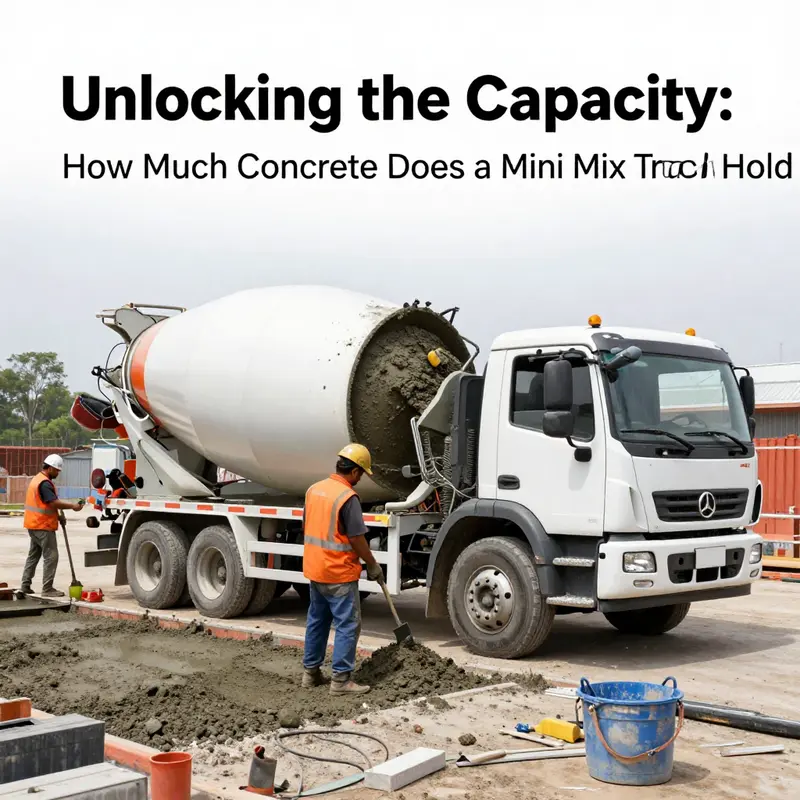
On many job sites, the question isn’t whether a mixer can fit into a tight space, but how much concrete can be delivered and poured before the crew must pivot to the next task. A mini mix truck occupies a unique niche in the construction toolbox. It sits between the size and reach of a traditional portable mixer and the capacity of a full sized transit mixer, blending on site with mobility that larger trucks cannot match. The practical question this chapter seeks to illuminate is not a single number, but a spectrum that reflects the realities of design, terrain, access, and schedule. When you look across the market, you see a range that stretches beyond a single capacity figure. Some models hover around the lower end, built for tight urban cores where space is the limiting factor and residents demand quiet, maneuverability, and minimal disruption. Others sit at the higher end, offering more concrete per trip to speed up projects that still require nimble equipment. In many catalogs and on real world sites, it is common to see capacities described in terms of a range, and that range is essential to understanding what a mini mix truck is really capable of delivering in a given context. A helpful way to frame the discussion is to think of three broad categories that reflect practical realities on the ground: smaller variants that optimize for access and size, mid sized configurations that balance volume with maneuverability, and larger mini models that push the envelope of what is considered “mini” while still avoiding the footprints of full scale transit mixers. Across these categories, a practical operating rule emerges: capacity is critical, but it is only one axis among many that determine whether a mini mix truck will save time, reduce costs, and improve quality on a job. The capacity that matters most is the one that aligns with the project’s batch sizes, the site’s access constraints, and the crew’s workflow. In the literature and among practitioners, you will encounter competing figures. Some guides place mini mix trucks in a 3 to 6 cubic meter band, a slice that captures many commonly used models. Other sources describe a slightly broader spectrum, noting trucks around 3 to 4 or even up to 6 cubic meters, depending on the make and configuration. A few smaller, specialized self loading or modular variants run closer to 1.5 to 2 cubic meters, highlighting how the term mini can cover a surprisingly wide range of capabilities. The reality is that the category’s strength lies in this variability. It is not that one number tells you everything; it is that a family of numbers tells you how different jobs will benefit from different vehicles. When you consider a typical residential build, a sidewalk repair, or a landscape project, the value of a mini mix truck becomes tangible in the rhythm of the day. You do not want to over mix or under pour, and you do not want to waste time making multiple trips. A truck in the 3 to 6 cubic meter bracket often hits that sweet spot for these smaller tasks. It is large enough to supply meaningful batches that reduce the number of trips, yet compact enough to maneuver along a narrow street, between houses, or up a winding driveway. For very tight sites, a 1.5 to 2 cubic meter unit may be the better choice, especially if the job requires frequent stops, precise placement, or if the ground conditions demand lower static loads on soft soil. On the other side, a 4 to 6 cubic meter configuration can deliver larger pours with fewer trips, a practical advantage for extended sidewalk repairs, curb installations, or building pads where the crew can batch, rotate, and pour with predictable cadence. What matters most is aligning the vehicle’s capacity with the project’s cadence. A useful figure to anchor this alignment is not only the theoretical maximum that a truck can hold, but the realistic output per hour it can sustain on site. In some cases, a mid sized mini truck has been observed delivering as much as 14 cubic meters per hour under favorable conditions. That rate emerges from a combination of compact batching, efficient conveyor or drum deployment, and the ability to move quickly from batch to pour without long standstill periods. It is a reminder that the total effect of capacity is not merely how much you can hold at once, but how fast you can move that concrete to the point of placement. Within this framework, it is not only the raw volume that drives choice, but the relationship between capacity and the site’s geometry. Remote locations and sites with limited access reward the operator who can carry meaningful volumes in tight corridors, where a larger truck simply cannot reach. The capacity range then becomes a practical tool: it helps designers and operators tailor the machine to the task, minimizing the number of trips and the overall traffic on the site, reducing soil compaction, noise, and disruption in sensitive neighborhoods. It also informs the budget. While a higher capacity unit might appear more expensive up front, the savings on labor hours, fuel, and equipment rental time can be substantial on a multi-day project. The dynamic does not stop at planning and procurement. Once the truck is on site, the day’s rhythm imposes its own demands. A mini mix truck, because of its size and modular design, often supports a more stable and consistent concrete quality. Self loading or self batching capabilities can reduce human error by standardizing mix proportions and ensuring uniform consistency across pours. In many configurations, you will find modular components that can be swapped or upgraded. The design may accommodate interchangeable bins, different mixing drums, or auxiliary compartments that can store tools and consumables for the crew. This versatility matters far beyond simple capacity. It shapes how a small crew organizes its workflow, how it sequences mixing, loading, transport, and placement, and how it adapts to different projects without requiring a large machinery fleet. On this point, the advantages of mini mix trucks become clearer when one looks at project contexts that stretch beyond the typical job site. Remote locations, such as the edge of a rural development or a temporary work zone along a road expansion, often demand equipment that can operate where larger trucks fear to tread. The compact footprint, combined with a capacity that can still deliver sizeable pours, makes these trucks an obvious choice for these kinds of tasks. Similarly, sites with restricted access—narrow driveways, low overhead lines, or urban backyards—benefit from a vehicle that can be parked near the pour area and still move quickly to the next batch. In such environments, the capacity available in a smaller truck translates directly into a smoother, faster pour and a more predictable schedule. The practical calculus for capacity also involves a subtler factor: the reliability of the mix and the rate at which the concrete can be discharged into forms or onto forms boards. A higher capacity does not automatically guarantee a faster pour if the mix quality declines or if the discharge mechanism slows progress. Conversely, a well-tuned, moderately sized system can deliver a more consistent product and a more reliable pace, particularly on jobs where formwork is precise and the crane or pump teams operate in tight coordination with the truck. Beyond the mechanics of mixing, there is a broader implication for the contractor’s approach to scheduling and logistics. A project that hinges on tight sequencing—pour, cure, strip, and proceed to frame—benefits from predictability. In that sense, capacity becomes a planning lever. If you know you will need parallel pours or sequential pavement segments, selecting a model in the 3 to 6 cubic meter class could yield the most efficient day. If the schedule allows for fewer, larger pours, a higher capacity option may be the better bet. If the site demands a higher degree of precision and smaller, incremental additions to the slab or path, a 1.5 to 2 cubic meter unit could reduce waste and mis-timing. The market’s current variety reflects this triage of needs. Real-time listings and manufacturer filters show an assortment of units with a wide array of mixing drums, drive trains, and loading mechanisms. For project planners, the challenge is to translate the abstract capacity figure into a concrete plan for batch size, cycle time, and pour rate. It is here that a simple rule of thumb can help calibrate expectations: understand the batch square, the pour length, and the effective cycle time. A batch square is the theoretical volume you intend to place per cycle, not just the truck’s maximum hold. The pour length is how long the operator can continue a continuous flow before needing to reposition or re-batch. Cycle time combines all the steps—loading, mixing, discharging, and repositioning—into a practical tempo for the day. When these three measures align with the truck’s capacity, the project’s forecast becomes more reliable. And it becomes easier to answer the recurring questions that haunt project managers on small sites: How many loads will this project require? How many trips will the truck make between the batching area and the pour location? Will the site’s layout allow the mixer and the pour path to function without bottlenecks? Answering these questions requires more than a single figure; it demands a clear mental model of how a given mini mix truck functions in the real world. The modular nature of many models enhances this clarity. By offering interchangeable components and configurable storage, these trucks can be reworked to suit different mixes, variable bag checks, or different ad-mixtures and fibers that a project might call for. This flexibility makes a meaningful difference on a site where changes in mix design or pour sequence are common. It is in these moments that capacity and configuration converge to support a smoother operation. The technology landscape also plays a role in shaping expectations. The pace of improvement in small-volume mixing systems has accelerated over the past few years, with refinements in drum design, discharge angles, and reverse discharge options that reduce clogging and improve consistency. Some models incorporate self-loading capabilities that automatically blend and carry back the remaining material to reduce waste, a feature that not only saves material but also improves site cleanliness and safety. While the precise capacity figure remains a function of the model and its configuration, the practical takeaway is the same across the spectrum: mini mix trucks fill a critical gap by offering a controllable, on-site batch capability with a footprint and maneuverability appropriate for constrained sites. For builders and operators who need to maintain quality while preserving time, capacity is a lever they can pull to optimize workflow. It is also a reminder that the best choice is often the one that matches the job’s scale with the site’s geometry rather than chasing the largest possible size. If one wants a concise starting point, consider the 3 to 6 cubic meter band as the most versatile default for many urban and suburban jobs, while recognizing that 1.5 to 2 cubic meters can yield superior results in ultra-tight conditions and lighter, precise pours. The broader lesson is that capacity, by itself, should never be treated in isolation. It is one aspect of an integrated system that includes batching accuracy, discharge reliability, truck maneuverability, driver training, and site coordination. When these elements are aligned, a mini mix truck becomes more than a convenience; it becomes a reliable partner in delivering concrete where it is needed, when it is needed, and in the right proportions to ensure the integrity of the built work. For those interested in exploring current model options and their technical parameters, real-time market listings offer useful windows into what is available today and how capacity is labeled across manufacturers. A quick reference point is that the market features a spectrum from compact 1.5 m3 units up through 6 m3 configurations, with many mid sized models in the 3 to 4 m3 range, which tends to balance speed and control for typical residential and light commercial applications. If you want to learn more about how these vehicles are discussed and evaluated by the broader community of mini truck operators, the Mini Trucks Blog provides a useful lens and practical observations on day-to-day use. You can explore that resource here: Mini Trucks Blog. For anyone planning a project or comparing options, it is valuable to anchor capacity decisions to field realities—site access, yard layout, pour length, and the number of heads required to place concrete in your forms without delays. When you consider all these dimensions together, a clearer picture emerges: the capacity of a mini mix truck is not simply a matter of a tank’s volume; it is a ratio between the truck’s physical footprint, the site’s constraints, and the project’s tempo. In the end, the best choice is the one that keeps the pour on track, the crew efficient, and the concrete quality consistent from the first batch to the last. For a snapshot of current offerings and technical parameters from market listings, see the external resource that surveys a range of models and configurations: https://www.made-in-china.com/products-detail/mini-3m3-concrete-mixer-self-loading-concrete-mixe-truck-for-sale/1000000000000.html
null
null
Final thoughts
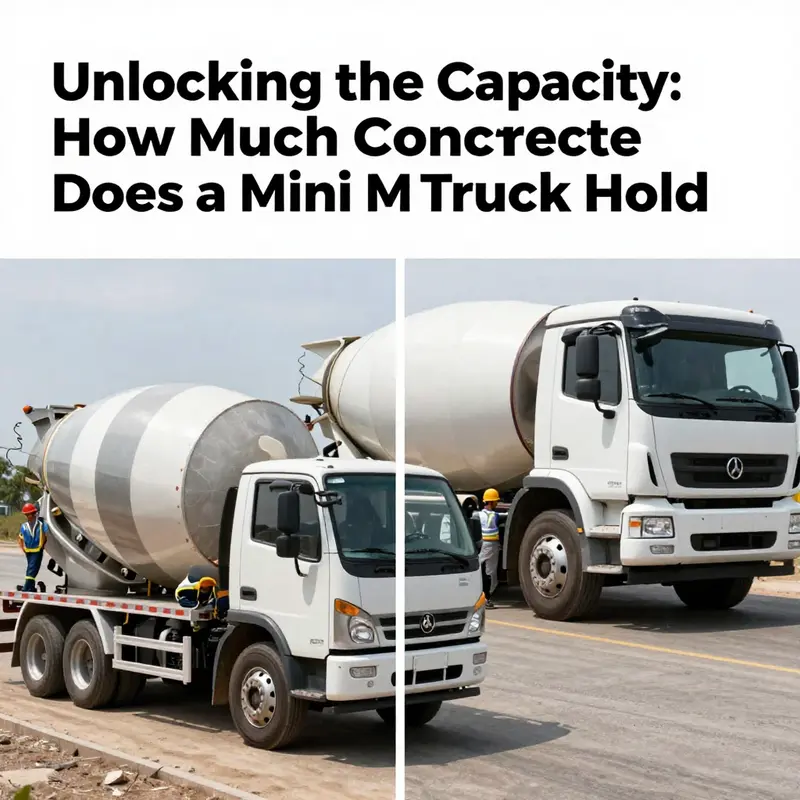
Understanding how much concrete a mini mix truck holds can significantly impact how effectively you handle small-scale construction projects. With capacities ranging from 1.5 to 4 cubic meters, these trucks offer both flexibility and functionality in various applications. From residential builds to road repairs, choosing the right truck ensures you maximize efficiency and productivity. So, whether you’re a small business owner, property owner, or mini truck enthusiast, knowing the ins and outs of your concrete delivery options is vital for your success in the construction landscape.