
For small business owners, residential property owners, and mini truck enthusiasts in Virginia, the excitement of hitting the road with a mini truck can be both thrilling and confusing. Can you actually get your mini truck licensed? The answer is yes, but with a few caveats! Understanding the eligibility requirements, safety standards, manufacturer certifications, and potential pitfalls of driving unlicensed mini trucks are crucial steps in the licensing process. This guide will walk you through everything you need to know about registering your mini truck in Virginia, providing you with knowledge and confidence to make an informed decision.
Licensing a Tiny Workhorse: Virginia’s Road-Use Eligibility for Mini Trucks
Virginia treats licensing a mini truck as ensuring the vehicle qualifies as a motor vehicle under state law and meets essential safety, title, and ownership requirements before a plate can be issued. The DMV looks at four core criteria: valid Virginia title, absence of liens, eligibility to register, and conformity with safety standards. If the vehicle passes these checks, registration and plates follow; otherwise the path may involve exemptions or private-use restrictions.
First, the vehicle must be titled in Virginia. A Virginia title anchors the registration process and signals the DMV recognizes the vehicle as an asset within the state registry. An out-of-state title may not be sufficient; a Virginia-issued title is typically required for smooth registration, especially for imported or custom-built minis.
Second, there should be no outstanding liens. A lien means a financial claim on the vehicle, which can complicate or delay registration. You may need documentation showing the lien has been satisfied or that the lender consents to transfer.
Third, the vehicle must be eligible for registration by meeting safety standards and, where applicable, emissions requirements. The vehicle should have basic safety equipment and comply with applicable FMVSS requirements or be listed in the NHTSA database as a compliant product. Non-standard builds may require extra review or documentation.
Fourth, kei trucks face a distinct gate. If the mini truck is classified as a kei truck, it must meet Virginia’s safety and emissions thresholds for passenger vehicles. If it does not, it may be limited to farm use or other non-public-road tasks, or require additional exemptions.
Fifth, federal certification and safety verification underpin the process. Vehicles lacking verifiable safety credentials may be restricted from public roads; novel or custom constructions may require additional DMV review.
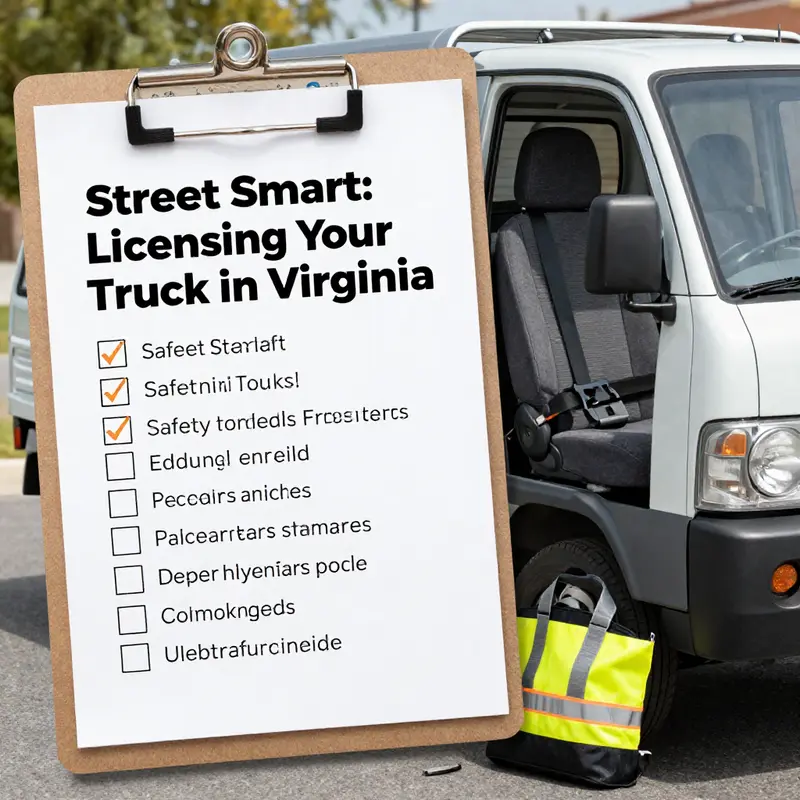
Practical steps for a buyer are straightforward: confirm a Virginia title, confirm no liens, check the DMV’s approved types for road use, verify the manufacturer is registered with NHTSA, and confirm the vehicle’s kei classification if relevant. If everything aligns, proceed with registration and plates; if not, explore compliant alternatives or restricted-use paths. Finally, verify details with the DMV through official channels to avoid surprises during registration.
null
null
From Classification to Compliance: Navigating Virginia’s Rules for Licensing Mini Trucks
Licensing a mini truck on Virginia roads isn’t a matter of following a single manufacturer’s directive or chasing a trendy label. Instead, Virginia’s approach hinges on how the vehicle is classified under state law, how it meets safety and federal standards, and what kind of license is required to operate it. The big question—can a mini truck be licensed in VA—unfolds as a careful assessment of weight, safety equipment, and the vehicle’s fit within Virginia’s statutory categories. For readers who want a practical path, this means moving beyond the marketing gloss and understanding the specific thresholds that separate a compact, roadworthy vehicle from a device that cannot legally share the street. Those thresholds determine the license you need, the inspections you undertake, and the paperwork you gather before a single plate is issued. The central aim is not to discourage use of compact mobility but to ensure that every vehicle sharing Virginia’s streets meets uniform safety expectations and operates within clearly defined rules.
Virginia’s framework centers on the vehicle’s classification rather than the manufacturer’s pedigree. If the mini truck qualifies as a small vehicle—typically a light-duty vehicle with a gross vehicle weight rating (GVWR) under 10,000 pounds—it can be registered and licensed as a road vehicle, with a standard driver’s license generally sufficient for operation. This path is straightforward for many buyers who intend to use the vehicle for everyday tasks, campus runs, or limited urban duties. The state’s guidance also lays out age-related requirements: to obtain licensing for a small vehicle, a small vehicle with automatic transmission, or, in some cases, a light motorcycle, the applicant should be at least 18 years old and under 70. Those age thresholds act as a practical gatekeeper, aligning eligibility with a driver’s presumed experience and responsibility on public roads. It is important to emphasize that the specific license category you need can hinge on the exact classification assigned to your vehicle, which depends on its weight, performance characteristics, and intended use under Virginia law.
Yet the landscape shifts when the mini truck slides into other classifications. If the vehicle is treated as a low-speed vehicle (LSV), a three-wheel vehicle, or a wheeled self-propelled mechanical vehicle, different licensing rules apply. These categories carry different expectations about speed capabilities, safety equipment, and the type of endorsement or specialized license that may be required. The broader implication is that a single, one-size-fits-all approach does not apply to all compact electric or gas-powered trucks. The DMV looks to how the vehicle operates in practice, what safety features accompany it, and how it will be integrated into Virginia’s traffic system. For instance, LSVs often necessitate considerations around where they can be driven, the permissible speeds, and whether they require certain equipment that standard passenger vehicles may not. Three-wheel designs, in particular, can trigger distinct regulatory interpretations because their dynamics and stability profiles differ from traditional four-wheeled vehicles.
Safety standards anchor the licensing conversation in Virginia. A mini truck that hopes to join the registered fleet must meet the federal safety standards that govern motor vehicles in the United States. This includes FMVSS—the Federal Motor Vehicle Safety Standards—and the broader requirement that the vehicle be listed in the National Highway Traffic Safety Administration (NHTSA) safety database. The practical upshot is that safety equipment cannot be treated as an add-on; it must be integral, reliable, and demonstrably present. Features such as seat belts, functional lighting, properly aligned mirrors, and effective braking systems are not optional for road use. If the vehicle fails to meet these standards or cannot be demonstrated to align with FMVSS, licensing will be blocked. This is where the import discussion often becomes real: an imported mini truck may need additional checks, certifications, or modifications to ensure it conforms to U.S. federal safety requirements and state inspection criteria before Virginia will approve it for registration and operation on public roads.
The practical effect of these rules is that many compact trucks marketed for off-road or niche uses do not automatically become street-legal in Virginia. Some vehicles are designed for non-road environments or for display at events and may lack essential safety equipment or fail to meet FMVSS requirements. The DMV’s scrutiny is not a punitive measure against small or innovative designs; it is a safeguard aimed at ensuring that any vehicle sharing public streets can reliably protect its occupants and other road users. Before purchase, potential buyers should verify that the model they intend to license has the necessary safety standards documentation and has the appropriate infrastructure to pass the state inspection and registration process. A prudent step is to confirm that the vehicle can be classified as a small vehicle, or, if not, to understand the exact licensing implications of its alternative classification.
The buyer’s journey, therefore, begins with classification and ends with paperwork. The DMV’s classification determines what type of driver’s license is needed and whether any endorsements are required. If a model slips into a standard small vehicle category, the licensing path can be straightforward: a standard license suffices, and the vehicle can be registered after meeting weight and safety prerequisites. If the model lands in a special class such as an LSV or a three-wheel vehicle, it is wise to anticipate additional steps and possibly a specialized endorsement. This nuance highlights a crucial point: the road to licensing is often about aligning your model with Virginia’s regulatory categories rather than chasing a brand’s marketing promises. The DMV’s determination of classification rests on a blend of the vehicle’s GVWR, its design features, its intended use, and how those elements translate into safety and operation on public roads.
As a practical matter, prospective owners should approach the process with diligence and a readiness to verify facts with official sources. The DMV’s website and a local field office can provide definitive answers about a specific model’s classification in Virginia and the exact documents required for registration and licensing. In some situations, the vehicle may require an inspection to verify safety features and compliance with FMVSS. The inspection is not merely a formality; it is a real assessment of the vehicle’s readiness for the public road environment. This step is particularly important for privately imported or uniquely configured mini trucks, which may be more likely to encounter questions about compliance than mass-market, U.S.-approved models.
For readers who want to connect these licensing considerations to broader discussions in the mini-truck community, a resource like minitrucksocala.com/blog/ offers context and discussions that illuminate how other jurisdictions interpret similar classifications and how Virginia’s rules align with the realities of compact, low-speed mobility. See the linked blog for perspectives and practical case studies that reflect the experiences of owners navigating classification, safety testing, and plate eligibility. minitrucksocala.com/blog/ This internal reference is a helpful companion as you map out your own licensing path and prepare to discuss your vehicle’s features with DMV staff.
Ultimately, the core message remains practical and clear: a mini truck can be licensed in Virginia if it fits the state’s defined classes and if it can demonstrate compliance with safety standards and inspection requirements. The path is not a mystery or a loophole but a set of concrete steps grounded in weight classifications, federal safety expectations, and a licensing framework that values road safety as the foundation of mobility. The process does not hinge on a manufacturer’s status or a model’s marketing narrative; it hinges on the vehicle’s actual characteristics and how those characteristics translate into a lawful, safe, and verifiable presence on Virginia’s streets. Those who take the time to verify GVWR, confirm FMVSS compliance, and understand whether their vehicle falls into a small-vehicle category or another classification will navigate the system more smoothly and reduce the risk of registration delays or, worse, penalties for driving an unregistered vehicle.
For readers who want to deepen their understanding of the official requirements, consult the Virginia DMV Driver License Requirements page, which outlines who can drive what class of vehicle and under what conditions. This official resource provides the framework readers need to determine the license type and eligibility criteria before purchasing a mini truck or planning its use on public roads. External resource: https://www.dmv.virginia.gov/drivers/license-requirements/.
Small, Street-Ready and Legal: How Virginia Licenses Mini Trucks for Local Use
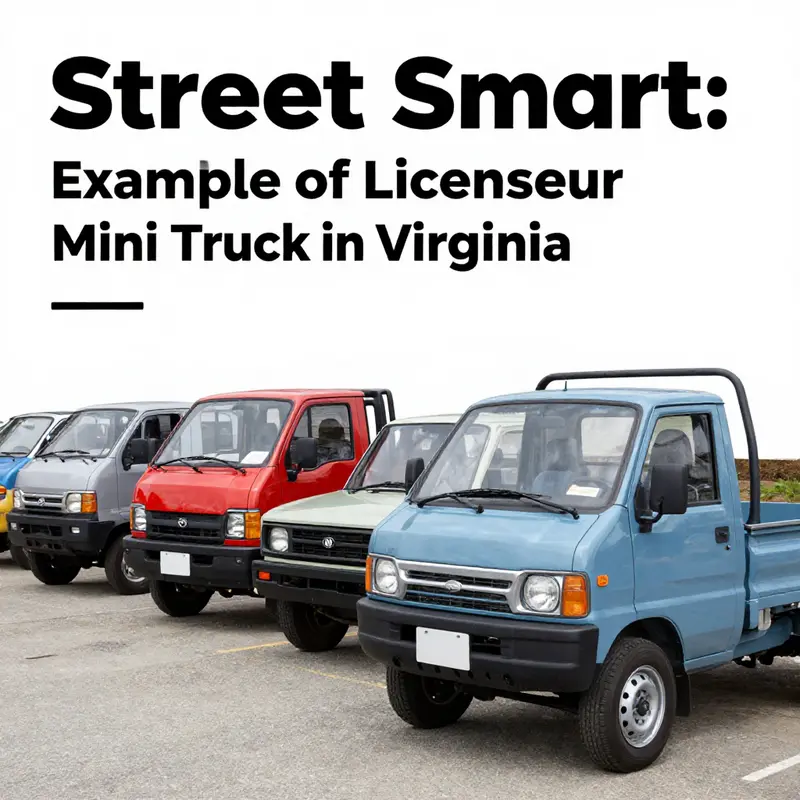
Virginia’s approach to licensing what many people call mini trucks is not a simple yes-or-no decision. It hinges on a careful alignment with state statutes that define what counts as a motor vehicle and how that vehicle is intended to be used. The practical effect is that a surprisingly small, lightweight vehicle can be road-legal in Virginia—so long as it fits within the DMV’s framework for light-duty, passenger, or small commercial vehicles. This chapter walks through the core realities the average buyer needs to understand before assuming a compact delivery cart or a kei-style work truck will automatically qualify for a Virginia license plate. It is not a jamboree of loopholes; it is a disciplined process grounded in safety, measurement, and an explicit recognition by state agencies that urban-scale transport requires a different approach than high-speed, highway-hauling trucks. The throughline is simple: if a vehicle is categorized as a motor vehicle under Virginia law, and it meets the applicable weight, safety, and certification standards, it can be registered and used on public roads. If not, the best-case scenario is that it remains for private property or off-road use, which is a market reality many prospective buyers must accept before negotiating any purchase. To understand the licensing pathway, it helps to picture the DMV’s framework as a set of checks rather than a single stamp of approval. The DMV determines eligibility by asking a few essential questions about mass, purpose, and compliance. Is the vehicle classified as a motor vehicle? Does its gross vehicle weight rating or GVWR fall under the threshold for light-duty status? Does it carry the federally required safety equipment and conform to FMVSS standards? Is the vehicle listed in the FMVSS database and manufactured by a company registered with the National Highway Traffic Safety Administration? These questions shape the decision, and the answers determine whether a buyer can walk away with a Virginia license plate or whether the vehicle must remain off-road or unregistered. On the road, the distinction between licensing and merely having a vehicle is not cosmetic. Virginia treats certain small, low-emission, and carefully classified vehicles like any other light-duty truck or passenger vehicle, provided they meet a defined set of criteria. The key threshold that repeatedly surfaces in DMV guidance is weight. If the vehicle’s GVWR is under 26,000 pounds, it typically sits within the realm of light-duty or light commercial classifications. That may sound generous, but it mirrors the practical reality that the roads are designed for a wide range of highway speeds and urban deliveries, and the state wants to ensure that even the tiniest road-going vehicle can stop, signal, illuminate, and protect its occupants. In this sense, the DMV’s approach is not about the size of the chassis alone but about who shares the street, what the vehicle can do in traffic, and how it protects its passengers and other road users. The safety envelope matters just as much as the weight threshold. A compact vehicle intended for urban delivery or short-haul services must comply with FMVSS—the Federal Motor Vehicle Safety Standards. That means standard features like functional seat belts, appropriately sized headlights and taillights, adequate signaling, sturdy mirrors, and reliable braking systems. It’s not enough to show up with something that looks like a vehicle from the outside. The inside must also reflect safety completeness. The Virginia DMV expects that vehicles receiving plates meet federal safety standards and that they be equipped with the features that make basic travel predictable and safer for everyone on the road. This safety core is complemented by the requirement that the vehicle have a verifiable manufacturer and be listed in the FMVSS database. In practice, this means the vehicle must come from a company that is registered with the NHTSA and that the model, or its compliance package, is recognized by federal standards. If a vehicle is a custom build or a non-standard conversion, it may still be able to obtain registration, but it will typically require special approval. The path from generic concept to registered vehicle is not a matter of filling out a form and waving a check. It involves a review of the vehicle’s compliance documentation, a VIN assignment, and often a demonstration that the vehicle’s design and components align with the standards Virginia expects for everyday road use. Within this framework, several practical categories emerge. One category consists of ultra-compact, low-GVWR vehicles designed for urban deliveries or local service routes. When these vehicles are electric or rely on lighter powertrains, they frequently strike a favorable balance between environmental goals and the mechanical realities of city driving. The second category includes compact utility models that blur the line between a passenger car and a small commercial truck. If their GVWR remains under the threshold and they fulfill the safety and emissions requirements, they can be treated as light trucks or light commercial vehicles for licensing purposes. The public perception that “mini” translates into “free-to-ride” misses the DMV’s insistence on compliance. The law does not grant a pass to anything that merely appears small. It grants permission to operate to those vehicles that carry the weight of law—literally and figuratively. The DMV’s published guidance emphasizes verification rather than conjecture. Prospective buyers should consult the official DMV resources or reach out directly to DMV staff to confirm whether their particular model qualifies. This is not a mere formality. In Virginia, driving an unlicensed vehicle on public roads remains illegal and can carry penalties, towing costs, and potential liability for the operator. Beyond the letter of the law, there is a practical rhythm to licensing. A small, street-ready vehicle must be registered with a VIN, insured, and subjected to annual safety and emissions checks where applicable. If the vehicle’s GVWR exceeds 26,000 pounds, the law introduces an additional financial and administrative obligation—the Highway Use Fee. This fee is designed to address heavier commercial operations that share the road with heavier trucks, and it is a threshold that many compact vehicles never cross. The practical takeaway for readers who are weighing a potential purchase is that the licensing path in Virginia rewards vehicles that are purpose-built for road use, meet safety standards, and stay within weight boundaries. When a vehicle is designed as a low-speed electric urban delivery vehicle or a compact light-duty truck, it most often clears the licensing hurdle with relative clarity. When it is a more adventurous custom build or a non-standard import, a license becomes a negotiation with the DMV, and the outcome depends on the particulars of the build, the supporting documentation, and the DMV’s interpretation of the relevant rules. In the broader marketplace, one can observe a spectrum of candidate vehicles that have found a home on Virginia streets. Low-emission, compact designs intended for city logistics, short-range delivery, or guest-services micro-mobility often align with the state’s regulatory framework. They are small enough to be economical, yet sturdy enough to carry essential loads without straining the vehicle’s fundamental safety systems. The most reliable path to licensing for these kinds of vehicles involves collaboration with the DMV throughout the purchase process. Before buying, a prospective owner should verify the model’s eligibility on the DMV’s official site or by speaking with a DMV representative. The emphasis is on formal confirmation rather than assumption. For readers exploring further context about how compact, street-ready vehicles fit into everyday transportation, a good resource is the broader Mini Trucks Blog, which discusses regulations, practical considerations, and real-world experiences of owners navigating licensing hurdles. Mini Trucks Blog.
In closing, the Virginia licensing landscape for mini trucks is not a blanket prohibition against small and efficient vehicles. It is a disciplined framework that rewards compliance, safety, and clear intent to operate on public roads. A true mini truck—one that weighs in under the GVWR threshold, carries the required safety equipment, and is backed by FMVSS conformity and manufacturer certification—can indeed become a legal part of Virginia’s road-legal fleet. The message for prospective owners is straightforward: do your due diligence, verify eligibility with the DMV, prepare the documentation, and be ready to meet annual checks. If you embrace these steps, a small, city-appropriate transport solution can become not only a practical work tool but also a legitimate, insured vehicle with a rightful place on Virginia’s streets. For more guidance on the broader landscape of compact work trucks and the kind of configurations that commonly find licensing pathways in Virginia, you can count on trusted sources that cover the regulatory and practical sides of the equation. External guidance from the Virginia DMV remains the definitive reference for anyone seeking to turn a compact vehicle into a licensed road participant. External resource: https://www.dmv.virginia.gov
The Legal Roadmap to Virginia’s Mini Trucks: Licensing, Compliance, and the Quietly Compelling Reality of Registration
A compact, economical vehicle designed for narrow streets and swift urban deliveries can be a powerful tool. Yet in Virginia, the dream of a licensed mini truck hinges on a strict confrontation with rules built to standardize what may enter the public roadway. The central truth is simple and often overlooked: a mini truck can be licensed in Virginia, but only if it passes a precise gatekeeping process that defines what a motor vehicle is on Virginia roads. This is not a matter of preference or style; it is a matter of compliance with state law, federal safety standards, and the practicalities of registering a vehicle that will share space with ordinary passenger cars and larger trucks. The DMV’s framework rests on three pillars. First, the vehicle must qualify as a motor vehicle under Virginia law. Second, it must meet weight and size thresholds that position it within the state’s definitions for light-duty trucks or passenger vehicles. Third, it must comply with established safety standards and be certified accordingly by the federal government. These conditions are not mere bureaucratic hurdles; they are designed to ensure that any vehicle traveling on public roads offers predictable performance, reliable braking, visible signaling, and basic occupant protection that aligns with the expectations of other drivers. In practice, this means a mini truck cannot simply be a quirky, off-road-bred, or hobbyist vehicle and then be treated as if it were a normal passenger car or a street-legal delivery van. The vehicle must be listed in the FMVSS framework and bear the certification that comes from being produced by a manufacturer registered with the NHTSA. If the vehicle is a custom build, or if it is a non-standard design that did not originate from an established, FMVSS-compliant production line, it will likely require special approval. The DMV’s approval process is not a mere formality; it represents a careful cross-check of how the vehicle was engineered, how it was tested, and whether it includes the essential safety features that Virginia drivers depend on. In this context, a certain class of small, lightweight electric vehicles intended for urban delivery has managed to win a place on Virginia’s approved list. These models embody a combination of strategic design and regulatory alignment that makes them fit for the road. Their inclusion signals that Virginia is not opposed to compact, efficient transportation, but it does require that these vehicles meet the same on-road expectations that protect everyone on the highway. Importantly, this is not a universal invitation to all “mini trucks” sold online or at off-road events. A substantial portion of so-called mini trucks do not meet federal safety standards, lack necessary lighting or signaling equipment, or are built in ways that render them ineligible for registration. The distinction between licensed, road-ready mini trucks and unlicensed, off-road-only models is not subtle in Virginia. The DMV maintains a list of approved vehicles that can be licensed for highway use, and potential buyers should check this list before committing to a purchase. By doing so, they avoid the disappointment and legal risk that come from discovering after the fact that a vehicle cannot be registered for public roads. The practical path to licensing begins with a careful, proactive inquiry. Before any purchase, prospective owners should verify eligibility with the Virginia DMV. This verification can take the form of a direct inquiry to DMV staff or a thorough review of the agency’s official materials online. The goal is straightforward: confirm that the exact model and configuration you intend to register is on the approved list and supported by the state’s registration framework. This step matters immensely because even a seemingly perfect fit—a compact, energy-efficient vehicle with urban-ready dimensions—can be disqualified if it lacks essential safety features or a proper safety and inspection record. The process also requires attention to what the DMV calls the “motor vehicle” classification. The Virginia DMV expects that the vehicle’s design, build quality, and safety features align with conventional on-road vehicles in practical ways. The requirement to adhere to FMVSS standards means that safety features such as seat belts, headlights, turn signals, mirrors, and functional brakes are not optional add-ons. They are baseline expectations. This is not merely about ticking boxes; it is about ensuring that a vehicle, when operated on public streets, behaves consistently with traffic laws and with the safety practices embedded in modern vehicle design. The ethical heart of this system is straightforward: the road is a shared space, and licensing is the covenant that ensures everyone has the means to operate safely within that space. For people who see their mini truck as a compact solution for urban freight, the regulatory structure can feel restrictive. Yet the constraints have a rational basis. A lightweight, city-oriented vehicle can deliver significant benefits—lower fuel use, reduced congestion, and improved maneuverability—only if it can be driven legally and safely. The DMV’s approach captures this balance. It accepts the potential advantages of smaller vehicles while preserving the predictability and safety that Virginia motorists expect. To the prospective buyer, this means a disciplined approach: identify the model, confirm that it’s FMVSS-certified, verify weight and dimensions, and ensure the vehicle will accept standard safety equipment and a highway-grade braking system. If a model is flagged as a non-road or off-road vehicle, it should not be pursued as a road-legal option. The line between transport and hobby becomes stark at this juncture. The DMV’s guidance is not simply about legality for legality’s sake; it is about protecting the driver and other road users from the consequences of systems that have not been proven to handle the demands of real-world traffic. The difference between a vehicle that can be registered and one that cannot is often a matter of a few critical features and a handful of regulatory verifications. For instance, a properly registered mini truck will typically be equipped with the required lighting and signaling, a stable braking system, and a understanding of how the vehicle will be inspected and titled. Without these features, or without the proper documentation to prove compliance, the vehicle cannot be licensed for road use. That is why many enthusiasts who are drawn to the concept of a mini truck love to read about the practical realities—what it takes to move a vehicle from garage to street, what officials look for during inspections, and how to secure insurance that aligns with Virginia’s requirements. The best path often includes a conversation with a dealer or a compliance professional who understands the state’s particular expectations for light-duty or small urban delivery vehicles. A credible seller will acknowledge the DMV’s criteria and help a buyer verify that a prospective model meets them before a purchase is completed. In this sense, a little more planning upfront can save a lot of legal trouble later. The search for the right vehicle on Virginia soil is also an exercise in patience and diligence. It is not enough to find a model that looks the part; one must confirm that the model is listed in the DMV’s approved fleet and that it can be legally registered using the standard processes for motor vehicles. If a vehicle does not meet these criteria, the right choice is to seek alternatives that do. The journey from curiosity to registration often leads to a broader appreciation of how Virginia’s road laws are designed to protect the public while still allowing innovative, compact transportation to flourish. For readers who want a deeper, more practical sense of how hobbyist mini trucks fit into the state regulatory landscape, a wider look at the blog community can be a helpful companion. See the Mini Truck Blog for practical examples, community insights, and nuanced discussions about the registration journey. Mini Truck Blog. When readers consider the legal path, they also have to think about the broader responsibility that accompanies vehicle ownership. Vehicle registration in Virginia is not a one-time event but a relationship with the state that involves regular compliance checks, safety inspections where required, and proof of ownership and insurance. The path you chart now will influence your ability to operate freely in the future. If the model you love proves eligible, the next steps flow naturally: ensure proper insurance coverage that satisfies Virginia’s minimum requirements and aligns with the vehicle’s classification, secure license plates and registration, and prepare for the periodic inspections that validate ongoing compliance. If you encounter a model that does not pass the DMV’s eligibility test, it is worth reassessing either the configuration or the intended use. The ultimate goal is to enjoy the benefits of a compact, efficient vehicle while upholding the safety, accountability, and legal responsibilities that Virginia demands for anyone who shares the road. In closing, licensing a mini truck in Virginia is less about resisting the status quo and more about embracing a prudent, well-documented path to on-road legitimacy. It is a process that rewards careful due diligence, clear communication with the DMV, and a readiness to adapt to the regulatory framework that keeps all road users safer. The payoff is a vehicle that not only serves your practical needs but does so with the confidence that comes from knowing you are fully compliant with state law and federal safety standards. External resource: https://www.dmv.virginia.gov
Final thoughts
Understanding the path to licensing your mini truck in Virginia is essential for both hobbyists and small business owners. By ensuring you meet eligibility criteria, comply with safety standards, and adhere to manufacturer requirements, you not only pave the way for legal road use but also enhance safety for yourself and others. Don’t underestimate the risks associated with unlicensed mini trucks, as they can lead to fines and penalties. Equip yourself with knowledge and take the necessary steps to enjoy the convenience and fun a mini truck can provide.