
The recent legislation permitting mini trucks on Colorado’s public roads has sparked significant interest among local business owners, residential property owners, and mini truck enthusiasts. This article dives deep into the changing dynamics of mini truck legality in Colorado, exploring crucial aspects like registration requirements, safety regulations, economic impacts, and public perceptions. Together, we’ll uncover how these compact vehicles can influence daily life and business operations in the state.
On Colorado’s Roads at Last: How New Legislation Made Mini Trucks Street-Legal—and What That Means for Drivers
Colorado has a reputation for embracing practical, offbeat solutions when they fit a clear public interest. In recent years, that ethos extended to the fate of tiny, cube-shaped vehicles that fans of compact mobility have long treated as either curiosity or hobbyist transport. The state’s approach to mini trucks reflects a broader policy aim: expanding access to affordable, efficient transportation while preserving the essential safeguards that keep streets safe. The question, once debated in garages and town halls, has moved from aspirational chatter to a concrete regulatory reality. The energy behind that shift came from a sense that innovation should not be stifled by disproportionate red tape, and that a segment of low-speed, low-emissions mobility could fit within Colorado’s diverse traffic ecosystem. Yet the same energy that spurred legalization also demands discipline from owners, dealers, and regulators alike. The legal path for mini trucks is not a caricature of car rules tailored for a niche market; it is a carefully considered framework that requires understanding, verification, and ongoing compliance. While the public debate often framed these vehicles as a novelty priced around three thousand dollars, the practical implications run far deeper. Street-legal status does not automatically translate into a free pass to exploit every roadway. Instead, it creates a structured route to legitimacy—one that begins with classification, then proceeds through registration, insurance, and a clear understanding of where and how the vehicle may operate. The core idea is straightforward: if a mini truck can meet a baseline set of safety, performance, and documentation standards, it can be driven on public roads like other light motor vehicles. But the exact contours of those standards are not a single, one-size-fits-all blueprint. They emerge from a combination of state legislation, regulatory interpretation, and local enforcement practice. That is why the most reliable guidance comes from official channels—the Colorado Department of Transportation (CDOT) and the Colorado Bureau of Motor Vehicles (BMV)—and why prospective owners should treat the legalization as a formal process rather than a marketing storyline. The published narrative in policy discussions and the official announcements converge on a practical truth: legalization is not a mere purchase decision. It is the beginning of a compliance journey that involves classification, registration, and ongoing adherence to vehicle requirements. In a state where road networks vary from urban arterials to mountainous pass routes, the responsibility attached to street-legal mini trucks is distributed across several actors. The vehicle must be capable, by design, of meeting safety benchmarks that align with state expectations for everyday passenger vehicles. It must be identifiable in the state’s records as a roadworthy machine, which implies not only a title and registration but also proof of insurance and compliance with equipment standards that make it safe for public corridors. For a driver, this translates into a predictable, documented path: acquire the vehicle, confirm its eligibility under Colorado rules, prepare it for inspection if required, and complete the registration process at the BMV. The elegance of the process lies in its simplicity and its accountability. When owners follow the steps, they gain access to roads without carrying the burden of ad hoc exemptions or temporary permits. The potential reward is a low-cost transportation option that can navigate daily commutes and run errands with surprising efficiency. Vehicles in this category, often marketed as a practical alternative to larger, more expensive compact cars, appeal to buyers who value fuel economy, maneuverability, and the novelty of a vehicle that can squeeze into tight spaces. The efficiency gains become more meaningful when coupled with Colorado’s landscape, where shorter trips, mountain access, and varied weather conditions pose unique transportation challenges. Yet the very conditions that make mini trucks attractive also demand respect for the rules that govern road use. This is where the advisory role of state agencies becomes essential. The BMV handles the administrative backbone—titles, registrations, and the legal recognition of a vehicle’s status—while CDOT provides the roadway-permission context, safety standards, and guidance on where a mini truck can operate. For a driver, it means a clear separation between ownership paperwork and on-road behavior. The vehicle may be street-legal in a broad sense, but it remains subject to the same expectations that govern other road users: adhere to posted speed limits, use appropriate lighting and signaling, maintain tires and brakes in good condition, and comply with insurance requirements. The compatibility of a mini truck with these expectations depends, in part, on the vehicle’s build and configuration. A customized vehicle, for example, may raise questions about how it aligns with safety standards or whether it requires additional inspections or equipment modifications to satisfy state criteria. That nuance underscores why the research field emphasizes official guidance: relying on a customized or improvised approach without verifying with the regulatory authorities introduces avoidable risk. The path forward is not simply about proving that a vehicle exists on a certificate of title; it is about proving that the vehicle meets a recognized standard of roadworthiness. To navigate that path with clarity, prospective owners should engage directly with the state’s authoritative resources. They should confirm the vehicle’s classification and the precise requirements that apply to street use. The classification framework—in broad terms—distinguishes standard passenger-vehicle rules from any special-case designations that may apply to ultra-compact or low-speed configurations. Understanding where a mini truck fits within that framework is essential for anticipating what paperwork is necessary, what safety features must be present, and which roads or highway segments may be legally traversed. In this context, the practical realities of ownership come into sharper relief. The sticker price on a mini truck is only part of the broader equation. Even when something can be legally driven, ongoing costs—registration, annual renewals, insurance premiums, and periodic safety checks—shape the overall affordability and viability of this mobility option. Colorado’s climate and topography further influence maintenance needs and operational planning. Snow, ice, and steep grades can test entry-level braking systems and traction aids, making routine maintenance more critical than it might be for a typical light passenger car. The conversation around legality, therefore, naturally expands beyond law books into the realm of practical engineering and daily discipline. For readers who want to dig deeper or share practical experiences, there is a vibrant online community that tracks the evolving regulatory landscape and discusses real-world compliance. The community’s conversations often bridge the gap between policy wording and on-the-ground reality, offering reminders about how to document compliance, how to prepare for inspections, and what to expect during registration renewals. If you are exploring this topic as a prospective owner or a curious observer, you can find a broad range of perspectives and updates in the Mini Trucks Blog, which compiles posts from enthusiasts and experts alike. It serves as a practical complement to official guidance, helping readers translate legal language into everyday steps. Mini Trucks Blog. As you read and compare experiences, you will notice a common thread: the path to legality is navigable when you treat it as a process rather than a promise. The ultimate goal is straightforward—ensure safety, foster accountability, and preserve road harmony—while expanding transport options for residents who value compact, economical mobility. The policy calculus behind legalization recognizes that affordable, small-scale transport can play a meaningful role in reducing congestion, supporting rural and urban trips, and offering an alternative in regions where car ownership may be constrained by cost. It also demands vigilant enforcement of standards to prevent scenarios where an uninspected, improvised vehicle could compromise safety. In Colorado, that balance—between accessibility and safety—rests on the careful work of the state agencies and the informed participation of drivers. The shift from either a theoretical possibility or a niche experiment to a functioning, legally recognized category of road vehicle is not instantaneous. It unfolds through a sequence of confirmations: a vehicle is appropriately classified, it is properly titled and registered, it meets or is equipped to meet safety and equipment standards, and it remains compliant through annual renewals and potential inspections. For anyone who wants to anchor their understanding in official guidance, a direct consultation with CDOT and the BMV is advisable. These agencies provide the precise criteria, update any changes to the rules, and offer official checklists that help owners verify their vehicle’s eligibility before taking it onto the street. In sum, Colorado’s legalization of mini trucks marks a notable shift in how the state approaches mobility, affordability, and personal transportation choices. It is not a blanket invitation to improvise or to bypass standard safety practices. It is an invitation to participate in a regulated, transparent process that recognizes the place these compact vehicles can hold in a diverse transportation ecosystem. As with any evolving policy area, the specifics matter. The best way to stay accurate is to consult the official resources that define classification, registration, and operation. For ongoing updates and a sense of how the community continues to respond to policy changes, enthusiasts can engage with the Mini Trucks Blog and related discussions, while always keeping in mind the necessity of verification through CDOT and BMV. For official guidance and the latest requirements, refer to state resources and professional advisories. External resource: https://codot.gov.
Stamping Plates on the Plains: Navigating Colorado’s Mini Truck Registration and Licensing
Colorado’s embrace of compact pickup trucks on public roads marks a pragmatic shift in how residents approach ownership, mobility, and the state’s road system. The change isn’t only about a vehicle’s size; it’s about fitting a smaller, more affordable class of transportation into the same framework that governs every passenger car and larger truck. That framework includes residency considerations, vehicle classification, emissions rules, and a predictable path to license plates and proof of compliance. While the concept sounds straightforward, the actual steps to register and license a mini truck are nuanced enough to matter for someone moving to Colorado or purchasing a vehicle from out of state. The journey from decision to daily use begins with a clear understanding of timing, documentation, and the role the vehicle’s classification will play in fees and insurance requirements. In practice, the state’s registration ecosystem treats a mini truck much the same as other vehicles, but it also invites you to confirm where the vehicle fits within the broad categories that the Colorado Department of Revenue and local motor vehicle offices manage. This alignment matters because it influences the exact documents you need, the environmental compliance checks you must pass, and the taxes that appear on your receipt when you walk out with license plates. The practical outcome is simple: when you complete the required steps with attention to detail, your compact vehicle becomes a legally driven member of Colorado’s shared roadways, eligible for routine renewal and subject to the same safety and environmental expectations as larger vehicles. To frame the path ahead, consider the essential timing first. You must be eligible to register your vehicle within sixty days of moving to Colorado or purchasing the vehicle. That window is designed to ensure that the vehicle’s eventual registration sits on the correct resident and ownership records, avoiding mismatches that could complicate insurance or enforcement. This sixty-day limit also emphasizes the importance of gathering documents promptly and planning a visit to your local county motor vehicle office before the deadline. The actual meeting with that office is more than a formality; it is where ownership and identity are verified, where the vehicle’s identity is cross-checked against records, and where you receive the plates and registration sticker that certify your vehicle’s road legality. The documentation you bring matters as much as the order of the documents themselves. You will need proof of identity, proof of ownership (usually the vehicle title), and valid auto insurance that meets Colorado’s requirements. Insurance is not a mere courtesy; it establishes the baseline financial responsibility that Colorado requires for anyone operating on public infrastructure. If your mini truck will join the road in the Front Range counties—Denver, Boulder, and Larimer in particular—emissions certification becomes part of the equation. Emissions testing can be a prerequisite for registration in those areas, reflecting the state’s ongoing commitment to air quality and its practical impact on daily driving. If your mini truck comes from out of state, you should anticipate a VIN inspection as part of the process. A VIN inspection helps verify the vehicle’s identity and ensures that it matches state records, a safeguard against tampering or theft and a standard step for out-of-state imports arriving on Colorado soil. The inspection is not a hurdle so much as a verification step that aligns your vehicle with Colorado’s catalog of registered units. Once these pieces are in place, the practical act of obtaining registration is straightforward, even if the office experience varies by county. You will visit your local county motor vehicle office to submit the application and the compiled documents, pay the required fees, and await approval. When the application is approved, you receive license plates and a registration sticker to affix to your vehicle. In the moment of truth, your mini truck’s status shifts from “potential registration” to “road-legal.” The path, however, does not end with plates; it continues with the matter of classification. Vehicle classification in Colorado can hinge on size, weight, and intended use. Mini trucks may be classified differently depending on these factors, which can affect fees, taxes, and some specific requirements. It is prudent to confirm with the Colorado Department of Revenue (CDOR) or your local DMV office exactly where your mini truck fits. If the vehicle is treated as a passenger vehicle, the fee structure and insurance expectations may look different from those for a commercial or medium-duty truck. This nuance matters both for budgeting and for understanding any future regulatory obligations that might arise with changes in use, load, or commercial activity. In short, the classification you receive at registration can shape your ongoing costs and compliance obligations for the life of the vehicle on public roads. For anyone tackling this process, a practical approach is to assemble a cohesive set of documents, confirm VIN status, and then consult the local motor vehicle office or the CDOR about classification. Because rules can change or vary by county, checking the latest guidance through official resources is wise. For ongoing clarity and broader context, those who want to explore practical experiences and additional nuances can consult the MinitrucksCala blog, which hosts a range of discussions and community perspectives related to mini trucks and their integration into daily life. The blog offers a window into how owners navigate the registration landscape in real-world terms, reinforcing that the process is achievable with careful preparation. You can visit the blog at minitrucksocala.com/blog/. This resource complements the formal requirements by providing a sense of how neighborhoods, counties, and individuals interpret and implement the rules in everyday settings. As part of planning, it’s important to map the journey to the final step—the official guidance that governs vehicle registration and licensing. Colorado maintains a robust framework for vehicle registration that is designed to be predictable, transparent, and enforceable. The most current and authoritative information is housed on state websites, including the Colorado Department of Revenue’s guidance for vehicle registration and licensing, and the related health and environmental administration documentation that sometimes intersects with emissions testing. To ensure you are operating with the most up-to-date rules, consult the official resources and stay aware of any county-level variations that may apply to your situation. For the broadest perspective and the most current requirements, refer to the official Colorado Department of Health and Environment and Department of Public Health and Environment resource on vehicle registration and licensing, which consolidates guidance on registration steps, required documentation, and emissions considerations across the state. In practice, the path from purchase to plate is a sequence of verified steps that align your mini truck with Colorado’s road-usage standards, environmental expectations, and legal obligations. The steps are straightforward when approached with a checklist mindset: confirm eligibility within the sixty-day window, assemble proof of identity, ownership, insurance, and, where applicable, emissions certification; complete and submit the VIN inspection if the vehicle is inbound from another state; file at the local county motor vehicle office, pay the fees, and receive your license plates and sticker. In doing so, you not only gain legal access to roads and highways but also join a system of accountability that supports safety, insurance integrity, and environmental stewardship. The practical reality is that mini trucks, even with their compact footprint, are treated within the same overarching structure as other registered vehicles. The details—what counts as proof of ownership, what emissions tests are required, and whether the vehicle is treated as a passenger vehicle or a commercial unit—are not mere formalities. They shape everyday driving, insurance costs, and the ease with which you can renew registration in subsequent years. The state’s framework aims to balance accessibility with accountability, enabling people to leverage an affordable option without compromising on safety or compliance. For readers who want a sense of the broader ecosystem—how these vehicles fit into Colorado’s road culture and regulatory landscape—exploring both official sources and community discussions can be enlightening. And for those who want a quick pointer to the practical side, a visit to the internal resource at minitrucksocala.com/blog/ can offer case studies, tips, and community insights that complement the official requirements. As with any major vehicle registration decision, discrepancies between expectations and reality often arise from county-level interpretations or from changes in state guidance. That’s why it’s wise to approach registration as a two-step process: (1) verify classification and emissions requirements with the state or your county office, and (2) complete the registration workflow with the necessary documentation, knowing you’ll soon be authorized to drive a mini truck legally on Colorado’s roads. The end result is a clear, enforceable status that aligns a practical, affordable vehicle with the standards that keep Colorado’s roads safe, clean, and well managed. For the most up-to-date details, consult the official resource: https://www.colorado.gov/pacific/cdphe/vehicle-registration-and-licensing
Tiny, Street-Ready, and Regulated: The Safety Framework Guiding Colorado’s Mini Trucks on Public Roads
Colorado’s embrace of mini trucks signals more than a trend toward affordable, compact mobility. It marks a shift in how municipalities, agencies, and everyday drivers view small utility vehicles that fit narrow streets, backyards, and worksites with equal aplomb. The central question: are mini trucks legal in Colorado? It has moved from a gray area of novelty to a recognized niche within the state’s traffic safety framework. Yet legality alone does not guarantee roadworthy operation; this overview blends the realities of street-legal status with the safety and regulatory standards that protect drivers and other road users. In short, a mini truck becomes roadworthy only when it meets verifiable standards and the driver maintains them through regular checks and compliance.
What makes a mini truck legal in Colorado rests on a framework that treats these vehicles as motor vehicles subject to the same expectations that govern passenger cars and light-duty vehicles. The core idea is straightforward: to operate on streets and highways, a mini truck must meet essential safety and procedural rules. This starts with seat belts, lighting, tire and brake integrity, and ongoing maintenance—then moves into registration and insurance, inspection, and proper classification. A mini truck cannot be a garage invention with a flashy badge; it must pass standards that the state audits via DMV procedures. In Colorado, the vehicle should be roadworthy in line with heavier automobiles while preserving the unique characteristics that make mini trucks appealing for work, weekend errands, or urban use. The aim is to balance accessibility with accountability so the rise of compact vehicles does not compromise safety.
Within the safety framework, core requirements are consistently emphasized: seat belts are mandatory for every occupant, the belt rule is a legal obligation tied to crash protection. Lights and reflectors are essential: functioning headlights, brake lights, turn signals, and rear reflectors communicate intent, particularly in low-visibility conditions. Tire wear and braking performance are treated with the same seriousness as for larger vehicles; tread depth and reliable stopping power reduce risk on the road.
Registration and insurance complete the safety triangle. Mini trucks must be registered with the Colorado DMV, and liability insurance is required; driving without insurance can lead to penalties and loss of driving privileges. In practice, owners should check the posted speed limits for their areas and comply; roadway safety depends on predictable speed and behavior. Where child passengers are concerned, appropriate child safety seating applies based on age, height, and weight and the vehicle’s seating configuration and anchor points.
To translate these rules into practice, use official resources such as the DMV vehicle information pages for registration and classification criteria. Enthusiast communities also offer practical guidance and real-world scenarios, helping readers translate policy into action while staying within legal requirements. The bottom line: going from legal to roadworthy is a continuous process of verification, maintenance, and informed operation. For official details on vehicle information and registration requirements, consult the Colorado DMV vehicle information resource.
Small Wheels, Big Shifts: The Economic Wake of Colorado’s Legalization of Mini Kei Trucks
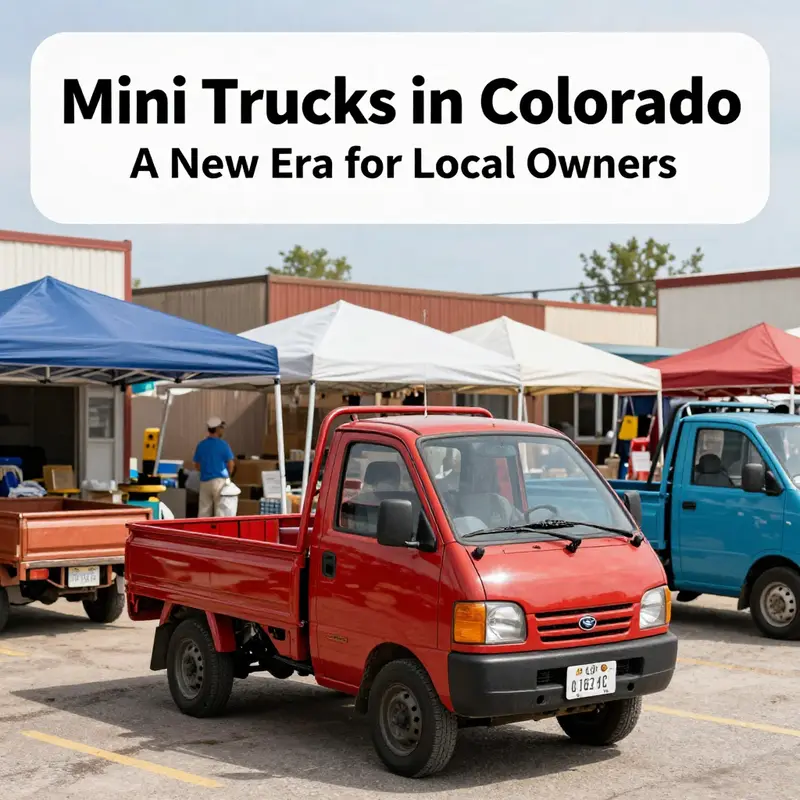
Colorado has chosen a road less traveled for its transport policy, embracing a class of ultra-compact vehicles that promise to reshape urban mobility and the state’s economy. In May 2025, the legislature, with support from the state’s transportation department, enacted a measure that clears a path for these compact, payload-ready vehicles to share public highways with traditional cars and trucks. The change is not simply about road legality; it signals a broader experimentation with how cities move people and goods in a world where space is increasingly at a premium. The practical upshot is that thousands of residents and small businesses may find a more affordable, efficient, and versatile option for daily transit and light-duty hauling. The legal shift, while specific in its technical provisions, sits at the intersection of urban planning, climate policy, and economic opportunity, inviting a range of stakeholders to rethink what a vehicle should cost, how it should operate, and who gets to participate in the transportation economy.
From the outset, the economic ripple is most visible in the demand that follows a state green light. The new rules unlock a segment of imported, compact vehicles that had been largely outside the mainstream Colorado market. Dealers and importers can begin to establish a local footprint, coordinating logistics, warranty service, and parts distribution with a clarity that was previously absent. The effect could be a modest but meaningful expansion of commerce tied to the movement of these small vehicles from distant suppliers to Denver neighborhoods and mountain towns alike. Because the price point for these vehicles is considerably lower than traditional light trucks, the market can become accessible to a broader slice of households and small businesses. A vehicle at a fraction of the cost of full-size trucks carries with it not just savings at purchase but potentially lower ongoing maintenance and insurance outlays, which in turn can alter household budgeting and small-business travel calendars across the Front Range.
The affordability dynamic is central to how Colorado’s new policy translates into real-world economic activity. When a transportation option costs around a few thousand dollars rather than tens of thousands, it broadens the space for choice and competition. For urban residents who commute short distances, run errands in dense neighborhoods, or rely on basic cargo capability for small-scale commercial activity, the lower upfront and operating costs can translate into more predictable monthly expenses. This in turn can support mobility for workers who previously faced barriers to reliable transportation, thereby influencing labor markets, employment access, and even local business vitality in compact, walkable districts like central Denver and Boulder’s university-adjacent corridors. The broader implication is not merely that more people can afford a vehicle, but that a greater share of daily trips occurs within a tighter, more energy-efficient market segment. The state’s climate goals may benefit as this shift nudges trips away from heavier vehicles with higher fuel consumption, though the net environmental impact will depend on usage patterns, fuel types, and the durability of the new fleet. The conversation surrounding affordability is nuanced; it involves not only sticker price but total cost of ownership, including maintenance, insurance, registration, and potential savings from lower fuel bills over time.
Beyond personal affordability, the policy catalyzes a new kind of innovation within the automotive ecosystem. Local businesses can adapt to a changing demand by offering targeted services that support the Kei-vehicle niche. Maintenance regimes, parts supply chains, and specialized diagnostic tools can take shape to accommodate these ultra-compact machines. Workshops may pilot low-cost upgrade paths, safety retrofits, or modular cargo solutions tailored to the unique dimensions and payload realities of these vehicles. The convergence of importation, service, and accessory markets creates a mini-ecosystem within Colorado’s broader auto economy. This kind of specialization often yields spillover effects as technicians gain new skills, suppliers adjust inventories, and aftermarket developers test innovative components that improve durability, safety, and versatility. The net effect is a more diverse automotive landscape where smaller, nimble businesses can compete alongside established dealers and repair shops—an alignment with a broader trend toward resilient, warehouseless supply chains that local economies increasingly prize.
The environmental calculus is another piece of the economic puzzle. Vehicles that are compact typically offer superior fuel economy and lower emissions per mile compared with larger pickups and SUVs. In a state with ambitious environmental targets and climate-centric transportation policies, the adoption of smaller, more efficient options can contribute to tangible reductions in greenhouse gas emissions from the transportation sector. While reduced emissions per vehicle are a clear advantage, the overall environmental impact turns on usage intensity. If the vehicles replace many trips that would have been made by larger, less efficient vehicles, the environmental dividend grows. Conversely, if the new option simply adds to total vehicle-miles traveled without displacing heavier alternatives, the emissions gains may be more modest. Still, policymakers can view the policy as a lever to nudge urban travel toward more space-efficient, lower-emission options, complementing other strategies such as transit investments, active mobility, and energy efficiency incentives. Colorado’s commitment to sustainability finds a practical ally in a mobility option that, by its design, lowers barriers to efficient travel for everyday tasks and light cargo hauling.
From a macroeconomic vantage point, the import and distribution of these compact vehicles offer a potential boost to trade activity with the vehicle’s country of origin and related markets. As Colorado opens its roads to this class of vehicle, importers, logistics providers, and local retailers are placed on a pathway that could gradually become a small but steady stream of cross-border commerce. The precise size of this impact depends on regulatory nuances, consumer confidence, and the reliability of after-sales support, but the scenario is straightforward: a legal framework reduces friction for a previously constrained market, which can translate into increased economic activity and an expanded local tax base. The state’s leadership thus faces a set of choices that balance immediate market dynamics with long-term policy objectives, ensuring that any growth aligns with safety standards and infrastructure capacities. The conversation around these incentives is complex, weaving together finance, labor, and urban planning as Colorado charts how best to integrate a new vehicle class into a road system designed for much larger machines.
As observers and residents look forward, the narrative of economic impact extends beyond numbers and market entries. It touches the daily lived experience of city life—how people move, how neighborhoods evolve, and how small business models adapt to shifting consumer needs. The conversation is ongoing, and public sentiment will likely influence subsequent policy refinements. For readers who want to explore evolving perspectives and the local debate more deeply, the Minitrucks Colorado conversation has been captured in discussions hosted on the community blog minitrucksocala.com/blog/. This resource offers a window into how residents and businesses weigh costs, benefits, and practical realities as Colorado navigates this policy experiment.
From a policy design standpoint, the Colorado experience offers a case study in aligning legal frameworks with market forces and environmental goals. The legislation establishes a framework for compliance, safety standards, and registration processes while inviting a market response that can be measured in terms of new businesses, job creation, and consumer choice. The balance hinges on keeping costs predictable for consumers, ensuring roadside safety, and maintaining infrastructure efficiency as the footprint of vehicle fleets in urban corridors evolves. The long arc of this development will depend on ongoing data collection, monitoring, and stakeholder dialogue. In other words, legalization is not a final destination but a starting line for an adaptive economy that seeks to harmonize mobility needs with a sustainable future.
For readers seeking a deeper, more technical dive into the policy implications and the broader trend toward street-legal, compact vehicles, a companion article offers a detailed examination of the legislative provisions and their anticipated effects. It highlights how Colorado’s approach compares with broader state and national conversations about urban mobility, vehicle efficiency, and consumer access. External readers can explore further here: https://k99.com/mini-kei-trucks-will-be-street-legal-in-co-soon/.
In sum, Colorado’s decision to legalize these compact, highly efficient vehicles opens the door to a set of economic opportunities that extend beyond the price tag of the vehicles themselves. It invites a reimagining of urban transportation economics, tapping into potential gains in affordability, local job creation, and environmental performance. The path ahead will require careful attention to safety, maintenance ecosystems, and consumer education, but the initial signal is clear: a smaller vehicle can carry a broader promise for a denser, cleaner, and more dynamic Colorado. As the state studies outcomes and refines its approach, the chapter that follows will examine how urban planning, transit investments, and community needs intersect with this new mobility option, shaping a transportation future that remains affordable, responsible, and resilient.
Street-Level Shifts: How Colorado’s Mini Trucks Redefine Public Perception and Urban Mobility
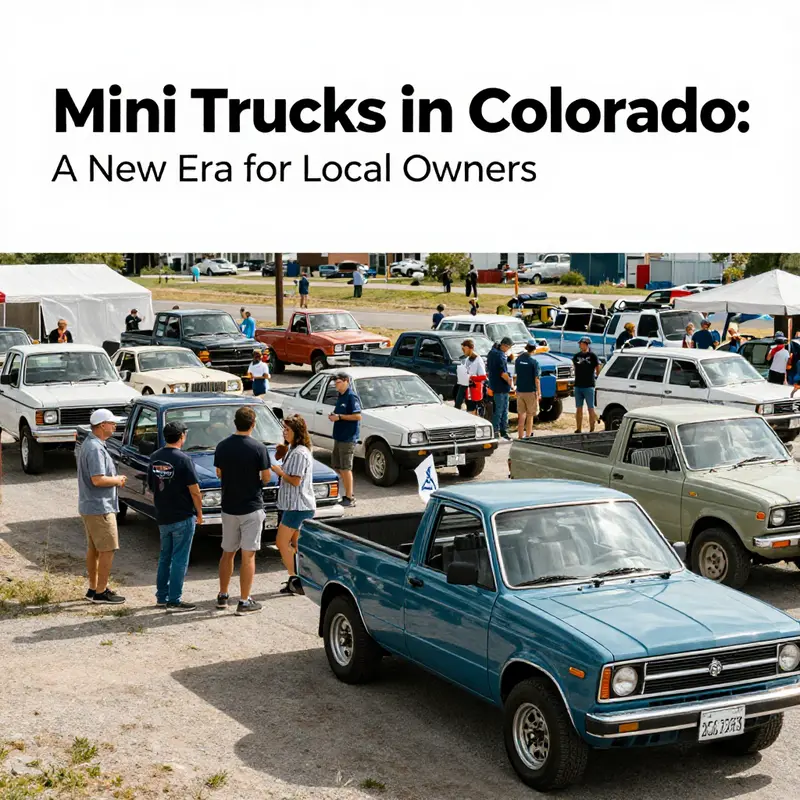
Colorado’s sudden embrace of compact Kei-style trucks on public roads marks more than a regulatory footnote. It signals a broader recalibration of how people imagine personal transportation, what counts as practical city driving, and how communities envision safety in a changing mobility landscape. When lawmakers opened the door to street-legal mini trucks, they did more than tweak a clause in the vehicle code. They invited a reexamination of how small, economical, and highly maneuverable vehicles can fit into a state known for long mountain drives, busy urban cores, and a public transport system that is always seeking ways to complement rather than compete with private options. The initial public reaction ranged from curiosity to cautious optimism, but as the novelty begins to fade and early owners accumulate real-world experience, Colorado’s streets are quietly becoming a laboratory for how small-scale mobility might coexist with larger, faster, heavier traffic. The conversation that follows is not merely about legality; it is about social meaning, daily routines, and the rhythms of urban life.
In the positive dimension, many residents see the shift as an invitation to rethink the economics of transportation. A tiny truck, in this framing, is not a fashion statement but a practical tool: a vehicle that sips fuel, occupies a fraction of a parking space, and can slip through crowded avenues with a nimble confidence that larger pickups and SUVs often lack. For urban commuters, especially those navigating dense cores like Denver or the university-adjacent neighborhoods that stitch together students, workers, and services, this translates into a tangible reduction in the friction of everyday trips. Less time circling for a parking spot, easier parallel parking on narrow streets, and the prospect of lowering household transportation costs all contribute to a favorable view. Environmental-minded residents see an additional, if nuanced, benefit. While any vehicle still contributes to emissions, the emphasis on efficiency and the possibility of smaller, lighter platforms that can be paired with modern drivetrain options suggests a future where city fleets and private owners lean toward lightweight mobility. In a city planning vocabulary that increasingly prioritizes walkable cores and transit-oriented development, a compact, affordable vehicle is construed not as a threat to alternatives but as a complementary mode that can bridge gaps—especially for short trips that do not justify a car ride or for errands that benefit from easy parking and urban access.
The social and cultural dimensions of this regulatory moment are equally telling. Kei trucks have long carried a distinctive cultural aura in their country of origin, where they are perceived as practical, unpretentious work vehicles rather than status symbols. In Colorado, that aura can be reframed to emphasize practicality without erasing the charm of a vehicle that is small and purpose-driven. Yet, public perception in a new national context is rarely a straightforward translation. Some Colorado residents respond with skepticism to anything new on the roads, particularly when the vehicle is visibly smaller than the majority of surrounding traffic. The concern often centers on how these compact machines will fare in high-speed conditions, how their safety features align with state standards, and whether the roads were designed with such small profiles in mind. These concerns are legitimate and deserve careful, ongoing evaluation. They shape not only opinions about the vehicles themselves but also conversations about how cities are designed to absorb innovations without compromising safety or cohesion. In neighborhoods that value quiet streets and predictable traffic patterns, residents might fear that a proliferation of small trucks could alter dynamic flows, encourage new parking behaviors, or contribute to a sense of unfamiliarity in everyday commutes. In turn, advocates emphasize that public perception can evolve. As more drivers demonstrate responsible use, as safety records begin to form, and as insurance and enforcement practices adapt to the new reality, the initial novelty often gives way to a tempered, pragmatic acceptance. A climate of cautious optimism can replace the bravado of novelty, yielding a durable cultural foothold for small, efficient vehicles within the state’s broader mobility ecosystem.
The legislative move itself is a reflection of a broader trend toward adaptive regulation in the face of evolving mobility technologies. Colorado’s policymakers have framed the change not as an impulsive loophole but as part of a considered response to shifting transportation needs. They have underscored the potential for reduced congestion in dense urban zones and the possibility of lower emissions, all while maintaining rigorous safety expectations. The practical implications extend beyond the simple question of what can be driven on a certain road. They touch on licensing, insurance, maintenance responsibilities, and the degree to which local authorities may need to adapt enforcement to a broader spectrum of vehicle types. On the surface, the new policy appears to empower individuals who are seeking affordable, functional transportation options that may better align with contemporary urban rhythms. Yet every policy that expands the field of operation invites questions about long-term consequences. Do these vehicles integrate smoothly with existing traffic safety protocols? How will the state monitor compliance with safety standards for such compact machines? Are there unintended effects on pedestrian space or bicycle lanes if a rise in micro-mobility accompanies street-legal kei trucks? These questions are not mere bureaucratic curiosities; they shape public confidence and the credibility of the policy as it operates in real communities.
As more Coloradans witness these vehicles in daily life, the social calculus begins to tilt toward experiential evidence. Stories of easy parking, surprising maneuverability, and surprisingly quiet operation start to spread through neighborhoods, workplaces, and online forums. The narrative of the practical, affordable vehicle gains credibility when paired with tangible benefits—short commutes, lower fuel costs, and the ability to haul small loads with a vehicle that can park where larger trucks cannot. This experiential evidence helps pull the public perception away from novelty and toward a functional acceptance that may eventually normalize mini trucks as a regular, if niche, part of Colorado’s transportation mix. At the same time, the acceptance curve remains sensitive to safety data. Communities want robust, transparent reporting on crash statistics, reliability, and performance in diverse weather conditions. They want assurances that a vehicle with a smaller footprint will not translate into higher risk simply by virtue of its size. In this sense, the social viability of street-legal kei trucks depends as much on the quality of safety culture and data sharing as on legislative cleverness. The road to normalization is paved with ongoing demonstrations of responsible ownership, clear guidelines for operators, and a shared commitment to keeping streets safe for all users.
From a planning perspective, the development invites a reimagining of the urban fabric. If a portion of daily trips can be served by compact, easy-to-park vehicles, cities may be able to reallocate scarce curb space toward more productive uses, expand micro-mobility corridors, or reimagine street design to better accommodate a wider variety of vehicle types without compromising safety. This is not a call to replace traditional cars but a recognition that comfort with a broader palette of mobility options can yield more resilient, inclusive, and efficient urban environments. The public, policymakers, traffic engineers, and local communities all play a role in shaping how that palette evolves. In the best-case scenario, the diffusion of small, affordable, and efficient vehicles becomes a catalyst for urban centers that move more smoothly, breathe more easily, and invite a wider cross-section of residents to participate in the city’s everyday life.
The conversation in Colorado thus unfolds as a living experiment in public perception and societal adaptation. As residents become more familiar with the sight of these compact trucks, the initial questions about safety and practicality gradually give way to a more nuanced appraisal of how such vehicles align with personal needs, municipal goals, and the state’s climate commitments. The broader article reflects this trajectory, illustrating how a single regulatory pivot can ripple through culture, infrastructure, and daily routines. For readers seeking an initial sense of where this story began, and for those who want a broader sense of the local discourse, the state’s official announcements and ongoing coverage provide essential context that complements the lived experiences described here. For a broader perspective on related discussions within the industry and community, you can explore the ongoing conversation at a general mobility blog that tracks developments in micro-mco mobility and vehicle design. This resource frames the kei-truck moment as part of a wider shift toward practical, low-cost, low-footprint transportation options that cities are increasingly prioritizing. If you’d like to see how enthusiasts and observers are discussing these vehicles in everyday terms, the following link offers a window into the ongoing dialogue: minitrucksocala blog.
The evolution of public perception around Colorado’s mini trucks is not simply about what a vehicle can do. It is about how a community learns to live with new options, how safety norms are built up over time, and how a city can integrate innovation without sacrificing the core values of road safety and shared responsibility. As more Coloradans encounter these vehicles in parking lots, on transit corridors, and along residential streets, the narrative will continue to mature. The state’s approach—balancing accessibility, safety, and sustainability—offers a template for other jurisdictions wrestling with similar choices. It remains to be seen how deeply these small, economical trucks will weave themselves into the state’s mobility fabric, but the signs so far point to a society ready to test the possibilities of compact, conscientious, and community-minded transportation.
External reference: for authoritative information and ongoing updates on Colorado’s kei-truck policy and its public reception, see the coverage from a regional news outlet at https://www.k99.com/news/local/mini-kei-trucks-will-be-street-legal-in-co-soon
Final thoughts
The legalization of mini trucks in Colorado marks an exciting development for various stakeholders including business owners and enthusiasts alike. By understanding the registration processes, safety regulations, and the economic benefits, both current and potential mini truck owners can make informed decisions. Community acceptance also indicates a shift in societal views, blending practical utility with changing lifestyles. As we embrace this new chapter, mini trucks not only cater to individual needs but also support local economies and foster connections.