

Mini trucks, particularly the celebrated Kei trucks, are becoming increasingly popular among small business owners, hobbyists, and residential property owners in Kansas. Their compact size, versatility, and efficiency make them a great option for urban and rural needs alike. But the journey from owning a mini truck to legally operating one on Kansas roads requires understanding local laws and compliance regulations. In this exploration, we’ll delve into the legal framework guiding mini truck ownership, the necessary safety and emissions standards, specific modifications required for Kei trucks, and the registration process involved. We will also look at how these vehicles impact our roads and communities, painting a comprehensive picture for enthusiasts and potential owners alike.
Tiny Trucks on Big Roads: Navigating Kansas’ Street-Legal Landscape for Kei and Mini Trucks
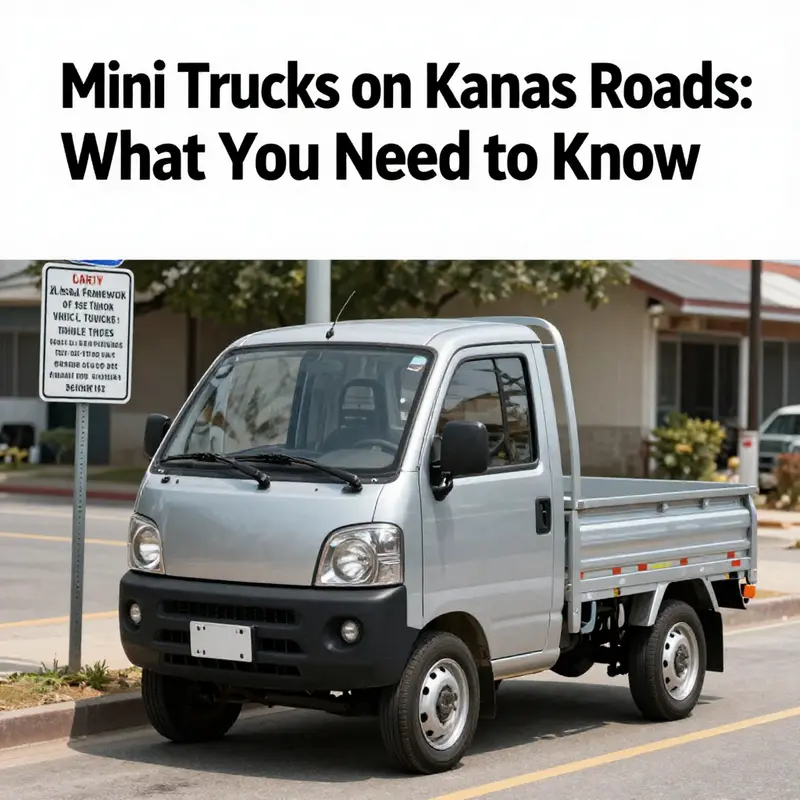
The Kansas highway hums with a practical variety of vehicles, and among the most intriguing are the tiny trucks that arrived from overseas with a different set of standards and a different pace. These Kei and mini trucks are small enough to fit into tight farm lanes and compact city streets, yet they must still meet the state’s rules if they are to ride legally on public roads. The core question—are these small workhorses street legal in Kansas?—has a straightforward answer in one sense and a more nuanced reality in another. Ownership itself carries no special state restriction. If you want to own a Kei or a mini truck in Kansas, you can do so without a special permit simply by adhering to normal vehicle ownership processes. Where the legal road gets twistier is the journey from ownership to operation: getting the vehicle registered, ensuring it meets safety and emissions standards, and navigating the speed, equipment, and usage limits that Kansas law imposes. The path resembles a careful checklist more than a single rule, and the outcome rests on how closely the imported vehicle mirrors the expectations of federal and state regulators.
In practical terms, registering a mini truck in Kansas falls under a straightforward frame: any motor vehicle with a gross vehicle weight rating (GVWR) of 10,000 pounds or less must be registered with the state. This is a broad threshold that covers most mini trucks and small pickups used for work, errands, or light transport. The process requires typical documentation—proof of ownership, a valid title, and the payment of applicable fees—and the vehicle must display valid license plates issued by Kansas. The operator must hold a valid driver’s license, and the vehicle must be legally titled and insured according to state standards before it can be plated and driven on public roads. These are not arcane requirements; they are the same basic steps that apply to any road-going vehicle in Kansas, scaled to accommodate the compact nature and lighter weight of mini trucks.
Yet the specifics matter. The GVWR rule is a practical lens through which to view a Kei or mini truck’s road-readiness. Most Kei trucks, originally designed with a 660cc engine and compact dimensions to fit Japan’s strict regulatory framework, end up well within the 10,000-pound GVWR limit. This makes them eligible for standard registration when they meet the other state criteria. Importantly, the state does not regulate ownership; it regulates operation. What this means in everyday terms is that a Kansan can bring a Kei truck into the country and bring it to life on the road only after it satisfies the mandated safety and emissions measures.
Safety and emissions are the two pillars that keep a miniature vehicle aligned with broader roadworthiness expectations. Federal safety standards, as enforced by the National Highway Traffic Safety Administration (NHTSA), and environmental regulations implemented by the Environmental Protection Agency (EPA) shape what modifications are permissible and required. In practice, this often translates into a sequence of practical steps: upgrading or verifying lighting systems to meet U.S. norms, ensuring effective braking and visibility through working mirrors and properly positioned headlights, and confirming that emissions control systems are either compatible with U.S. clean-air standards or replaced with compliant equivalents. For a Kei or mini truck that originated outside the United States, the import and retrofit process can be the most demanding portion of achieving legal on-road status. It is not unusual for owners to need a combination of changes—ranging from lighting upgrades to possible adjustments or replacements of engines, exhaust, and emissions control devices—so that the vehicle complies with the EPA and NHTSA expectations.
Operation on Kansas streets carries its own set of considerations beyond the registration and safety enhancements. On public roads, these compact vehicles are generally permissible, but the law carves out a few caveats that reflect their size and performance profile. One notable rule is the limitation on highway operation. Kansas law commonly restricts a vehicle’s operation on highways with speed limits over 55 mph unless the vehicle is specifically designed and equipped to handle such speeds. This is a practical acknowledgment that even a well-modified mini truck may not be suited to high-speed highway operation in the same way as full-size pickups or passenger cars. It does not ban these vehicles from all major routes, but it does mean that the best-use case for many Kei trucks is local streets, rural byways, and farm-to-market trips where lower speeds are compatible with the vehicle’s capabilities and the required safety features.
The classification of a mini truck can also influence its regulatory treatment. If a mini truck is used for business purposes or modified in ways that alter its safety profile—such as oversized tires, extended chassis, or other nonstandard alterations—it can be considered a commercial vehicle. This classification carries additional regulatory considerations under Kansas law, potentially affecting registration, insurance requirements, inspection regimes, and even the permissible venues for operation. In short, the more a mini truck diverges from its original design intent toward heavy-duty or commercial use, the more carefully it must be navigated through the state’s regulatory landscape.
When a Kansan considers importing a Kei truck, the discussion necessarily turns to compliance at the federal level. The NHTSA and the EPA play pivotal roles in determining what is permissible in terms of safety equipment, emissions control, and overall vehicle configuration. The practical implication is that a Kei truck arriving from Japan will at times require modifications to meet U.S. standards. Common adjustments include upgrading lighting to meet U.S. photometric and visibility norms, installing a speed governor to ensure the vehicle cannot exceed certain speeds on public roads, and ensuring that emissions controls bring the vehicle into line with U.S. environmental expectations. The import process is not merely about bringing a vehicle into the country; it is a careful alignment of the vehicle’s design and verified performance with the safety and environmental yardsticks that govern the road.
For Kansas residents, the practical path to compliance begins with official resources. The Kansas Department of Revenue (KDOR) provides the essential framework for registration, licensing, and plate issuance. The KDOR materials emphasize proof of ownership, a valid title, license, and the demonstration that the vehicle is suitable for operation on state roads. The driver’s license requirement remains a fundamental gatekeeper: even a vehicle with a clean bill of health under federal standards cannot operate legally without a valid driver’s license in the operator’s possession. This alignment of state and federal expectations is the cornerstone of the system, ensuring that micro-sized workhorses blend into the existing traffic ecosystem without compromising safety or accountability.
A crucial practical note emerges for anyone contemplating this path: regulations are subject to change as new safety technologies and environmental standards emerge, and enforcement practices can vary by locality within the state. The responsible approach is to stay current with KDOR announcements, and to consult federal resources when contemplating modifications or a complex import. In addition to official channels, there are community resources and industry discussions where people share real-world experiences—how a specific Kei truck was registered, what modifications proved necessary, and how insurance and registration were handled in a particular county. Such conversations can illuminate the process, but they should always be checked against the latest formal guidance from KDOR and federal agencies.
For readers seeking a practical starting point and ongoing updates, there is value in tapping into the accessible discussions hosted on dedicated mini-truck community sites. These platforms often provide step-by-step narratives from people who have walked the same path—planning registrations, coordinating with importers, and navigating the often overlapping requirements of state and federal regulators. To access a focused repository of practical steps and the latest discussion threads, you can visit minitrucksocala.com/blog/. This internal resource can offer a cadence of updates, case studies, and clarifications that complement the official statutes and regulatory guidance.
The broader landscape remains grounded in a simple truth: owning a Kei or mini truck in Kansas is not a matter of a special license to possess, but a matter of meeting the same roadworthy criteria that apply to other light vehicles. Registration, a valid title, proof of ownership, and a driver’s license are the anchors. The more the vehicle adheres to its origin—compact size, limited engine displacement, light GVWR—the more straightforward the path to on-road status. Yet the calculus also requires attention to federal safety and emissions standards, with the added layer that highway operation may be restricted by speed and design limitations. The practical reality is that small, efficient, and locally usable these vehicles may be, but their legal life on Kansas roads is earned through a blend of compliance, careful modification, and an understanding of how state and federal rules intersect.
In closing, Kansas offers a clear framework that supports ownership of Kei and mini trucks while demanding diligence in making them road-ready. The state does not ban ownership; it requires that operation on public streets align with safety and environmental expectations. The process is a negotiation between the vehicle’s intrinsic small size and the public’s demand for predictable, safe, and environmentally responsible transportation. For anyone curious about the specifics—how to title a kei truck, what kinds of lighting upgrades are commonly needed, or how to confirm that a vehicle’s GVWR meets the threshold—formal sources are the definitive compass. And for those who want a practical, experience-based lens to how the process unfolds, the community discussions linked through the internal blog can serve as a helpful companion, while the federal safety and environmental checkpoints remind us that the road to legality is a continuous, technically guided journey. External references to federal safety standards offer a broader context for this journey, ensuring readers understand that these vehicles sit at the intersection of local practicality and national regulatory rigor.
External resource: https://www.nhtsa.gov
On the Road in Kansas: Navigating Safety, Emissions, and the Reality of Street-Legal Mini Trucks

In Kansas, the appeal of compact, capable mini trucks is hard to ignore. They fit narrow farm lanes, assist with small-scale deliveries, and provide a surprisingly versatile platform for seasonal projects or hobbyist exploration. Yet the path from a clean slate of ownership to a vehicle you can legally drive on public roads is not a mere formality. It sits at the intersection of federal safety and environmental standards, state registration rules, and the practical realities of vehicle modification. The story of whether a kei-style mini truck is street legal in Kansas begins with a clear distinction: owning such a vehicle is not the same as operating it on public streets. Kansas does not regulate ownership itself, so you can possess a kei truck without running afoul of state ownership restrictions. The moment you intend to take it out onto public roads, however, you step into a regulatory space that follows wide, nationwide rules designed to keep every vehicle on the road up to certain safety and emissions benchmarks. This is where federal authorities and state agencies meet to define what counts as roadworthy in Kansas.
At the core of the safety framework are the Federal Motor Vehicle Safety Standards, or FMVSS, administered by the National Highway Traffic Safety Administration. These standards set a baseline for critical systems: brakes that reliably slow and stop, lighting and signaling systems that communicate with other drivers, mirrors that provide adequate rear visibility, seat belts, and, in many cases, restraints designed to protect occupants in a crash. The general expectation is straightforward: a vehicle offered for sale in the United States should meet these safety criteria, and the same expectation extends to the homes on the prairie where a compact mini truck might end up doing local work. Yet there is a nuanced wrinkle. Some mini trucks originally designed for agricultural or industrial use may be exempt from certain FMVSS if they are classified as off-road or non-highway vehicles. That exemption is not a free pass for public roads, though; it can influence what modifications are required and whether a vehicle, once altered or imported, can be registered for road use at all. The important takeaway is that compliance is not a one-size-fits-all checkbox. It hinges on how the vehicle is classified, how it has been modified, and how it is intended to be used on public streets.
On the environmental side, the Environmental Protection Agency enforces emissions standards under the Clean Air Act. The fact that Kansas does not impose additional state-specific emissions rules beyond federal requirements is helpful for owners who may be bringing a Japanese kei truck into the state. The EPA standards apply to all new vehicles sold in the United States, and any kei truck that is legally operated on Kansas roads must meet these federal emission limits. For a lot of import scenarios, this means verifying that the exhaust and exhaust-control systems, the catalytic converter (where applicable), and related emissions control devices satisfy federal expectations. In practice, this can require carefully planned modifications to ensure compatibility with U.S. testing procedures and regulatory expectations, especially if the vehicle’s original configuration relied on different standards than those used in the United States.
That regulatory landscape also places state-level duties on the operator. Kansas law requires every vehicle operated on public roads to carry valid registration and proof of insurance. It also imposes minimum safety equipment requirements—lighting, mirrors, reflectors, and proper signaling—that must be in working order for a vehicle to be considered roadworthy. The combined effect is that even though you can legally own a kei truck in Kansas without restriction, you cannot simply park it in the driveway and drive it to work without ensuring it meets both federal and state requirements. And the moment you transform the truck—through lift kits, altered electrical systems, different exhaust configurations, or other modifications—you enter a zone where the vehicle must still be shown to comply with FMVSS and EPA standards and to meet Kansas’s registration criteria. This is where many projects either become feasible or stall entirely, depending on how you approach the compliance process.
For those actively pursuing import, ownership, or operation pathways, the practical steps are clear but exacting. First, confirm whether the vehicle will be treated as a standard light-duty vehicle or as a special-purpose or off-road vehicle for regulatory purposes. This classification influences which FMVSS sections apply and whether any exemptions are relevant. Second, assess the modifications you plan to implement. Upgrading lighting to meet U.S. standards is a common requirement, as is installing appropriate braking performance and, in some cases, speed-limiting devices to align with U.S. use-cases. A robust approach to emissions means ensuring the vehicle’s emissions control systems are functional and compliant, which may involve additional sensors, calibrations, or even retrofits to bring the vehicle into federal compliance. Third, plan for registration and insurance as a separate but connected process. Kansas requires proof of insurance and current registration to operate on public roads, and the vehicle must pass any applicable inspections before the plates are issued. In all of this, the role of federal guidance cannot be overstated. Owners should consult NHTSA resources for safety standards and EPA resources for emissions requirements as they design and execute their modification and import plans.
As a practical matter, many people who are drawn to mini trucks view community knowledge as an indispensable part of the process. The internet hosts a range of discussions, build diaries, and practical checklists that can illuminate the realities of converting a kei truck for U.S. street use. For ongoing conversations and the latest practical insights, the mini trucks blog offers a central space for readers to explore how others navigate similar compliance challenges and to learn from real-world experiences. This kind of community input can clarify expectations, highlight common pitfalls, and point readers toward regulatory nuances that might otherwise be easy to miss. You can explore those discussions here: minitrucks blog.
When you move from concept to concrete plan, the import pathway becomes a central concern. Importers frequently confront a set of questions: Will the vehicle pass FMVSS testing after modifications? Are the emissions controls compatible with federal test procedures? What is the best sequence of changes to minimize time and cost while preserving compliance? The answers rest on careful evaluation of the vehicle’s original design, the extent of modifications, and a clear, documented plan for addressing safety and emissions requirements. The reality is that success hinges on a disciplined approach to compliance rather than a quick fix. It also means maintaining thorough records of all changes, parts used, and tests performed, because regulators and insurers may request documentation to verify that the vehicle adheres to applicable standards.
For anyone contemplating the legal journey of a kei truck in Kansas, this is not a tale of ease but a narrative of diligence. It is a story that requires attention to federal safety principles, a sober understanding of emissions obligations, and a disciplined process of registration and insurance. It is also a story that can be navigated with the help of the broader community and the official guidance offered by state and federal agencies. If you’re unsure where to start, begin with a careful inventory of the vehicle’s current configuration, identify the modifications you intend to make, and map those changes against FMVSS and EPA expectations. Then, contact the Kansas Department of Revenue to understand registration specifics and any state-level considerations that may apply to your situation. Finally, consult the federal resources for safety and emissions information to ensure the path to legality is solid and well documented.
In the end, the map is clear: ownership of a mini truck in Kansas is straightforward, but operation is a regulated journey. The effort is worthwhile for those who want to enjoy a compact, capable vehicle on local roads while preserving the standards that keep Kansas drivers safe and the air clean. This balance—between the charm of small utility and the rigor of regulatory compliance—defines the modern reality of street-legal mini trucks in the Sunflower State. For definitive regulatory language and the most current requirements, reference the official Kansas Department of Revenue resources. External resource: https://www.kdor.ks.gov
On the Edge of the Road: Modifications, the 25-Year Rule, and the Kansas Path for Kei Trucks
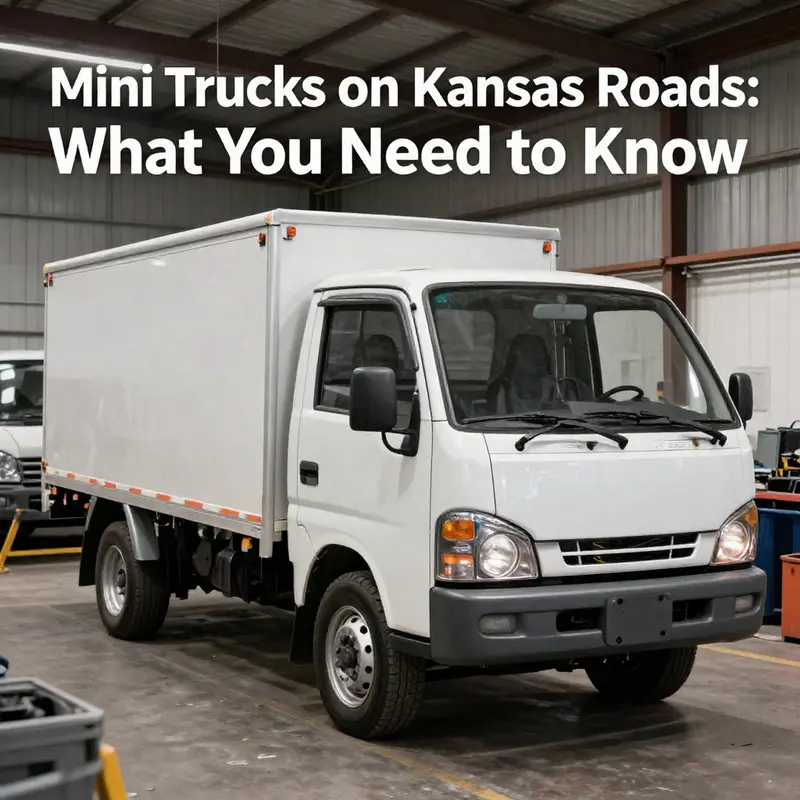
The allure of tiny, efficient workhorses is hard to deny. Mini trucks, including the Japanese Kei trucks that inspired their popularity, are prized for their compact footprint, nimble handling, and surprisingly robust mechanical simplicity. In Kansas, the question isn’t merely whether ownership is allowed; it’s whether a Kei truck can legally share the state’s public roads with full safety and environmental legitimacy. Ownership itself isn’t restricted by Kansas law, but turning a Kei truck into a street-legal vehicle involves a careful alignment with federal safety and emissions standards, and then a careful check against state rules. The path from import to roadway involves a sequence of gates that separate hobbyist curiosity from legitimate daily use. The state’s approach recognizes that while the basic concept may fit Kansas’ rural and urban needs, a vehicle designed for Japan’s regulatory climate needs adjustment to meet U.S. standards. The practical journey is not merely about parts replacement or cosmetic tweaks; it is a coordinated effort to ensure visibility, restraint, and emissions behavior align with a broader safety and environmental framework. In this framework, the 25-year rule emerges as a central axis, but it is not a simple pass-or-fail line. It is a doorway that opens or closes based on timing, condition, and the willingness to meet state requirements that may still apply even when federal rules relax. The result is a nuanced picture: some Kei trucks glide onto Kansas streets as out-of-the-box, legally compliant vehicles; others require a sequence of modifications and inspections that transform a compact curiosity into a reliable, road-ready tool. The narrative of legality in Kansas is thus not solely about the age of the vehicle or its origin. It is about a disciplined process of verification, conversion, and confirmation with the agencies that certify roadworthiness. When contemplating importation, it helps to think of the journey as a chain of overlapping obligations rather than a single hurdle. The first link in the chain is federal eligibility, which the 25-year rule uses as a firewall against the most stringent federal safety and emissions standards. The next links are state-level steps in Kansas—inspection, registration, and any additional local requirements that ensure a vehicle meets the state’s own standards for roads, lighting, and ongoing performance. The least glamorous but most important truth is that a Kei truck, while small in stature, can nonetheless carry a heavy load of compliance duties. To move from curiosity to daily use, the vehicle must be documented clearly, fitted with equipment that matches U.S. specifications, and tested to prove that it behaves in ways consistent with the expectations of Kansas drivers and other road users. The journey begins at the federal level with the concept of age as a shield against the initial, sometimes daunting, regulatory scrutiny. If a Kei truck is 25 years old or older from its model year, its import into the United States is exempt from federal safety and emissions standards. That exemption is powerful, but it does not grant immediate, unfettered access to public roads. It simply means the vehicle can be imported without undergoing the same conformity processes required for newer vehicles. Once the Kei truck has crossed the border into Kansas, the scrutiny shifts to state law. The Kansas Department of Revenue and related state agencies will require that the vehicle pass inspections appropriate to the state. Emissions testing, safety equipment verification, and proper labeling may all come into play, depending on the year and condition of the vehicle, and the specific route through which it is registered. In many cases, the 25-year rule brings welcome clarity: it suggests a realistic, cost-conscious path to ownership without courting the complexity of federal compliance programs. Yet the rule does not absolve a vehicle from the duty to perform in a way that respects local safety expectations. The speedometer has to read in miles per hour, the lights must meet DOT standards, and the vehicle must carry the necessary safety features that Kansas law requires. In practical terms, that often means a set of changes that touch most areas of the vehicle’s design. Emissions systems may require attention, even if they are not subject to the same federal standards as newer vehicles. The exhaust system might need a catalytic converter or, at minimum, an upgraded exhaust outlet and fittings that align with state expectations. The cockpit and exterior must reconcile with U.S. norms for occupant safety. This includes seat belts that function properly for all seating positions, rearview mirrors in the correct places, and functional turn signals that communicate intent clearly to other drivers. The lighting system is a frequent focal point. Kansas adheres to standards that dictate headlamps, taillights, brake lights, and turn signals must be visible and reliably documented for performance on public roads. A Kei truck born in a different regulatory world will likely require at least some modifications to bring lighting into conformance. The instrument panel often presents its own challenge. Speedometers that display kilometers per hour need conversion to mph, and the gauges should be calibrated so that the operator can interpret engine and vehicle behavior without ambiguity. Another major hurdle for many Kei trucks is the right-hand-drive (RHD) configuration that characteristically arrives from Japanese design. Kansas law, like much of the United States, expects left-hand-drive operation for most street use. The conversion from RHD to left-hand-drive is not a mere cosmetic swap; it is a substantial engineering undertaking. It touches steering geometry, pedal arrangements, dash layout, and sometimes even the vehicle’s alignment with safety standards that govern occupant protection in the event of a crash. The costs and complexity of this conversion vary widely with the base design and the availability of appropriate parts, but it is widely acknowledged as one of the more labor-intensive and expensive pieces of the puzzle. This is not to suggest that RHD-to-LHD conversion is an impossible hurdle; rather, it is a real and often decisive one in the process of making a Kei truck legally operable on Kansas streets. For many enthusiasts, the decision to pursue or abandon conversion hinges on the intended use of the vehicle, the anticipated mileage, and the long-term plans for registration and compliance. Some owners approach the process with a practical mindset: they view the Kei truck as a temporary project, a stepping-stone toward a more efficient, small-displacement option that still fits within the rules. Others see a long-term commitment, one that requires a sustained investment in time and resources to maintain a vehicle that looks and performs in ways that align with U.S. standards. It is here that the role of official guidance becomes crucial. Those who are serious about legal operation will consult both state and federal sources. The Kansas Department of Revenue, in concert with the NHTSA, provides the framework for how imported vehicles must be treated, what standards apply, and how to document compliance, while federal resources clarify the boundaries of the 25-year exemption. The practical message is straightforward: a Kei truck can be a viable tool on Kansas roads, but it requires careful planning and an honest appraisal of the work needed to meet safety and emissions expectations, even when federal standards allow it to bypass certain conformity steps due to age. For a broader discussion that contextualizes these themes within the broader world of mini trucks and their adaptation to American roadways, readers may find related perspectives and experiences in the ongoing dialogue across the MiniTrucks Ocala community. minitrucksocala.com/blog/. The conversation on these pages touches on the everyday realities of ownership, modifications, and the evolving landscape of how these small machines find their place on American streets. In the end, the path to legality in Kansas is not about shortcuts. It is about a deliberate alignment with safety, reliability, and environmental responsibility that lets a compact vehicle do a big job. Those who navigate this path well come away with a clear understanding of what it takes to keep a Kei truck compliant, safe, and able to earn its keep in a state known for straight roads, long horizons, and a willingness to tinker with unconventional solutions. For those seeking official, up-to-date guidance, the federal standard is a critical compass, and the NHTSA’s resources offer a definitive baseline for the 25-year rule and its implications. External reference: https://www.nhtsa.gov/vehicle-imports-and-exports/imported-vehicles-and-parts/25-year-rule
From Import to On the Road: The Roadmap for Registering Mini Trucks in Kansas

When a mini truck—often a Kei-tuck or similar compact pickup designed for lighter duties and often powered by smaller displacements—enters Kansas, the question shifts from ownership to operation. Kansas law allows individuals to own a Kei-style truck without special prohibitions, but using it on public roads brings a set of standards designed to align with national vehicle safety and environmental expectations. The heart of the matter lies in whether the vehicle can meet federal safety standards established by the National Highway Traffic Safety Administration (NHTSA) and environmental controls overseen by the Environmental Protection Agency (EPA). In practice, a mini truck may arrive legally, but to become a street-legal asset in Kansas, it needs to be brought into compliance and then properly registered through state channels. The on-ramp to that process is not a single form or deadline; it is a sequence of verifications, modifications, and registrations that connect federal compliance to state administration. To understand this pathway, imagine the journey as a careful translation—from the specifications of a Japanese-market design into the criteria that Kansas tax and motor vehicle officials use to certify, plate, and license a vehicle for everyday use. This translation is not about erasing the vehicle’s character but about ensuring predictable safety, fair emissions, and clear accountability on Kansas roads. The steps are concrete, but the way they unfold depends on the vehicle’s origin, its current condition, and the paperwork that accompanies it. The practical guidance centers on three pillars: verifying federal compliance, preparing the vehicle for state inspection, and navigating the Kansas registration process itself. Each pillar supports the next, and skipped steps can stall the entire effort, leaving a mini truck confined to private property or restricted to off-road use. Where to begin is usually determined by whether the vehicle was imported new, imported used, or assembled in the United States with a nonstandard configuration. In all scenarios, the federal baseline remains paramount. A Kei-style truck built for Japan typically features a 660cc engine and compact dimensions that are distinct from U.S. market norms. To operate on Kansas roads, the vehicle must be certified to meet FMVSS standards and possess emissions controls compatible with EPA requirements. This is not merely about engine size; it involves a constellation of safety components—lighting, braking, restraint systems, and crashworthiness considerations—that must align with U.S. expectations. In many cases, owners discover that certain original Japanese specifications do not automatically conform to American standards, and modifications become necessary. The process often begins with confirming documentation that proves the vehicle’s identity, provenance, and compliance intent. A bill of sale, a certificate of title, and a clean VIN (vehicle identification number) are essential pieces of the narrative the Kansas Division of Vehicles (a branch of the Department of Revenue) will review. If the vehicle has been imported, it may require an import compliance document or an HS-7 declaration that attests to its brick-and-mortar adherence to U.S. safety standards. The practical reality is that the state’s reviewers like to see a clear chain of ownership and a credible path from the vehicle’s original specification to its current condition. This transparency helps avoid delays and gives the assessor a straightforward basis for evaluating how far the vehicle has been modified, if at all, to accommodate U.S. safety features and emissions controls. Modifications frequently involve a few deliberate substitutions and supplements rather than a wholesale rebuild. For lighting, owners may need to retrofit headlights and taillights to meet photometric and visibility standards that drivers expect on U.S. roads. Turn signals, running lights, and reflectors must be present and functioning, with compliance verified by the inspection process. Speed governors, if installed, should be compatible with the vehicle type and present a documented method of adjustment or disablement that complies with applicable rules. Emissions controls can be the most nuanced aspect of compliance. Depending on the vehicle’s age and whether it retains or replaces certain components, the state may require a demonstration that the exhaust and emission system reduces pollutants to a level consistent with federal guidelines. In some cases, this translates into a verbal promise rather than a fully engineered retrofit; in others, it requires a tangible converter, catalytic elements, or at least a carbon-trimmed diagnostic, so a tester can certify its performance. The Kansas process also asks for a clearly labeled safety system that reflects the vehicle’s operation on public roads. Seat belts, airbags where applicable, and a robust braking system are baseline expectations, and the inspector will examine these along with tire integrity, steering alignment, and windshield condition. The inspection itself often occurs at a Kansas Division of Vehicles facility or at a designated inspection site, where a qualified technician evaluates the vehicle’s compliance against state standards. The outcome dictates whether the vehicle can be assigned a title and registered, or whether additional work is required. Fees accompany this stage, reflecting state administrative costs, title issuance, and the registration itself. Registration in Kansas is not a one-and-done check; it is the annual portal through which the state confirms continued compliance and collects the corresponding fees. Insurance coverage is a practical prerequisite for registration, because proof of financial responsibility is typically required before a license plate can be issued. The requirement to carry insurance is not peculiar to mini trucks; it is a general rule that applies to all motor vehicles operated on public roads in Kansas. The interplay between insurance, compliance, and registration is a vivid reminder that street-legal status depends on a shared standard of safety and responsibility. Once the vehicle clears the inspection and the paperwork is in order, the licensing step follows with a straightforward sequence. The title is issued or updated to reflect ownership, the vehicle is assigned a Kansas title number, and the registration is activated. A license plate, custom or standard, is issued and becomes the identifying mark that ties the vehicle to its owner for tax, safety, and regulatory purposes. This is the moment when the mini truck completes the arc from import curiosity to a recognized participant in Kansas traffic. It is also a moment that triggers ongoing obligations. Each registration renewal cycle demands continued proof of insurance and current address information. If the vehicle’s configuration changes in a way that affects safety or emissions, owners must revisit the inspection process to obtain updated certification. In addition, compliance standards evolve. Federal agencies periodically update FMVSS and EPA regulations, and state procedures respond accordingly. Staying aligned means monitoring official channels—often the Kansas Department of Revenue and its Division of Vehicles—and being prepared to adjust the vehicle’s equipment or documentation in response to changes in law or policy. Because rules can shift with new rulings, owners are wise to check for updates before rolling a vehicle onto a public street. The right starting point is a clear, documented plan: gather ownership documents, confirm the vehicle’s identity and provenance, and anticipate the kinds of modifications that might be needed for political and physical safety alignment with U.S. standards. Then, engage with the state’s process calmly and methodically. The practical path is neither esoteric nor opaque; it rests on transparency, compliance, and a willingness to invest in necessary adaptations. For those who want a broader context beyond the letter of the rule, the Mini Trucks blog offers a wealth of practical narratives and real-world experiences from fellow enthusiasts who have navigated similar routes. A quick read through that resource can illuminate common pitfalls and successful strategies without replacing the official channels that govern registration. If you’re looking for additional perspectives, a good starting point is to explore the linked ecosystem of resources that surrounds mini truck ownership and operation, and remember to approach the Kansas registration process with patient diligence. At the end of the day, the goal is not simply to own a unique vehicle, but to integrate it into Kansas streets with a legally solid, safety-forward footing. For a compact primer that complements this chapter, visit the Mini Trucks blog. Mini Trucks blog. External resources also anchor this journey; for a federal perspective on safety standards and vehicle compliance, refer to the National Highway Traffic Safety Administration’s guidance at https://www.nhtsa.gov. Keeping these references in view helps ensure that the road ahead remains clear and compliant, no matter how compact the vehicle. In pursuing street legality for a mini truck in Kansas, you are, in essence, stitching together a state’s administrative processes with federal safety and environmental expectations. The result is a vehicle that respects both the spirit of Kansas roads and the broader framework that keeps those roads safe for everyone.
Kansas Kei and Mini Trucks: The On-Road Challenge
Kansas Kei and mini trucks exist at the intersection of interest and compliance. Ownership is permitted in Kansas, but driving on public roads requires meeting federal safety and emissions standards and completing state registration. The process centers on demonstrating that the imported vehicle adheres to NHTSA safety benchmarks and EPA emissions criteria, and that the vehicle is properly documented for return-to-road use. It may involve modifications to lighting, braking, or emissions systems, plus keeping records that prove ongoing compliance. The road-legal path typically includes securing a title, proof of insurance, and possibly a VIN verification through the Kansas Department of Revenue. This path rewards diligence, professional support, and careful budgeting for potential inspections or re-engineering. On rural and agricultural applications, these vehicles can offer practical benefits, but safe operation hinges on visibility, reliability, and adherence to standard traffic expectations. For up-to-date guidance, consult official resources from the NHTSA, EPA, and the Kansas DOR; avoid relying solely on anecdotal sources. External reference: https://www.epa.gov/otaq/importing-vehicles
Final thoughts
Mini trucks, particularly Kei trucks, offer dynamic advantages for owners in Kansas. However, to unlock their full potential on public roads, understanding the legal landscape is crucial. From ensuring compliance with safety and emissions standards to navigating the registration process, each step informs not just ownership but also enhances community interactions. As these vehicles become a staple of Kansas roadways, it’s imperative to stay informed and engaged with local regulations, fostering a responsible and thriving mini truck community.