
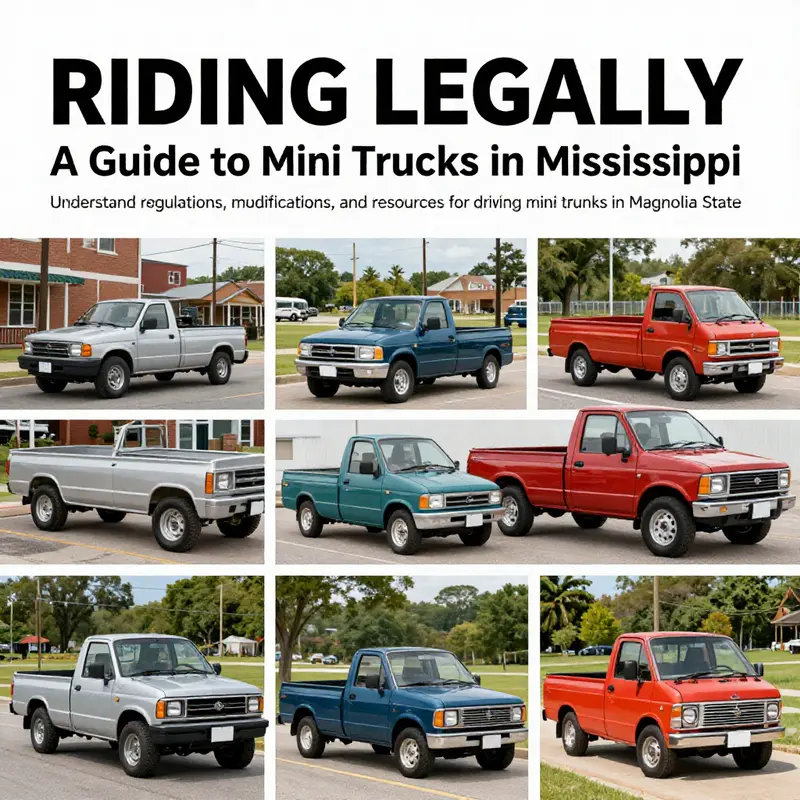
Are you a small business owner, a property owner, or simply a mini truck enthusiast eager to hit the roads of Mississippi? Understanding whether mini trucks are street legal in the state can be crucial for anyone looking to enjoy this efficient mode of transport. This guide dives deep into the specific regulations and requirements to ensure you can legally operate a mini truck in Mississippi. We’ll explore essential modifications necessary for compliance, outline the process for importation and certification, and provide a wealth of resources to help you navigate the legal landscape. By the end of this exploration, you’ll be equipped with the vital information needed to drive your mini truck safely and legally through the streets of Mississippi.
Mini Trucks in Mississippi: Legal Requirements and Road‑Ready Guidelines

Mississippi permits the operation of mini trucks on public roads only when they satisfy both federal safety standards and state registration rules. The first hurdle is compliance with the National Highway Traffic Safety Administration (NHTSA) – the vehicle must have DOT‑approved seat belts, functioning headlights, taillights, turn signals, side‑mirror(s), a horn, brakes that meet highway specifications, and tires rated for road use. If the truck was originally built for off‑road or export markets, it will need these items installed or upgraded to U.S. specifications.
The second requirement is environmental. The Environmental Protection Agency (EPA) mandates that any vehicle registered for street use meet the state’s emissions standards. Mini trucks with gasoline engines typically need a certified catalytic converter and an approved exhaust system; diesel or alternative‑fuel models must pass the same emissions inspection. Documentation of any emissions‑control modifications is required for the state inspection.
Once the vehicle is equipped with the necessary safety and emissions gear, the owner must apply for a Mississippi vehicle identification number (VIN) verification through the Department of Public Safety (DPS). The DPS inspection checks:
- Presence of all required safety equipment.
- Proper operation of lights, signals, brakes, and horn.
- Verification that the emissions system complies with state standards.
- Confirmation that the vehicle’s label indicates it was designed for highway use (or, if not, that it qualifies as a Low‑Speed Vehicle – LSV – with a maximum speed of 25 mph).
If the truck meets the full NHTSA criteria, it can be registered as a standard passenger vehicle and receive a regular Mississippi license plate. If it only satisfies LSV criteria, it may be limited to roads with speed limits of 35 mph or less and must display LSV identification stickers on the plate. Off‑road‑only vehicles cannot be registered for public‑road use.
The registration process involves submitting:
- Proof of ownership (bill of sale).
- Completed DPS Form 311 (Vehicle Registration Application).
- Receipts for any safety or emissions upgrades.
- VIN verification form (or a certified inspection report from an authorized dealer).
- Payment of registration fees and any applicable road‑use taxes.
Costs vary widely. Basic safety upgrades (lights, mirrors, seat belts) can range from $300–$800, while emissions work may add $500–$1,500, especially if a new catalytic converter is needed. Professional installation and DPS inspection fees typically add another $150–$250. Allow at least 4–6 weeks for parts acquisition, modification, and state processing.
In summary, a mini truck can be street‑legal in Mississippi if it:
- Is equipped with DOT‑approved safety features.
- Meets EPA emissions standards.
- Passes a DPS safety and emissions inspection.
- Receives a VIN verification and proper registration (standard or LSV).
Owners should keep all receipts and modification records, as DPS may request proof during the inspection. For the most current regulations, consult the Mississippi DPS vehicle registration page (https://www.dps.ms.gov/vehicle-registration/) and the NHTSA guidelines for low‑speed and specialty vehicles.
By following these steps, mini‑truck enthusiasts and small‑business operators can safely and legally integrate these compact workhorses into Mississippi’s road network.
Bridging Borders and Roadways: Making Kei-Style Mini Trucks Legally Road-Ready in Mississippi
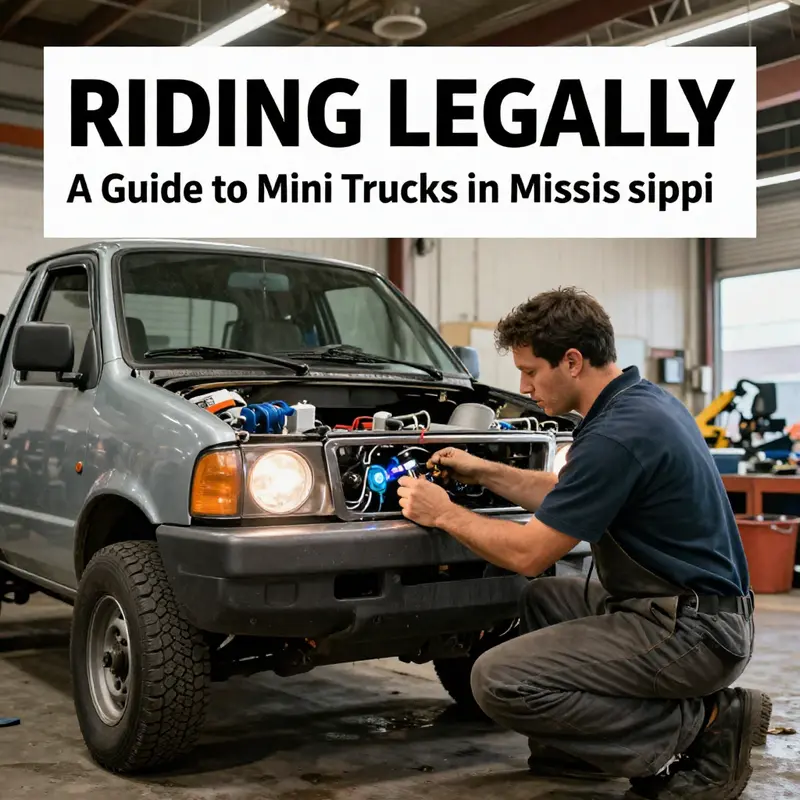
Inquiries about whether Kei-style mini trucks can share Mississippi’s highways with everyday passenger cars sit at an intriguing crossroads of design philosophy and legal reality. These compact workhorses, born from Japanese regulation and urban practicality, prioritize efficient use of space, maneuverability, and fuel economy. On paper they seem tailor-made for tight city streets, quick errands, and narrow alleys. On the road in Mississippi, however, the question takes on a more complicated form: are these vehicles street-legal, and if not, what would it take to bring them into full compliance? The short answer is nuanced. Without significant modification and proper documentation, mini trucks like these are generally not street-legal in Mississippi. The state’s road-legal framework is anchored in federal safety standards, national emissions rules, and a registration system that requires a verifiable vehicle history, a compliant emissions profile, and a recognized vehicle identity. The longer answer, though, reveals a potential pathway for those who are drawn to the practical advantages of a compact, capable vehicle that can navigate urban confines while still meeting the demands of public-road safety.
To understand the possibilities, it helps to start with the core of the friction: how U.S. and Mississippi standards differ from the design brief of a Kei truck. Kei trucks are traditionally designed to fit within tight Japanese regulation—engine displacement limits around 660cc, modest overall dimensions, and a set of safety and emissions expectations calibrated to Japan’s own traffic environment. Those constraints create a vehicle profile that can diverge markedly from U.S. federal motor vehicle safety standards (FMVSS) and Environmental Protection Agency (EPA) emissions requirements. In practice, this divergence is not simply about horsepower or top speed; it concerns a suite of safety features, a robust emission control system compatible with U.S. fuel and catalytic processes, and a vehicle identification system that satisfies the inspection, titling, and registration processes in Mississippi.
The legal framework relevant to Mississippi operates along several interlocking threads. First, there is the FMVSS—these federal safety standards define what a road vehicle must include to be considered roadworthy in the United States. These standards cover everything from lighting and braking systems to crashworthiness and occupant protection. Second, there are EPA emissions standards that the vehicle must meet to be registered and operated legally. Third, the state itself imposes its own procedural requirements for title, registration, and ongoing road-use compliance. In Mississippi, the practical steps typically involve securing a valid VIN, demonstrating emissions compliance, installing required safety equipment, and completing title and registration through the appropriate state offices. Importantly, while the discussion often centers on the safety and environmental aspects, the process also hinges on documentation and verification that the vehicle is legally traceable and compliant with state standards.
A path to legality exists for those who want to bring a kei-inspired mini truck onto public roads in Mississippi, but the path is paved with concrete requirements rather than shortcuts. The journey usually starts with a candid assessment of what modifications are actually feasible and how those modifications align with the vehicle’s intended use. A practical approach emphasizes three pillars: safety, emissions, and identity. Safety means installing and validating DOT-compliant lighting, functional brake lighting, turn signals, mirrors, and seat belts. It also means ensuring windshields and other glass elements meet visibility and impact standards, and that there is adequate crashworthiness given the vehicle’s weight class and intended use. Emissions means that the vehicle’s exhaust and exhaust-related controls must be engineered or retrofitted to meet EPA standards for the year and type of vehicle being registered. This is often the most challenging area, given the compact engine’s origin and its compatibility with U.S. fuel systems, catalysts, and sensor networks. Identity means that the vehicle must carry a valid VIN and a clear title history, with documentation that supports the chain of ownership and the vehicle’s compliance footprint for registration.
Within this framework, the practical steps begin to take shape when a Mississippi resident or importer begins to sketch out a compliance plan. The first step is to establish the vehicle’s baseline: does the mini truck’s origin and current configuration render it an import that could, in principle, be brought into FMVSS and EPA equivalence? A licensed vehicle importer can provide a candid evaluation of feasibility, including whether the engine, fuel system, and emissions controls can be adapted to U.S. standards without compromising core safety or functionality. The importer’s assessment often includes a review of the vehicle’s structure, including frame integrity, axle and suspension geometry, and the potential need for additional safety devices. If the base vehicle cannot be brought into compliance through modification, the importer will typically advise against proceeding, highlighting the financial and regulatory risks of attempting to register a non-compliant vehicle.
When a path toward compliance appears viable, a common sequence emerges that blends mechanical work with administrative steps. On the mechanical side, a certified retrofit may be necessary to align with DOT and EPA expectations. This commonly entails upgrading or installing lighting modules to meet DOT photometric specifications, ensuring that all signals function reliably, and installing or upgrading mirrors to meet visibility requirements. The safety equipment package may also involve seat belts that are properly anchored and tested, as well as the structural elements needed to withstand standard crash-test criteria, at least in a way that satisfies the state’s inspection process. On the emissions side, retrofitting to meet EPA standards frequently requires more than a cosmetic upgrade. The exhaust system, fuel delivery components, sensors, and, if applicable, the catalytic control system must be brought into alignment with U.S. testing procedures. The challenge is that some ultra-compact engines designed for 660cc operation in Japan may struggle to meet U.S. emissions thresholds without substantial modification, replacement, or engine swap, each with its own regulatory and financial implications.
Beyond the mechanical and regulatory hurdles, the vehicle’s identity and documentation form an equally critical part of the puzzle. A valid VIN is essential for title creation and registration. In many cases, the process involves obtaining a compliant VIN through a recognized pathway rather than attempting to import with a tainted or nonstandard identification. The title and registration steps in Mississippi typically require not only a VIN and proof of ownership but also documentation that proves compliance with FMVSS and EPA requirements, as well as an inspection phase conducted by a state authority or a certified inspector. The goal is to demonstrate that the vehicle is safe, traceable, and compliant with the standards that govern road use in Mississippi. Only then can a title be issued and the vehicle registered for lawful operation.
A critical, often overlooked element is the cost and timeline of the entire process. The import, modification, and compliance journey can be lengthy and expensively variable. Costs accumulate across several fronts: parts and labor for modifications, testing and certification fees, inspection costs, and the administrative fees associated with titling and registration. The timeline can stretch across months, especially when engines, emissions systems, or safety components require specialized workmanship. For many enthusiasts and small-business operators, this is a calculated investment in the prospect of owning a vehicle that blends the environmental and urban-friendliness of a Kei design with the reliability and legal standing of a U.S.-compliant vehicle. The upside is a machine that can navigate Mississippi’s streets with the confidence that comes from legitimate operation on public roads, backed by a formal registration and the assurance of ongoing compliance checks.
In evaluating whether a mini truck can become a legal player on Mississippi roads, it is helpful to keep in mind that the state’s approach to vehicle legality is not a single checkbox but a coherent system that evaluates the entire life cycle of the vehicle from import to daily use. The VIN anchors the vehicle’s identity, the emissions profile anchors its environmental compatibility, and the safety systems anchor its on-road behavior in a real-world context. When these pieces align, the result is not merely a legally plated vehicle. It is a transportation asset that respects the regulatory architecture designed to protect drivers, passengers, pedestrians, and the broader community. For those who pursue this route, the journey requires meticulous planning, professional guidance, and an honest appraisal of the engineering feasibility. The alternative—operating an unregistered or non-compliant mini truck on public roads—carries legal penalties that can include fines, vehicle impoundment, and more severe consequences depending on the circumstances.
If you are exploring these questions as part of a broader curiosity about compact, efficient vehicles, you may find value in connecting with a community that discusses practical experiences, challenges, and solutions. The shared experiences of hobbyists and professionals alike underline a central reality: the dream of a small, nimble, city-friendly vehicle is compelling, but turning that dream into a road-legal reality requires patience, know-how, and a clear understanding of regulatory pathways. For readers who want to explore related topics, the community resource hub offers a broad overview and ongoing discussions that can illuminate common pitfalls and smart strategies. minitrucksocala blog.
As readers consider their own projects, it is essential to anchor expectations in the current regulatory landscape. Mississippi’s official road-legal framework emphasizes that modifications must be engineered to meet standardized safety, emissions, and documentation requirements. While the Kei design’s efficiency and compact footprint offer undeniable urban practicality, that practicality does not automatically translate into road legality. The process demands a careful evaluation of feasibility, a robust plan for modifications, and a commitment to securing proper documentation and registration. The distinction between a well-intentioned project and a legally operable vehicle often rests on the diligence of the person pursuing it—the person who asks the right questions up front, consults qualified professionals, and respects the state’s regulatory process. In this sense, the road to legality is not a shortcut but a deliberate course of action that honors the vehicle’s strengths while meeting the responsibilities that come with sharing Mississippi’s streets.
The practical takeaway is clear. If you are considering a Kei-style mini truck for Mississippi roads, begin with a candid assessment of whether you can realistically meet FMVSS and EPA standards through modification. Engage a licensed importer or technician who can assess the feasibility of a VIN, the scope of emissions retrofits, and the safety-system upgrades that the state requires. Prepare for a timeline that reflects both engineering and administrative tasks, and approach the project with a clear budget that accounts for parts, labor, testing, and registration fees. In the end, the aim is not merely to achieve a label of legality, but to cultivate a vehicle that performs reliably on the road while upholding safety and environmental expectations. This alignment—engineering feasibility, regulatory compliance, and practical operation—defines the pathway from a compact design to a responsible, road-ready machine that can legitimately navigate Mississippi’s streets.
For those who want direct access to authoritative guidance, it is wise to consult the state’s official resources and professionals who understand the nuances of vehicle compliance. The Mississippi Department of Public Safety provides essential information on vehicle registration and related processes, and their guidance should be your anchor for up-to-date requirements. This official resource reinforces the reality that while the dream of a compact, efficient mini truck is compelling, the pathway to legal operation is grounded in compliance, documentation, and a careful approach to modification tailored to Mississippi’s road-use standards. As you move forward with any project, keep in mind that the most durable solution is one that respects the regulatory framework while preserving the vehicle’s practical benefits.
External resource note: for the latest official guidelines on vehicle registration and title information, consult the Mississippi Department of Public Safety’s Vehicle Registration & Title Information page. https://www.dps.ms.gov/vehicle-registration/ .
From Overseas to Mississippi Roads: The Importation and Certification Path for Mini Trucks
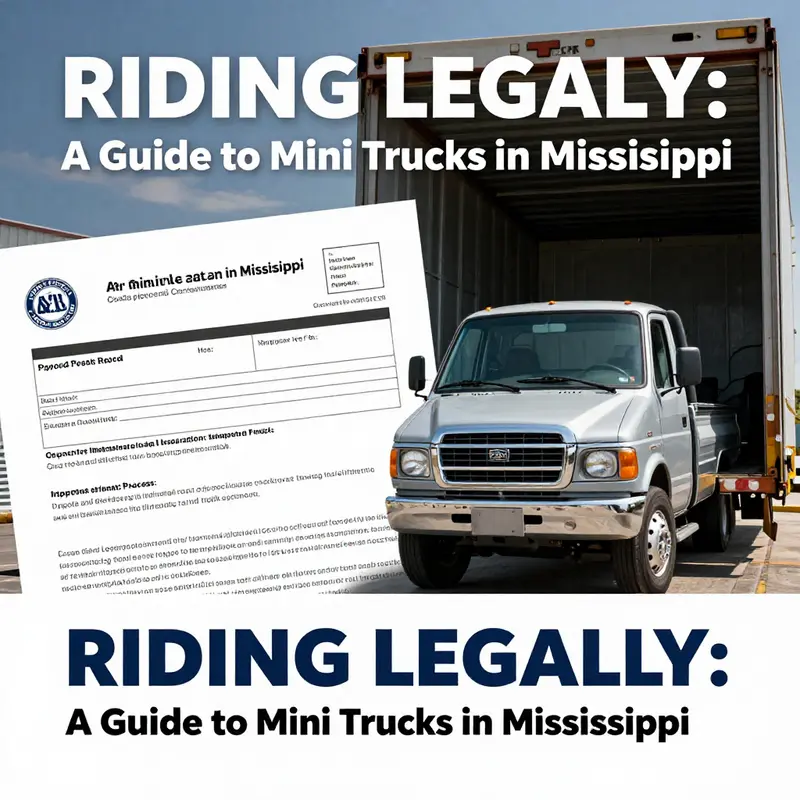
The question of whether mini trucks can legally share Mississippi’s streets begins with the same truth that governs any non‑domestic vehicle moving toward U.S. roads: federal and state standards set the baseline. Mini trucks—often categorized in the public imagination as kei trucks from Japan or other compact, purpose-built utility vehicles—can be driven on Mississippi streets, but only after they clear a two‑tiered system of compliance. First comes the federal stage, where the vehicle must meet the safety and environmental rules set by the federal government. Then comes the state stage, where Mississippi inspectors confirm the vehicle’s conformance to local rules and ensure the paperwork matches the machine in front of them. The route from import dock to drive‑home plate is seldom short or simple, but it is navigable with careful planning and a clear understanding of where changes must be made and who must sign off on them.
At the heart of the federal framework are the Federal Motor Vehicle Safety Standards, known in practice as FMVSS. These standards, administered by the agency charged with road safety, cover a broad spectrum of requirements intended to ensure that any vehicle sold for the American market is equipped with reliable lighting, predictable braking, effective restraint systems, and a structure that can absorb impact without unreasonable collapse. When a mini truck arrives from overseas, the importer must verify—before it can be registered—that the vehicle is certified as FMVSS‑compliant. The aim is not to police every element of a vehicle’s original design but to ensure that critical safety features and performance characteristics meet the same baseline that U.S. vehicles adhere to on roads shared by family sedans and work vans alike. The orange thread through this fabric is that the thing must function within the same safety envelope as a domestic vehicle for the driving public to have confidence in its operation on highways and local streets.
The importation pathway adds its own vendor‑level complexity. Importers must engage in a process of compliance verification, sometimes requiring substantial engineering work or post‑arrival modifications to bring the vehicle into line with FMVSS. In practice, this means manufacturers, auto import specialists, or qualified shops can be called upon to install U.S. compliant lighting and safety equipment, adjust or upgrade braking systems to U.S. standards, and ensure that seat belts for all seating positions meet the federal requirements. In some cases, the vehicle may be deemed noncompliant and denied entry or subject to a set of corrective actions before it can be allowed into commerce or on the road. This is not a bureaucratic hurdle to discourage importation; it is a safety gate designed to prevent a non‑conforming vehicle from entering the stream of traffic.
Mississippi then adds its own stage to the process. A mini truck, once federal compliance is established, must still pass a state safety and emissions inspection before it can be registered and licensed for road use. The exact requirements can vary by county in Mississippi, but the general rules are clear: the vehicle’s Vehicle Identification Number (VIN) must be verifiable and consistently documented, the vehicle must meet current state safety standards, and the emissions control system must be capable of delivering emission levels within state expectations. The inspection also serves as a checkpoint for the practical realities of ownership—confirming that the vehicle you intend to drive actually matches the paper handed to the state, and that the machine you plan to park in your driveway is the same machine the state notes on its records.
For an importer or a new buyer weighing the feasibility of a mini truck, the first critical decision is whether the vehicle can be made compliant without turning the project into a full restoration. A compact vehicle with a simple, traditional layout might present fewer hurdles than a highly engineered platform designed for a different regulatory environment. The 660cc engine displacement cap that defines Kei cars in Japan is not a hard floor in U.S. policy, but the engines, emissions systems, and exhaust configurations of many foreign mini trucks must be reconciled with U.S. emissions expectations. In Mississippi, an emissions system that cannot demonstrate compliance with U.S. standards may need substantial modification or replacement. This is a practical consideration that often drives the decision to pursue a straightforward import with minimal modifications versus a more ambitious program to re‑engine or retrofit.
Achieving compliance and securing registration is not a purely technical exercise. It is a collaborative process that often spans agencies, technicians, and the vehicle’s owners. An importer will usually guide a novice through the early steps: confirming eligibility, obtaining the necessary paperwork, and coordinating the path through NHTSA’s process for import certification. The National Highway Traffic Safety Administration (NHTSA) has explicit expectations for vehicles that enter the U.S. market from abroad. Importers must be prepared to document how the vehicle meets FMVSS and to present the evidence that supports compliance. The process includes an emphasis on documentation—the VIN, the manufacture’s statement of compliance, and the precise specifications of the vehicle’s safety systems. If a vehicle diverges from U.S. design norms in a way that cannot be reconciled with FMVSS, the door to entry can close, sometimes permanently, unless an approved modification plan can be executed.
When the vehicle crosses into the state stage, Mississippi regulators turn their attention toward safety demonstrations and verifiable conformity. A state inspection checks the basics: headlights and taillights functioning correctly and aimed properly; brake lights, turn signals, and hazard lights operating as expected; seat belts present and in good condition for all designated seating positions; the integrity of the structure to withstand normal road loads; and the presence of safety equipment that matches the vehicle’s design intent. A key component of this state assessment is the VIN verification. The VIN acts as a fingerprint for the vehicle in state records. If the VIN supplied at registration does not align with the vehicle in the shop or if the VIN has to be imported and assigned, a delay in registration can occur while the paper trail is corrected. This is not a technical choice but an essential legal requirement to ensure that the vehicle can be reliably tracked for safety recalls, roadside assistance programs, and compliance audits.
Of course, the practical reality for Mississippi residents or businesses considering mini trucks is that the path to street legality often involves working with specialists who understand both U.S. regulatory expectations and the nuances of importing smaller, foreign vehicles. A licensed importer or a shop with experience in FMVSS modifications can help determine what changes are necessary and who should perform them. The goal is to create a vehicle that behaves consistently with its domestic counterparts in terms of safety and emissions while preserving the compact and efficient character that makes mini trucks appealing in the first place. In this sense, the journey from an overseas chassis to a Mississippi street‑legal vehicle becomes a carefully managed project rather than an off‑the‑shelf purchase. It is a canvas that invites technical precision rather than a simple swap of plates for a bill of sale.
For readers who want practical context while planning, the broader automotive community often shares experiences and guidance through industry blogs and discussion forums. A resource that some find helpful is the Minitrucks Blog, which offers insights into the practicalities of owning, importing, and operating mini trucks on U.S. roads. Engaging with such sources can illuminate the questions that arise during the import process, even if the specifics of each case vary. You can explore that resource here: Minitrucks Blog.
The bottom line is that Mississippi does not flatly prohibit mini trucks on its streets. The law requires alignment with FMVSS and with state safety and emissions standards, plus proper documentation and accurate VIN handling. Small, well‑built, and properly certified vehicles can be registered and legally driven. The cost and timeline, however, are not negligible—the modifications, inspections, and paperwork add up, and the process is as much about verification as it is about parts replacement. The best approach is to view the importation and certification path as a cooperative journey among importer, regulator, and owner rather than a single leap from a foreign lot to a Mississippi highway.
For readers seeking a direct anchor to federal guidance, official information about importing vehicles is maintained by the national safety authority and its related agencies. This external resource provides a comprehensive overview of the requirements for importing vehicles, the process for certification, and the kinds of documentation that may be necessary along the way: https://www.nhtsa.gov/vehicle-imports. This external reference helps ground the practical steps described here in the formal framework that governs all foreign vehicles seeking U.S. registration and operation.
From Import to Interstate: Making Mini Trucks Street-Ready in Mississippi

Mississippi has a reputation for practicality and a love of accessible utility vehicles, but when it comes to mini trucks—especially those born in Japan and popularized as Kei trucks—the road to legality is anything but straightforward. The question of whether these compact workhorses can legally share Mississippi’s streets hinges on a web of federal safety standards, emissions rules, and state registration requirements. In practice, Kei trucks are not street-legal out of the box in Mississippi. They are designed to meet a different set of domestic regulations, and without deliberate modification, they typically fail to satisfy the U.S. Department of Transportation (DOT) and Environmental Protection Agency (EPA) standards that govern what cars, trucks, and vans may operate on public roads. The engine size that Kei vehicles use—often 660cc or less—designed for efficiency in tight urban spaces, is not by itself disqualifying. What matters are the features and systems that the federal and state regimes insist upon. This means that the path to legality is not a matter of simply importing a vehicle and turning the key; it’s a carefully navigated process of compliance, inspection, and documentation.
In Mississippi, as in other states, a vehicle must meet core safety and environmental requirements if it is to be registered, titled, and plated for road use. The FMVSS—federal safety standards that set the minimum performance criteria for things like lighting, braking, occupant protection, and crashworthiness—forms the backbone of what is permissible on American roads. The EPA’s emissions standards add another layer, ensuring that a vehicle’s exhaust and control systems meet limits designed to protect air quality. Kei trucks, while efficient and compact, often arrive without the array of safety features expected in the United States, such as properly integrated lighting packages, reliable crash structures, and seat belt configurations that align with U.S. norms. They may also lack a compatible emissions control system or a vehicle identification number (VIN) that satisfies U.S. registration processes. Without making those modifications, a Kei truck cannot legally be registered or operated on public roads in Mississippi.
That said, the story does not end with a hard ban. Many owners pursue a path that begins with a clear-eyed assessment of what needs to be changed and ends with a vehicle that can be legally driven after passing the relevant checks. The core idea is not to circumvent rules but to align a foreign vehicle with U.S. standards through a documented, legitimate process. This often means substantial work: upgrading lighting to meet DOT requirements so the vehicle is visible and communicates its presence reliably to other drivers; installing or upgrading braking systems to ensure predictable stopping performance in a broad range of conditions; adding proper seat belts and ensuring the interior structures provide roughly equivalent crash protection to what a U.S.-built vehicle offers; and upgrading the emissions system so that exhaust emissions comply with EPA limits. Such modifications are not cosmetic; they touch the fundamental safety and environmental performance of the vehicle.
The practical steps begin with a methodical evaluation of what is missing or inadequate in the imported vehicle. The first checkpoint is a determination of whether the vehicle can be brought into alignment with FMVSS and EPA requirements through a legitimate modification program. This determination is not always straightforward. Some Kei trucks may require more extensive work than others, and the feasibility of retrofit options can depend on the exact model, year, and current condition of the vehicle. For a Mississippi resident, the process typically involves coordinating with a licensed importer or automotive compliance expert who can translate federal guidelines into a concrete, state-appropriate plan of action. These specialists can help identify which components must be swapped or added—such as lighting assemblies that meet DOT specifications, a compliant braking system, seat belts appropriate for the vehicle’s seating layout, and an emissions system that can pass EPA testing—before the vehicle reaches a facility capable of performing a safety inspection and emissions evaluation.
Once the mechanical and safety considerations are addressed, attention turns to documentation and registration. In Mississippi, the process generally requires clear proof of ownership, a title that can be transferred, and an inspection that confirms the vehicle meets the state’s safety and environmental expectations. The Mississippi Department of Public Safety (DPS) and the Mississippi Department of Revenue (MDOR) play central roles here, guiding owners through the registration and titling pathways for newly imported or reconfigured vehicles. The DPS’s vehicle registration and title information portal is a primary touchpoint for understanding what forms are needed, what fees apply, and what inspections will be required. At this stage, the VIN becomes a focal point. A valid VIN is essential for registration, and in many cases, an importer or compliance expert will help ensure that the vehicle’s identification numbers align with U.S. standards and can withstand the scrutiny of a safety inspection.
The consultation network for Mississippians pursuing this path is well worth leveraging. The Mississippi Highway Patrol can provide insights into the practical, on-the-ground requirements for vehicle safety compliance, and their perspectives can help anticipate what inspectors will look for during the review process. Beyond state authorities, federal guidance from the National Highway Traffic Safety Administration (NHTSA) is indispensable. NHTSA maintains resources to determine whether a foreign-made vehicle can be legally imported and operated in the United States, including guidance that helps prospective owners understand the scope of modifications that may be necessary to achieve compliance. The NHTSA’s vehicle-imports information serves as a critical reference for owners who want to avoid missteps and misplaced expectations. For authoritative, up-to-date guidance, consult the NHTSA portal on vehicle imports and the specific pages that detail compliance pathways for foreign-made vehicles.
Talk with an expert who understands the delicate balance of federal standards and state procedures. A licensed import specialist or an automotive compliance professional can translate the regulatory requirements into a practical plan that fits Mississippi’s processes. They can outline a realistic timeline, identify the modifications that are both feasible and defensible from a safety and environmental standpoint, and help coordinate with workshops that have experience bringing foreign vehicles into alignment with U.S. standards. The goal is not simply to get a vehicle to look right or to perform well in local conditions. It is to ensure that every system—safety, emissions, lighting, and structural integrity—complies with the law and that the vehicle can pass a legitimate inspection and be titled and registered in Mississippi.
As with any complex regulatory undertaking, the path is best navigated with clear expectations and an honest appraisal of costs and risks. The modifications required to meet FMVSS and EPA standards can be substantial, and there is no one-size-fits-all solution. The cost profile depends on the starting condition of the Kei truck, the models involved, the specific safety and emissions upgrades necessary, and the rates charged by specialists for testing, wiring, lighting, and structural improvements. There is also time to consider. The process often involves multiple phases: assessment and planning with an importer, procurement of compliant parts, execution of modifications by qualified technicians, a safety inspection, and then the formal registration and titling steps with the MDOR and DPS. Each phase involves its own potential delays, particularly when the vehicle must pass emissions testing or when parts are sourced from overseas and must be certified and verified for U.S. standards.
In practice, Mississippians who pursue this route often find value in connecting with communities that share this interest. They read about the experiences of others who have undertaken similar projects, compare notes on the practicality of different modification strategies, and seek guidance on where to find reputable service providers. For readers who want a broader perspective on how mini trucks are discussed and evaluated in the United States, a useful entry point is the Mini Trucks USA Blog, which provides a centralized hub for general discussions, case studies, and practical considerations related to these vehicles. See minitrucksocala.com/blog/ for more context and community perspectives. This resource can help frame expectations and provide a sense of the kinds of questions owners typically ask when considering import, modification, inspection, and registration in Mississippi.
Even with a clear plan, owners should approach the process with a long view and a readiness to learn a new regulatory language. The steps do not function in isolation. They are interconnected threads that weave together federal compliance, state administration, technical modifications, and the realities of vehicle ownership in Mississippi. That means budgeting for professional services, parts, and testing; scheduling inspections around available appointment slots; and preparing for the possibility that a given vehicle, despite best efforts, may not be able to meet all state requirements due to structural or safety concerns. In those cases, alternative paths—such as sourcing a vehicle that is already compliant or choosing a different, purpose-built vehicle for rural or urban tasks—may be more prudent.
The bottom line is that mini trucks, including Kei variants, are not automatically legal on Mississippi streets. However, with careful planning, professional guidance, and a thorough commitment to safety and environmental standards, it is possible to bring a foreign, compact utility vehicle into compliance. The most reliable course is to start with a comprehensive assessment of what modifications are necessary, align those changes with FMVSS and EPA expectations, and then work closely with state and federal authorities, plus a qualified importer or compliance expert, to navigate the registration and inspection process. The goal is to arrive at a vehicle that is not only street-legal in Mississippi but also safe for the driver, passengers, and other road users.
For readers seeking a starting point, the following steps offer a practical framework without becoming a rigid checklist. First, confirm the vehicle’s baseline compatibility with FMVSS and EPA rules by consulting a licensed importer or compliance professional who is familiar with Mississippi’s procedural landscape. Second, obtain an assessment of required upgrades, including lighting, safety features, and emissions controls, and obtain cost estimates to inform decision-making. Third, engage with the MDOR and DPS to understand the registration and titling requirements early in the process and to learn which inspections will be needed. Fourth, connect with a workshop that has demonstrated experience in modifying foreign vehicles to U.S. standards and can perform the necessary safety and emissions work. Fifth, document every step—from parts and retrofits to test results and inspection reports—to ensure a smooth registration experience. And finally, stay connected to reliable sources of information, including federal guidance from NHTSA and ongoing updates from Mississippi’s regulatory agencies, to remain current with any changes in rules or procedures.
External resource for further reading: https://www.nhtsa.gov/vehicle-imports
Final thoughts
Navigating the labyrinth of regulations surrounding mini trucks in Mississippi doesn’t have to be daunting. By understanding the legal requirements and necessary modifications, you can embrace the joys of owning and operating a mini truck legally. Start your journey with informed decisions while ensuring that your vehicle aligns with state and federal regulations. Whether you’re using it for business, leisure, or as a passionate hobby, the joy of driving your mini truck can be yours legally and safely in Mississippi.