
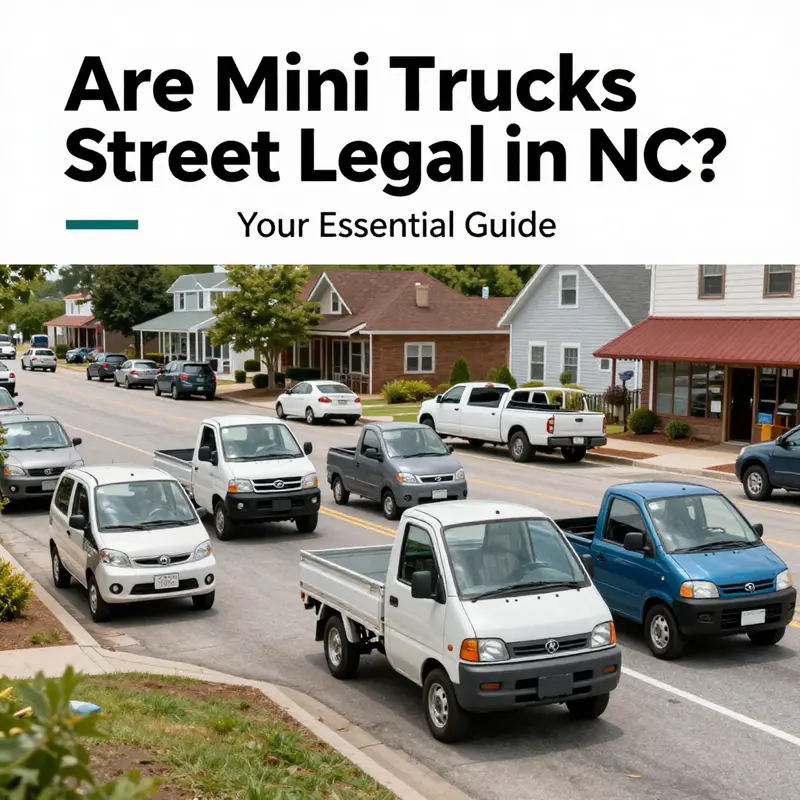
As mini trucks gain popularity among enthusiasts and local business owners in North Carolina, understanding their street legality becomes crucial. This guide will explore the regulations surrounding mini trucks, particularly Kei trucks, within the state. We’ll dive into necessary safety and emissions standards that must be met for legal operation on public roads. Lastly, we’ll compare North Carolina’s mini truck laws with those in other states to provide a broader perspective. Whether you’re a small business owner looking for a versatile vehicle or a hobbyist eager to hit the streets legally, we’ve got you covered.
Riding the Line: Navigating the Street-Legal Path for Kei-Style Mini Trucks in North Carolina
In North Carolina, the appeal of Kei-style mini trucks—compact, capable, and surprisingly versatile for chores from farm work to urban deliveries—meets a landscape of rules that can feel almost navigationally dense. The question, at its core, is simple in everyday speech: can you drive a mini truck on North Carolina streets? The answer, as many who chase a practical, affordable work vehicle discover, is nuanced. Ownership is possible, but using such a vehicle on public roads hinges on meeting a set of regulatory thresholds that balance safety, environmental responsibility, and the pragmatic needs of a growing mobile economy. To understand the path from possession to pavement, it helps to follow a thread through state law, federal safety standards, and the practical realities of registering and operating a vehicle that was designed with a different jurisdiction and purpose in mind.
At the center of the North Carolina framework is how a vehicle is classified. The state does not simply categorize a vehicle by its name or its origin. Instead, it considers a matrix of size, weight, engine displacement, and the safety features installed. Kei trucks, by their very nature, arrive with a design philosophy borrowed from a different regulatory environment: small engines, tight turning radii, and a light footprint that makes them ideal for confined spaces. In Japan, these vehicles are celebrated for efficiency and utility, but as they cross the ocean and land on a North Carolina road, they confront a different set of rules. The U.S. system expects compliance with federal safety standards, emissions controls, lighting requirements, crash protection features, and a reliable installation of mirrors, seat belts, and horn systems. When a Kei truck’s native configuration does not meet these expectations, it risks being relegated to off-road use, non-highway use, or a status that requires substantial modification before it can legally share the public roadways with larger, more conventional vehicles.
To operate legally, a mini truck in NC must first pass through the doors of the North Carolina Division of Motor Vehicles (NC DMV). Registration and titling are the entry points; they establish who owns the vehicle and under what terms it may circulate in traffic. But registration alone does not grant the right to cruise down city streets or highway ramps. The vehicle must also pass a safety inspection, a check that ensures essential systems operate correctly and reliably. For Kei-style vehicles, that means a careful assessment of basic compliance items like lighting and signaling; rear and side mirrors; a horn that works in a predictable way; and the installation of seat belts that secure passengers. Depending on the vehicle’s age and modifications, drivers may also be asked to demonstrate the integrity of the braking system and the reliability of steering components. The process is not merely bureaucratic; it is designed to verify that a vehicle with a very different footprint and performance profile can still operate within the expectations of modern traffic safety.
Emissions compliance adds another axis to the decision. North Carolina has historically required vehicles to meet certain emissions standards, with testing that varies by region and by the year of manufacture. Imported, older, or non-standard vehicles can present a particular challenge. The engine displacement and overall performance of Kei trucks—660cc or thereabouts in their original form—often places them outside the typical U.S. market envelope. The result is that many such vehicles require modifications or certified retrofit solutions to align with state emission requirements. The cost and feasibility of achieving this alignment can be a decisive factor in whether a vehicle can be registered for street use. For some owners, the reality is that a Kei truck has value on the farm or in a controlled environment, but supporting it with street-legal status proves impractical from a financial or logistical standpoint.
The safety framework itself conveys a clear, if stringent, message: street-legal status in NC demands more than just a title and a sticker. It calls for a vehicle that is verifiably compliant with the safety standards that govern public road use. This includes, in practical terms, the presence of proper lighting, predictable signaling, robust mirrors, effective braking, and a dependable horn. It also demands an approach to occupancy that presumes standard seat belt arrangements and protective restraint systems for all occupants. When a vehicle arrives with a structure that lacks some of these features or relies on non-standard parts, it triggers a cascade of code considerations. The state’s approach effectively discourages unmodified imports from being treated as street-legal without a formal pathway of certification and modification that satisfies the relevant standards. In other words, the road-legal journey for a Kei truck in North Carolina is not a matter of preference but of compliance with a defined safety and emissions architecture.
Concrete steps guide the process of turning a Kei truck into a street-legal vehicle. The first step is to confirm that the vehicle can be titled and registered. This involves establishing proof of ownership, transferring title if necessary, and, crucially, ensuring that the vehicle’s configuration does not violate the state’s classification rules. Next comes the safety inspection. The inspector will look for a complete set of required safety features, including functional lights from end to end, turn signals that respond reliably, well-adjusted mirrors on both sides, and a working horn. The vehicle should also have proper restraint systems and a visible horn audible enough to meet road-safety expectations. In many cases, this stage reveals the practical barriers Kei trucks face when their original configuration lacks some of these elements or relies on non-standard mounting points that do not meet NC’s safety prescriptions.
Emissions is the third pillar of the compliance triad. The intricacies here depend on the vehicle’s age, origin, and any modifications that have been made since it left its country of origin. In some cases, owners choose to pursue retrofit solutions that bring the engine and exhaust system into alignment with U.S. standards. In other instances, a vehicle may be deemed impractical to retrofit in a way that satisfies emissions expectations, effectively limiting street-legal prospects. The process, while technical, is not insurmountable for those with the right combination of engineering know-how and financial flexibility; it is, however, a hurdle that must be cleared to avoid later compliance issues.
The overarching legal posture thus emphasizes that while ownership may be permissible, street use demands a holistic alignment with NC’s regulatory framework. That alignment is not a single fix but a chain of requirements. Some Kei trucks, after careful modification and verification, can become legitimate street participants. Others, by virtue of their design or the cost of bringing them into compliance, may be best reserved for off-road or private-use scenarios. To any potential owner, the decision is not merely about cost. It is about the feasibility of achieving a dependable, safe, emission-compliant, road-legal configuration that will stand up to the scrutiny of both inspectors and the daily realities of North Carolina traffic.
Alongside the formal regulatory path, a practical sense of the road emerges from ongoing conversations among owners, retrofit specialists, and DMV staff. The story of mini trucks on NC streets is not a rumor or a trope; it is a process that involves documentation, inspection, and sometimes a sequence of staged improvements. The evolving nature of vehicle compliance means that the rules can shift with changes in technology, in safety expectations, and in regional enforcement priorities. The best approach for anyone considering this route is to begin with solid information from official sources, then map out a plan that balances the vehicle’s intended use with the required safety and environmental standards. In this context, the state’s own guidance becomes a reliable compass. For readers seeking direct engagement with the broader landscape of mini trucks and their adaptations, there is value in exploring related perspectives from the wider community of enthusiasts and professionals who navigate the same regulatory terrain. A good starting point to broaden the conversation is a general resource that collects practical insights and project notes from people who work with small, versatile trucks in varied settings. In practice, this means engaging with a community voice that often translates regulatory nuance into actionable steps, from selecting a candidate vehicle to detailing the exact modifications needed for compliance. For readers to access a broader array of perspectives, the following link offers a gateway to a community blog that regularly discusses topics related to mini trucks and their life-cycle in different regions: Mini Trucks California Blog.
As one moves from theory toward application, the realities of North Carolina’s streets begin to shape expectations. A Kei truck that has been legally registered and passed a safety inspection can ride alongside standard passenger cars, pickups, and SUVs with no special treatment beyond the normal rules that govern all street-legal vehicles. Yet to get to that point—a process that may involve technical work, costs, and time—the owner must stay engaged with the state’s requirements, be prepared for inspections, and ensure ongoing compliance in terms of emissions and safety. The enforcement environment is designed to be dynamic: inspectors may request documentation, verify modifications, or require updates if a vehicle’s configuration has changed after its initial registration. In short, the street-legal path for mini trucks in North Carolina is a journey that unfolds in stages rather than a single, one-time achievement. It is a journey that rewards careful planning, transparent documentation, and a willingness to invest in the safety and reliability of the vehicle for everyone who shares the road.
For many people, the prospect of owning and operating a Kei truck on NC roads is attractive because it offers a unique blend of practicality and efficiency. The small footprint translates into nimble parking, reduced fuel consumption, and a surprising ability to navigate tight urban spaces or remote work sites without the higher running costs of larger trucks. The social and economic value of such a vehicle depends heavily on its ability to meet legal requirements, because a legally compliant vehicle enables stable insurance, predictable resale value, and less risk of disruption from enforcement actions. These benefits are not abstract. They manifest as fewer times the vehicle is pulled over, fewer concerns about road-use legality, and a more straightforward insurance process that recognizes the vehicle as a standard participant in everyday traffic. In that sense, the value proposition of turning a Kei truck into a street-legal utility vehicle is intimately tied to the quality of the compliance work that accompanies ownership—from the initial registration and safety inspection to ongoing maintenance and, when necessary, emission-related upgrades. The NC DMV, the regulatory mechanism that anchors this process, thus emerges as a practical partner rather than a distant gatekeeper, providing a pathway for careful, legitimate use.
Looking ahead, anyone who considers adopting a Kei truck as a daily driver in North Carolina should approach the decision with a clear-eyed view of the compliance landscape. It is not enough to admire the vehicle’s compact dimensions and clever design; one must also anticipate the technical and financial commitments required to bring it into line with state and federal expectations. A thoughtful assessment would weigh the vehicle’s intended use—the frequency of highway travel, the distances covered, and the potential loads against the realities of emission controls and safety enhancements. It should also consider the long-term maintenance implications of running a small-displacement engine in a climate and market that prizes reliability and predictability. The objective is not simply to own a vehicle that is legally permissible but to own one that can be consistently enjoyed without the friction of unexpected inspections, failed emissions tests, or recertification challenges.
In sum, the law in North Carolina offers a conditional doorway for Kei-style mini trucks to become street-legal. The door hinges on a triad of registration, safety inspection, and emissions compliance, each demanding attention to detail and a willingness to invest in proper modification. The journey from importer’s dream to daily rider is real and tangible, but it is also bounded by the state’s commitment to road safety and environmental responsibility. Those who undertake it well—documenting every modification, seeking professional guidance when needed, and staying informed about evolving standards—will find that the street-legal route is not only possible but rewarding. The practical takeaway is straightforward: if a mini truck is to share North Carolina’s roads legally, it must be, in essence, a vehicle that North Carolina drivers would recognize as safe, reliable, and compliant, even if its origins lie outside the United States. For the curious reader who wants to explore how these ideas resonate with broader mini-truck communities, the ongoing conversation in related online spaces can provide practical context, update cycles, and real-world examples that illuminate what compliance looks like in practice in a way that the regulatory documents alone cannot fully convey. As always, the most reliable guidance comes from the official source, which remains the NC DMV’s information ecosystem, complemented by careful consultation with licensing and inspection professionals when making a purchase or planning a conversion. For official guidance, visit the state’s DMV resources at https://www.dmvnc.com.
Between Specs and Streets: How Safety and Emissions Standards Shape Mini Trucks on North Carolina Roads
The question of whether mini trucks, the compact workhorses often labeled Kei trucks in their country of origin, can legally share North Carolina streets is not merely a matter of personal preference or budget. It sits at the intersection of federal safety and environmental rules that govern every vehicle sold, imported, or operated in the United States, and the state’s own enforcement mechanisms that translate those rules into on‑the‑ground reality. In North Carolina, as in other states, the path to legality for a mini truck begins with a clear understanding of what the federal government requires in terms of safety design, crashworthiness, and emissions performance. Kei trucks are small and utilitarian by design, built to carry loads with minimal footprint. Their compact dimensions and, in some cases, unconventional configurations, can raise legitimate questions about collision protection, occupant safety, and how they meet the standards set for passenger cars and light trucks. The practical consequence is that even if a vehicle looks like a simple, inexpensive work tool, it must pass the same gatekeeping standards that apply to all vehicles that will operate on public roads. The result is a carefully balanced framework that acknowledges the utility of smaller, lighter vehicles while preserving road safety and air quality for everyone who shares the street or highway.
The backbone of this framework is federal law, crafted and enforced by agencies with nationwide reach. The National Highway Traffic Safety Administration, or NHTSA, is responsible for vehicle safety standards in the United States. These standards cover a broad spectrum—from crash-test requirements and airbag deployment criteria to seat belt and restraint system performance, structural integrity, and other safety-critical attributes. The Environmental Protection Agency, or EPA, focuses on the environmental performance of vehicles, including limits on emissions and the effectiveness of catalytic converters and other pollution-control technologies. Taken together, these federal rules create a baseline that any vehicle, including specialized and imported ones like mini trucks, must meet to be considered eligible for sale and operation on U.S. roads. While the language of the rules can read as technical and comprehensive, the practical implication is straightforward: a vehicle cannot be legally used on public ways unless it meets federal safety and emissions standards as verified through certified documentation and labeling.
A key nuance in the import and registration landscape is the age of the vehicle. The materials gathered for this chapter emphasize a crucial threshold: any imported vehicle that is younger than 25 years old must meet current federal safety and emissions standards to be legally operated on U.S. roads. In the context of mini trucks, many of these vehicles originate from markets where the design priorities differ markedly from what U.S. standards require. The design tradeoffs that favor light weight, compact dimensions, or simplified safety systems may clash with U.S. requirements for crashworthiness, occupant protection, and emissions controls. If a Kei truck or its equivalent does not bear the appropriate federal certifications, labeling, and documentation demonstrating compliance, it cannot be registered for on-road use. This is not merely a bureaucratic hurdle; it is a tangible barrier that protects other road users and ensures that vehicles sold across the country adhere to a consistent safety baseline. This is the core reason why numerous imports of mini trucks end up being used off-road or strictly for private-property tasks rather than as daily, on-street transportation vehicles.
In North Carolina, the state’s Department of Transportation, and more specifically the Division of Motor Vehicles, operate within the framework established by federal standards. The NC DMV will not issue registration or license plates to vehicles that fail to meet federal safety and emissions standards, and this is not something the state negotiates on a whim. The NC regulatory posture is designed to align with national policy, recognizing that road safety and environmental stewardship are not optional add-ons but foundational requirements for vehicle operation. When a consumer asks, “Can I drive a mini truck on NC roads?” the answer, in practice, hinges on whether the vehicle has clear, verifiable compliance documentation: a DOT certification label, an EPA certificate, and other federal attestations that demonstrate conformity with applicable standards. Absent such documentation, the state cannot complete the registration process. This is why due diligence before purchase is essential. Prospective buyers must ask: Does this vehicle carry the DOT conformity label? Is there an EPA approval or certification that applies to this specific model and engine configuration? These are not merely academic questions; they are the gates through which a vehicle must pass to be driven legally on North Carolina streets.
The practical implications of this framework are best understood by considering the typical journey of a mini truck in the state—from import or purchase, through inspection and registration, to the potential use on rural or urban roads. A thoughtful approach starts with the seller and extends to the importer, the dealership, and the DMV. Buyers should request documentation that demonstrates federal compliance before any commitment to a purchase. In many cases, contemporary importers will provide evidence of compliance, but not all will. This reality means that the market can vary significantly depending on the year of manufacture, the country of origin, and the specific configuration of the vehicle. Some mini trucks imported from Asia may come with limited or no federal compliance documentation, which instantly places them outside the on-road legal framework in North Carolina. Others, particularly those marketed or certified for sale within the United States, may carry the necessary DOT and EPA endorsements. The role of the DMV, in this context, is to apply the law impartially; it evaluates the paperwork and the vehicle’s physical attributes to determine whether registration is permissible. This is why the separation between a vehicle one can own and a vehicle one can legally operate on public roads is a fundamental distinction in NC as in many other states.
If you are contemplating ownership of a mini truck in North Carolina, a prudent first step is to consult the official channels before heavy investment or sign-off on a purchase. The NC DMV website and local DMV offices are the most reliable places to obtain current, state-specific guidance. The rules can change as federal standards evolve and as the state updates its procedures to reflect new testing requirements or aging-in-place policies for compliance documentation. In addition to basic registration, there are ancillary costs and procedures to consider. Insurance is an essential component of road legality; most insurers require proof of compliance with federal safety and emissions standards before they will issue a policy or quote. This is not unique to mini trucks; it is a standard expectation for any vehicle that will operate on public roads. The absence of insurance, or a lapse in compliance documentation, can lead to immediate enforcement action or, at minimum, the inability to legally operate the vehicle on state roads. The interdependence of registration and insurance underscores a broader truth: legality in North Carolina emerges from a chain of verifications that begins with federal conformity and ends with practical, everyday compliance in the form of registration and coverage.
For many enthusiasts and small-business operators, the dream of using a mini truck on NC roads is tempered by the reality of the regulatory framework. The desire to haul tools, supplies, or small loads in a compact, maneuverable vehicle must be balanced against the obligations that come with public road use. In this light, the suggestion to tap into community knowledge becomes especially valuable. The online community around mini trucks often shares firsthand experiences about the steps they took to achieve or attempt to achieve legal on-road status in various states, including North Carolina. A resource worth consulting is the broader ecosystem of content and commentary found on specialty platforms and blogs that discuss compliance, imports, and practical considerations of using these small trucks on real roads. As you navigate these discussions, you may find anecdotes about the challenges of obtaining federal documentation for certain imported configurations, the importance of verifying labeling on the engine and chassis, and the realities of state-level inspections that confirm compliance. While these stories provide useful context, they are not a substitute for the official guidance issued by the NC DMV or the federal agencies. Always corroborate any practical advice with official sources and, when possible, with a licensed professional who can review the vehicle’s documentation in person.
To connect with the wider conversation about mini trucks and to explore community experiences that may illuminate the compliance journey, readers can visit the broader Mini Trucks blog, which hosts a range of articles about ownership, maintenance, and regulatory considerations. The blog serves as a repository for real-world perspectives that can help set expectations and identify common pitfalls. While individual experiences vary and are not a substitute for official requirements, they offer a sense of what the process can entail—what kind of paperwork tends to be requested, how sellers handle the documentation, and what kind of delays or hurdles might arise during registration inspections. The blog can be a useful companion as you prepare for a potential purchase, especially if you pair the community insights with direct confirmation from the NC DMV and, when necessary, counsel from a qualified automotive professional. Mini Trucks blog
Despite the strict posture toward compliance, the door is not permanently closed for those who are determined to bring a mini truck into regulated use in North Carolina. In certain scenarios, owners may pursue legitimate avenues to operate a compliant vehicle that resembles a Kei truck but adheres to the safety and emissions expectations set forth by the federal government and the state. This path typically involves ensuring the vehicle has an approved federal conformity label and an EPA certification, or an equivalent documentation that demonstrates the vehicle was manufactured to meet current standards. In some cases, this process may require modifications to the vehicle’s safety systems, exhaust and emission controls, or other components to align with federal requirements. It is critical to approach any such modifications with caution and to rely on qualified technicians who understand the regulatory implications. Unsanctioned modifications, or attempts to bypass the compliance process, can lead to serious consequences, including fines, obligate rework, or the eventual inability to register the vehicle for on-road use. Consequently, the most responsible approach for prospective owners is to pursue compliance as a structured, documented process rather than as an improvised workaround.
The regulatory landscape, by design, is not a static backdrop but a living framework that evolves with advances in vehicle technology, changes in environmental policy, and shifts in enforcement priorities. North Carolina, like other states, remains attentive to the balance between enabling practical, efficient transportation options and preserving safety and air quality. The federal standards administered by NHTSA and the EPA continue to determine what is permissible on the road. This is why the chapter on safety and emissions standards for mini trucks in NC should not be interpreted as a universal ban or an absolute green light. It is a precise description of the boundary conditions: vehicles must meet federally recognized safety and emission criteria and carry appropriate documentation to be registered and used on public thoroughfares. The ultimate takeaway is straightforward yet exacting: if a mini truck cannot demonstrate compliance with federal standards, it cannot be legally operated on North Carolina roads. Prospective buyers and current owners should treat the documentation as their roadmap and not as optional paperwork to be filed away. The road to legality is navigated through careful verification, transparent records, and ongoing compliance as long as the vehicle remains in use on the public highway system.
For readers seeking a concise reference to the governing safety framework, the official resource from the U.S. National Highway Traffic Safety Administration provides authoritative guidance on vehicle safety standards, including how those standards apply to light trucks and other categories that overlap with mini trucks in practice. This resource is essential for understanding what kinds of certifications and labeling to look for and how federal standards translate into state registration requirements. While the day-to-day experience of owning or using a mini truck in North Carolina may feel localized, the backbone of legality rests on a national safety and environmental regime that applies uniformly across states. Therefore, any attempt to operate a noncompliant mini truck on public roads is inherently risky and legally precarious, regardless of a vehicle’s size, cost, or intended use.
The conversation about mini trucks and road legality in NC is ongoing and nuanced. It intersects with commercial logistics needs, hobbyist interests, and the realities of urban and rural mobility. Importantly, it invites prospective owners to invest time in due diligence, to verify federal compliance documentation, and to engage with both state and federal authorities early in the decision-making process. The end goal is not to discourage innovation or to deny a potentially useful vehicle, but to ensure that every vehicle sharing a North Carolina street does so in a way that honors safety, environmental responsibilities, and the rule of law. This is, in essence, the condition that makes a mini truck a legitimate part of the state’s transportation landscape rather than a vehicle relegated to private property or limited to off-road adventures. The chapter thus stands as a practical reminder: the street-legal status of mini trucks in North Carolina is not an abstract matter of personal preference. It is a consequence of compliance, documentation, and a cooperative regulatory framework designed to protect motorists and communities alike. For those who want to see how these principles translate into everyday decisions, the registered path through compliance is not merely possible; it is the expected and prudent route to take when the goal is legitimate on-road use in the Tar Heel State.
External resource for further context: https://www.nhtsa.gov/vehicle-safety
On North Carolina Roads: Decoding the Realities of Mini Truck Legality
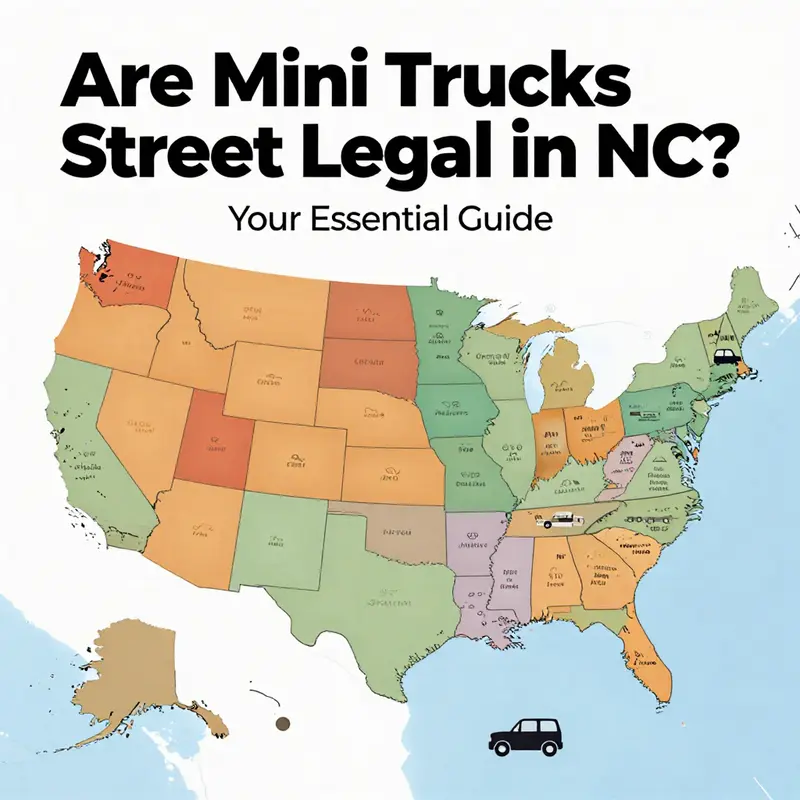
When people talk about mini trucks, they often imagine a pocket-sized pickup that folds into a narrow lane, slips through tight alleys, and turns a simple farm task into a surprisingly efficient chore. In North Carolina, these compact workhorses, commonly grouped under the umbrella of kei trucks in some markets, arrive with a mix of appeal and complication. Ownership is not the question in many cases; the real puzzle is whether they can be used on public streets without running afoul of state rules. The short answer is nuanced: mini trucks can be legally owned, but their on-road use hinges on meeting a lattice of safety, registration, and emissions requirements established by the North Carolina Department of Transportation (NCDOT) and its sister agencies, notably the state DMV. This chapter weaves together the practical realities for NC residents, the regulatory spine behind those realities, and the daily choices people face when they decide to bring one of these diminutive work vehicles onto public streets. It is a topic where curiosity and compliance must walk hand in hand, because the difference between a compliant daily driver and a vehicle parked for off-road use is often a matter of precise, up-to-date information rather than a simple yes-or-no verdict.
To begin with, the point of legal clarity in North Carolina is not the vehicle’s size alone but whether the vehicle that arrives in the driveway is prepared to meet the standards that govern every passenger car and light truck on the road. The chassis type—whether it is a conventional mini pickup, a purpose-built compact, or a repurposed utility vehicle—matters, but the governing framework remains consistent: the vehicle must be properly titled, registered, insured, and compliant with both safety standards and emissions considerations when applicable. In NC, those standards are enforced through a combination of inspections, paperwork, and the ongoing responsibilities of the vehicle owner. The overarching principle is straightforward: ownership is permissible, use on public roads is conditioned, and the path to compliance is a series of verifiable steps administered through official channels.
The practical steps begin with ownership but quickly move into administrative and technical territories. First, prospective owners should verify that the truck is suitable for road use under state definitions of a motor vehicle. Some mini trucks are designed primarily for off-road or agricultural work, lacking certain features typically expected on public roads, such as standardized lighting packages, adequate bumpers, and resilient зад protections. If a vehicle does not meet baseline safety standards, it cannot be lawfully operated on NC streets, regardless of ownership. The next layer centers on registration and title—an essential gateway to lawful operation. A vehicle must be properly titled in the state, and its ownership must be reflected in a valid registration. This process is not merely a bureaucratic hurdle; it is the formal acknowledgment by the state that the vehicle is a road-going machine with a recognized legal status. Alongside registration, proof of financial responsibility, in the form of minimum liability insurance, is typically required. The practical impact is clear: even if a mini truck can perform the tasks you need, you cannot legally put it on the highway without meeting insurance obligations that cover potential damages and injuries arising from its operation.
Beyond the safety and insurance pillars lies the question of compliance with emissions and vehicle safety laws. Emissions requirements have varied over time and by county, driven by air quality goals and testing programs that jurisdictions implement to reduce pollutants. North Carolina’s approach has historically evolved with ambient air quality considerations. While some counties and regions have more stringent testing regimes, others have a lighter footprint in the emissions landscape. The central takeaway is that the process is not simply about the engine size or the compact footprint; it is about whether the vehicle’s emissions profile aligns with state standards at the time of inspection and registration. Whether a kei-style mini truck can be retrofitted to meet those standards, or whether it arrives with a compliant factory setup, is a critical determinant of whether it can travel down a NC road with a license plate and a clean conscience.
Alongside emissions, the vehicle’s safety architecture is a living requirement that can prompt modification or certification. NC’s framework expects that the vehicle, once on the road, satisfies the same safety expectations as other light-duty vehicles. This can translate into tangible needs: functioning headlights, tail lights, turn signals, seat belts, windshield, and mirrors in proper configuration. Some owners encounter questions about rollover protection, stability features, and crash-compatibility with typical NC road conditions. While kei trucks are celebrated for their maneuverability and efficiency, the road rules emphasize predictability and standardization. If a vehicle lacks one or more mandated safety features, it cannot be legally operated on public streets until those features are added or verified during the inspection process.
In practice, then, the most reliable way to determine street legality in North Carolina is to engage directly with the state’s official guidance. The DMV and NCDOT collaborate to provide up-to-date checklists, forms, and point-by-point requirements that reflect current law. Given how quickly regulations can shift—especially with newer vehicle concepts entering the market—relying on archived or secondary guidance can be risky. For a resident contemplating a kei-style mini truck, the prudent path is to plan a call or a visit to the official DMV or NCDOT resources, ensuring every procedural box is checked before attempting street registration. This is not a bureaucratic trap but rather a practical safeguard against fines, impoundment, or the revocation of the right to operate in the event of noncompliance.
The day-to-day implications are meaningful. If you intend to use a mini truck for light-duty urban tasks, farm runs, or campus-style deliveries, you can frame your approach around a simple triad: confirm vehicle compatibility with road-use standards, secure the appropriate registration and insurance, and ensure ongoing compliance with safety and emission expectations. The consequences of skipping any part of this triad are not merely theoretical. They include potential traffic violations, insurance disputes in the event of an accident, and the possibility that a law enforcement officer will require you to remove a noncompliant vehicle from public roads until it is brought into compliance. The balance is delicate, and it hinges on not assuming that “smaller means easier.” In NC, smaller often means more nimble and less expensive, but legality remains tethered to the same fundamental conditions that apply to any vehicle meant for public streets.
As with any jurisdictional framework, the specifics are best understood through primary sources, not paraphrased recollections. The North Carolina DMV’s official pages and the NCDOT’s motor vehicle sections offer current checklists, inspection criteria, and steps tailored to the domestic fleet. The guidance makes clear that the path from ownership to street legality is navigable, but it is a path that respects state boundaries and the necessity of compliance. For readers who crave a deeper sense of how this works in practice, a quick visit to the main hub of information can be illuminating. Our own hub for practical context and community perspectives on mini trucks hosts a variety of articles and insights, which you can explore as a companion resource in the broader discussion of vehicle legality. For a concise touchstone on the subject, see our broader knowledge base at minitrucksocala.com/blog/.
The broader debate about mini trucks across states often centers on how different jurisdictions classify and regulate these diminutive vehicles. Some states have embraced them with relatively low thresholds, treating them as standard light-duty trucks when compliant with basic safety and emissions norms. Others impose more stringent requirements that feel disproportionate relative to the vehicle’s size and purpose. North Carolina’s stance sits in a space that acknowledges the vehicle’s utility while applying the same general standards that govern other road-going machines. This means that, in practice, a NC resident who wants to drive a kei-style mini truck on public roads should not expect to bypass established processes simply because the vehicle is compact. Instead, the emphasis is on responsible ownership and diligent compliance—the same ethic that guides the registration of classic cars, modern EVs, or any other work-oriented vehicle that shares the road with daily commuters.
One aspect that becomes particularly salient in NC is the relationship between on-road legality and the vehicle’s intended use. A mini truck used primarily for private property tasks, farm chores, or strictly off-road recreation may, at times, fall outside the scope of street legality, depending on how the local authorities interpret the vehicle’s configuration and use. Conversely, a vehicle that adheres to safety, emissions, and registration standards, and that is operated in accordance with state law, becomes eligible to share NC streets with broader traffic. This is not merely an abstract calculation; it translates into concrete decisions about modifications, maintenance, and record-keeping. For instance, certain cosmetic or functional alterations—intended to optimize performance or fit the vehicle to a particular job—may have knock-on effects on safety compliance or emissions certification. Owners who pursue such modifications without confirming their impact risk undermining the very legality they sought to establish. The responsible approach emphasizes transparency with the DMV, adherence to documented standards, and a willingness to adjust plans in light of regulatory feedback.
For readers who are curious about practical exemplars and how real-world enthusiasts navigate these waters, the broader community in North Carolina and neighboring states often shares experiences that illuminate the path without replacing official guidance. Community forums, small-business operators, and rural users often discuss the trade-offs between engineering creativity and regulatory compliance. The shared insight is not a call to abandon creativity but a reminder that inventive uses of miniature trucks still must pass the same gatekeepers as any other vehicle on the road. That balance—between ingenuity and accountability—defines the current moment for mini trucks in NC and will likely shape how the landscape evolves as manufacturers introduce more models and configurations that straddle the line between utility and road-legal status.
Ultimately, whether a specific kei-style mini truck is street-legal in North Carolina comes down to a concrete, verifiable status. Have you secured proper title and registration? Is there evidence of insurance that meets state requirements? Does the vehicle pass the safety inspection and, where applicable, emissions testing? Are any required modifications in place to ensure compliance with lighting, bumper, and occupant protection standards? If the answers to these questions are affirmative, and if ongoing compliance is maintained, the vehicle can be legally operated on NC roads. If any answer is uncertain or negative, the prudent choice is to pause and consult the official channels. This is not a barrier to ownership—it is a safeguard for the broad, shared ecosystem of road safety and environmental responsibility that makes road travel possible in a state renowned for its varied landscapes and dense traffic in urban areas alike.
For readers who want a tactile feel for the broader conversation, consider how the topic intersects with other vehicle categories and how a state’s approach to mini trucks reflects larger policy priorities. In North Carolina, the emphasis on safety, emissions, and accountability mirrors a careful balancing act: preserving agricultural and small-business utility while ensuring that roadways remain safe for all users. The result is a landscape that rewards due diligence—checking the model’s baseline capabilities, aligning it with state standards, and maintaining the vehicle in a roadworthy condition. If you approach the process with a spirit of compliance rather than a workaround, you will likely find that the path to street legality is not only navigable but also a harbinger of more thoughtful, well-regulated adoption of compact work vehicles in the state.
In closing, the NC answer to Are mini trucks street legal? is: yes, with conditions. The conditions are not designed to deter; they are designed to protect drivers, passengers, pedestrians, and the broader traffic environment. As regulations change and new models enter the market, the best practice remains straightforward: start with official guidance, assemble the necessary documentation, address any safety or emissions gaps head-on, and maintain compliance as an ongoing obligation. The result is not a static yes or no, but a dynamic, transparent process that enables North Carolinians to leverage the efficiency and practicality of mini trucks without compromising safety or legality. For those who want to explore more about community perspectives, practical model comparisons, and keep abreast of evolving regulations, dipping into the broader online conversations can be instructive. Our own hub, linked above, offers a gateway to a spectrum of related discussions and resources that can supplement the official requirements with real-world context. This approach helps ensure that the road ahead remains clear and lawful for those who choose to adopt these small, capable vehicles as part of their everyday work and life on North Carolina streets.
External resource for authoritative guidance: https://www.ncdot.gov
Final thoughts
In summary, mini trucks can indeed be street legal in North Carolina when they adhere to specific regulations and standards set forth by the NCDOT. By understanding the required safety and emissions standards, mini truck owners can navigate local laws effectively. This knowledge not only empowers property owners and small business operators to make informed decisions, but it also fosters a community of responsible mini truck enthusiasts. Remember, staying informed about regulations, whether in NC or compared to other states, enhances your experience as a mini truck owner and enthusiast. Drive safely and responsibly!