
In the bustling landscape of New Jersey, mini trucks, especially the beloved Kei trucks from Japan, have captured the attention of many small business owners, residential property owners, and automotive enthusiasts. However, the legality of operating these compact vehicles on public roads here is anything but straightforward. In this article, we will break down the complex legal landscape surrounding mini trucks in New Jersey. From understanding their legal status to compliance with federal standards, we will explore requirements and considerations for owning a mini truck. Finally, we will look ahead at potential future trends in legislation, helping you make informed decisions whether you’re looking to buy, modify, or simply enjoy your mini truck.
Steering Through Regulation: The Narrow Path for Mini Trucks on New Jersey Streets
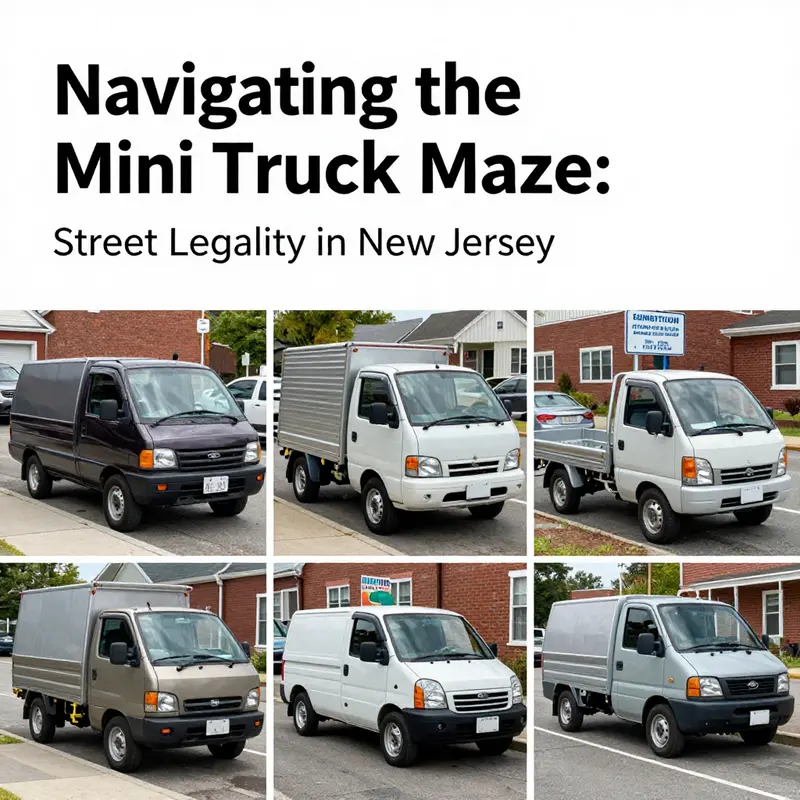
New Jersey sits at a complicated crossroads when it comes to mini trucks, especially those that originated halfway around the world in Japan and elsewhere. These compact workhorses—often known for their kei-truck size and utilitarian flair—are not simply mass-produced for every American street. Their legal standing in the Garden State rests on a delicate balance between ownership rights and public-road responsibility. In practical terms, many people can own these vehicles, but putting them behind the wheel on a public highway requires navigating a tightly drawn set of standards. The key idea is straightforward: the mere possession of a mini truck does not grant automatic permission to drive it on New Jersey’s roads. To operate legally, a vehicle must meet a blend of state and federal safety, emissions, and size requirements, and it must be properly registered and insured. The regulatory language has grown out of a broader framework that views these smaller trucks as potential roadworthy problems unless they are brought into alignment with established norms.
The most authoritative curbs and contours of this issue come from the New Jersey Motor Vehicle Commission (NJMVC). The commission outlines a clear distinction between ownership and operation in its guidance. Owning a mini truck can be as simple as meeting general vehicle ownership prerequisites, but driving on public avenues binds the owner to a thorough set of compliance benchmarks. The spectrum of factors that inspectors scrutinize is wide. It includes the vehicle’s external footprint—how large it actually is on New Jersey’s pavement—along with its emissions profile, its safety equipment inventory, and certain administrative features required for registration. In practical terms, the state asks: Does this vehicle fit within the legal parameters for a road-legal light truck? Does it have the necessary brakes, lighting, and signaling systems? Is it equipped to meet current emission standards or, in some scenarios, to operate under established exemptions? And crucially, can it be shown to be insured in a manner that aligns with state requirements for road use? These questions define whether a mini truck can be a common-sight on a New Jersey street or a rare exception guarded by stringent approvals.
Among enthusiasts and importers, one recurring theme is the tension between older and newer models. The dichotomy often hinges on federal rules that govern the importation and use of older vehicles. For vehicles that are 25 years or older, federal law provides a relatively lenient pathway: import and use of these vehicles can proceed without meeting the full spectrum of current U.S. safety and emissions standards. This exemption has a practical American consequence in New Jersey because it introduces a viable route for some Kei trucks to be legally operated on public roads, provided they pass the state inspection and are properly registered. In such cases, the age of the vehicle becomes a bridge to compliance, rather than a catch-all shield against regulation. But the same 25-year rule does not automatically translate into universal legality for every older model in every circumstance. The vehicle still must pass the state inspection and satisfy NJMVC registration requirements. The line between compliance and non-compliance remains tightly drawn and hinges on successful alignment with inspection criteria and the overall intent of the vehicle’s use.
By contrast, newer mini trucks introduce a more burdensome set of questions. The very standards that make modern vehicles roadworthy—Canting through FMVSS (Federal Motor Vehicle Safety Standards) and EPA emission rules—have historically created friction with imports that were not originally engineered to meet U.S. regulatory norms. In many cases, these newer models do not naturally meet the threshold for roadworthiness in New Jersey without substantial modifications and official approvals. The regulatory risk is clear: without compliance, a newer mini truck may be deemed illegal for public-road use. That does not erase the ownership option; it simply means that operation is constrained to a controlled environment, or it requires a costly and time-intensive process to bring the vehicle into alignment with state and federal standards. This tension between what owners can possess and what they can legally drive on state roadways is central to understanding the practical reality of mini trucks in New Jersey.
For readers seeking to verify the current landscape, the NJMVC website provides the definitive reference. The commission’s published guidelines lay out the path for registration, inspection, and the criteria a vehicle must meet to be considered road-legal. Practically speaking, this means that before a driver or owner commits to using a mini truck on public roads, there is a baseline expectation: the vehicle must be evaluated against New Jersey’s safety and emissions requirements and must pass the state’s inspection regime. For anyone who wants to acquaint themselves with the latest policy language and procedural steps, the NJMVC portal is the trusted source. You can explore the official guidance at the state’s motor vehicle authority site, which outlines the registration, inspection, and compliance processes that govern whether a mini truck can legally share the road with cars, trucks, and SUVs. The path is bureaucratic, but it is designed to ensure that even a tiny vehicle—one that once served a farm or a construction site—contributes to road safety and environmental standards rather than undermining them. As a practical matter, this means a prospective operator must engage with a combination of inspections, documentation, and potentially professional consultations to determine whether their particular kei-truck configuration can be accepted on New Jersey’s public roadways. The state’s emphasis on safety and emissions reflects broader public policy that aims to balance personal mobility with the well-being of all road users. For those curious about the institutional framework behind these rules, the official NJMVC resources are the indispensable starting point.
Within this regulatory environment, the practical journey from ownership to operation can be long and costly, but it is not impossible. The core strategy hinges on a careful assessment of the vehicle’s age, its compliance with U.S. safety and emissions standards, and the likelihood of obtaining the necessary approvals for registration and road use. A vehicle that is 25 years old or older may present a more straightforward route, provided it can pass the state inspection and be properly registered. In the case of newer models, owners often confront an uphill climb. They must determine whether the vehicle can be brought into compliance through specific modifications or whether a specialty pathway—such as a “non-standard vehicle” designation or other regulatory accommodations—exists in practice within the state. The details of such pathways are intricate and require professional evaluation, as well as an understanding of the costs involved, the scope of changes, and the timelines that accompany regulatory approvals.
For readers tracking how regulation translates into everyday decisions, consider the interplay between safety equipment and the vehicle’s overall footprint. The larger question is whether the mini truck can be brought up to a standard that aligns with the expectations of NJMVC inspectors. This involves more than just a basic checklist; it means a comprehensive assessment of braking systems, lighting and signaling equipment, seat belts, rollover protection if required by the vehicle’s design, and a reliable exhaust and emissions apparatus. The state’s registration framework also expects proof of insurance that reflects the vehicle’s risk profile and intended use. In a practical sense, the owner must assemble a dossier of certifications and, in some cases, third-party evaluations that attest to the vehicle’s compliance with safety and environmental requirements. This is where the potential for significant cost and professional involvement becomes a real factor. A typical path toward compliance may begin with a specialized inspection by professionals familiar with non-standard or imported vehicles, followed by an evaluative process with state regulators. If successful, the owner then moves toward obtaining the necessary plates and insurance coverage that enable legal road use. If unsuccessful, operators may be limited to private property or off-road contexts, where the regulatory focus is less onerous but the public-use goal remains unfulfilled.
Amid the regulatory complexity, many in the community turn to informal networks and experienced shops that understand the NJMVC landscape. These channels can illuminate the practical realities—what kinds of modifications tend to be accepted, what documentation proves essential, and what the typical timelines look like for a compliance project. The reality is that even with strong motivation, a successful path to on-road legality is not guaranteed for every vehicle. Yet for some, especially those who own older models already recognized under federal exemptions or those who can demonstrate a feasible route to compliance, the prospect of legally driving a mini truck on New Jersey’s streets remains alive. The key is a disciplined, well-documented approach that respects both the spirit and the letter of the law, recognizing that public safety and environmental integrity form the backbone of the regulatory framework.
For readers who want a starting point to deepen their understanding or to explore community experiences, a practical first step is to consult up-to-date community resources and the latest NJMVC guidance. A continually useful, community-driven resource is the Mini Trucks Blog, which gathers perspectives from owners, registrants, and modifiers who have navigated similar regulatory seas. The conversations shared there can help set expectations about the kinds of modifications that have historically moved through the system, the kinds of documentation regulators tend to request, and the common obstacles that appear in the journey from import to in-road operation. This internal perspective can complement the official standards by offering real-world context that helps frame the regulatory path, the financial commitment, and the timing involved in a successful transition from ownership to lawful operation on New Jersey streets. Learn more at the Mini Trucks Blog: Mini Trucks Blog.
All of these dimensions—age, compliance, inspections, and documentation—coalesce into a practical story about mini trucks in New Jersey. The state does not ban these vehicles outright, nor does it allow universal operation without regard to safety and emissions. Instead, it preserves a narrow, well-defined corridor in which a mini truck can become a legitimate road participant, provided the owner commits to a process that aligns the vehicle with state and federal expectations. In that sense, the New Jersey experience mirrors a broader pattern in contemporary auto regulation: ownership remains attractive and accessible, while operation requires a corroborated case for roadworthiness. As the chapter moves forward and readers contemplate their own ownership ambitions, this balance between possibility and constraint provides a sober map of what it really takes to put a Kei truck on a New Jersey roadway. The journey from import to compliance is not simply a mechanical upgrade; it is an orchestration of regulatory literacy, professional guidance, and deliberate investment, all aimed at ensuring that a small vehicle can share the road with larger, purpose-built machines without compromising safety or environmental goals. The next chapters will delve into case studies and practical steps—how owners approach documentation, what kinds of inspections have been decisive, and how insurance considerations shape the overall feasibility of a road-legal mini truck in New Jersey. For readers interested in the regulatory backbone itself, the official pathways are laid out on the NJMVC site, and any practical plan should begin with a careful review of those criteria before committing to any modification or purchase.
External resource: https://www.njmvc.gov
Road-Ready Kei Trucks in New Jersey: Navigating Legal Paths and Regulatory Hurdles
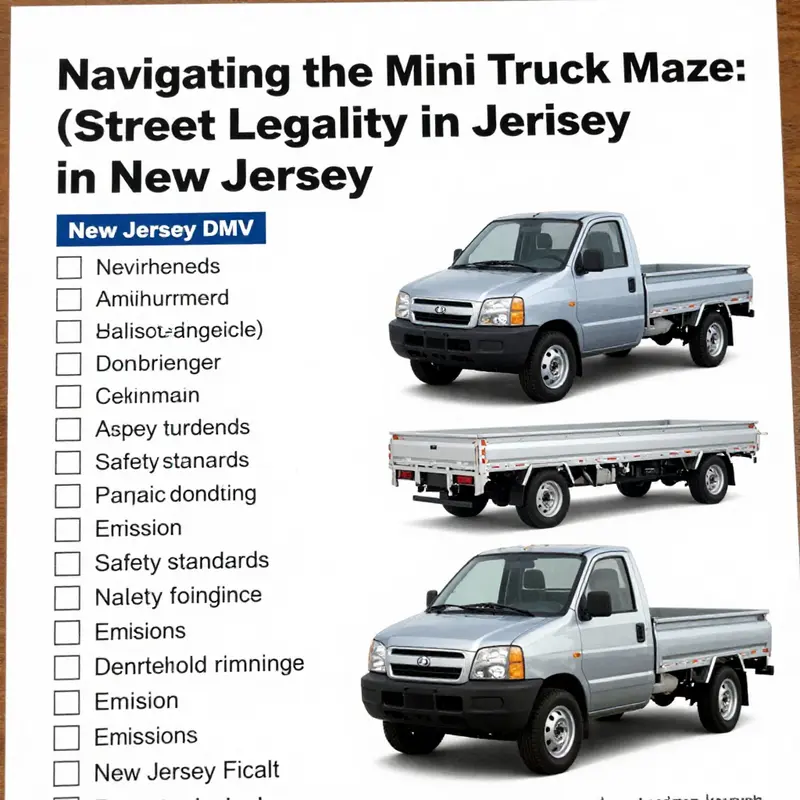
New Jersey presents a carefully balanced stage for anyone who dreams of turning a compact, Kei-style truck into a vehicle that can confidently share public streets with larger cars and trucks. The dream often runs up against real regulatory limits, because street legality in the Garden State is not a blanket certificate granted to every small pickup with a cute silhouette. Instead, it rests on the shoulder of the New Jersey Motor Vehicle Commission (NJMVC) and the broader framework of federal safety and environmental standards. In practice, this means that owning a mini truck and driving it on a highway or a city street are two different things. It also means that the path from ownership to on-road use is not a straight line, but a careful negotiation of registration, compliance, and verification that the vehicle can meet the expectations of both state and federal regimes. For those who stay curious and cautious, the road to legal operation is navigable, but not automatic, and it is not a shortcut for the unmodified machine that arrived from abroad or from a different market altogether.
A central truth anchors the entire conversation: the vehicles in question are not inherently outlawed, but most Kei trucks do not arrive in New Jersey ready to roll. They were designed for different regulatory environments, often with safety standards and emissions rules that diverge from those in the United States. The FMVSS—the federal motor vehicle safety standards—along with EPA emissions regulations, create a baseline that many imported mini trucks do not meet out of the factory. In practical terms, this means that simply purchasing a small, lightweight truck and parking it in a driveway does not equate to a right to operate it on state roads. To reach the point of legal operation, the vehicle typically needs substantial modifications and formal approval processes that demonstrate compliance with New Jersey’s own rules and with federal expectations. The challenge is not merely technical; it is procedural, logistical, and often financial.
The NJMVC framework centers on several pillars: registration, emissions, safety equipment, and general vehicle dimensions that align with standard road-use expectations. Registration is the foundation. Without proper registration, a vehicle cannot be legally driven on public roads. This means the mini truck must be properly titled and registered in the state. Registration is not a ceremonial step; it is a legal designation that marks the vehicle as permitted for use on public highways and streets. Emissions follow next. New Jersey tends to align its emissions standards with federal EPA requirements, which means a Kei-style vehicle must meet those standards—or be certified to a state-specific or modified standard that achieves equivalent outcomes. The path to compliance might involve emissions testing, certification of the modification work, and documentation that demonstrates ongoing adherence to the relevant limits. Each of these steps functions as a gatekeeper: fail to satisfy any one, and the vehicle is not cleared to operate beyond private property.
Then there is the matter of safety equipment. The state requires that vehicles driven on public roads bear functional safety components: seat belts for all occupants, properly working headlights, taillights, brake lights, turn signals, mirrors, and a valid license plate. The list is not glamorous, but it is fundamental. It is not enough that a vehicle looks the part; it must actually provide the minimum protections and signals that other drivers rely on for predictable behavior on the road. The safety requirement is especially challenging for older or less common designs, where certain components may need replacement or upgrading to meet current standards. In practice, this means that even if a mini truck passes emissions, it must also pass a safety audit of sorts, ensuring all the essential systems operate as modern traffic participants expect.
Dimensions and weight add another layer of complexity. The broader category of “smaller-than-average” pickup trucks does not automatically receive a free pass under New Jersey rules. The state does not publish a single, explicit quota for length, width, or height that universally applies to mini trucks. Instead, the vehicles must conform to the general size and weight limits applicable to all motor vehicles on public roads. Very small or uniquely engineered designs may trip up this criterion if their dimensions raise questions about stability, maneuverability, or compatibility with standard roadway infrastructure. In short, the regulatory gaze is pragmatic: the truck must be able to navigate typical road conditions without posing unusual risks due to its size or geometry.
An often-underappreciated piece of the puzzle is insurance. Liability coverage is a core prerequisite to registration and operation in New Jersey. Even if a Kei truck somehow meets emissions and safety checks, drivers must show proof of insurance as a condition of licensing. This requirement protects both the owner and other road users by ensuring that liability is covered in the event of an accident. The practical implication is straightforward: the cost and availability of insurance for a non-standard or modified vehicle can be a decisive factor in whether the vehicle eventually becomes street-legal. Some insurers assess the risk profile of these atypical vehicles differently, which can influence how much it costs to keep the vehicle legally and financially protected on the road.
The reality on the ground is nuanced. Some owners pursue a formal path that seeks to classify the mini truck as a non-standard vehicle or subject to a special compliance framework. This route is not a mere checkbox; it involves a chain of assessments, documentation, inspections, and likely significant modification work. The process can demand professional evaluations, engineering reports, and conformity with a spectrum of standards that may not be obvious at first glance. The steps often include removing or replacing noncompliant components, updating lighting and signaling systems, integrating safety features that meet current standards, and achieving an emissions profile acceptable to New Jersey authorities. The financial and logistical considerations can be substantial. The cost may extend beyond the parts and labor of modifications to include expert consultations, testing, and the administrative fees associated with registration and titling. For many, the effort is worthwhile—but only if the end result is a vehicle that will weather compliance checks and on-road scrutiny over time.
Enforcement and penalties form the headwind for any hopeful street-legal transformation. New Jersey does not tolerate noncompliance, and the consequences can be swift and severe. Fines for unregistered operation, vehicle impoundment, or denial of registration are real possibilities. The practical risk is not just a money concern; it is the potential loss of vehicle access, the inability to legally drive, and the need to disassemble and rework components to regain compliance. The legal journey is thus a long-term investment in safety, accountability, and civic responsibility. It is a pathway that rewards meticulous preparation, not hasty improvisation. Those who understand the stakes tend to approach the process with a readiness to navigate audits, inspections, and the inevitable paperwork that accompanies legal road use.
Throughout this process, the broader regulatory environment also matters. The month-by-month cadence of inspections, the periodic need for updated registrations, and the possibility of changes in emissions or safety standards all shape how the street-legal status evolves over time. For anyone standing on the verge of a decision, the message is clear: the goal of operating a mini truck legally is achievable under the right conditions, but the odds favor those who equip themselves with accurate information, professional guidance, and a realistic budget that anticipates the costs of compliance rather than merely the thrill of ownership. A practical approach often includes doing preliminary checks with the NJMVC and seeking a feasibility assessment from a qualified shop that understands both federal and state expectations for non-traditional light trucks.
For readers seeking a broader context or practical narratives about the journey, a visit to the Mini Trucks Blog can offer perspectives from others who have walked this path. The content there can help frame expectations, share experiences, and illustrate the kinds of questions that arise when trying to balance passion with regulation. You can explore that resource here: Mini Trucks Blog.
In sum, the New Jersey road-legal status for mini trucks is not a given and is not determined by the vehicle’s charm or origin alone. It hinges on a careful alignment of ownership, compliance, and ongoing stewardship of the vehicle as a road-going asset. The process is complex, but it is not impossible. Those who master it know that legality is not an ornament on the bumper but a discipline that begins with accurate appraisal, continues through documented modifications, and culminates in a registration that stands up to time and test on the highway. The lesson is straightforward: if you envision a Kei-style truck sharing New Jersey’s streets, invest in a clear plan, engage the right professionals, and prepare for a measured, compliant pathway rather than a quick, unverified ride. The state’s roads reward diligence, and the journey from ownership to lawful operation is a testament to the broader principle that safety, accountability, and practical design considerations must steer every inventive automotive impulse.
For those who want to confirm current requirements directly, the authoritative source remains the official New Jersey Motor Vehicle Commission portal. The site provides the most up-to-date standards on registration, emissions, safety equipment, and the general rules that govern all motor vehicles operating on New Jersey roads. It is essential to consult these guidelines periodically, as regulatory landscapes can evolve with changes in technology and environmental policy. The authoritative point of reference is the NJMVC, accessible at https://www.njmvc.gov. This external resource anchors the practical steps described above and offers direct access to forms, fees, and the procedural steps needed to move from ownership to on-road legality.
When Washington Meets Main Street: How Federal Safety and Emissions Rules Determine Mini Truck Road Rights in New Jersey
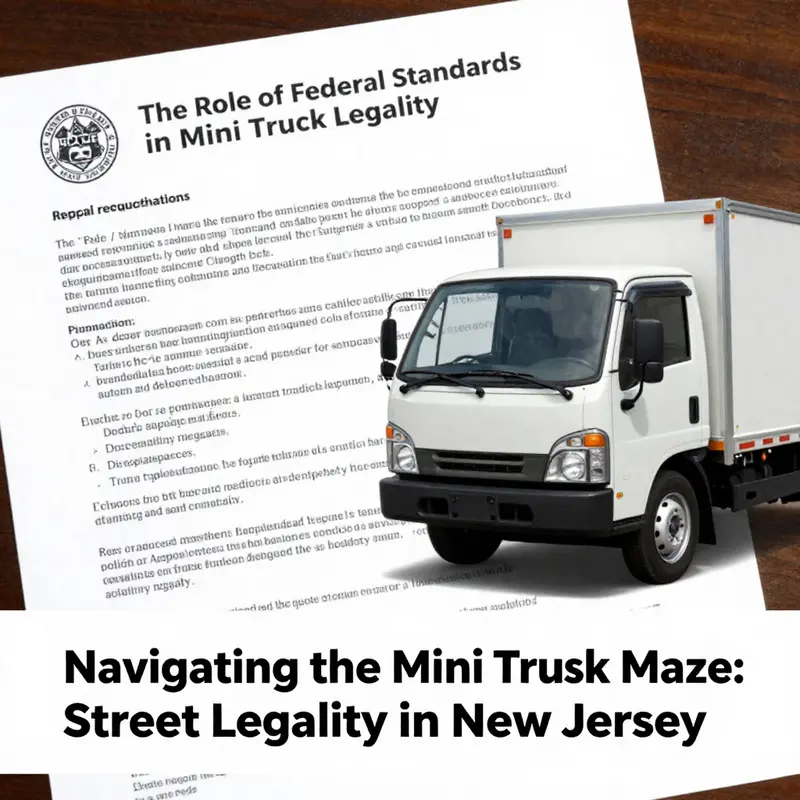
Federal standards decide whether a mini truck can legally use New Jersey roads. These national rules, enforced by federal agencies, act as the gatekeepers. They determine which vehicles can be sold, imported, and ultimately registered. For mini trucks—small, lightweight commercial or utility vehicles often built for markets abroad—federal safety and emissions requirements are the first legal obstacle. If a vehicle does not meet those requirements, state-level permission to drive it never materializes.
The federal framework is twofold. One side covers safety standards: structure, lighting, restraint systems, and crashworthiness. The other covers emissions: how much pollution the engine emits and whether it meets U.S. limits for nitrogen oxides, hydrocarbons, carbon monoxide, and particulates. Both sides matter because New Jersey law demands that any vehicle operated on public roads comply with applicable federal standards before the state will register it. In short, federal compliance is a prerequisite for state registration.
Safety standards are technical and prescriptive. They specify requirements for headlights, turn signals, mirrors, seat belts, windshield wipers, and crash performance for various vehicle classes. Many mini trucks built for foreign markets were never designed to meet these specifications. Their cab structures, restraint systems, and lighting often fall short of U.S. standards. Some elements, such as advanced airbag systems or specific crash energy management features, are practically impossible to retrofit. That reality explains why many imported mini trucks remain off public roads unless owners pursue complex, costly changes.
Emissions rules add another layer of complexity. The U.S. Environmental Protection Agency sets emissions limits for engines and requires certification of engine families. A foreign-built engine or vehicle typically lacks EPA certification for U.S. operation. Retrofitting can sometimes reduce emissions to compliant levels—by fitting certified catalytic converters, recalibrating engine control units, or installing approved exhaust treatment systems—but results vary. Modifying an engine to meet EPA standards often requires testing, documentation, and approval from recognized facilities. Without that paperwork, the vehicle remains noncompliant in the eyes of both federal regulators and state motor vehicle departments.
A few legal pathways can allow a mini truck to become road-legal in New Jersey, but each has trade-offs. One path is full compliance: the vehicle is modified, tested, and certified to meet federal safety and emissions rules. This route may involve replacing lighting, adding seat belts, upgrading structural elements where feasible, and achieving EPA-approved emissions performance. It requires work by qualified professionals and documentation accepted by federal agencies. The expense and technical difficulty can be prohibitive for many owners, however, because some safety features cannot be retrofitted or certified easily.
Another path involves special federal import or age exemptions. Federal law permits certain older vehicles to be imported without meeting all modern standards if they meet age thresholds or qualify for collector exemptions. Age-based exemptions may allow vehicles older than a specific number of years to be registered in many jurisdictions, but not all mini trucks meet those age criteria. Even when age exemptions apply, state rules can still restrict road use. Relying on age exemptions is a common strategy, but it means the vehicle is treated as a historic or special-use vehicle rather than a modern daily driver.
A third option is reclassification. Some mini trucks can be converted and certified as low-speed vehicles. Low-speed vehicle standards are less strict than full passenger car standards because these vehicles are limited to low maximum speeds, typically 20 to 25 miles per hour. If conversion succeeds, owners may gain legal access to certain low-speed roads. But conversion requires meeting the specific federal standard for low-speed vehicles and complying with state rules about where they may be driven. Many New Jersey roads have speed limits well above those thresholds, so practical utility may still be limited.
Federal noncompliance has tangible consequences at the state level. When a vehicle lacks federal certification, New Jersey’s motor vehicle bureaucracy will raise red flags during the title and registration process. The state may refuse to issue a title or registration, preventing legal operation. Insurance companies are likely to deny coverage for vehicles not legally titled, and driving an uninsured, untitled vehicle risks fines and impoundment. For commercial use, the barriers are even higher. Companies cannot lawfully operate noncompliant vehicles for hire or haul goods for pay without meeting federal and state requirements.
Enforcement also works the other way: federal authorities can restrict imports and penalize those who attempt to circumvent rules. The legal architecture discourages informal modifications that claim compliance without proper documentation or testing. Buyers and owners who think they can make a few changes and register the vehicle without going through formal channels often find the paperwork and inspections unavoidable.
Practical considerations matter. Even if you intend to pursue compliance, start by checking documentation. Does the vehicle have proof of meeting any emissions standard recognized by the EPA? Is there a manufacturer’s statement of conformity for safety features? If not, expect to pay for inspections, certification testing, and possibly major replacements. Talk with professionals experienced in compliance conversions and with New Jersey motor vehicle officials before purchasing. Those conversations reveal whether a given mini truck can realistically be made legal, and at what cost.
Community resources help, too. Owners and modifiers exchange hard-won advice about which retrofits succeed and which do not. For practical examples and hands-on perspectives from the mini truck community, consult the MiniTrucksSoCal blog for insights into conversions, equipment choices, and the realities of getting small trucks road-ready. Those discussions often highlight the point that federal compliance is not just a technical hurdle—it’s a process requiring planning, inspection, and acceptance from multiple authorities.
Finally, remember that federal standards evolve. Emissions requirements tighten over time, and safety standards adjust as new technologies and research appear. A conversion that works today might not meet tomorrow’s rules, and a vehicle that gained an exemption years ago might face new scrutiny. For anyone hoping to drive a mini truck on New Jersey roads, the prudent course is to view federal standards as the foundation. Without meeting them, state registration is unlikely. With them, New Jersey’s department of motor vehicles can process titles and registrations, and the vehicle can join Main Street without legal risk.
For guidance on federal vehicle safety requirements and how they apply to imported or modified vehicles, consult the official federal resource on vehicle safety. https://www.nhtsa.gov
On the Edge of the Road: Navigating Ownership and Street Legality of Mini Trucks in New Jersey
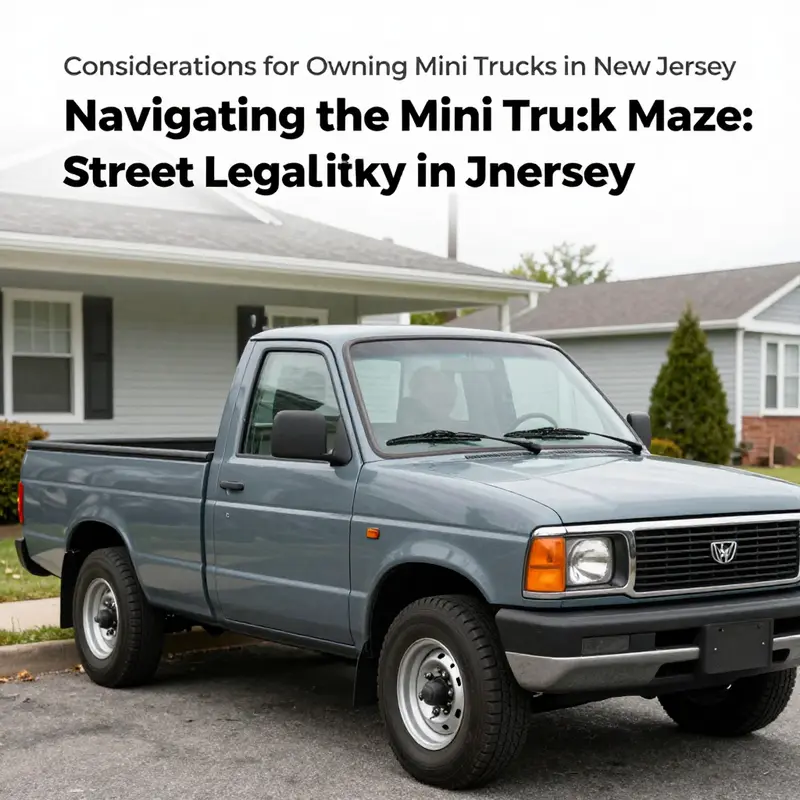
In New Jersey, the allure of compact, utility-focused trucks sits against a backdrop of rules that keep street use carefully circumscribed. For drivers drawn to the idea of a small, capable workhorse that can squeeze into tight urban spaces yet still tote gear or gravel, the attraction is real. But the path from fascination to lawful, on-road reality is lined with regulatory gates. The state’s traffic laws and vehicle safety rules are designed to ensure that any vehicle sharing public roads meets certain standards for safety, emissions, and size. The tension between practicality and compliance becomes especially pronounced with mini trucks, a category that often originates outside the United States and is designed for a different regulatory baseline than what New Jersey requires for a vehicle to be street legal. The outcome is not a simple yes or no; it is a careful, potentially expensive process of alignment with state standards, federal motor vehicle safety requirements, and environmental protections. The romance of the compact utility vehicle gives way, in practical terms, to a careful calculation of what a vehicle must become to earn a license to roam New Jersey streets.
The core of the issue lies in the statutory framework that governs registration, inspection, and operation. In New Jersey, no vehicle is permitted on public roadways without meeting a combination of state and federal criteria. The New Jersey Motor Vehicle Commission, the MVC, acts as the gatekeeper for who can register a vehicle and under what conditions it may be driven. The criteria are not merely about a vehicle’s ability to move. They encompass a spectrum of safety features, structural integrity, lighting and signaling requirements, and compliance with noise and emissions standards. For most Western-market pickups, the hurdle is not solely a matter of registration but of conformity. Many mini trucks imported from abroad are designed around a different set of rules, often for lighter duty cycles or terrain that does not mirror the expectations of U.S. public roads. They may not meet the federal motor vehicle safety standards and the Environmental Protection Agency emissions requirements that govern vehicles sold or operated in the United States. Until such a vehicle is altered and approved to align with FMVSS and EPA standards, it cannot be lawfully driven in most public road scenarios in New Jersey. The path from import to on-road legality thus runs through a process of compliance that can require significant, and sometimes costly, modifications.
When ownership crosses into operation, the dialogue shifts from what is possible in theory to what is permissible in practice. The first question a prospective owner should ask is whether the vehicle can be registered at all. Local DMV offices and the MVC require documentation that proves the vehicle’s identity, its compliance with safety and emissions standards, and, crucially, its measurement parameters. Size and weight matter here. Vehicles that sit too high or too wide for the lane and curb spaces that are typical in New Jersey can trigger compliance concerns about roadway safety. The state places emphasis on how a vehicle interacts with other traffic, pedestrians, and road infrastructure. A mini truck that does not conform to the expected profiles may be subject to extra inspections, or it may be deemed non-compliant for public-road use. In practical terms, this often means that owners must pursue a qualification route that some call non standard vehicle designation or an equivalent compliance path. It is not a shortcut; it is an alternative route designed to acknowledge a vehicle’s unique origins while ensuring it can still be operated safely and legally alongside conventional cars and trucks.
The process is not purely administrative, either. The legal landscape around these vehicles has evolved to reflect concerns about safety and proper documentation. A recent reference point in the state’s broader regulatory climate is the continued emphasis on transparency in vehicle ownership and operation. While a single case cannot encapsulate an entire regulatory framework, it underscores a principle that runs through these rules: legality is inseparable from documentation. In New Jersey, as in many jurisdictions, paperwork is not a mere formality. The system is designed to identify any misrepresentation or improper use that could expose other road users to risk or expose the vehicle owner to penalties. In one notable example, a local case highlighted the risk of corporate and financial irregularities surrounding vehicle fleets, reminding readers that legal compliance extends from the vehicle itself to the way it is acquired, insured, and invoiced. While the exact facts of such cases can vary, the reminder remains relevant: attempting to drive a vehicle that does not meet standards or that is not properly documented carries meaningful legal exposure. The takeaway is not fear but prudence. It is essential to treat the process with seriousness, securing the vehicle’s registration, confirming insurance coverage, and ensuring ongoing compliance with state laws.
To approach ownership responsibly, an informed mindset is essential from the outset. Prospective buyers should first consult the MVC official guidelines and, where possible, speak to a licensed professional who understands the intricacies of New Jersey’s vehicle compliance requirements. It is not enough to rely on personal intuition or online anecdotes. The rules demand precise alignment with safety and emissions criteria, and that alignment often begins with a professional assessment of the vehicle’s current condition and the modifications that would be required to meet compliance. The question of modifications is not merely cosmetic. It centers on whether a vehicle can be modified in a way that will pass inspection and remain within FMVSS and EPA standards. The modification process typically involves certified technicians, vehicle re-certifications, and documentation that demonstrates the vehicle’s new conformance. That path can be lengthy and expensive, but it is essential for those who seek a legitimate on-road life for a mini truck in the Garden State.
The practical implications of these regulatory considerations are significant, especially in the context of urban life. Owners weigh the appeal of a nimble, low-profile work vehicle against the realities of NJ’s road environment, where lane widths, curb heights, and parking constraints can magnify even small misalignments with safety standards. For some, the payoff remains worth the investment: smaller footprints in high-traffic areas, simpler maneuverability in tight jobsites, and the ability to carry tools and materials without resorting to larger, heavier equipment. For others, the cost and complexity of achieving compliance may overshadow the immediate benefits, leading to a decision to diversify transportation and work-gear options rather than pursue a street-legal mini truck in the state. In either path, the guiding principle is clear: legality requires diligence, transparency, and a commitment to meeting established standards rather than simply bending the rules.
If you are considering this route, the best course is to engage with the state’s official resources and to proceed with a plan that treats compliance as a collaborative process. The MVC website serves as the authoritative source for eligibility, inspections, and the steps you must follow to register and operate a vehicle that finally earns its on-road status. For readers seeking a community-oriented perspective that speaks to practical experiences and ongoing developments, a related online resource offers a broad discussion of mini-truck ownership and customization culture. See the Mini Trucks Scala blog for insights and updates that can illuminate the broader landscape of kei-style trucks and how enthusiasts navigate regulatory realities.
The conversation about street legality in New Jersey centers less on a single yes-or-no verdict and more on a process of alignment. It asks owners to consider whether the vehicle’s potential utility justifies the effort, cost, and time required to meet safety and emissions milestones. It invites owners to adopt a mindset of rigorous due diligence, ensuring that every step—from documentation to insurance to final inspections—is handled with accuracy and integrity. And it reminds readers that legality on New Jersey roads is a living, evolving standard, not a static rulebook. The state’s approach emphasizes that safety is a shared responsibility: a road system that accommodates a wide range of vehicles can still function smoothly when every participant adheres to transparent procedures and verifiable standards. For those who commit to this path, the payoff is more than the ability to operate a compact truck on public highways; it is the reassurance that the vehicle is integrated into a broader framework of road safety and environmental responsibility.
As the chapter closes, a broader picture emerges: ownership of mini trucks in New Jersey sits at the intersection of desire and duty. Enthusiasm for compact utility vehicles meets the duty to conform to safety and environmental expectations. The road to legality may be paved with paperwork, modifications, and professional assessments, but it also offers a clear, principled route to lawful operation. The path is not insurmountable for those who are prepared to invest in compliance, to work with qualified technicians, and to navigate the state’s regulatory processes with honesty and patience. In the end, the question is not whether a mini truck can exist in a New Jersey driveway; it is whether that vehicle can responsibly share the state’s public roads, comply with the letter and spirit of the law, and serve the owner’s needs without compromising the safety of others on the road. For now, the answer remains nuanced and situational, with legality earned through diligent, transparent work rather than a simple shortcut. External resources such as official MVC guidelines and federal safety information provide the essential framework for anyone approaching this careful balance between practicality and regulatory compliance.
Shifting Gears on the Garden State: The Quiet Drift Toward Clarity in Mini Truck Legislation
In New Jersey, the question of whether a tiny, Kei-sized work truck can truly be street-legal sits at the intersection between practicality, safety, and the stubborn rigidity of regulatory systems. The short answer remains nuanced: these vehicles can exist in the state, but their presence on public roadways is governed by a patchwork of standards that rarely align with the original design intentions of compact importers. What this means in real terms is not a simple yes or no, but a careful, sometimes costly ballet of compliance, verification, and sometimes restraint. As with many policy issues, the driving force behind any shift is not a single dramatic vote but a slow recalibration of priorities—safety on crowded streets, the push to reduce emissions, and the practical needs of small businesses and rural landholders who see value in a lighter, more maneuverable truck for specific tasks. The current posture, therefore, reads more like a cautious posture than a bold leap forward. The state’s approach emphasizes that street legality hinges on meeting three core criteria: safety, emissions, and dimensions that fit within the established road and infrastructure framework. In practice, this means that even when a Kei-sized truck arrives in New Jersey and is technically registered as a vehicle, it still has to prove that it conforms to FMVSS—the federal safety standards that govern vehicle structure, lighting, braking, and occupant protection—and to EPA emission requirements. The reality is that many imported Kei trucks were engineered for uses far from the complexity of urban driving: small scales tailored for agriculture, light construction, or off-pavement utility tasks. Their original intent often omits features judged essential on U.S. roads, such as advanced airbag configurations, reinforced crash structures, or modern exhaust aftertreatment. The result is a built-in tension: the vehicle can serve a niche function under controlled conditions, yet the moment it needs to share a road shoulder, a lane, or a speed limit with heavy traffic, the compliance burden becomes a gatekeeper rather than a mere formality. New Jersey’s regulatory framework mirrors this tension. A vehicle must pass rigorous assessments, be properly titled and registered, and, crucially, be demonstrably compliant with both federal safety standards and state environmental requirements. In other words, the path to legality is not a single modification or a one-time inspection. It is an ongoing alignment with standards that may not have been part of the original product design. For many owners, the route through this landscape begins with acknowledging the gap between the vehicle’s native configuration and the state’s expectations. The first step is to understand how a vehicle’s design translates into a road-legal package. Some Kei trucks arrive with metalwork and control systems that are compatible with U.S. standards in a nominal sense, but the devil lies in the details: lighting housings, mirror geometry, crashworthiness, and even seat belt anchorage can trigger compliance reviews. Other vehicles fail to meet emissions thresholds right out of the crate, a gap that requires emissions modification work that brings them into line with EPA rules. The financial dimension of compliance is rarely playful. Owners must consider engineering assessments, potential aftermarket parts, professional installations, safety inspections, and registration fees. The cumulative cost can exceed the price differential between a compliant, purpose-built light truck and the imported unit. Importantly, the state’s stance is not punitive by design; it reflects a prioritization of infrastructure safety and environmental integrity. The roads that accommodate a vast mix of vehicles—from compact electric city cars to heavy-duty freight haulers—depend on predictable behavior from all participants. When a vehicle claims space on a public axis, it must demonstrate its ability to perform consistently within the traffic system. This includes reliable braking performance under diverse conditions, predictable steering responses, appropriate visibility, and exhaust outputs that do not undermine air quality targets. The regulatory narrative, therefore, emphasizes process as much as product. For example, some owners pursue a designation known as a non-standard vehicle, a pathway that acknowledges a vehicle’s atypical origin while seeking official recognition of its roadworthiness after a rigorous review. This route can unlock street use but demands documentation, traceable modifications, and often the involvement of licensed technicians who can certify that the work has achieved the required standards. The sense one gains from looking at the current landscape is that the system is patient, methodical, and, above all, risk-averse. There is no catchy loophole that can be exploited with a quick fix. Instead, there is a long form of due diligence where engineers, inspectors, and regulators repeatedly confirm that safety, emissions, and dimensions have conformed to a shared baseline. In this environment, the role of professional assessment cannot be overstated. A vehicle that might look street-ready after cosmetic improvements could still fail a critical test if a component—say, the braking system or the exhaust configuration—does not meet the thresholds set by the FMVSS and the EPA. The consequence is not merely denial of a registration; it can also be a signal to the owner that a different approach is necessary—one that may involve re-engineering parts, replacing noncompliant components, or in some instances, choosing to keep the vehicle for off-road use or private-property tasks. The broader discussion around these regulatory choices is connected to public policy debates about urban congestion and environmental impact. As cities across the country face growing concerns about air quality and street safety, there is a natural pressure to harmonize the expectations placed on all types of light vehicles. New Jersey, with its dense road network and high throughput of commuters, serves as a microcosm of these tensions. The state’s agencies weigh the benefits of lighter, more efficient work vehicles against the imperative to maintain predictable traffic behavior and robust environmental performance. The possibility of legislative or administrative shifts tends to hinge on two recurring themes. The first is clarity: administrators and lawmakers seek clear guidance on what constitutes acceptable modifications, what kinds of inspections are required, and what minimum standards must be met before a vehicle can be permitted on public roads. The second theme is scalability: even if a subset of Kei trucks can be legalized, policymakers consider how to prevent a patchwork of exceptions that could undermine uniform enforcement or create safety blind spots. It is this blend of clarity and scalability that shapes the likelihood of any meaningful change in the near term. For readers who want to stay ahead of potential changes, the most reliable compass remains the official channel: the New Jersey Department of Transportation’s ongoing regulatory reviews and proposed bills. These processes are designed to surface the practical questions that matter to road safety, vehicle emissions, and roadway infrastructure compatibility, rather than to chase every evolving import trend. The NJDOT site serves as the central repository for updates on transportation policies, proposed bills, and regulatory analyses. In practical terms, this means that anyone considering a road-legal Kei truck in New Jersey should treat legislative discussions as a moving target—one that may shift in response to new data about traffic patterns, safety incidents, or environmental measurements. While there is no current, imminent landmark legislation on mini trucks in the state, ongoing conversations reflect a broader readiness to adapt regulatory language to the realities of smaller, more agile work vehicles. This is not a guarantee of a liberalized regime; rather, it is a signal that policy makers are watching the balance between utility and safety with increasing scrutiny. For readers who want to delve deeper into the topic and follow potential changes, consulting the official NJDOT channels is essential. The internal side of the conversation—how communities, owners, and shops navigate compatibility challenges—also matters. A community of enthusiasts often shares practical experiences about the steps required to move a vehicle from a nonstandard status toward compliance, including the careful documentation of modifications and the engagement of licensed technicians who can attest to the vehicle’s readiness for the road. If you are curious about how practical challenges map onto regulatory expectations, you can explore broader discussions within the mini-truck community and see how owners describe the journey from import to legitimate street use. For readers seeking a closer, real-world perspective on the culture and processes, the community blog summarizes many of the practical considerations, challenges, and potential pathways, offering a supplement to the formal regulatory language. minitrucksocala.com/blog/ provides a window into how enthusiasts frame the street-legal question in everyday terms and how peer guidance can help navigate the compliance maze. This does not replace professional counsel or official guidance, but it helps illuminate the lived experience behind the policy. The evolving picture in New Jersey remains a study in careful, incremental progress rather than sweeping reform. The state continues to balance the needs of small businesses and agricultural operators who see value in lighter, compact trucks with the universal goals of roadway safety, durability, and environmental stewardship. As urban areas intensify and the demand for flexible, efficient work vehicles grows, policy makers are likely to lean on data, modeling, and pilot programs to test how smaller trucks perform under real-world conditions before broad changes are embraced. In short, the current trajectory suggests a cautious openness rather than a rapid revolution. Readers who want to keep pace should monitor official updates and engage with the regulatory process in a transparent, well-informed way. The path to a more predictable, streamlined framework for mini trucks on New Jersey roads will likely depend on accumulated evidence of safety outcomes, a clear definition of the acceptable modification spectrum, and a shared understanding of how such vehicles integrate with the state’s broader transportation goals. For now, the lane lines remain defined, and the guardrails are in place. Still, the conversation is alive, and with it comes the possibility that a future chapter will reveal clearer standards, simpler pathways to compliance, and a more definite answer to the street-legal status of these diminutive vehicles in the Garden State. External updates and authoritative guidance can be found on the New Jersey Department of Transportation’s official website. https://www.nj.gov/transportation/
Final thoughts
Navigating the legal landscape for mini trucks in New Jersey doesn’t have to feel overwhelming. By understanding the specific requirements, compliance regulations, and potential future trends, you can take the necessary steps to enjoy your mini truck legally and safely. Whether you’re a small business owner looking to maximize utility or a hobbyist eager to explore modifications, being informed puts you in the driver’s seat. Stay tuned to local legislation and community discussions to ensure your mini truck experience remains enjoyable and compliant. With the proper preparations, the roads of New Jersey can welcome your mini truck with open arms.