
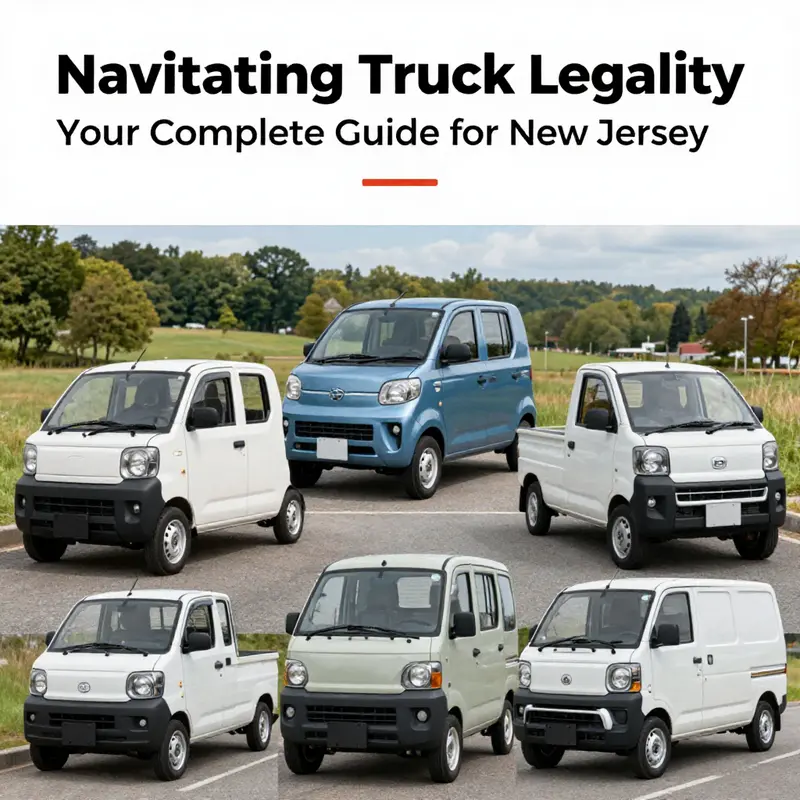
If you’re a local business owner, a property owner, or a mini truck enthusiast in New Jersey, you’ve likely encountered the question of whether mini trucks are street legal. Specifically, the unique Japanese Kei trucks spark curiosity with their compact size and versatile uses. Despite their popularity, navigating the rules surrounding their operation can be complex. This guide dives into the ownership regulations, modification requirements, operating criteria, safety and emissions standards, and finally, the various practical applications and usage of mini trucks in NJ. Each chapter aims to provide clarity and empower you to make informed decisions about owning and utilizing these quirky yet functional vehicles.
Revving Up Compliance: Navigating the Ownership and Regulatory Maze for Mini Trucks in New Jersey
Mini trucks, especially the distinctive Kei trucks that have captured the interest of vehicle enthusiasts worldwide, represent a unique blend of compact engineering and functional versatility. In New Jersey, these vehicles embody both a homage to efficient design and a challenge for owners who must navigate a labyrinth of regulations to legally take them on public roads. While the allure of mini trucks lies in their small footprint, economical engine performance, and cultural resonance from their origins in Japan, owning one in New Jersey means embarking on a journey that involves rigorous inspections, tailored modifications, and an intimate understanding of state and federal compliance standards.
The charm of Kei trucks originates in their design philosophy, explicitly developed to meet the strict vehicular regulations in Japan. These vehicles, engineered with engine displacements of 660cc or less, facilitate lower taxes and ease of registration back in their homeland. However, when these mini trucks cross the Pacific to find a new home in New Jersey, the established norms are challenged by a regulatory ecosystem that demands strict adherence to American safety, emissions, and equipment standards. This transition from a tailored Japanese environment to a state with its own defined legal framework necessitates considerable modifications if owners wish to operate their mini trucks on New Jersey’s public roadways.
A significant aspect of this process involves addressing the gap between what is standard in a Kei truck and what is required on the roads of New Jersey. Most Kei trucks are built to be compact and efficient, often lacking many of the enhancements that American vehicles routinely include as standard features. Critical components such as side mirrors, advanced lighting systems, and robust crash safety features may not be present in the original configuration. To transform a Kei truck into a street-legal vehicle, owners must invest in retrofitting these essential parts. For example, installing updated headlights and brake lights, ensuring that turn signals and hazard indicators are fully compliant, and upgrading seat belts to meet modern safety criteria are among the tasks that must be accomplished. This retrofit process is not just a simple improvement—it often requires professional evaluation and modifications that meet both the stringent safety protocols enforced by state inspection and the overarching federal safety and emissions standards.
Inspection is a cornerstone of the regulatory framework in New Jersey. Every mini truck aspiring to be street legal must undergo a comprehensive state inspection that verifies its compliance with the specific mandated safety features. During these inspections, vehicles are scrutinized for proper functionality of critical items such as headlights, turn signals, brake lights, and seat belts. In practice, inspectors often look for modifications that demonstrate the vehicle’s ability to operate safely on public roads. This inspection process is rigorous not only to ensure the safety of the mini truck’s driver and passengers but also to protect other road users from potential hazards. Consequently, many owners find themselves balancing the intrinsic charm and economical operation of their mini trucks against the considerable investment required to bring these vehicles into compliance.
The registration process itself involves several layers that contribute to the broader regulatory oversight. After a mini truck successfully passes its safety inspection, the next step is to register the vehicle with the New Jersey Motor Vehicle Commission. This registration process is meticulous, requiring documentation that proves the truck has been modified in accordance with state standards. Moreover, owners must secure appropriate insurance coverage that meets the minimum liability requirements set forth by New Jersey law. In essence, registration is not merely a formality but rather a critical validation of the vehicle’s compliance with all operational rules. Legalizing a mini truck on public roads thus becomes a holistic procedure that integrates inspection, registration, and insurance to create confidence in the vehicle’s roadway suitability.
For many enthusiasts and practical users alike, the decision to modify a Kei truck for road use is driven by a combination of personal passion and functional need. In rural areas or in settings where tight maneuverability is advantageous, mini trucks serve as practical transports for agricultural operations, construction support, or market deliveries. Despite their charm, the originally minimalistic design of Kei trucks means they are more than just collectibles or conversation starters—they often play vital roles in specific sectors. However, this functionality is tethered to the compliance narrative; without the necessary upgrades, owners risk encountering legal obstacles that could result in fines or the inability to use their vehicles for daily operations.
Beyond the technical modifications, owning a mini truck in New Jersey involves a commitment to ongoing maintenance and continual regulatory compliance. Even after the initial modifications are completed, owners must ensure that the vehicle remains in a state of readiness for periodic state inspections. Regular maintenance not only preserves the function of installed components, such as updated lighting systems or mirrored assemblies, but it also safeguards the vehicle’s overall operational safety. Given the complexity of maintaining a vehicle that has been adapted from a non-standard configuration, many owners are advised to consult specialized service centers familiar with both Kei trucks and the specific demands of New Jersey law. Resources such as the mini truck enthusiasts blog available at mini truck enthusiasts blog can serve as an invaluable guide, offering insights and tips derived from the collective experiences of owners who have navigated these modifications successfully.
One must also consider the financial aspects that come with legalizing a mini truck for street use in New Jersey. The cost of retrofitting a vehicle can be substantial, involving not only parts and labor but also the potential for periodic upgrades as standards evolve. Owners must account for the immediate expenses related to modifying safety features, as well as long-term costs associated with maintenance and compliance checks. This financial commitment is balanced by the inherent efficiency and unique style of mini trucks—a balance that car enthusiasts and practical users alike find both challenging and rewarding. In many ways, the investment in making a Kei truck street legal is a reflection of the owner’s dedication to ensuring that their vehicle is not only an extension of their personal style but also a safe, reliable machine adapted for American roadways.
Safety remains a paramount consideration throughout the legalization process. Mini trucks, by their very design, were originally intended for controlled, low-speed environments. When adapted for use on public roads, the transition demands rigorous enhancements in safety features. Upgrades such as the removal of speed governors to allow for legally acceptable speed variations must be combined with the addition of robust crash protection systems, reinforced safety barriers, and modern emission control technologies. These modifications are often subjected to external reviews, sometimes involving third-party evaluators who certify that the vehicle now meets contemporary standards. Such enhancements are not merely cosmetic—they play a critical role in ensuring that the vehicle provides adequate protection in emergency situations, reducing the risk of injury to both occupants and other road users. The process underscores the importance of viewing the mini truck not solely as a cultural icon or a niche vehicle, but as a tool that must meet universally accepted safety benchmarks.
Regulatory compliance further extends into the realm of environmental stewardship. New Jersey’s emission standards are among the strictest in the nation, which means that even small discrepancies in the retrofit process can lead to a vehicle falling out of compliance. Kei trucks, with their small engine capacities, typically yield lower emissions; however, the lack of modern catalytic converters or exhaust treatments in their original design necessitates additional investment. Owners are often required to install updated emission control systems to ensure that the vehicle contributes minimally to environmental pollution. This dual mandate—of safety and environmental compliance—forces owners to take a holistic approach to vehicle modification, treating their Kei trucks as both personal vehicles and regulated entities within a broader societal framework.
Navigating the regulatory landscape is not without its ambiguities. Future changes in environmental policies and road safety regulations pose ongoing challenges for mini truck owners. There is always the potential for tighter controls and stricter enforcement, especially as state and federal bodies strive to harmonize American vehicle standards with evolving technological norms. As regulations evolve, owners must be vigilant, proactively seeking updates and re-certifications if necessary. The dynamic nature of legal requirements means that owning a mini truck in New Jersey is more than a one-time effort—it is an ongoing commitment to compliance. In some cases, this may involve periodic visits to certified modification centers and regular reviews of updated standards, ensuring that the vehicle remains in alignment with both new technologies and regulatory expectations.
Despite these challenges, many find the process of legalizing a mini truck in New Jersey to be a rewarding endeavor. For those with a passion for unique vehicles and a commitment to safety, the modifications represent not only an investment in aesthetics and style but also a reaffirmation of personal responsibility. The narrative of transforming a Kei truck into a compliant, roadworthy machine is one of ingenuity, perseverance, and a deep appreciation for automotive culture. Enthusiasts often share detailed guides, personal experiences, and technical tips that demystify the complexities of the regulatory framework—turning what might seem an insurmountable challenge into a well-charted path towards legal operation.
In summary, the legal journey for mini trucks in New Jersey is a complex but navigable process that demands attention to detail, an investment in modifications, and an ongoing commitment to maintenance and safety standards. From passing mandatory state inspections to modifying essential components and ensuring environmental compliance, the transformation of a Kei truck into a street-legal vehicle is not for the faint-hearted. It is a pursuit that embodies both the charm of innovative design and the rigors of regulatory adherence. Owners must be prepared to balance the financial costs, technical challenges, and constant vigilance required to ensure that their mini trucks not only capture the spirit of compact automotive engineering but also meet the exacting standards of New Jersey’s roadways.
For those considering this venture, it is crucial to consult reliable sources of information such as the official New Jersey Motor Vehicle Commission website at NJMVC to stay updated on current requirements and potential regulatory changes. Each step taken—from initial modifications to periodic maintenance—builds towards a vehicle that is both a personal statement of style and a rigorously vetted piece of machinery. The story of mini trucks in New Jersey is one of transformation, where cultural heritage meets modern compliance, and where every undertaking, however small, contributes to a greater narrative of safety and innovation on the road.
Embracing the challenge of legalizing a mini truck in New Jersey invites enthusiasts to become active participants in a dialogue between tradition and progress. It is a journey that epitomizes the spirit of automotive innovation, where every modification, inspection, and registration not only ensures safety and legality but also reinforces the value of meticulous craftsmanship. As owners and regulators work hand in hand to uphold road safety standards, the evolution of mini truck compliance continues to serve as a testament to the enduring appeal of these compact vehicles—a fusion of legacy and modern ingenuity that defines their place on the highways of New Jersey.
Transforming Mini Trucks for New Jersey Roads: Navigating Modification and Compliance Challenges
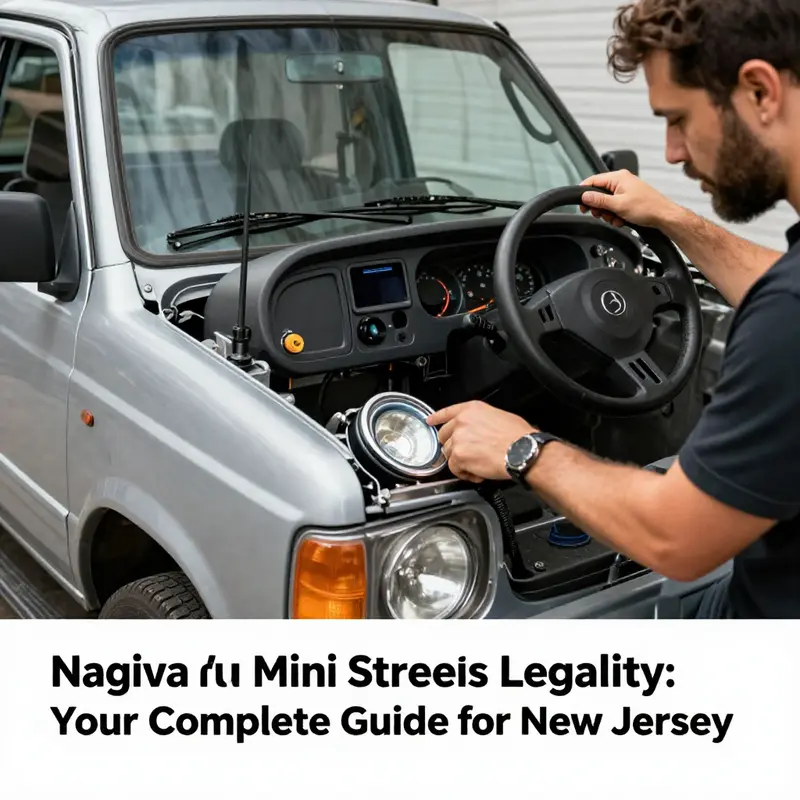
In New Jersey, the possibility of driving a mini truck on public roads comes with a host of strict modifications and regulatory hurdles that require the owner’s careful attention and commitment to compliance. Originating from Japan’s Kei truck lineage – vehicles designed to meet incredibly specific size and engine displacement standards – mini trucks have captured the imagination of enthusiasts, yet their transition from niche market beauties to street-legal vehicles is an elaborate process that demands precision, dedication, and a deep understanding of both state and federal guidelines. The transformation process hinges on meeting safety, environmental, and performance standards akin to those required for larger vehicles, ultimately safeguarding both the driver and the broader community.
At the heart of New Jersey’s regulatory framework lies the mandate that every vehicle must conform to federal standards set out by the National Highway Traffic Safety Administration (NHTSA) alongside state-specific requirements administered by the New Jersey Motor Vehicle Commission (MVC). Owners of these compact workhorses find that while owning a mini truck is generally permitted, their street usage is heavily regulated. This is because mini trucks, by design, were not originally intended for high-speed or high-traffic environments typical of U.S. public roads. Instead, these vehicles were initially engineered to operate under less demanding conditions with low tax implications in their countries of origin. As a result, before a mini truck can safely and legally circulate on New Jersey roads, it must undergo a series of modifications that transform it from a quirky import into a bona fide, fully compliant on-road vehicle.
The transformation journey begins with a careful evaluation of the vehicle’s lighting and safety systems. New Jersey’s MVC requires that all vehicles, including mini trucks, be equipped with a complete and fully functioning lighting system that meets Department of Transportation (DOT) standards. This includes front headlights, tail lights, turn signals, brake lights, and in some cases, reverse lights. Beyond mere functionality, these modifications are vital in ensuring that the vehicle is clearly visible to other drivers under various environmental conditions. Additionally, the installation of rearview mirrors on both sides of the driver’s compartment is mandatory to provide a comprehensive view of approaching traffic, significantly reducing blind spots and improving road safety. As enthusiasts already know, attention to these details is essential not only for legal approval but also for ensuring a safe driving experience.
A cornerstone of making mini trucks street legal is the rigorous installation of safety devices that cater to occupant protection. Each seating area in the vehicle must be fitted with compliant three-point safety belts that effectively secure passengers in the event of an accident. This requirement is non-negotiable; even the slightest compromise in the installation of safety belts can disqualify a mini truck from receiving official approval. Beyond seat belts, another critical safety modification is the integration of a properly functioning braking system. The vehicle must be equipped with a robust liquid or air-based brake system capable of meeting New Jersey’s minimum braking efficiency standards. Given that mini trucks may have originally been engineered with lower performance metrics, modifications to meet the necessary stopping power often involve both hardware upgrades and meticulous testing to ensure compliance with the state’s rigorous safety benchmarks.
Compliance also extends to the vehicle’s identification and monitoring systems. An essential element of the approval process involves ensuring that the mini truck is equipped with a legally recognized Vehicle Identification Number (VIN). For vehicles imported from regions where VINs might not have been originally assigned or properly documented, owners are required to obtain a supplementary VIN through official channels. Equally significant is the installation of an odometer that accurately tracks mileage. This not only prevents any potential tampering but also assists authorities in verifying the vehicle’s history during safety inspections. Meeting these standards is fundamental to ensuring that every mini truck on New Jersey roads can be reliably traced and validated through state records, thereby deterring fraudulent practices and unauthorized modifications.
Another important aspect is the environmental impact of these vehicles. The Environmental Protection Agency (EPA) and the New Jersey Department of Environmental Protection (NJDEP) have explicit requirements regarding emissions. Mini trucks, especially those with older or non-standard engines, may not meet current emissions standards out of the box. Therefore, owners must undertake modifications, such as updated engine management systems or exhaust upgrades, to ensure the vehicle complies with modern environmental regulations. These efforts serve the dual purpose of reducing harmful emissions and aligning the vehicle’s performance with the expectations of both federal and state environmental agencies. Meeting these criteria often demands not only mechanical changes but also thorough testing, ensuring that the vehicle’s engine adjustments yield the desired improvements in emissions performance.
The road to legalizing these uniquely compact vehicles does not end with mechanical and safety modifications alone; it continues with a comprehensive registration and inspection process. Once all the physical modifications have been implemented, owners must submit their vehicle for a complete technical inspection with the NJ MVC. During this inspection, every element—from lighting and mirrors to braking and emissions—is scrutinized to confirm that the mini truck meets or exceeds required safety and performance specifications. In many ways, this inspection is the final checkpoint in what is otherwise a lengthy process of adaptation and upgrading. It is imperative that the vehicle not only meets the letter of the law but also the spirit of safety and responsibility that guides vehicle modifications in New Jersey.
Following a successful inspection, the vehicle can then be registered and issued a new title and license plates. This step formalizes the creature’s transformation from an off-road or recreational vehicle into a street-legal mode of transportation. Special certification forms, such as those related to NHTSA compliance (including Form 33608 when needed), provide additional layers of validation that bolster the vehicle’s safety credentials. Completing the registration process involves submitting a battery of documentation that includes the details of all modifications, proof of inspection, and evidence that the vehicle meets current emission and safety standards. For many mini truck enthusiasts, this final procedure symbolizes not only a regulatory achievement but also the culmination of a careful and often costly process focused on adapting a non-standard vehicle to meet highly specific legal requirements.
Despite the clear pathway laid out by regulatory authorities, the process of modifying a mini truck for street use in New Jersey comes with several warnings and caveats. Owners must be particularly cautious about undertaking any modifications that could lead to an inadvertent breach of regulations. Unauthorized modifications—such as replacing engines with higher-powered versions, removing essential safety restraints, or installing non-certified lighting systems—can result in the vehicle failing the technical inspection or even being designated as illegally modified. The risks associated with non-compliant modifications are not only financial, but also include potential legal penalties and safety hazards that could put both the driver and other road users at risk. Thus, it is highly advisable for owners to consult with professional modification experts or authorized dealers who specialize in adapting mini trucks to meet legal standards for public road use.
Beyond the technical aspects of vehicle modification, the regulatory landscape in New Jersey carries broader implications for insurance and long-term ownership. Even if a mini truck successfully passes the rigorous technical inspection, insurance companies might be reluctant to offer coverage if the vehicle falls outside established model classifications. This means that owners may face challenges in securing comprehensive insurance, especially if their vehicle is categorized as an unusual or non-standard model. Insurers rely heavily on classification tables and performance records, and any deviation from the norm can complicate the underwriting process. Therefore, potential owners must weigh the benefits of owning a mini truck against the additional considerations required for both compliance and insurance, ensuring that every modification not only meets legal requirements but also does not inadvertently jeopardize future insurance coverage.
Given these complexities, many enthusiasts find it useful to follow trusted resources and industry insights. For an in-depth exploration of similar modification challenges and practical advice on adapting robust vehicles for specialized uses, one can reference the wealth of information available on the Mini Trucks blog insights. This resource offers a blend of personal experiences, technical guidance, and regulatory updates that mirror the efforts required to bring a mini truck into full compliance with New Jersey’s exacting standards.
The journey from an imported Kei truck to a legally on-road mini truck in New Jersey is a multifaceted process that reflects the broader evolution of vehicle safety and environmental policies. Every step, from installing a comprehensive lighting system to ensuring that emissions meet stringent standards, underscores the emphasis on protecting public safety and environmental health. The process reveals the intricate balance between preserving the unique appeal of these compact work vehicles and adapting them to meet the modern demands of an increasingly regulated roadway environment. As vehicle technology continues to evolve and regulations become even more refined, the challenges and solutions associated with converting mini trucks into street-legal vehicles in New Jersey will likely offer valuable insights for a wider audience of vehicle enthusiasts and regulatory bodies alike.
For those considering taking the plunge into the world of mini trucks, it is imperative to approach the modification process with thorough research, expert consultation, and an unwavering commitment to compliance. In doing so, enthusiasts can not only enjoy the distinctive charm and efficiency of these vehicles but also navigate the regulatory maze with confidence. The official guidelines provided by the New Jersey Motor Vehicle Commission offer a detailed roadmap for all required modifications and inspections, and potential owners are highly encouraged to review these resources. More detailed and current information can be found on the NJMVC official website, ensuring that every modification and registration step is in strict alignment with both state and federal mandates.
Ultimately, the transformative process of adapting a mini truck for New Jersey’s roads is both challenging and rewarding. It demands a balance of technical expertise, regulatory knowledge, and a clear vision for safety and performance. By committing to the process and following the rigorous standards set forth by agencies like the NJMVC and NHTSA, mini truck owners can achieve a level of modification that not only preserves the vehicle’s original charm but also elevates it to a fully compliant, safe, and legally recognized street machine. The adventure of transforming a mini truck, with all its nuances and challenges, is emblematic of a broader journey – one that reflects the evolving relationship between vehicle innovation, regulatory oversight, and the aspiration to combine legacy design with modern performance standards.
Navigating New Jersey’s Regulatory Maze for Mini Truck Operation
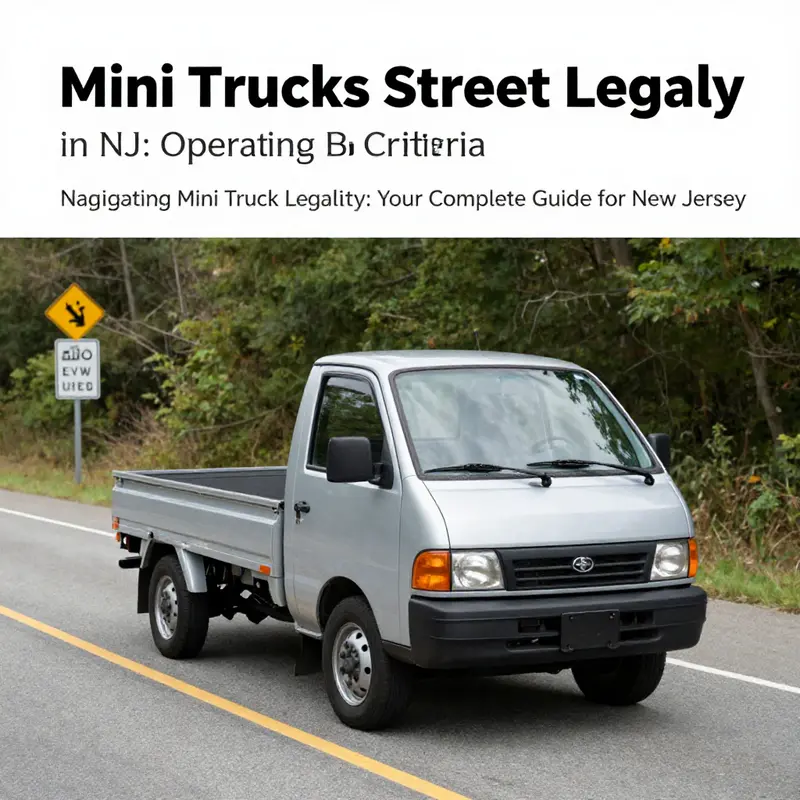
Mini trucks, especially the renowned Kei trucks from Japan, are a subject of intense discussion when it comes to their road use in New Jersey. These compact vehicles, once designed and regulated under Japan’s stringent standards, are now attempting to find a niche in a state with its own unique set of regulations. In New Jersey, the use of these mini trucks is a delicate balance between ownership rights and strict operational limitations. Although individuals are permitted to own these vehicles, the rules governing their use are both complex and detailed. The process begins with registration, which is both a legal necessity and an opportunity for owners to ensure that their vehicles adhere to state standards.
Ownership is not synonymous with complete freedom in these cases. The initial step requires vehicle owners to navigate a registration process that is far from straightforward. Mini trucks, like Kei trucks built around a modest 660cc engine displacement, fall under a specific regulatory framework that considers their design and purpose. The very design of these trucks — lightweight, compact, and economical — was meant for Japan’s controlled environments where space is at a premium and strict regulations govern engine sizes and vehicle dimensions. However, when these vehicles enter New Jersey, they are subject to additional modifications and inspections. While registration is theoretically possible in the Garden State, owners must contend with the reality that these trucks are inherently and legally limited when it comes to road use.
The state of New Jersey requires that any vehicle intended for public roads must meet a rigid set of federal safety and emission standards. Many Kei trucks, in their original configuration, do not meet these benchmarks. This discrepancy is not merely a technicality; it represents a fundamental misalignment between the intended use of these mini trucks and the rigorous demands of public road operation in New Jersey. For the majority of owners, this means that although they may legally possess and register a Kei truck, the vehicle cannot be used for everyday travel. Instead, it is relegated to private property or specific non-public domains such as farms, industrial complexes, construction sites, or other secure private premises.
The concept of road legality hinges upon the vehicle’s ability to perform under regulated conditions. For example, modifications such as the removal of speed governors, upgrades to the lighting systems for improved visibility, and sometimes even improvements to the vehicle’s overall structure are essential. These modifications are more than cosmetic changes; they are a necessity if the truck is ever to have a chance of being compliant with New Jersey’s standards. Without such changes, mini trucks are bound by law to remain off public roadways. This limitation stems not only from safety concerns but also from environmental standards. The engine displacement of 660cc, while perfect for the intended use in Japan, fails to provide sufficient performance or meet pollution control requirements when pitted against the demands of modern American roads.
The discussion of legality is deeply intertwined with the vehicle’s original design philosophy. Kei trucks were built to be compact, economical, and efficient within the limited spatial confines of Japanese cities and rural towns alike. Their design catered to efficient navigation, minimal environmental impact, and cost-effective operation. In contrast, New Jersey’s vehicle regulations are shaped by concerns over safety, emissions, and the overall compatibility of vehicles with an advanced and heavily regulated transportation network. The differences in these underlying assumptions about vehicle use create an inherent tension between the benefits of owning a mini truck and the realities imposed by New Jersey law.
While some enthusiasts may feel a natural draw to the simplicity and charm of these vehicles, the legal limitations can be a significant roadblock. For many, the dream of owning a Kei truck is quickly tempered by the realization that these vehicles may never serve as fully functional daily drivers on public roads. Instead, their use is typically restricted to controlled environments, such as private land or designated work areas, where the strict criteria of public road safety and environmental regulations do not apply. In these settings, owners can exploit the compact design and efficiency of the mini trucks without having to worry about the rigorous standards required for wider road use.
An important aspect of this regulatory framework is that it preserves the spirit of safety and environmental responsibility. New Jersey’s laws are designed to protect both drivers and the public. By imposing strict criteria on which vehicles may operate on the high-speed, densely populated public road system, the state ensures that only vehicles that meet very specific requirements can be on the road. This is not merely bureaucratic overreach; it is a necessary safeguard in an era when environmental concerns and road safety are paramount priorities. In this context, Kei trucks become more of a novelty or specialized tool rather than a substitute for conventional transportation.
For those who still wish to take advantage of the benefits offered by these miniature engines, detailed research and careful planning are essential. Owners must prepare for both the initial steps of registering their vehicle and the subsequent modifications that are necessary to adhere to local codes. It is important to note that the modifications required do not alter the inherent character of the Kei truck. Instead, they serve as practical updates that bring the vehicle in line with the local laws and safety standards. Many vehicle modification experts and automotive shops that specialize in small trucks recommend a series of tested procedures to help these mini trucks succeed in registration if owners choose to pursue that route.
Furthermore, a dialogue between vehicle enthusiasts, legal experts, and regulatory officials is necessary to continuously review these standards. The automotive world is ever-changing, and with it, the demands placed on both drivers and vehicles. This evolving environment means that what is considered acceptable today may not be tomorrow. In New Jersey, owners who wish to legally drive their mini trucks on public roads must remain vigilant about changes in legislation and enforcement practices. The interplay between state law and the evolving technology of Kei trucks creates a landscape that is as dynamic as it is challenging. Owners frequently find themselves caught between nostalgia and modernity, balancing the historical significance of these small trucks with the modern demands of road safety and environmental regulations.
Some drivers choose to view these challenges as an adventure. They appreciate that, while the Kei truck may never fulfill the role of an everyday commuter vehicle, it excels in specialized contexts. The rugged design of the mini truck makes it ideal for specific tasks such as agricultural work, rural transport, and even construction support. In these roles, the vehicle’s compact size and efficiency are significant advantages. Landowners and business owners alike find value in a vehicle that can navigate spaces where larger trucks cannot. These working environments, whether on a farm, at a construction site, or within a private industrial complex, allow the mini truck to thrive. The limitations on road use become irrelevant, as the vehicle is used solely where its unique qualities are an asset rather than a liability.
Not all is lost for those who seek to enjoy the virtues of mini trucks. Despite the restrictions imposed by New Jersey law, automobile enthusiasts often find innovative solutions by repurposing the mini truck for specialized uses. For example, some owners choose to convert their Kei trucks into stationary or off-road units. By investing in additional safety modifications and ensuring that the vehicle remains within the confines of private land, these owners can legally operate their mini trucks and enjoy the unique benefits they offer. Such projects are often well-documented on enthusiast websites and blogs that offer practical guidance on maintaining these vehicles within the legal framework. In fact, further insights and community-driven knowledge can be found in articles such as those available on the detailed reviews and community insights page, which provides a rich source of experiences related to the use and modification of mini trucks.
The journey to legal compliance in New Jersey is not a simple one, even if the initial allure of the Kei truck is strong. Beyond the modifications, there is the ongoing responsibility of meeting insurance requirements and adhering to periodic inspections. Insurance companies often have their own criteria regarding vehicles that have been modified from their original state. This creates an additional layer of complexity for owners who must ensure that every change is properly documented and legally justified. Some vehicle experts suggest that the challenges of insuring a modified mini truck can be as daunting as the registration process itself. The cumulative effect of these hurdles means that while ownership is allowed, the freedom to freely navigate New Jersey’s public roads remains significantly restricted.
Moreover, the broader regulatory environment in New Jersey reflects a cautious approach toward vehicles that deviate from the norm. There is a justified concern that permitting a vehicle with such unique characteristics to operate on public roads might inadvertently encourage safety lapses. New Jersey law enforcement and state regulators are particularly attentive to the condition of vehicles operating on public roadways. They are tasked with ensuring that every vehicle, regardless of its size or engine capacity, meets stringent safety protocols. Given this context, the limited road use of Kei trucks appears to be a carefully considered compromise rather than an outright prohibition. It acknowledges both the desire of enthusiasts to own these vehicles and the practical realities of maintaining public road safety. In effect, this approach preserves a balance between personal freedom and collective responsibility.
As automotive trends continue to evolve, the future regulation of vehicles like mini trucks may also undergo significant changes. Technological advancements and shifts in environmental policy could prompt a reexamination of existing laws. Some industry experts speculate that further modifications or even entirely new classes of vehicles might emerge, thereby blurring the lines between traditional automobiles and specialized transport solutions like Kei trucks. Such a transformation would demand a reevaluation of road safety standards and fuel efficiency metrics that currently limit mini truck operation. Until such a time as these broader changes occur, New Jersey’s stance remains one of cautious regulation.
For those deeply interested in the legal nuances and operational criteria of mini trucks in New Jersey, staying informed is essential. Engaging with expert analyses and reviewing up-to-date information provided by official sources like the New Jersey Motor Vehicle Commission is a prudent strategy. An excellent external resource that provides valuable insights into these regulatory issues is World Law Digest. This website offers a wealth of legal context that can assist owners in understanding the precise implications of owning and modifying a Kei truck in New Jersey.
The narrative surrounding Kei truck usage in New Jersey is emblematic of a broader dialogue between innovation and regulation. While technological progress and creative vehicle design have outpaced older regulatory frameworks, state authorities continually work to ensure that public safety and environmental standards are not compromised. Ultimately, the story of mini trucks in New Jersey is one of cautious adaptation. With each vehicle registration and modification, owners are reminded of the complex interplay between regulatory intent and the timeless appeal of a uniquely compact engineering marvel.
The regulatory labyrinth that mini truck owners must navigate is fraught with challenges. However, for the dedicated enthusiast, these challenges represent an opportunity to explore innovative solutions and push the boundaries of conventional vehicle usage. The road ahead may be constrained by legal limitations, but the passion for these vehicles ensures a continued interest and commitment to their adaptation and improvement. As regulations evolve and new technological solutions emerge, there is cautious optimism that the experience of owning a mini truck in New Jersey may one day become more versatile, even if it is unlikely to ever fully align with the freedom enjoyed by traditional automobiles.
Navigating New Jersey’s Stringent Street Standards: The Road to Mini Truck Legality
In New Jersey, mini trucks have become more than just a novelty—they are a subject of careful scrutiny by state authorities and enthusiasts alike. The compact design and versatile functionality of these vehicles, particularly those imported from Japan such as Kei trucks, make them appealing to buyers looking for economical and efficient transport solutions. However, the journey to turning a mini truck into a street-legal vehicle in New Jersey is one filled with challenges that require a thorough understanding of the state’s comprehensive safety and emissions standards. What might on the surface seem to be a simple registration process transforms into an intricate balancing act between maintaining the inherent character of the mini truck and meeting rigorous modern requirements for public road use.
At the heart of New Jersey’s regulatory framework is a staunch commitment to ensuring that every vehicle on its roadways adheres to standards that protect drivers, pedestrians, and the environment alike. Mini trucks, including the widely known Kei trucks, were originally tailored to Japan’s compact and highly efficient vehicular design guidelines. These vehicles typically sport engines of 660cc or lower and simplified safety features designed for a different road culture. When they are imported into the United States, and specifically into New Jersey, they must be upgraded to align with the Federal Motor Vehicle Safety Standards (FMVSS) and other local safety requirements. The challenge is not merely bureaucratic—each modification must also securely integrate into the vehicle’s original structure, reinforcing that the mini truck remains both functional and safe.
The emphasis on safety is especially evident in New Jersey’s insistence on ensuring that all vehicles, regardless of origin, are properly equipped with essential safety features. For mini trucks, this means that items such as fully functional headlights, tail lights, and proper signaling devices are non-negotiable. These vehicles must also meet federal mandates by incorporating dependable components including, but not limited to, compliant rearview mirrors, secure seat belts, and a robust body structure that has passed stringent crash tests. Even something as seemingly minor as using Department of Transportation (DOT)-certified tires becomes critical, as the tires are one of the foremost defenses against hazardous road conditions. For many mini trucks, especially those originally designed for non-road use such as agricultural or construction work, retrofitting these safety elements not only increases expense but also demands meticulous attention to detail from a certified mechanic or specialized service.
Upgrading a mini truck for street use is also a matter of comprehensive engineering. Original Kei truck designs, known for their fuel efficiency and lower tax burdens in Japan, sometimes lack integral safety infrastructure required in the United States. The road modifications frequently include installing advanced lighting systems that ensure visibility during all hours, replacing or upgrading the vehicle identification number (VIN) to comply with government tracking, and ensuring that structural reinforcements are in place to pass collision evaluations. These modifications extend beyond mere cosmetic changes; they are about ensuring that the complexities of modern road environments—ranging from variable traffic patterns to heavier vehicles—are adequately met by a vehicle originally crafted for a completely different set of conditions.
Another major consideration is the strict emissions standards enforced by both New Jersey and federal agencies, including the U.S. Environmental Protection Agency (EPA) and, in some respects, guidelines inspired by the California Air Resources Board (CARB). The state’s stance on emissions is rigorous, ensuring that every vehicle minimizes its ecological footprint and contributes to cleaner urban air. In practice, this translates to a requirement that mini trucks must produce emissions that not only meet but in many cases exceed standard federal and state thresholds. For gasoline-driven mini trucks, this often necessitates an upgrade or complete overhaul of the engine system to incorporate advanced fuel control systems and catalytic converters that efficiently reduce harmful exhaust components. In contrast, electric versions or those modified to run on alternative fuels benefit from an easier route through the emissions testing process due to significantly reduced or zero tailpipe emissions. The process of retrofitting these vehicles often requires detailed inspections and conformity with state documentation protocols to confirm that the modified systems are indeed within the set limits.
The dual demands of enhanced safety and strict emissions compliance underscore the complexities faced by mini truck owners in New Jersey. The state’s regulatory demands are not arbitrary roadblocks but are intended to offer a balanced framework that enhances public safety while encouraging responsible vehicular innovation. It is a situation that requires both the manufacturer’s intent and the owner’s diligence. For instance, when a Kei truck is imported, it may arrive with its original low-speed governor—a feature that contributes to fuel efficiency but is not ideal for highway speeds or modern traffic conditions. Removing or adjusting this governor is typically indispensable, although it might alter the vehicle’s original character. Similarly, original lighting systems designed for the subdued nighttime requirements in rural Japan must be upgraded with high-intensity, compliant lighting technology to match New Jersey’s busy urban and suburban lanes. These changes, while technical, serve a broader purpose: they demonstrate the state’s commitment to harmonizing nostalgia with modern safety and environmental standards.
Practically, the process to achieve full street legality in New Jersey involves not only physical modifications but also a comprehensive legal and administrative journey. Vehicle owners must ensure that every alteration from the engine assembly to the smallest lighting component is documented and certified by professionals familiar with both domestic and federal standards. A thorough inspection by an authorized technician is mandatory, ensuring that every aspect of the vehicle adheres to the stipulated guidelines. In a sense, the process itself transforms the mini truck from a curious relic of a bygone era into a contemporary machine worthy of the state’s busy highways. Owners are encouraged to consult local authorities and even specialized services that offer guidance on retrofitting vehicles to navigate these stringent requirements. One can learn more about the community’s experiences and shared solutions by exploring detailed insights on the mini truck offerings blog available on this dedicated page, which has provided excellent advice and case studies on similar modifications.
Emissions testing in New Jersey is no less rigorous than safety inspections. Each vehicle that enters the state must provide verifiable documentation that it meets all applicable emissions guidelines before registration is finalized. This requirement mandates that even imported mini trucks, with their smaller and seemingly less potent engines, must produce evidence of having undergone comprehensive emissions testing. For vehicles modified from their original configuration, these tests often include multiple stages of review, ensuring that any changes in the exhaust or fuel system remain within acceptable limits. The state’s environmental policies are supported by a broader national mandate to reduce pollution and safeguard natural resources, reinforcing the idea that no compromise is acceptable when it comes to air quality standards.
Importantly, the regulatory framework in New Jersey is designed not merely as a deterrent against potential hazards but also as a mechanism to promote continuous innovation. As modern mini trucks and Kei trucks evolve, manufacturers and enthusiasts alike are pushed to explore creative modifications that marry traditional design elements with contemporary technology. For instance, while some purists might argue that enforced modifications detract from the original design ethos of a Kei truck, the benefits of enhanced safety and compliance cannot be overlooked. These upgrades, though costly and time-consuming, open up new avenues for mini truck use—from specialized transport on rural roads to innovative adaptations for urban delivery systems. The dialogue between preserving the charm of an imported mini truck and adapting to modern requirements is a constant feature of this niche market, highlighting that regulatory compliance is as much about respect for tradition as it is about embracing progressive standards.
As a result of these stringent but thoughtful regulations, mini trucks in New Jersey are largely restricted to specific uses even after modifications are complete. Many owners find that, despite their successful transformation to street-legal vehicles, these trucks are more commonly put to specialized tasks rather than everyday commuter duties. Their limited top speeds sometimes render them unsuitable for high-speed highways, and indeed, New Jersey law explicitly restricts their access to certain high-speed roadways unless special permissions are granted. This careful allocation reinforces the notion that while the vehicle may be legally permissible, its operational parameters remain defined by the modifications made in adherence to state law. In essence, the vehicle becomes a hybrid of cultural artifact and modern engineering—a fascinating blend that is both respected and regulated.
The journey to street legality for mini trucks in New Jersey is an ongoing narrative of adaptation and meticulous compliance. Every step—from initially importing the vehicle, undergoing necessary mechanical and aesthetic adjustments, to finally passing detailed inspections—represents a commitment to safety, environmental stewardship, and a broader respect for public welfare. The process is rigorous, and its multifaceted demands ensure that only vehicles which have truly met all standards can safely join New Jersey’s roads. For many, the allure of owning a mini truck lies not only in its distinctive appearance and economical operation but also in the unique challenge of meeting and exceeding the diverse requirements set forth by state and federal authorities.
In conclusion, while a mini truck may captivate the imagination with its compact size and efficient design, transforming it into a vehicle that is both street-legal and practical in New Jersey requires significant investment in safety modifications and emissions upgrades. The entire process—from adapting basic structural elements to meeting modern environmental mandates—exemplifies the state’s thoughtful approach toward regulating vehicles that deviate from conventional norms. For further authoritative guidance, interested parties are advised to consult the comprehensive resources available on the official New Jersey Motor Vehicle Commission website at New Jersey Motor Vehicle Commission – Vehicle Registration & Safety Requirements. Through diligence and a commitment to compliance, mini truck enthusiasts can enjoy a blend of classic design and modern functionality that is both innovative and safe for today’s roadways.
Navigating the Complex World of Mini Trucks in NJ: Conditional Legality and Real-World Practicalities
New Jersey’s approach to mini trucks, particularly the famed Kei trucks imported from Japan, is a textbook example of how nuanced vehicle regulations can be. These small, efficient vehicles, originally designed to meet Japan’s stringent size and engine displacement restrictions, have in New Jersey become a subject of fascination and frustration. Many enthusiasts and potential owners are drawn to the appeal of these compact workhorses, yet the road to making them street legal here is paved with challenges and strict safety standards. In New Jersey, while these vehicles are allowed to be owned and even used in specific contexts, taking them onto public roads requires substantial modifications and adherence to a labyrinth of state and federal regulations.
At the crux of the matter is the fact that mini trucks like the Japanese Kei truck were engineered to fulfill a set of criteria that are highly specific to the Japanese market. With engine displacements often not exceeding 660cc and with dimensions that are far from the typical American truck, these vehicles were never really built with US road conditions in mind. Their compact size and lightweight frames, while offering excellent fuel efficiency and maneuverability, do not automatically translate into compliance with the safety and emissions standards enforced by the US Department of Transportation and the Environmental Protection Agency. In New Jersey, the vehicle must conform to both federal and state guidelines—a requirement that often necessitates radical modifications before it can legally operate on public roads.
One of the primary challenges is meeting safety requirements. Original Kei trucks are typically not equipped with many of the critical safety features expected in vehicles used for daily road transportation in New Jersey. Elements such as modern seat belts, robust crash structures, and properly calibrated lighting systems are often lacking. In the absence of these features, the vehicle is not fit to carry passengers safely in an environment where high speeds and unpredictable traffic conditions prevail. For those keen on the idea of owning a mini truck that is truly roadworthy, it is not only a matter of pride in vehicle ownership but also an exercise in rigorous and often expensive modifications. The process calls for replacing or upgrading the headlights, installing reflective markers and turn signals, and incorporating advanced braking systems that meet modern standards.
The regulatory framework in New Jersey makes it abundantly clear that the legal usage of these vehicles on public roads is conditional upon significant retrofitting. Owners must acquire a comprehensive understanding of the guidelines set forth by the New Jersey Motor Vehicle Commission (NJMVC) and ensure that every modification adheres strictly to the standards set forth by the National Highway Traffic Safety Administration (NHTSA) and the EPA. Essentially, if a Kei truck is to be used as an everyday mode of transportation on New Jersey roads, it must pass a series of inspections and obtain certificates of compliance. Failure to do so relegates these vehicles to being restricted to private or off-road use.
For a number of potential users, especially those who only wish to capitalize on the unique charm of these vehicles without undertaking extensive modifications, alternative applications present themselves. In many cases, the most practical and legal use of these mini trucks is on private land. Consider the scenario of a large estate, a commercial farm, or an industrial compound where the conditions are controlled and the risks associated with high-speed road travel are eliminated. In these contexts, mini trucks become incredibly valuable tools. They can be employed for transporting materials, for utility work around expansive properties, or even for short, controlled trips between closely situated premises. The vehicles, once brought up to a satisfactory standard for non-public operation, can serve roles that emphasize efficiency and practicality over speed and high-capacity transport.
In the realm of agriculture, for instance, mini trucks have found a reliable niche. Farm operations often require vehicles that are nimble enough to navigate narrow field roads or compact enough to function within dense crop rows. After proper retrofitting, these vehicles can be used for everything from transporting produce to carrying tools and machinery around a farm. The modifications necessary for making them road legal in New Jersey also serve to enhance their capability in these off-road environments, making them robust and adaptable. Many farmers appreciate not only the compact size and low operating costs but also the added bonus of a vehicle that stands out due to its unique design.
Industrial users and construction professionals have similarly benefited from vehicles that might traditionally be considered unsuitable for urban surroundings. On construction sites or within industrial parks, mini trucks provide a practical solution for short-distance transport on private or restricted roads. Their small size allows them to maneuver within tight spaces, and modern modifications ensure that they meet the safety needs required in work environments. For those managing logistics on a construction site, where every minute counts, having a vehicle that is both efficient and nimble can be a real asset. In such districts, the burden of extensive public road regulations is mitigated by the controlled nature of the operational area. Here, Kei trucks serve as short-haul work vehicles, performing tasks that would otherwise require a larger, less efficient machine.
Even within the realm of events and exhibitions, the novelty and distinctive appearance of Kei trucks can be leveraged. At auto shows, specialty events, and vintage vehicle exhibitions, these mini trucks command attention. A specially modified Kei truck, with enhanced lighting and greater safety features, can be granted special permits for limited road use. Curated routes during parades or designated times for display drives allow these vehicles to make public appearances without violating the strict regulations set by state authorities. Enthusiasts and collectors who reserve their vehicles for display and ceremonial purposes find that these rare appearances provide an excellent way to share their passion with a broader audience, while still adhering to the regulations that govern public road use.
For those who are genuinely committed to the idea of having a fully operational Kei truck on New Jersey roads, the process encompasses several detailed steps. The first and most crucial step involves a comprehensive overhaul of the vehicle. This means installing safety equipment that meets American standards: reinforced belts, upgraded lighting systems including front headlights and rear tail lights, and robust mirrors in compliance with state regulations. In addition, specialized inspections are necessary to verify that the modifications are up to par with both federal and state criteria. Owners must be prepared to invest considerable time and financial resources to transform a vehicle that is essentially designed for a very different regulatory environment into one that can safely navigate New Jersey’s bustling roads.
Alongside these physical modifications, obtaining the proper paperwork and certifications is equally important. The vehicle must be thoroughly inspected and vetted by recognized authorities. Documentation in the form of compliance reports from accredited third-party testing agencies becomes essential. With such paperwork in hand, the vehicle owner can approach the NJMVC to apply for final registration. Only after passing these rigorous inspections can the vehicle be insured and legally declared street legal. A look at some of the expert advice available on vehicle modification and regulatory requirements, such as those detailed on the Mini Trucks USA Blog at minitrucksocala.com/blog, can provide further insights and anecdotal evidence on what works best in the field.
It is crucial to underline that even with all these modifications, a Kei truck on New Jersey roads is never quite the same as a traditional American pickup or SUV. The size and structural simplicity, which many consider part of the vehicle’s charm, continue to limit its utility in everyday scenarios, particularly urban commuting. Most notably, the absence of modern comfort and convenience features—features that are standard in vehicles designed primarily for American highways—means that long-distance travel remains impractical. Given these constraints, owners typically choose to deploy these vehicles in applications where their limitations are overshadowed by their benefits, such as efficiency, ease of maneuverability in restricted spaces, and lower operating costs for short, dedicated tasks.
Ultimately, the reality for most potential owners of mini trucks in New Jersey is that their optimal use lies in roles that do not require extensive public road interaction. Instead of investing in a complete overhaul to meet public road criteria, many prefer to utilize these vehicles in environments where their modified state can be fully appreciated without incurring the penalties of non-compliance. Whether operating within the secure confines of a private farm, maneuvering through a busy construction site, or serving as a standout piece in a car exhibition, the Kei truck remains a unique blend of utility and novelty. The vehicle’s value is not diminished by the regulatory hurdles it faces but rather recontextualized to environments where it excels and stands out as a practical yet distinguishing choice.
For those considering this path, understanding that the mini truck’s transition from an imported curiosity to a legally compliant road vehicle is not a trivial task is paramount. The amount of dedication required, both in terms of funds and effort, will often outweigh the benefits of simply owning a uniquely styled vehicle. As such, the contemporary trend leans towards using these vehicles in specialty applications rather than as a primary means of transportation on busy state roads. More than just a means of mobility, they represent an intersection of cultural import, engineering challenge, and practical application, all filtered through the regulatory lens of New Jersey law.
This intricate balancing act between modification, compliance, and practical application is why many enthusiasts regard the process as an art form rather than a mere technical upgrade. The pursuit of making a Kei truck fully roadworthy is imbued with passion—a dedication to honoring both the vehicle’s original design and the demanding standards of modern safety and efficiency. Ultimately, this journey is characterized by compromise; it involves transforming a vehicle with limited direct compatibility into one that can serve a purpose within a framework where safety and regulatory adherence reign supreme. For anyone considering navigating this challenging yet rewarding endeavor, staying informed by consulting resources such as the detailed legal guidance provided by the World Law Digest at Are Kei Trucks Legal in New Jersey? – World Law Digest is an indispensable step.
In summary, while the allure of mini trucks in New Jersey is undeniable, their regulated nature underscores a decisive shift in how they are perceived and utilized. The extensive modifications required to bring these vehicles up to par for public road use impose limitations on their everyday practicality, thus steering their application toward niche sectors such as agriculture, industrial work, and controlled environments like exhibitions. Prospective owners must decide whether the transformation journey is worthwhile, balancing the inherent charm and utility of the Kei truck against the significant challenges of regulatory compliance. In New Jersey, where every modification must meet rigorous standards, the true value of these vehicles is best realized not in conventional road use but in specialized roles that showcase their unique blend of efficiency, adaptability, and cultural significance.
Final thoughts
Understanding the complexities of mini truck legality in New Jersey is essential for safe and responsible ownership. From registration to operational criteria and modifications, being well-informed allows you to enjoy the benefits these vehicles offer. Whether you’re using a mini truck for local deliveries, agricultural tasks, or just joyful jaunts in the countryside, knowing the rules will maximize your experience. Embrace your mini truck journey with confidence!