
In the charming state of Oregon, mini trucks, especially Kei trucks, have become topics of conversation among local small business owners, hobbyists, and property owners alike. While these compact vehicles are celebrated in various parts of the U.S. and abroad, they currently face significant restrictions on Oregon roads. This article dives into the current legal status of mini trucks in Oregon, explores ongoing legislative efforts to change this, compares regulations with other states, and assesses the potential economic impact of their legalization. Finally, we’ll highlight public sentiment around mini truck legality, creating a well-rounded viewpoint for enthusiasts and stakeholders. Together, let’s navigate the complexities surrounding these unique vehicles and understand their future in Oregon.
Between Private Property and Public Roads: Oregon’s Delicate Balance in the Push to Legalize Mini Trucks
In Oregon, the practical question of street legality for mini trucks sits at a quiet crossroads of safety, innovation, and local tradition. As of early 2026, the state does not allow on-road registration for these compact work vehicles. They can be owned and enjoyed on private property or within designated off-road spaces, but when it comes to public streets and highways, the current statutes keep them out of ordinary traffic. This creates a curious gap. People who value the nimble size, low running costs, and easy maneuverability of these vehicles confront a road network that was designed around more conventional, larger trucks and passenger cars. The result is a paradox: on rural back roads they can feel perfectly suited to the task, yet when the sun sets and the day’s errands push toward town, the same vehicles must retire to private property or private lanes. The appeal of these mini trucks is rooted in their simple logic. Their small footprint makes them easier to park and navigate in tight spaces, while their light weight can translate into lower fuel use and simpler maintenance. For farmers and small-scale operators, they offer a practical tool for chores that don’t demand a full-size pickup. And for urban dwellers, they promise a mode of transport that could blend into narrow streets and busy corridors with less congestion and a smaller environmental footprint—provided they can be legally and reliably integrated into the state’s transportation framework. Yet the operational reality remains governed by a set of rules that emphasize predictability, uniformity, and proven safety, all designed to reduce risk on shared roads. The current legal status thus operates as a gate, not a ban, separating the on-road world from the on-property world, while leaving room for policy to rewire that boundary in the future.
The regulatory atmosphere surrounding mini trucks in Oregon is not static. It is being reshaped by a rising current of legislative interest. A proposed bill, revived in early 2026, seeks to create a pathway for registration and on-road use, but only for vehicles that meet clearly defined safety and emissions thresholds. This is not a blind permission slip. It is a cautious, criteria-driven invitation to join the road ecosystem, with a built-in mechanism for ongoing compliance. The idea is to preserve public safety while recognizing a practical demand for lighter, more versatile mobility options. The debate, then, is less about abandoning standards than about refining them. Proponents frame the change as sensible policy that aligns with modern mobility needs. They argue that the kei truck format is inherently efficient for certain tasks—urban deliveries, farm-to-town exchanges, and maintenance work on smaller properties—where a larger truck would be impractical or wasteful. If the vehicle can be certified to meet safety expectations and environmental requirements, their case rests on a straightforward premise: better options for people who need a small, reliable tool that can perform routine duties without creating new risk in traffic. Critics, on the other hand, caution against approving a new class without a robust system of checks. They point to the complexities of urban traffic, where vehicles of varied size and speed interact in dense networks. They worry about crash compatibility with heavier vehicles, tailpipe emissions at scale, and the potential for gaps in enforcement. They call for clear guidelines about where and how such vehicles may operate, how quickly they can legally travel, and how insurance markets would adjust to a new, low-speed category. The tension in the conversation is not simply about a single vehicle; it is about how Oregon wants to govern a broad spectrum of emerging mobility tools without compromising the public’s safety or the state’s environmental commitments. Within this tension lies a practical question: how do you design a policy that is specific enough to prevent loopholes, yet flexible enough to adapt to evolving technology and the diverse needs of rural and urban communities? The answer, as policymakers approach drafting rooms and public hearings, will determine whether tiny trucks become a niche on private land or a recognized, regulated option on public roads. In this sense, the Oregon effort mirrors a larger national conversation about balancing innovation with the time-tested discipline of road safety and environmental stewardship.
Community voices and industry conversations often surface in informal venues and online discussions. A key theme is the need for predictable standards that can be uniformly applied by law enforcement, inspection stations, and insurers. To those following the issue closely, this framework resembles other successful models where a narrow class of utility vehicles can be hazardous if left unchecked, yet beneficial when responsibly integrated. The idea of a controlled on-road pathway includes elements such as a maximum speed cap, specific safety equipment, and verified emissions compliance, plus a defined process for periodic inspections. It is important that such a framework does not reduce incentives for manufacturers or operators to prioritize safety; rather, it should encourage a transparent line of accountability. The public policy objective is to facilitate responsible use without inviting backsliding into inconsistent practices that occur when the rules are too vague or retrospective in their enforcement. Oregon’s stakeholders—a mix of farmers, small-business operators, urban commuters, environmental advocates, and traffic-safety professionals—are converging on a common point: any legalization would require a well-documented, enforceable standard that protects pedestrians and motorists alike while acknowledging the practical realities that small-scale operators face. The dialogue has begun to coalesce around a phased approach, one that begins with stringent qualifications and moves toward broader eligibility only if safety and environmental performance are consistently demonstrated. The road ahead will be shaped by committee deliberations, public feedback, and the evolving technology of light, low-speed vehicles. The outcome will set a precedent for how the Pacific Northwest navigates similar questions in the years to come.
For readers who want a glimpse into the practical, people-centered side of this debate, industry forums and local communities have been a rich source of real-world perspectives. The mini trucks community, in particular, has been vocal about how these vehicles could fit into day-to-day life—from farm chores to compact urban errands—if the regulatory landscape evolved. A helpful way to explore the lived experience behind the numbers is to follow ongoing discussions in the broader industry conversation. A convenient entry point is the mini trucks blog, which collects notes, anecdotes, and analyses from enthusiasts and practitioners across regions. The conversations there illuminate how ownership, maintenance, and daily use shape opinions about legality and utility. As Oregon weighs its options, keeping an ear to those practical voices helps policymakers appreciate where line-drawing is most effective and where flexibility can yield real social and economic gains. It is not a simple, binary decision; it is a careful calibration of risk, reward, and practical need.
In the broader landscape, this issue sits at the intersection of mobility policy, environmental goals, and the everyday realities of people who manage property, run small operations, or simply navigate crowded streets. The current focus on a recognized, regulated pathway for mini trucks reflects a broader understanding that traffic safety policy must adapt as vehicle technology and usage patterns evolve. If the proposed framework passes, Oregon could establish a tested category that aligns with the state’s emission standards, safety expectations, and enforcement capabilities, while preserving the integrity of its road network for all users. If it stalls, the status quo remains a cautionary tale of a boundary that protects the public from untested traffic while leaving legitimate users to improvise within the confines of private property and rural lanes. Either outcome will shape not just the fate of mini trucks, but Oregon’s approach to measuring risk, opportunity, and responsibility on two feet, four wheels, and everything in between. As policymakers continue to deliberate, the natural question for communities becomes practical: what does a successful, safe, and scalable on-road pathway actually look like, and how quickly could it become a reality?
External reference for ongoing developments: https://www.oregonlive.com/autos/2025/06/oregon-bill-aims-to-legalize-kei-trucks.html
How Oregon’s Lawmakers Are Working to Bring Mini Trucks onto Public Roads
The push to legalize mini trucks in Oregon is more than a niche transportation debate; it ties into rural mobility, small-business efficiency, and evolving views on vehicle regulation. Representative Anthony Broadman has introduced a bipartisan bill that, if enacted, would allow lightweight Kei trucks to be registered and driven on Oregon roads. These compact Japanese and Korean-built trucks are already common in other parts of the world and a few U.S. states. The legislative effort in Oregon responds to a growing number of residents and small enterprises asking for practical, economical, and low-impact utility vehicles suited to tight spaces and rugged terrain.
The bill’s proponents frame the change as targeted and pragmatic. Mini trucks have engines and dimensions that differ significantly from full-size pickup trucks and SUVs. That smaller profile offers clear advantages on narrow rural lanes, farm tracks, and steep, winding roads where large vehicles can be unwieldy. Supporters argue that legalizing these vehicles would expand mobility options without creating broad regulatory or safety problems, provided the state sets sensible standards for registration, equipment, and use.
At the heart of the legislative effort are several interlocking goals. First, lawmakers want to recognize a legitimate demand among rural residents, landscapers, small-scale farmers, and property managers who already use mini trucks in off-road settings. Legalization would allow those users to register their vehicles and operate them on short highway segments to move between job sites, fields, or neighboring properties. Second, supporters aim to reduce economic friction for small businesses. Mini trucks cost considerably less than standard pickups, consume less fuel, and often require simpler maintenance. For enterprises that rely on repeated short trips, tight maneuvering, or carrying light loads, mini trucks can lower operating costs and improve productivity.
A third and increasingly influential rationale is environmental. Mini trucks typically have smaller engines and better fuel economy than comparably useful larger trucks. Wider adoption could contribute to modest reductions in local emissions, especially for repetitive, low-speed work trips. Lawmakers and advocates highlight that carefully regulated use of mini trucks could dovetail with broader state goals around emissions and transportation efficiency. That said, environmental benefits depend on the vehicles’ exact specifications and how they are used; modernization and emissions controls would likely factor into any final statute.
The proposed legislation attempts to balance access with safety. Lawmakers are considering requirements for basic safety equipment, speed limitations, and possibly restrictions on the types of highways where mini trucks could be driven. For example, legislators may limit operation to roads with lower speed limits or allow registration only for vehicles with certain safety features installed. These targeted limitations aim to address concerns that lighter vehicles could be at greater risk on high-speed multilane highways, while still enabling practical use on rural routes and local roads.
Opposition to legalization comes from several quarters. Some transportation safety advocates worry that mini trucks lack crashworthiness compared with modern passenger vehicles. Law enforcement agencies may have concerns about enforcement complexity—distinguishing between properly registered mini trucks and off-road-only vehicles, ensuring equipment compliance, and adapting inspection protocols. Additionally, some safety critics worry about a potential increase in roadway conflicts if a high number of slower, lighter vehicles mixes with standard traffic on busy corridors.
Lawmakers and advocates are aware of those critiques and have structured the bill to reduce conflict points. Provisions under discussion include speed governors, mandatory safety lighting, mirrors and seat belts, registration classes distinct from passenger cars, and clearly defined permissible roads. The goal is to permit beneficial use while protecting public safety.
Financial and administrative considerations also play a role. Introducing a new vehicle class requires updates to registration systems, fee structures, inspection processes, and dealer compliance rules. The state would need to decide whether mini trucks are subject to standard vehicle taxes, special fees, or exemptions for agricultural use. Lawmakers are weighing how to implement these administrative changes without imposing undue cost on users or the state’s DMV systems.
The political landscape is notable for its bipartisan tone. Representative Broadman’s outreach reflects interest that crosses party lines, particularly in regions where small-scale agriculture and outdoor work are common. Rural legislators often emphasize practical mobility solutions; urban lawmakers may focus on environmental or regulatory safeguards. That overlap can produce compromise language that allows limited legalization with clear guardrails.
Comparisons to other states help shape expectations. States that already allow mini trucks on roads tend to do so with restrictions—maximum speed limits, limits on highway access, or registration classes requiring specific equipment. These precedents offer Oregon policymakers practical templates for drafting enforceable rules that address both safety and utility. Lawmakers are studying how other jurisdictions implemented their rules, what enforcement challenges arose, and how states handled title and lien issues for imported vehicles.
For residents and business owners who favor legalization, the immediate question is how the legislative calendar will unfold. Bills typically move through committees, receive testimony from stakeholders, and are amended before a floor vote. Public outreach and testimony can be influential. Farmers, landscapers, and property managers can highlight real-world use cases, while safety experts can advise on technical requirements that mitigate risks. If the bill advances, it may include sunset clauses or review periods to assess outcomes and adjust standards based on actual roadway experience.
Legalization would also affect the local market for accessories and conversions. If registration becomes available, a small aftermarket could form around safety upgrades, weatherization options, and light-duty hauling accessories tailored to registered use. Training for service shops and inspectors would be necessary to ensure that conversions and repairs meet legal standards. That ecosystem could create modest local economic activity in regions where mini trucks become a practical tool for businesses.
For opponents, the legislative process offers opportunities to shape outcomes too. Proposals for stricter equipment mandates, narrower allowable roads, or pilot-program trials can address concerns while still permitting limited legalization. Some stakeholders prefer a cautious approach: permit a pilot in specific counties or require local opt-in to let communities decide if mini trucks make sense for their road network.
Ultimately, the bill’s fate will depend on whether lawmakers find a middle path that respects safety, supports rural and small-business needs, and keeps administrative burdens manageable. If passed, the law would mark a notable shift in Oregon’s vehicle policy—responding to localized mobility needs while testing how light utility vehicles fit within modern transportation systems. For now, residents tracking the issue should watch committee hearings, public comment periods, and any amendments that refine the scope and safeguards of the proposal.
For readers wanting more detail on the legislative text and local reporting about the proposal, see the original report from The Oregonian. For practical perspectives, including stories from users and regional resources, the Mini Trucks SoCal blog provides firsthand accounts and insights from owners and operators who have navigated registration and road-use questions in other states: Mini Trucks SoCal blog. External reporting and community experiences together give a fuller picture of what legalization would mean on Oregon’s roads.
https://www.oregonlive.com/2025/06/oregon-bill-aims-to-legalize-kei-trucks.html
Trail of Kei Trucks: Oregon’s Regulatory Path in a National Mosaic
Oregon, the Kei truck discussion sits at the intersection of practicality and public safety. Kei trucks are compact Japanese pickups designed for light loads, fuel efficiency, and tight urban maneuvering. In Oregon, however, road rules place these vehicles in a framework that limits broad on-road use, not because the concept is undesirable but because safety standards and registration requirements are built around traditional car and truck categories. The practical effect is a cautious stance: many Kei trucks cannot be registered for unrestricted street use without meeting specific criteria, leaving them usable primarily on private property or in restricted lanes and work zones. This situation creates a tension between the appeal of compact, efficient transport and the state’s obligation to keep highways predictable for all users.
ODOT’s low-speed vehicle framework is a central reference point. Vehicles classified as LSVs often must stay within certain speed envelopes and meet lighting, signaling, and safety standards, with mandatory registration and insurance. Even when a Kei truck can satisfy these criteria, local enforcement and road design considerations—such as shared lanes with higher-speed traffic and bicycle riders—shape how and where the vehicle can operate. The result is a practical barrier to unrestricted use on typical city and rural roads, even for well-intentioned operators.
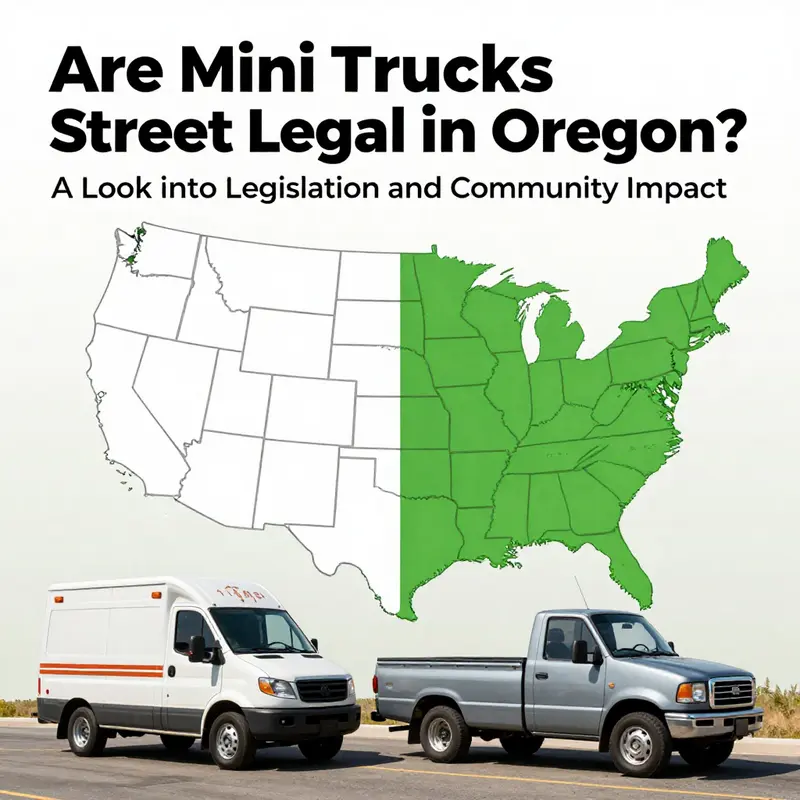
National patterns vary. Some states, like California and Texas, offer more permissive options under defined safety rules, while others—such as Florida—adopt stricter thresholds that push micro-mobility toward private property or specialized zones. Oregon’s potential path forward would likely hinge on clear safety criteria, a straightforward registration process, and explicit use cases (for example, agricultural work or campus maintenance) that preserve safety and promote utility. A legislative proposal or regulatory clarification could unlock opportunities for farms, small businesses, and rural residents who need a compact vehicle for modest hauling in constrained spaces.
As Oregon weighs its options, the broader takeaway is that the Kei truck question is not merely about a single statute but about how states adapt to evolving mobility patterns. The outcome could influence neighboring states and shape how micro-mobility fits into infrastructure planning, insurance models, and everyday commerce. For readers tracking the conversation, regional coverage and industry discussions offer a snapshot of the trade-offs between convenience, cost, and safety. An ongoing dialogue among lawmakers, agencies, and the public will determine whether Oregon becomes a pioneer in narrowly scoped on-road use or a cautious exemplar of traditional vehicle classes.
How Legalizing Kei Mini Trucks Could Reshape Oregon’s Local Economy
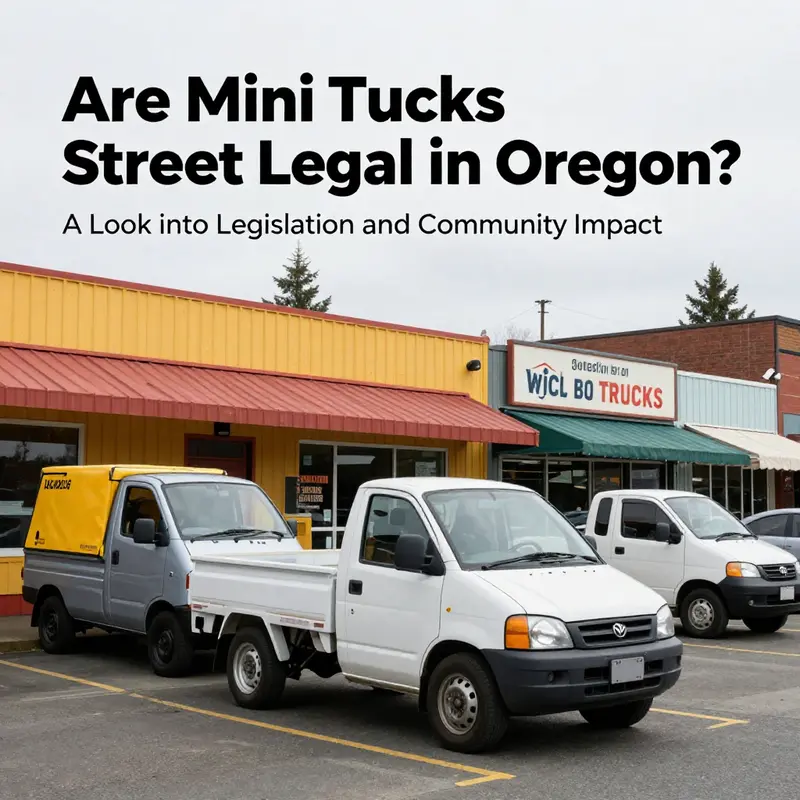
Economic ripple effects of allowing Kei mini trucks to hit Oregon roads
Legalizing Kei-class mini trucks in Oregon would do more than change the look of neighborhood streets. It would alter cost structures for small businesses, redirect consumer spending, and create new service niches across urban and rural areas. These lightweight, low-cost trucks are already widely used in Asia for short-haul delivery, farm work, and municipal tasks. If state law moves to allow their registration, the economic consequences would be immediate in some sectors and gradual in others, depending on how policymakers write safety, emissions, and insurance rules.
Small enterprises would likely see the first, clearest benefits. Contractors, landscapers, and local delivery operators routinely face high vehicle acquisition costs. A smaller, more fuel-efficient platform can reduce both upfront purchase prices and operating expenses. For a landscaping crew or local handyman, the shift from a full-size pickup to a mini truck could cut fuel bills and maintenance hours, freeing capital for payroll or equipment investment. Many operations that now rely on aging compact trucks or vans could replace multiple older vehicles with a single modern mini truck that meets their payload and maneuverability needs. The result: lower overhead and potentially lower prices for consumers, creating a competitive boost for neighborhood businesses.
Delivery and logistics are another obvious area of impact. Last-mile delivery makes up an increasing share of urban freight activity. Mini trucks excel in congested environments where tight parking and narrow lanes complicate operations. Their smaller footprint reduces time spent maneuvering and parking, which lowers labor costs per delivery. For companies that operate fleets, a mixed approach—using mini trucks for dense neighborhoods and full-size vehicles for heavier loads—could optimize route economics. That would lead to more efficient delivery models and could encourage new entrants to the market who were previously priced out by the cost of larger commercial vehicles.
Retail and import businesses would also feel the change. If Oregon allows legal registration, demand for used imported Kei trucks will spur a market for importers, dealerships, and financing services. These businesses create jobs in sales, logistics, and compliance support. Beyond sales, a secondary market for parts, customization, and repairs would expand. Local shops that adapt to the new platforms—learning their engines, chassis quirks, and common wear items—could develop profitable aftersales businesses. This would be particularly true in regions with high concentrations of small-business fleets.
Tax revenues and registration fees present a direct fiscal angle. New vehicle registrations generate state and local taxes, title fees, and possibly additional permit revenues. While each mini truck may yield modest revenue compared to a heavier vehicle, the aggregate effect across hundreds or thousands of registrations would be meaningful. Sales taxes, business activity taxes tied to increased commerce, and ancillary spending at service shops and parts stores will contribute to state coffers. The net fiscal impact will hinge on the pace of adoption and the specifics of fee structures lawmakers adopt.
Employment effects split between short- and long-term opportunities. In the near term, importers, dealerships, and repair shops would hire technicians and administrative staff to handle increased inventory and customer demand. Over time, as mini trucks become an established segment, training programs and specialization could support higher-skilled positions focused on diagnostics and emissions compliance. Conversely, some displacement could occur in sectors tied to sales of larger vehicles, though competition also tends to stimulate innovation and improved value in those markets.
Consumer behavior will matter to the overall economic picture. If buyers treat mini trucks as complementary to existing vehicles, the state will see fleet diversification rather than wholesale replacement. Many households will keep a standard passenger car while adding a mini truck for specific tasks. This pattern spreads the economic benefits—retailers selling both consumer vehicles and mini trucks may capture cross-sales, and parts suppliers might report broader demand. Price-sensitive consumers who otherwise delayed vehicle purchases could enter the market, raising sales volume across the board.
There are important caveats tied to regulation. Costs associated with complying to state safety and emissions rules could blunt some of the economic benefits. If compliance requirements are too stringent or expensive, import costs rise and purchase prices may lose their competitive advantage. Alternatively, carefully calibrated rules—targeting essential safety features and clear emissions baselines—could preserve affordability while protecting public interests. Insurance requirements will also shape uptake: higher premiums to account for perceived risk could slow adoption, while tailored coverage options for low-speed, light-duty vehicles could keep total ownership costs attractive.
Local infrastructure and municipal budgets could see offsetting impacts. Mini trucks’ lighter weight reduces pavement wear on local streets, potentially lowering maintenance needs where they are extensively used. Municipal fleets could adopt them for routine tasks such as parks maintenance, street sweeping, and meter servicing. That substitution might reduce fuel and maintenance expenses for city departments. However, adjustments to fleet procurement cycles and the need for compatible equipment mounts or attachments could introduce short-term costs.
The environmental and public health angles have economic consequences too. Superior fuel economy and lower emissions per mile for small-displacement engines can reduce community-level pollution and health-related costs. Yet, these benefits depend entirely on the engines and emissions controls of imported vehicles. If mini trucks fail to meet acceptable emissions benchmarks, the state could face higher long-term health costs and pressure to retrofit or restrict the fleet, undermining initial economic gains.
Finally, competition and innovation should not be underestimated. Introducing a new vehicle class invites competitors to refine offerings. Domestic dealers and manufacturers, facing pressure from imported mini trucks, may develop more efficient, cost-effective models. Aftermarket vendors will innovate accessories and utility solutions specific to the mini-truck form factor. Over time, this competition can lower prices and expand features, increasing consumer surplus and enhancing the value proposition for businesses and households.
If Oregon lawmakers adopt legislation that permits registration, stakeholders will need to monitor market responses closely. Early adopters will reveal the practical limits of the vehicles and the demand curves that shape supply chains. Policymakers can then adjust standards around safety, emissions, and insurance to balance public interest with market growth. For a state that values both urban efficiency and rural practicality, legalizing Kei mini trucks could be an economically constructive step—provided regulations preserve affordability while ensuring community safety and environmental protections.
For a closer look at the legislative proposal and reporting on the bill, see the Oregon publication outlining Representative Anthony Broadman’s effort to legalize Kei trucks: https://www.oregonlive.com/oregon-news/2025/06/oregon-bill-aims-to-legalize-kei-trucks.html. For resources and community perspectives on small truck use and customization, local enthusiasts and businesses maintain guides and reviews, such as this mini truck community blog that covers models and practical adaptations: https://minitrucksocala.com/blog/.
Where Oregon Stands: Public Attitudes, Concerns, and the Push to Legalize Mini Trucks
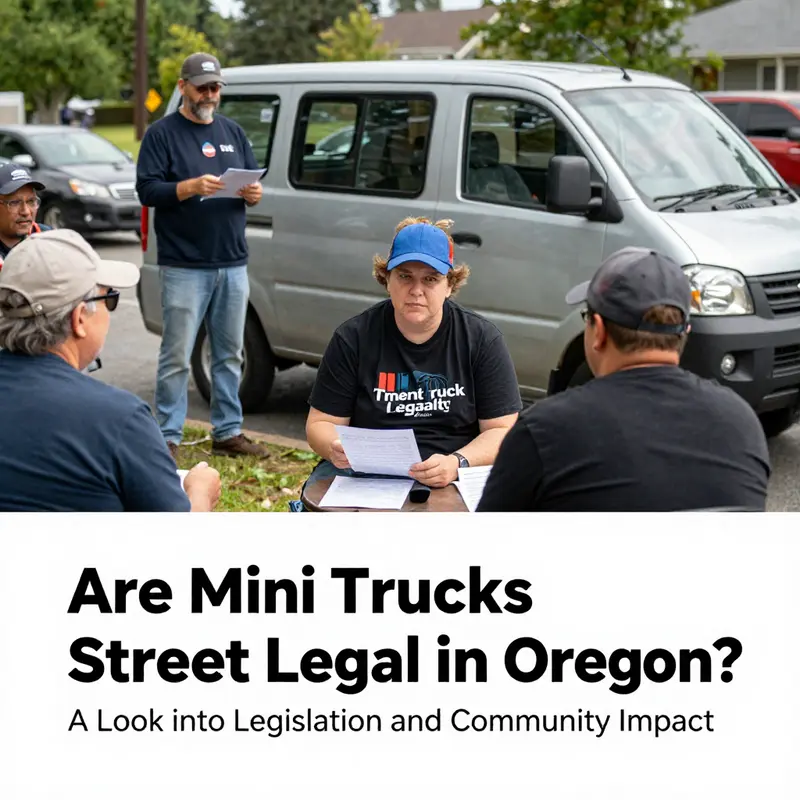
Public attitudes toward mini trucks in Oregon are mixed, nuanced, and under-documented. There is no comprehensive, state-level polling that tracks how Oregonians feel about legalizing mini trucks, sometimes called Kei trucks. What exists instead are fragments: local news coverage, community forum posts, social media debates, and testimony collected during occasional public hearings. Those fragments point to a conversation shaped by utility, safety, and local context — not by a single, unified public sentiment.
People who favor legalization often raise practical arguments. Mini trucks are compact, fuel-efficient, and affordable. In agricultural counties they serve obvious needs: moving feed, hauling small loads, and navigating narrow lanes where full-size pickups feel cumbersome. Urban supporters emphasize last-mile delivery and micro-business use. Enthusiasts also point to examples in other regions where these vehicles operate legally on public roads with appropriate restrictions. For many proponents, the appeal is utility paired with economy: a small, versatile vehicle that fills gaps larger vehicles cannot.
On the other side, concerns are primarily about safety and infrastructure fit. Critics worry that these small vehicles lack crash protection compared with modern passenger cars. They point to differences in size and weight, and to possible shortcomings in lighting, mirrors, braking performance, and emissions controls. For people who travel highways regularly, seeing slower, smaller vehicles can feel risky. This anxiety is especially acute where roads have higher posted speeds and limited shoulders.
A second layer of public opinion emerges from fairness and regulatory consistency debates. Some residents ask why certain vehicles can be registered while others cannot. They worry about uneven enforcement if a new category is legalized. Questions arise about whether legalizing mini trucks could create loopholes for poorly built imports, or whether it would encourage improper modifications that weaken safety. Residents who value strict regulatory standards often argue that any change should include clear certification rules, inspections, and retrofit requirements.
Geography matters. Rural Oregonians, particularly those in farming communities, tend to view mini trucks favorably. They see them as tools that lower operating costs and improve agility on private roads. Urban residents, by contrast, may focus on parking, sidewalk interactions, and performance in mixed traffic. In suburban areas, opinion often splits down use-case lines: families and commuters emphasize safety, while hobbyists and small-business owners highlight utility.
Public sentiment also shifts with the framing. When mini trucks are presented as specialized work vehicles for farms, campuses, and gated communities, resistance often softens. When they are framed as vehicles that might mix with highway traffic at high speeds, the tone hardens. Media coverage plays a decisive role here. Local outlets that emphasize real-world uses and feature local owners tend to humanize the issue. Coverage that foregrounds hypothetical crash scenarios tends to amplify fear and reluctance.
Because formal polling is limited, the most visible indicators of public opinion are legislative hearings and public comments. In Oregon, a bill has been proposed to legalize Kei trucks, and that proposal has prompted testimony from a range of stakeholders. Farmers, small-business owners, and vehicle hobbyists have testified in favor. Road-safety advocates, insurance representatives, and some municipal officials have urged caution. These exchanges reveal a public that is engaged but not monolithic.
Grassroots advocacy is also shaping the conversation. Enthusiast communities organize online and locally, sharing retrofit tips and safety upgrades. They often emphasize compliance: adding seat belts, upgrading lighting, and ensuring proper tires and brakes. These communities can be influential because they convert abstract support into practical proposals for policy. Opposing groups, meanwhile, tend to mobilize around safety data and liability concerns. That dynamic — community proponents proposing practical solutions, and critics pushing for rigorous standards — drives the legislative process.
One underappreciated factor is the role of local governments and law enforcement. Sheriffs, police chiefs, and municipal fleet managers bring practical insights about road interactions and enforcement complexity. Their views often shape how voters and state lawmakers weigh the trade-offs. Some local officials support limited legalization with clear speed and equipment limits. Others fear an enforcement burden and prefer to keep the status quo.
Another dimension is economic. Small businesses and delivery services see a potential cost advantage in deploying mini trucks for short trips. For entrepreneurs, a legal pathway to register mini trucks could lower barriers to entry. Conversely, insurance companies and repair shops consider the long-term costs and claims trends. Public opinion is therefore informed both by immediate, tangible benefits and by abstract concerns about future costs.
If Oregon proceeds toward legalization, public attitudes will likely evolve. Initial skepticism often softens after implementation, provided regulations are clear and enforcement is consistent. Real-world pilots or phased approaches can help. When a new vehicle class is introduced with strict equipment standards, designated speed limits, and defined permitted roads, communities can better assess impacts. Trials also let regulators and the public gather crash and usage data, which can convert debate into evidence.
For advocates and policymakers who want to navigate public sentiment, several practical steps stand out. First, emphasize safety upgrades that bring mini trucks closer to existing vehicle standards. Demonstrations that show seat belts, lights, mirrors, and brake improvements reduce fear. Second, propose clear operational limits: maximum speed, restricted highway access, and approved road classes. Third, support pilot programs or limited rollouts that allow for careful evaluation. Those actions address both practical use and safety concerns, and they make the conversation less theoretical.
Public education matters as well. Many concerns stem from uncertainty about what a legal mini truck would look like and where it would be allowed. Clear visual guides, videos, and community demonstrations can demystify the vehicles. In addition, offering stakeholders a role in rulemaking builds trust. When local officials, safety advocates, farmers, and delivery companies sit at the same table, the solutions are more likely to reflect community priorities.
Finally, measuring public opinion more rigorously would improve the debate. Targeted surveys, focus groups, and observational studies could reveal who would likely use mini trucks, where they would operate, and what equipment upgrades would matter most. The Oregon DMV and legislative offices can benefit from data that moves the discussion beyond anecdotes. Until that happens, public opinion will remain a patchwork of local impressions, media frames, and advocacy voices.
If you want the most current regulatory guidance, consult the Oregon DMV for vehicle registration and title information. Their resources explain the equipment and safety standards any vehicle must meet to be road legal in Oregon: https://www.dmv.state.or.us/vehicles/
For community-oriented information and owner perspectives, see the Mini Trucks SoCal blog for stories and practical insights from enthusiasts and small-business users: https://minitrucksocala.com/blog/
Final thoughts
The conversation about Kei trucks and mini trucks in Oregon is at a pivotal point. While their current legal status remains a barrier for many enthusiasts and local businesses, active legislative efforts are paving the way for potential changes that could positively impact the community. Understanding how other states manage mini truck regulations, along with the public’s sentiment on the matter, reveals the intricate relationship between local preferences and legislative action. As we look ahead, it’s crucial for residents and stakeholders to continue advocating for clarity and progress in these laws to better support the diverse needs of Oregonians.