
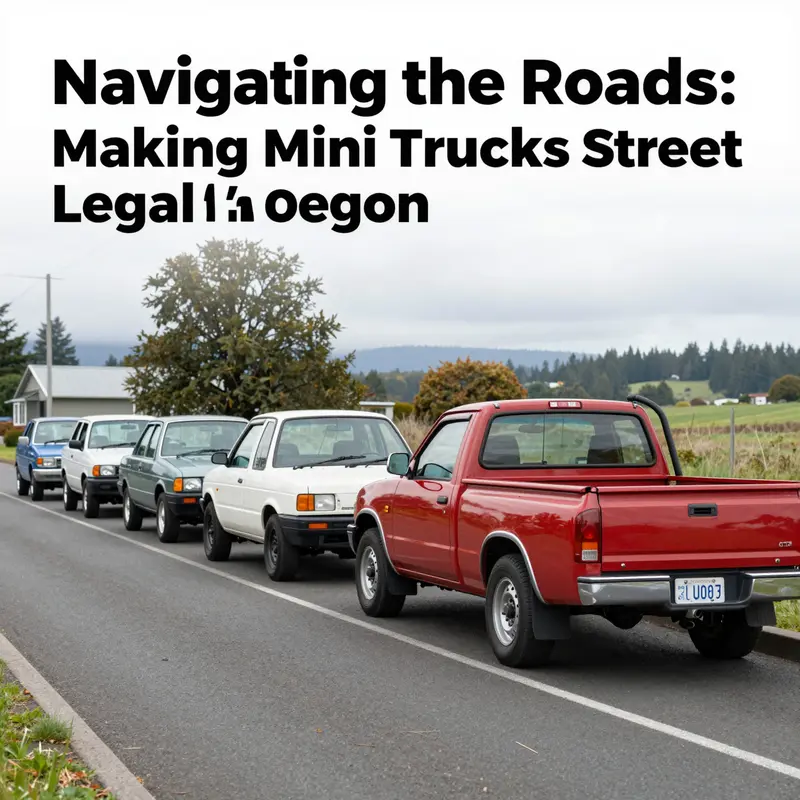
Mini trucks have become increasingly popular in Oregon, appealing to local small business owners, residential property owners, and mini truck enthusiasts alike. These compact vehicles offer versatility for both personal use and business applications. However, their legality on public roads hinges on meeting specific requirements as dictated by the Oregon DMV. This guide will help you understand how to make your mini truck street legal, including essential requirements, safety regulations, environmental considerations, and the exciting legislative changes on the horizon. Each chapter will provide insights tailored for enthusiasts and practical advice for owners hoping to take advantage of what mini trucks can offer in our wonderful state.
The Street-Efficient Kei: How Oregon Turns Mini Trucks into Legal, Practical City Vehicles
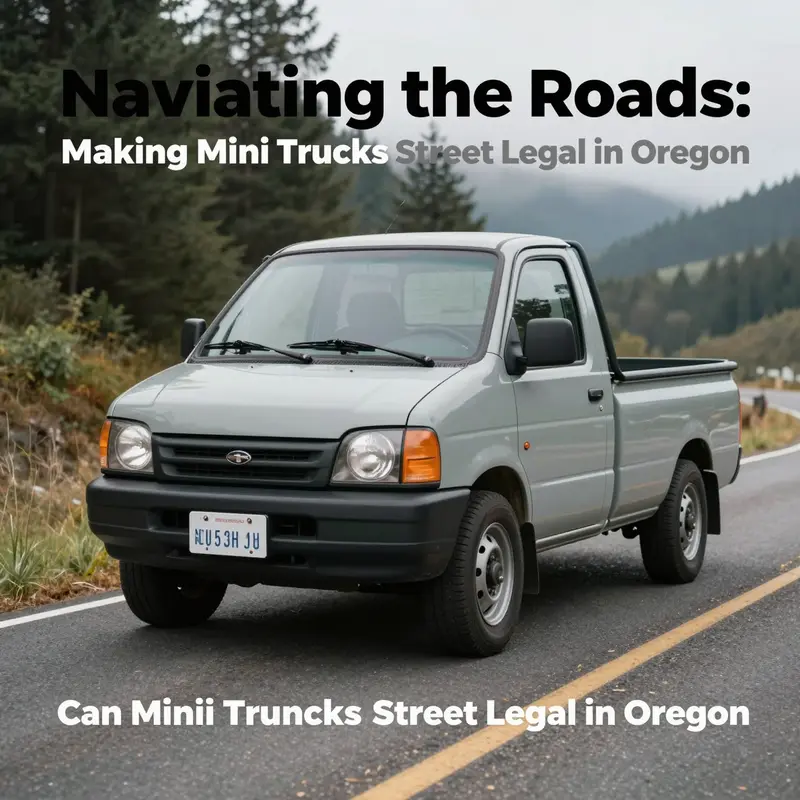
When people imagine a compact, work-ready vehicle zipping through urban corridors, the image often centers on kei trucks—the small, nimble workhorses popular in Japan. In Oregon, these diminutive machines can join the general traffic stream, but only after they clear a carefully drawn gauntlet of rules designed to protect road safety and local environmental goals. The core message is clear: mini trucks can be street legal in this state, but legality is not a matter of affection for small footprints alone. It depends on registration, proper modification, and ongoing compliance with state safety and emissions standards. The DMV is explicit on this point, and the pathway to street legality starts with the same principle that governs any conventional passenger vehicle: a vehicle must be identified, equipped, and certified to function safely on public roads. In practice, that means a kei truck must be registered with Oregon’s Department of Motor Vehicles, display valid license plates, and satisfy an inspection that confirms its readiness for road use. The story of legality is, therefore, a story of alignment with the state’s safety culture rather than a loophole for off-road marvels.
That alignment begins with the basics of visible signaling and protection. A street-legal kei truck needs functional headlights and taillights, proper turn signals, and mirrors that give the driver adequate rear visibility. It needs a VIN that can be traced and verified, a key feature for any vehicle that will be tracked by law enforcement and the DMV alike. Tires must meet federal standards for road use, which meansDOT-approved tires capable of withstanding highway speeds while delivering predictable grip under wet or dry conditions. Inside, the vehicle must offer reasonable occupant protection: seat belts for all riders and a cabin that tolerates routine traffic demands, including secure seating and seating capacity that aligns with seat belt provisions. In the eyes of the federal safety regime, this is not merely a suggestion but a baseline requirement to participate in public road use. The Oregon DMV, as the gatekeeper of state compliance, cross-references these elements with federal safety norms to ensure that a compact, light-duty vehicle does not compromise on the fundamental duties of road travel.
Beyond the basic hardware, there is a nuanced layer to the road-legal status of mini trucks: the question of emissions and overall environmental impact. Oregon has long prioritized cleaner transportation options, and while kei trucks are small, their emissions profile still matters. The vehicle must meet emissions standards applicable to other light-duty vehicles operating in the state. This can involve demonstrating a compliant exhaust system, passing an emissions test when required, and, in some cases, emitting measurements that align with the expectations set by the state’s environmental regulators. In short, a compact, efficient vehicle can contribute to urban air quality goals, but it must do so within the framework of established emissions compliance. The possibility of exemption or adjustment can depend on the vehicle’s propulsion method and age, so the careful review of current DMV guidelines—along with any local ordinances—remains essential for drivers who plan to use these diminutive trucks for daily commuting or routine errands.
Electric power adds another dimension to the discussion. Lithium-ion battery packs enable zero-emission operation, instant torque, and quiet acceleration that suits city driving well. An electric kei truck can be especially appealing in dense downtowns or corridors where noise and tailpipe emissions are a concern. Yet even electric variants must navigate Oregon’s road-legal criteria: the vehicle must be properly registered, inspected, and equipped with the necessary safety features for highway travel. Battery weight, charging considerations, and range become practical concerns only in the sense that they shape how and where such a vehicle can be used. A compact electric truck may excel as a last-mile or urban delivery solution, but it still falls under the same regulatory umbrella as any other light-duty vehicle when it comes to street use. The promise of electric mini trucks lies in their alignment with urban sustainability goals, not in a bypass of the rules intended to keep roadways safe and predictable for all commuters.
The policy landscape adds another layer of complexity—and not merely because legislation can change. In early 2026, a bipartisan group of Oregon lawmakers, including Representative Broadman, reintroduced legislation aimed at expanding the possibilities for kei trucks to ride public roads. The potential passage of such measures would not rewrite safety or emissions standards; it would broaden the mechanisms by which compact, fuel-efficient vehicles can be considered eligible for street use, perhaps by clarifying registration pathways or adjusting certain regulatory hurdles. If these discussions advance toward law, they could tip the balance in favor of more compact options that already meet the foundational requirements and are willing to adhere to the state’s safety and environmental expectations. It is a reminder that legality is not static but rather a dynamic interplay between technology, safety priorities, and the legislative environment. For readers who are curious about how policy trajectories could shape the availability of ultra-compact, road-ready trucks in the near future, following state debates and DMV updates becomes part of the practical planning process.
For those navigating the practical steps today, the approach is straightforward but exacting. Start with a vehicle that can be registered and brought to a compliant state—a process that typically involves a title transfer, a VIN verification, and adherence to Oregon’s registration requirements. Expect to document and demonstrate the vehicle’s lighting configuration, signaling systems, mirrors, and seat belts. If the initial build leans toward off-road aesthetics or performance, expect to modify the setup to meet highway standards. This is not about making the truck resemble a conventional family sedan; it is about ensuring the essential safety features are present, functional, and compliant with the relevant federal and state criteria. The easiest path to compliance often involves partnering with local shops or converters that understand how to transform an off-road-style vehicle into a road-legal compact truck without compromising safety or reliability. A well-documented modification trail, with parts that meet the recognized standards, not only eases the DMV inspection but also supports the owner in case of questions from law enforcement or insurance providers.
The dialogue around these vehicles also invites readers to widen their view beyond the DMV box to the daily realities of urban mobility. A street-legal kei truck can function as a practical alternative for people who value a small footprint with predictable urban performance. Its compact size can ease parking and maneuvering, and its efficiency can yield meaningful savings in everyday trips. Yet the compact mindset comes with trade-offs: reduced cargo space, the need for careful load management, and the awareness that some routes or road sections may demand stricter adherence to rules than larger, more conventional vehicles. The interplay between capability and compliance becomes a constant consideration for drivers who adopt mini trucks as everyday mobility solutions and not merely as weekend curiosities. In that sense, the Oregon experience mirrors broader conversations about how cities adapt to new micro-mobility options: by combining robust safety requirements with flexible, well-structured pathways for legitimate use on public streets.
To keep readers oriented, it helps to see how the pieces fit together. A quick map of the process looks like this: ensure the vehicle has a VIN and can be traced; verify that it carries the necessary lighting, signals, mirrors, and seat belts; confirm that the tires are road-licensed; and complete the registration through the Oregon DMV, followed by any required inspections or emissions checks. In parallel, stay alert to local ordinances and city-level rules that might add constraints or grant additional allowances. The broader aim remains consistent: a street-legal mini truck should offer the urban advantages of compact dimensions and efficient operation while preserving the standards that keep everyone on the road safe. For readers eager to see how these ideas translate into real-world options, the comparative landscape of compact models can be informative; this side-by-side exploration helps illustrate how different configurations balance safety, efficiency, and practicality. See comparing-kingstar-kruzr-models-specs-features for a sense of how small-footprint options stack up across key specs.
Finally, for those who want direct access to official guidelines, the best source remains the state’s own portal. It consolidates registration steps, inspection expectations, and the precise emissions requirements that apply to street-legal mini trucks in Oregon. The process is clear when approached with the right documentation and a mindset focused on safety and compliance rather than novelty. As the policy environment evolves, staying connected to official updates will help owners align their plans with current law and anticipated changes. Official guidance is available at https://www.dmv.state.or.us.
Kei on the Road: Oregon’s Quiet Push Toward Street-Legal Mini Trucks and What It Means for Urban Mobility
Oregon has long cultivated a culture of practical, compact transportation—the kind of approach that prizes efficiency, maneuverability, and a lighter footprint on crowded streets. In this climate, the idea of street-legal mini trucks, specifically Kei trucks, has shifted from a niche curiosity to a policy question that could reshape how urban and rural residents move their cargo and themselves through the state. The current arc hinges on a blend of practical engineering, safety expectations, and state-level legislation that would redefine what is allowed on public roads. At the core of the conversation is Senate Bill 1213, a proposal aimed at legalizing the registration and operation of these small, efficient vehicles under a defined set of conditions. If SB 1213 passes, the door opens not to a universal stamp of approval for every Kei truck, but to a carefully circumscribed pathway that aligns fleet and personal use with Oregon’s existing road safety framework. The story here is less about a single model or a shopping list of features and more about the alignment of a vehicle class with a state’s standards for safety, emissions, and traffic governance. It’s about how policy, technology, and daily needs intersect to create a practical option for folks who want a nimble, cost-conscious vehicle that can still run the same routes as larger cars and trucks when properly equipped and registered.
The practical question follows a familiar arc: can a miniature, light-weight vehicle meet the tall order of street legality in Oregon? The answer, as it stands, depends on a constellation of factors that Oregon’s DMV and the legislature are balancing. Kei trucks are defined by size and engine—typically compact in overall dimensions and capped at 660cc or less in engine displacement. The proposed framework considers age-related stipulations, recognizing that the life cycle of these vehicles often intersects with older, possibly more affordable units that owners might bring into service. The legal pathway would hinge on a registration process that acknowledges the vehicle’s distinct characteristics while placing it firmly within the state’s regulatory perimeter. In other words, the mechanical novelty of a Kei truck must be reconciled with the safety and accountability that our roads demand. And this reconciliation sits at the intersection of two critical realities: vehicle modification for compliance and the ongoing need for robust, verifiable safety and emissions standards.
From a safety standpoint, the bill’s focus is noticeably narrower than a full-scale safety audit of every potential Kei-truck configuration. The legislation emphasizes the basics: the vehicle must be street-ready in terms of visibility and signaling, with functional headlights and taillights, turn signals, and mirrors to reflect standard driving conditions. A valid Vehicle Identification Number (VIN) and alignment with DOT-approved tires become non-negotiables in the registration process. These elements address the most visible aspects of road safety—being seen, being predictable to other drivers, and having a way to verify the vehicle’s identity for recalls and insurance purposes. Yet even as these fundamentals are acknowledged, the discussion around broader safety systems—seat belts, airbags, structural integrity—remains nuanced. There is a clear recognition that the bill, while moving toward legality, does not guarantee universal compliance with every safety feature that would be expected of a larger, more regulated vehicle class. The implication is that, for a Kei truck to become a legitimate on-road option, owners will need to bring their individual vehicles into alignment with minimum safety equipment standards set by the Oregon Department of Transportation and by relevant federal guidelines. In practice, this means that a Kei truck destined for street use would likely require thoughtful upgrades and documented conformity checks before it can be registered and plated.
The debate, then, becomes not only about whether the law should permit smaller vehicles on state roadways, but how riders and operators can bridge the gap between a compact, efficient form factor and the comprehensive safety expectations that Oregon systems have built over decades. In urban settings, where space is at a premium and traffic patterns demand nimble responsiveness, a properly prepared Kei truck could offer an appealing combination of lower operating costs, reduced emissions, and easier navigation through congested corridors. Electric variants add another layer of appeal, especially in urban zones striving for cleaner air and quieter streets. Battery-powered mini trucks appeal to city dwellers and small-business operators who want quick, no-fuss access to neighborhoods and industrial parks alike, without the noise and emissions associated with larger engines. The zero-emission advantage, along with the instant torque characteristic of electric drivetrains, resonates with the growing demand for sustainable mobility, even when the vehicle’s footprint in terms of size remains compact. The challenge, of course, is ensuring battery safety, charging infrastructure compatibility, and long-term reliability within Oregon’s regulatory expectations.
As this policy conversation evolves, the practical steps for a prospective owner remain clear but demanding. The registration process is not merely a bureaucratic formality; it is a corrective to the perception that a small vehicle is inherently exempt from higher safety and accountability standards. A potential owner would begin with a thorough assessment of the vehicle’s compliance with the size and engine-displacement requirements, followed by securing a VIN and preparing for the inspection that verifies lights, signals, and mirrors. A strong emphasis on tire quality and suitability for public roads underscores the state’s commitment to road readiness. Owners might also be advised to partner with local DMV representatives or qualified inspection facilities to ensure that their Kei trucks comply with emissions standards and other regulatory expectations. The aim is not to penalize creativity or efficiency but to ensure that lighter, smaller vehicles contribute to safer roads, predictable driving behavior, and responsible road-sharing.
A deeper shift lies in the cultural and practical willingness of Oregon’s residents to consider a different class of on-road mobility. If SB 1213 advances, it could recalibrate the market demand for compact, high-efficiency vehicles while encouraging a standardization of safety checks that protect both users and other road users. It could also spur a broader discussion about urban design, parking, and congestion management, where smaller, easier-to-park vehicles might alleviate some stress from crowded corridors. Yet this shift comes with caveats: the safety baseline, the reliability of the allowed configurations, and the ongoing enforcement realities that ensure any street-legal Kei truck remains safe and predictable. The policy design will need to address maintenance expectations, insurance considerations, and the potential for aftermarket adjustments that could inadvertently undermine safety or compliance.
For readers who want to track the evolution of this topic beyond the abstract of a legislative proposal, there is value in turning to community resources and official channels. The broader online conversation about mini trucks and their customization often highlights a shared interest in preserving the practicalities—compact dimensions, versatile bed space, and the ability to maneuver through tight urban environments—while reframing them within the robust safety and regulatory frameworks that govern all on-road vehicles. If you are curious about how these ideas are being discussed in practice, you can explore the wider mini-truck community’s insights through the general blog coverage that often accompanies these developments. See the community blog for perspectives and practical considerations at minitrucksocala.com/blog/. This resource can offer context on how owners translate concepts of efficiency and ingenuity into street-legal realities, while still acknowledging the importance of safety, insurance, and compliance as central pillars of any on-road operation.
Any reader who is following Oregon’s legislative trajectory should stay attuned to the actual bill text and status, which can shift as lawmakers debate the precise language and oversight mechanisms. The official bill page and updates provide the most reliable snapshot of what would be required for a Kei truck to become street legal in the state, including the exact vehicle specifications, inspection requirements, and registration processes that would be enacted if the measure advances. For those who want to review the current stance and any amendments, consult the Oregon Legislative Assembly’s page for SB 1213. The ongoing dialogue between lawmakers, safety agencies, and the public will determine whether Oregon will embrace a broader spectrum of on-road vehicles that marry compact form with reliable safety standards. In the meantime, drivers who anticipate this transition should prepare for a future where the line between off-road novelty and on-road utility becomes more clearly defined—but also more navigable—through careful compliance, responsible modification, and informed ongoing maintenance, all within the boundaries of Oregon’s road rules.
For more on the ongoing discussion and related considerations, explore additional perspectives and related topics at the broader mini-truck community hub: minitrucksocala.com/blog/. And for those who want to follow the legislative path directly, the official status and text of SB 1213 can be found on the Oregon Legislative Assembly site: https://www.oregonlegislature.gov/bills_laws/2025/bills/sb1213.
From Street-Ready to City-Smart: Navigating Oregon’s Rules, Emissions, and Electric Promise for Mini Trucks
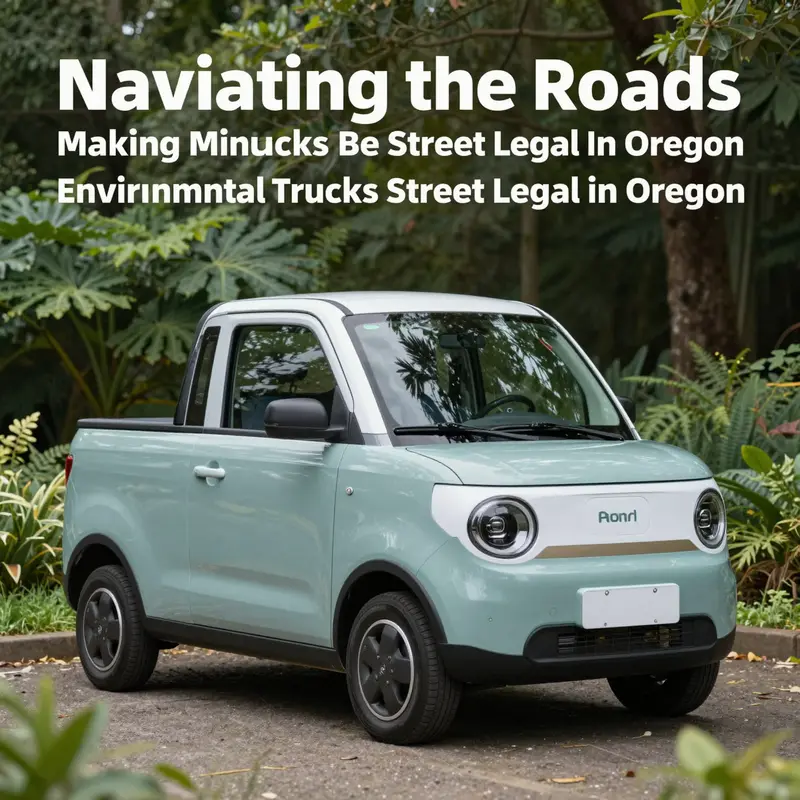
The question of whether a mini truck can ride Oregon’s streets moves beyond a simple yes-or-no check. It sits at the intersection of safety standards, vehicle classifications, and the state’s ambitious push toward cleaner, quieter urban mobility. In Oregon, a compact, purpose-built vehicle can be street legal, but only if it is properly modified, registered, and equipped to meet both state and federal requirements. The journey from off-road or utility labeling to public-road eligibility is not merely cosmetic; it is a conversion process that anchors every choice in verifiable standards. The core of legality rests on a triad of size and weight, emissions compliance, and safety features that ensure the vehicle behaves as any other passenger or light utility vehicle on city streets and highways. In practical terms, a mini truck must fall within defined size and weight limits that the state accepts for road use. It must not only be capable of basic driving performance but also integrate the essential safety equipment that drivers expect in everyday traffic. The Oregon DMV, following federal guidelines set by NHTSA, requires vehicles to have working brakes, a functioning steering system, and reliable lighting. This means that even a model marketed as off-road or “utility” cannot skip the basics. The machine must wear headlights, taillights, turn signals, and mirrors. It must sport a valid Vehicle Identification Number, and its tires must be DOT-approved. These elements are non-negotiable in the registration process and are the practical gatekeepers for access to public roads. The emphasis is not on the novelty of the vehicle but on its ability to perform safely and predictably within the traffic ecosystem. In the real world, that translates to a carefully planned package of components and modifications. For owners and builders, the path to compliance often involves consultation with professionals who understand both the precise federal safety standards and the state’s own requirements for emissions and inspection. The goal is not to “beat” the rules but to align with them so that the vehicle can be registered and lawfully operated. Emissions compliance adds another layer, particularly for gas-powered mini trucks. Oregon’s environmental standards require that vehicles meet state emission requirements, which can vary depending on the engine type and model year. The region’s climate goals also color the conversation, because cleaner air and lower noise pollution align with urban planning priorities. Electric mini trucks, on the other hand, present a different calculus. Their primary advantage lies in zero tailpipe emissions and a quieter profile—attributes that resonate with dense urban environments and communities seeking to reduce noise and air pollution. Electric power trains, when paired with appropriate safety systems, can meet or exceed the performance criteria drivers expect from traditional internal combustion engines. Importantly, electric mini trucks can align well with Oregon’s clean-transport incentives, creating a compelling case for both individuals and small businesses seeking cost-effective, sustainable mobility solutions. The state’s incentives program is designed to reduce the upfront cost of qualifying zero-emission vehicles, which can make the transition to an electric mini truck more attainable for a broad audience. The decision to adopt an electric option is not purely environmental; it also resonates with economic practicality. Fewer moving parts in an electric drivetrain typically translate to lower maintenance costs over time, and electric operation often yields lower fuel expenses, especially in a city where stop-and-go driving is common. Yet, the legal pathway remains anchored in compliance. A vehicle must be properly certified and registered, and it must meet the safety and emissions standards that apply to any vehicle operated on public roads. The DMV’s insistence on compliance with federal standards ensures that even the smallest street-legal machines share the same obligations as their larger counterparts. It’s this alignment that protects drivers, pedestrians, and other road users while maintaining a consistent regulatory baseline across vehicle classes. Legislative developments add another layer of texture to the scene. In early 2026, a bipartisan group of Oregon lawmakers signaled momentum to broaden access for kei-style trucks—compact, lightweight vehicles that are particularly well-suited to urban corridors. If such legislation advances, it could open doors to more compact, fuel-efficient mini trucks becoming officially street legal in the state. The practical implications would include standardized DOT tires, appropriate bumpers, and a carefully defined weight class that fits Oregon’s regulatory framework. The idea is not to flood the roads with novelty, but to expand options for drivers who prioritize efficiency, maneuverability, and a smaller environmental footprint. For anyone considering a street-legal mini truck in Oregon, the decision-making process intertwines practical engineering, regulatory navigation, and forward-looking environmental goals. It begins with a clear plan for how the vehicle will be used—commuting, cargo runs, or lightweight service tasks on city streets—and then moves through a checklist of required features and confirmations: a robust braking system, a safe and functional steering mechanism, reliable lighting and signaling, intact mirrors, and a verifiable VIN. The registration process will typically involve an on-road inspection to verify compliance with safety and emissions standards, rather than a trust-that-it’s-fine approach. This is where the line between vehicle branding and roadworthiness becomes stark. The label attached to the vehicle—whether it’s described as off-road, a utility vehicle, or something in between—won’t exempt it from the rules. The vehicle must wear the trappings of a road-legal machine: seat belts, working lights, and tires approved for highway use. These are not cosmetic add-ons; they are safeguards that support predictable performance under a broad range of driving conditions. The environmental argument for electric mini trucks remains compelling. Zero tailpipe emissions, reduced noise, and the potential for integrated charging in apartment complexes or workplaces create practical advantages for people who commute through urban cores or navigate congested streets. When powered by renewable energy, the environmental footprint of electric mini trucks diminishes further, supporting Oregon’s climate goals and resilience planning. The broader social value is also meaningful: smaller, efficient vehicles can ease street clutter in dense neighborhoods, contribute to safer curbside operations for deliveries and service calls, and offer a nimble alternative for residents who require regular but modest transportation needs. The legal pathway, then, becomes a bridge between innovation and responsibility. It invites builders and buyers to think holistically about how a vehicle will function in mixed traffic, how it will be maintained to the standard expected by safety authorities, and how it will be financed and insured. It also invites readers to connect with ongoing dialogue in the community. For practical notes, ongoing discussions and practical considerations can be found in the Mini Trucks blog, which provides a space for shared experiences and insights from builders, drivers, and enthusiasts. See the Mini Trucks blog at minitrucksocala.com/blog/. As with any significant vehicle purchase, potential owners should approach the process with a clear plan: map out the registration steps, estimate the anticipated maintenance schedule, explore insurance options, and compare the total cost of ownership between conventional compact trucks and specialized mini trucks that meet Oregon’s road-ready criteria. In all these considerations, a careful eye on the regulatory landscape is essential. While the path to street legality is well-defined, it is not static. Regulations evolve as technology advances and as lawmakers respond to urban mobility needs. The ongoing dialogue around kei-style trucks signals a future where even smaller, efficient designs could play a larger part in Oregon’s transportation mix, provided they meet the same standards that govern other street vehicles. For readers seeking formal guidance, the Oregon DMV website remains the authoritative source, and it will reflect any legislative updates or revisions to the licensing, inspection, and emissions requirements that determine what can and cannot be registered for street use. External resources that help illuminate the incentives landscape in Oregon offer additional value. For those considering electric options, the state’s incentives can influence the economic calculus of ownership, charging infrastructure, and long-term operating costs. To explore official incentives, readers can consult the Oregon Electric Vehicle Incentives pages, which detail eligibility and rebate amounts: https://www.oregon.gov/odot/vehicles/electric-vehicles/Pages/electric-vehicle-incentives.aspx.
Small, Street-Ready, and on the Horizon: Oregon’s Kei-Truck Legislation and the Road Ahead
In Oregon, the compact appeal of kei trucks sits at a curious crossroads of practicality and regulation. These small utility vehicles capture the imagination of urban drivers who need nimble, affordable machines for short trips, deliveries to tight spaces, or simply a different approach to daily commuting. Yet today’s reality is that, while owners can legally possess and operate such vehicles on private property, they cannot register them for use on public roads under the current set of state rules. The disconnect between ownership and on-road use reflects a careful prioritization of safety, crash protection, and regulatory oversight. The rules are not meant to deny utility; they are meant to ensure that anything sharing the street with other cars, cyclists, or pedestrians meets a baseline standard for visibility, collision avoidance, and emissions. The practical upshot is a pathway that begins with a clear understanding of what it would take to become street-legal in Oregon. Essential features matter as much as the vehicle’s origins. A kei truck would need to be properly modified and registered to comply with state safety and emissions standards. That translates into a package of on-vehicle requirements that the Oregon Department of Motor Vehicles emphasizes: headlights and taillights that meet basic illumination standards, functional turn signals so other road users can anticipate intent, mirrors that provide adequate rear visibility, a valid VIN that anchors the vehicle in the official registry, and tires that meet DOT criteria for road use. These elements are not mere formalities. They are the practical gatekeepers that help inspectors determine whether a vehicle designed for tight alleys, farm lanes, or private tracks can function safely on a shared roadway. Beyond the mechanical and cosmetic adjustments, the process touches the broader question of compliance. A street-legal path would almost certainly require the vehicle to meet emissions standards appropriate to its propulsion system. For electric minibikes—the growing subset of compact, battery-powered trucks—the conversation centers on zero-emission operation and the reliability of the battery and charging systems, as well as safety features associated with high-energy storage. The allure of electric mini trucks is straightforward: rapid torque, quiet operation, and the potential for clean urban mobility. In a city environment where noise and air quality are increasingly scrutinized, a compliant zero-emission vehicle could offer a compelling case for access to public streets, provided the regulatory framework adapts to accommodate such a transition. The dialogue around this is not merely about hardware; it is about creating a structured route through the DMV’s regulatory labyrinth, one that preserves safety while acknowledging evolving vehicle technology. In early 2026, Oregon’s legislative attention turned toward a handful of practical questions that have long bedeviled kei-truck enthusiasts. A bipartisan group of lawmakers, including Representative Broadman, revived a push to create a formal pathway by which these small, energy-efficient vehicles could be driven on public roads if they meet safety standards established by the state. If the bill advances, it would not automatically grant on-road status. Instead, it would provide a framework—outlined safety criteria, production or conversion verification, a process for obtaining appropriate registration, and a mechanism for continued compliance. That framework would also interpret how such vehicles align with current licensing, insurance, and road-use expectations, ensuring that drivers understand their responsibilities just as drivers of traditional passenger cars do today. The proposed approach recognizes a fundamental shift in how people move in and around Oregon’s neighborhoods and business districts. Kei trucks, compact by design, can be highly efficient for short hops and municipal tasks, and their potential street access could reshape decisions around last-mile deliveries or work-site transport. But that potential is not a guarantee. The legislative momentum is tempered by sober questions about safety standards, consumer protection, and the practicalities of enforcing a new class of vehicles on a state’s roadways. Still, the conversations are moving beyond theoretical debate. They reflect a broader trend toward recognizing the role of small, agile, low-cost vehicles in urban mobility strategies, especially as communities grapple with congestion, parking constraints, and environmental concerns. Within this context, enthusiasts and policymakers alike are looking to practical precedents and the lived experience of other jurisdictions where similar vehicles have found a legitimate, regulated niche. It is here that community voices and official guidance intersect. For readers who want to track the sentiment and the practical steps being discussed, there is a vibrant online community and a growing set of how-to discussions that anchor the conversation in real-world experience. A useful entry point is the ongoing material hosted on community blogs and forums where owners share what modifications and inspections they have pursued to align with the letter of the law. You can explore these discussions at minitrucksocala.com/blog/, which curates a range of perspectives on mini trucks, their customization, and the regulatory considerations that accompany on-road use. This resource helps readers understand how people approach the threshold between private-property use and public-road eligibility, from practical inspection notes to the broader regulatory anxieties that accompany any attempt to alter a vehicle’s legal status on Oregon’s streets. Of course, the official guidance remains the Oregon DMV. The agency provides the definitive checklist for what must be present and what must be verified before registration can even be contemplated. The path requires deliberate compliance, with an eye to safety, legal eligibility, and environmental impact. Until a law changes, however, owners should recognize that these vehicles are restricted to private property. They can be exceptionally capable in the right setting, yet their road-use potential hinges on future regulatory decisions that balance mobility needs with public safety. The push to amend the rules embodies a broader conversation about how modern users want to move in urban spaces. Kei trucks are not only a nod to a particular size or style; they symbolize a shift toward compact, versatile vehicles that can function as practical city tools without imposing the footprint of a larger backdrop vehicle. If legislation succeeds, Oregon could carve out a controlled pathway that preserves rigorous safety checks while acknowledging the appeal of efficient, lightweight transport for everyday tasks. Potential models of success in such a regime would likely hinge on clear inspection regimes, standardized conversions or factory-ready options, and consistent enforcement practices that help avoid a patchwork of local rules. The negotiation between state-level standards and local enforcement realities would matter deeply to drivers who want predictability and fairness in registration decisions. In the meantime, the best-informed path for interested readers remains twofold: stay connected to official channels for the latest DMV guidance and monitor legislative developments that could alter the on-road eligibility landscape. The Oregon Live reporting on this revival of kei-truck discussions offers a comprehensive look at the legislative intent, the players involved, and the potential implications for Oregon’s traffic and environmental policies. For readers seeking direct updates, the article is a reliable external resource: https://www.oregonlive.com/2026/01/oregon-lawmakers-revive-push-to-make-kei-trucks-street-legal.html. As developments unfold, the narrative will continue to be shaped by safety benchmarks, technological evolution, and the real-world needs of residents who seek practical, affordable transportation options. Until then, the street remains closed to kei trucks as a matter of law, while the debate keeps a steady cadence in city corridors and legislative hearings alike. Readers who want to follow the broader context may also explore a range of related topics and community discussions tied to the evolving landscape of miniature utility vehicles and their place in Oregon’s streets, with ongoing conversations rooted in both practical experience and regulatory scrutiny.
Street-Ready Kei Trucks in Oregon: DMV Rules, Legislation, and the Path to Quiet, Compact Compliance
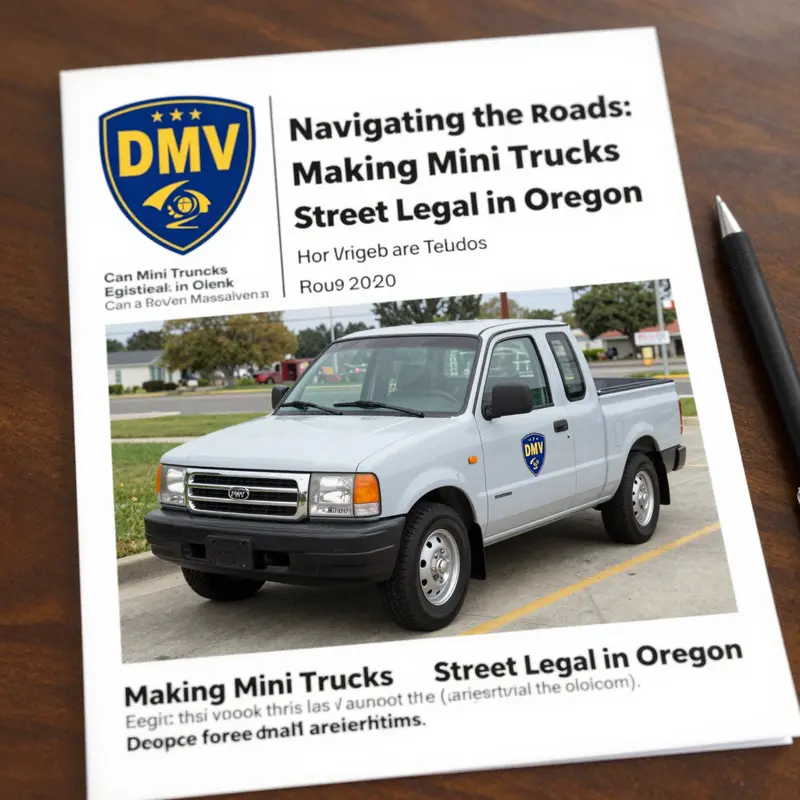
Oregon street-legal kei trucks require careful conversion and documentation to meet safety and emissions standards. The street-legal path begins with alignment of design, regulation, and ongoing compliance. A vehicle that starts as an off-road toy must be converted and certified by the DMV, and it must pass inspections and renewals. The core requirement is that it presents as a properly outfitted motor vehicle with safety features recognized by the DMV: headlights and taillights, turn signals, mirrors, a valid VIN, and tires that meet DOT standards. Emissions standards also matter; modifications may require engines to meet limits, exhaust configurations to be approved, and accompanying documentation for title and registration. In practice, street legality is about reliable operation and verifiable compliance, not cosmetic resemblance. A dynamic element in Oregon’s horizon is the Kei truck policy debate. As policy discussions unfold, the DMV remains the primary source for current rules, forms, and eligibility criteria, and lawmakers keep the door open to new pathways through ongoing legislation.
SB 1213 and related work would create a framework for Kei trucks, including a registration fee of 63 and a maximum fine of 1000 for unlawful use. It does not automatically legalize every Kei truck, but it signals intent to harmonize policy with urban mobility needs. For readers who want to follow the arc, refer to the Oregon DMV for the latest guidance. Because status can shift, check official sources for current language and deadlines.
Electric mini trucks bring instant torque, quiet operation, and zero-emission profiles, which suit inner-city routes, but they must meet the same gatekeeping tests as combustion models: battery safety, charging compatibility, thermal management, and reliable braking. The DMV’s guidelines, and any Kei-truck amendments, will shape when electric options can be roadworthy on Oregon lanes.
The journey from hobby to road-legal vehicle involves registration, title, insurance, and meticulous documentation of modifications. Plan compatible lighting, confirm safe installation of safety features, and ensure the VIN is legitimate. Vehicle weight, speed, and braking performance factor into highway readiness. A dune buggy can become a boulevard-legal mini truck only after it meets road-worthy standards.
For a practical sense of how models compare, many resources offer comparative information on compact designs and capabilities. While exact models vary, the principle remains: safety, visibility, and regulatory compliance matter. A referenced page can illuminate how configurations influence readiness for Oregon streets. See model comparisons and specs at https://minitrucksocala.com/comparing-kingstar-kruzr-models-specs-features/.
Ultimately, the path to legality depends on thorough preparation and ongoing compliance. The DMV is the authoritative source, and ongoing Kei-truck discussions signal future clarity. Monitor official DMV resources and reputable coverage of Kei-truck policy for updates. The latest guidance from Oregon DMV and Kei-truck discussions will shape when and how electric and gasoline mini trucks may operate on Oregon roads.
Final thoughts
In conclusion, making mini trucks street legal in Oregon is not only feasible but also increasingly popular among local entrepreneurs and enthusiasts. Understanding the requirements, safety standards, and environmental implications is essential for navigating this unique vehicle’s legality. With ongoing legislative changes potentially broadening the scope for mini truck usage, now is a perfect time to delve into the world of mini trucks. Stay informed through DMV resources and take proactive steps towards enjoying the benefits of these versatile vehicles in your daily life.