
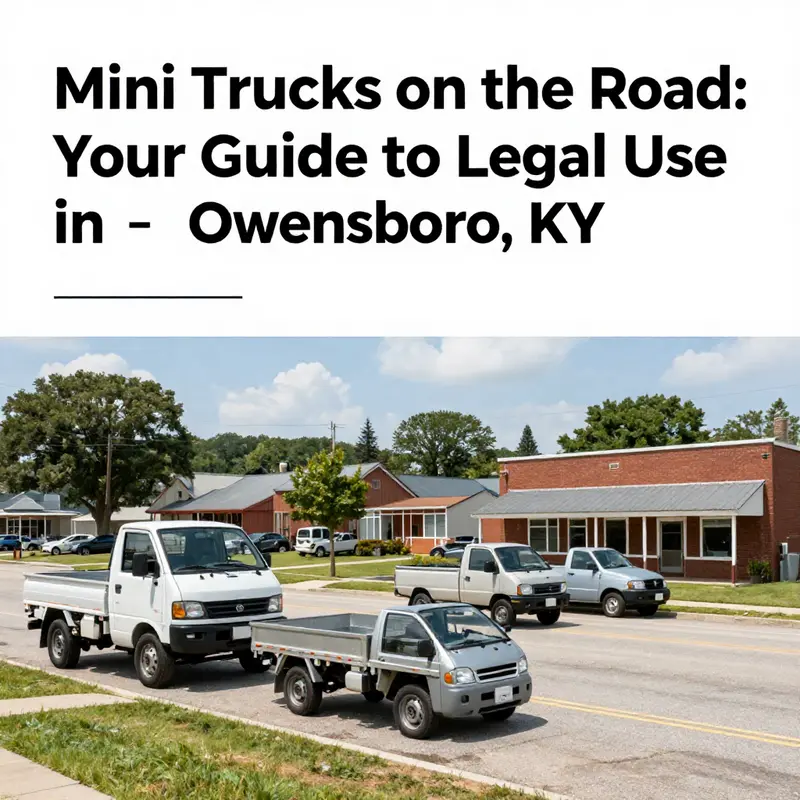
Owensboro, KY, is a vibrant community where small business owners, residential property owners, and mini truck enthusiasts find common ground. Understanding the legal status of mini trucks—their registration, necessary modifications, and compliance—ensures you stay within the law while enjoying your vehicle. Throughout this article, we’ll explore whether mini trucks can be street legal in Owensboro, the registration process, any necessary adjustments for compliance, and special permissions, all tailored for local residents and enthusiasts alike.
On the Edge of the Street: Navigating the Street-Legal Landscape of Mini Trucks in Owensboro, KY
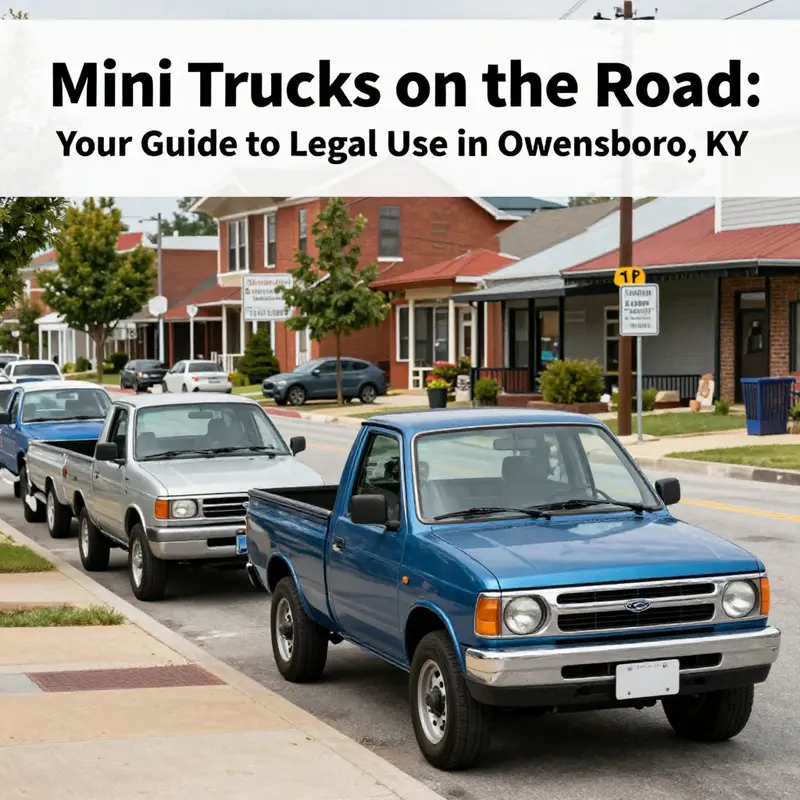
Owensboro sits along the winding curves of the Ohio River, its streets carrying the cadence of daily life and the occasional hum of novelty vehicles that stir conversation in local shop fronts and neighborhood blocks. Among these conversations, one recurring question rises with the morning sun: can a mini truck, the compact Kei-style workhorse that many owners find practical for tight spaces, actually drive on Owensboro’s public roads? The short answer, anchored in the state and local framework, is nuanced enough to require a careful walk through the details. In Kentucky, the legality of miniature pickup trucks on public streets hinges on a combination of design characteristics, safety features, registration status, and the legal category under which the vehicle is classified. What may be legal in one county or city could be restricted in another, which is why residents often find themselves dialing the DMV or the local county clerk’s office to confirm the precise path to lawful operation.
At the heart of the matter lies the distinction between vehicles that Kentucky categorizes as standard road vehicles and those it classifies as non-highway or off-road types. The Kentucky Department of Transportation (KYDOT) outlines broad safety requirements for any vehicle that travels on public roads. These include having valid registration and license plates, functional lighting systems (headlights, taillights, brake lights, turn signals), properly installed mirrors, a working braking system, and adherence to emissions standards where applicable. Most mini trucks—especially those designed for farm work, construction, or off-road recreation—tend to fall into a gray area. They are often framed as non-highway vehicles or compact variants of all-terrain or light utility vehicles rather than traditional automobiles. This classification, in practice, tends to bar them from legal street use unless they undergo modifications that bring them into alignment with state vehicle standards and obtain the necessary road-legal documentation.
Within this landscape, three pathways—though not guaranteed, and each with its own hurdles—appear to offer a route to legality in Owensboro. The first is straightforward in concept: registration and plate issuance. A mini truck that has been modified to meet Kentucky’s vehicle specifications could be registered with the Kentucky Transportation Cabinet and issued a license plate. This requires a conformance check of the vehicle’s safety features, proving that it meets the state’s standards for lights, brakes, tires, and other essential systems. The second pathway is the temporary or special-use option. In some cases, vehicles deployed for agricultural or particular work purposes may obtain temporary permits. These permits often come with route and time restrictions, limiting where and when the vehicle can operate on public roads. Such permits can be provisional but still render the vehicle lawful under specific conditions and timeframes. The third pathway is a tighter but possible classification shift: the Low-Speed Vehicle (LSV) category. If a mini truck’s top speed is capped at or below 25 miles per hour and it is equipped with the required safety features, it may be classified as an LSV in some contexts. LSVs are allowed on certain roads in many jurisdictions, depending on local speed limits and traffic patterns. However, the LSV route is not a universal passport; it demands compliance with local ordinances and a clear understanding of where LSVs may operate within Owensboro and across Kentucky.
For the owner or prospective operator, the practical starting point is a conversation with the right authorities. The county clerk’s office, or the Owensboro city clerk if operating within city limits, stands as the first point of contact for registration questions and counsel on whether a given mini truck meets the state’s road-vehicle criteria. The Kentucky DMV, or the Kentucky Transportation Cabinet as the supervising body, also serves as the official source for registration requirements, inspection expectations, and the differentiation between non-highway vehicles and road-legal vehicles. In this regard, the process is not a single form or a single inspection. It is a careful alignment of the vehicle’s physical attributes, its intended use, and the legal category under Kentucky law.
Consider the typical design features of a mini truck and how they influence legality. A compact, kei-style truck often comes without certain elements common to standard road cars: perhaps it lacks full-sized airbags, may have smaller or fewer seat belts, or a chassis that doesn’t inherently meet the higher crash-safety benchmarks that mainstream passenger vehicles are expected to meet. These gaps do not automatically disqualify a vehicle from street use, but they do compel owners to seek modifications or certifications that bring the vehicle into compliance. The regulatory path commonly involves a combination of updating lighting systems to a standard that matches highway requirements, ensuring that both front and rear signaling devices operate correctly, installing or validating mirrors, and confirming the braking system’s performance through a formal inspection. The emissions dimension, while potentially less onerous for some non-highway vehicles, remains a factor to verify with the state’s environmental standards and any applicable federal requirements.
Owensboro’s local regulatory environment can also influence the feasibility of street-legal mini trucks. Some Kentucky jurisdictions enforce stricter rules on LSVs or on vehicles converted from off-road use for on-road operation. The reality is that two mini trucks with identical builds could face different outcomes if they are operated in different parts of the state or on different road networks. This reality underscores a core message for owners: do not assume legality based on another state or even a neighboring county. Each locality can interpret and apply vehicle regulations differently, and the enforcement landscape can shift with changes in local leadership or policy priorities.
The recommended course for anyone contemplating street use of a mini truck in Owensboro is to perform due diligence before purchasing or modifying a vehicle with street use in mind. Begin by confirming eligibility with the Kentucky DMV and the local county clerk. Ask explicit questions about how the vehicle will be registered, what inspections are required, which safety features must be present, and whether your planned route within Owensboro aligns with the regulatory expectations for road-legal status. In addition, it is wise to obtain written guidance or a formal written determination from the relevant authority that outlines the steps you must complete and the documentation you must provide. This reduces the risk of post-purchase disputes, fines, or even the impounding of a vehicle that could not be lawfully operated on public roads.
The literature around mini truck legality also highlights the importance of not relying solely on informal online guidance. While many sources provide useful summaries, the official state and local agencies maintain the authoritative positions and the most current requirements. For anyone building or converting a mini truck for street use, the process is best described as a conditional pathway—one that begins with registration and ends, if all checks are passed, with a license plate and lawful operation in Owensboro. It is a pathway that rewards diligence and compliance more than speed or ingenuity. And it is a pathway that, when navigated correctly, allows a vehicle that is smaller in size to move confidently within the rhythm of the city streets, without attracting penalties that can disrupt daily life or compromise road safety.
The practical implications extend beyond mere legality. Owning and operating a street-legal mini truck in Owensboro can shape everyday routines—from the ease of running errands in tight spaces to the efficiency of taking tools to a job site that sits close to the riverfront. But the cost of noncompliance—for fines, vehicle impoundment, or denial of registration—far outweighs the appeal of flexibility. The literature and legal summaries consistently emphasize the risk of noncompliance and the benefits of a transparent, regulator-guided approach. One piece of the broader advisory puzzle is that owners should not assume a quick fix through cosmetic changes or the addition of aftermarket parts alone. The regulator’s watchfulness extends to how a vehicle is designed, how it functions on the road, and whether it remains compliant across the lifecycle of ownership.
In Owensboro, as in much of Kentucky, the heart of the matter is fiscal and civic responsibility as much as it is technical feasibility. Registering a vehicle means not only obtaining a plate but also contributing to road safety data, insurance accountability, and the legal framework that governs who uses public space and under what conditions. The process also means that if a mini truck fails to meet a key safety criterion or if its speed capability and handling characteristics are inconsistent with state standards, the owner may be left with a vehicle that can legally operate only on private property, or in controlled conditions, rather than on everyday streets. This reality highlights the importance of planning, budgeting, and patience when pursuing street legality for a compact work vehicle.
For residents who seek deeper understanding, the most reliable route is to consult the official sources that govern vehicle registration and road-vehicle classification in Kentucky. The Kentucky DMV’s registration requirements page provides the foundational framework for understanding how non-highway vehicles relate to standard road vehicles and what distinctions apply to mini trucks. It is a practical anchor in the search for clarity, particularly when coupled with county-level guidance that addresses local road networks and speed considerations. The goal is not to chase a shortcut; it is to arrive at a compliant, road-ready status that integrates smoothly into Owensboro’s traffic ecosystem while respecting the letter of the law and the safety of all road users. For readers who want to explore broader discussions on the topic, a reputable external resource examines the specific question of kei trucks and Kentucky law, offering a complementary perspective that can inform conversations with local authorities and legal counsel.
In the end, the question, “Are mini trucks street legal in Owensboro, KY?” yields a sober conclusion: they can be, but only with careful alignment to Kentucky’s vehicle standards, proper registration, and a local regulatory environment that permits road use under defined conditions. The practical reality is that most unmodified or unregistered mini trucks will not be legal on public roads in Owensboro. The path to legality is a structured process rather than a shortcut, and it requires an engaged owner who is prepared to navigate the regulatory channels, invest in necessary safety features, and maintain the vehicle to ongoing standards. Those who pursue this path responsibly will find that a small, well-equipped vehicle can indeed share the streets with larger cars, blending utility with safety and legality in a way that serves both practical needs and community standards.
For readers who want to dig deeper into related discussions and for broader context on how kei-style vehicles fit into Kentucky’s regulatory framework, see the Mini Trucks blog for contextual background and evolving guidance. As you scroll through practical guidance, you will find a steady emphasis on checking with the proper authorities and on verifying the latest state-level requirements before making any definitive plans or purchases. This chapter is intended to equip you with a clear-eyed understanding of what it takes to operate a mini truck on Owensboro’s public roads, while encouraging responsible, informed decision-making informed by official resources and local guidance.
External resource for broader context: https://www.worldlawdigest.com/are-kei-trucks-legal-in-kentucky/
Internal resource for ongoing context: Mini Trucks blog
Roadworthy in Owensboro: A Registration Roadmap for Mini Trucks
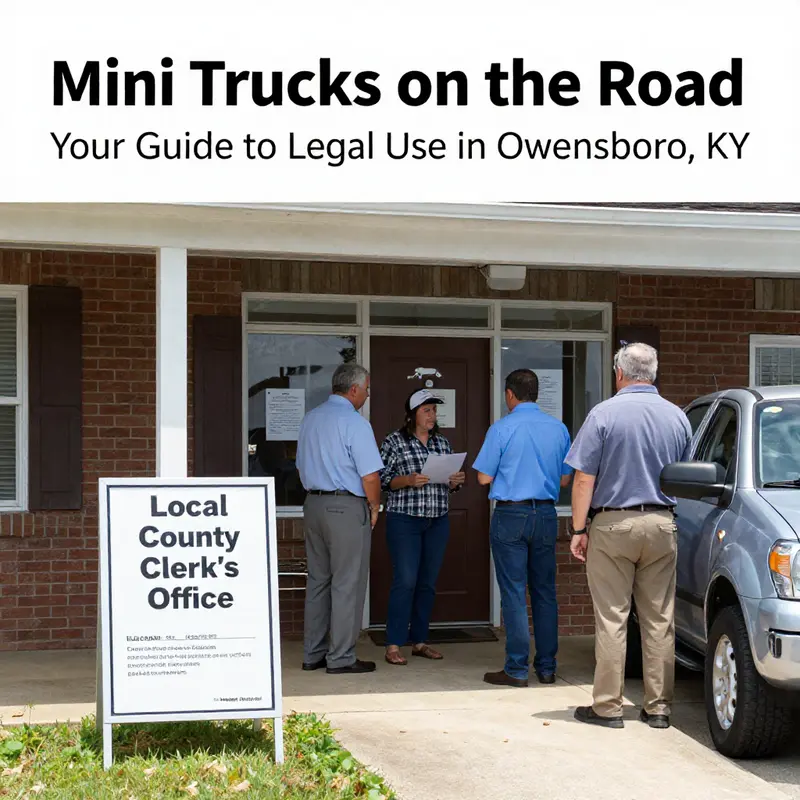
Owensboro sits on the edge of shifting rules and practical realities when it comes to getting a tiny truck onto its streets. The question, plainly put, is whether a mini truck is street legal here. The honest answer hinges on a careful alignment with both Kentucky state regulations and local enforcement expectations. In practice, most compact, kei-style trucks—vehicles that are small in footprint and weight—do not automatically qualify as street-legal road vehicles in Kentucky. They are often treated as non-highway vehicles or variants of all- terrain vehicles, depending on their design, weight, top speed, and the specific use they are intended for. This is not a blanket verdict, but a landscape of conditions that the vehicle must meet to earn the right to travel on public roadways. The journey toward legality begins with recognizing that a mini truck’s path to Owensboro streets is governed by a combination of federal safety standards, state vehicle regulations, and any applicable local ordinances. The overarching framework is clear: to operate on public roads, a vehicle must meet minimum safety and registration requirements, and that framework is enforced by state agencies that can, at their discretion, allow, restrict, or deny road use based on the vehicle’s compliance. In Owensboro, as in the rest of Kentucky, the crucial distinction is not the vehicle’s size alone but its qualification as a road vehicle under Kentucky’s registration and safety laws. And that qualification is not fixed; it can change if the vehicle is redesigned, reclassified, or registered under a different category, such as a traditional passenger car or a low-speed vehicle (LSV), when the vehicle’s specifications align with the relevant definitions. The practical upshot for an owner or a prospective buyer is to anticipate a process rather than an assumption. The process begins with the recognition that federal safety standards, enforced at the state level by the Kentucky Transportation Cabinet (KYTC), and federal emissions standards, enforced by the Environmental Protection Agency (EPA), shape what is permissible on Kentucky highways. Any imported mini truck that hopes to join Kentucky’s fleet of roadworthy vehicles must first meet or be able to be modified to meet those federal standards. That is not merely a bureaucratic hurdle; it is a acceptance of safety and environmental norms that protect drivers, passengers, and pedestrians alike. The onus, in other words, is on the vehicle owner to demonstrate compliance before a license plate even appears, much less a signature on a title. Once federal compliance is established, the state’s registration machinery becomes the next gatekeeper. Kentucky requires proof of ownership—typically a title or bill of sale—and a fixed set of forms that document the vehicle’s identity, ownership chain, and eligibility for registration. In this system, a mini truck is not treated as a factory-standard road machine by default. It must be properly documented and classified in the state’s records so that its use on public roads conforms to the same expectations as any other vehicle that shares the pavement. The process is not opaque, but it is exacting. The Kentucky Certificate of Title Application (Form TC-24) and the Registration Application (Form TC-27) are the two central instruments in most reg-runs. They collect essential information about the vehicle, the owner, and the intended use. The forms are not merely paperwork; they are the bridge between a vehicle’s potential and its lawful operation. And the bridge is crossed only after a payment of the standard fees—registration, title, and any applicable sales tax—are completed, recorded, and reflected in the state’s motor vehicle records. This is the point at which a mini truck can move from a concept of legality into a tangible, enforceable right to travel on Kentucky’s public roads, and Owensboro’s streets in particular. Yet there is also the possibility that a mini truck might find a different lane of legality, especially for owners who prioritize work-use scenarios. A vehicle that does not aspire to be a full-fledged passenger automobile may still travel legally if it can be classified as a low-speed vehicle (LSV). In Kentucky, LSVs are defined not solely by size but by performance characteristics, including a maximum speed threshold—commonly up to 25 miles per hour—and a suite of safety features, such as lighting and signaling that meet specific standards. In practice, gaining LSV status can unlock the ability to operate in particular zones or on certain routes where traditional vehicles would be restricted, but this is not an automatic pathway for every mini truck. It demands compliance with the exacting safety equipment requirements and careful attention to where these vehicles may be used. The Owensboro ecosystem also reminds us that local and county-level considerations can influence how strictly a vehicle’s registration is interpreted. Road use on city streets versus county roads, or access to certain highways, can depend on latest local ordinances and enforcement practices. For a resident or business owner, the most reliable strategy is to initiate contact with the county clerk’s office representative who handles vehicle registration—whether at the Pike County Clerk’s Office or the Owensboro City Clerk—because they will provide guidance on the formal steps, local interpretations, and any nuances that may affect a particular mini truck’s path to legality. This is not a ritual of guesswork; it is a structured process with formal checkpoints that ensure every legal criterion has been met before the vehicle can share the road with other motorized traffic. The recommended starting point for any prospective owner is the KYTC’s official guidance on registration requirements, which clarifies the distinctions between highway and non-highway vehicles and explains the necessary documentation, fees, and checks for imported and domestically assembled vehicles. The KYTC site, along with the state’s broader transportation department resources, helps establish a consistent standard that Owensboro and other Kentucky communities rely on when evaluating whether a given mini truck is street-legal. Importantly, for vehicles that originate outside the United States, whether imported through a dealer, a private sale, or an individual purchase, the path to legality runs through federal compliance first. The NHTSA safety standards and EPA emissions standards apply across the board. Any deviation from U.S. safety or emissions norms will require modification to bring the vehicle into conformance. This is the point where a vehicle’s true alignment with Kentucky’s road-legal status is decided, and the opportunity to register exists only if those standards are met. In this context, a practical approach to ownership is as important as the regulations themselves. Prospective buyers should plan for a verification phase that includes confirming the vehicle’s safety equipment (headlights, tail lamps, brake lights, turn signals, mirrors, and a functional braking system), its emissions profile, and the feasibility of achieving conformity with U.S. standards if it originated abroad. The process also entails a careful accounting of title and ownership documentation—proof of ownership, a properly completed Certificate of Title Application, and the registration paperwork—which act as the administrative backbone for legal operation. The fee structure, while routine for Kentucky’s motor vehicle system, deserves early attention. Registration fees, title fees, and, when applicable, sales tax can significantly affect the total cost of bringing a mini truck onto Owensboro streets. Although a rough estimate is common in preliminary discussions, precise figures come from the county clerk’s office and the KYTC’s official fee schedule. For many buyers, the financial component is as decisive as the technical compliance, because the registration cost, in combination with any required modifications to meet standards, determines whether the vehicle can be a practical choice. A final, practical layer concerns insurance. Insurance providers in Kentucky evaluate non-traditional road vehicles differently, and the coverage you can obtain often depends on how the vehicle is registered and classified. If a min-truck is registered as a standard motor vehicle and it fulfills the relevant safety and emissions standards, standard auto insurance policies may be applicable. If, however, the vehicle is registered and used as an LSV or a non-highway vehicle, coverage may be scoped differently, with restrictions on where and how the vehicle can be operated. This insurance dimension should not be left to chance, because the financial and legal protection that such coverage provides can influence both the day-to-day practicality and the long-term viability of using the vehicle on Owensboro streets. A broader takeaway emerges: the path to street legality for mini trucks in Owensboro is not a single checkbox but a sequence of verifications, each tied to a regulatory framework that has grown more complex as the vehicles themselves have diversified. It is a process that rewards diligence—gathering the correct documents, ensuring compliance with federal and state standards, and engaging with the appropriate offices early in the decision-making cycle. In sharing this framework with readers, it is useful to anchor the discussion in the practical steps most commonly encountered. Confirm federal compliance through NHTSA and EPA requirements for imported or modified vehicles. Gather ownership documentation—title, bill of sale, and any liens that must be recorded. Complete Form TC-24 for title and Form TC-27 for registration, ensuring that all vehicle identifiers align with the Kentucky registration system. Prepare for a possible inspection or safety review that demonstrates functional lighting, signaling, braking, and mirrors. Budget for the standard registration and title fees, and, where applicable, sales tax. Explore the LSV pathway if the top speed can be limited to 25 mph and the vehicle can be equipped with mandated safety features. Contact Owensboro’s municipal or county clerk offices to confirm any local nuances that could affect where and how you register the vehicle. In parallel, consider the broader community knowledge that exists among enthusiasts and prospective owners. For readers seeking a sense of how mini trucks are discussed within the wider community of people who own and operate these vehicles, there is a growing body of online resources where ownership experiences and regulatory insights converge. These perspectives can offer practical context for the often technical language of statutes and forms. They should complement, not replace, the official sources. And while online communities can illuminate common challenges and successful pathways, they cannot substitute for the precise, official steps laid out by the Kentucky Transportation Cabinet and local authorities. To anchor the discussion in a reliable frame, readers are encouraged to consult the Kentucky Transportation Cabinet’s registration guidance, which provides the definitive answer on how the state delineates road-legal status, how to apply for titles and registrations, and how to handle vehicle classifications that may differ from the conventional passenger car. This official framework is what determines whether a mini truck can be driven on Owensboro streets at all, under what conditions, and with what obligations. For a sense of how the broader mini-truck community discusses these matters, one can explore related conversations and resources that appear in the online ecosystem of hobbyists and enthusiasts. These discussions, while not official directives, often illuminate practical experiences—the common hurdles, the typical timelines, and the kinds of documentation that end up being decisive in real-world registrations. They can also point readers toward alternative routes and creative workarounds that some owners explore, such as owner-specific modifications that align a vehicle with LSV or non-highway classifications, subject to the precise standards in effect at the time of registration. The best path stays anchored in official sources, and the most trustworthy starting point remains the Kentucky Transportation Cabinet’s own registration portal, supplemented by direct contact with the county clerk offices that administer vehicle records at the local level. This combination of state-level policy, local administration, and informed community discussion creates a comprehensive roadmap for any Owensboro resident wondering whether a mini truck can legally share the road. As a closing thought, the practical takeaway is straightforward: your mini truck must be treated as a road vehicle only after it meets federal safety and emissions standards and has been registered properly with the Kentucky authorities. And even then, there may be nuances—such as whether it will be classified as an LSV or a non-highway vehicle—that determine where you can drive it and what protective measures you must maintain. For readers who want a quick point of reference that distills the regulatory backbone, the Kentucky official registration page remains the anchor, while local verification confirms hands-on applicability in Owensboro. If you are exploring this topic out of curiosity or because you’re serious about ownership, consider using the internal resources that discuss mini truck ownership more broadly, and pair them with the official state and local channels described here. The landscape is practical rather than mythical: a mini truck can be street-legal in Owensboro, but only when it satisfies the conditions laid out by state law, is properly registered, and operates within the permitted frameworks for speed, safety, and emissions. This is not a promise of effortless access; it is a promise of a clear, accountable pathway to legality—one that keeps Owensboro’s streets safe while preserving the distinctive utility and charm that mini trucks bring to the region. For further authoritative guidance, consult the Kentucky Transportation Cabinet’s vehicle registration resources and the official state portal. External reference: https://www.ky.gov/dot/vehicles/vehicle-registration/Pages/Registration-Requirements.aspx. Additionally, readers seeking community perspectives may find value in exploring industry-wide discussions at the Mini Trucks Cali Blog. This resource offers a broader view of how enthusiasts approach the intersection of regulation and ownership: Mini Trucks Cali Blog.
From Yard to Road: A Practical Guide for Owensboro
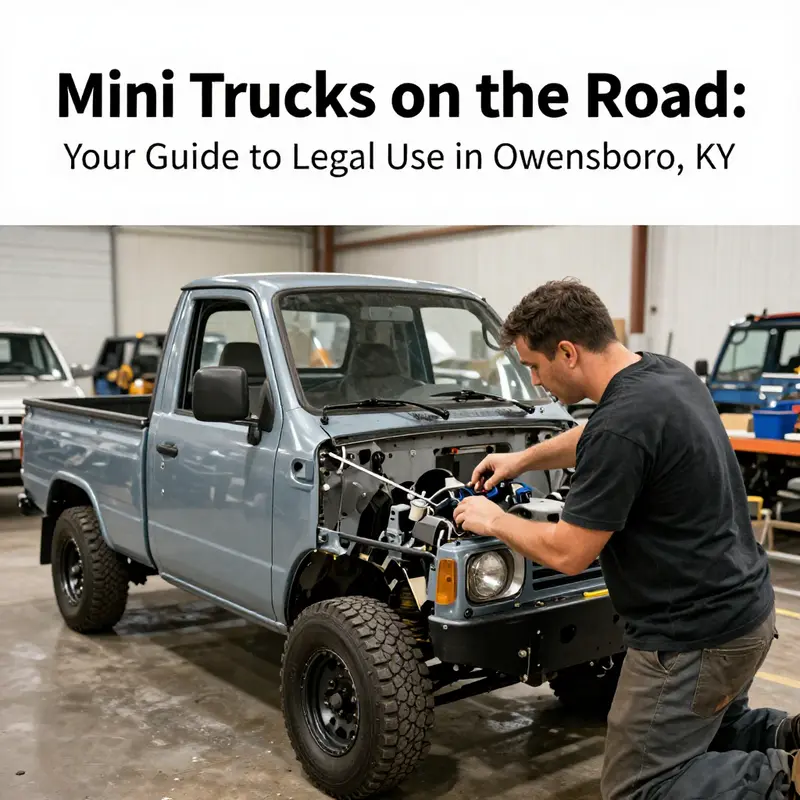
Owensboro sits along the Ohio River and blends busy streets with quieter avenues that see a mix of commuter and service traffic. For owners wondering whether a mini truck can legally operate on public roads, the answer rests on a careful alignment of design, regulatory classification, and the steps to register and validate the vehicle. In Kentucky, on-road use is governed by state standards and by local rules, so turning a yard curiosity into a street-legal vehicle requires a clear plan.
A mini truck intended for road use must generally meet standard safety and identification requirements: valid registration, a license plate, working lighting and signaling, mirrors, reliable brakes, and emissions controls where applicable. Its weight and top speed must fit the thresholds that Kentucky uses for road vehicles. If the vehicle does not meet these criteria, it is often treated as a nonhighway vehicle, which restricts where it may be operated.
Three practical routes exist to achieve street legality: (1) register the vehicle as a standard road vehicle after meeting all safety and identification requirements; (2) obtain an agricultural or other special-use permit that allows limited road access under defined conditions; (3) explore whether the vehicle qualifies as a low-speed vehicle with required safety equipment and local authorization. Local Owensboro ordinances may add restrictions even for eligible routes.
A reliable path is to contact the Owensboro City Clerk and the county clerk to confirm exact registration steps, inspection requirements, and any permits needed. Documentation typically includes proof of ownership, proof of insurance, and technical compliance certificates for brakes and lighting. If the vehicle has been modified, you may need re-testing or updated documentation. Keeping thorough records helps prevent delays and demonstrates compliance if questioned by authorities.
For readers seeking formal guidance, Kentucky state pages outline the baseline rules for road and nonhighway vehicles and provide the framework for determining which route fits your mini truck. Always verify with local offices before making changes that affect roadworthiness.
External reference: official details on registration requirements can be found on Kentucky Transportation Cabinet pages.
Wheels, Permits, and Pace: Navigating Temporary Licenses and Low-Speed Vehicle Rules for Mini Trucks in Owensboro
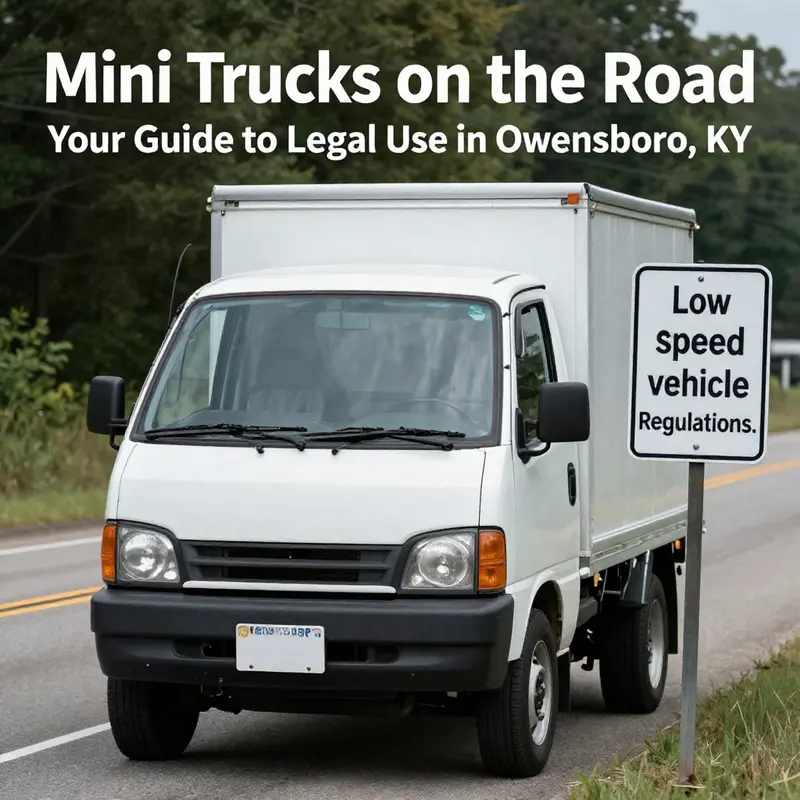
Owensboro sits at a crossroads of rural practicality and urban accessibility, a place where small, nimble machines can feel like a bridge between farm lanes and city streets. The question of whether mini trucks can actually ride on the town’s streets is determined by a mix of state regulations, county practices, and local road design. Two strands shape the path to street legality: temporary licenses that bridge toward a full license, and low-speed vehicle standards that govern what a vehicle must be and how it may travel on public roads. Together they outline a careful path from could be on the street to is on the street, with a distinctly Kentucky flavor that blends state law with local administration.
To understand the legal road ahead for mini trucks—vehicles smaller than full-size pickups but not typical passenger cars—you first disentangle Kentucky’s vehicle classifications. The state distinguishes non-highway vehicles, ATVs, and road vehicles. This matters because it determines what safety equipment is required, what insurance is needed, how a vehicle is registered, and what kind of driver’s license is required. In Owensboro, many mini trucks used for work fall into a gray area: they may resemble a small truck, but their road legitimacy depends on design features, speed potential, and compliance with safety standards.
One entry point is the concept of a temporary license. The Kentucky Department of Vehicle Services issues temporary permits that let someone drive while pursuing a permanent license after required tests or training. Temporary permits are intended to support a learner phase, typically valid for up to 90 days, issued during the licensing process when other requirements are met. In Owensboro and the rest of Kentucky this matters for new or returning drivers, as it creates a framework to legally operate while full credentials are pursued, reflecting a cautious approach to road safety.
The more consequential thread for mini trucks is the low-speed vehicle standard. Kentucky law defines low-speed vehicles (LSVs) as capable of speeds between 20 and 25 mph. LSVs must meet safety standards from federal regulations enforced by the National Highway Traffic Safety Administration. Required features include seat belts, headlights, brake lights, turn signals, windshield wipers, and reflectors. The idea is to balance energy, efficiency, and safety in environments where higher speeds are not the norm.
When considering whether a mini truck can ride Owensboro’s streets, the speed question is central. An LSV can operate on roads with speed limits of 35 mph or less, unless local ordinances provide additional allowances. Drivers must still hold a valid license, and the vehicle must be properly registered with the Kentucky DVS. Registration ties the vehicle to the state’s safety oversight network and supports insurance and recalls tracking. A registered vehicle can be safely integrated into the road network with confidence about compliance.
If a mini truck can meet safety standards, owners can pursue conventional road-vehicle registration, ensuring lighting, braking, safety, and emissions meet requirements, then completing registration with the county clerk. If the vehicle is designed for low speeds and can be equipped to meet all safety requirements, it can be considered an LSV, with speed caps and equipment specified by law. Local guidance from the county clerk’s office and Owensboro’s city clerk helps clarify jurisdiction-specific steps and ensure the plan matches local rules.
Step by step, residents should verify the vehicle’s profile against the LSV criteria—top speed, safety features, and the ability to meet federal standards. If compliant, begin the registration process and secure appropriate insurance, ensuring proper labeling for the vehicle’s intended use. If not, upgrade critical systems and consult authorities before driving on public streets. The goal is a careful choreography of speed, safety, and proper registration that supports safe sharing of road space.
Ultimately, the state framework supports both pathways: temporary licenses for learners and LSVs for efficient, lower-speed operation. The driver’s license remains a core requirement, and a registered vehicle is essential for safety oversight and lawful operation. In Owensboro, the journey to street legality travels through the Kentucky DVS, county clerks, and local ordinances, reflecting a practical balance between innovation and public safety.
For readers seeking concrete steps, a practical plan is to assess the vehicle’s speed and safety features, contact the county clerk to begin registration, secure insurance, and ensure signaling and reflectivity meet standards. If upgrading is needed, do so and verify with local authorities before driving on public streets.
External resources: Kentucky vehicle registration requirements. Local guidance from the county clerk and city clerk will clarify jurisdiction-specific steps.
Final thoughts
Navigating the rules surrounding mini trucks in Owensboro, KY, can be complex, but knowing the legal status, registration requirements, necessary modifications, and options for temporary licensing can open the road to new adventures. Whether for personal enjoyment or business use, staying informed will empower you to make the most of your mini truck. Remember, compliance with local regulations ensures safety and enjoyment for all on the road.