
Are you thinking about registering a mini truck in New York? Many small business owners, property owners, and passionate enthusiasts might feel a bit overwhelmed by the registration process. Fear not! This guide will provide you with everything you need to know—from understanding the vehicle eligibility to exploring the necessary documentation. Each chapter is designed to build your knowledge and confidence, making the registration journey smoother than your mini truck’s ride on a freshly paved road.
null

null
From Pink Slip to Plates: Navigating Mini Truck Registration in New York
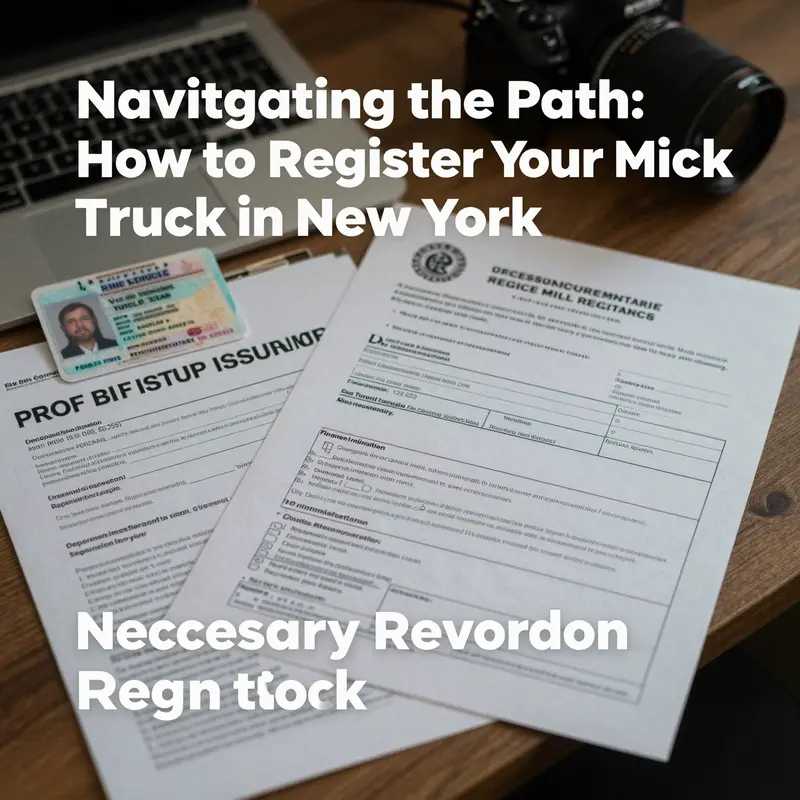
People often ask whether their compact or ‘mini’ pickup can be registered in New York. The short answer is yes, but there is no off-the-shelf path for a gray area car. New York’s DMV does not recognize a formal ‘mini truck’ class. Instead, your vehicle will need to be treated as a standard passenger or commercial vehicle according to its size, weight, and intended use. That means the basic questions revolve around eligibility, title status, and proof of insurance. The process can feel routine to someone who has navigated vehicle registrations before, yet for first-timers it’s easy to overlook a document or misinterpret a rule. The roadmap hinges on understanding the few essential categories—the vehicle’s title, the ownership chain, and the documentation that proves who you are, where you live, and how the vehicle will be insured. When you align these elements, New York’s system becomes mechanical rather than mystical, transforming the task into a series of verifiable steps rather than an ambiguous hurdle.
First comes eligibility. Because ‘mini truck’ isn’t an official DMV label, the vehicle is judged by standard classifications. Your car must meet federal safety standards and be eligible for registration, which captures the need for a clean title and a compliant odometer disclosure statement. If a lien exists, you must secure its release before the vehicle can be registered in your name. Importantly, the DMV looks at the VIN, the vehicle’s weight, and its intended use. A compact pickup often falls into a light-duty or small commercial category, which affects fees and perhaps certain licensing requirements if the vehicle is used for business purposes. The overarching principle is straightforward: if the vehicle can be titled, insured, and inspected in New York, it can be registered, but the path is shaped by that vehicle’s precise classification in the DMV’s system. This nuance matters because a misclassification can lead to delays, additional forms, or extra inspections, especially if the vehicle carries a modified configuration that pushes it toward commercial use.
Next, you will need to prove who you are and that you live in New York. The DMV requires identity and residency documentation that is current and verifiable. A valid government-issued photo ID is typically necessary, such as a driver’s license or a passport. You also need proof of address—things like recent utility bills, bank statements, a lease, or a government document that shows your name and address. For some applicants, especially noncitizens or those without an SSN, there can be an additional step. The SSA may provide an SSN denial letter, which can be used to establish identity when an SSN is not available. The key point is consistency across documents: your name, your address, and the vehicle information must align with the DMV’s records. Any discrepancy can trigger extra review or delays. Because New York teams identity, residency, and ownership into a single clearance, gathering these papers in advance reduces the chance of last-minute complications at the counter.
Ownership transfer is another place where careful attention pays off. You must have a properly signed title from the previous owner, and if the vehicle was bought from a private party, the seller must sign the title over to you. If the car has a lien, this lienholder must release the title before you can register it. The absence of a clean title is the most common obstacle because it blocks registration and plate issuance. A title transfer is also the moment you confirm the VIN on all documents, ensuring it matches the physical vehicle and the paperwork. DMV staff look for a seamless chain of ownership, because any ambiguity can create questions down the line about responsibility for the vehicle and potential retroactive taxes. If your purchase involved a dealer, you may have additional documents such as a bill of sale and a manufacturer’s certificate of origin, but those are separate from the core title transfer. Either way, the aim is to move from owner to owner in a way that preserves the vehicle’s legal history and your ability to drive with confidence.
With ownership and residency in place, the actual registration comes into view. The DMV offers in-person service, and it is wise to book an appointment to minimize wait times. When you arrive, you will present the title, the proof of insurance, and the completed forms. The MV-82 is the main application for registration, and the DTF-802 transaction statement is typically required for private sales, illustrating the purchase details and the parties involved. The DMV will want to verify that you carry insurance on the vehicle, which means you should bring your insurer’s proof of coverage. While the process is standardized, it can introduce small frictions if any documents are missing or if the paperwork shows a discrepancy in dates or VINs. The bulletin of accepted documents is precise, and missing items can trigger a return trip or a hold while documents are corrected. Emissions or safety requirements may appear here as well, depending on the vehicle’s age and where you live. The overall experience centers on thorough preparation and a straightforward submission, after which you receive confirmation and, soon, your license plates.
Speaking of plates and stamps, the financial side follows a predictable pattern but with local variability. The registration fee for light and small vehicles generally sits in a range, and you can expect a base charge that varies with weight and classification. There’s also a separate title fee, commonly around fifty dollars, charged at the point of ownership transfer. Beyond these, sales tax applies and is calculated as a percentage of the purchase price, ranging from roughly four to eight percent depending on the county where you register. In addition to these core charges, there may be plate issuance costs, underlying emissions tests if applicable, and various local surcharges that reflect the jurisdiction’s particular policy. The best approach is to budget with a clear understanding that tax and fees can shift over time and from county to county. The DMV’s fee schedule makes sense once you recognize that the vehicle’s weight class and intended use are the major levers. If your mini truck is more of a personal vehicle than a commercial tool, you may fit a lighter category that carries a smaller fee, though the exact figure depends on the specifics of your situation.
Insurance stands as the backbone of lawful registration. New York requires that every vehicle have valid liability coverage. The stated minimums include coverage per person and per accident and a separate property damage component. In addition, the state mandates Personal Injury Protection, sometimes known as no-fault coverage, and it requires Uninsured/Underinsured Motorist protection. The phrasing can feel dense, but the practical effect is simple: you must have a policy that will respond to bodily injury, property damage, and medical expenses in the event of a collision, even if you are at fault. Agencies issuing policies will ask for the vehicle’s VIN and the registration details, ensuring that the insurance is tied to the exact vehicle you intend to register. If you plan to use the mini truck for business purposes, inform your insurer about the intended use, because commercial classifications can trigger different rates or coverage requirements. The process becomes smoother when you secure a policy before you initiate the DMV registration, so there is no last-minute scramble to meet the coverage condition before you can complete the registration.
Emissions inspections can complicate matters, especially in carbon-regulatory regions. Depending on where you live in New York and how old the vehicle is, an emissions inspection may be required as part of the registration or as a separate test soon after registration. The rules can vary by county, so calling ahead to your local DMV office or checking the official pages helps you avoid surprises on the day you register. If you’ve just purchased the vehicle, you might receive a temporary registration that permits operation while the permanent plates are being produced. Those temporary permits typically run for a limited period, giving you time to complete the process without exposing you to the risk of driving illegally on an uninsured or unregistered vehicle. Emissions, inspections, and temporary plates are not obstacles if you plan, verify, and align your documents with the DMV’s expectations. The key is to signal your compliance early and keep the vehicle in good standing during the interim period.
Taken together, the path to registering a mini truck in New York is not a portal to mystery but a carefully arranged sequence of verifications. The critical tactic is to assemble the right set of documents before you step into a DMV office, or before you begin online submissions if that option is available in your county. A signed title from the previous owner, a bill of sale that captures essential transaction details, a valid VIN on every piece of paperwork, and proof of insurance that matches the registration will anchor the process. If any lien exists, you must resolve it so the title can be cleanly transferred. In parallel, you should ensure your identity documentation is correct and current, as well as your proof of residency. As with many administrative tasks, speed comes from preparedness rather than haste. If a special situation applies—such as a modified vehicle or a use that might edge into a commercial classification—take the extra step to confirm how the DMV will classify the vehicle in your county. This step reduces the risk of delays due to unexpected rules and helps you plan for the total cost, including tax, registration, and any required inspections. For readers seeking practical checkpoints and ongoing discussion, the blog offers deeper dives into related topics that often accompany the registration journey blog. Finally, when you’re ready to verify the official requirements, the most authoritative guidance comes from New York’s DMV pages. The process is precise, but it remains navigable when you treat it as a series of exact documents that connect you to your plates and road-ready status. External resource: https://www.dmv.ny.gov/vehicle/registration.htm
From Paperwork to Pavement: Navigating NY Registration for Your Mini Truck
The question of whether a so‑called mini truck can be registered in New York is less about a single class and more about meeting a series of standards and procedures that the state DMV enforces for light‑duty vehicles. In practice, a “mini truck” isn’t a formal category you’ll find in the DMV’s nomenclature. What matters is whether the vehicle qualifies as a light‑duty vehicle under state and federal rules, whether it complies with safety standards, and whether you can show proper ownership and insurance. If your vehicle fits within those general limits, the journey to registration is a careful, step‑by‑step process that blends title paperwork, identity verification, and a payment schedule that includes taxes and fees. Understanding this pathway helps you plan ahead, avoid delays, and keep your wheels on the road without unnecessary detours. The procedure is not a mystery, but it does demand attention to specific requirements that can change with local nuances, such as county tax rates or emissions rules in particular regions. In that sense, the registration conversation becomes a conversation about responsibility as much as about paperwork, because New York places a premium on keeping track of who is driving what and where it is allowed to travel. To begin, think of eligibility as the foundation: the vehicle must be a permissible type for New York registration, meet federal safety standards, and carry a title that can be transferred cleanly from seller to buyer. A key benchmark many people encounter is the weight threshold. The DMV and related guidance commonly reference a gross vehicle weight rating, or GVWR, that is within a range typically associated with light‑duty vehicles. For most practical purposes, that means a GVWR of 10,000 pounds or less. If your mini truck clears that bar, you’re standing on solid ground; if it edges toward or beyond that limit, you’ll want to verify whether exemptions or alternative classifications apply in your particular case. Even when the weight is in range, there are other compliance questions to resolve. Federal safety standards must be met, and the vehicle must be titled properly and free of unresolved odometer disclosures that could complicate ownership transfer. The odometer discussion matters not just for compliance but for accuracy in reporting the vehicle’s history, which is essential for the DMV and for insurance providers alike. When you collect the documents and prepare to file, you’ll notice that the process is as much about identity and residency as it is about the vehicle itself. New York requires proof of identity and proof of residence, and the rules are explicit about what counts. A government‑issued photo ID—such as a driver’s license or passport—lays the groundwork, but a current and verifiable address is just as important. Utility bills, bank statements, or a lease can serve as residency proof, but the documents must reflect your name and the New York address you intend to register with. If you happen to be in a situation where you do not have a Social Security Number, the DMV has a path that involves obtaining an SSN denial letter from the Social Security Administration. This letter demonstrates that you are not eligible for an SSN, which some residents use to establish identity in states that accept such documentation. The point system the DMV uses to verify identity and residency underscores how serious this part of the process is. You will need to present a balanced set of documents that adds up to the required six points, with more weight given to primary documents like a valid photo ID and proof of residency, and supplementary pieces that might include a utility bill or lease agreement. As you navigate the paperwork, the question of ownership comes into clearer focus: you must have a properly signed title from the previous owner, and if there is a lien on the vehicle, the lienholder must release the title before you can register it. A private party sale adds a few more layers of diligence—namely, ensuring the seller signs the title over to you and that any outstanding liens are resolved. The moment you have the title, the registration begins to take shape. You will need to visit a New York DMV office (or, in many cases, start the process online and then complete in person), and you’ll want to book an appointment to minimize wait times. The MV‑82 form, used for the registration, is a central piece of the submission, as is the DTF‑802 transaction statement that is often required for private sales. Do not forget proof of insurance, an indispensable requirement for every vehicle in New York. Insurance is not optional; it is the foundation of the registration, and the DMV will want to see valid coverage before you can proceed to plates. The state requires a minimum level of liability coverage, along with Personal Injury Protection (PIP) and Uninsured/Underinsured Motorist Coverage. The exact numbers for liability can vary, but historically New York’s minimum liability limits are established to ensure a baseline level of protection for drivers, passengers, and other road users. In many cases, the insurance provider will need the vehicle identification number (VIN) and the registration details to bind a policy and issue coverage. Beyond insurance, there is the matter of emissions inspections in certain counties. New York’s approach to emissions testing is regionally targeted, so you should check with a local DMV office or the official DMV site to determine whether an emissions inspection is required for your mini truck in your specific county. The presence or absence of this requirement can influence your timing and the cost of registration, since some counties layer on inspections as part of the registration cycle. If you are purchasing a vehicle that is new to your name, you may be eligible for a temporary registration that lasts up to 90 days while your permanent plates and documentation are processed. This gap period can be a relief, especially if you’re managing a move or a delayed title transfer. Temporary registrations allow you to operate the vehicle legally while you finalize the essentials—the permanent plates, the official title, and the long‑term registration details. The fee structure is an inevitable part of the journey. Registration fees vary by vehicle type and weight, and for light‑duty vehicles, the range is often modest, typically between thirty and sixty dollars. The title itself carries a separate fee, which is commonly around fifty dollars. The state also imposes sales tax, which is calculated as a percentage of the purchase price and can range from four to eight percent depending on the county. In addition to these core charges, there can be plate issuance fees, potential emissions inspection fees, and other local charges that creep into the total cost. The total, of course, reflects the specifics of your situation—the vehicle’s weight, the county you reside in, whether you face emissions inspections, and whether you’re dealing with a private sale or a dealership purchase. The insurance piece also factors into the overall equation because premiums correlate with vehicle type, usage, and risk profile. Your insurer will ask for the vehicle’s VIN and registration details to issue a policy, and you’ll want to ensure your coverage remains active and up to date as you move through the registration steps. In short, the core path to registering a mini truck in New York begins with confirming eligibility and ownership, then proceeds through identity verification, proof of residency, and a carefully assembled set of documents, followed by insurance binding and the payment of taxes and fees. It’s a pipeline that rewards preparation: the more you assemble up front, the smoother the actual DMV visit or online submission will be. One practical way to anchor this path is to assemble a single, consolidated folder that contains the signed title, any lien releases, the MV‑82 and DTF‑802 forms, proof of residency and identity documents, proof of insurance, and the most recent registration or odometer statements if applicable. Having everything together reduces the risk of back‑and‑forth communications with the DMV, which can extend processing times and complicate your timeline. It’s worth noting that some registrations involve additional nuance if your mini truck is being used in a commercial capacity or if it has modifications that could influence its classification. If the vehicle is intended for commercial use, or if there are modifications that affect safety features or weight, the DMV or the local county may have extra steps or different documentation requirements. In those instances, it pays to contact the DMV directly or consult a qualified registration professional who can walk you through the specifics for commercial vehicles and special configurations. For a broader primer on the kinds of information that regularly appears in DMV guidance and to get a sense of how these steps look in practice, many readers find it useful to explore the more general content on related blogs. A good starting point is the blog hub that covers a range of mini truck topics; this resource can help frame the practicalities of ownership, maintenance, and registration within a broader landscape. minitrucksocala.com/blog/ While the core process remains anchored in federal standards, state requirements, and the details of your own vehicle, the overarching goal is clear: to establish a legitimate, insured, and compliant vehicle that can legally operate on New York’s roads. The DMV’s official site provides the definitive reference you should consult as you finalize any submission, confirm fee amounts, and verify whether emissions inspections apply in your county. A direct route to those official references is through the New York DMV portal, which houses forms, fee schedules, and the latest regulatory notes. For ongoing accuracy and the most up‑to‑date guidance, refer to the official DMV hub at dmv.ny.gov and, specifically, the vehicle registration sections. External resources can guide you through practical checklists, but nothing substitutes the authority of the DMV’s published requirements and the precise forms you will submit. In that spirit, you may also wish to keep a personal calendar or reminder system for key steps, such as appointment windows, the posting of new fee schedules, and emissions timelines that could affect your registration date. Staying on top of these moments ensures you won’t miss a compliance window or a required inspection. Finally, remember that the path to registration is about more than simply obtaining plates. It is a bridge to safe and responsible driving, with safeguards designed to protect you, your passengers, and other road users. It is also a reminder that even a compact, seemingly simple vehicle still operates within a sophisticated regulatory framework. The steps described here reflect a practical, real‑world approach to getting your mini truck legally on the road in New York. By aligning ownership documents, residency verification, insurance, and the relevant fees in a timely fashion, you set yourself up for a smooth registration experience and a quicker transition from purchase to pavement. If you keep the DMV’s guidance in front of you and prepare in advance, you will reduce the risk of delays, misfiled forms, or missed inspections. The end result is straightforward: a legally registered vehicle that carries valid insurance, supports your mobility needs, and meets the safety and regulatory standards that keep New York’s roads orderly and open to responsible drivers. For continued clarity as regulations evolve, it’s wise to consult the official DMV channels periodically and to stay aware of any county‑level requirements that might affect your situation. The process remains accessible, but it benefits from a careful, informed approach that treats registration not as a hurdle but as a structured path to lawful driving. External resource: https://dmv.ny.gov
The Ledger of Licenses: Navigating Fees, Insurance, and the NY Mini Truck Registration Path
When you set out to register a mini truck in New York, the process sits at the intersection of policy, paperwork, and budgeting.
The term mini truck is not a formal DMV category, but you are likely dealing with a small pickup or light commercial vehicle.
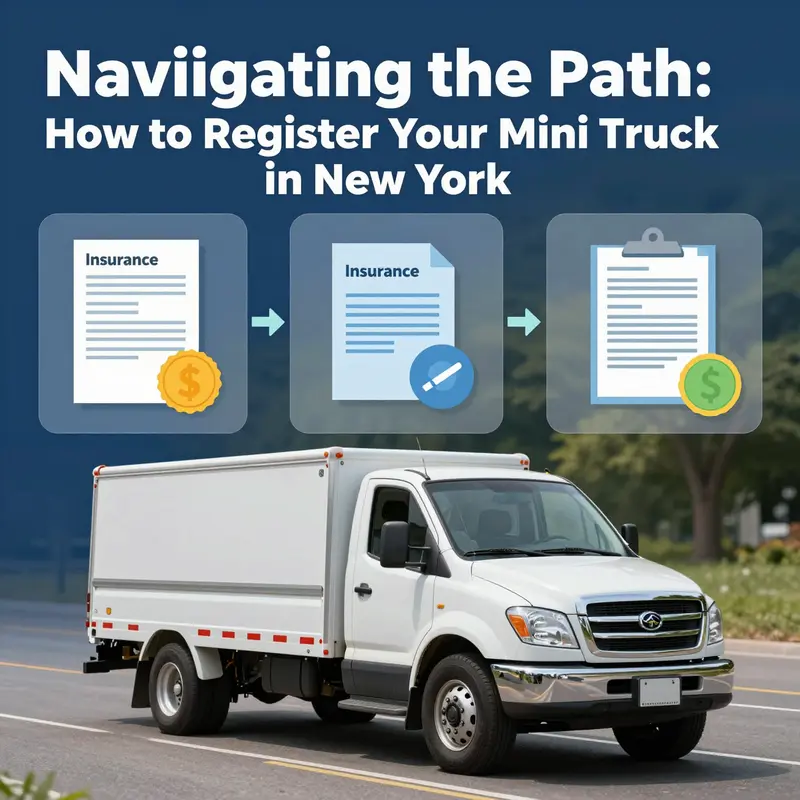
The steps are: verify eligibility, secure the title, prove identity and residency, obtain insurance, complete the registration and title paperwork, and pay the associated fees.
Insurance is required and validates before registration. You should have active coverage before visiting the DMV and present proof of insurance when you submit the registration.
Liability coverage is standard, with PIP and UM/UIM protections to cushion medical costs.
Your insurer will use the vehicle VIN and registration information to set rates.
The fee structure includes registration charges that depend on weight, a separate title fee around 50 dollars for first time titling, sales tax based on price and locale, and possible plate issuance or emissions fees.
Emissions tests may apply in certain counties, adding time and cost.
The process also requires the MV-82 form and, for private sales, the DTF-802 statement, plus proof of insurance and payment.
Schedule an appointment if possible to reduce wait times.
The final total reflects weight class, use designation, and any local charges.
If your mini truck has commercial designation or modifications, additional charges or different rules may apply, so check with the local DMV guidance.
The key to a smooth experience is gathering documents in advance and timing insurance activation with your DMV plans, since insurance must be in effect within a defined window.
Official guidance and fee schedules are available on the NY DMV site, and you can consult those to plan accurately before you go.
By following the steps and understanding the cost components, you can complete registration with confidence and avoid surprises at the counter.
Final thoughts
Registering your mini truck in New York doesn’t have to be a daunting task. With the right knowledge and preparation, you’ll be able to navigate the process with confidence. Remember to check your vehicle’s eligibility, gather all necessary documents, understand the registration process, and factor in the fees and insurance requirements. Embrace the journey of becoming a proud mini truck owner in New York and enjoy every adventure it brings!