
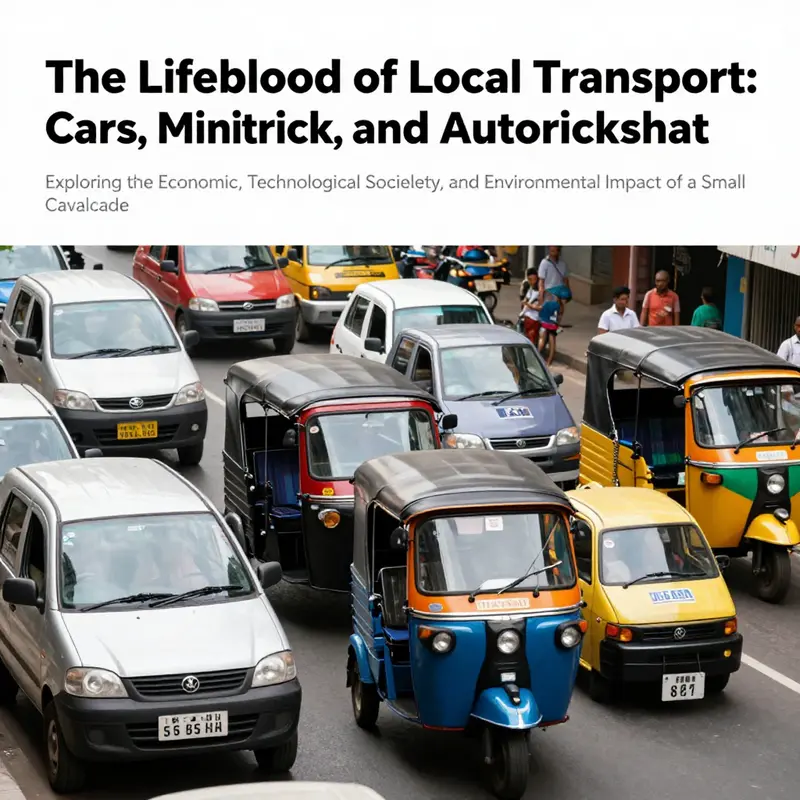
Every day, small cavalcades of cars, mini trucks, and autorickshaws weave through our streets, forming the backbone of local transport and commerce. These vehicles, admired for their affordability and agility, cater to various needs—from personal transport to essential services for small businesses. This article delves into the profound impact and interconnected roles of these vehicles within our communities. We’ll explore how they drive economic growth, embrace technological advances, fulfill societal needs, and contribute to environmental considerations—all vital to understanding their intrinsic value in modern urban and rural settings.
Small Cavalcades, Big Local Payoffs: The Economic Pulse of Everyday Fleets of Cars, Mini Trucks, and Autorickshaws
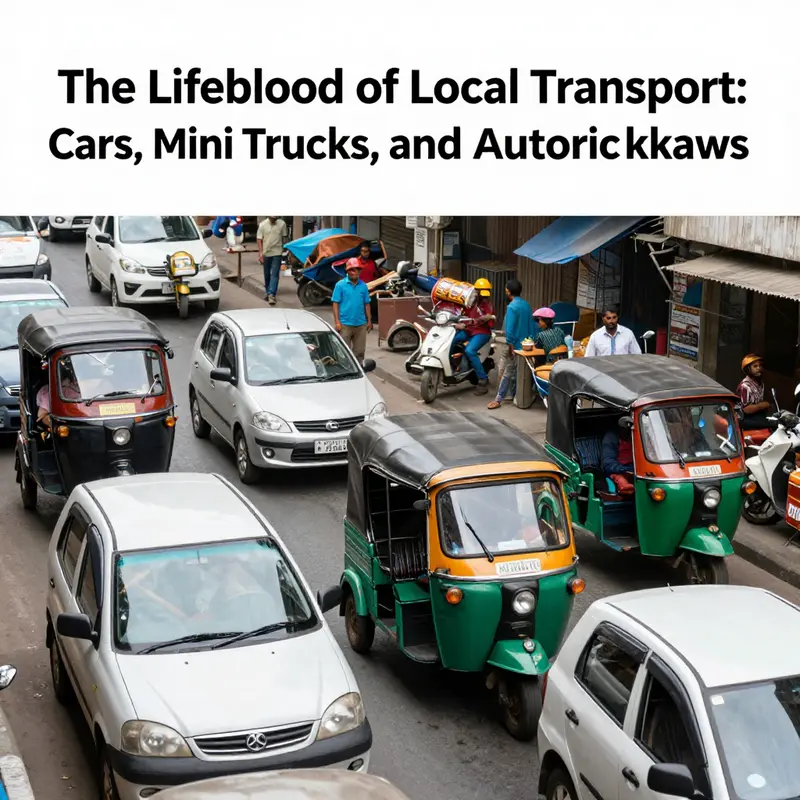
On city streets and rural lanes alike, a small cavalcade of cars, mini trucks, and autorickshaws moves with a quiet confidence that belies the scale of its impact. These fleets, modest in appearance yet persistent in presence, knit together households, neighborhoods, and small markets in ways that larger transport systems rarely reach. They thread through narrow alleys, bridge gaps between homes and shops, and shuttle goods and people with a level of agility that makes them indispensable in places where formal infrastructure is thin. What begins as a visual motif—a handful of compact cars, low-profile delivery vans, and three-wheeled passenger and cargo carriers—unfolds into a robust economic microcosm. The economic value of such fleets is not confined to the wages paid to drivers. It radiates outward, contaminating every corner of the local economy with increased mobility, reduced transaction costs, and a measurable uplift in the participation of residents in commerce, education, and labor markets. In this sense, the small cavalcade operates as both a moving service and a living system, where the movement of people and goods sustains and is sustained by informal networks that seldom appear in macroeconomic tallies but are felt in daily life.
The appeal of these fleets lies in their low barrier to entry and their flexibility. For individuals with limited capital, a single compact car, a small cargo van, or a three-wheeled vehicle can open doors to micro-entrepreneurship: a driver servicing a neighborhood route; a vendor relying on timely deliveries to keep a stall stocked; a craftsman transporting tools, materials, and finished goods to clients across town. The economics operate on a tight margin, yet the cumulative effect is transformative. When a driver moves through a market or a residential cluster, the economic activity triggered is not a single transaction but a constellation of tied activities: fuel purchases, vehicle maintenance, spare parts, insurance, and royalties to informal networks that connect clients to drivers. Each transaction multiplies as it circulates; a simple ride or delivery becomes a node that sparks further spending and employment across services ranging from cleaning and fueling to mechanical repair and account-keeping. This is why many regional studies have found that even seemingly small fleets contribute substantially to local income and job creation, especially where formal employment is scarce and the informal economy is the dominant engine of growth.
In the discourse around micro-mobility, it is common to focus on the utility of movement—the ability to reach a market, a workplace, a school, a clinic. Yet the true economic ripple effect emerges when one considers the entire ecosystem surrounding every ride and delivery. Drivers are not solitary agents; they are part of a web of repair shops, spare parts sellers, fuel suppliers, and informally organized associations that steward routes and schedules. A single cavalcade that scans a neighborhood can sustain a network of technicians who service, repair, and retrofit vehicles, often with locally sourced materials. The operational cash flow from daily renditions circulates through small shops, fueling the local economy with a reliability that large-scale logistics networks sometimes neglect. In this sense, the micro-transport segment functions as a democratized conduit for opportunity, where people from varied backgrounds participate in the act of exchange by enabling others to access goods, services, and opportunities with greater ease.
Empirical evidence from regional studies underscores this point in a particularly compelling way. In a study focused on urban and peri-urban transport in Ghana, researchers quantified the direct economic impact of rickshaw transportation, highlighting a substantial role in job creation and income generation. The figure—roughly a 42 percent direct contribution to jobs and income—reflects more than the earnings of drivers. It captures the broader ripple effects across fuel supply, maintenance, and spare parts markets, all of which rely on a steady demand created by the daily rhythms of transport. It is important to note that such a metric does not stand alone as a monetary figure; rather, it points to a multiplicative effect that unfolds as drivers and vehicles enable residents to participate in economic activity they would otherwise forgo due to distance, time, or logistical constraints. When one considers the frequency of trips to markets, clinics, and workplaces, the aggregate effect becomes evident: better access to mobility translates into more frequent market visits, more reliable attendance at employment opportunities, and greater participation in education and training programs.
Similarly, case studies from other parts of the region highlight parallel dynamics. In several urban centers, autorickshaws—three-wheeled vehicles that straddle passenger and goods transport modes—serve as a critical link between residential zones and commercial districts. Their presence essentially lowers the friction of getting to a job, a market stall, or a workshop, thereby enlarging the pool of active participants in the local economy. The practical consequence is not merely convenience; it is a measurable expansion of the labor force, particularly among low-income households that rely on flexible work arrangements. When these vehicles operate alongside small delivery vans and compact cars, they form a coordinated micro-mobility system. Their routes and schedules, though locally determined, collectively support a city-wide rhythm of commerce and labor that keeps neighborhoods functional during peak hours, post-harvest periods, and seasonal shopping surges.
What makes this dynamic so potent is the ease with which it scales within the constraints of local contexts. A family that buys a single mini truck, or a driver who leases a compact car for a dedicated route, can rapidly adjust to changes in demand, weather, or policy. The equipment required to start is modest, and the operating costs—though not negligible—are often aligned with the modest earnings that informal economies generate. This alignment creates an inclusive pathway to income, one that can accommodate first-time entrants who lack collateral for more capital-intensive ventures. The same vehicles that enable a family to fetch water or supply groceries can, on the same day, carry apparel, electronics, or agricultural produce to distant markets. The capacity to pivot between passenger transport and goods carriage adds resilience to household incomes, especially when seasonal fluctuations affect one line of work more than another.
The link between mobility and economic opportunity is not purely theoretical. It almost always intersects with access to education and healthcare. When families can safely reach schools and clinics, not only are immediate health and educational outcomes improved, but longer-term human capital begins to accrue. The ability to travel to a vocational training center or to attend a workshop extends the horizon for earnings potential. In densely populated urban grids and in bridging peri-urban zones, these small fleets become the connective tissue that keeps the city functioning while enabling households to plan for a more secure future. The consolidation of many tiny movements into a coherent, reliable service reduces the cost of doing business for micro-entrepreneurs who depend on timely deliveries to satisfy customers. It lowers the opportunity cost of participating in the local economy and creates a virtuous circle: mobility fuels commerce, and commerce, in turn, sustains mobility through demand for vehicles, fuel, and maintenance.
A critical dimension of this discussion is the gendered and social implications embedded in everyday transport. In many settings, women participate as drivers, owners, and operators of small transport ventures. Mobility expands their economic agency, offering a portable basis for income generation that can be worked around domestic responsibilities. At the same time, improved access to markets and employment opportunities alters household dynamics, enabling greater financial autonomy and decision-making capacity. The social returns can be as consequential as the monetary ones because they influence education choices for children, health-seeking behavior, and community engagement. When a family’s income becomes more predictable through reliable transport links, it can translate into better school attendance rates and more stable participation in local enterprises. This is not a theoretical luxury; it is a practical outcome observed in contexts where informal transport forms the backbone of the local economy.
The discussion also invites a forward-looking consideration of sustainability and policy. The electrification of mini trucks and the introduction of cleaner, safer, and more efficient micro-vehicles offer a path to reduce local air pollution while preserving the mobility that families depend on. In places where government policy supports green transportation and low-emission fleets, the micro-transport sector can transition gradually without sacrificing the accessibility that communities rely on. This transition, however, requires attention to the broader ecosystem: charging infrastructure, maintenance networks, financing models for smaller operators, and safe operating standards for routes and markets. When these elements align, the same tiny cavalcade that powers micro-enterprises can also contribute to a cleaner, healthier urban or peri-urban environment. The result is not a replacement but a transformation—an evolution of everyday mobility that preserves the essence of the local economy while advancing sustainability goals.
The narrative of the small cavalcade, therefore, is not about a handful of vehicles performing isolated tasks. It is about a dynamic, adaptive system that shapes how people live, work, and connect with one another. It is about the way a neighborhood becomes more accessible, a vendor can reach a wider customer base, and a worker can reach a job with less friction. It is about the recognition that the economics of mobility is central to a broader story of inclusive growth and development. This perspective invites us to see the road not merely as a conduit for movement but as a living investment in opportunity. It suggests that supporting these fleets—through affordable financing, safe driving training, and compatible infrastructure—can amplify the social and economic returns in ways that are tangible at the household level and visible in the patterns of local markets.
Further reading and related discussions on micro-mobility and local economic development can be found in accessible industry writings such as the Mini Trucks CaLa blog, which explores the practicalities, constraints, and opportunities of small-vehicle fleets on the ground. For deeper context on a related transport mode and its economic implications in another regional setting, researchers point to studies like the one on rickshaw transportation in Ghana. See for instance the study titled Modelling the Economic Impact of Rickshaw Transportation in Ghana, which examines how similar mobility patterns translate into job creation and income generation in urban economies. This broader lens helps situate the small cavalcade within a global pattern of informal transport networks that matter far more than their size would suggest. https://www.researchgate.net/publication/375689120ModellingtheEconomicImpactofRickshawTransportationin_Ghana
Micro-Cavalcade, Major Shift: The Tech-Driven Transformation of Cars, Mini Trucks, and Autorickshaws
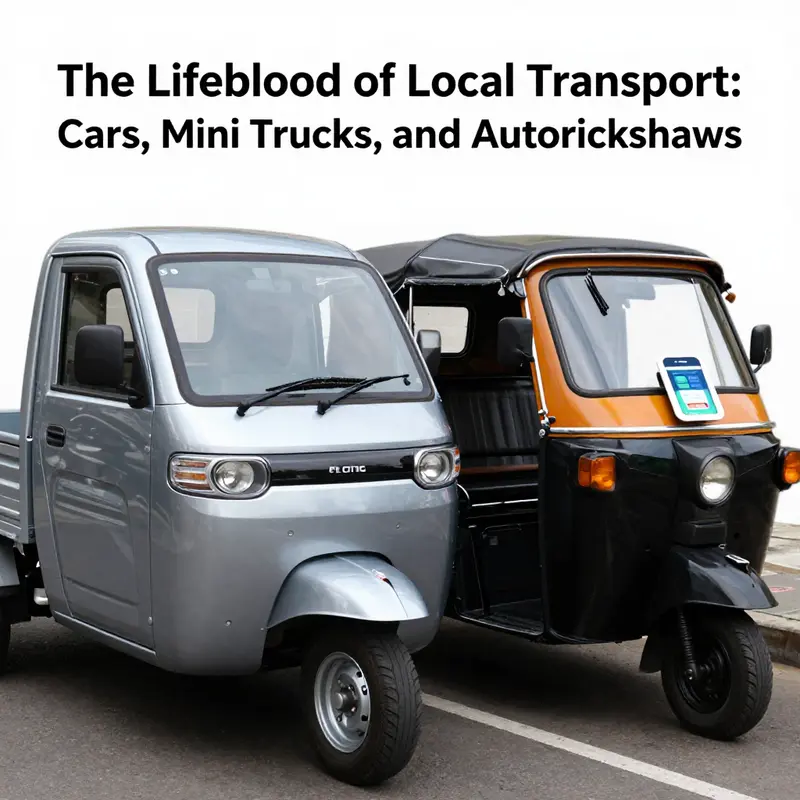
A small cavalcade of cars, mini trucks, and autorickshaws has long filled the lanes and alleys of cities where space is precious, budgets are tight, and time is a hard-won resource. The sight is more than a transit tableau; it is a living thread in the urban fabric, stitching together households, corner stores, and neighborhood workshops with the rhythms of daily life. In many regions, this mix functions as a practical, adaptable network. It can carry a family to work, ferry a vendor’s wares to a street market, or deliver a load of goods to a door with a speed that larger fleets can only envy in hindsight. Yet beneath the familiar hum of engines and the patient lines of traffic, a quiet revolution is taking place. Advances in electrification, lightweight materials, and intelligent systems are converging on these small vehicles, reshaping what mobility feels like on a human scale and what it can do for local economies, safety, and the climate. The changes are incremental in some places and dramatic in others, but their direction is steady. A micro-mobility ecosystem is emerging from the same DNA as larger urban transition plans: efficiency, resilience, accessibility, and accountability.
The Guangzhou policy landscape from the 2025 period offers a compact case study in how cities are steering this shift. A parade of intelligent connected vehicles, autonomous driving models, and new-energy cars announced a clear intent: transport should be smarter, cleaner, and safer, even when the vehicles are small. The parade did not feature perfection or finality, but it did showcase a pathway where local fleets learn to operate with data, sensors, and autonomic routines that echo through the city’s traffic signals, curbside management, and parcel networks. The scene mattered not because it proved a singular solution, but because it signaled policy-makers, manufacturers, and drivers that a smarter, more integrated road system is both possible and necessary. The logic is practical as well as aspirational. If fleets of compact cars, micro vans, and three-wheeled shuttles can be equipped with digital brains and modular batteries, they become not just transport, but autonomous, adaptive nodes in a city’s logistics backbone. And if a public policy framework supports such nodes with charging corridors, safety standards, and interoperable data protocols, the entire mobility system becomes more efficient, less prone to breakdown, and easier to maintain.
In the developing urban world, where informal markets often rely on smaller, nimble vehicles, the technology narrative follows a simple thread: improvements in powertrains, materials, and software translate into clearer benefits for everyday life. In Vietnam, for example, the mini truck market is undergoing a digital transformation that blends electric powertrains with safety systems and lightweight composites. These changes are not cosmetic. They reduce fuel use and emissions, lower running costs for drivers, and boost payload efficiency without sacrificing maneuverability. Lightweight composites, chosen for their strength and stiffness, help to offset added weight from batteries and sensors. The result is a vehicle that can carry more, operate longer between charges, and remain responsive in congested streets. For local operators, this means a tangible improvement in daily economics: lower energy bills, fewer costly accidents, and a longer service life for vehicles that are already central to small-scale commerce. The impact ripples outward, too. Safer fleets foster better insurance terms, less downtime, and more reliable service for customers who depend on timely deliveries and predictable transport. In these settings, the small vehicle becomes a versatile platform for broader social and economic benefits.
A parallel thread runs through the tipper segment of the mini truck world. Here, AI-driven telematics and data analytics are moving maintenance from a reactive to a proactive discipline. Predictive maintenance, once the domain of larger fleets with the capital to invest in costly hardware, is now achievable for lighter-duty operations. Telemetry collects data on engine health, brake wear, tire temperature, and vibration patterns. When analytics detect a developing issue, maintenance can be scheduled before a breakdown disrupts a delivery route or a construction site. The same data stream supports route optimization, allowing operators to chart the most efficient paths through urban mazes, balancing time, energy use, and payload constraints. This is not just a matter of saving fuel; it is a way to increase reliability across a network of small, interconnected trips that, in aggregate, keep communities supplied and businesses solvent. The safety components—enhanced braking, stability control, and driver-assistance features—emerge as essential complements. In a system where a single misstep can derail a day’s work, every incremental improvement in safety compounds into greater on-time performance and lower risk for workers who often take on manual loading and unloading tasks in crowded environments.
The broader arc toward electrified fleets continues to unfold, even as the transition moves at different speeds across regions. The electrification of commercial fleets has matured in earnest but remains uneven. The momentum is building on the foundation laid by consumer electric vehicles, augmented by lessons from non-road applications such as mining and industrial logistics. One of the key developments fueling this progress is the push for modular battery designs. Instead of a single, monolithic battery pack, modular architectures allow operators to swap or scale energy capacity in response to workload. This flexibility matters for last-mile and last-hour delivery operations where duty cycles vary wildly and downtime is costly. A modular approach makes it feasible for a single fleet to serve a mix of duties—from short city hops to longer rural routes—without carrying the cost of multiple specialized vehicles. In rural or peri-urban settings, where charging infrastructure may be sparse, the ability to scale energy with exchangable modules becomes a practical advantage, blurring the line between light-duty urban vans and more robust delivery solutions.
The electric autorickshaw, a staple in many Asian cities, embodies the interface between tradition and transformation. For generations, these three-wheeled shuttles have provided affordable, accessible mobility for people and goods alike. Today, their role remains critical in last-mile transport, but the technology choices are widening their capabilities. Modern batteries extend operating costs downward, and regenerative braking systems help recuperate energy during slow-speed maneuvering through busy markets and residential zones. Connectivity features give fleet managers a window into usage patterns, health, and maintenance needs across dozens or hundreds of rickshaws. The result is a more predictable, more controllable micro-mobility network that can adapt to festival crowds, harvest seasons, or sudden supply-chain demands without sacrificing the intimate, low-cost service that local travelers rely on. This evolution is not simply about replacing gasoline with electricity; it is about retooling the business model of urban transport around data, reliability, and shared infrastructure.
All these strands converge in what many observers now call the convergence of automation, electrification, and data intelligence. The city’s small cavalcade becomes a living laboratory for resilient, scalable mobility. It is not a wholesale replacement of everything with high-tech, nor a single, ready-made solution for every market. It is a layered transition that respects local context—the cost constraints, the street layouts, the informal economies and the daily routines of commuters and merchants. In communities where space is limited and street-level commerce is vibrant, a fleet of compact cars, micro vans, and autorickshaws can be orchestrated like a chorus. Each instrument contributes to the song of urban life: the cars compress time for families, the mini trucks support micro-supply chains, and the autorickshaws weave through gaps and alleys that larger vehicles cannot reach. When outfitted with sensors, connected gateways, and energy-dense batteries, these vehicles become not just chariots of everyday use, but data-rich assets that inform traffic management, urban planning, and sustainable development.
The social and economic implications are profound. In such cities, the small cavalcade supports informal employment by offering flexible routes for vendors who need to move goods as conditions change with the day. It lowers the barriers to entry for entrepreneurship, since the operating costs of these vehicles can be kept within tight margins through efficient powertrains and prudent maintenance. When fleets are instrumented with predictive maintenance and dynamic routing, downtime falls and service levels rise. Consumers benefit from more reliable delivery windows and safer, cleaner streets. The environmental dividend, though not always immediately visible in every neighborhood, accumulates as emissions per kilometer drop and idle times shrink. The urban experience shifts from a constant, frenetic halt-and-go to a more predictable cadence, where people and goods meet with less friction and more opportunity.
The practical takeaway for city planners, fleet operators, and drivers is to think in terms of modular, interoperable building blocks. A modern small vehicle should carry a capable powertrain, a durable chassis, and a software layer that can grow with the user’s needs. Safety features must be designed to withstand the realities of crowded streets and variable road conditions, not merely to satisfy a compliance check. Connectivity should not be a luxury; it should be a standard that informs maintenance scheduling, route planning, and health monitoring. The story from Guangzhou to Hanoi to Lagos is not a single blueprint; it is a pattern of adaptation, learning, and incremental improvement that respects local realities while embracing the global momentum toward cleaner, smarter mobility.
For readers who want to explore practical implications or share experiences from the field, the broader conversation on micro-mobility and small-capacity vehicles is documented in industry discussions and case studies available in the community space. The Minitrucks CaLa blog offers a wide lens on how owners and operators think about customization, efficiency, and endurance in real-world settings. It serves as a practical companion to the more policy- and technology-forward narratives, grounding them in hands-on experience and daily operations. Minitrucks CaLa blog provides observations, insights, and practical considerations that help connect the dots between prototype concepts and street-level realities.
As the narrative advances, the future appears not as a distant horizon but as a continuous stream of improvements stacked upon prior gains. The integration of automation, electrification, and data intelligence is not a singular leap but a sequence of coordinated steps. In the short term, fleets in many regions will optimize existing powertrains, expand the use of lightweight materials, and deploy more sophisticated telematics. In the medium term, modular energy storage, better battery management, and more capable driver-assistance systems will further reduce cost and risk. In the longer horizon, the combination of autonomous functions and real-time analytics could enable new service models, such as on-demand micro-logistics, neighborhood delivery hubs, and shared mobility options that complement public transit rather than compete with it. Yet at every turn, these advances must respect the human dimension: affordability for riders, fair working conditions for drivers, and equitable access for communities most dependent on these vehicles. The small cavalcade, therefore, remains a mirror of the city itself—adaptive, diverse, and capable of evolving with purpose.
External resource: Guangzhou Policy Document – 2025. Guangzhou Policy Document – 2025
Lifelines in Motion: How a Small Cavalcade of Cars, Mini Trucks, and Auto-Rickshaws Moves Cities
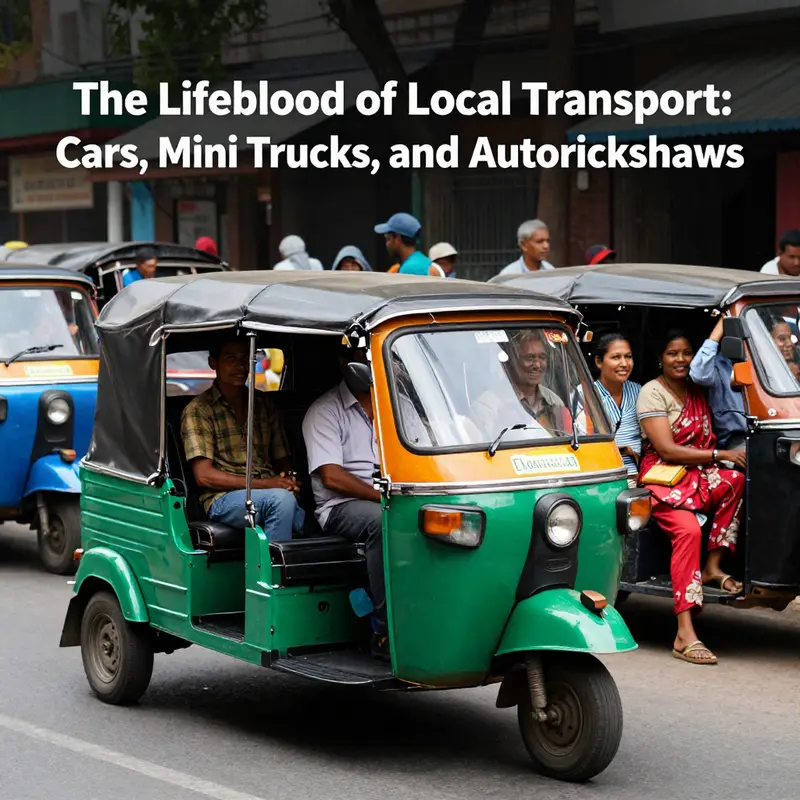
On the crowded lattice of urban streets, a modest convoy travels with quiet gravity. A small cavalcade of cars, mini trucks, and auto-rickshaws moves not as spectacle but as routine—an underlying network that makes daily life possible for millions.
This trio of vehicle types forms a flexible, responsive system that adapts to what cities throw at them: traffic bottlenecks, narrowing byways, peak hours, and the rhythms of informal economies. They are the steady hum that keeps neighborhoods connected when bigger transit arteries falter or turn inflexible. Where trains and buses pause at the edge of a metropolis, these vehicles slip through gaps, carrying people and essential goods with a speed that feels almost intimate in its immediacy.
Auto-rickshaws—three-wheeled engines of motion—offer door-to-door service in places where conventional transit stops feel distant. In dense neighborhoods, they arrive at the curb with a readiness that makes them a bridge between home and workplace, between a shopping trip and a late shift. The drivers navigate through traffic with practiced calm; they are connectors who translate the city into manageable travel plans for riders who might otherwise struggle to meet the day’s obligations.
Mini trucks function as the city’s mobile workbenches. Compact in design yet robust in function, these small cargo carriers weave through congested streets with nimbleness essential for last-mile logistics. Street cleaning, park maintenance, waste collection, and minor emergency responses—all activities become feasible in tight urban corridors because mini trucks can squeeze into gaps bigger vehicles cannot access.
Cars anchor personal mobility and family-scale logistics. They are often the most familiar onlookers in the street, yet their value goes beyond personal convenience. Compact cars, favored for affordability and ease of parking, provide a flexible option when public transit falls short or when a private trip is necessary. They enable households to respond to shifting work schedules, school routines, and healthcare needs with a degree of independence that strengthens social resilience.
The social value of this trio becomes clearer when we widen our lens to how these vehicles shape work, access, and opportunity. Auto-rickshaw drivers contribute to a dynamic, often precarious, labor market, providing steady income streams for a broad cross-section of people who may have limited access to formal employment.
Mini trucks add another layer to this social equation. Their operators—often small-business owners or family crews—embody micro-entrepreneurship deeply embedded in local commerce. They enable a street-level supply chain that keeps small shops stocked and neighborhoods connected to broader markets. This capability matters most in places where formal logistics networks are sparse or expensive.
Compact cars contribute to social equity in mobility. They offer a personal mobility option that can relieve pressure on crowded transit lines during peak periods or in neighborhoods with sparse bus networks. They enable families to live with fewer constraints on work and care responsibilities, a factor that strengthens social resilience when combined with the other two vehicle types.
Policy and governance influence how this trio evolves. In regions prioritizing green transportation, electric versions of mini trucks and auto-rickshaws begin to appear, offering cleaner options for municipal services and passenger travel. Electrification can reduce local air pollution and lower operating costs over time, making the small fleet more sustainable and affordable for drivers who already operate on tight budgets.
The synergy among cars, mini trucks, and auto-rickshaws also contributes to urban resilience. When cities contend with heavy rain, road repairs, or sudden surges in demand for services, this small fleet can reconfigure routes and responsibilities with speed. It adds redundancy to the transportation system in a way accessible to ordinary users and small businesses alike.
As cities grow and morph, the small cavalcade remains a vital thread in the urban fabric. Its components respond to everyday needs with flexibility, affordability, and a pace that honors the tempo of local life. The social narrative around these vehicles is not only about usage; it is about belonging and the quiet social engineering of a city in motion.
For readers seeking practical examples, recent municipal discussions highlight how fleets like these can deliver essential functions—from last-mile logistics to street-level services—while sustaining local commerce and daily life. The broader literature on micro-mobility illustrates how such fleets can complement rather than compete with transit, helping to complete a multimodal city.
Greener Wheels in a Small Cavalcade: Emissions, Electrification, and Everyday Mobility in Cars, Mini Trucks, and Autorickshaws

Across crowded lanes and dusty arterial streets, a small cavalcade of cars, mini trucks, and autorickshaws moves with the quiet urgency of daily life. These vehicles stitch together neighborhoods, markets, and railways, carrying people, parcels, and the labor that keeps small economies humming. Their combined footprint stretches beyond the curbside and the doorstep; it ripples through air quality, energy use, and the climate that shapes urban life. The everyday practicality of this mix—compact cars for personal mobility, light-duty mini trucks for small business and delivery, and three-wheeled autorickshaws for rapid, low-cost shuttle services—has made it a cornerstone of mobility in many developing regions. Yet the same compactness that makes this cavalcade so indispensable also concentrates emissions in places where air quality is already fragile. In other words, what seems like a modest ensemble of affordable transport carries a heavy responsibility for cities seeking cleaner skies and healthier streets. The environmental calculus for these vehicles is not a single number but a spectrum of choices, each with implications for health, climate, and social equity. Emissions characteristics differ not only by vehicle type but by fuel and maintenance practices, and the choices made today shape urban air quality for years to come. The chapter that follows weaves together measured realities with practical paths forward, showing how small-scale fleets can be both affordable and greener, how policy can steer rather than restrict, and how everyday riders can participate in a transition that respects livelihoods as much as lungs. In many cities, the visibility of this cavalcade is immediate: the diesel-scented mornings give way to cleaner afternoons when LPG and electric options begin to displace the most polluting practices. The narrative is not about a single technology but about a continuum of improvements that honor two constraints at once: keeping transportation within reach for low-income households and reducing the environmental toll that such mobility exacts on crowded urban cores. To understand this balance, it helps to look closely at emissions patterns, the harnessing of new energy options, and the way policy can align incentives with public health. In small, bustling towns and crowded neighborhoods alike, the effect of fuel choice on air quality is not abstract; it translates into fewer pollutants at street level and clearer skies for a child waiting at a bus stop or a vendor preparing goods for market. The next pages trace these connections, using observed contrasts between traditional gasoline options and cleaner alternatives, and then sketch the kinds of planning needed to translate promise into everyday practice. This is not a call for instant transformation, but a cautious invitation to reimagine mobility around the twin pillars of accessibility and stewardship. Within this frame, even modest changes—shifting a portion of the autorickshaw fleet from gasoline to LPG or electricity, improving servicing and maintenance for mini trucks, or expanding safe charging and refueling options—have the potential to accumulate into meaningful improvements. At the heart of this argument lies a pragmatic realism: small vehicles serve small budgets and tight spaces; any movement toward cleaner transport must respect those constraints while seeking leverage points that yield outsized benefits over time. Emissions are, in their own right, a logbook of daily choices. The fractions of CO, HC, and NOx that circulate through urban canyons tell a story about fuel systems, engine wear, and driving patterns. The data point to clear contrasts: gasoline-powered autorickshaws emit considerably more of certain pollutants than LPG-fueled variants, while the combined HC and NOx burden remains a stubborn challenge when gasoline engines dominate. This is not a verdict against mobility in crowded places; it is a reminder that the path to cleaner air is paved with choices about fuel, technology, and the scale of change. A crucial dimension of this conversation is the role of electric autorickshaws, which promise zero tailpipe emissions during operation and the potential for lower long-run costs. The case from Rajshahi City, Bangladesh, illustrates a broader pattern: when electricity becomes the source of motive power, the economic calculus tips in favor of operators who face high daily operating costs but can manage lower fuel bills and simpler maintenance regimes. The levy of upfront costs is real, but so are the off-ramps that come with longer vehicle life, reduced fuel imports, and fewer health-related losses from air pollution. These shifts do not occur in a vacuum; they depend on policy design, charging infrastructure, and the ability of communities to access finance. Policy can coax the transition by combining incentives with safeguards that keep prices predictable for low-income users, and by ensuring that grid upgrades and renewable energy supply grow in tandem with vehicle electrification. The environmental logic extends beyond emissions to climate benefits. Every kilogram of carbon dioxide avoided by replacing a gasoline autorickshaw with an electric or LPG-powered alternative contributes to a broader momentum toward cleaner urban systems. Yet the climate story is inseparable from air quality, for the two are linked by the same pollutants that sharpen respiratory risk and degrade visibility on busy city streets. The social dimension is equally important. The micro-mobility network that powers local commerce—small vendors who rely on reliable, affordable transport to move goods to markets, families who depend on a quick ride to school, or a neighbor who ferries a fragile shipment across town—depends on predictable costs, steady service, and accessible infrastructure. Electrification and cleaner fuels must be designed to protect livelihoods rather than displace them. This is where the practicalities of finance and training meet the science of emissions. Battery technology, charging times, and the availability of affordable spare parts influence whether a family can swap toward greener options without compromising day-to-day earnings. In contexts where electricity is scarce or expensive, the appeal of a simple LPG system or a well-tuned gasoline engine can persist longer. The transition, therefore, demands not only cleaner machines but a synchronized set of conditions: reliable charging or fueling, transparent pricing for energy, access to financing, and public programs that ease the initial burden for the smallest operators. The micro-delivery function within the cavalcade adds another layer of complexity. Mini trucks—compact, nimble, and cost-conscious—are often at the service edge of informal economies, ferrying produce, parcels, and tools between home and shop. Their lifecycle emissions are sensitive to engine technology, maintenance regimes, and payload patterns. When these small workhorses move from older diesel or petrol engines toward electric or cleaner alternatives, the benefit multiplies across the supply chain. The improvements are not solely environmental. For drivers and operators, longer-term savings on fuel, fewer maintenance visits, and lower operating risks translate into steadier income streams and reduced exposure to price volatility. In some settings, the transition also strengthens resilience. Electric fleets, or hybrid approaches, can decouple operations from volatile fuel markets and from the sometimes volatile availability of imported fuels. They can also integrate with community energy initiatives, aggregating small-scale power needs with local renewable generation. The potential ripple effects extend to traffic dynamics as well. Cleaner fleets often coincide with quieter streets and reduced exhaust plumes, which can alter pedestrian behavior, curbside activity, and the practical spacing of traffic flows. With smoother, steadier performance, small fleets can participate more fully in urban logistics networks, offering predictable service windows that improve the reliability of last-mile delivery without inflating congestion or pollution. A central challenge remains: how to finance, deploy, and maintain this transition at scale. This is where policy clarity matters as much as technical capability. Public investment in charging and refueling infrastructure, coupled with financial instruments that lower upfront costs for low-income drivers, can unlock a faster, more inclusive shift toward cleaner energy. Training programs that upgrade mechanics and technicians to handle electric drivetrains and battery management systems are essential to sustaining the lifecycle benefits of new technologies. Without skilled service networks, even the best machines risk becoming costly liabilities rather than dependable assets. The social contracts around green mobility must be explicit. Subsidies, if used, should be designed to reach the smallest operators and the most vulnerable communities, not merely the fleet owners with scale. Transparent measurement of air quality improvements and health outcomes helps communities see the value of the transition beyond warm rhetoric. In this light, the small cavalcade is not merely a transport solution; it is a living laboratory for how cities can balance mobility, affordability, and environmental responsibility. It invites a careful choreography of vehicle choice, energy policy, urban planning, and social protection that recognizes the interdependence of these elements. The practice of sustainable mobility, therefore, rests not on a single technology but on a constellation of choices that together reframe what it means to travel, work, and trade in crowded spaces. For readers who want a grounded look at practical experiences from practitioners, resources such as the Minitrucks Sala blog offer perspectives on how fleets manage day-to-day operations, technology updates, and the realities of maintenance in diverse settings. Minitrucks Sala blog. As campaigns to electrify and modernize micro-mobility gain traction, it will be essential to monitor how energy costs, regulatory environments, and community benefits unfold on the ground. The aim is not to replace one form of transport with another but to shape a better balance—one that preserves access and livelihoods while lifting the ceiling on environmental performance. When communities, policymakers, and operators align around shared goals, the small cavalcade can become a backbone of sustainable urban life rather than a source of pollution. In the end, the story of these vehicles is a story about how everyday choices accumulate into city-wide experience: cleaner air, safer streets, steadier incomes, and a future of mobility that remains within reach for all. External reading: Environmental and Socio-economic Impacts of Battery-driven Auto Rickshaw in Rajshahi City, Bangladesh. https://www.researchgate.net/publication/396784522Socio-economicandenvironmentalimpactsofbatterydrivenAutoRickshawatRajshahicityinBangladesh
Final thoughts
From fueling local economies to integrating latest technologies and enhancing social connections, the cavalcade of cars, mini trucks, and autorickshaws embodies a significant thread in the fabric of our daily lives. Not only do they provide essential services, but they also adapt to an evolving world that prioritizes sustainability and technological engagement. Recognizing their multifaceted importance can help communities nurture and innovate these vital transport choices further, supporting both current needs and future aspirations.