
Mini trucks, or Kei trucks as they’re affectionately called in Japan, are more than just vehicles; they represent a lifestyle, a solution for small businesses, and a passion for miniature utility. These compact wonders are shaping the way we think about transportation and accessibility in urban settings and rural landscapes alike. In this insightful journey, we’ll delve deep into the concept of mini trucks—examining how they emerged in Japan, what they’re called globally, their practical applications, and the regulatory frameworks that govern them. Join us as we celebrate these remarkable vehicles that blend efficiency, functionality, and fun into one tiny package.
Naming the Small Workhorse: How Kei Trucks Define the Mini Truck Landscape in Japan and Around the World
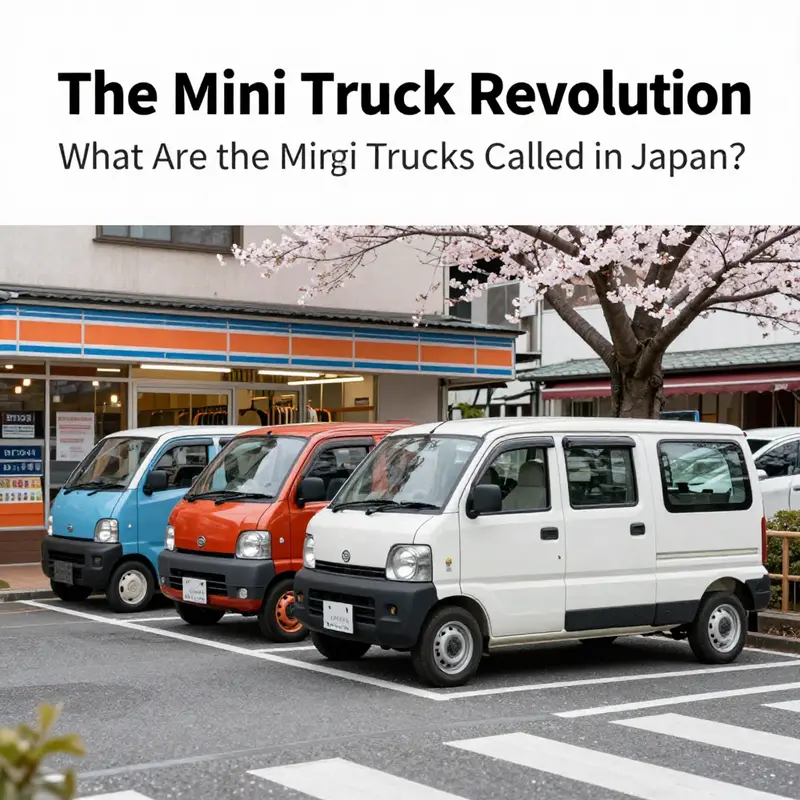
When you seek to answer what the mini trucks are called, you quickly run into a geography of names that mirrors a geography of regulations. In Japan, the smallest commercial workhorses on four wheels carry a formal label that sounds almost ceremonial: kei jidosha, a term that makes the category sound both compact and purpose-built. Elsewhere, drivers and dealers simply call them mini trucks, or more informally refer to them by the shade of their utility—flatbed, dump, or agricultural carrier. The difference between these naming choices is not merely semantic. It reflects a legal framework that shapes size, power, cost, and even how people perceive the vehicle’s role in daily life. In Japan, kei trucks are not just small trucks; they are a precisely defined class of light vehicles that sit at the intersection of regulation and practicality. The official term kei jidosha signals a set of standards that keep the vehicles within strict limits and, as a result, influence everything from insurance and parking to tax treatment and road usage. The word kei, which translates roughly to “light” or “small,” is more than an adjective here. It is a legal category with an impact on who can buy, how much they pay, and what owners can reasonably expect from maintenance, parts, and resale values. For readers new to the subject, the most direct entry point is to understand that kei trucks are a national solution—an answer to the needs of farmers managing compact plots, urban couriers squeezing deliveries into narrow streets, and small businesses that must move goods without paying for a larger vehicle’s footprint. The official designation highlights the engine and vehicle dimensions and trades, in a calculated way, on efficiency and cost rather than sheer power. In everyday conversation, however, people outside Japan often simply refer to them as kei trucks or mini trucks, a shorthand that captures their essence without invoking the regulatory jargon behind the name. In markets like the United States and Australia, the language has shifted toward practicality and market positioning. “Mini trucks” conjures a vehicle with a particular silhouette: narrow width, short wheelbase, and a bed capable of handling everyday deliveries without the bulk of a full-size pickup. In such places, the name is a descriptor of capability—the ability to park on congested streets, to haul goods around a small business, or to support a farm where space is a premium. Yet the distinction between kei trucks and mini trucks is more than nomenclature. It maps the regulatory environment that governs who can buy them, how they must be certified, and what they can legally carry or emit on public roads. The Japanese framework specifies a 660cc engine displacement cap, with dimensions that ensure the vehicle remains within the light vehicle category. That combination of engine size and size constraints is not arbitrary; it was designed to balance affordability, tax advantages, and urban maneuverability with practicality in rural settings where open fields meet narrow lanes. The result is a compact machine that can perform heavy labor while remaining economical at the pump and gentle on the wallet at registration time. The practical implications of these design constraints are palpable in daily life. A kei truck can be a lifeline for a farmer who needs to move produce from field to shed with the smallest possible footprint. It can be the reliable courier for a neighborhood business, slipping through alleys and between parked cars to reach customers with minimal disruption to traffic flow. The fuel efficiency, another hallmark of the kei category, translates into lower operating costs and less frequent visits to the pump—an especially meaningful advantage in rural Japan where distance and fuel price matter. These vehicles often feature flatbeds or boxy cargo areas that maximize cargo space within a compact frame, a design choice that reinforces their versatility. The bed lengths, the compact cab, and the straightforward, durable construction all contribute to a vehicle that can be repaired easily in a rural setting, where access to specialist service centers may be limited. This practicality translates into a surprisingly broad appeal beyond Japan’s borders. Kei trucks have found welcoming pockets in North America, Oceania, and parts of the Caribbean, where importers and enthusiasts prize their efficiency and nimbleness. The reach of kei trucks has grown through export channels, and with that growth comes a new set of considerations. Import regulations, safety standards, and environmental rules shape whether a kei truck can legally enter a given market and under what conditions. In the United States, for example, imports have faced scrutiny related to compliance with federal emissions standards and other regulatory requirements. The regulatory environment is not about restriction for its own sake; it is about ensuring that a vehicle designed for a particular regulatory ecosystem remains compliant as it crosses borders. The story of kei trucks abroad thus becomes a story about how language and law intersect with technology. It asks readers to see beyond a two-word label and to recognize how a single classification—kei jidosha—carries a suite of expectations about performance, cost, and responsibility. The Japanese term signals that this is more than a small pickup; it is a carefully regulated tool of everyday life designed to do a lot with a little. That design philosophy resonates with people who live in tight spaces or who run lean operations. The appeal lies not in bravado or horsepower but in efficiency, reliability, and the ability to fit into daily routines with minimal friction. And as these vehicles migrate into new markets, the naming becomes a cultural bridge, a reminder that the vehicle’s purpose is universal even as its regulatory context is local. For readers who want to see how one might broaden their understanding beyond the label, there is a simple invitation embedded in the literature of kei trucks: explore the broad spectrum of vehicles that share the core characteristics of compact size, light weight, and practical cargo capacity. A good way to continue learning is to read broadly about the topic and, if you wish to see more general discussions about mini trucks and their global footprint, explore a general resource that aggregates perspectives on minis and their use in different regions. Explore the Mini Trucks blog for insights and discussions that bridge the gap between Japanese kei theory and global practice. Mini Trucks blog.
The narrative about naming is not merely about what to call a machine; it is about understanding the ecosystem that supports it. In Japan, kei trucks are celebrated for their clever alignment with local tax incentives, vehicle inspections, insurance norms, and urban infrastructure. This alignment is why the kei label carries weight in conversations about road use, parking, and urban planning. In other markets, the same vehicle becomes a symbol of frugal engineering and versatile utility, and its name reflects a different set of expectations—one that emphasizes economy, maneuverability, and the ability to serve small-scale commerce without the size and expense of a full-size truck. The Japanese kei framework thus becomes a blueprint for how a small vehicle can be designed to be big enough to perform meaningful tasks and light enough to remain accessible to a broad range of operators. The naming, then, is a map of ambitions: to deliver payloads with efficiency, to blend into crowded streets, and to be affordable enough to justify a daily use case that many other vehicles cannot sustain. Across borders, the word kei jidosha travels as a concept rather than a mere label, carrying with it the idea that a vehicle’s value rests in how well it performs within its intended environment. In that sense, the mini truck story is less about a specific model and more about a philosophy of design that prioritizes practicality, sustainability, and accessibility. And the name is the passport that allows these machines to move between regulatory landscapes while keeping their core identity intact—the identity of a small, capable, and economical workhorse that can live up to the demands of a modern, mobile economy. As readers turn the page to the next chapter, they will see how these naming conventions intersect with the real-world considerations of how these vehicles are built, sold, and maintained, including the environmental standards they must meet in different markets. The chapter also invites readers to consider how the language around these vehicles shapes expectations—how a term like kei jidosha can evoke a regulatory identity as well as a practical one, reminding us that names carry a history of policy, technology, and daily use. To deepen this thread, consider continuing your exploration through more general discussions about mini trucks and the ways different regions adapt the same core concept to local needs. And if you wish to broaden the conversation with a broader pool of perspectives, you can follow the ongoing content on the Mini Trucks blog linked above.
For readers interested in regulatory and environmental context, it is worth noting that the importation of kei trucks into the United States has drawn attention from authorities who enforce emissions standards. The broader conversation about how these vehicles fit within the Clean Air Act demonstrates why the naming and classification matter. Understanding the distinction between a vehicle that is designed for a particular regulatory framework and one that must meet another set of standards highlights why the dialogue around kei trucks remains dynamic. The practical takeaway is straightforward: if a reader is considering acquiring or importing a kei truck, the road to compliance begins with a clear grasp of what the kei category represents, what it permits in terms of engine size and dimensions, and what regulatory gates may apply in the destination country. The chapter that follows will continue to peel back the layers of this topic, examining the nuanced trade-offs, the regional variations, and the technologies that make kei trucks reliable partners for small businesses and farms alike. And it will remind readers that the name—whether spoken in a bustling Tokyo street or a quiet rural lane—signals a shared ethos of efficiency and practicality that defines the mini truck genre across the globe.
External resource: For a deeper regulatory and environmental perspective on vehicle emissions and import compliance, see EPA Guidance on Vehicle Emissions.
Global Names for Tiny Haulers: How Mini Trucks Are Called Across Borders and What They Reveal About Urban Mobility
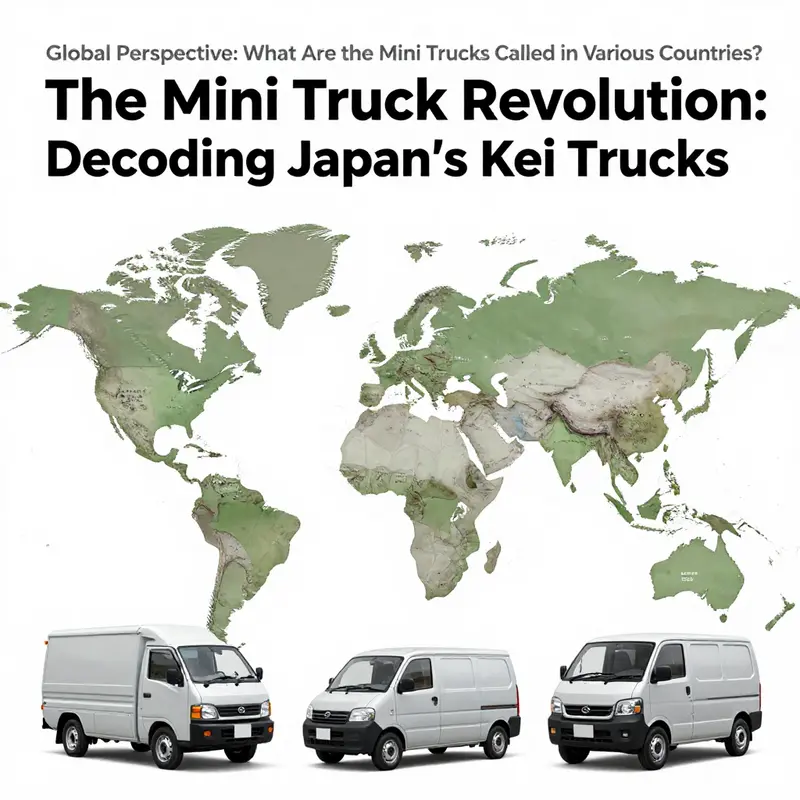
The question of what to call a small, capable workhorse used to ferry goods through crowded streets opens a window onto how nations imagine their economies, regulate their streets, and shape daily life around the movement of cargo. Across continents, these compact vehicles—designed to squeeze through tight gaps, climb narrow lanes, and still haul a meaningful payload—wear many names. The same basic idea persists: a nimble, economical, and practical machine that can slip into spaces larger trucks cannot, yet remains sturdy enough to handle real-world chores from markets to farms to urban deliveries. In Japan, the term Kei truck marks not only a class of vehicle but a whole regulatory philosophy that makes ownership affordable and operation straightforward. In the United States and Australia, the same archetype is widely known as Kei trucks or mini trucks, a bilingual nod to their heritage and their practical appeal. Across Europe, the taxonomy shifts toward micro vans or light delivery vans, a label that foregrounds their role in city logistics rather than a strict technical specification. In China and India, the language of last-mile commerce favors phrases like mini cargo vehicles or small delivery vans, underscoring the practical use case and the rapid urbanization that makes such vehicles indispensable. Yet amid these terms lies a shared thread: a compact, efficient, and durable solution for moving goods where space is at a premium and the cost of ownership matters as much as the utility of the cargo bed. The global tapestry of names mirrors a global reality: as cities densify and e-commerce expands, the appeal of small, capable transport persists, and people find new ways to describe, classify, and deploy these vans and pickups in ways that fit local streets, taxes, and cultures.
In Japan, the Kei truck embodies a precise intersection of policy and practicality. The designation Kei refers to a regulatory category that imposes strict limits on engine displacement and overall dimensions. Typically, Kei trucks run engines under 660 cubic centimeters and keep length within roughly 3.4 meters. These limits are not mere trivia; they translate into tangible advantages. Lower taxes, reduced insurance costs, and lighter registration duties accumulate into a lower total cost of ownership. The regulatory framework also nudges manufacturers toward compact, efficient designs, creating a long-running ecosystem of parts and service that keeps these vehicles affordable and easy to maintain. In daily life, Kei trucks are not museum pieces or niche curios; they are ordinary tools, seen in urban alleys and rural lanes alike, guiding fresh produce from fields to markets and delivering goods to storefronts with a quiet efficiency that modern logistics often demands. They are built to work, and their small size invites a kind of intimate knowledge of the terrain—how to dodge pedicabs in a crowded street, how to load a trunk without overreaching the tailgate, how to park in a space that would challenge a larger vehicle.
If you step beyond the archipelago, the vocabulary shifts, but the rationale remains. In the United States and Australia, the same family of compact vehicles travels under the banner of Kei trucks or mini trucks, depending on local familiarity and marketing history. The term mini truck—an almost universal descriptor—emphasizes the same competencies: fuel efficiency, maneuverability, and an ability to carry meaningful cargo without the footprint of a full-size pickup. These vehicles find homes in small businesses that need to navigate busy streets, in rural ventures that shuttle tools and harvests between sites, and in urban or peri-urban contexts where every square foot of space matters. The popularity of this class in these countries is not merely about the vehicles’ size but about how the vehicles fit into operational models that prize low running costs and high turnover. The back roads of small towns, the lanes beside warehouses, and the alleys behind market stalls all reveal a common truth: small does not mean weak; it can mean agile, economical, and relentlessly practical.
In Europe, the naming convention reflects a different emphasis. While Kei trucks do not have a direct regional equivalent, the closest analogs are micro vans or light delivery vans. These terms foreground function over form, highlighting the vehicle’s role in urban logistics, last-mile delivery, and service work rather than any specific engine displacement or vehicle class. The European market has long favored compact vans with square cargo bays, tall roofs, and efficient drivetrains that maximize payload efficiency within urban constraints. The difference in nomenclature signals regulatory diversity as well. Europe’s complex labyrinth of emissions standards, weight classifications, and urban restriction policies shapes how these vehicles are designed, priced, and used. The result is a fleet that looks and behaves differently from its Kei cousins, yet often performs similar tasks, especially in congested cities where nimbleness and reliability trump raw horsepower.
China offers another layer to the global vocabulary. Here, the vehicles commonly appeared as mini cargo vehicles or light-duty commercial vehicles. The labels reflect a vast, fast-moving market where urbanization and the expansion of e-commerce have created a huge appetite for small, efficient delivery machines. In dense city centers, these vehicles perform precise, targeted operations—picking up goods from wholesale markets, delivering to small shops, or ferrying parcels to residences in a way that larger trucks cannot manage given traffic patterns and road constraints. Affordability is a recurring theme, too: smaller engines, simpler maintenance, and lower operating costs align with the needs of many small-scale businesses and individual entrepreneurs seeking to test or scale micro-delivery ideas.
In India, the same practical logic appears under phrases such as mini trucks or small delivery vans. The urban fabric of Indian cities—narrow lanes, heavy traffic, and high demand for rapid, local delivery—lends itself to compact, utilitarian vehicles. Here, the vehicles are valued for their ability to navigate dense urban cores while still delivering a meaningful payload to markets, homes, and service points. The naming reflects a working-class pragmatism: these are not luxury machines or prestige symbols but dependable tools that help a street-level economy function. The adoption of these vehicles, in turn, is shaped by local supply chains, financing options, and the availability of service networks that can keep fleets on the road through daily wear and tear.
Across these regions, several common themes emerge that explain why the same anthropological need inspires different names. First, space matters. Narrow streets, compact parking, and tight loading zones reward a vehicle that can turn quickly, fit into a small parking slot, and cargo-load efficiently. Second, cost matters. Low purchase prices, affordable maintenance, and cheap insurance make these vehicles attractive to small businesses and individuals alike. Third, reliability matters. A vehicle that can return daily with minimal downtime helps a small operation survive the volatility of demand and the vicissitudes of supply chains. Fourth, versatility matters. The typical user will adapt a small truck for multiple roles—from moving goods to carrying tools, from serving as a mobile workshop to becoming a portable storefront on a market day. Taken together, these factors explain why the global vocabulary remains distinct yet interconnected: different languages describe the same engineering philosophy, a philosophy grounded in practical urban mobility.
The narrative of naming is also a reflection of how cultures manage risk and reward in transportation. In Japan, the Kei framework reduces financial risk for owners and operators by lowering ownership costs, a factor that can influence everything from the way people price goods to the way local governments design parking and street-clearing policies. In the United States and Australia, the term mini truck carries a sense of heritage and resourcefulness, repeating a story of cross-cultural borrowing and adaptation that has traveled with importers and enthusiasts who value the compact form and the clever solutions it enables. In Europe, the emphasis on micro vans or city vans aligns with a longer tradition of urban logistics that prioritizes predictable delivery windows, noise and emission controls, and standardized loading procedures. In rapidly developing markets like China and India, the language of mini cargo vehicles or small delivery vans signals a scalable, modular approach to business that can expand with demand, convert easily to multiple uses, and operate within a logistics ecosystem that is still taking shape at the city level.
That ecosystem—an interwoven set of policies, finances, markets, and street layouts—explains why one term can’t neatly replace another across borders. Each term exists not only to identify a vehicle class but to communicate permission, expectation, and utility within a local frame. And yet, the underlying design ethos remains strikingly similar. A compact footprint, a practical cargo area, a drivetrain that favors efficiency over exuberance, and a chassis that keeps maintenance straightforward and affordable. The shared aim is not to outmuscle a full-size pickup but to outmaneuver congestion, outpace fuel costs, and outlast typical wear and tear in day-to-day operations.
For readers who want to explore how these vehicles are discussed and showcased in contemporary online communities and enthusiast spaces, the Minitrucks SoCal blog offers a broad perspective on the culture, customization, and practicalities of working with these small trucks. You can visit the site at Minitrucks SoCal blog. Exploring such communities helps illuminate how ownership models, customization trends, and regional preferences shape what people call these machines and how they use them in daily life. The naming is less a mere label and more a signal about who relies on these vehicles and how they fit into the rhythms of local commerce and street life.
The global conversation around what these little workhorses are called is more than linguistic trivia. It is a window into how cities and countries organize themselves around the transportation of goods, how policymakers encourage or restrict certain forms of urban logistics, and how small-business owners adapt to changing economic conditions. The Kei class in Japan makes a powerful case for social and fiscal sustainability by showing how a narrow set of rules can produce widespread utility. The North American and Australian adaptations illustrate how a shared vehicle archetype can cross oceans and still meet diverse demands. The European and Asian variations demonstrate that while solutions may differ in label or emphasis, the core needs—navigating tight spaces, returning a steady payload, and keeping operating costs manageable—remain universal. In the end, asking what these vehicles are called is a way of asking how societies mobilize themselves to move goods efficiently and affordably through increasingly crowded landscapes.
External reference for broader classification and trends can be found through international automotive organizations and government energy resources, which provide context for how such vehicles fit into national and regional transport strategies. For a broader international perspective on vehicle classifications and trends, you can explore resources such as the International Organization of Motor Vehicle Manufacturers (OICA) or the U.S. Department of Energy’s Alternative Fuels Data Center. External reference: https://www.oica.net
What Are Mini Trucks Called and Why It Matters: Names, Classifications, and Real-World Roles
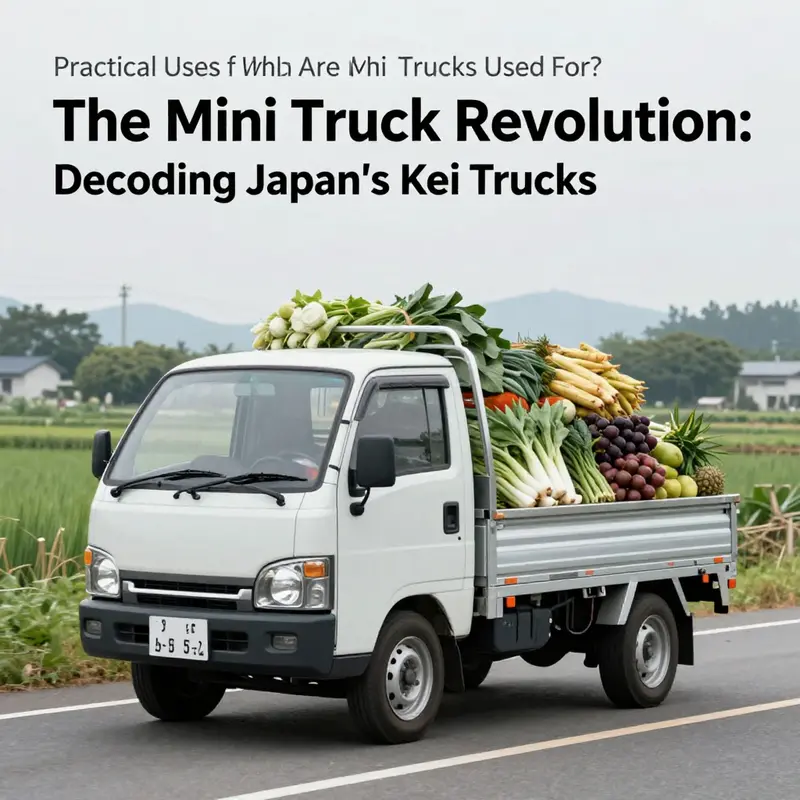
Across markets, a small workhorse goes by several names, but the core idea stays consistent: a compact, purpose-built vehicle designed to move goods and people in tight spaces with minimal fuss. In Japan, these little workhorses are officially recognized as Kei trucks, a label that ties directly to regulatory limits on size and engine displacement. The term Kei comes from a government classification, and it signals more than a nickname. It implies a vehicle that fits within strict limits—notably a tiny engine and compact exterior dimensions designed to optimize efficiency and maneuverability. The result is a class of vehicles with a distinctive profile: short wheelbase, tall cabin for cargo, and a practical flatbed that makes loading and unloading straightforward in crowded urban blocks or narrow rural lanes. While the word Kei is the formal term in Japan, the vehicles themselves have earned a broader, more general moniker in other parts of the world. Outside Japan, many people simply call them mini trucks, or mini trucks with a regional flavor, and the name sticks because it captures their most salient trait: they are small enough to fit where larger trucks cannot, yet capable enough to move substantial loads when needed. The dual naming—Kei trucks in Japan and mini trucks elsewhere—highlights both the regulatory framework that shapes their design and the pragmatic reasons operators reach for these tiny workhorses.
The regulation-driven design of Kei trucks translates into real advantages on the job. These vehicles are typically light, economical, and highly maneuverable. They can squeeze through gaps that would challenge a full-size pickup, and their fuel efficiency helps businesses keep operating costs down. In rural settings, where farm paths and back roads demand agile machinery, the compact footprint allows a driver to navigate fields, barns, and loading docks with less effort and fewer trips than a larger vehicle would require. In cities and towns, their turning radius and parking footprint open up possibilities for same-day deliveries and service calls where space is at a premium. In short, the terminology—Kei in Japan, mini trucks elsewhere—helps people quickly gauge the kind of operation a vehicle is built to support and the scale of logistics it can sustain.
Beyond the naming, the practical uses of these compact transporters reveal a surprisingly wide range of applications. They are not single-use tools; they are flexible platforms that adapt to different tasks. The best way to understand their value is to picture the daily workflow of a small business owner, a farmer, or a service technician who needs to move tools, parts, and products without the overhead of a larger fleet. On construction sites, the appeal is immediate. Mini trucks can haul tools, materials like concrete, and small loads of aggregates over short distances. Their compact size allows them to thread through busy worksites and between equipment, where bigger trucks would struggle to turn or park. Some configurations even offer hybrid tipping mechanisms that combine hydraulic and mechanical systems to provide energy-efficient dumping. This feature reduces the energy draw in frequent material handling tasks, which is especially helpful on multi-phase projects or mining operations where material movement happens repeatedly over a shift.
In the realm of logistics and deliveries, these vehicles shine in places with narrow streets or winding rural routes. Gasoline-powered mini trucks, noted for their reliability and cost-effectiveness, have earned a place in operations that must balance affordability with dependable service. For rural delivery routes, a small truck can traverse dirt roads, cross-country lanes, and seasonal terrain with less wear and tear than a larger truck would incur. The blend of low fuel consumption, straightforward maintenance, and simple drivetrain designs makes them attractive to operators who need predictable costs over the life of the vehicle. When a business needs to scale up only modestly, a small-truck platform offers a sensible step. The idea is not to replace a full-sized fleet but to fill gaps where conventional trucks would be underutilized or too expensive to deploy on a daily basis.
Food and pharmaceutical industries represent a specialized, but increasingly common, niche for mini trucks. In these contexts, preserving product temperature and integrity becomes crucial. Insulated bodies and refrigeration units can be integrated into compact truck frames to maintain the cold chain during short-haul transport. The ability to deliver perishable goods—be it fresh meals, dairy, produce, or temperature-sensitive medicines—without the complexity of a larger refrigerated truck makes these compact vehicles an attractive option for small roasters, regional distributors, and local pharmacies. The same principle extends to the broader goal of maintaining quality while minimizing spoilage and waste. Even as regulations around food safety tighten, the lightweight and efficient design of these vehicles helps operators stay compliant without sacrificing speed or reliability.
Recreational and utility applications demonstrate another facet of their versatility. Some models offer 4×4 capabilities and robust towing and payload capacities, enabling activities that go beyond typical urban logistics. A compact truck can haul boats, trailers, or campers for weekend adventures, especially when paired with thoughtful engineering that addresses cooling, traction, and stability under load. For users who pursue a blend of everyday commuting and occasional heavy hauling, this dual capability makes the vehicle not merely a tool for work but a companion for life outside the office or workshop. These capabilities are not just about raw power; they reflect a broader design approach that emphasizes balance—between payload and fuel economy, between rugged capability and compact size, between low upfront cost and long-term reliability.
Industrial settings also benefit from the durability and modularity of these small platforms. In factories and warehouses, specialized variants are built to endure harsh environments and repetitive tasks. The overarching principle is straightforward: when space is at a premium and duty cycles are intense, a compact, purpose-built vehicle can outperform larger alternatives in efficiency and uptime. The workforce can move heavier items with greater precision, traverse factory floors with less risk of damage to surroundings, and complete repetitive transport tasks with a cadence that suits production schedules. All of this contributes to a broader narrative about naming and utility: the category is defined as much by its regulatory roots as by its real-world flexibility. The tension between compact size and functional capacity is the heart of what makes these vehicles so widely adopted in a range of settings.
The naming and the use cases converge in how operators evaluate their options. A typical buyer begins with the fundamental constraint: what class does this vehicle belong to? In Japan, the Kei designation tells them the engine is kept deliberately small, and the exterior dimensions stay within the limits that govern registration, taxes, and licensing. In other markets, the same evaluation translates to questions about payload, bed length, and available configurations that maximize payload without sacrificing maneuverability. The result is a careful balance of factors: cost per mile, maintenance ease, and the ability to operate efficiently in environments that larger trucks would find challenging. In practice, this means the vehicle becomes a flexible partner, an asset that can adapt as business needs shift—from a simple daily route to a more demanding job site or a more specialized service role.
To illustrate how these considerations translate into everyday choices, consider the wide spectrum of configurations people encounter. Some operators prioritize minimal running costs, and they choose models with fuel economy that keeps operating expenses low during long daily duties. Others demand higher payloads and ruggedized suspensions to handle tougher loads or rough ground. Temperature control adds another layer of specification when transporting perishables or medicines. And then there are the recreational and utility variants that expand capability for occasional heavy hauling—proof that these compact vehicles are not one-trick ponies but adaptable platforms that can be tailored to the kind of work someone actually does, rather than the kind of work a showroom demonstration promises. This adaptability is a key reason the naming conversation matters. The label a market attaches to these vehicles is more than a marketing tag; it signals the device’s regulatory background, its typical use cases, and its overall value proposition to a business or individual.
As readers explore the options and histories behind these small trucks, it can be helpful to anchor the discussion in concrete examples of how people think about model variety and capability. For instance, when faced with a choice among different configurations, many operators turn to model comparisons to gauge whether a given setup will meet their daily rhythm. Such comparisons examine balance—payload versus fuel economy, bed length versus turning radius, available drivetrain options for varied terrain—and then translate those technical trade-offs into practical outcomes on the job. To get a sense of how these comparisons unfold in online discussions and on product pages, you can explore model comparison resources that present multiple variants side by side, highlighting how small differences in engine tuning or chassis stiffness can influence daily performance. See this model comparison resource for a sense of the spectrum of options and how they map to real-world needs: comparing-kingstar-kruzr-models-specs-features.
Ultimately, the question of what these vehicles are called returns to a simple truth: the names reflect both regulation and practicality. Kei trucks in Japan embody a legal framework that shapes their most important traits, while the broader label mini trucks captures the same essence wherever the vehicles are used—compact, efficient, and capable enough to move goods in tight spaces and dense work environments. The terminology matters because it frames expectations: a Kei truck signals a certain footprint, engine size, and cost profile; a mini truck signals a compact, versatile platform that can be adapted to farms, factories, delivery routes, or weekend adventures. In the end, a vehicle’s name is more than a label. It is a concise map of what the machine is designed to do, where it shines, and how it can fit into the daily tempo of work and life. This chapter keeps returning to that map, guiding readers toward an understanding of the mini truck as a practical tool and a linguistic reminder of the economies of scale that small, purpose-built vehicles bring to modern work and play.
External reference: https://www.engineeringandindustrytoday.com/mini-trucks-real-world-uses-2026
Labels in Law: How Regulations Define What Mini Trucks Are Called Across Borders
Names carry weight. In the shadow of policy, what people call a vehicle changes with where it is built, sold, and taxed. The term mini truck is widely used, but official labels vary and shape everything from safety rules to repair manuals and insurance categories. In Japan, kei trucks sit within a tightly drawn regulatory universe that rewards compact design and low displacement. In the United States, these vehicles tend to slip into the family of light-duty trucks or compact utility vehicles, a classification that blends passenger and commercial use. In Europe, they land in the N1 category of light commercial vehicles, a box that carries strict emissions standards and safety requirements. Across these regions, the word used to name a vehicle is less a matter of fashion than of legal definition, and the difference matters for manufacturers, buyers, and everyday operators who navigate tight alleys, farmyards, and delivery routes with a small but capable workhorse.
In Japan the kei truck occupies a distinctive and long standing niche. Kei jidōsha, the formal term for lightweight vehicles under the kei category, is defined by very specific limits: engine displacement capped at 660 cubic centimeters, length not exceeding 3.4 meters, and width limited to around 1.48 meters. These constraints were designed to minimize weight, optimize maneuverability in crowded urban environments, and lower the environmental footprint of frequent short trips. The regulatory framework around kei trucks is not just about size; it wraps in tax incentives, reduced registration fees, and simplified licensing considerations that reflect the government’s aim to encourage small business logistics and rural economies without sacrificing vehicle standards or road safety. The kei designation also shapes the user experience in practical ways. Axles and suspensions are pared back to accommodate tight turning radii and stable handling on narrow streets. The compact footprint enables farmers and small traders to maximize cargo capacity within a very small envelope, trading a bit of power for high maneuverability and low operating costs. Such advantages explain why kei trucks remain deeply embedded in everyday life for many communities across Japan, where the smallest tool on the farm or the neighborhood delivery route can be a kei workhorse that keeps the wheels turning with minimal fuss.
Across the Atlantic, the United States frames mini trucks within the broader box of light-duty trucks. The regulatory classification rests on a mixture of payload capacity, gross vehicle weight rating, and the intended use of the vehicle. In practice, many of these small, flatbed, or cab forward designs fall into Class 1 or Class 2 truck categories. The classification system is tied to federal safety standards and fuel economy requirements set by the Department of Transportation and the Environmental Protection Agency. The lines between a commercial vehicle and a passenger vehicle blur when a compact model regularly carries goods or equipment rather than people. This blend has practical implications for licensing, insurance, and tax treatment, depending on the jurisdiction and whether the vehicle is primarily used by a business or an individual. The result is a spectrum of regulatory expectations, with some states treating small trucks more like utility vehicles than traditional cars, while others apply closer scrutiny to payload limits or modification rules. The naming stands as a breadcrumb trail toward those regulatory expectations, with the actual design and use patterns aligning to the category’s intent—efficient, versatile, and capable of navigating urban and rural burdens with equal deftness.
In Europe the story follows a slightly different road. The European Union places mini trucks within the N1 category of light commercial vehicles, defined by a gross vehicle weight rating not exceeding 3.5 tonnes. The N1 designation is not only about weight; it bundles a portfolio of emissions standards, safety obligations, and maintenance expectations that manufacturers and operators must meet. Within N1, subcategories like N1-1 and N1-2 reflect stepwise divides in weight ranges, translating into nuanced compliance obligations that affect design choices, testing procedures, and fleet-wide service considerations. Emissions rules, from Euro 6 variants to newer strands aiming for Euro 7, intersect with safety and efficiency norms that shape how mini trucks are engineered, tested, and certified for sale across continental markets. The EU framework emphasizes environmental accountability in a way that influences how compact utility vehicles are perceived and adopted by businesses that operate across borders. The regulatory language, in other words, does more than assign a label; it steers technology toward cleaner, safer, and more efficient operation, especially for vehicles that routinely function in dense urban zones or on short, repetitive routes.
The cross regulatory fabric also holds implications for buyers and operators who may cross borders or import vehicles. A kei truck, a light-duty US spec chassis, or an EU compliant N1 vehicle may look similar at a glance, but the compliance steps behind the scenes diverge. Importers, for instance, must navigate compatibility with local crash standards, lighting and marking rules, and noise or emissions limits. They may also encounter variations in tires, braking systems, or fuel delivery configurations that reflect the jurisdiction’s emphasis on safety and environmental performance. When a vehicle moves from one regulatory environment to another, it might require adaptation—changes to meet height or width restrictions, updates to emissive systems, or re-certification through a local testing regime. This is not merely a bureaucratic hurdle; it shapes product strategy, determines the feasible price point for consumers, and affects the speed with which a business can deploy a new fleet across a region. The naming, then, is a shorthand for a much larger alphabet of standards that a vehicle must satisfy to be used legally and effectively.
The way a mini truck is named also mirrors the practical needs of different work ecosystems. In farming and agriculture, where maneuverability, off-road capability, and a light footprint matter, a kei truck offers a compact, efficient workmate designed to squeeze through tight rows and carry modest loads with reliability. In urban deliveries, the same class of vehicle can be a nimble alternative to larger vans, offering reduced turning radius, lower parking footprint, and favorable fuel economy. In Western commercial fleets, the emphasis may tilt toward payload, durability, and compatibility with a broader set of road rules, making the regulatory label a signal for maintenance standards and service expectations as much as for the vehicle’s physical dimensions. These realities keep the language of classification alive in daily operations: a label is the first qualification a buyer considers, then a long list of performance metrics, safety features, and regulatory conformance follows.
The internal logic of regulation and naming also shapes how information circulates online and in consumer guidance. The informal term mini truck travels through blogs, forums, and marketplaces, but official references anchor the dialogue in policy and law. This matters for people who plan to use one of these small workhorses as a primary tool for their business, or for hobbyists who want to farm a parcel of land with a compact, highly maneuverable hauler. When a reader encounters a term like kei truck in a travel article, a regulatory briefing, or a vehicle import guide, the word signals a distinct regulatory heritage and a unique operating envelope. The same reader, who encounters the label light-duty truck in a government notice or a fleet procurement document, gains insight into the vehicle’s expected performance, maintenance obligations, and the kinds of safety features the vehicle is required to carry. The labeling system, in short, is a map of expectations. It helps avoid mismatches between what a buyer thinks the vehicle can do and what the law allows it to do in a given jurisdiction.
For readers who want to see how these labels translate into real-world guidance and community discussions, a central resource is the broader blog ecosystem around mini trucks. This hub offers a snapshot of how owners, operators, and enthusiasts interpret and respond to regulatory labels in daily life. To explore one such resource, you can visit the blog page at minitrucksocala.com/blog/ for a sense of how end users talk about the practical implications of different regulatory names and the kinds of questions that arise when vehicles cross borders or switch use cases. This kind of cross talk helps illuminate the gap between the letter of the law and the lived experience of operating a small, nimble work vehicle on varied terrain and road networks.
A final reflection ties these threads back to the central question of the chapter: what are mini trucks called under various vehicle regulations? The answer is not a single name but a spectrum of terms, each tethered to a regulatory framework that defines size, weight, power, emissions, and safety expectations. The kei designation in Japan embodies a domestic calculus that rewards compactness and efficiency. In the United States, the label of light-duty or compact utility trucks maps to a broader classification system that blends personal and commercial use. In Europe, the N1 category channels a concerted EU policy toward low-emission, safe, and economic urban freight. The result is a rich tapestry where naming serves as a concise shorthand for a set of technical and legal prerequisites. The texture of this naming system matters because it affects how vehicles are engineered, sold, maintained, and used in daily work. It matters for fleets balancing cost with reliability and for individuals who need dependable transport for modest payloads in confined spaces. It matters because, in the end, the name attached to a vehicle is a key that unlocks access to the legal, financial, and practical pathways that define how the vehicle will perform on real roads and terrain across the globe.
External resource: European Commission on the regulatory framework for light commercial vehicles, including the N1 category: https://ec.europa.eu/growth/industries/transport/vehicles_en
Final thoughts
In conclusion, mini trucks, or Kei trucks, have carved their niche across the globe, appealing to small business owners, property owners, and enthusiasts alike. Their unique functionality and efficiency offer countless advantages for various applications—from urban deliveries to agricultural assistance. Understanding their origins as Kei trucks in Japan, their differing names internationally, and the regulatory frameworks surrounding them equips you with the knowledge to appreciate and utilize these remarkable vehicles fully. Whether you’re contemplating the purchase of a mini truck or simply curious about their versatility, it’s clear that these compact powerhouses are poised to continue revolutionizing transport and utility in diverse environments.