
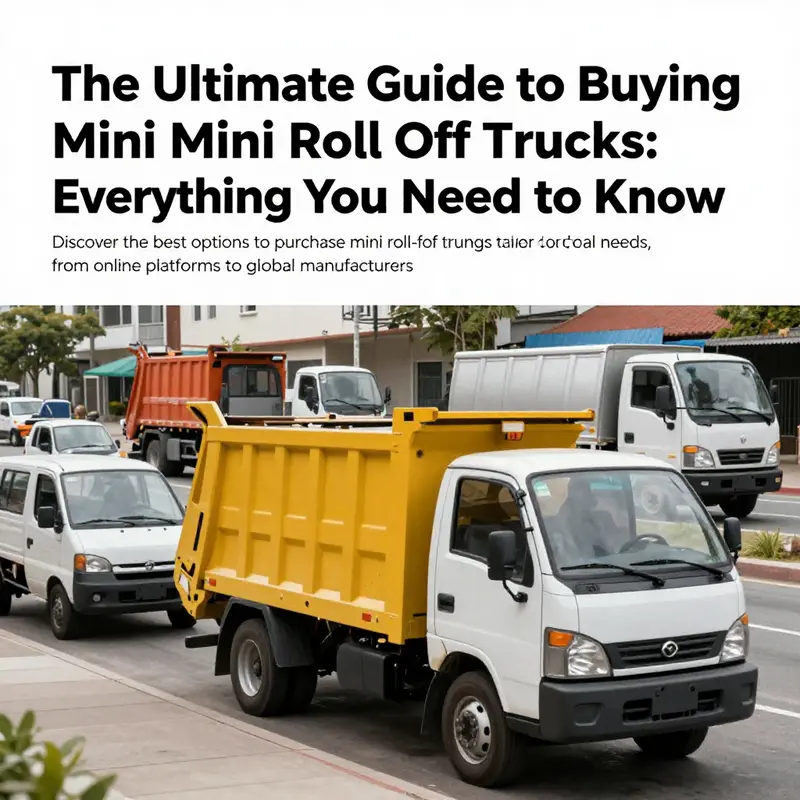
Finding the right mini roll-off truck can significantly impact your small business or property management efforts. Whether you’re a local small business owner looking to enhance your waste management efficiency or a hobbyist passionate about these compact trucks, understanding where to buy mini roll-off trucks plays a crucial role in your success. In this guide, we’ll explore various avenues ranging from online marketplaces to specialized suppliers. Each chapter will give you a closer look at the options available and help you make an informed decision based on your specific needs.
Finding Mini Roll-Off Trucks Online: A Practical Guide to Markets, Vendors, and Value
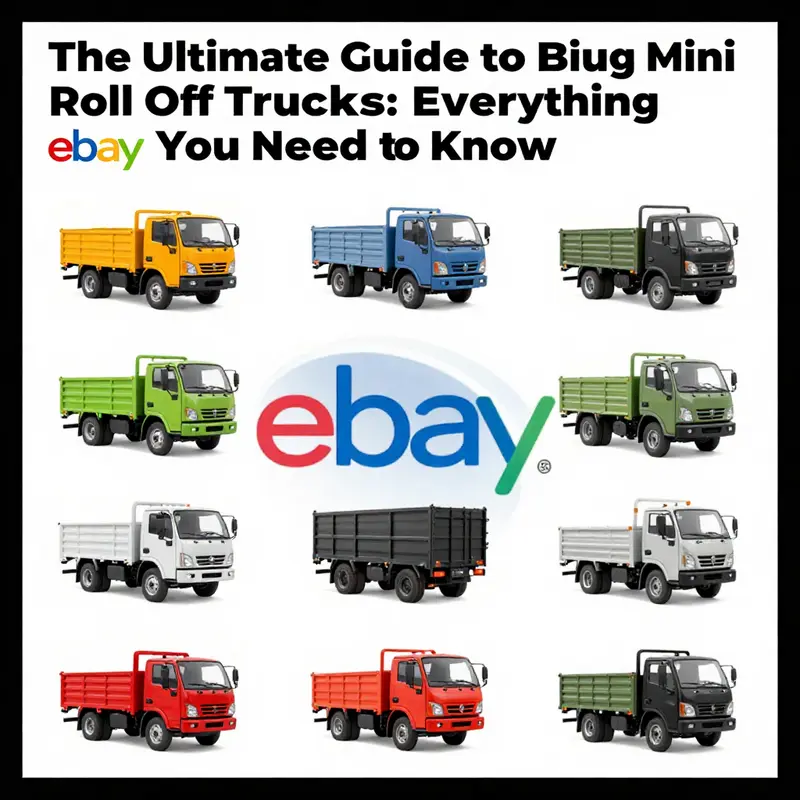
When operations demand compact roll-off capacity, the question isn’t only “what fits,” but “where can I buy mini roll-off trucks that balance price, reliability, and service?” For small-scale waste collection, construction sites, or municipal tasks where maneuverability matters, the right purchase channel can save both money and downtime. The landscape is broad, spanning large general marketplaces, industry-focused suppliers, and direct-from-manufacturer channels across regions. A seasoned buyer treats online options as a spectrum rather than a single storefront. You begin with the big-picture goal—acquiring a mini roll-off truck that can handle the daily rigors of your workload—and then map that goal to concrete sourcing decisions. The path to the right truck runs through understanding what you need, what you’re willing to trade for price versus service, and how different platforms behave in terms of selection, lead time, and after-sales support.
One core truth anchors the entire process: these vehicles are purpose-built but not uniform. A mini roll-off truck is essentially a compact chassis equipped with a hook-lift system and a separate roll-off body. The size and capabilities vary, but the common thread is the need for reliable hydraulics, solid structural integrity, and an instrumentation package that makes daily dispatch predictable rather than risky. Online markets reflect this diversity. You’ll encounter listings that range from brand-new, purpose-built units designed for municipal use to older, pre-owned configurations that can be refurbished for light-duty or specialized tasks. The spectrum includes vendors that offer basic configurations suitable for tight urban environments and those that tailor solutions for work at construction sites, landfills, or recycling facilities. The key is to translate the listing details into a practical assessment of how the truck will perform under your specific conditions, not just how it’s priced at a glance.
Where to begin in the online space often depends on how quickly you need to deploy a vehicle and whether you’re seeking a one-off unit or a bulk order for multiple sites. Large, general online marketplaces are typically the fastest route to a ready-to-drive option. They aggregate sellers from multiple regions, which means you can compare price points, delivery terms, and payment protections side by side. The advantage here is the breadth of inventory and the potential for buyer protections that accompany many listings. The downside is variability: the same model can appear with different equipment packages, different maintenance histories, and uneven after-sales support, especially if the seller operates across borders or relies on third-party service networks. When speed and breadth trump everything else, these platforms function as a first-pass filter—your quick scan that helps you identify a handful of credible listings worth deeper evaluation.
Beyond these general marketplaces, dedicated industry suppliers and regional exporters are where you find the kinds of configurations that small operations often need. In these channels, you’ll encounter manufacturers and distributors who specialize in waste-management equipment. They tend to offer more consistent documentation, standardized warranty terms, and clearer service or parts networks. This is not about chasing a single “best” brand; it’s about aligning a credible supplier with your expectations for uptime, maintenance costs, and local regulatory compliance. For buyers who need a steady supply line or who intend to scale fleet sizing in the future, establishing a direct line with a reputable exporter or dealer can provide longer-term benefits in terms of spare parts, service intervals, and tailored configurations that meet regional requirements.
The price spectrum reflects both the platform you choose and the configuration you settle on. A general rule of thumb is that mini roll-offs from direct-from-manufacturer or dealer channels tend to command higher upfront prices but include more robust warranties and service coverage. In contrast, used units listed on broad marketplaces can offer compelling price points, especially if you’re willing to invest in a refurbishment or if a unit comes with a favorable maintenance history. For buyers with tight budgets, a used unit sourced through a marketplace may be a practical entry point, provided you have a clear plan for inspection, parts availability, and timing for any required repairs. It’s essential to quantify total ownership costs, not just the sticker price. Shipping, import duties, potential remounts or retrofits for your local regulations, and the cost of needed spare parts should be folded into the comparison. The modern buyer’s decision is as much about total cost of ownership as it is about the initial price tag.
When you consider regional sourcing, the value proposition shifts again. Chinese exporters have become a central part of the global supply chain for compact roll-off trucks. They frequently offer a broad range of 4×2 and 4×4 configurations, sometimes with diesel or electric options, and at price points that make entry feasible for smaller fleets. This is not without caveats. The advantages include lower upfront cost and the ability to tailor specifications in larger volumes or even for single-unit orders with modest MOQs. The risks typically involve longer lead times, potential language barriers in technical communication, and variability in after-sales support and parts availability. If you pursue this path, it pays to have a clear spec sheet, a defined inspection protocol, and certainty about who you will call for maintenance once the unit lands in your yard. A practical way to mitigate risk is to work with a seller who can provide references, uptime data, and a straightforward warranty framework. Even with a longer wait, the cost-to-performance ratio can be favorable, especially if you plan to scale operations or need a fleet that can be deployed with minimal customization.
On the other side of the globe, Japanese manufacturers, known for precision and long-term reliability, often market mini roll-off options with strong after-sales service and more generous warranty terms. Buyers who value durable construction, predictable maintenance, and networked service support may find this path appealing, particularly for urban operations where downtime is costly. A vehicle built in Japan is likely to come with a robust warranty window and an established service ecosystem, which translates into easier scheduling of maintenance and access to trained technicians. For organizations that run tight schedules and cannot afford frequent unplanned outages, this reliability can justify the premium. Importantly, the decision to pursue a Japanese-made unit hinges on your willingness to navigate import logistics and the availability of local support or a capable importer who can handle warranty coordination and parts provisioning over the life of the truck.
A central piece of good sourcing practice is to use a thoughtful evaluation framework rather than chasing the lowest price alone. The framework centers on four pillars: performance specs, warranty and after-sales support, parts availability, and total ownership costs. Performance specs must cover the hook-lift system’s responsiveness, the hydraulic flow and lift speed, the body’s compatibility with standard roll-off containers, and the chassis endurance for your expected payloads. Warranty and after-sales support are not trivial add-ons; they are a form of risk reduction that becomes especially valuable if your fleet operates in remote locations or across multiple job sites. Parts availability matters because even a well-built truck will need regular maintenance, and a reliable supply chain for filters, seals, and wear items prevents long outages. Finally, total ownership costs require a clear lens on maintenance intervals, potential retrofits, licensing, insurance considerations, and the freight and duty profile associated with each sourcing channel.
For buyers who need immediate deployment, the simplest path is often a broad, reputable online marketplace that presents a mix of new and used units with clear photos and a straightforward payment process. If your team has the technical bandwidth to assess condition remotely, these platforms can accelerate the initial screening. For buyers who anticipate growth or whose operations depend on a more predictable service experience, engaging with a dedicated industry supplier or a regional exporter can deliver a more stable long-term relationship. The practical choice depends on your risk tolerance, timeline, and the degree to which you prioritize after-sales coverage over the initial price.
As you weigh options, a concrete step is to assemble a short, objective checklist you can apply to each listing. Confirm the engine type and transmission, the exact payload and roll-off capacity, the hook-lift system’s compatibility with your containers, and the availability of maintenance records. If you are evaluating multiple units, create a side-by-side matrix that records price, estimated landed cost, warranty terms, and the status of service networks. Enter the negotiation phase with a clear minimum acceptable specifications list and a maximum acceptable price. Don’t shy away from asking for recent service logs, proof of load testing, and any photos or videos that demonstrate hydraulics in operation. It’s common to request a live video of the unit lifting a representative container to verify lift speed and control response, especially when buying sight unseen.
To connect this process with practical reading and further context, you can explore related topics in the industry blog that covers compact trucks and their markets. For related topics on compact trucks, see minitrucksocala.com/blog/. This resource can help you balance strategic sourcing with hands-on maintenance considerations and provide real-world anecdotes from operators who have navigated similar procurement choices.
Finally, the overall decision should reflect not only the immediate need but the potential for future scale. If your operation is likely to expand or consolidate across sites, consider a source that supports easy expansion, offers flexible financing or leasing options, and provides a straightforward path to parts and technician support across regions. While the allure of a low upfront price is strong, a sourcing approach that emphasizes reliability, service access, and predictable maintenance can lower total costs over the life of the vehicle and reduce the friction of growth. The journey to securing a mini roll-off truck online is not merely about clicking “buy.” It is about translating an online catalog into a dependable asset for daily practice, a decision that shapes productivity, safety, and the ability to meet waste-management obligations in a timely, efficient manner.
External resource: https://www.alibaba.com
Sourcing Mini Roll-Off Trucks for Tight Urban Jobsites: Global Pathways, Standards, and Trusted Partners
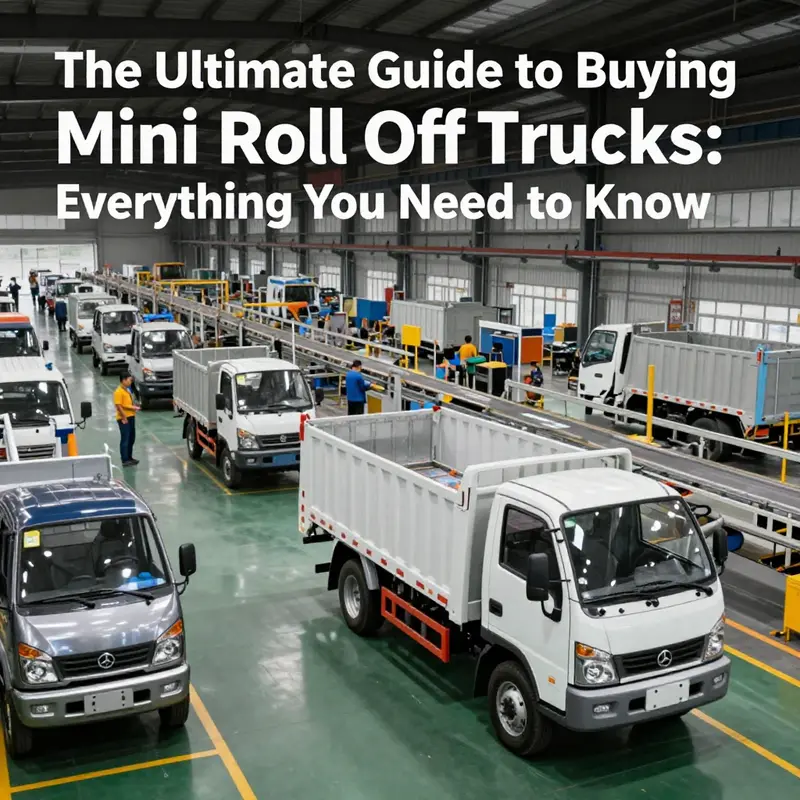
Urban work sites demand compact, capable vehicles. Mini roll-off trucks fit the tight spaces of dense cities by combining compact dimensions with robust lifting and containment systems. This chapter surveys the global sourcing landscape, highlighting regional production hubs, modular designs, and the importance of standardization and after-sales support.
It discusses three sourcing pillars: compliance, documentation, and due diligence, including references to CE marking, ISO 9001, and emissions standards. It notes the spectrum of procurement options from new to used, and from direct purchases to leasing models, with emphasis on total cost of ownership and long-term uptime. The geographic dynamics of supply chains are explored, including proximity to steel mills, hydraulics suppliers, and chassis fabricators, and the role of international logistics, import/export paperwork, and currency considerations.
Buyers are advised to verify container configurations, lift geometry, and hydraulic specs against official data sheets, request factory audits, and seek transparent warranty terms. Practical steps for a credible sourcing process include online market screening, direct supplier outreach, facility tours, live demonstrations, and field tests that mirror operating environments. The chapter also compares broad-market vendors with specialist suppliers, stressing that the best partner delivers consistent quality, reliable spare parts, and a clear maintenance ecosystem. For readers seeking concrete starting points, examples of evaluating documentation, test data, and after-sales networks are provided, along with a reminder to incorporate regional regulatory realities and environmental goals into the final fleet configuration. External reference resources and case studies are cited to ground the discussion in real-world practice.
Compact Roll-Offs, Clear Path: Sourcing Mini Roll-Off Trucks for Small-Scale Waste Operations
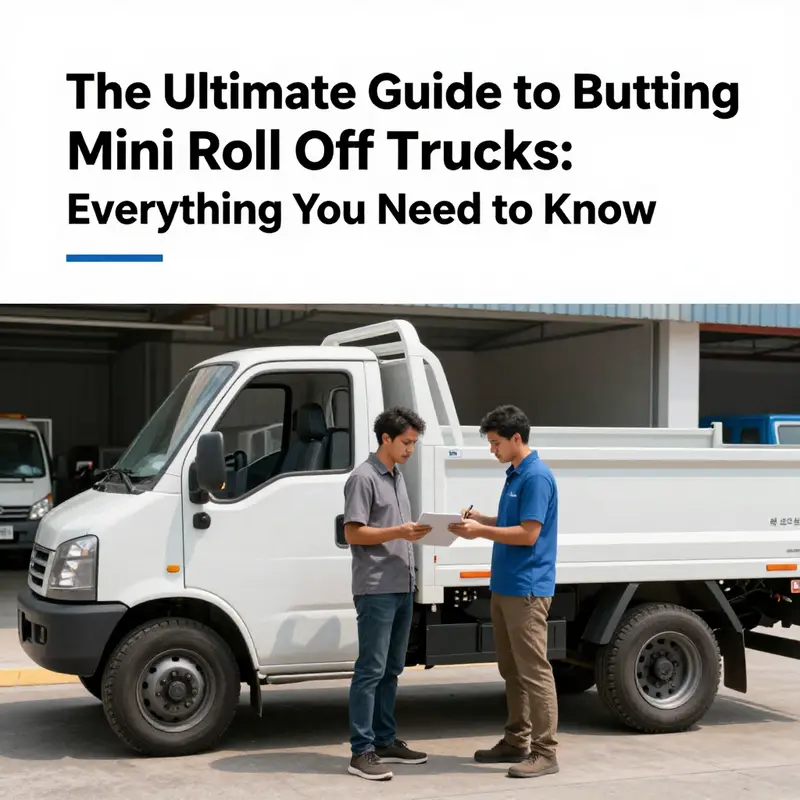
When a small operation steps into the world of waste management, the choice to use mini roll-off trucks often marks a turning point. These compact machines are designed to navigate tight sites, urban streets, and short-haul routes where full-size roll-offs struggle to fit or to align with project timelines. The question of where to buy becomes less about chasing the lowest price and more about aligning capability, reliability, and long-term support with the realities of daily use. In this chapter, the focus is on finding practical paths to source these specialized vehicles, weighing new versus used options, and weighing leasing as a viable route for cash-flow management. The intent is to present a cohesive picture that can guide a buyer through the marketplace with clarity, avoiding the jargon and flash often associated with industrial equipment purchases while still delivering a robust framework for decision making.
First, recognize that mini roll-off trucks exist in a tiered market. At one end are new models from global manufacturers or regional distributors that promise warranty coverage, standardized parts supply, and an advertised level of after-sales service. At the other end are used units and rebuilt configurations that can deliver immediate capability but come with uncertainties about history, maintenance discipline, and residual life. The middle ground often features near-new units from specialized suppliers and short-run or customized builds that optimize for a specific use case—such as low-clearance sites, particular hook-lift systems, or multi-axle arrangements designed for urban operation. The challenge and opportunity lie in aligning the right tier with the operator’s needs, the site conditions, and the budget cycle.
A practical starting approach is to map the intended use against the constraints of the machine. Mini roll-off trucks are chosen not only for their payload and hydraulic performance but for how well they can be deployed in the real world. Jobs on tight sites often demand a vehicle with a short wheelbase, precise steering, and a reliable lift system that can grab containers quickly and release them without stalling or misalignment. If your work is dominated by small container sizes and frequent on/off cycles, you’ll want to verify the hook-lift mechanism’s responsiveness and the sturdiness of the chassis. Conversely, when your operation involves longer moves or heavier loads within the mini class, you’ll be weighing the power of the drive train, the quality of the hydraulic system, and the availability of spare parts in your region. These considerations set the stage for evaluating suppliers and contract structures.
One of the most important distinctions in sourcing is the decision to pursue new units versus used or refurbished ones. New machines come with the comfort of a comprehensive warranty, predictable performance, and the assurance that the technology matches current safety and emission standards. They also carry a premium price and typically longer lead times. For operators who need certainty and a predictable maintenance trajectory, a new purchase can be compelling. However, new units are not always necessary for every operation. For many small fleets, a carefully selected used unit, possibly with a documented maintenance history and a recent service, can deliver the required capability at a fraction of the initial cost. The key is to conduct rigorous due diligence—verify service records, inspect the hydraulic system, check the integrity of the lifting arms, and assess the condition of the chassis and tires. A test drive or a field trial, if possible, helps ensure that there are no hidden issues that could derail operations after delivery.
Leasing and rental options offer another pathway that is especially attractive for small or fluctuating workloads. Leasing reduces upfront capital exposure, aligns payments with usage and revenue, and can include ongoing maintenance as part of the package. A well-structured lease or rental agreement should spell out the expected service intervals, the support network, and the process for handling equipment upgrades as needs evolve. Leasing is also a way to trial a model before committing to ownership, enabling a team to validate that a particular setup truly fits the site conditions and workflow. For some operators, leasing becomes a stepping stone toward eventual ownership of the asset once the business case is proven.
The marketplace takes many forms, and the buyer should approach each channel with a clear set of criteria. Global online marketplaces—designed to connect buyers with a broad set of sellers—can deliver a wide range of inventory, from aging units to lightly used machines. They often provide a straightforward path to compare configurations, price points, and shipping terms. The benefit is speed and breadth; the risk can be inconsistent after-sales support and limited transparency about machine histories. Regional distributors and municipal-equipment specialists offer another dimension. These players understand the sector’s requirements—emissions compliance, safety certifications, and compatibility with existing fleets—and can provide tailored configurations, service arrangements, and local support networks. In some markets, manufacturers in Asia, Europe, and the Americas maintain partnerships with local dealers who can facilitate demonstrations, transport, and regulatory documentation. The result is a more predictable path to acquisition, with assurances around warranty and parts availability, albeit potentially at a higher price or longer lead time.
As buyers navigate these channels, the quality and reliability of the supplier become as important as the price tag. A supplier’s track record, response times, and willingness to provide references or testimonials matter when your operation depends on the vehicle’s uptime. A disciplined due diligence process helps reduce risk: request a written specification for the lift mechanism, the chassis, the payload rating, and the hydraulic system; verify that the unit complies with local safety regulations; and ask for a service history if a used unit is under consideration. In addition, it’s prudent to seek sources that offer at least a basic level of after-sales support—spare parts access, troubleshooting guidance, and a pathway to trained technicians who can service or repair the unit without long delays. The presence of a clear, documented warranty and a transparent return or exchange policy is a strong signal of a supplier’s confidence in its product and their commitment to customer satisfaction.
Another critical factor is the availability of replacement parts and the size and reach of the service network. The operation will grow more smoothly if the buyer can map out a plan for routine maintenance, parts stocking, and emergency repairs. In some cases, suppliers offer maintenance packages or service contracts tied to the lease or purchase agreement. These packages often cover routine inspections, hydraulic fluid changes, filter replacements, and safety-system checks. While such arrangements add to operating costs, they can shift the burden of maintenance away from the owner and toward a predictable, budget-managed service flow. For small teams, this predictability often translates into less downtime, fewer unexpected repairs, and better overall equipment utilization.
Embedded within this landscape is the question of customization. Small operations frequently require tweaks that make a mini roll-off more fit for a specific site. This might involve selecting a particular wheelbase, choosing 4×2 versus 4×4 configurations for better traction on uneven surfaces, or upgrading to a hook-lift system designed for a precise container size. Some suppliers can accommodate these adjustments as part of a standard build, while others offer a bespoke configuration that may entail longer lead times but yields a machine that aligns more closely with the site workflow. Buyers should weigh the value of customization against the cost, the anticipated return on investment, and the potential impact on service and parts compatibility across the fleet. A thoughtful customization plan can reduce the need for later retrofits, which can be disruptive and expensive.
Logistics and regulatory considerations form a practical layer that shapes the purchasing decision. For cross-border purchases, documentation, compliance, and import processes can influence the total cost of ownership and the timing of deployment. Buyers should be mindful of local licensing, road-use restrictions, and any safety or emission standards that affect the operation of the vehicle in their jurisdiction. Freight arrangements, incoterms, and insurance during transport are all part of the upfront planning. If a unit is sourced from another country, it is wise to secure a clear picture of lead times, delivery schedules, and the responsibilities for commissioning and initial setup once the machine arrives on site. This planning reduces the risk of delays or misaligned expectations that can erode the value of a seemingly attractive price.
To illustrate how this all comes together in practice, let’s consider a hypothetical scenario that avoids naming specific brands or retailers while still delivering actionable insight. A small contractor with a modest fleet intends to expand into local waste removal using compact containers that fit through a standard urban loading bay. The operator opts for a near-new model sourced from a regional distributor with a robust local service network. The built-in warranty covers critical components for a defined period, and a service package is bundled with the purchase to ensure predictable maintenance. The operator negotiates a short-term lease on a second unit to test a different drive configuration and a new hook-lift option that promises smoother container handling on uneven lots. The decision-making process involves evaluating total cost of ownership, including upfront price, shipping, insurance, and ongoing maintenance, against the expected productivity gains and downtime reductions. After a few months, the operator confirms that the combination of the two units—one purchased with a service package and one leased for flexibility—offers the best balance of capability and cash flow, with enough spare capacity to handle peak workloads without overcommitting capital.
For those seeking further guidance and a broader sense of the market, a reliable starting point is to tap into the community of long-standing operators and industry professionals who share experiences, lessons learned, and practical recommendations. A resource like the Mini Trucks Blog—an information-rich hub for small-vehicle operations—offers a wide range of perspectives, case studies, and practical tips for sourcing, maintaining, and deploying compact waste-handling equipment. This kind of resource can help buyers align their expectations with real-world outcomes, rather than relying solely on product specifications. The blog can serve as a touchstone for understanding what has worked for peers in similar markets and site conditions, which is especially valuable when the decision hinges on nuanced factors like maneuverability in tight alleys or the reliability of a particular hydraulic system under heavy use. Mini Trucks Blog
As buyers engage with suppliers, it is essential to maintain a clear, structured approach to evaluating proposals. Begin with a concise request for information that covers the vehicle’s core specifications: chassis type, drive configuration, container compatibility, lifting capacity at the hook, hydraulic cycle times, and safety features. Request documentation on warranties, maintenance intervals, and the availability of spare parts in your region. Ask for references from other customers who operate in similar conditions and, if possible, schedule a site demonstration to assess how the machine handles actual containers in the intended environment. A transparent supplier will be able to provide a detailed proof of concept or a test period that minimizes the risk of committing to a configuration that may not meet practical needs.
In conclusion, the path to acquiring mini roll-off trucks is less about chasing a single source and more about building a sourced ecosystem that balances cost, capability, and support. The best outcomes come from a deliberate mix of channels: a primary stable supplier or distributor for new or near-new units, a trusted partner for used units with verifiable maintenance history, and a flexible leasing option to absorb demand-driven fluctuations. Throughout this process, the emphasis should be on reliability, serviceability, and the logistics of getting the vehicle to work sites with minimal disruption. When these pieces align, a small to mid-sized operation can leverage compact roll-off capacity to expand its service offerings, speed up project turnover, and maintain a resilient fleet that scales with the business. An informed buyer treats sourcing as a strategic activity, not a one-off transaction—mapping out needs, verifying capabilities, and selecting partners who can deliver on both performance and partnership over the long haul. External references can supplement this approach, offering additional depth on specific models or regional conditions, such as detailed product information from cross-border suppliers and technical specifications that inform the final decision. External reference: https://www.alibaba.com/product-detail/Japan-New-Model-Elf-5t-Roll-off-Truck_1600481937122.html
Final thoughts
In conclusion, whether you’re aiming to purchase or lease a mini roll-off truck for your business or personal use, knowing where to look is essential. Online platforms like eBay offer immediate access, while global manufacturers provide specialized options at competitive prices. Additionally, engaging with specialized suppliers for leasing may prove beneficial in optimizing costs and ensuring you have the right vehicle for your needs. Make an informed choice and gear up for success in managing your waste efficiently.