
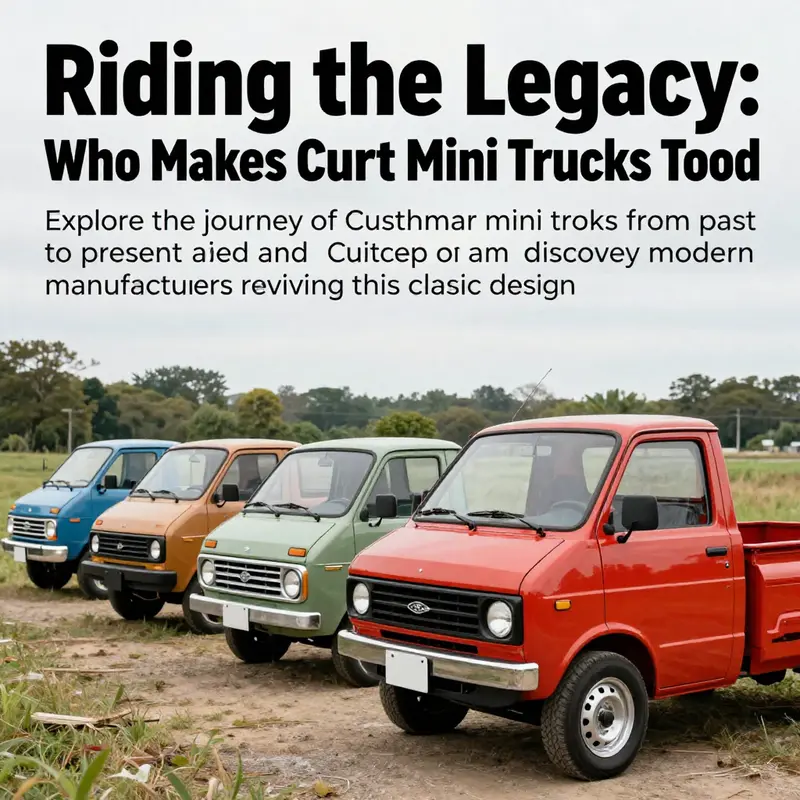
Cushman mini trucks, often regarded as the quintessential small utility vehicle, hold a unique place in automotive history. Originally manufactured by the Cushman Company, these vehicles became popular for their functionality and compact design, appealing to a broad range of users from local business owners to hobbyists. As we explore the evolution of Cushman mini trucks from their inception to their modern counterparts, we’ll delve into the key players involved in their production, how their designs have transformed over the decades, and the current impact they have on the market. This comprehensive overview will not only celebrate the rich heritage of these vehicles but also arm you with knowledge about today’s manufacturers, ensuring that whether you’re a small business owner or a mini truck enthusiast, you have the insights needed to navigate this fascinating world.
From War-Era Workhorse to Global Copycat: Tracing the Makers of Cushman Mini Trucks
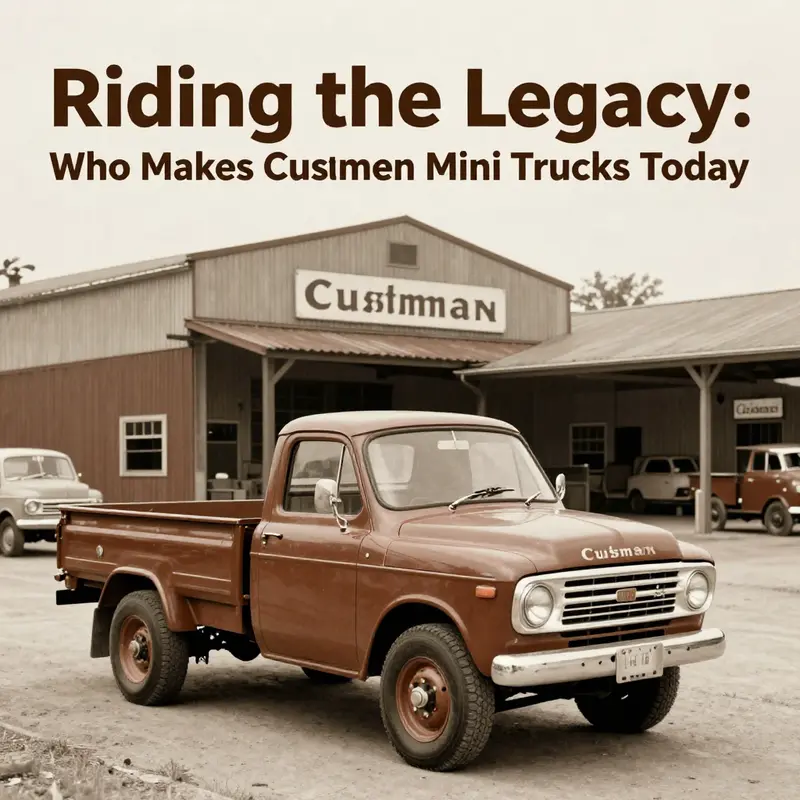
When you think of a compact, utilitarian vehicle that could haul a surprising load in tight spaces, the Cushman Mini Truck often comes to mind as a quiet emblem of mid-century industrial efficiency. Its story begins with a company that chose to specialize in compact, practical transport long before the modern urban micro-truck culture existed. In the early part of the twentieth century, the Cushman Company established itself as a nimble producer of small, lightweight mobility solutions. It was a time when factories, shipyards, hospitals, and campuses needed reliable, simple machines that could slip through narrow corridors, across loading docks, and along campus paths without the heft and expense of full-size trucks. The Cushman name became synonymous with a particular breed of vehicle: compact, rugged, and purpose-built for utility rather than speed or glamour. The company, rooted in a New England tradition of precision and practicality, filed its ambitions into a form that could be mass-produced and easily maintained by the people who used them daily. In that incubating era, the company’s focus on small engines, simple transmissions, and a frame designed for durable, repeated service would shape an entire category of transportation long after its original lineup retired from production. This was not merely a product line; it was a philosophy of mobility that valued reliability over novelty and service life over flashy innovation. The Cushman story is inseparable from the broader arc of industrial American manufacturing, a period when small, purpose-built machines filled essential roles in factories, warehouses, and military logistics. The exact geographical footprint of Cushman’s early life is often described with a regional pride tied to its base in Norfolk, Nebraska. That location, referenced in historical materials, anchors the company in a place where wind-swept plains met the kind of industrious mindset that valued function. The historical record notes that the company’s origins stretch back to 1908, when a new class of personal and utility transportation started to take shape. It is easy to misread those early decades as merely a precursor to later, more famous models, but the Mini Truck emerged as part of a deliberate strategy: a small, three-wheeled, fuel-efficient platform designed to deliver payloads with minimal footprint and tolerated maintenance requirements. The result was a vehicle that, even in its most basic form, carried the hallmarks of its maker: a design that could be understood, repaired, and trusted by operators who did not have time for complex mechanical overhauls. From the outset, the Cushman Mini Truck carried a dual identity. On one hand, it was a workhorse crafted for the demands of industry, military logistics, and campus routines. On the other, it was a symbol of an era when industrial equipment needed to be accessible to the people who used it every day. That accessibility was not an afterthought; it informed the chassis layout, the choice of a small gasoline engine, and the decision to keep the transmission simple. Everything about the design spoke to a principle: utility first, maintenance second, and cost kept within reach for a broad spectrum of buyers across sectors. The wartime environment of the 1940s is often highlighted in histories of the Cushman Mini Truck because it marks a turning point in its function and visibility. During World War II, small, rugged, and easily serviceable vehicles were essential to moving supplies within crowded depots, on airfields, and across training grounds where larger trucks could prove impractical. Cushman’s engineers leaned into the strengths that mattered most in war and postwar contexts: a compact footprint, a straightforward engine, and a chassis that could survive rough handling. The result was a vehicle that could traverse uneven surfaces, squeeze through gaps in crowded facilities, and deliver commensurate payloads with a level of reliability that operators could depend on after long shifts. Those pragmatic specifications translated into a design language that persists in the collective memory of enthusiasts and historians alike. The Cushman Mini Truck’s silhouette—a compact body perched over a small engine, with a utilitarian cargo bed—remained emblematic of a broader ecosystem of small, purpose-built workhorses. It is essential to distinguish that these machines occupy a different lineage than the passenger-focused automobiles that later defined postwar mobility. They are not relatives of the civilian car as much as they are cousins of a class of industrial devices meant to augment human labor in environments where maneuverability and reliability outrank horsepower and luxury. So while the term “truck” might conjure images of road-going haulers, the Cushman Mini Truck’s real domain was the factory floor, the loading dock, and the campus quad—places where the vehicle’s size and its economy of operation mattered most. Its three-wheeled configuration, a hallmark of its kind, was not a fashion choice but a functional adaptation. Designers balanced weight distribution, steering simplicity, and payload capability against the demands of cramped lanes and quickly changing tasks. The result was a vehicle that could be wheeled into position, loaded with parts or groceries, and wheeled away with a minimum of fuss. The broader market for such vehicles grew in tandem with the needs of industries that valued small, nimble, and affordable transport. In the decades following the war, as manufacturing processes evolved and new logistics demands emerged, the Cushman approach to small-truck design found imitators and competitors. The market began to see a proliferation of compact, lightweight trucks that borrowed heavily from Cushman’s sense of scale, durability, and serviceability. That influence traveled across oceans and into the hands of manufacturers who sought to reproduce the essential virtues in a landscape that would eventually lean toward globalization and outsourcing. Yet the Cushman brand retained a certain prestige tied to its American roots and to the era in which industrial design prioritized practical deliverables over sporting lines or speed. The tale did not end with the original firm. The decades that followed saw Cushman’s production evolve, decline, or cease in some of its traditional forms, giving way to changes in corporate strategy, market demand, and the shifting economics of manufacturing. At the same time, a new global reality emerged: modern interpretations of the Cushman ethos began to appear in manufacturing centers around the world. In particular, Chinese manufacturers began to develop modern variants that echo the old Cushman design language without being exact replicas. These companies have produced compact trucks and vending carts that draw their visual vocabulary from the classic Mini Truck. They adapt that vocabulary to contemporary production methods, meeting new regulatory standards, and addressing a different set of users. The shift is not a sudden pivot but a gradual transition that reflects broader patterns in industrial history. It underlines the practical truth that a successful design can outlive its original company by inspiring new generations to reframe an old concept for new contexts. Rather than a single monolithic creator, the Cushman story becomes a chorus of manufacturers and designers who, knowingly or not, carry forward an idea about what a small, purposeful vehicle should do. The modern adaptations often emphasize modularity, efficiency, and adaptability. Vendors on campuses and festival grounds alike now rely on compact cargo vehicles to move food, merchandise, or equipment through narrow spaces. The logic is straightforward: if a vehicle can fit where others cannot, and if its maintenance is straightforward enough to be managed by a small team, then it becomes a dependable workhorse for a broad range of tasks. The contemporary landscape includes a spectrum of manufacturers that echo Cushman’s original premise. Some firms lean into the rugged, work-ready aesthetic, emphasizing payload capacity, long service intervals, and simple fuel systems. Others pivot toward a more commercial or retail orientation, designing mini-trucks that function as mobile vending carts, conversion platforms, or campus-service vehicles. The diversity of these designs underscores the enduring appeal of a compact platform that can be tailored to countless functions with minimal modification. The continuity can feel almost genealogical. The old Cushman would recognize the new vehicles in their judges’ eyes: a practical approach to mobility, a bias toward the utilitarian, and a confidence that small machines can carry outsized responsibilities. It is a reminder that industrial progress often travels through quiet channels. It moves not in the glare of high-profile unveilings but in the everyday reality of workers who need dependable, affordable transport to move a pallet of goods, a toolbox, or a stack of groceries from one point to another. The modern manufacturing ecosystem that has grown around Cushman-inspired mini trucks is as much about supply chains as it is about design. It involves sourcing components, aligning with regulatory standards in different markets, and offering service and support in global regions. The dynamics of globalization allow design concepts to travel faster than ever, but they also demand a local flexibility that ensures the product remains useful in diverse contexts. In this sense, the Cushman Mini Truck’s modern successors are not merely copies; they are evolutions that retain the essence of the original—compact size, straightforward operation, and reliable performance—while embracing the practical realities of today’s logistics needs. If you want to explore the community that follows these vehicles and the kinds of discussions that surround them, you can visit the Minitrucksocala blog, which curates a wide range of observations about mini trucks, including historical reflections and practical tips for owners and operators. This resource helps connect the long arc of Cushman’s influence to the contemporary ecosystem that keeps the concept alive in markets around the world. For readers who want to see how the lineage has evolved, the modern landscape offers a vivid portrait of how a simple, well-made, small-capacity transport solution can adapt, endure, and remain relevant across decades and continents. The Cushman story, then, is not a closed chapter but a continuing conversation about the kinds of mobility that empower work in tight spaces. It is a reminder that, in the world of small vehicles, the best answers often come from solutions designed with restraint and practicality in mind. While the brand may no longer define every new model, the spirit of that initial design—the ability to move people and payloads efficiently with minimal fuss—continues to inform a global ecosystem of compact trucks and carts that anyone can use to move forward with their daily tasks. External resource: Cushman Official Site. https://www.cushman.com
Heritage on Wheels: Who Now Makes Cushman-Style Mini Trucks and Why It Matters
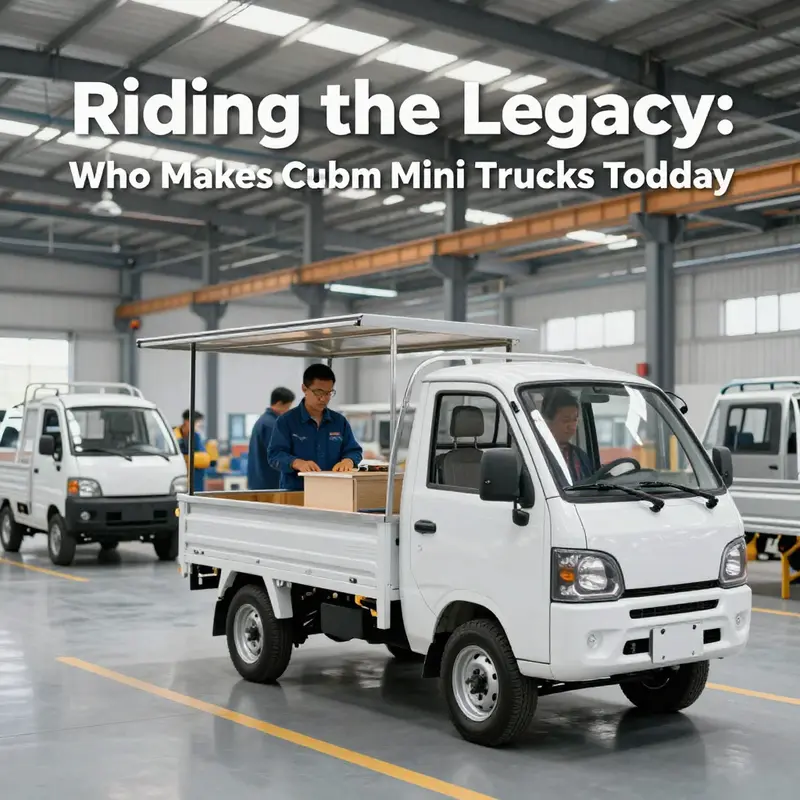
Across the landscape of compact utility vehicles, the Cushman mini truck family sits at a crossroads of heritage and adaptation. What began as a purpose-built workhorse in New England almost a century ago has become, in the modern era, a global idea translated by manufacturers who keep the essential traits—compact footprint, rugged construction, and a willingness to shoulder everyday chores—while reimagining powertrains, materials, and use cases. This is less a single origin story than a continuum of design philosophy: small, sturdy, and capable of navigating tight spaces where larger trucks simply cannot tread. As a result, the modern Cushman name, though separated from its early factories by decades and geography, endures in a family of vehicles built to perform on campuses, in industrial yards, and along city-service corridors that demand agility as much as endurance.
Today, the Cushman brand is anchored in a well-established American company known for reliability in the hardest-working environments. The modern lineup under this brand emphasizes multi-purpose utility with a focus on durability and serviceability. Powertrain choices demonstrate a practical response to changing markets and regulations, offering both traditional gasoline options and electric drives. In concrete terms, these vehicles are engineered to move sizable loads in constrained spaces, meeting the needs of facilities teams, maintenance crews, and service operations that must operate within the confines of narrow aisles, loading docks, and crowded campuses. The payloads realized in a typical configuration approach several thousand pounds, a threshold that keeps these machines relevant for loaders, tool kits, and the supply chains that rely on quick, predictable delivery of goods and materials. They are not mere toys of nostalgia; they are tools built to stand up to continuous use, day after day, season after season.
Yet the story of Cushman mini truck equivalents does not end at the gates of Textron’s assembly lines. A broader ecosystem has emerged in which modern, Cushman-inspired concepts are produced by manufacturers outside the United States, most notably in parts of Asia. These vehicles often appear in urban settings as practical solutions for vendors who need a compact platform for food service carts, or for facilities staff who require a nimble truck that can traverse campus walkways and service lanes without creating bottlenecks. They borrow the familiar silhouette—the short wheelbase, the stubby cargo bed, and a frame designed to absorb the rough edges of daily work—while injecting contemporary touches: electric propulsion, simplified controls, and chassis tuned for low-speed, high-torque performance. The result is a spectrum of products that share an ethos with the Cushman standard but adapt it to a diverse and global set of use cases. The practical effect is a marketplace where reliability, cost of ownership, and aftersales support become as important as the basic mechanics of propulsion and load handling.
In examining who makes Cushman mini truck style vehicles today, it is useful to balance the lineage with the realities of today’s manufacturing landscape. The Cushman name itself carries a weight of history—an American manufacturing story rooted in the early 20th century and built on a reputation for practical, go-anywhere utility. The current, direct lineage is anchored by a corporate entity that has grown into a broader portfolio of commercial-grade utility solutions. This arrangement gives buyers access to a network of parts, service, and warranty coverage that supports long-term ownership. It also ensures that the core attributes—tight turning radii, compact footprints, and versatile bed configurations—are delivered with consistency across models and powertrains. In practical terms, a buyer is not just selecting a vehicle, but choosing a system that can integrate with maintenance schedules, campus operations, or fleet management tools that already rely on standardized parts and predictable service cycles.
The independent, non-native producers who also claim Cushman-inspired lines contribute to a dynamic, competitive market. They tend to emphasize form as much as function, offering a product that looks like a scaled-down utility vehicle but is tailored to specific tasks. For street-facing operations, these variants may be more compact and technologically streamlined, prioritizing quiet operation and energy efficiency. For warehouse and dockside duties, they may lean into tougher suspensions, better protective enclosures, and higher torque profiles that push through dense workloads. For vendors and mobile food concepts, the emphasis shifts toward tailored cargo modules and integrated power sources that minimize the need for constant fuel stops or generator support. In all these cases, the underlying appeal is the same: a compact, predictable, easy-to-maintain platform that can move people or goods where a full-size truck would be impractical.
For readers who want a clear frame of reference on how modern mini trucks compare, there is value in looking at comparative analyses that bring together several makers and configurations. A resource that discusses how contemporary brands approach the same basic brief offers a useful lens through which to assess a Cushman-style purchase. This kind of comparison highlights the trade-offs in capacity, powertrain choices, and ergonomic design that shape day-to-day performance in different environments. It also helps illuminate the spectrum of aftersales support, which in a world of global manufacturing is as important as the initial sticker price. The broader point is not to declare one path superior but to illustrate how the Cushman concept translates across markets and business needs, from the quiet, campus-adjacent corner store to the bustling logistics hub.
For those navigating the decision process, the current landscape presents a few practical touchpoints. First, there is the question of propulsion. Gasoline engines deliver straightforward performance with the familiarity of refueling infrastructure that many fleets already rely on. Electric variants, by contrast, offer reduced noise, lower emissions, and the promise of smoother maintenance in some environments, particularly where underground garages or urban canyons demand cleaner operation. Second, payload and bed geometry matter. A vehicle that can haul heavy toolkits across a loading dock without sacrificing maneuverability will prove more economical over time than a model that fights for space in crowded interiors. Third, dealer networks and service accessibility can make or break a fleet’s total cost of ownership. A robust maintenance ecosystem—part availability, trained technicians, and accessible spare parts—ensures uptime and predictable downtime. Buyers weigh these factors against purchase price, residual value, and the anticipated service life of their investment, which can span a decade or more in commercial settings.
The story of Cushman mini truck style vehicles thus sits at the intersection of heritage and modern manufacturing. It is a story of a brand that has endured by adapting to changing needs while preserving a core philosophy: create a small, tough, reliable platform that can be pressed into countless daily tasks. It is a story of cottage-scale craft coexisting with mass-market engineering, where a single concept—something between a car-like cab and a compact utility platform—has evolved to fit a broad array of roles. It is also a reminder that the most meaningful innovations in this space often come not from bold, dramatic redesigns but from incremental improvements: stronger frames, safer brake systems, better sealing against the elements, and smarter battery management. These refinements make a vehicle that once could perform a narrow set of jobs now capable of supporting a wider spectrum of service tasks—precisely the kind of adaptability that urban environments and contemporary fleets demand.
The question of who makes Cushman mini truck style vehicles today therefore has a layered answer. It is not a single factory, not a lone engineer, not a single country. It is a plural story: a heritage brand that remains actively involved in producing a line of compact, robust utility vehicles; a global network of manufacturers who offer modern interpretations grounded in the same design principles; and a growing class of operators who rely on these machines to keep essential work moving. The result is a market that reflects both continuity and change—a reminder that in the realm of small, capable transport, history matters, but so does the flexibility to reinvent what a Cushman-equivalent can do in a world that prizes speed, efficiency, and reliability.
For readers curious to dive deeper into how modern Cushman-style machines stack up against other similar platforms, explore a comparative overview that examines different manufacturers’ approaches to payload, drive options, and chassis design. This resource helps illuminate the ways in which traditional values—durability, simplicity, and serviceability—translate into today’s more diverse and electrified work fleets. And for those seeking the most authoritative, up-to-date information on the official Cushman lineup, the best source remains the brand’s own publication hub, which provides current model details and specifications that reflect how the company positions itself in a competitive market. External resources can offer broader context, while the official site anchors the specification realities buyers will rely on in making a prudent choice. External resource: https://www.cushman.com.
To further explore the landscape of contemporary mini trucks and how different players present themselves in this niche, you may also find value in a focused comparison of current offerings from various makers. The linked overview below is relevant to readers who want a side-by-side sense of utility, maneuverability, and powertrain options across modern, Cushman-inspired platforms. comparing Kingstar Kruzr models.
In sum, the question of who makes Cushman mini truck style vehicles today unfolds as a narrative of continuity and change. The Cushman brand remains a touchstone of reliability and practical design in the world of compact utility vehicles, while an international ecosystem of manufacturers carries forward the spirit of the Cushman silhouette with modern engineering, electrified powertrains, and an emphasis on low operating costs. For buyers, that translates into a richer set of choices, clearer pathways to service and parts, and an ability to select a machine that precisely fits the demands of today’s work—from the factory floor to the campus quad to the street-food stall corner. The Cushman name endures not as a relic but as an ongoing invitation to reimagine what a small truck can do when reliability, economy, and nimbleness are prioritized in equal measure.
From the Truckster Blueprint to Today’s Mini Trucks: How Design Evolved Around Practicality and Simplicity
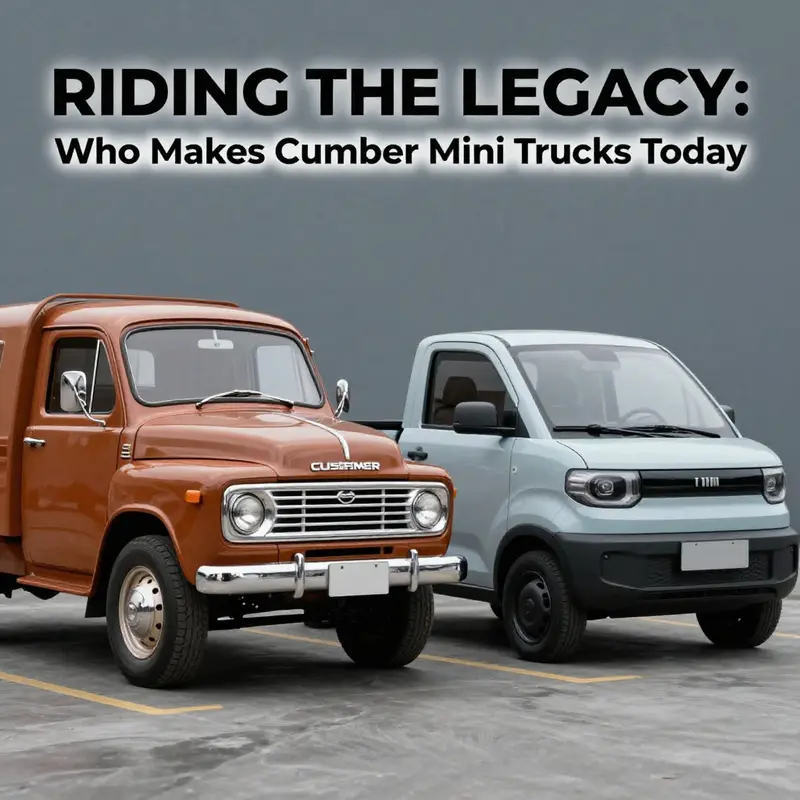
The design story of the classic Truckster and its small utility kin is a study in purposeful simplicity. Born from a need for affordable, repairable cargo transport, the original Truckster embodied a mechanical logic that favored durability and ease of upkeep over novelty. That logic shaped its proportions, its materials, and its mechanical layout. Over decades, engineers and makers carried those priorities forward while adapting them to new powertrains, materials, and markets. The result is a recognizable family of vehicles that still serves neighborhoods, campuses, resorts, vendors, and hobbyists today.
The original Truckster illustrates the logic clearly. Its engine sat longitudinally behind the driver. A modest single-cylinder motor produced enough torque to haul cargo at low, practical speeds. Power flowed through a simple three-speed gearbox to a driveshaft. This direct drivetrain limited complexity and made routine service straightforward. The chassis used thick, layered steel and a ladder-like frame to resist damage. Suspensions were basic but effective: a linkage-style front setup and a leaf-spring rear axle with the chassis attached to the spring center and axle ends anchored at each side. That arrangement absorbed punishing bumps and kept loads stable over uneven surfaces.
The vehicle’s form followed function. A wooden cargo bed with a fold-down tailgate gave users a forgiving, repairable platform for varied loads. The cabin imitated a truck’s silhouette enough to feel familiar but remained compact. That aesthetic—workmanlike, sturdy, and slightly charming—endured because it aligned with what owners needed most: a cheap, dependable mover that could be fixed with hand tools.
Under those pragmatic choices lies a clear engineering philosophy. First, design for maintainability. Simple components and direct mechanical linkages reduce failure points and lower repair costs. Second, prioritize structural resilience over weight savings. Before modern high-strength alloys and computer-optimized sections, it made sense to use more steel where loads concentrated. Third, match powertrain output to mission. Low-speed torque, rather than raw horsepower, was the practical metric. These principles made the Truckster both effective and long-lived.
As decades passed, the same core priorities informed new variants and reinterpretations. The small three-wheeled utility proved especially well suited to short-range, low-speed tasks. That niche later blossomed into a broader family of micro-trucks and electric utility vehicles. Designers kept the idea of compact cargo capacity and easy serviceability, but adapted materials and propulsion to changing constraints.
Electrification became a defining influence. Replacing an internal combustion engine with electric motors alters packaging, weight distribution, and control systems. Batteries require secure, crash-resistant mounting and dedicated cooling in some climates. Electric drivetrains reduce moving parts and hence maintenance needs. They also enable simple regenerative braking and flexible torque delivery, which suits the stop-start nature of campus or resort work. Modern electric micro-trucks therefore retain the Truckster’s low-speed, high-torque character, but they achieve it with far fewer mechanical linkages.
Materials and manufacturing also evolved. Where older models relied on thick steel plates for strength, contemporary builds often use high-strength steels and modular body panels. This change trims weight while maintaining load capacity. Corrosion-resistant coatings, molded plastics for non-structural parts, and composite bed inserts extend life in wet or salty environments. The styling keeps the utilitarian silhouette, but panels are cleaner and easier to source. Modular frames allow builders to swap beds, refrigerated boxes, or vending modules with less fabrication.
Suspension and handling received incremental upgrades, too. The original linkage and leaf-spring approach still appears on many small utility platforms because it serves the mission. But modern interpretations sometimes add independent front suspensions, improved damping, and geometry refined with computer-aided design. These tweaks keep ride comfort acceptable for longer shifts and allow slightly higher safe speeds where regulations permit. Braking systems also modernized. Drum brakes gave way to discs and, on many electric variants, to electronic stability aids and regenerative braking for improved fade resistance.
Another axis of change is ergonomics and controls. The simple, mechanical cockpit of the Truckster required minimal instrumentation. Newer models add practical creature comforts and safety features without betraying the original purpose. Better seating, clear instrumentation for battery state-of-charge, and simplified maintenance access panels make daily operation less fatiguing. Some modern utility vehicles also embrace modular control electronics to fit different languages or utility systems across export markets.
Regional design traditions influenced how small utility vehicles evolved. In some places, a scooter-inspired approach produced ultra-compact three-wheelers. These prioritize maneuverability and fuel efficiency in dense urban streets, trading some load capacity for nimbleness. Elsewhere, the stick-to-basics truck ethos continued: a small bed, simple suspension, and emphasis on hauling power. The divergence highlights a recurring truth: design choices reflect the environments where a vehicle will be used. Heavy urban trafficking favors compact turns and low emissions. Industrial estates and resorts value load capacity and tow ratings.
Globalization reshaped manufacturing and accessibility. Original makers long since left the scene, but the design language survived. New manufacturers in different regions adopted and adapted the Truckster’s framework. Some produced near-replicas for niche markets. Others took the functional cues and integrated modern drivetrains and materials. This shift lowered costs and expanded variety. Now, options range from stripped-down work wagons to fully equipped electric utility platforms with vendor-ready bodies.
Applications multiplied as the platform diversified. The compact footprint and predictable handling made these vehicles ideal for food vending, grounds maintenance, short-haul logistics inside gated facilities, and urban last-mile deliveries. Vendors particularly favored customizable beds and service cutouts. The durability and ease of repair remained attractive in environments where downtime is costly. Preservation-minded hobbyists and restorers also sustained interest by keeping vintage examples operational, highlighting the original design’s longevity and charm.
Restoration culture underscores the Truckster’s legacy. Enthusiasts value the mechanical transparency and the tactile experience of simple drivetrains. Restorations often keep the fundamental design intact while upgrading brakes, tires, and electrical systems to meet modern expectations. That blend of old and new preserves historical character while ensuring roadworthiness and safety.
Regulatory pressures nudged the design toward safer, cleaner solutions. Emissions standards, noise limits, and safety requirements for urban vehicles made electrification and improved structural integrity compelling. Designers responded by providing crashworthy battery enclosures, improved crash structures, and better lighting systems. These changes helped small utility vehicles operate legally and safely in more jurisdictions.
The visual language also evolved, though subtly. The classic wooden bed and fold-down gate remain beloved features among purists. Contemporary variants frequently emulate that look with weatherproof composite beds that mimic the original texture. Designers maintain a utilitarian face—flat fenders, simple grilles, and upright cabins—but integrate modern lighting and smoother panel transitions. This keeps nostalgia alive while delivering contemporary functionality.
What unites the Truckster and its descendants is a set of enduring trade-offs. Builders consistently balance cost, durability, maneuverability, and payload. Where weight reduction is possible, they adopt lighter materials. Where durability matters most, they keep heavier sections or reinforce mounting points. Where emissions or noise are restricted, they electrify. These trade-offs reflect the vehicle’s mission more than fleeting trends.
Today’s makers take different approaches but share a common lineage. Some focus on nostalgia and faithful restorations. Others aim for high-volume, low-cost production for vendors and facility operators. Still others produce modular platforms that can be electrified and re-bodied for different use cases. Across these paths, the guiding principle remains: small, practical utility with minimal fuss.
For readers who want visual and technical detail on how the original Truckster worked and why it mattered, a thorough historical overview is available online. That resource presents archival photos, engineering diagrams, and commentary on the vehicle’s role in mid-century commerce and recreation. It helps explain how the Truckster’s mechanical clarity shaped later designs and why the form still makes sense for short-range, low-speed hauling.
For practical inspiration, restoration tips, and community stories, enthusiasts and regional operators share experiences on dedicated mini-truck forums and blogs. One helpful local resource collects articles about mini-truck culture and customization, including reviews and practical build ideas. You can explore more community-driven content at the Mini Truck SoCal blog.
A single evolutionary thread links the original Truckster to modern micro-trucks: purposeful simplicity. Whether built a half-century ago or assembled in a modern factory, these vehicles solve the same basic problem. They move modest loads over short distances, reliably and with low operating cost. Their forms have softened and their powertrains modernized. Their spirit, however, remains unchanged.
External reference: https://www.motortrend.com/cars/cushman-truckster-history/
Who Makes Today’s Cushman-Style Mini Trucks: Market Presence, Makers, and Cultural Impact
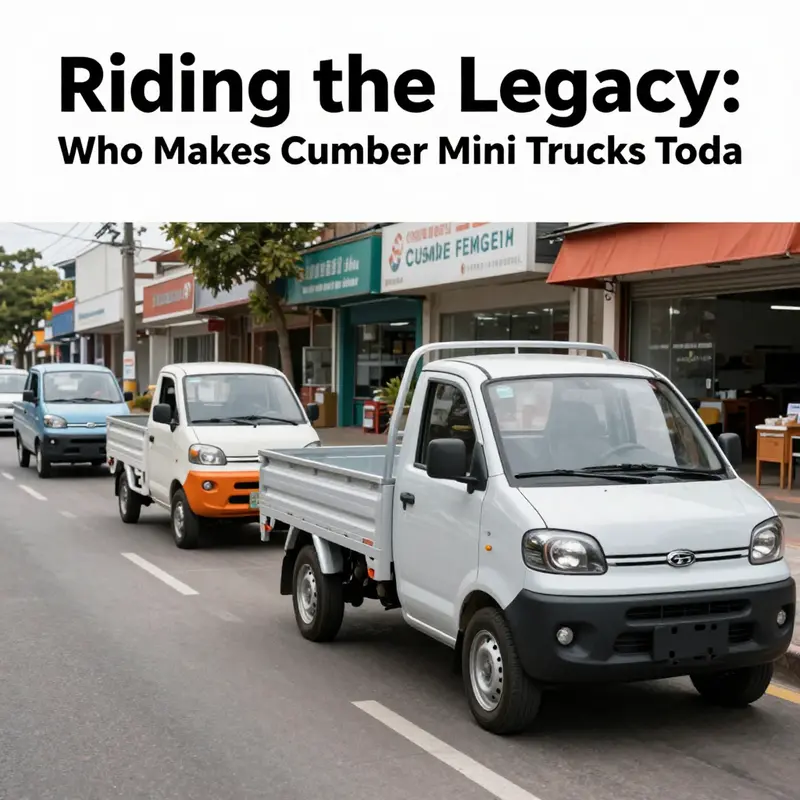
Who Makes Today’s Cushman-Style Mini Trucks: Market Presence, Makers, and Cultural Impact
The original three-wheeled utility vehicle left a lasting mark on small-vehicle design. Its simple construction, compact footprint, and rugged practicality made it a favorite of service yards, campuses, and small businesses. That legacy shapes how modern manufacturers and enthusiasts view today’s mini trucks inspired by that classic design. Yet the market presence of these modern iterations remains modest. They occupy a narrow band between nostalgia, municipal utility use, and specialized low-speed transport.
Historically, the vehicle emerged as a pragmatic answer to short-haul needs. Early models used small four-stroke engines and basic mechanical systems. The cargo bed was simple wood and metal, the suspension robust and easy to maintain. That combination made the vehicles durable and inexpensive to operate. For many decades, they filled roles too small for full-size trucks and too heavy for simple carts. Over time, the patchwork of owners, restorers, and small manufacturers kept the image alive. The classic form holds cultural value as much as functional appeal.
When assessing modern market presence, context matters. Mainstream automotive markets prioritize efficiency, safety, and regulatory compliance. In that environment, light utility vehicles modeled on mid-century three-wheelers face structural barriers. Modern safety standards require crumple zones, occupant protection, and emissions controls. These constraints push mainstream manufacturers away from reintroducing three-wheeled, low-speed designs at scale. Instead, a handful of smaller builders and overseas manufacturers have taken up the mantle, producing compact electric or gas-powered vehicles that echo the original styling.
Much of today’s production comes from smaller firms and overseas factories that adapt the classic aesthetic for niche applications. These modern makers often focus on electric drivetrains. Electrification suits the low-speed, short-range profiles typical of the vehicles’ intended uses. Electric motors simplify maintenance and reduce operating costs. Battery packs allow silent operation, which appeals to campus, resort, and indoor applications. Modern variants replace wooden cargo beds with lightweight composites or metal trays. They incorporate basic safety features and improved steering geometry, while retaining a deliberately retro silhouette.
Despite the availability of these modern versions, their commercial impact remains limited. They rarely compete with mainstream compact trucks or utility vehicles in volume. Instead, they appear in specific contexts. Municipalities and private facilities use them in pedestrian-priority zones. Theme parks, resorts, and campuses value their small size and distinctive look. Enthusiasts buy them as collector pieces or as platform vehicles for conversions. In short, the market presence is narrow but visible. The vehicles show up where novelty, practicality, and a controlled environment converge.
Manufacturing sources vary. Some companies produce licensed or inspired designs, while others evolve through independent development. A number of manufacturers in Asia have built versions that echo the classic styling. These firms often emphasize customization and low-speed utility rather than high-volume automotive production. Their business models rely on small-batch exports and bespoke builds. This approach suits buyers who want something different from mainstream commercial fleets. The result is a mosaic of suppliers rather than a single dominant maker.
Licensing and intellectual property play roles in how these vehicles are produced and marketed. The original brand name carries historical weight, but decades of dormancy and corporate changes have blurred ownership of names and designs. Modern manufacturers either obtain explicit licensing or market their products as “inspired by” rather than direct continuations. This legal and branding landscape affects distribution, parts support, and customer expectations. Buyers looking for authenticity or historical lineage must navigate claims of legacy and actual manufacturing provenance.
Technical evolution has been selective and pragmatic. Where the original emphasized mechanical simplicity, modern iterations favor reliable electric powertrains and modular components. Suspension and chassis design get incremental improvements to meet contemporary expectations. Batteries and controllers replace small internal combustion engines. Modern wiring, lighting, and braking systems bring modest safety upgrades. Still, many design choices remain faithful to the spirit of the classic vehicle: compactness, ease of repair, and functional cargo capacity.
Regulatory and operational limits influence market viability. Low-speed vehicle classifications benefit many modern builds, allowing relaxed emissions and crash standards compared to on-road automobiles. However, these classifications also restrict where the vehicles can legally operate. Many jurisdictions limit maximum speed and permissible operating zones. That reduces potential markets to private properties, controlled communities, and designated roads. The constrained legal envelope keeps production volumes low and cements the vehicles’ role as specialized transport rather than broad commercial tools.
The cultural and nostalgic pull of these vehicles is significant. Collectors, restorers, and event organizers celebrate the classic design. That enthusiasm fuels aftermarket parts suppliers, bespoke restorations, and small-scale custom builders. In some communities, the vehicles are symbols of a bygone approach to utility vehicle design. They appear at rallies, in museums, and as conversation pieces in retail spaces. This cultural presence translates into a steady, if limited, demand for modern reinterpretations.
A practical ecosystem supports the niche market. Parts suppliers, restoration shops, and small dealerships form a distributed support network. This network is rarely corporate or centralized. Instead, it consists of specialists who understand the vehicles’ quirks. For buyers, availability of service and parts becomes a key consideration. Where local support exists, sales and use grow modestly. In markets without such support, owners rely on creative solutions and community-sourced knowledge.
Looking forward, several dynamics could shape market presence. Continued interest in electrification aligns with the vehicles’ low-speed operational profile. Advances in battery energy density may extend range and payload capacity. Regulatory evolution could either expand allowable uses or tighten safety requirements. If local governments create incentives for low-emission, small-footprint transport, these vehicles could gain wider acceptance in certain urban or campus applications. Conversely, stricter safety regimes would raise production costs and limit appeal.
For anyone trying to answer who makes today’s cushman mini truck, the accurate response is nuanced. No single global manufacturer dominates. Instead, a patchwork of small builders and overseas factories produce modern interpretations. Buyers should evaluate maker reputation, parts availability, and legal status in their region. Those factors determine the practical value of a purchase more than nostalgia alone. For further community insight and hands-on perspectives, the Mini Truck SoCal blog provides local news and owner experiences. (https://minitrucksocala.com/blog/)
Ultimately, the impact of modern Cushman-style mini trucks is cultural more than commercial. They preserve an engineering ethos of simplicity and practicality. They also provide distinctive, low-speed transport where size and style matter. Their makers range from niche specialists to overseas manufacturers who reimagine the classic under electric power. This diversity keeps the spirit alive while keeping market presence modest and focused.
External reference: https://en.wikipedia.org/wiki/Cushman_(company)
Final thoughts
Cushman mini trucks have not only stood the test of time but have also evolved through modern manufacturing, continuing to serve a variety of purposes across different sectors. From their rich history rooted in utility to the modern interpretations now available, these vehicles remain an integral component for local small business owners, residential property owners, and enthusiasts alike. By understanding who makes these mini trucks today, you’re better equipped to make informed decisions whether it’s for business use or personal passion. Embracing this legacy means engaging with a community that values both functionality and nostalgia, ensuring that the spirit of the Cushman Truckster continues to thrive.