
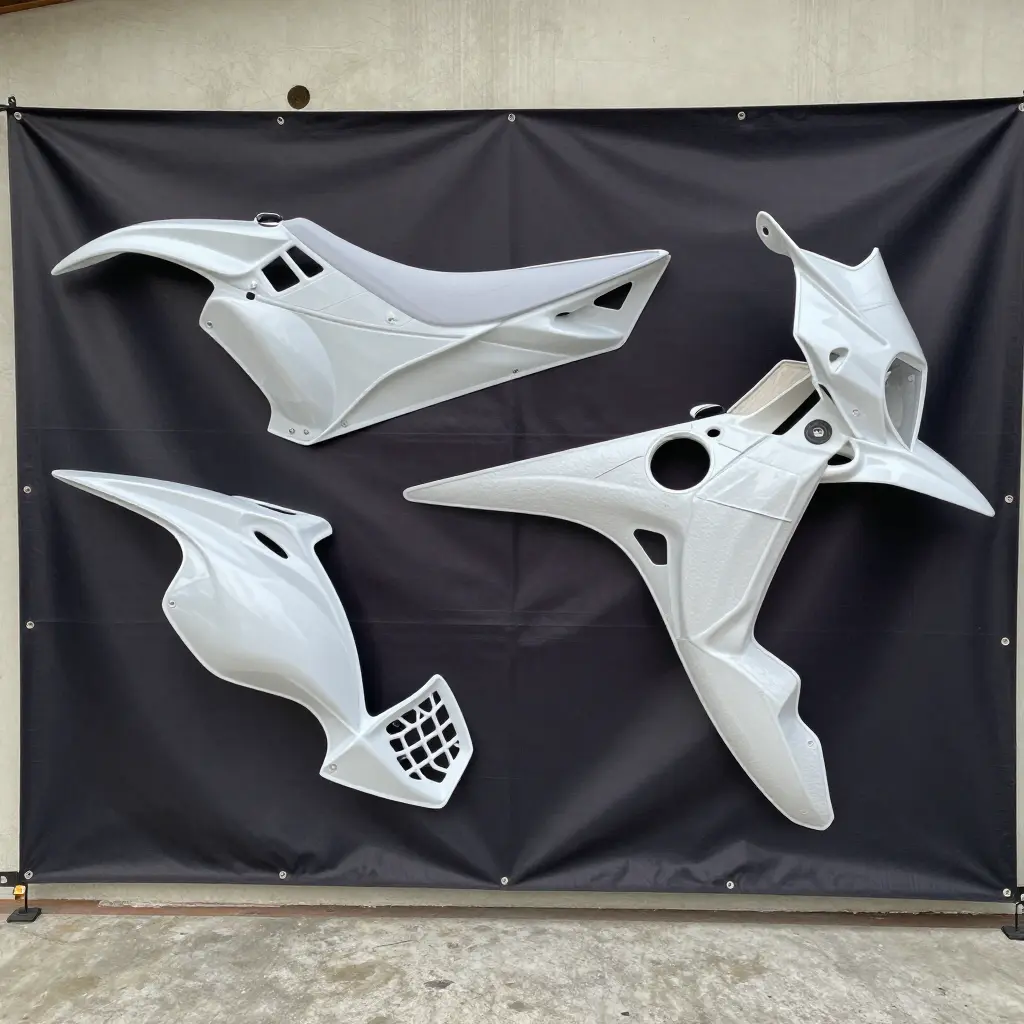
What a Motorcycle Fairing Kit Actually Is
A fairing kit is the full set of molded body panels that bolt onto a motorcycle’s frame and turn bare mechanicals into a weather-resistant shell. Riders buy them as factory replacements, as repair-shop stock, or as aftermarket sets that change a bike’s whole look. Kits ship as a complete set so the seams, mounting tabs, and paint lines match.
The Parts You’ll Typically Find
- Front cowl – the large forward shell that wraps the headlight and cockpit.
- Nose – the pointed tip panel that clips onto the cowl for a sharper profile.
- Side panels – mid-body covers that hide the battery, wiring, and airbox.
- Tail section – the rear seat cowl and undertail that shape the back end.
- Fender – front and rear guards that keep road spray off the tire and rider.
- Belly pan – a lower tray that shields the engine and improves airflow.
- Windscreen – the clear shield that deflects wind over the rider’s helmet.
Why the Panels Do More Than Look Good
Fairings do real aerodynamic work. Their shape cuts drag and lift, channels wind and debris away from the rider, and routes cool air to the radiator through ducting while heat escapes through rear vents. Material choice follows from that: injection-molded ABS flexes and absorbs vibration at a low cost per panel, fiberglass is stiffer and easier to repair for track use, and carbon fiber is where the real weight savings come from. Panels also carry a bike’s visual identity, which is why riders chase particular colorways and aftermarket kits.
How Injection-Molded Motorcycle Fairing Kits Are Produced
Injection molding is the reason good fairing tooling costs so much before the first panel exists. The trade is a large upfront investment for parts that fit the same way on every bike, every time.
Production starts with steel or aluminum tooling. Engineers machine a cavity and core that mirror the finished panel to within fractions of a millimeter. Steel molds survive hundreds of thousands of cycles and suit high-volume kits; aluminum is cheaper and better for shorter runs. Tooling is the biggest upfront cost, and it is why small batches rarely use injection molding at all.
ABS or polycarbonate pellets are dried and fed into a heated barrel, where they melt into a uniform resin. A reciprocating screw forces the melt through a nozzle into the sealed cavity under high pressure. Because the cavity fills completely, wall thickness stays even across complex curves, vents, and mounting points.
Water channels inside the mold then cool the packed resin until it hardens. The mold opens, ejector pins push the panel out, and operators trim the sprue and flash. Sanding, priming, painting, and clear-coating follow to give ABS panels their showroom finish.
Tight tolerances and repeatability are what let a panel bolt on without gaps, rattles, or warping. For riders and shops, that means fewer returns, faster repairs, and tooling costs that pay for themselves over a long production run.
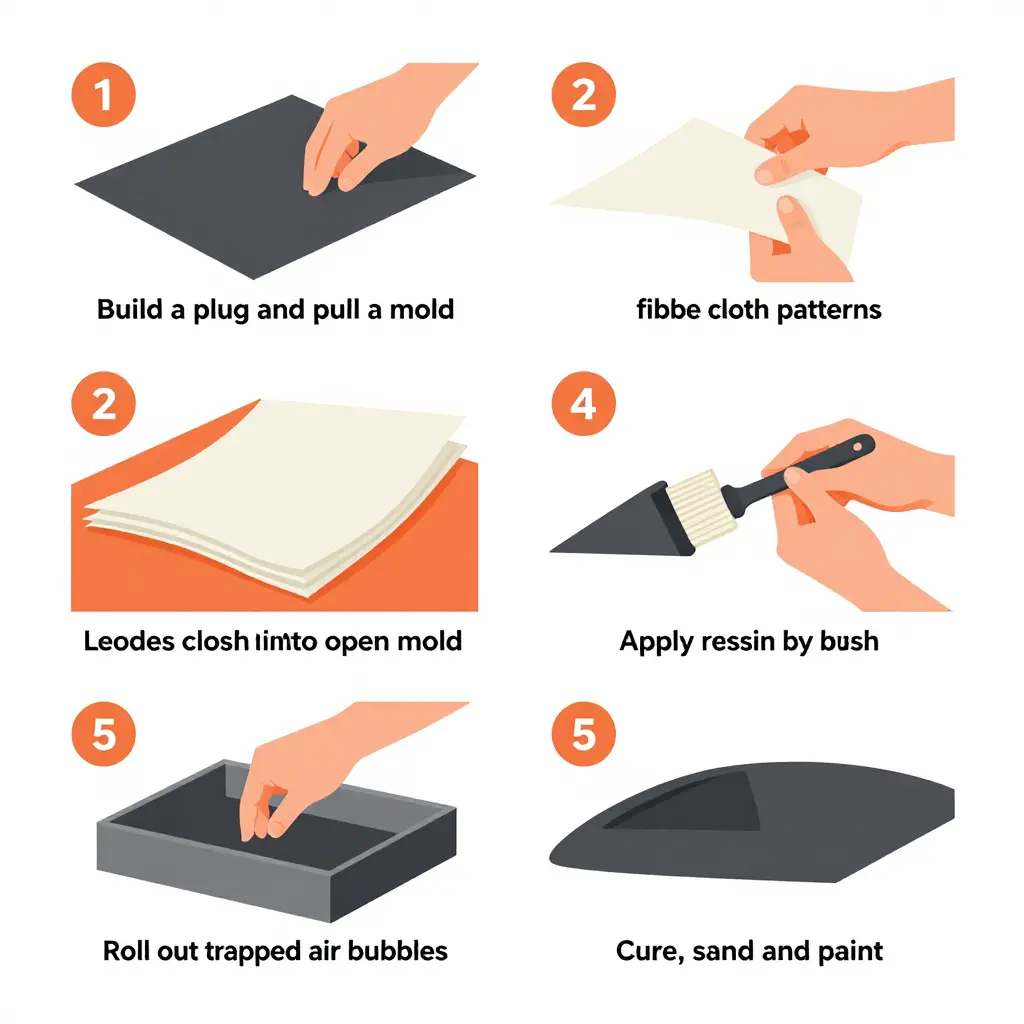
Hand layup: flexible, labor-heavy, and slow by design
Hand layup is the classic method behind fiberglass fairings, and it survives because it favors flexibility over speed. It makes sense when volume is low, shapes are unusual, or a builder cannot justify hard steel tooling. Where injection molding needs expensive machines and high volume to pay off, hand layup needs a mold, resin, cloth, and skilled hands.
The process starts with a plug: a full-size master shaped to match the finished part. Builders pull a mold from that plug, then cut fiberglass or carbon fiber cloth into pattern pieces, layer them into the mold by hand, and wet them out with resin applied by brush or roller. Each layer gets rolled to force out trapped air, because a bubble left behind becomes a weak spot or a visible flaw. Once the layup is done, the part cures at room temperature, then gets trimmed, sanded, and painted.
That hands-on workflow is both the strength and the weakness. Nothing is machined into a costly die, so tooling stays cheap and shape changes are easy: a hand-laid kit can be scaled, restyled, or built as a one-off without a large upfront investment. You can see the same custom-first mindset in other custom build projects where small batches beat mass tooling. Resin goes on unevenly, though, so wall thickness and surface finish drift from part to part, and every piece needs sanding, filler, and primer before paint looks right. That labor is the real cost driver, and it is why hand layup thrives in custom work and short runs rather than high-volume production.
Injection Molding vs Hand Layup: Head-to-Head
The two methods diverge on cost, consistency, and flexibility. The table below puts the trade-offs side by side so you can weigh what each approach actually delivers before you spend money on a kit.
| Attribute | Injection Molding | Hand Layup |
|---|---|---|
| Tooling cost | High upfront mold investment | Minimal, low-cost molds |
| Per-unit cost | Very low at high volume | Higher, labor-driven per part |
| Production speed | Fast, automated, minutes per part | Slow, hours of manual work |
| Weight | Light, consistent, thin walls | Varies; carbon is lighter, fiberglass often heavier |
| Impact resistance | Good on minor hits; can crack under hard point loads | Fiberglass cracks but can be re-laminated |
| Flexibility of shape | Limited by mold design | Any custom shape possible |
| Fitment accuracy | Excellent, uniform every time | Variable, depends on builder skill |
| Finish quality | Smooth, factory-grade, paint-ready | Good, needs sanding and prep |
| Best for | Mass production, showroom kits | Custom, low-volume, race builds |
Read each row as a trade-off rather than a verdict. Injection molding wins on consistency, fitment accuracy, and per-unit cost at volume; hand layup wins on flexibility, low tooling cost, and small-batch freedom. Match the column to your order size, budget, and finish expectations before you commit.
What the Price Gap Really Pays For
The gap between an injection-molded kit and a hand-laid one is not padding. It is the visible cost of the engineering, tooling, and material decisions that determine how a fairing looks and how long it survives vibration and weather.
R&D and CAD design. Injection molding starts with millimeter-accurate CAD files, flow simulations, and several prototypes. Hand layup often begins with a plywood plug and mounting points eyeballed from the original. That design work costs money before a single panel is molded.
Tooling costs. A machined steel mold can cost tens of thousands of dollars, but it produces thousands of identical pieces. A hand-laid fiberglass mold costs a fraction of that and is good for only dozens of pulls. Part of the higher sticker price simply prepays tooling that buys consistency.
Material grade. Injection-molded kits typically use virgin ABS or high-grade resins chosen for UV stability and flex. Cheap kits often substitute recycled ABS or thin fiberglass, which cracks or fades faster. Material grade is easy to overlook and expensive to get wrong.
Labor hours. Hand layup burns labor, but skilled laminators are paid for judgment and finishing, not speed. Injection molding swaps those hours for machine time, moving cost into capital and setup.
Quality control. Reputable sellers test hole alignment, panel gaps, and heat tolerance. Catching a bad batch before it ships is what keeps returns and refunds from eating the margin.
Packaging and warranty. Durable padding, reinforced cartons, and real warranty support add cost too. A generous warranty usually signals a maker expects the product to hold up.
So the price gap pays for repeatable precision, better materials, and accountability. If fitment and longevity matter most, injection molding justifies the premium; if budget rules, hand layup can still work with realistic expectations. Compare the specs the way you would for any vehicle purchase.
Typical Price Range per Fairing Kit by Manufacturing Method
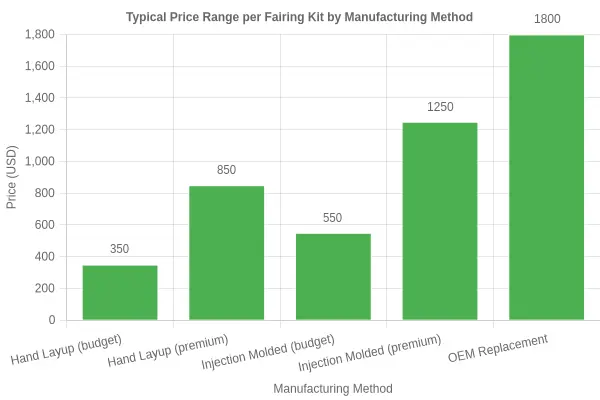
The gap in fairing kit pricing is not a marketing trick. Hand layup keeps costs down through manual labor and minimal tooling, but every panel comes out slightly different. Injection molding requires expensive steel molds and consistent material, and OEM replacement adds factory-spec tooling, tighter tolerances, and guaranteed fitment. That engineering difference, not branding, drives the numbers in the chart above.
Eight Factors That Drive Fairing Kit Pricing
Two fairings can look identical in photos and still sit hundreds of dollars apart. Eight practical factors usually explain the gap.
- Tooling complexity – Precision injection molds cost tens of thousands upfront, and that investment is spread across every set sold. Complex multi-piece molds raise fairing kit cost right away.
- Material grade – Virgin ABS plastic fairings flex and resist heat far better than recycled blends, so higher-grade resin adds cost but lasts noticeably longer.
- Production volume – Big runs lower the per-unit price, while small batches for rare models carry premium pricing because fixed costs split among fewer buyers.
- Labor intensity – Hand layup and sanding demand skilled hands and hours of work, pushing aftermarket fairings made this way well above machine-molded options.
- Fitment accuracy – Kits engineered from OEM scans bolt on cleanly, while loose-tolerance parts need trimming, and that extra precision is priced in.
- Surface finish prep – A ready-to-paint finish requires extra priming and polishing passes; a rougher gel-coat surface costs less but needs more prep work.
- Packaging and shipping – Large, fragile panels require custom foam crating and freight handling, adding real dollars to every order.
- Warranty or support – Brands offering replacement guarantees and responsive customer service build that backup directly into the price.
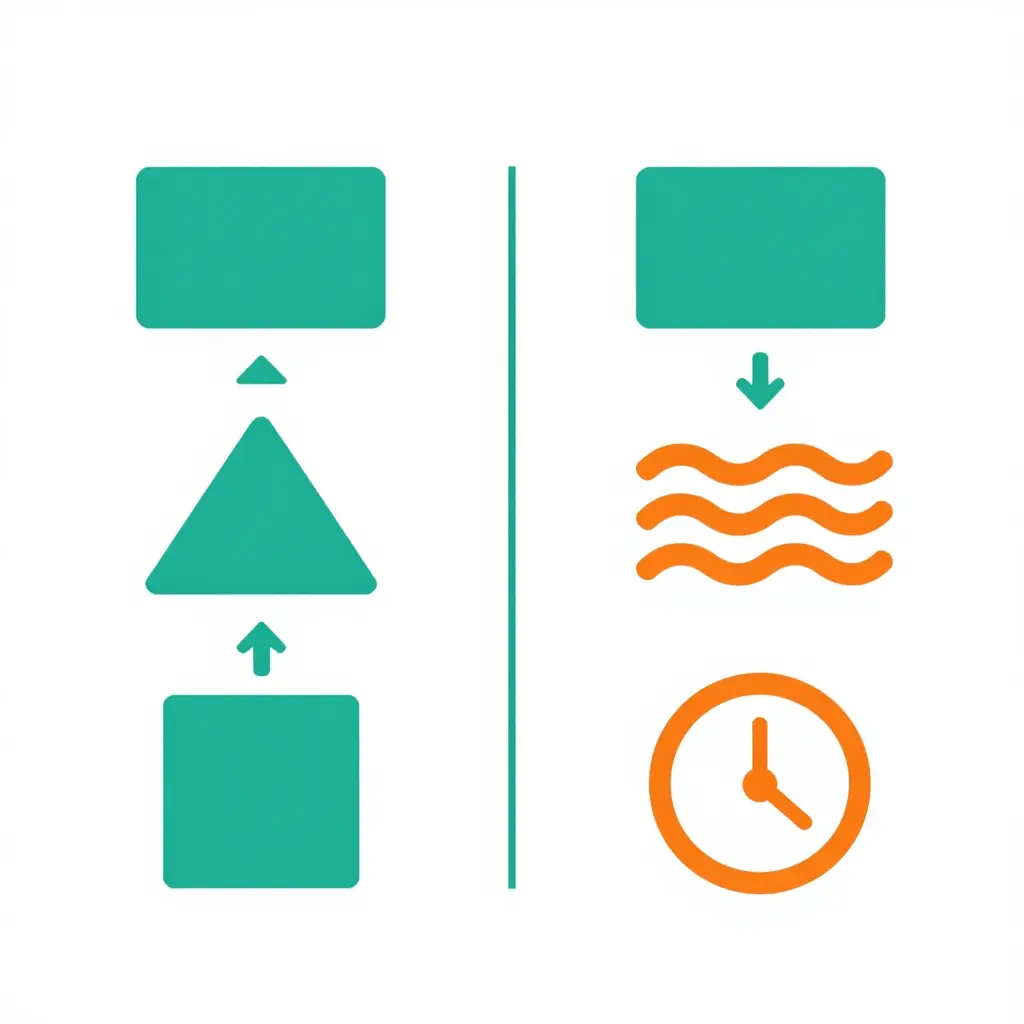
The schematic contrasts the two production flows. Injection molding runs mold to injection to ejection in three fast, machine-driven steps with little hands-on labor and expensive steel tooling. Hand layup runs mold to layup to cure, leaning on manual work and cheap tools but costing far more time and labor.
Durability, Fitment, and Real-World Performance
Where the extra money goes shows up on the road: in how each panel behaves against vibration, engine heat, and a crash. Molded panels win on repeatability; hand-laid panels win on repairability.
- Impact resistance: Hand-laid fiberglass spreads energy through the laminate and cracks rather than shattering, and it can be re-laminated. Injection-molded ABS flexes on minor knocks but can crack under a hard point load.
- Flex vs rigidity: Hand-laid kits flex, which helps them survive vibrations but can let panels distort at speed. Injection-molded fairings hold their shape, which keeps aerodynamics predictable.
- Weight: Carbon-fiber hand layup can run 15-30% lighter than molded ABS; fiberglass usually ends up heavier because of resin content. Molded ABS panels are heavier than carbon but more uniform.
- Heat tolerance: Molded ABS softens near exhaust and engine heat. Hand-laid resin holds up better in heat-soaked traffic.
- Paint adhesion: Factory-molded panels accept paint evenly; hand-laid surfaces need extra sanding and primer to avoid fisheye.
- Fairing fitment: Molded kits deliver consistent panel gaps and bolt holes. Hand layup varies from part to part, so fairing fitment often needs shimming.
- Crash repair: Hand-laid panels can be ground, filled, and re-laminated. Molded ABS usually gets replaced.
Track riders chasing predictable gaps and cheap replacement panels lean injection-molded. Daily riders prize tough, heat-tolerant hand layup. Restoration projects want original-style molded plastic for authenticity, and repair shops favor hand layup because it can be fixed in-house. Whatever you ride, research your platform first – the same patience buyers use when understanding how to research a pre-owned vehicle before ordering parts pays off with motorcycle fairing kits.
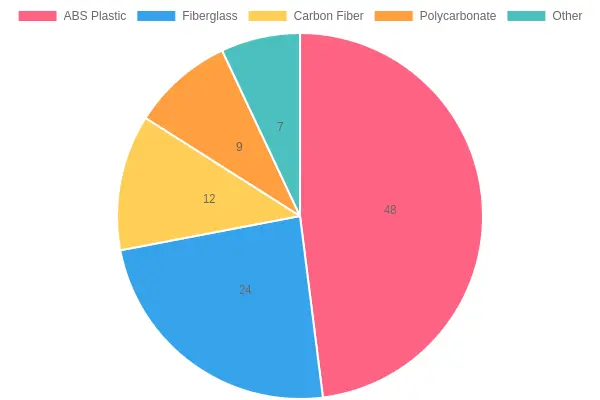
Chart title: Share of Aftermarket Fairing Kits by Material Type
Chart type: Pie (clean 2D style)
Legend labels and dataset values:
| Material Type | Share (%) |
|---|---|
| ABS Plastic | 48 |
| Fiberglass | 24 |
| Carbon Fiber | 12 |
| Polycarbonate | 9 |
| Other | 7 |
| Total | 100 |
ABS plastic dominates the aftermarket because injection molding gets dramatically cheaper at high volume: the tooling cost is spread across thousands of identical units. Fiberglass and carbon fiber stay niche and labor-intensive. For buyers comparing prices, that gap usually pays for the manufacturing process, not automatically for better fit, finish, or crash protection.
Frequently Asked Questions About Motorcycle Fairing Kits
Is injection molding better than hand layup?
For precision, uniformity, and long-term value, injection molding usually wins. Machine-pressed ABS panels hold consistent thickness and tight tolerances and take a factory-like finish that hand layup struggles to match at volume. Hand layup, where resin and fiberglass go in by hand, is better for low-volume and custom shapes. For repeatable, durable kits bought off the shelf, injection molding is the safer everyday choice.
Why are hand-laid fairings sometimes cheaper?
Hand layup skips the expensive steel molds injection molding needs, so a small shop can make fiberglass panels in tiny batches without heavy machinery, and the entry price drops. Labor, resin, and finishing time still add up, and fitment varies. For a single budget set, a hand-laid kit often costs less than a fully tooled injected alternative.
Will an aftermarket fairing kit fit my motorcycle perfectly?
Not always straight out of the box. Injected panels from reputable brands usually bolt on with little adjustment; hand-laid kits often need trimming, sanding, or shimming around the mounting tabs. Confirm the kit lists your exact model and year, and expect small gaps or paint touch-ups. A skilled shop can dial in fitment, but factory tightness is not guaranteed with aftermarket kits.
Which fairing material lasts longest?
In everyday riding, injection-molded ABS generally outlasts fiberglass hand layup. ABS flexes instead of cracking on minor impacts and handles weather well. Fiberglass can be repaired easily but is more brittle and prone to stress cracks. For long-term durability with less maintenance, injected ABS usually wins, though no material survives a hard crash.
Can I paint an injected ABS fairing kit?
Yes, if you prep it properly. Wash off mold release, scuff the surface with fine sandpaper, apply a plastic adhesion promoter, then a flexible primer before your base coat and clear. Injection molding leaves smooth, uniform panels, so paint lays down evenly. Skip cheap enamel on flexible parts; a urethane or acrylic system holds up best on motorcycle fairing kits.
Do I need to modify mounting points?
Sometimes, but less often than you might expect. Quality injection molding replicates factory mounting geometry, so most molded holes and tabs line up directly. Hand layup kits, being handcrafted, may need new holes, enlarged slots, or brackets. Test-fit every panel before painting, keep your original hardware, and be ready for minor adjustments to get a clean, rattle-free result.
Match the Kit to the Ride
Choosing between injection molding and hand layup is not about which one is “better” in the abstract. It comes down to how you ride and what you can spend, because the choice drives fit, durability, weight, and cost. Injection-molded panels give precise fitment, UV-stable finishes, and consistent thickness. Hand-laid fiberglass is simpler to modify and repair for custom and race builds. Work through these steps before you commit.
- Define the use case. Daily street riding favors durable injection-molded plastic, while track builds often prefer fiberglass that can be repaired and reshaped.
- Set a budget. Injection kits cost more up front but need less prep. Hand layup saves money, but factor in sanding, primer, and paint.
- Verify model and year fitment. Even one model-year off can mean mismatched bolt holes. Confirm the exact make, model, year, and submodel.
- Check material and thickness. Ask for ABS or polypropylene specs and compare panel thickness – thicker is not always better, but consistency matters.
- Confirm mounting hardware. Make sure the kit includes brackets, clips, and bolts, or budget for them separately.
- Review seller support and returns. A clear warranty and hassle-free returns signal a seller who stands behind their aftermarket fairings.
Shoppers can compare more than 3,000 styles across almost all motorcycle models, which makes research essential. Many riders study community threads and join local rider and enthusiast groups before committing to a purchase. Take your time, ask questions, and buy the kit that matches how you actually ride – your panels will thank you for the extra homework.
The Bottom Line: You Are Paying for Engineering, Not a Logo
People see the gap between injection-molded and hand-laid fairings and assume the higher number is brand markup. It is not. The difference pays for the steel tooling that stamps out hundreds of identical panels, the higher-grade ABS or polycarbonate that survives heat and impact, the labor of skilled hands building each hand-layup piece one at a time, and the fitment consistency that keeps mounting holes and panel gaps where the factory put them. The price reflects what goes into the part, not what is printed on the box.
That gives you a simple buying guide. If you are restoring a rare or custom bike and need a single one-off panel, hand layup offers flexibility at a lower entry cost. If you are a repair shop, an aftermarket buyer, or a rider who wants durable, matching, repeatable panels, injection-molded kits are the practical choice, because they deliver fit and finish you can rely on across every order.
Where to Find the Right Set
SummitFairings.com stocks over 3,000 styles covering almost every motorcycle model, and their motorcycle fairing kits are priced 10-40% less than other sites. You can buy directly at summitfairings.com, and their team promises to answer any question within six hours. Choose the method that matches your need, then buy from a source that prices fairly and responds fast.