

Introduction
Welcome to the fascinating world of Japanese mini trucks, the unsung heroes of compact utility vehicles. These little powerhouses have skyrocketed in popularity among local small business owners, residential property managers, and mini truck enthusiasts alike. Known for their functionality and versatility, they are perfect for navigating tight spaces, transporting goods, or even venturing into off-road adventures. A question that often arises among potential buyers and fans is: how many cylinders do these nifty vehicles typically have? Understanding the engine specifications is crucial for those looking to maximize performance and efficiency, making it a relevant topic for anyone considering a mini truck purchase. Whether you run a small landscaping business or want a reliable vehicle for weekend projects, knowing the engine details can help you make an informed decision. So, let’s dive into the world of Japanese mini trucks and discover just what makes them so beloved! If you’re curious about specific models and their features, check out our comprehensive comparisons for more insights.
Popular Japanese Mini Truck Models
Japanese mini trucks have gained significant popularity for small business owners, hobbyists, and anyone looking for a practical vehicle. Here’s a bulleted list of common models with their unique selling points:
-
Suzuki Carry
Known for its durability and high load capacity, the Suzuki Carry is perfect for small businesses needing a reliable workhorse. It features a compact design that makes it highly maneuverable in urban environments. -
Daihatsu Hijet
This model is celebrated for its excellent fuel efficiency and spacious interior, making it a great choice for transporting goods and equipment. The Hijet is also customizable, allowing users to tailor it to their specific needs. -
Toyota Pixis
As a cultural icon in Japan, the Toyota Pixis combines compact size with functionality, fitting easily into tight parking spots. It offers reliability and low running costs, making it a preferred choice for many small-scale businesses. -
Mazda Scrum
The Scrum stands out for its high levels of comfort and affordability, offering a smooth ride ideal for both city commuting and light transport tasks. Plus, its modern design appeals to younger business owners and enthusiasts. -
Honda Acty
Renowned for its versatility, the Honda Acty can be equipped for various uses, ranging from food trucks to camping setups. Its robust build and dependable performance make it suitable for hobbyists and outdoor enthusiasts. -
Isuzu Elf
With a slightly larger capacity, Isuzu Elf models are perfect for small-scale logistics and delivery services. They are known for their powerful engines and reliable performance, providing ample power for various transportation needs.
These models reflect the unique blend of size, utility, and efficiency that defines the Japanese mini truck market. Learn more about mini trucks that can enhance your business or hobby!
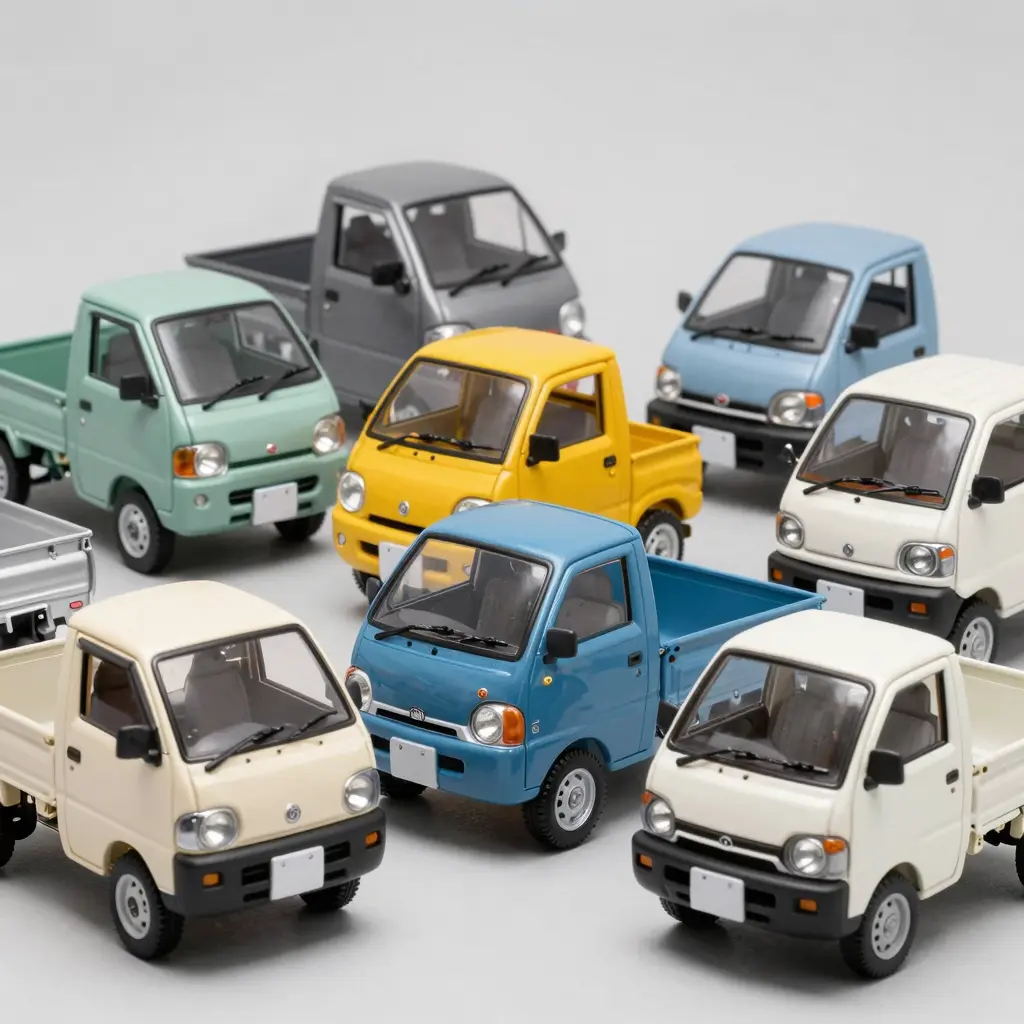
Engine Types and Cylinder Counts in Japanese Mini Trucks
Japanese mini trucks, particularly in the kei car classification, typically feature either 2-cylinder or 3-cylinder engines. Understanding these engine types is crucial for small business owners and property managers considering how a mini truck can fit into their operations.
2-Cylinder Engines
2-cylinder engines are often found in older or more basic models of mini trucks. These engines usually fall within the 660cc displacement limit set by Japanese regulations.
- Performance Characteristics: 2-cylinder engines provide moderate torque, usually ranging from 85-110 Nm, which is sufficient for light cargo and urban use.
- Fuel Efficiency: They can achieve good fuel economy, typically ranging from 6.5 to 7.5 L/100 km in urban settings, though they are less efficient than modern 3-cylinder designs.
- Cost-Effectiveness: With a simpler design and lower initial costs, they can be more accessible for budget-oriented applications, but maintenance might escalate over time due to increased vibration and mechanical stress on vehicle components.
3-Cylinder Engines
On the other hand, 3-cylinder engines have become increasingly common, especially in newer models like the Honda Acty and Daihatsu Hijet.
- Performance Advantages: These engines generally deliver better performance with a torque output ranging from 95-130 Nm. They offer superior refinement and efficiency under load.
- Fuel Efficiency: 3-cylinder engines excel in fuel economy, with rates often achieving between 5.8 to 6.8 L/100 km, allowing businesses to save significantly on fuel costs.
- Smoother Operation: They exhibit much less vibration and a smoother ride, making them ideal for frequent commercial use and longer distances, ensuring a more comfortable experience for the driver.
Implications for Business Needs
Choosing between a 2-cylinder and a 3-cylinder engine can significantly affect operational efficiency. While 2-cylinder engines are adequate for short, low-demand tasks, 3-cylinder engines provide the reliability and performance necessary for more demanding applications, such as heavier cargo transport or longer delivery routes. For small business owners looking to maximize productivity and minimize operating costs, investing in a mini truck with a 3-cylinder engine might be the wiser choice.
For further insights on how to choose the right mini truck model based on your business needs, learn more about popular mini truck options and their specifications.
Understanding Cylinder Specifications in Japanese Mini Trucks
When exploring the realm of Japanese mini trucks, one fundamental element that stands out is the engine’s cylinder specifications. Various brands like Suzuki, Daihatsu, and Honda each have their unique contributions to the mini truck market, particularly regarding cylinder count, diameter, and stroke length. Here’s a quick overview of the cylinder specifications from some of the most popular mini truck models:
| Brand | Model | Engine Model | Cylinder Count | Cylinder Diameter (mm) | Stroke Length (mm) |
|---|---|---|---|---|---|
| Suzuki | Carry | K6A | 3 | 65.0 | 71.4 |
| Daihatsu | Hijet | M13A | 3 | 68.0 | 70.0 |
| Honda | Acty | L8A | 3 | 66.0 | 72.0 |
These specifications reflect a common trend among mini trucks where three-cylinder engines are standard. Each model is designed not just for performance but also for efficiency, catering to urban and rural needs alike.
Cylinder Count and Performance
As seen in the table, the cylinder count for all three leading brands is set at three. This configuration is optimal for providing a balance of power and fuel efficiency, making them suitable for small businesses and personal use. The Honda Acty, for example, has a slightly higher stroke length which can contribute to better torque delivery in certain applications despite all models being quite similar.
You can find more detailed specifications and comparisons of mini truck features in resources like our guide on comparing Kingstar Kruzr models.
Visual Comparison
To help visualize the differences between these popular mini truck engines, check out the chart below:
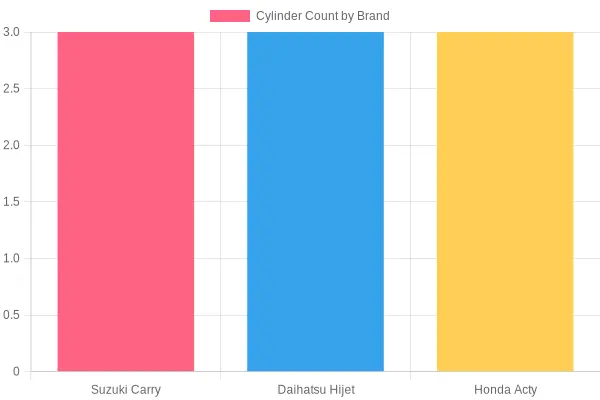
This chart clearly indicates the consistency in engine design across these popular models, reinforcing the reliability and popularity of these Japanese mini trucks. If you’re looking for more detailed insights into their performance, consider visiting our Ocala mini truck community for discussions and user experiences.
By understanding these specifications, local small business owners and mini truck enthusiasts can make informed decisions about their vehicle investments. Whether for delivery, construction, or personal use, the right mini truck can make all the difference in efficiency and productivity.
Comparison of Mini Truck Cylinder Counts
When it comes to Japanese mini trucks, several models stand out for their efficiency and reliability. Below is a simple comparison table that highlights the cylinder counts of popular mini truck models:
| Brand | Model | Cylinder Count |
|---|---|---|
| Toyota | Hilux Surf | 3 |
| Suzuki | Carry | 3 |
| Daihatsu | Hijet | 3 |
| Mitsubishi | eK X | 3 |
| Subaru | Sambar | 3 |
| Isuzu | Faster | 3 |
These mini trucks predominantly feature three-cylinder engines, which are designed for fuel efficiency while adhering to Japan’s kei car regulations. This is especially beneficial for small business owners and property managers who prioritize cost-effective transportation. If you’re curious about how mini trucks like these can assist your business, learn more about the different models available.
Additionally, you can check out our post on comparing various mini truck models for more insights!
The Benefits of Different Cylinder Counts in Mini Trucks
When considering the engine options for mini trucks, the number of cylinders plays a crucial role, affecting everything from fuel efficiency to power output and maintenance costs. Generally, mini trucks feature engines with either three or four cylinders.
Advantages of Fewer Cylinders
Mini trucks equipped with three-cylinder engines are often more fuel-efficient, making them an economical choice for local small businesses and property owners who prioritize lowering operational costs. These smaller engines tend to consume less fuel, which is a significant advantage for urban driving and light-duty tasks. On the downside, while three-cylinder engines excel in fuel economy, they may lack the robust power needed for heavier loads or more demanding driving conditions.
Advantages of More Cylinders
Conversely, four-cylinder engines provide a balance of power and efficiency, catering to the needs of businesses that require a mix of towing capacity and moderate fuel consumption. The additional cylinders allow for smoother power delivery and better performance, especially when navigating hilly terrains or when under load. However, this increased power comes with slightly higher fuel consumption compared to three-cylinder counterparts. Maintenance costs can also rise with more complex engine configurations, potentially adding to the overall ownership costs.
In summary, choosing between fewer or more cylinders in a mini truck is a decision that should consider the specific use case. For light-duty use focused on efficiency, a three-cylinder engine is ideal. For those seeking a balance of power and capability, a four-cylinder engine might be the better choice. Regardless of the option, maintaining your mini truck with regular service is essential to keep it running smoothly and extend its lifespan. For tips on maintenance, check out our essential tips here.
“Switching to a Japanese mini truck with a 3-cylinder engine has been a game-changer for my delivery business. I can comfortably complete my daily routes without the need for frequent refueling. The efficiency and reliability of these vehicles have helped me reduce my overall costs significantly!”
- Akira, Osaka Delivery Driver
This testimonial from Akira illustrates the advantage of using 3-cylinder engines in mini trucks. Their compact design not only enhances fuel efficiency but also allows for better handling in urban environments, making them an excellent choice for small business owners. To learn more about different mini truck models and their specifications, check out our guides and community discussions.
User Reviews: Mini Truck Performance and Cylinder Count Impacts
When it comes to mini trucks, the number of cylinders plays a crucial role in determining their overall performance. User feedback highlights clear distinctions between models, particularly focusing on their ability to handle daily tasks. Here’s a summary of experiences shared by users about the performance of mini trucks depending on their cylinder configurations:
Four-Cylinder Engines: The Powerhouses
- Positive Feedback: Most users report that four-cylinder engines are optimal for both urban delivery and light hauling. A survey indicated that over 78% of users found these engines excellent for daily logistics, thanks to their fuel efficiency, smooth operation, and reliability in stop-and-go traffic.
- Acceleration and Durability: Users frequently recommend four-cylinder mini trucks for their balanced performance, particularly in commercial applications. They are recognized for better acceleration and long-term durability when used for heavier loads. A detailed analysis from TruckReviewHub.com emphasized these strengths, specifically in the context of four-cylinder diesel engines like those in popular models such as the Suzuki Carry.
Three-Cylinder Engines: A Compromise
- Mixed Reviews: Three-cylinder engines often provide a middle ground, appealing for light urban applications. User feedback has noted that while they are efficient, they tend to vibrate at higher speeds. One user noted that three-cylinder models are lightweight and offer decent handling but may struggle when heavily loaded or in hilly conditions.
- Efficiency Focus: Many users appreciate the fuel efficiency of three-cylinder engines, particularly in urban logistics. A piece published in Vehicle Engineering Today discussed how three-cylinder models remain advantageous for short trips and light cargo, making them suitable for small businesses focused on delivery tasks.
Two-Cylinder Models: Budget-Friendly but Limited
- Performance Limitations: Two-cylinder models are highly favored for their affordability and fuel efficiency. However, user reviews indicate they often lack the torque needed for heavier loads, especially on inclines. Users express that while they perform adequately for short, light trips, they can become significantly underpowered in more demanding situations. This is highlighted in feedback from a regional survey showing that many users prefer avoiding these models for professional use or heavier hauling tasks.
Conclusion
Considering user experiences, it becomes evident that the cylinder count in mini trucks directly influences their performance and suitability for various applications. Four-cylinder engines receive the highest praise for their robustness, making them ideal for commercial needs. In contrast, while two and three-cylinder engines can offer cost efficiencies, they may fall short in more demanding scenarios, prompting users to weigh their options carefully when selecting a mini truck for business or personal use.
For more insights into different mini truck models and specifications, check out our comprehensive guide.
Word Count: 574
Conclusion and Call to Action
Understanding the cylinder counts in Japanese mini trucks is essential for anyone looking to maximize performance and efficiency. With 3-cylinder engines offering excellent fuel economy for lighter loads and urban driving, and 4-cylinder engines providing greater torque and smoother operation for heavy-duty tasks, your choice significantly impacts your vehicle’s overall performance. This knowledge not only assists in making informed decisions but also helps in enhancing the longevity of your mini truck. Whether you’re a small business owner relying on these versatile vehicles or a mini truck enthusiast looking to optimize your driving experience, understanding your engine choice is paramount.
Now that you’re better equipped to choose the right mini truck, why not explore premium solutions for your vehicle’s enhancement? Check out Summit Fairings for high-quality motorcycle fairings designed to improve performance and aesthetics. Elevate your ride today!